Changing stroke rehab and research worldwide now.Time is Brain! trillions and trillions of neurons that DIE each day because there are NO effective hyperacute therapies besides tPA(only 12% effective). I have 523 posts on hyperacute therapy, enough for researchers to spend decades proving them out. These are my personal ideas and blog on stroke rehabilitation and stroke research. Do not attempt any of these without checking with your medical provider. Unless you join me in agitating, when you need these therapies they won't be there.

What this blog is for:

My blog is not to help survivors recover, it is to have the 10 million yearly stroke survivors light fires underneath their doctors, stroke hospitals and stroke researchers to get stroke solved. 100% recovery. The stroke medical world is completely failing at that goal, they don't even have it as a goal. Shortly after getting out of the hospital and getting NO information on the process or protocols of stroke rehabilitation and recovery I started searching on the internet and found that no other survivor received useful information. This is an attempt to cover all stroke rehabilitation information that should be readily available to survivors so they can talk with informed knowledge to their medical staff. It lays out what needs to be done to get stroke survivors closer to 100% recovery. It's quite disgusting that this information is not available from every stroke association and doctors group.

Showing posts with label quackery?. Show all posts

Monday, June 9, 2025

Fact Check: Can Sheesham leaves in oil cure paralysis in just 3 days?

At least safer than Train track stroke therapy? from Indonesia.

Fact Check: Can Sheesham leaves in oil cure paralysis in just 3 days?

Quick Take

A social media post claims that Sheesham leaves in oil can cure paralysis in just 3 days. After fact checking, we rated this claim as false.

false rating

The Claim

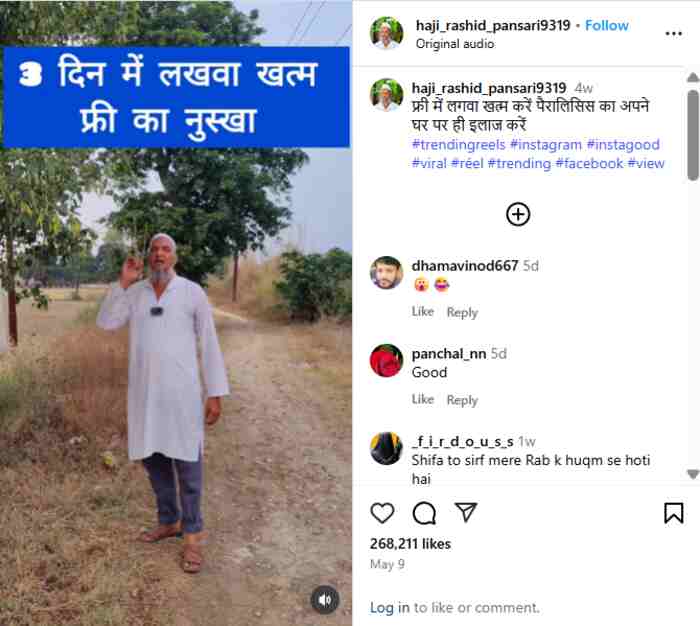
A viral Instagram video claims that any type of paralysis or ‘lakwa‘ can be completely cured at home in just 3 days. The post suggests using Sheesham leaves boiled in sesame or olive oil and applied to the affected area.

Sheesham leaves in oil can cure paralysis

Fact Check

Can paralysis be cured at home with oil?

No, paralysis cannot be cured at home using oils. Paralysis happens when communication between the brain and muscles is disrupted—this can be due to a stroke, spinal injury, nerve damage, or other medical conditions. These causes require professional medical treatment such as physiotherapy, medication, and in some cases, surgery. Oils, whether herbal or not, may help with massage and muscle stiffness, but they cannot repair nerve damage or restore movement on their own.

Dr Mohit Sandhu, Consultant Ayurvedic Practitioner

To assess the claim, we consulted Dr Mohit Sandhu, Ayurvedic Practitioner at AgniShalya Ayurvedic Hospital and Research Centre, Hamirpur. He firmly dismisses the idea to cure paralysis in just 2 or 3 minutes of oil massage, or even a few days, by applying oil, whether it contains sheesham leaves or not. “That’s not how paralysis works, not even according to Ayurveda,” he says. Dr Sandhu explains that while certain medicated oils like Mahanarayan tail or Ksheerabala tail may be used in Ayurvedic treatments, their role is to support recovery by improving circulation and easing stiffness when combined with massage (Abhyanga) and steam therapy (Swedana). In very rare and early-stage cases, such as mild Bell’s palsy or functional paralysis, some minor movement may return temporarily, but this is only short-term relief, not a cure.

He adds that Ayurveda approaches paralysis through a structured, long-term protocol involving internal and external oleation (Snehana), medicated enemas (Basti), nasal therapy (Nasya), and calming treatments like Shirodhara and Shirobasti. Therapies such as Rasayana for nerve regeneration and procedures like Marma Chikitsa or Agnikarma may also be included. “These treatments aim to manage symptoms and support nerve function over time. Claims of instant or three-day cures are misleading and have no basis in classical Ayurvedic texts or clinical practice,” Dr Sandhu concludes.

Dr Muskan Thakur, BAMS, Indore

We also spoke to Dr Muskan Thakur, Ayurvedic Practitioner from Indore, to understand if an oil massage alone can completely cure paralysis in just 3 days. She firmly denies this, stating, “Classical Ayurvedic texts and scientific evidence do not support such claims.” According to her, paralysis, or Pakshaghat in Ayurveda, is a serious condition caused by an aggravated Vata dosha, which affects the nervous system. Treatment involves a gradual, multi-step process including medicated oil massages (Abhyanga), internal herbal medicines, Panchakarma therapies like Pizhichil and Basti, and appropriate lifestyle changes. Oils such as Mahanarayana Tail and Dhanwantaram Tail can help support nerve function over time, but they cannot provide an instant cure.

Dr Thakur also stresses that the idea of one oil curing all types of paralysis contradicts the core Ayurvedic principle of personalised treatment, which considers a person’s dosha, dhatu, and roga (imbalance, tissues, and disease). “Such one-size-fits-all claims are misleading and go against the very foundation of Ayurveda. People should be cautious before trusting such advice on social media,” she concludes.

Do Sheesham leaves have any proven benefits for paralysis?

No, there is no scientific proof that sheesham leaves can cure paralysis. While Sheesham (Dalbergia sissoo) is used in Ayurveda for managing pain and inflammation, this is not the same as curing or reversing paralysis. A 2021 animal study showed that extracts from Sheesham leaves might help improve memory and reduce brain inflammation in rats with Alzheimer’s-like symptoms, but this has no connection to paralysis. So far, no clinical research supports the idea that Sheesham leaves, whether raw or boiled in oil, can heal nerve damage or restore lost muscle control. Such claims remain unverified and misleading.

Why is the “3-day cure” claim dangerous?

Because it spreads false hope and may stop people from seeking real help. Paralysis, especially after a stroke, needs urgent medical care to prevent lasting damage. Relying on home remedies like oil massages instead of going to a hospital or continuing physiotherapy can delay proper treatment. This delay could worsen the condition or make recovery much harder.

Dr Kunal Bahrani, Neurologist

Dr Kunal Bahrani, Director and HOD of Neurology at Marengo Asia Hospitals, Faridabad, explains, “Paralysis, particularly due to stroke, is a critical condition that demands immediate and structured care. It results from a sudden interruption in blood flow to the brain, which can damage the regions responsible for movement. Managing it requires timely diagnosis, medical support, and regular rehabilitation. False information about quick fixes can be harmful as it may lead patients to skip essential treatment during the most crucial recovery window.”

How are paralysis and nerve damage usually treated?

They are managed with proper medical care, not home remedies. Recovery depends on the type and cause of paralysis. Treatment may include:

  • Physiotherapy to help regain strength and movement
  • Speech or occupational therapy if muscles used in talking or daily work are affected
  • Medications to manage symptoms like pain, stiffness, or muscle spasms
  • Surgery or assistive devices in some cases Ayurveda and other traditional therapies can support recovery, but they should not replace proper medical care.

Can a massage with herbal oils be helpful in any way for paralysis?

Yes, but only as supportive care, not as a cure. Gentle massage with warm oil may improve blood flow, reduce stiffness, and offer emotional comfort. Oils like sesame or medicated Ayurvedic oils are often used in post-stroke rehabilitation, but these are part of a broader treatment plan. On their own, simple oil massages are not enough to cure paralysis.

THIP Media Take

The claim that Sheesham leaf oil can cure all types of paralysis in 3 days is false. While massage with herbal oils may provide some relief, there is no scientific or medical evidence that it can cure paralysis. People with symptoms of paralysis should seek immediate medical attention. Relying on viral remedies can be harmful and delay life-saving care.

Wednesday, July 24, 2024

Beyond stroke therapy, neuroaid (a chinese herbal) has an effect on cognition and neurogenesis, a bibliometric study

 Really? Because all the previous posts I've written on this never proved a damn thing.

Beyond stroke therapy, neuroaid (a chinese herbal) has an effect on cognition and neurogenesis, a bibliometric study

Abstract

Introduction

NeuroAiD, also known as MLC601 or MLC901, is a Chinese herbal combination used worldwide for stroke treatment. It contains herbal components and five hewan components. MLC601 contains herbal components and hewan components, while MLC901 has a similar herbal composition. NeuroAiD is used to support neurologic recovery after stroke and to aid cognitive function in Alzheimer’s disease. Studies show that NeuroAiD has potential in treating Alzheimer’s disease and is beneficial in both local and global stroke models and in the Kortikal culture. However, there is limited bibliometric research on NeuroAiD, which is a method of collecting data from published articles to analyze developments and trends in the field of research. This research contributes significantly to the literature and helps develop more effective stroke treatment strategies.

Methods

In this work, a literature review methodology is employed to gather data from the Scopus database using the keywords neuroaid. Data were analyzed using Biblioshiny and VOSviewer software to produce visualizations and bibliometric maps. We conducted quantitative and qualitative analysis

Results

The research trend found are documents by year, most relevant sources, factorial map of the most cited documents, factorial map of The documents with the highest contributes, documents by author, documents by country or territory, documents by subject area, documents by affiliation, network visualization, overlay visualization of scopus database using vosviewer, density visualization, thematic map, thematic evolution, topic dendogram, and world cloud.

Conclusions

The study investigates the potential of Neuroaid, a neuroprotective drug, for stroke prevention and cognitive function enhancement. It uses terms like “cognition” and “neurogenesis” to highlight its potential. While the study’s focus may be limited, it provides valuable insights into research direction and potential areas of neuroaid for stroke treatment.

Tuesday, February 21, 2023

Rapid improvement 10 years after brain injury due to cardiac arrest after treatment by Dr. Tobinick

Until this is confirmed by independent testers(not affiliated with any of the researchers), I refuse to trust videos like this.   Good researchers would provide independent verification. Testing by qualified therapists would take hours to verify so I call for better research verification. This is the same style of video I despised when Dr. Tobinick used it.

Sunday, September 26, 2021

Electroacupuncture with rehabilitation training for limb spasticity reduction in post-stroke patients: A systematic review and meta-analysis

Oh well, you can google 'electro acpuncture quackery' to see if you believe that or this paper. Up to you.  To me this can only be an elaborate placebo effect since energy meridians have never been proven to exist.

 Electroacupuncture with rehabilitation training for limb spasticity reduction in post-stroke patients: A systematic review and meta-analysis

Topics in Stroke Rehabilitation , Volume 28(4) , Pgs. 340-361.

NARIC Accession Number: J87054.  What's this?
ISSN: 1074-9357.
Author(s): Zhang, Jiyao ; Zhu, Luwen ; Tang, Qiang.
Publication Year: 2021.
Number of Pages: 22.

Abstract: 

Study assessed the evidence on the effectiveness of electroacupuncture (EA) with rehabilitation training in reducing limb spasticity in post-stroke patients. Six databases (Medline/Pubmed, Embase, Cochrane Library, China National Knowledge Infrastructure, Database for Chinese Technical Periodicals, and Wanfang Data) for randomized controlled trials (RCTs) on EA with rehabilitation training for limb spasticity reduction in post-stroke patients. A meta-analysis was performed after bibliography screening, data extraction, and risk of bias assessment using the Cochrane handbook. A total of 31 RCTs (including 2,488 participants) were included. The primary outcome was spasticity. Overall, the quality of other RCTs was not high. All studies performed a descriptive analysis, and 29 RCTs conducted a meta-analysis. The odds ratio (OR) for marked efficiency was 2.35. The OR for Modified Ashworth Scale (MAS) classification was 2.42. The weighted mean difference (WMD) for MAS score was −0. 1. The WMD for clinical spasticity index score was −1.50. The findings suggest that EA with rehabilitation training could be a good strategy for reducing limb spasticity after stroke and is better than EA alone or rehabilitation training alone. However, its effectiveness remains to be further verified by large-sample and high-quality RCTs.
Descriptor Terms: ALTERNATIVE MEDICINE, INTERVENTION, LIMBS, LITERATURE REVIEWS, OUTCOMES, REHABILITATION, SPASTICITY, STROKE.


Can this document be ordered through NARIC's document delivery service*?: Y.

Citation: Zhang, Jiyao , Zhu, Luwen , Tang, Qiang. (2021). Electroacupuncture with rehabilitation training for limb spasticity reduction in post-stroke patients: A systematic review and meta-analysis.  Topics in Stroke Rehabilitation , 28(4), Pgs. 340-361. Retrieved 9/26/2021, from REHABDATA database.

Monday, May 3, 2021

Rehabilitation of Post-stroke Hemiplegic Patient with Integrative Medicine

 Anything with integrative in the title is suspect as quackery. Massage is not integrative, it is already scientific.

Rehabilitation of Post-stroke Hemiplegic Patient with Integrative Medicine

Kittiphum Ruangravevat, M.Sc., M.D.1
, Siraprapa Veerapattananon, M.Sc., M.D.1
, Sulakkana Noiprasert, Ph.D., M.D.1
,
Watchara Rattanachaisit, M.D.2
, Parichart Hongsing, Ph.D., ATTM.3
1 Department of Traditional Chinese Medicine, School of Integrative Medicine, Mae Fah Luang University,
Chiang Rai 57100, Thailand
2 Chiang Rai Prachanukroh Hospital, Chiang Rai 57000, Thailand
3 Department of Applied Thai Traditional Medicine, School of Integrative Medicine, Mae Fah Luang University,
Chiang Rai 57100, Thailand
Received 4 March 2021 • Revised 4 April 2021 • Accepted 14 April 2021 • Published online 1 May 2021

Abstract:

Numerous of stroke survivors are suffering from the body function impairments such
as problems with balance or coordination, weakness, and paralysis. We describe a case
in which use of integrative medicine rehabilitation for a 52-year-old female patient with
ischemic stroke suffered a right hemiplegia, resulting in persistent weakness and problems
with muscle control. The patient underwent sequential three healing processes including
physical therapy, Thai traditional massage, and acupuncture in total of 10 times, at 2 times per
week by professional practitioners. After management with this rehabilitation program, the
patient had better effects on stroke recovery evaluating by The Barthel index for activities of
daily living, Mini-Mental Status Examination (MMSE) Thai 2002 and muscle power grading.
The outcomes of the study evidence that comprehensive integrative medicinal rehabilitation
approach has multiple effects on individuals who have poststroke disability or weakness to
confer greater rehabilitative benefit.
Keywords: Rehabilitation, Poststroke, Acupuncture, Thai traditional massage
Introduction
Cerebrovascular disease or stroke
has become the top three leading cause of
mortality in non-communicable diseases
which is also the cause of disability in Thai
population1
. Ischemic stroke is the common
type of stroke which can be found in elderly
people as the report of the Thai Stroke
Registry indicating that the mean age of
patients at the onset of ischemic stroke in
Thailand is around 65 years old2
. Stroke
survivors with mobility limitation, motor
dysfunction, cognitive impairment, and
poststroke depression are unable to live
independently because of disability and
leading to physical, emotional, social, and
financial problems leading to the dramatic
impact on their quality of life (QOL)3
. Thus, the poststroke rehabilitation therapy is
recommended to improve the daily activities
and quality of life of these patients.
Ischemic stroke is a major type of
stroke in Thai population which causes by a
blockage in an artery that supplies blood to
the brain, leading to damage or even death
of brain cells4
. The damage of brain cells
typically impacts limbs and facial muscles
of stroke survivors. It’s often accompanied
by muscle pain, seizures, spasticity and
atrophy5
. The clinical study has shown that
the use of herbal medicine and acupuncture
along with conventional rehabilitation
can reduce injury level and exert a neuroprotective role in ischemic stroke patients6
.
In addition, acupuncture and Thai traditional
massage have been reported to stimulate
the sensory via multiple efferent pathways
of neural systems7, 8. However, early movement and exercise from physical therapy is
recommended to prevent a long-term
disability and promoting of neural function9
.
This case report demonstrated use of
physical therapy (conventional rehabilitation) together with Thai traditional massage
and acupuncture in a female patient suffered
from stroke. After management with
integrative approach, the patient’s neurological condition, mobility and balance have
improved drastically without significant side
effects.
Case Presentation
A poststroke 52-year-old female
(body weight, 86 kg; height, 158 cm) was
diagnosed with ischemic stroke which
caused her to have a right hemiplegia. Seven
months before stroke, she was a physically
active person, but suddenly had experienced
right-sided weakness and she was admitted
to the nearby hospital within 4 hours. After
discharge from the hospital, she visited
the local hospital for exercise therapy by
physiotherapists; however, there was no
significant improvement. Therefore, she
decided to come to Mae Fah Luang University
Hospital for rehabilitation at brain and
neurology department by integrative
medicine with a chief complaint of rightsided paralysis. She had a history of
hypertension as well as hyperlipidemia and
the physician prescribed her Enalapril 5 mg
and Simvastatin 10 mg per a day as the
antihypertensive and antihyperlipidemic
drugs, respectively. At the first visit, she
could not move her right-sided upper and
lower limbs, but she could smile and raise
her eyebrows symmetrically. She denied
a severe headache or visual disturbances.
She had a hard time for information intake
and processing such as slow thinking when
compared to the pre-stroke time. She could
communicate by talking and writing with
her left hand. The patient had elevated blood
pressure at the first to third time of visiting,
after that she had normal vital signs when
visited for the rehabilitation program.
Investigation
Blood chemistry tests were examined
at the first and tenth time of the rehabilitation program, including HbA1c, eAG,
fasting plasma glucose, total cholesterol,
triglycerides, LDL-cholesterol, and
HDL-cholesterol. The Barthel index for
activities of daily living, Mini-Mental
Status Examination (MMSE) Thai 2002
and muscle power grading were evaluated
at the first, fifth and tenth time of the
rehabilitation program.
Treatment
The rehabilitation program was
designed by the hospital for disability
patients after stroke by integrating three
medical professional fields including
physical therapy, applied Thai traditional
medicine and traditional Chinese medicine.
The patients with disability after stroke
(less than a year) who don’t need any
intensive care monitoring by physicians
with medically stable can apply for this
integrative medicine rehabilitation program.
In this study, all the techniques for the
treatments were accepted as clinical care.
The combination of three healing processes
were delivered to the patient in the same
sequence for ten times, two times per
week. Initiation of the activity began with
a physical therapy including exercise in
the hospital gym with some equipments to
improve mobility coordination, strengthen
muscles and regain range of motion. This
session was last for an hour under the
supervision and monitoring by physiotherapists. In the next session, the patient received
Thai traditional massage (Table 1). Following
this, a hot herbal compress was applied to
the same massage areas for approximately
40 min. The main ingredient of the herbal
compress is Zingiber cassumunar rhizome.
After that, the patient was taken through the
regime of traditional Chinese medicine using
acupuncture. The 0.25x40 mm fine needles
were inserted into specific 11 acupuncture
points (Table 2) based on YangMing
meridian lines and Dumai channel of the
weak or painful area for 30 min.
Table 1 Step, area and duration of Thai traditional massage treatment
Step Area and duration
1 Apply pressure on the right leg (beginning from lower leg to upper leg then
return to lower leg) and right ankle (press at anterior of ankle joint) for 6 min
2 Apply pressure on the back (along erector spinae muscle from L5 to C7) for 9 min
3 Apply pressure on the lateral side of the right leg (beginning from gluteal area
to lateral side of upper and lower leg) for 5 min
4 Apply pressure on the medial side of the right leg (beginning from medial side
of upper leg to lower leg) for 5 min
5 Apply pressure on the medial side of the right arm (beginning from middle of
medial side of upper arm to anterior of wrist) for 5 min
6 Apply pressure on the lateral side of the right arm (beginning from middle of
lateral side of upper arm to middle of lower arm) for 5 min
7 Apply pressure on the right shoulder (upper part of back at posterior shoulder)
for 5 min
8 Apply pressure on the right shoulder (lateral side of lower neck and posterior of
shoulder) for 5 min
Table 2 Eleven acupuncture points and areas
Point Areas
BaiHui Insert the needle at the top of the head at midpoint of the posterior
hairline.
TongTian Insert the needle at the midline of the anterior hairline, lateral to the
midline.
Point Areas
FengFu Insert the needle at the midline of the nape of the neck, above the
midpoint of the posterior hairline.
JianYu Insert the needle at the upper border of the deltoid muscle, in the anterior
border of the acromion of the right arm.
QuChi Insert the needle at the midpoint between the lateral end of the transverse
cubical crease and the lateral epicondyle of the humerus of the right arm.
WaiGuan Insert the needle at the dorsal aspect of the forearm, above the transverse
crease of the dorsum of the wrist of the right arm.
HeGu Insert the needle at the dorsum of the hand, midway between thumb
and point fingers of the right hand
HuanTiao Insert the needle at the junction of lateral 1/3 and medial 2/3 of the line
linking the prominence of greater trochanter and the sacro-coccygeal
hiatus of the right buttock.
YangLingQuan Insert the needle at the depression anterior and inferior to the small
head of the fibula of the right leg.
ZuSanLi Insert the needle at the lateral to the anterior crest of the tibia of the
right leg.
JieXi Insert the needle at the midpoint of the transverse crease of the ankle
joint, between the tendons of m. extensor digitorum longus and hallucis
longus of the right leg.
Results
After the patient completed five weeks
of the program, most of her blood chemistry
profiles were at normal range at the tenth
time of the program, except HbA1c (6.5%),
eAG (140.8 mg/dL), fasting plasma glucose
(109 mg/dL) (Table 3). Therefore, she was
recommended to the physician to monitor
and manage her diabetes. Additionally,
she was managed to continue with
antihypertensive and antihyperlipidemic
drugs including Enalapril 5 mg and
Simvastatin 10 mg per a day to reduce
long-term cardiovascular as well as
cerebrovascular mortality and morbidity
after stroke10. The evaluations of Barthel
index and muscle power grading revealed
her improvement, especially the weakened
right-sided leg and arm as shown in Table 4.
The Mini-Mental Status Examination
(MMSE-Thai 2002) indicated the normality
of her cognitive function at the end of the
program.

Thursday, July 23, 2020

Acupuncture as a factor of correction of final points and improving the quality of life at the stage of rehabilitation of patients with ischemic stroke

Oh my god, reflexology as stroke rehab! 

You might want to read an earlier post of mine on this:

 Research on stroke and reflexology

The latest here:

Acupuncture as a factor of correction of final points and improving the quality of life at the stage of rehabilitation of patients with ischemic stroke

All parameters of the quality of life of patients after cerebral stroke are reduced. There is relatively little information about the impact of stroke and the features of rehabilitation technologies in the acute period on the quality of life of patients in the period of residual events.
The study of quality of life indicators for patients who have suffered an ischemic stroke after three years from the onset of the condition, as well as the incidence of recurrent strokes and mortality in the residual period, depending on the rehabilitation methods in the acute period.
In order to identify the frequency of recurrent strokes and the mortality rate in the post-stroke period, a three-year prospective observation of 330 patients (220 patients of the main group, whose early rehabilitation was optimized using various methods of reflexotherapy, and 110 patients of the comparison group who underwent traditional pharmacotherapy in combination with physiotherapy and Exercise therapy) was performed. To study the quality of life (using the MOS SF-36 questionnaire), 140 people from the main group and 40 from the comparison group were selected by random sampling.
The main group showed a lower incidence of recurrent stroke episodes (3.2%) and mortality (1.8%) compared with the comparison group (12.7 and 13.6%, respectively). Comparison of quality of life indicators in the studied groups revealed higher values for all subscales of the MOS SF-36 questionnaire in the group of patients who received reflexotherapy in the acute period of ischemic stroke, and for several subscales, the differences were statistically significant: in the acute period, by subscales RP (<0.05), GH (<0.05), VT (<0.05), SF (<0.05), RE (<0.05), MH (<0.05), after three years – by subscales PF (<0.05), GH (<0.05), VT (<0.01) and MH (<0.05).
Thus, optimization of early rehabilitation by including from the first days reflexotherapy methods helps to improve the indicators of both the physical and mental components of the patients’ health not only in the acute but also in the long term, and also helps to reduce the frequency of repeated strokes and the mortality rate in the post-stroke period.

Sunday, January 12, 2020

Physician discusses rapid improvement ten years after stroke at the INR(Institute of Neurological Recovery

 You'll want to google this first:

(institute of neurological recovery quack)

If this truly worked you would see research results rather than anecdotes. But up to you to decide which side is correct. The client in the video would be able to prove she had a stroke and be available for followup questions with no INR employes around.  That is the minimum needed to prove this works.

institute of neurological recovery video

This whole response to the Better Business Bureau of Boca Raton, FL is instructive:

No service was provided to improve my wife's disabilities from a
stroke as state by the doctor. Procedure date September 15,
2016 - no changes good, bad just nothing at all. He is a total
scam artist with films of Australian actors playing the parts of
stroke victims demonstrating amazing recovery results. I found
out after the procedure that many people were scammed in LA
which he ran out of town to Boca Raton now. He scammed me
for $7600.00 without any remorse...$7100 from ******** *******
however ***** ***** BackCharged $500 - a good company, *****
***** not ******** *******...
Desired Outcome
Total refund for no service provided
Institute of Neurological Recovery Response
02/10/2017
Case# ********* ******* ****** The allegation that the patient did not respond to treatment is not correct. The allegation that there were no changes for the good is not correct. The allegation that this is a scam is not correct. The allegation that the scam includes films of Australian actors playing the part of stroke victims is not correct. The allegation "ran out of town" is not correct. There has been no bank reversal of these charges. There is no merit to any of these complaints. February 8, 2017 *** ******* General Manager Institute of Neurological Recovery
Customer Response
02/14/2017
(The consumer indicated he/she DID NOT accept the response from the business.) *** ******* is dishonest as is the doctor. Thieves respond as such. The consent form was a cut and paste job. Never did I see the total charge of $7600.00 until Mr. ******* sent that created consent form last week.
Institute of Neurological Recovery Response
02/22/2017
BBB Complaint Case# XXXXXXXX The allegations that "*** ******* is dishonest as is the doctor" are completely unsupported, and not correct. The implication that Mr. ******* and the Doctor are thieves is unsupported, and absolutely untrue. The allegation that "The consent form was a cut and paste job" is completely unsupported, and not correct. Both the bank and the credit card company accepted this same form. The allegation that the consent form was created last week is completely unsupported, and not correct. The allegation that the consumer never saw the total charge of $7600.00 until "Mr. ******* sent that created consent form last week" is completely unsupported, and not correct. The consumer was fully informed of the treatment fee prior to treatment. The consumer reviewed and signed the consent form, which informed the consumer of the cost of treatment, prior to treatment. The consumer's signature is on the credit card slip, signed prior to treatment, and was honored by the bank and credit card companies. Similar allegations made by the consumer to the credit card company and the banks were found to be non-meritorious. The consumer has supplied no evidence of wrongdoing. All rulings have been completely in our favor, as the ruling from the BBB must be, based on the indisputable evidence. There is no merit to any of his complaints. February 22, 2017 *** ******* General Manager Institute of Neurological Recovery

Wednesday, April 17, 2019

Neurologists need to warn patients of the illusions of pseudomedicine for dementia, say Lancet Neurology editors

This is another example of laziness, warning against stuff but offering NOTHING useful in response, except guidelines. 

Neurologists need to warn patients of the illusions of pseudomedicine for dementia, say Lancet Neurology editors

Friday, October 26, 2018

DEBUNKED: The Odd Myth That Chiropractors Cause Strokes Revisited

1 in 1-2 million chance is still too fucking high. I will never have my neck adjusted/cracked.  He never pointed to the RAND study that supposedly proved his point.  His protestations to the contrary, nothing he stated is convincing.  Excuses, excuses; CT scan costs too much, medical doctors don't catch the artery trauma either.  The adjustment probably tore loose the clot that formed from the initial trauma. So, he is bypassing the whole cause because he is focusing on the original cause of the trauma, NOT the cause of loosening the clot. Comeuppance would be too good for this apologist.

DEBUNKED: The Odd Myth That Chiropractors Cause Strokes Revisited

This week, we are tackling a myth that has run rampant for years and I hope to once and for all dispel it. The myth is that Chiropractors Cause Strokes. The information could not be clearer on this and we’re going to show it to you in a way that you can understand and in a way that allows you to show it to others. I’m done with this Chiropractors Cause Strokes myth, folks!
Debunking the Chiropractors Cause Strokes Myth

Unfortunately, you have often read, watched, or heard me complaining about how our profession has been historically attacked by those organizations in charge of the medical profession. I hope those paying attention understand the fact that this is not just sour grapes.

It is education.

Rather watch on YouTube? Click below!
It has been proven in the courts that medical associations and organizations aligned together to force Chiropractic out of business. When we talk about profession validation, the history of our invalidation is incredibly important.
I continually bring these facts up in my articles, videos, and podcast because many of the things we talk about have their roots in our history, in the attacks our profession has sustained, and in the attacks our profession is currently battling.
From the start, let me state that research simply does NOT support the “Chiropractors Cause Strokes” myth.
Through the RAND Institute, it is estimated that a serious, adverse reaction (such as stroke as a result to a chiropractic adjustment alone) happens in approximately 1 out of every 1 million treatments. Keep in mind the “1 out of every 1-2 million” number as you read through this article.(Still too fucking high.)
Let’s put that finding into perspective by comparing it to some other odds.(Death and disability are not the result of your lame comparisons, except for lightning and you get out of harm's way in those cases.)
  • The odds of being struck and killed by lightning is 1 in 174,426 according to the National Safety Council.
  • The odds of being told to “Come on down,” on The Price Is Right is 1 in 36!
  • The odds of being born with 11 fingers or toes is 1 in 500.
  • The odds of dying from a firearms assault is 1 in 113.
  • How about this one: the odds of winning an Oscar are 1 in 11,500.

Tuesday, October 2, 2018

Acupuncture Confirmed To Speed Recovery From Stroke

Really? Impossible to have effects except as a placebo. Energy meridians have never been proven to exist.
No mechanism of action is possible.

Acupuncture Confirmed To Speed Recovery From Stroke

Science has confirmed the efficacy of acupuncture in helping stroke survivors to recover more quickly, with a trial showing improved functions that were disrupted by an acute ischemic stroke.
Millions of stroke survivors do not get treatment quickly enough and experience the full range of negative conditions. Patients who undergo extensive rehabilitation with stroke have a better chance of surviving the stroke, and a likelier to retain independence with better bodily functions. Rehabilitation programs for stroke survivors in China include acupuncture sessions, with electroacupuncture and scalp acupuncture being the two most commonly used methods.
Acupuncture use to treat stroke and associated problems is a divisive topic among experts as some studies indicate it is ineffective and others report it exerted limited positive effects on stroke patients during rehab. Such conflicting reports inspired Zhejiang Chinese Medical University researchers to conduct a high quality clinical study with significant statistical power, seeking to determine if acupuncture could improve neurological problems, motor dysfunctions, swallowing issues, and cognitive impairment caused by acute ischemic stroke.
A large group of hospitalized patients due to acute ischemic stroke and paralysis on one side of the body were recruited to conduct this study. These 250 patients received either standard rehabilitation treatment which involved 2 hour periods of physiotherapy and occupational therapy for 6 days each week for three weeks; or acupuncture treatment sessions for 30 minutes 6 days a weeks along with the conventional treatment.  Assessment of primary and secondary outcomes occurred at the beginning of the trial, first and third weeks of the trial, and again seven weeks after the trial.
Primary outcome was a neurological deficit, secondary outcomes were motor function of upper extremities, swallowing function, and cognitive function. Safety of acupuncture based on adverse reaction experienced by patients was also evaluated.
The group receiving acupuncture treatment were observed to display significantly better neurological functions, improved function of lower extremities, swallowing, and cognitive function, no improvements in upper extremities were noted and when taken into consideration overall motor function score did not show much improvement.
Upper extremities involve fine motor skills which are theorized to require higher level of recovery than that which is provided by acupuncture. Acupuncture is believed to improve stroke related neurological deficit through different aspects as it greatly improved swallowing functions. Adverse reaction did develop in a few cases in response to acupuncture which were mild and posed no danger to the patients which suggests the treatment is safe enough to be routinely used.
Based on their findings the researchers suggest that acupuncture could be considered to be a multi-effect treatment having shown it can assist recovery of different neuroprotective, microcirculatory, and metabolic systems that were affected by the stroke.
Materials provided by:
Note: Content may be edited for style and length.
https://www.naturalnews.com/2018-09-30-science-confirms-efficacy-of-acupuncture-in-helping-stroke-patients-recover.html
https://www.science.news/2018-09-16-acupuncture-effective-rehabilitation-treatment-for-stroke-patients.html
https://www.ajol.info/index.php/ajtcam/article/view/105108
https://bmccomplementalternmed.biomedcentral.com/articles/10.1186/s12906-016-1193-y
https://www.thelancet.com/journals/lancet/article/PIIS0140-6736(99)90064-8/fulltext
 

Monday, May 28, 2018

NeuCogni is pioneering wearable devices to improve well-being, and relieve pain and symptoms of neuro-disorders.

Maybe you want to read this before starting any brain wave training;

Brainwave woo - RationalWiki

 I tune my neurons with red wine, helps with my needed social connections, although sake and white wine work just as well. Don't follow me, I have no medical training.

NeuCogni is pioneering wearable devices to improve well-being, and relieve pain and symptoms of neuro-disorders

NeuCogni is pioneering wearable devices to improve well-being, and relieve pain and symptoms of neuro-disorders.
Our innovations at the intersection of neuroscience, artificial intelligence and functional psychology can transform existing approaches to overall well-being and mental health treatment.
Our technology lies in fine-tuning brainwave frequencies for the optimal operation of neurons.

Saturday, May 26, 2018

Clinical effects and safety of electroacupuncture for the treatment of post-stroke depression: a systematic review and meta-analysis of randomised controlled trials

Oh well, you can google 'electro acpuncture quackery' to see if you believe that or this paper. Up to you.  To me this can only be an elaborate placebo effect since energy meridians have never been proven to exist.
http://aim.bmj.com/content/early/2018/05/17/acupmed-2016-011300?rss=1
  1. Xue-bin Li1,2,
  2. Jie Wang
3,


  • An-ding Xu
  • 1,
  • Jian-min Huang2,
  • Lan-Qing Meng
  • 2,
  • Rui-Ya Huang
  • 2,
  • Jing Xu4

  • Author affiliations


    Abstract

    Objective The aim of this systematic review was to assess the efficacy/effectiveness and safety of electroacupuncture (EA) in the treatment of post-stroke depression (PSD).
    Methods A comprehensive literature search in the Pubmed, Embase, CENTRAL, ISI Web of Science, CNKI and Wanfang databases was conducted, and all relevant randomised controlled trials (RCTs) were screened for eligibility by two independent reviewers. The Cochrane Collaboration’s tool and Jadad score were used to assess the risk of bias of included studies, and only RCTs scoring ≥3 were included in a meta-analysis.
    Results 18 RCTs involving a total of 813 participants (mean age 61.6 years) in the EA groups and 723 participants (mean age 61.9 years) in the control groups were included. The included studies had an average 3 point Jadad score. PSD was diagnosed according to the Chinese Classification of Cerebrovascular Disease (CCCD) and the Chinese Classification of Mental Disease (CCMD) criteria. There was no significant difference between EA and antidepressants (fluoxetine 10–40 mg/day, citalopram 20 mg/day, sertraline 50 mg/day) in terms of the Hamilton Depression Rating Scale (HAMD) scores at week 4 after treatment (standardised mean difference (SMD) −0.11, 95% CI −0.31 to 0.10), at week 6 after treatment (SMD 0.04, 95% CI −0.43 to 0.51) or at week 8 after treatment (SMD −0.01, 95% CI −0.23 to 0.22). However, the combined incidence of adverse events in the EA groups was significantly lower than in the antidepressant groups (RR 0.21, 95% CI 0.14 to 0.33).
    Conclusion There was no significant difference between EA and antidepressants in the severity of depression, however EA caused fewer adverse events than antidepressants. Additional larger scale RCTs with rigorous study design are required.

    Thursday, May 3, 2018

    Miracle cures or modern quackery? Stem cell clinics multiply, with heartbreaking results for some patients

    I wouldn't do stem cells for decades yet, nothing has truly been proven.
    https://www.washingtonpost.com/national/health-science/miracle-cures-or-modern-quackery-stem-cell-clinics-multiply-with-heartbreaking-results-for-some-patients/2018/04/29/80cbcee8-26e1-11e8-874b-d517e912f125_story.html?utm_term=.053a2edf12e6

    Doris Tyler lay on the examining table as the doctor stuck a long, thin tube into her belly. The doctor pulled back a plunger, and the syringe quickly filled with yellow blobs tinged with pink.
    “Look at that beautiful fat coming out. Liquid gold!” one of the clinic’s staff exclaimed in a video of the procedure provided to The Washington Post.
    Hidden in that fat were stem cells with the amazing power to heal, the Stem Cell Center of Georgia had told Tyler. The clinic is one of hundreds that have popped up across the country, many offering treatments for conditions from Parkinson’s disease to autism to multiple sclerosis.
    Federal regulators have not approved any of their treatments, and critics call such clinics modern-day snake-oil salesmen. But on that day in 2016, Tyler trusted the clinic to extract stem cells from her fat and inject them into her eyes, where she was told they could halt or even cure the macular degeneration threatening her sight.
    Five days after the injections, the clinic was boasting online that it had performed the first such treatment in Georgia for macular degeneration. On Facebook, the clinic called Tyler “our fabulous patient!” and urged others with her disease to book an appointment.
    But by then, Tyler’s vision was getting blurry.
    Within weeks, the retina in her left eye detached. Then went the retina in her right eye, according to a lawsuit Tyler and her husband filed in March against the clinic. Surgery after surgery failed to repair the damage. She quickly lost the ability to read large-text print. She could no longer make out the faces of her seven grandchildren.
    Within months, she said, she was completely blind.
    “We trusted these people. We never questioned that they knew what they were doing,” Tyler said at her Florida home.

    Doris Tyler in her living room in Ocoee, Fla., in February. (Zack Wittman for The Washington Post)
    The Tylers’ lawsuit alleges negligence by the clinic that treated her, the network to which it belongs and an outside eye doctor. The clinic’s owner and employees and the eye doctor declined to answer repeated calls and emailed questions. The co-founders of the clinic network said neither it nor the Georgia facility did anything wrong.
    For years, such direct-to-consumer stem cell clinics have expanded mostly unchallenged. Cases like Tyler’s, however, are prompting lawsuits and new efforts by state and federal regulators to rein in potentially dangerous and worthless treatments.
    Last year, California passed a law requiring stem cell clinics to post warnings that their treatments were unapproved, and Washington’s legislature passed a similar law this year. North Dakota’s attorney general is investigating a Bismarck clinic. And the Federation of State Medical Boards is exploring ways to increase oversight of the clinics.
    In interviews, Food and Drug Administration Commissioner Scott Gottlieb and his predecessor blamed the agency’s limited resources for the lack of aggressive action in the past. Since last summer, Gottlieb has promised to pursue “unscrupulous actors” who he says are putting the promising field of stem cell therapies at risk.
    The agency, which had issued only seven warning letters in seven years to stem cell clinics and suppliers, has sent two such letters since August. It also ordered the seizure of an experimental concoction made of stem cells and given to cancer patients.
    Late last year, officials clarified previously murky policies to assert that many of the treatments clinics offer are unapproved drugs, a key point of contention. The facilities argue they aren’t subject to FDA regulation because they use surgical procedures to administer patients’ own cells — meaning they aren’t making new drugs.
    But the agency now insists that their therapies require advance approval because the cells are intended to treat diseases and undergo substantial processing before being used in ways that are different from their original purposes.
    Acknowledging the difficulty of curbing the entire booming industry, FDA officials say their crackdown will first focus on high-risk procedures such as injections into the brain, spinal cord and eye — rather than less risky ones, such as shots into achy joints.
    This month, Sen. Charles E. Grassley (R-Iowa) sent a letter to the FDA, pushing for stronger action. Grassley cited the cases of three women who suffered permanent loss of vision at a Florida facility called U.S. Stem Cell Clinic. He asked what has been done to ensure such dangerous procedures aren’t performed again.
    Clinic operators say desperately ill patients have a right to use their own cells for experimental therapies. They say their treatments have the ability to find and repair damaged tissues and organs, and they cite online testimonials from satisfied customers as evidence.
    Regulators and researchers disagree, saying strict regulations do apply because the clinics are essentially conducting human experiments without proper oversight.
    “What they’re really selling is false hope,” said Timothy Caulfield, a health law professor at the University of Alberta. “It’s science-ploitation. They’re taking a legitimate and developing field of science and using it to prey on patients who are desperate for a cure.”

    Tyler fiddles with her rings as she describes how her life has changed since she became blind. (Zack Wittman for The Washington Post)

    Tyler pets her dog, Tippe. She must feel her way through her home, clutching onto furniture. (Zack Wittman for The Washington Post)
    The treatments are not covered by insurance. Many of the clinics’ patients are old, sick and already struggling with medical bills. Some clinics urge individuals who can’t afford their steep fees — which range from $1,800 to more than $20,000 — to launch GoFundMe pages or take out loans, according to patients and former employees.
    Many of the practitioners remain defiant, saying patients need alternative treatments like theirs.
    Mark Berman is a Beverly Hills, Calif., plastic surgeon who co-founded Cell Surgical Network, the nation’s largest group of independent stem cell clinics, including the facility that injected material into Tyler’s eyes. After the network learned of her complications, Berman said, it directed all of its affiliated physicians to stop doing such injections into the eye.
    Berman said Tyler’s problem was “virtually” the only serious adverse event to occur in his network in treating almost 8,000 patients. But an FDA report in July 2017 listed four adverse cases, including Tyler’s. Berman said the others were “very minor” and called the FDA’s concerns about patient safety “sanctimonious garbage.”
    “How do you heal your body? You have to heal yourself,” Berman said. He said it’s “asinine” for the FDA to call patients’ own cells a drug.
    For Tyler, however, the debate over the clinics has come too late.
    Before the injections, she could still read large-print books and navigate her home in Ocoee. But now she moves cautiously, clutching each piece of furniture like a life raft. Her husband has learned to cook for them both, and Tyler — a former music teacher who is 77 — had to quit her church choir because she can no longer read the music.
    “When I wake up in the morning, one of the hardest things is opening my eyes and seeing that everything is still dark,” she said recently. “And it’s going to be this way until I go to sleep.”
    Yet what saddens her most, she said, is that she will never see her youngest grandchildren grow up. In her mind’s eye, they are frozen at ages 1 and 3.
    ***
    Researchers say there is real promise in stem cells’ ability to self-renew and turn into other types of cells. They are methodically developing stem cell therapies for many types of disorders, including macular degeneration, which can destroy the central vision of the eye. British researchers recently said in a peer-reviewed clinical trial report that two patients who were implanted with an engineered stem cell patch to replace failing cells regained some vision.
    But bringing such treatments — tested and refined in rigorous trials — safely to market will take years, experts say.
    Only a few stem cell therapies have been approved by the FDA, primarily products made from placental and umbilical cord blood and used to treat leukemia and other blood diseases.
    No one tracks how many injuries have occurred from unproven, direct-to-consumer treatments. Such cases have become public in recent years only when doctors write about them in medical journals or patients file lawsuits.
    Two years ago, the New England Journal of Medicine published an account of a man who ended up with a huge spinal growth after getting fetal stem cell injections overseas. A 69-year-old woman died in 2010 after a doctor at a Florida clinic injected bone marrow stem cells into the arteries of her brain. In 2012, the same doctor infused fat-derived stem cells into the bloodstream of a man who died soon after, according to the findings of a state health department administrative hearing. But it wasn’t until 2013 that Florida’s state medical board revoked that physician’s license.

    Tyler and her husband, Don, said their son created a GoFundMe page to raise the $8,900 fee for her procedure. (Zack Wittman for The Washington Post)
    Financial harm is also a hazard. Some clinics use high-pressure sales tactics more typical of condominium time-shares than of medical procedures — complete with recruitment seminars, on-the-spot discounts and emotional patient-testimonial videos, according to patients and former employees who attended such seminars.
    Some clinics list their unapproved, paid procedures as “studies” on ClinicalTrials.gov, a database maintained by the National Institutes of Health. Critics say they are using the database inappropriately to attract clients and give their treatments an air of legitimacy.
    Most trials for new experimental therapies, unlike the stem cell clinic procedures, are overseen as part of the FDA’s investigational new-drug program and free for participants. But NIH doesn’t independently verify the information or indicate whether a “trial” listed in the database was reviewed by the FDA. The site recently added more visible disclaimers to warn consumers. Grassley expressed concern in his recent letter to regulators that the database is being misused.
    An NIH spokesperson said the agency “does not assess the quality of clinical research studies — that is the role of funders, regulators and ethics review boards, among others.”
    “We’re afraid that these charlatans will besmirch the reputation of legitimate work we have spent decades trying to bring to the clinic,” said Charles Murry, director of the Institute for Stem Cell and Regenerative Medicine at the University of Washington.
    Patients who say they benefit from treatments at stem cell clinics could be experiencing the placebo effect or some biological improvement, Murry said. For conditions like arthritis, “these cells may be able to talk to our immune system and say, ‘Cool it,’ ” thus providing temporary relief — like a weak steroid shot.
    But unless such treatments are tested in rigorous trials, he said, there’s no way to know whether they are safe and effective.
    ***
    The first stem cell clinics popped up during the early 2000s in countries with lax regulations — like China, Russia and South Korea — and targeted desperate American “medical tourists.” U.S. doctors soon followed. For many, especially plastic surgeons, sucking out patients’ adipose tissue, or fat, was already routine.
    Stem cell clinics have exploded in number across the United States. In 2009, there were two; today, there are at least 700 and likely hundreds more, according to Leigh Turner, a University of Minnesota bioethicist, and Paul Knoepfler, a stem cell biologist at the University of California at Davis, who have compiled a database. In the past four years, at least 150 new facilities have opened every year.

    The clinic that treated Tyler is in a sleepy suburb 40 minutes outside of Atlanta. It’s part of the Ageless Wellness Center, which business records show was founded in 2008 by Jamie Walraven, a former emergency room physician, and nurse practitioner Linda Faulkner.
    For years, the two offered mostly Botox, laser hair removal and other beauty services. In 2014, they added stem cell treatments to their business model.
    The Georgia clinic says on its website that adult stem cells derived from fat are capable of fixing various defects and diseases throughout the body. In a promotional video for the clinic, patients say injections reduced their neck and knee pain and multiple sclerosis symptoms.
    Many researchers scoff at the idea that adult stem cells can circulate throughout the body correcting almost any problem. “This idea of a magic bullet that can go around and fill in gaps in the body is science fiction,” said Sally Temple, co-founder of the Neural Stem Cell Institute in Rensselaer, N.Y. She said she doubts there are any stem cells in the processed material most clinics inject back into patients.
    In a June 2016 advertisement in a local newspaper, Walraven said her clinic had used fat-derived stem cells to treat multiple sclerosis, osteoarthritis, stroke, rheumatoid arthritis and Parkinson’s disease. In coming weeks, she added, “We have an ophthalmologist who is going to treat three people with macular degeneration.”
    Tyler was the first of those patients.
    In the spring of 2016, as Tyler continued struggling with macular degeneration, a family friend gave her and her husband a book, “The Stem Cell Revolution.” In it, plastic surgeon Berman and his partner, urologist Elliot Lander, recount how they developed their technique partly from doctors in South Korea and Japan. They started treating patients in California and later launched Cell Surgical Network, which now totals more than 100 stem cell clinics nationwide, including the Ageless Wellness Center facility that treated Tyler’s eyes.
    For a fee, Berman and Lander teach other doctors how to extract patients’ fat through liposuction and process it using a proprietary centrifuge called the “Time Machine.” The machine and instruction cost about $30,000, they said.
    “People license our brand, and what we give them is training and unlimited professional and technical support,” Lander said. He said affiliated clinics are required to provide Cell Surgical Network with the outcomes of their procedures so it can track patients over time.
    The two doctors say the FDA, in taking a tougher stand, is acting on behalf of the pharmaceutical industry, which doesn’t want competition for its medicines.
    Visitors to the network website who scroll down toward the bottom of its homepage are told that “stem cell treatment is not approved by the FDA for any specific disease.” If they click for details, they are told that the clinics’ therapies are not being offered as “a cure for any condition, disease, or injury.”
    But the website lists dozens of diseases, including congestive heart failure, muscular dystrophy and stroke that Cell Surgical Network is “currently studying.” Patients are charged fees for treatments — in what Berman calls “patient-funded research.”
    Walraven, at the Georgia clinic, had never treated macular degeneration but seemed eager to try, the Tylers said.
    According to the lawsuit the couple filed in a Georgia state court, the clinic said the treatment would improve Doris Tyler’s vision or, at worst, have no effect.
    To raise the $8,900 fee for her procedure, the Tylers’ son set up a GoFundMe account that got an enthusiastic response. “We love you, Doris!” one person wrote on the site. “If you need extra belly fat, I’m MORE than happy to offer mine!” another said.
    Walraven asked Robert Halpern, an Atlanta ophthalmologist, to perform the injections. In a June 30, 2016, letter that Tyler’s lawyer shared with The Washington Post, Walraven sent Halpern a brochure explaining how he could become a certified doctor within the network.
    Halpern injected Tyler’s right eye on Sept. 8, 2016. The next day he injected her left eye, the lawsuit alleges. Injecting both eyes so close together is a safety risk, eye experts say, because if something goes wrong, patients can be left entirely blind.
    Thomas Albini, an ophthalmologist at the University of Miami’s Bascom Palmer Eye Institute, treated Tyler after the stem cell procedure but could not reverse the damage. Albini, retained as an expert witness in the Tylers’ lawsuit, said he believes the processed fat that was injected into Tyler’s eyes may have contained fibroblasts — connective tissue cells that can cause scarring and “literally pull the retinas off the wall of the eye,” in a process called proliferative vitreoretinopathy.
    The Georgia clinic, Walraven, Faulkner and Halpern declined to answer repeated calls and emailed questions. None has responded in court to the allegations.
    Lander said all clinics in Cell Surgical Network use a “very, very thorough” consent form that spells out all the risks, such as, in Tyler’s case, her vision potentially getting worse.
    The Tylers’ lawyer, Andrew Yaffa, said that was a “misrepresentation.” He said she was given one consent form that said she would be participating in what was described as a research study. Other forms warned of possible complications from the injections, Yaffa said, but not from the stem cells themselves.

    Andrew Yaffa, Tyler's attorney, helps guide her in her home. (Zack Wittman for The Washington Post)
    Yaffa represented two women who reached confidential settlements after losing vision following stem cell injections for macular degeneration at U.S. Stem Cell Clinic in southern Florida — among the cases detailed in a New England Journal of Medicine article last year.
    Berman said the Georgia clinic that treated Tyler “did everything right,” noting that a retina specialist performed the injections and that Cell Surgical Network halted such eye injections as soon as he and Lander heard about Tyler’s complications.
    But Ajay Kuriyan, a retinal specialist at the University of Rochester, said he and other researchers have found dozens of clinics that continue to market such eye injections on their websites. After writing that 2017 article on the three women who suffered severe eye damage at the Florida facility, Kuriyan said he and his co-authors received a flurry of calls about other cases.
    “The problem is still there,” he said.
    ***
    In August, the FDA sent a warning letter to U.S. Stem Cell Clinic; in January, another warning letter went to American CryoStem Corp. in New Jersey, which processes and distributes a fat-derived stem cell product. Both companies, the agency said, were selling unapproved drugs — in the case of U.S. Stem Cell Clinic, for heart disease, amyotrophic lateral sclerosis and diabetes, among other diseases — and deviating from proper manufacturing practices.
    In response, CryoStem said it would “actively engage with the agency to resolve these issues and continue to improve our quality systems and processes.”
    U.S. Stem Cell Clinic told the FDA that it isn’t making a drug and isn’t subject to agency regulation, and it asserted that patients have a right to alternative treatments. It denied having sterility problems in its operation. In an interview, Chief Science Officer Kristin Comella said the clinic no longer does eye injections and “the cases have been settled.”
    Her goal, she added, is “to always help people achieve health and help them feel good, and when they don’t, it’s personally devastating.”
    The company continues to expand. It recently opened another facility at a seniors community in central Florida, and it announced plans to inject stem cell mixtures into patients’ penises to treat erectile dysfunction — a $4 billion market, a company release noted.
    The FDA last summer also had U.S. marshals seize live vaccinia virus vaccine, used to protect people at risk of smallpox, that was discovered during an agency inspection of a San Diego biotech company named StemImmune. The vaccine, combined with stem cells, was being injected directly into tumors of terminally ill cancer patients and administered intravenously at Lander’s and Berman’s two California clinics, the agency said. The FDA said the vaccine posed “substantial risks,” including myocarditis, an inflammation of the heart muscle.
    Allan Camaisa, chief executive of StemImmune, said the company is “cooperating fully” and will continue talking to officials about cancer treatments. Berman said the FDA misrepresented what the clinics were doing.
    In recent months, the FDA has stepped up its oversight efforts. It spelled out procedures designed to speed approval of legitimate stem cell therapies. It also detailed under what circumstances direct-to-consumer stem cell treatments require agency approval.
    Of the decision to focus its enforcement on “high-risk” procedures, Gottlieb said there’s only so much that can be done: “You can’t boil the ocean.”
    Many researchers say the moves fall short. Temple, the stem cell scientist, is blunt: “I’d like the FDA to be firmly shutting all these places down.”

    Tyler sits on her bed in the dimming light. (Zack Wittman for The Washington Post)
    laurie.mcginley@washpost.com
    william.wan@washpost.com
    Julie Tate contributed to this report.