Use the labels in the right column to find what you want. Or you can go thru them one by one, there are only 34,245 posts. Searching is done in the search box in upper left corner. I blog on anything to do with stroke. DO NOT DO ANYTHING SUGGESTED HERE AS I AM NOT MEDICALLY TRAINED, YOUR DOCTOR IS, LISTEN TO THEM. BUT I BET THEY DON'T KNOW HOW TO GET YOU 100% RECOVERED. I DON'T EITHER BUT HAVE PLENTY OF QUESTIONS FOR YOUR DOCTOR TO ANSWER.
Changing stroke rehab and research worldwide now.Time is Brain!trillions and trillions of neuronsthatDIEeach day because there areNOeffective hyperacute therapies besides tPA(only 12% effective). I have 523 posts on hyperacute therapy, enough for researchers to spend decades proving them out. These are my personal ideas and blog on stroke rehabilitation and stroke research. Do not attempt any of these without checking with your medical provider. Unless you join me in agitating, when you need these therapies they won't be there.
What this blog is for:
My blog is not to help survivors recover, it is to have the 10 million yearly stroke survivors light fires underneath their doctors, stroke hospitals and stroke researchers to get stroke solved. 100% recovery. The stroke medical world is completely failing at that goal, they don't even have it as a goal. Shortly after getting out of the hospital and getting NO information on the process or protocols of stroke rehabilitation and recovery I started searching on the internet and found that no other survivor received useful information. This is an attempt to cover all stroke rehabilitation information that should be readily available to survivors so they can talk with informed knowledge to their medical staff. It lays out what needs to be done to get stroke survivors closer to 100% recovery. It's quite disgusting that this information is not available from every stroke association and doctors group.
Showing posts with label feet to the fire. Show all posts
Showing posts with label feet to the fire. Show all posts
April 23 (Reuters) - Grace Therapeutics said on Thursday the U.S. Food and Drug Administration declined to approve its drug for a rare type of stroke, citing deficiencies in chemistry, manufacturing and controls and non-clinical data.
Shares of the Princeton, New Jersey-based company were down 43%.
In its complete response letter, the FDA referenced specific issues in the chemistry, manufacturing and controls (CMC) and non-clinical sections of the company's application. Grace said it can address these in a resubmission.
Those issues relate to leachables data for product packaging, non-clinical product toxicology risk assessments and product manufacturing deficiencies at the contract manufacturing organization, the company said.
Leachables are chemical compounds that migrate from packaging, manufacturing equipment or delivery systems into a drug.
The company said it intends to request a meeting with the FDA to clarify the path forward and determine the appropriate next steps.
"Potential FDA approval of ... GTx-104 for the treatment of aSAH would represent the first meaningful innovation in the standard of care for these patients in more than 40 years," said Prashant Kohli, Grace's CEO.
The drug GTx-104 is for the treatment of aneurysmal subarachnoid hemorrhage, a critical, often fatal form of stroke caused by a ruptured brain aneurysm.
Grace said it is a relatively uncommon type of stroke that accounts for about 5% of all strokes and an estimated 42,500 hospital-treated patients in the U.S.
GTx-104 is an injectable formulation of nimodipine, the only FDA-approved drug for aneurysmal subarachnoid hemorrhage, for intravenous infusion. The IV delivery has the potential to lower drug-to-drug interactions and eliminate potential dosing errors, Grace added.
(Reporting by Puyaan Singh in Bengaluru; Editing by Tasim Zahid)
A 1-Year Follow-Up Study Published in the
Peer-Reviewed Journal Stroke Validates Effectiveness of Paired Vagus
Nerve Stimulation Therapy for Improved Upper Limb Function(Your definition of effectiveness is obviously completely wrong. No survivor that hasn't been bamboozled into accepting failure would consider this effective!)
AUSTIN, Texas, May 7, 2025 /PRNewswire/ -- MicroTransponder®, Inc., a commercial-stage medical technology company and developer of the breakthrough Vivistim®
Paired VNS™ System for chronic stroke recovery, today announced the
publication of new findings in the peer reviewed medical journal Stroke
validating the beneficial long-term outcomes of Paired VNS™ Therapy.
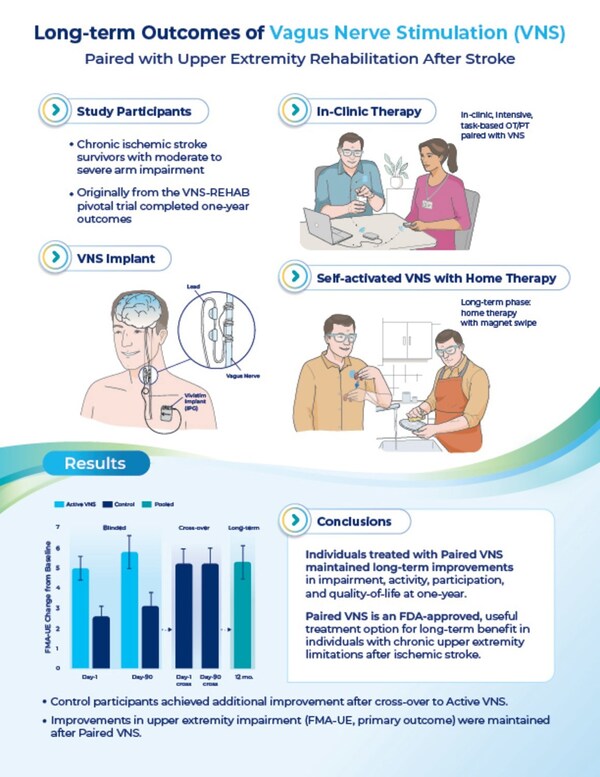
The findings demonstrate that stroke survivors treated with paired vagus
nerve stimulation (VNS) for upper extremity deficits post-stroke had
improvements in impairment, activity, participation and quality of life
for at least one year after completing therapy.
“Long-Term Outcomes of Vagus Nerve Stimulation Paired with Upper
Extremity Rehabilitation after Stroke,” as published in the May 2025
issue of Stroke, reports that stroke survivors treated with Paired VNS
Therapy for upper extremity deficits post-stroke had improvements in
impairment, activity, participation and quality of life for at least one
year after completing therapy.
One year after completing Paired VNS Therapy
participants maintained significant and clinically meaningful
improvements in motor impairment and functional activity as measured by
the Fugl-Meyer Assessment –Upper Extremity (FMA-UE) and the Wolf Motor
Function Test (WMFT), respectively. Additional patient-reported outcomes
demonstrated improvements in activity, participation in daily life and
quality of life.
Average improvement from baseline was FMA-UE: 5.23; WMFT: 0.50
66.2% of the 74 participants responded positively to Paired VNS™ Therapy
Participants reported significant improvements across multiple validated measures:
Motor Activity Log (amount/quality of upper extremity use in daily activities)
Stroke Impact Scale - Activities of Daily Living (perceived performance in daily tasks)
Stroke Impact Scale - Hand (perceived hand function)
Stroke Specific – Quality of Life Scale (stroke-specific quality of life)
EQ-5D (overall health-related quality of life)
"These long-term clinical and quality of life outcomes of Paired
VNS Therapy are particularly notable because sustained, comprehensive
benefits are rarely shown in chronic stroke recovery," said Teresa Jacobson Kimberley,
PT, Ph.D., FAPTA, the lead researcher on the study and director of the
Brain Recovery Lab at the MGH Institute of Health Professions. "Most
stroke survivors need improved hand and arm function because it is
essential for nearly every task in daily life, and Vivistim may be the
boost that helps get them there."
Collaborating researchers on the follow-up study include Steven C. Cramer, MD, a stroke neurologist at UCLA and medical director of research at California Rehabilitation Institute; Steven Wolf, Ph.D., FAPTA, professor emeritus at Emory University School of Medicine; Charles Liu, MD, Ph.D., director of the USC Neurorestoration Center at Keck Medicine; Perman Gochyyev, Ph.D., statistician at University of California Berkeley; Jesse Dawson, MD, professor of stroke medicine at the University of Glasgow; and the VNS-REHAB Pivotal Trial Group.
Manufactured by MicroTransponder®, Inc., Vivistim
was approved in 2021 with the FDA's Breakthrough Device Designation and
is the first and only intervention clinically proven to help chronic
ischemic stroke survivors regain 2-3 times more upper extremity function
than high-intensity stroke therapy alone. In current clinical practice,
the Vivistim device is implanted in stroke survivors, enabling
therapists to use a wireless remote that communicates with the device to
pair vagus nerve stimulation with high-repetition, goal-oriented
functional activities to increase neuroplasticity. The standard protocol
is for stroke survivors to participate in in-clinic Vivistim Therapy
during 90-minute sessions three times a week for six weeks.
This
in-clinic Paired VNS Therapy is complemented by self-initiated Vivistim
Therapy, which allows stroke survivors to swipe a magnet across the
implant to activate vagus nerve stimulation while doing daily activities
at home or in the community. The one-year study analysis demonstrates
that self-initiated Paired VNS Therapy may facilitate the continued
refinement and consolidation of behaviorally relevant activities,
resulting in long-term, persistent improvements.
"The growing
clinical and real-world evidence supporting Vivistim emphasizes that
stroke recovery needs to extend beyond acute intervention. While
patients who have lost mobility in their hands and arms following
ischemic stroke have previously been limited in their treatment options,
the Vivistim Paired VNS Therapy is a breakthrough intervention in
establishing a new standard in the stroke continuum of care," said Richard Foust,
MicroTransponder's CEO. "With this data, healthcare professionals,
including neurologists, physiatrists, neurosurgeons, occupational
therapists and physical therapists, can confidently pursue Vivistim
Therapy as an evidence-based, clinically proven intervention for
ischemic stroke survivors who are 6 months or more post-stroke."
The pivotal VNS-REHAB trial was conducted between October 2017 and June 2022.
Researchers note that some therapy and assessments occurred during the
COVID-19 pandemic, but improvements were sustained despite how the
pandemic may have impacted participants' lives unfavorably. Sex, age,
side of stroke, and time since stroke did not significantly impact
FMA-UE or WMFT outcomes. No long-term serious adverse events related to
therapy or stimulation were reported.
Get involved and DEMAND they create 100% recovery protocols. YOU have to hold their feet to the fire or they won't even try for 100%. Screaming may be required; DO NOT BACK DOWN! Go all the way up to the hospital president if need be.
Our research project is looking for stroke survivors to participate in a personalised physical activity program
So be a pain in the ass and ask VERY SPECIFICALLY HOW THEY ARE GOING TO GET STROKE SURVIVORS 100% RECOVERED. Do not let them pooh pooh your question and suggest you aren't qualified to even ask such a silly question. Screaming may be required. Unless we hold their feet to the fire they will never solve stroke; they are that incompetent.
This is thanks to the recent announcement that a new Community Diagnostic Centre (CDC) is set to open next year.
Initially the CDC will operate from mobile facilities based at the
Healthy Living Centre on the Bournville Estate, before the opening of a
purpose-built facility.
Local MP John Penrose explained that the new centre would make a real
difference to local people by reducing waiting times, which escalated
during the pandemic.
He went on to say that fast diagnosis is reassuring to patients, enabling treatment to start much sooner and thus save lives.
John Penrose has welcomed news that Weston Hospital will also receive
£4.9M of Government funds to provide a new Stroke Rehabilitation Centre.
The Rehabilitation Centre is expected to increase capacity and enable
the hospital to treat more patients for a wider variety of illnesses. It
should also free up 12 much needed beds to reduce pressure.
John is in favour of the opportunity for local stroke patients to get
“the all-important rehabilitation they need” much closer to home.
He went on to say that this further recent investment to expand local
healthcare provision “makes huge sense for a growing town like Weston."
I got slightly criticized for providing questions for your doctor on the first day. While true that lots of stroke patients are not mentally capable of understanding what occurred to them in the first days. The whole point is to ask your doctor, therapists and hospital what they are doing in the first days to get you recovered. Even if you can't ask that question immediately, it should be asked and demand an answer so future stroke patients will have a better chance of recovery than you had. If WE don't hold the stroke medical world's feet to the fire NOTHING WILL EVER GET BETTER!
So we still have NO FUCKING CLUE
what a blood pressure management protocol is. Hope you don't mind dying
because of the cesspools of incompetence of the complete stroke medical world.
Unless YOU hold your stroke hospital's
feet to the fire you are allowing your children and grandchildren to die
or become disabled from their strokes.
Blood
pressure (BP) is the most important modifiable risk factor for
intracerebral hemorrhage (ICH). Elevated BP is associated with an
increased risk of ICH, worse outcome after ICH, and in survivors, higher
risks of recurrent ICH, ischemic stroke, myocardial infarction, and
cognitive impairment/dementia. As intensive BP control probably(NOT GOOD ENOUGH! Survivors need a protocol! GET THERE!) improves
the chances of recovery from acute ICH, the early use of intravenous or
oral medications to achieve a systolic BP goal of <140 mm Hg within
the first few hours of presentation is reasonable for being applied in
most patients. In the long-term, oral antihypertensive drugs should be
titrated as soon as possible to achieve a goal BP <130/80 mm Hg and
again in all ICH patients regardless of age, location, or presumed
mechanism of ICH. The degree of sustained BP reduction, rather than the
choice of BP-lowering agent(s), is the most important factor for
optimizing risk reduction, with varying combinations of thiazide-type
diuretics, long-acting calcium channel blockers, ACE
(angiotensin-converting enzyme) inhibitors or angiotensin receptor
blockers, being the mainstay of therapy. As most patients will require
multiple BP-lowering agents, and physician inertia and poor adherence
are major barriers to effective BP control, single-pill combination
therapy should be considered as the choice of management where
available. Increased population and clinician awareness, and innovations
to solving patient, provider, and social factors, have much to offer
for improving BP control after ICH and more broadly across high-risk
groups. It is critical that all physicians, especially those managing
ICH patients, emphasize the importance of BP control in their practice.
Footnotes
For Sources of Funding and Disclosures, see page xxx.
Correspondence
to: Craig S. Anderson, MD, PhD, The George Institute for Global Health,
Post PO Box M201, Missenden Rd, Camperdown, NSW 2050 Australia. Email canderson@georgeinstitute.org.au
So we still have NO FUCKING CLUE
what a blood pressure management protocol is. Hope you don't mind dying
because of the cesspools of incompetence of the complete stroke medical world.
Unless YOU hold your stroke hospital's
feet to the fire you are allowing your children and grandchildren to die
or become disabled from their strokes.
Department of Neurology, Samsung Medical Center, Sungkyunkwan University School of Medicine, Seoul, South Korea
Background and Purpose: Collateral flow
in acute ischemic stroke is known as a predictor of treatment outcome
and long-term prognosis. However, factors determining the initial
collateral flow remain unclear. We investigated factors related to
collateral flow in patients with acute ischemic stroke caused by large
vessel occlusion (AIS-LVO) and further analyzed the results according to
stroke etiology.
Methods: This was a retrospective study
using prospective stroke registry data from a single university
hospital from October 2014 to May 2021. AIS-LVO with middle cerebral
artery M1 occlusion identified by pre-treatment multiphasic computed
tomography angiography was included. Collateral flow score was graded on
a 6-point ordinal scale according to pial arterial filling.
Results: A total of 74 patients
[cardioembolism (CE): 57; large artery atherosclerosis (LAA): 17] was
included. The mean age of all patients was 72.2 ± 11.7 years, and 37.8 %
(n = 28) were men. Multivariate regression analysis showed that initial SBP [odds ratio (OR): 0.994; 95% confidence interval (CI): 0.990–0.998; p = 0.002] and stroke etiology (OR: 0.718; 95% CI: 0.548–0.940; p
= 0.019) were independent factors of the collateral flow grade.
Collateral flow grade was independently associated with initial SBP in
the CE group (OR: 0.993; 95% CI: 0.989–0.998; p = 0.004) but not in the LAA group (OR: 0.992; 95% CI: 0.980–1.004; p = 0.218). Initial SBP was significantly correlated with NIHSS score in the CE group but not in the LAA group (r2= 0.091, p = 0.023; r2 = 0.043, p = 0.426, respectively).
Conclusions: Elevated initial SBP was
associated with poor cerebral collateral flow and more severe symptoms
in the CE group, but not in the LAA group in patients with AIS-LVO.
These findings suggest differential effects of initial SBP elevation on
collateral flow by stroke subtypes.
Introduction
Collateral flow is an important feature of cerebral
circulation when major arteries are occluded, which varies depending on
individuals. Collateral flow in acute ischemic stroke is known as a
predictor of acute thrombolytic and endovascular therapy outcome as well
as long-term prognosis (1–5).
Patients with a cervical large artery atherosclerosis (LAA) have a more
extensive cerebral collateral circulation and a better functional
outcome at 90 days than those with a cardioembolic (CE) stroke (6). Previous studies have also suggested that LAA stroke is associated with better collateral flow than CE stroke (6–9).
Theoretically, LAA in humans develops over decades, which might promote
the gradual development of cerebral collateral flow. For example,
patients with a severe (71–99%) stenosis have a better collateral flow
than those with a moderate (51–70%) stenosis (6).
In contrast, since CE stroke is not accompanied by chronic cerebral
hypoperfusion, the chances of collateral artery formation and
recruitment are less likely to occur in these patients.
Although the importance of collateral flow has attracted
more attention over the past decade, studies on the factors which
determine collateral flow are not well understood. The potential
relationship of collateral flow with history of cardiovascular risk
factors, such as hypertension, congestive heart failure, hyperlipidemia,
and diabetes might exhibit complex interactions. Calleja et al. have
reported that diabetes is significantly associated with poorer
collateral flow on admission (1).A history of hypertension has also been more frequently found among patients with poor collateral flow (2, 10, 11).
Menon et al. have found that metabolic syndrome, hyperuricemia, and age
are associated with poor collateral flow in patients with acute
ischemic stroke (12). In case of coronary collateral flow, eGFR is an independent affecting factor (13).
We hypothesize that factors related to collateral flow in
patients with acute ischemic stroke caused by large vessel occlusion
(AIS-LVO) are different according to stroke etiology. In this study, we
investigated the extensive physiologic, laboratory, and imaging
parameters which have been reported to be possibly related with
collateral flow in patients with AIS-LVO. We further analyzed the
results according to stroke etiology with the assumption that stroke
subtype may influence the collateral development.
Nothing in Chapter 7. Rehabilitation for subacute to chronic stroke; even remotely suggests any path to 100% recovery. So you are screwed along with your children and grandchildren. Until we start holding stroke persons feet to the fire nothing will improve.
The
revised Japan Stroke Society Guidelines for the Treatment of Stroke
were published in Japanese in July 2021. In this article, the extracted
recommendation statements are published. The revision keeps pace with
the great progress in stroke control based on the recently enacted Basic
Act on Stroke and Cardiovascular Disease in Japan. The guideline covers
the following areas: primary prevention, general acute management of
stroke, ischemic stroke and transient ischemic attack, intracerebral
hemorrhage, subarachnoid hemorrhage, asymptomatic cerebrovascular
disease, other cerebrovascular disease, and rehabilitation.
The
Japan Stroke Society Guideline 2021 for the Treatment of Stroke is a
totally revised version that is developed every 6 years, with two yearly
updates in the intervening periods. The guidelines have been developed
in conjunction with Japan Neurosurgical Society, the Japanese Society of
Neurology, the Japanese Association of Rehabilitation Medicine, the
Japanese Society of Neurological Therapeutics, the Japanese Society on
Surgery for Cerebral Stroke, and the Japanese Society for
Neuroendovascular Therapy. The guideline comprises 300 pages in
Japanese. In this English version, recommendations of each topic are
extracted and introduced. The guideline consists of seven chapters. Of
these, the chapters for ischemic stroke, intracerebral hemorrhage (ICH),
and subarachnoid hemorrhage are introduced in the main text and the
other four chapters, as part of the full guideline, are presented in the
supplemental material.
Method
The
Committee for Stroke Guideline 2021, selected from the members of the
Japan Stroke Society(Notice no survivors were involved so the conclusions presented are invalid.), developed the present guideline based on the
literature searched for the guidelines up to the 2019 version (papers
published up to December 2017) and additional papers published between
January 2018 and December 2019. In the Committee, there was no
distinction between those who reviewed the literature and those who
wrote the recommendations.
Taking into consideration the level of
evidence, the balance between “benefit” and “harm” of the intervention,
the influence of patient values and other factors, and the cost of the
intervention and medical resources, the Committee members determined the
grade of recommendations (Table 1).
The level of bodies of evidence for the recommendations was determined
by the Committee members after integrating the evidence of the relevant
references (Table 2). Detailed explanation is described in “Level of Evidence and Grade of Recommendation” in the full article in the supplemental material.
Table 1. Classification of grade of recommendation by the Committee (2021).
Table 1. Classification of grade of recommendation by the Committee (2021).
Declaration of conflicting interests The
author(s) declared no potential conflicts of interest with respect to
the research, authorship, and/or publication of this article.
Funding The author(s) received no financial support for the research, authorship, and/or publication of this article.
Disclosures All
the authors completed the declaration of their conflicts of Interest
(COIs) to the office of the Japan Stroke Society. COIs for all the
authors are below the maximum amount for the inauguration of committee
members of guidelines in the Japanese Association of Medical Sciences
COI Management Guideline.
Well at least some semblance of a protocol, but not enough. For fingers, do I do them individually or as a group first and then individually? How many repetitions?
WHOM in stroke leadership are you contacting to get future research and protocol creation done? Specific names only, I want to hold their feet to the fire.
To evaluate for any clinical effects of home-based mirror therapy and
subsequent cortical reorganization in patients with chronic stroke with
moderate upper extremity paresis.
Methods.
A total of 40 chronic
stroke patients (mean time post .onset, 3.9 years) were randomly
assigned to the mirror group (n = 20) or the control group (n = 20) and
then joined a 6-week training program. Both groups trained once a week
under supervision of a physiotherapist at the rehabilitation center and
practiced at home 1 hour daily, 5 times a week. The primary outcome
measure was the Fugl-Meyer motor assessment (FMA). The grip force,
spasticity, pain, dexterity, hand-use in daily life, and quality of life
at baseline—post treatment and at 6 months—were all measured by a
blinded assessor. Changes in neural activation patterns were assessed
with functional magnetic resonance imaging (fMRI) at baseline and
post treatment in an available subgroup (mirror, 12; control, 9).
Results.
Post treatment, the FMA improved more in the mirror than in the control group (3.6 ± 1.5, P < .05), but this improvement did not persist at follow-up. No changes were found on the other outcome measures (all Ps
>.05). fMRI results showed a shift in activation balance within the
primary motor cortex toward the affected hemisphere in the mirror group
only (weighted laterality index difference 0.40 ± 0.39, P < .05).
Conclusion.
This phase II trial showed some effectiveness for mirror therapy in
chronic stroke patients and is the first to associate mirror therapy
with cortical reorganization. Future research has to determine the
optimum practice intensity and duration for improvements to persist and
generalize to other functional domains.
YOU have to get involved in this. Otherwise the strategy created and followed will not include 100% recovery. Conquering stroke is nothing less than 100% recovery. Hold their feet to the fire to accomplish that goal. Otherwise they will allow the tyranny of low expectations creep in. Ideally this should be a stroke survivor, I don't trust currently abled people to have the drive and passion to complete that 100% goal, they haven't in the past.
Ref:S495 | National (Office or home-based) | 35 hours per week
We’re looking for an
exceptional individual to provide strategic direction to our work in
England. You’ll develop partnerships to ensure all affected by stroke
get the help they need to live the best life they can. Leading and
inspiring your team of staff and volunteers, you’ll ensure we deliver
excellence in all we do. And you’ll be passionate about ensuring all
affected by stroke have a strong and influential voice.
Reporting to the UK Executive Director of Stroke Support, you’ll be
joining the UK senior leadership team at a really exciting time as we
take forward our new strategy. With proven influencing and negotiation
skills, you will actively develop positive, credible relationships with
all stakeholders to grow our work. You’ll be innovative in contributing
to support and policy development and skilled in driving change.
Significant senior management or executive level experience in the
third, social or health sectors is required, to help us make stroke the
priority it needs to be and grow access to our support offerings.
It is optional for this role to be homebased, please see our homeworking agreement for full details.
This is an exciting time to join the Stroke Association. Join us and together we can conquer stroke.
Applying
We want to make the process of
applying for this role as straightforward as possible. To this end, we
ask that your application consist of the following three documents:
A supporting statement, no more than two pages in length, which
addresses and provides evidence against the criteria set out in the
Person Specification in the Role Profile section below. The covering
letter provides you with the opportunity to explain your motivation for
applying, as well as highlighting how your experience and achievements
fit with the requirements of the role. As such, it is an important part
of the application process.
A comprehensive CV.
Your completed Equal Opportunities Form
- The information you provide in this form will not be shown to the
Selection Panel and will play no part in the assessment of your
application. The Stroke Association is an equal opportunities employer,
to fulfil our responsibilities please email it to equalops@stroke.org.uk which is managed by our HR team.
For more information on how we use the information you have
provided and the legal basis upon which we rely to process the personal
information you have provided in this form, please see our job applicant
privacy notice which can be viewed by clicking here
Email the completed supporting statement and CV to recruitment@stroke.org.uk by the closing date 24 February 2019. 1 stage interview to be held on 6 March 2019, London. 2 stage interview to be confirmed.
If you have any queries please email the HR team at recruitment@stroke.org.uk
If you’re still unsure about applying for a role with us or just want
to get an idea of the benefits of doing so please visit the benefits page or see what we do.
We are the UK’s leading charity dedicated to conquering stroke.
There are over 1.2 million stroke survivors in the UK. Almost two
thirds have a disability and one third rely on others for help, making
stroke one of the biggest causes of disability.
We are continually working to improve the lives of stroke survivors
and their families who deserve the very best treatment and care. We
deliver amazing, life-changing support to over 60,000 stroke survivors
and their families each year. We also fund research to find better
treatments, campaign for better stroke care and help people understand
how to spot and prevent stroke. This work is made possible by more than
4,000 talented volunteers and staff, our fantastic supporters and our
strong relationships with the stroke clinical and research community.
We work with integrity, demonstrating our values as one combined passionate, innovative, respectful and professional team. Together we can conquer stroke.
Renowned
pianist, composer and prolific recording artist John Bayless
experienced a rude awakening on the first night he and his partner,
Bruce Franchini, spent at their new home in the desert.
The
couple had just moved from the Bay Area to a two-story residence in
Indio in 2007 and were still waiting for the furniture – and John’s
Steinway Concert Grand Piano – to arrive.
“I was
sleeping and I had a terrible, horrific nightmare and I woke up – and
something was wrong with my right arm," he said. “I jumped out of bed
because it was a little hot in the bedroom, and I turned down the
thermostat, got back in bed. Twenty minutes later is when I was
breathing funny … that’s when Bruce woke me up. I couldn’t sit up – he
had to prop me up.”
John, 53 at the time, had
suffered a stroke that affected the right side of his body. He lost the
ability to speak for about 24 hours. An ambulance rushed him to
Eisenhower Medical Center where he spent three days before starting the
grueling rehabilitation process.
An
in-patient stroke rehabilitation program at Desert Regional Medical
Center afforded him the opportunity to undergo occupational, speech and
physical therapy daily for two weeks. Not long after he completed the
program, he met local philanthropist Peggy Cravens, who, among her other
charitable work in the desert, is Chairman of the Board of the Virginia
Waring International Piano Competition.
“The night before I left Desert Regional, a lady came to my room – a physical therapist that had been recommended,” John said.
John was going to need in-home physical therapy, and the couple had been referred to physical therapist Kay Folmar.
“Bruce
called her and said, ‘Could you please come meet John,’ and she said,
‘Yes, I’d love to,’ and she walked into my room and she said, ‘I know
you.’ I said, ‘We’ve never met.’ She said, 'I have your records,’ and I
started crying because I thought, ‘Oh my God, I can’t play.’”
During this time, Folmar had been working with Donald Cravens – Peggy’s husband – who had also suffered a stroke.
“She
came one day and said, ‘Mrs. Cravens, I’m working with someone … aren’t
you the president of an international piano competition?’” Cravens
recounted. “I said, ‘Yes,’ she said, ‘Oh, you have to meet John
Bayless!’”
“I said, ‘I know that name,’ and (Kay)
said, ‘Yes, he’s had a fabulous career as a concert pianist and sadly,
he just had a stroke and he’s paralyzed on his right side.’ And I said,
‘Oh, I’d love to meet him. Hopefully we can get him involved at the
Waring.’”
“It was thrilling for me,” John said. “Talk about meant to be.”
Kay
suggested he give Peggy one of his albums. He gave her an autographed
copy of a Puccini album. Peggy invited John and Bruce to the competition
and they attended the finals at the Indian Wells Theater on the
California State University San Bernardino Palm Desert campus.
“It was pretty soon thereafter that Bruce and I were on the board,” John said.
Bruce, a
producer and director who won two Daytime Emmys for directing Julia
Child in "Baking With Julia" (1997) and "Julia & Jacques Cooking at
Home" (2000), died in 2013 at the age of 69 of cancer. Since then, John
has moved to Desert Island in Rancho Mirage, where he and Peggy are
neighbors.
Composer, pianist, recording artist
John,
who’s been playing the piano since the age of four, attended the
Julliard School of Music and studied with Leonard Bernstein, Jules
Styne, Arthur Laurents and other notables in the field of musical
composition. As a performer, both solo piano and with orchestra, he’s
appeared at Carnegie Hall, Lincoln Center’s Avery Fisher Hall and has
appeared with the Boston Pops and New York Pops among others.
He
made his recording debut in 1985 with an album entitled, “Happy
Birthday Bach,” which was created in honor of Bach's 300-year
birthday celebration. Two subsequent releases, “Bach meets the Beatles”
and “Bach on Abby Road,” contained his improvisations on Beatles
melodies. The former was selected as one of the Top Ten Classical
Crossover Recordings of the 1980's by Billboard Magazine. The Puccini
Album Arias for Piano soared to No. 1 on Billboard Magazine's Classical
Crossover Chart where it remained for 18 weeks, selling over 175,000
albums.
John
grew up in the Texas panhandle town of Borger, where his dad was an
automobile dealer, selling Fords and Lincoln Mercuries. His mother was a
singer and, early on, both of his parents realized his musical talent
and encouraged his development as a pianist.
“I
went to Aspen Music School in the summer when I was 16 and 17 and met
the teacher I subsequently studied with at Julliard, Adele Marcus,” John
said.
John needed a high school diploma to get
into Julliard, but he was also practicing the piano full time during
these school years and flying from Amarillo to Houston twice a month for
piano lessons. His mother explained the situation to school
administrators and they put him in “easy” classes – the bare minimum
required to graduate.
John practiced the piano daily before school at 6:30 a.m. and then after school from about 2:30 or 3 p.m. until 7 or 8 p.m.
He
graduated in 1971 with diploma in hand. It was his ticket to Julliard,
which he attended for five years. He took six months off near the end of
his stay to have an operation. While he was at home, he began composing
more.
“I didn’t want to play Beethoven, I didn’t
want to play all that stuff anymore. I wanted to compose. Fortunately,
my parents understood and they supported me a couple of years," John
said.
One of the influential families that Bayless
met was Nat Lefkowitz, the president of the William Morris agency, and
his wife Sally. They took him under their wing.
"I
was their protégé," John said. "One Saturday, Sally calls me and says,
‘You have a clean shirt?’ I said, ‘Yeah, why?’ We’re going to a dinner
tonight and I want you to come and I hope they have a piano.’ They
picked me up. I go to the dinner and I’m sitting there and this man
across the table says, ‘How would you like to play in Carnegie Hall?’
"I
flipped my wig and I said, ‘Of course, it’s a dream.’ He said, “I
support a concert every year by the musician’s union for orchestras in
New York and we’re having a concert in May. He said if you’ve got the
Leftkowitz’s support, you’ve got to be tops.’
“So, I did. June 9, 1980 and I played Rhapsody in Blue and my own piano concerto that I wrote. That was pretty special.”



 Jae Eun Sim
 Jong-Won Chung
 Woo-Keun Seo
 Oh Young Bang
 Gyeong-Moon Kim


