Use the labels in the right column to find what you want. Or you can go thru them one by one, there are only 34,264 posts. Searching is done in the search box in upper left corner. I blog on anything to do with stroke. DO NOT DO ANYTHING SUGGESTED HERE AS I AM NOT MEDICALLY TRAINED, YOUR DOCTOR IS, LISTEN TO THEM. BUT I BET THEY DON'T KNOW HOW TO GET YOU 100% RECOVERED. I DON'T EITHER BUT HAVE PLENTY OF QUESTIONS FOR YOUR DOCTOR TO ANSWER.
Changing stroke rehab and research worldwide now.Time is Brain!trillions and trillions of neuronsthatDIEeach day because there areNOeffective hyperacute therapies besides tPA(only 12% effective). I have 523 posts on hyperacute therapy, enough for researchers to spend decades proving them out. These are my personal ideas and blog on stroke rehabilitation and stroke research. Do not attempt any of these without checking with your medical provider. Unless you join me in agitating, when you need these therapies they won't be there.
What this blog is for:
My blog is not to help survivors recover, it is to have the 10 million yearly stroke survivors light fires underneath their doctors, stroke hospitals and stroke researchers to get stroke solved. 100% recovery. The stroke medical world is completely failing at that goal, they don't even have it as a goal. Shortly after getting out of the hospital and getting NO information on the process or protocols of stroke rehabilitation and recovery I started searching on the internet and found that no other survivor received useful information. This is an attempt to cover all stroke rehabilitation information that should be readily available to survivors so they can talk with informed knowledge to their medical staff. It lays out what needs to be done to get stroke survivors closer to 100% recovery. It's quite disgusting that this information is not available from every stroke association and doctors group.
Is this far enough along for your competent? doctor TO ENSURE HUMAN TESTING GETS DONE? You mean your doctor has no idea on contacting leadership to get necessary research accomplished? And s/he HASN'T BEEN FIRED YET?
Ischemic stroke, the second leading cause of death worldwide and the leading cause of long-term disabilities, presents a significant global health challenge, particularly in aging populations where the risk and severity of cerebrovascular events are significantly increased. The aftermath of stroke involves neuronal loss in the infarct core and reactive astrocyte proliferation, disrupting the neurovascular unit, especially in aged brains. Restoring the balance between neurons and non-neuronal cells within the perilesional area is crucial for post-stroke recovery. The aged post-stroke brain mounts a fulminant proliferative astroglial response, leading to gliotic scarring that prevents neural regeneration. While countless therapeutic techniques have been attempted for decades with limited success, alternative strategies aim to transform inhibitory gliotic tissue into an environment conducive to neuronal regeneration and axonal growth through genetic conversion of astrocytes into neurons. This concept gained momentum following discoveries that in vivo direct lineage reprogramming in the adult mammalian brain is a feasible strategy for reprogramming non-neuronal cells into neurons, circumventing the need for cell transplantation. Recent advancements in glial cell reprogramming, including transcription factor-based methods with factors like NeuroD1, Ascl1, and Neurogenin2, as well as small molecule-induced reprogramming and chemical induction, show promise in converting glial cells into functional neurons. These approaches leverage the brain’s intrinsic plasticity for neuronal replacement and circuit restoration. However, applying these genetic conversion therapies in the aged, post-stroke brain faces significant challenges, such as the hostile inflammatory environment and compromised regenerative capacity. There is a critical need for safe and efficient delivery methods, including viral and non-viral vectors, to ensure targeted and sustained expression of reprogramming factors. Moreover, addressing the translational gap between preclinical successes and clinical applications is essential, emphasizing the necessity for robust stroke models that replicate human pathophysiology. Ethical considerations and biosafety concerns are critically evaluated, particularly regarding the long-term effects and potential risks of genetic reprogramming. By integrating recent research findings, this comprehensive review provides an in-depth understanding of the current landscape and future prospects of genetic conversion therapy for ischemic stroke rehabilitation, highlighting the potential to enhance personalized stroke management and regenerative strategies through innovative approaches.
Ask your competent? doctor if anything here will get you recovered from your stroke. If your doctor doesn't even know about this research; YOU DON'T HAVE A FUNCTIONING STROKE DOCTOR!
Summary: Researchers have discovered how glial cells
can be reprogrammed into neurons through epigenetic modifications,
offering hope for treating neurological disorders. This reprogramming
involves complex molecular mechanisms, including the transcription
factor Neurogenin2 and the newly identified protein YingYang1, which
opens chromatin for reprogramming.
The study reveals how
coordinated epigenome changes drive this process, potentially leading to
new therapies for brain injury and neurodegenerative diseases.
Key Facts:
Neuronal Reprogramming: Glial cells can be transformed into neurons via epigenetic modifications.
Key Players: Neurogenin2 and YingYang1 are crucial for the reprogramming process.
Therapeutic Potential: This discovery could lead to new treatments for brain disorders and injuries.
Source: LUM
Researchers at LMU and Helmholtz Munich have shown how glial cells are reprogrammed into neurons via epigenetic modifications.
Neurological
disorders, such as trauma, stroke, epilepsy, and various
neurodegenerative diseases, often lead to the permanent loss of neurons,
causing significant impairments in brain function.
Current
treatment options are limited, primarily due to the challenge of
replacing lost neurons. Direct neuronal reprogramming, a complex
procedure that involves changing the function of one type of cell into
another, offers a promising strategy.
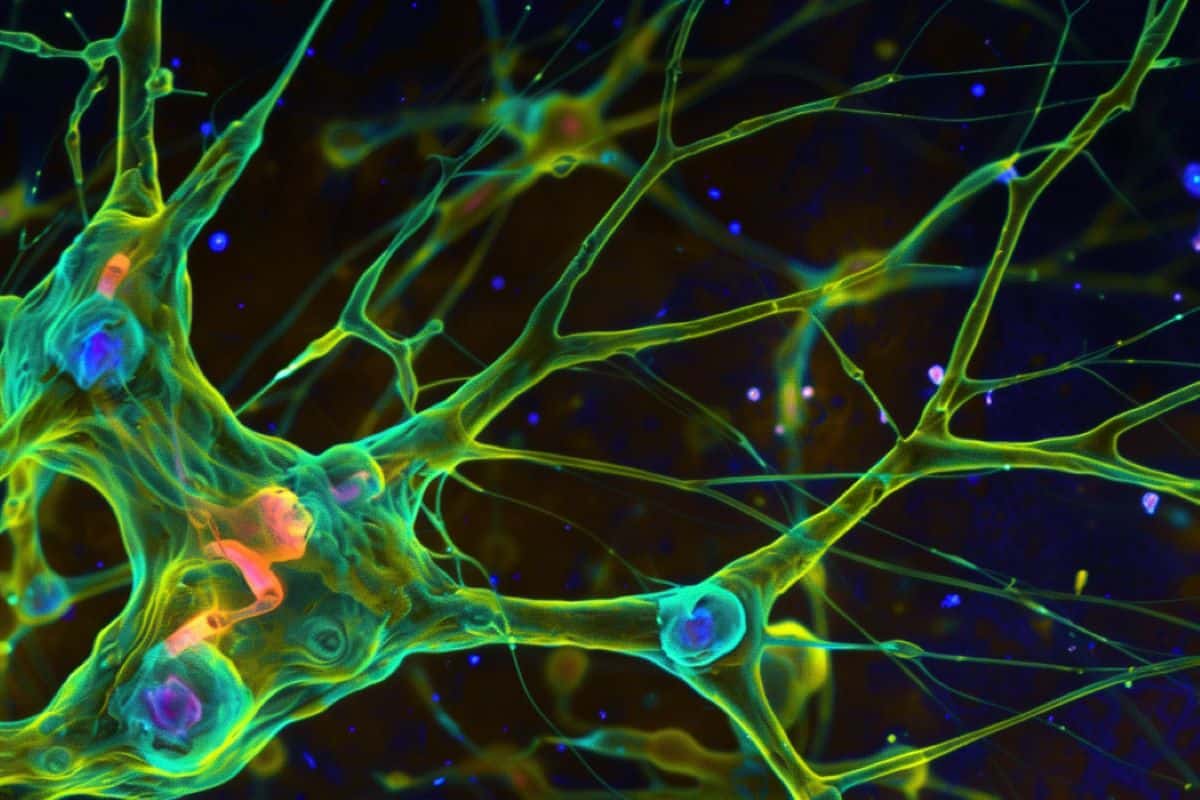
For
the first time, the teams have now shown how coordinated the epigenome
rewiring is, elicited by a single transcription factor. Credit:
Neuroscience News
In cell culture and in living
organisms, glial cells – the non-neuronal cells in the central nervous
system – have been successfully transformed into functional neurons.
However, the processes involved in this reprogramming are complex and
require further understanding.
This complexity presents a
challenge, but also a motivation, for researchers in the field of
neuroscience and regenerative medicine.
Modifications in the epigenome
Two
teams, one led by Magdalena Götz, Chair of Physiological Genomics at
LMU, Head of the Stem Cell Center Department at Helmholtz Munich, and
researcher in the SyNergy Cluster of Excellence, and the other led by
Boyan Bonev at the Helmholtz Pioneer Campus, explored the molecular
mechanisms at play when glial cells are converted to neurons by a single
transcription factor. Specifically, the researchers focused on small
chemical modifications in the epigenome.
The epigenome helps
control which genes are active in different cells at different times.
For the first time, the teams have now shown how coordinated the
epigenome rewiring is, elicited by a single transcription factor.
Using
novel methods in epigenome profiling, the researchers identified that a
posttranslational modification of the reprogramming neurogenic
transcription factor Neurogenin2 profoundly impacts the epigenetic
rewiring and neuronal reprogramming.
However, the transcription
factor alone is not enough to reprogram the glial cells. In an important
discovery, the researchers identified a novel protein, the
transcriptional regulator YingYang1, as a key player in this process.
YingYang1 is necessary to open up the chromatin for reprogramming, to
which end it interacts with the transcription factor.
“The protein Ying Yang 1 is crucial for achieving the conversion from astrocytes to neurons,” explains Götz.
“These
findings are important to understand and improve reprogramming of glial
cells to neurons, and thus brings us closer to therapeutic solutions.”
About this neuroscience research news
Author: Constanze Drewlo Source: LUM Contact: Constanze Drewlo – LUM Image: The image is credited to Neuroscience News