Changing stroke rehab and research worldwide now.Time is Brain! trillions and trillions of neurons that DIE each day because there are NO effective hyperacute therapies besides tPA(only 12% effective). I have 523 posts on hyperacute therapy, enough for researchers to spend decades proving them out. These are my personal ideas and blog on stroke rehabilitation and stroke research. Do not attempt any of these without checking with your medical provider. Unless you join me in agitating, when you need these therapies they won't be there.

What this blog is for:

My blog is not to help survivors recover, it is to have the 10 million yearly stroke survivors light fires underneath their doctors, stroke hospitals and stroke researchers to get stroke solved. 100% recovery. The stroke medical world is completely failing at that goal, they don't even have it as a goal. Shortly after getting out of the hospital and getting NO information on the process or protocols of stroke rehabilitation and recovery I started searching on the internet and found that no other survivor received useful information. This is an attempt to cover all stroke rehabilitation information that should be readily available to survivors so they can talk with informed knowledge to their medical staff. It lays out what needs to be done to get stroke survivors closer to 100% recovery. It's quite disgusting that this information is not available from every stroke association and doctors group.

Showing posts with label Left atrial appendage closure. Show all posts

Tuesday, March 3, 2026

Cardiologist develops new heart device that uses gel to reduce stroke risk in AFib patients

 For discussion with your doctor.

Cardiologist develops new heart device that uses gel to reduce stroke risk in AFib patients

After years of implanting left atrial appendage occlusion (LAAO) devices in atrial fibrillation (AFib) patients, an interventional cardiologist with the University of Chicago Medical Center (UChicago Medicine) has developed a new device that could be a more affordable alternative to Boston Scientific’s Watchman and Abbott’s Amplatzer Amulet LAA Occluder. 

Atman P. Shah, MD, a professor of medicine and co-director of the cardiac cath lab at UChicago, found that the currently available devices for LAAO were still associated with significant limitations. Their round shape is a poor fit for many patients, for example, and they require active fixation. With these issues in mind, Shah developed a minimally-invasive device that seals the LAA using a gel that adapts to the AFib patient’s anatomy and then hardens. A catheter delivers the gel, and an umbrella-like piece at the end of that catheter protects the heart during treatment. 

Shah believes this device will reduce the risk of stroke in these patients while also limiting the likelihood of adverse complications while it is being implanted by an interventional cardiologist. 
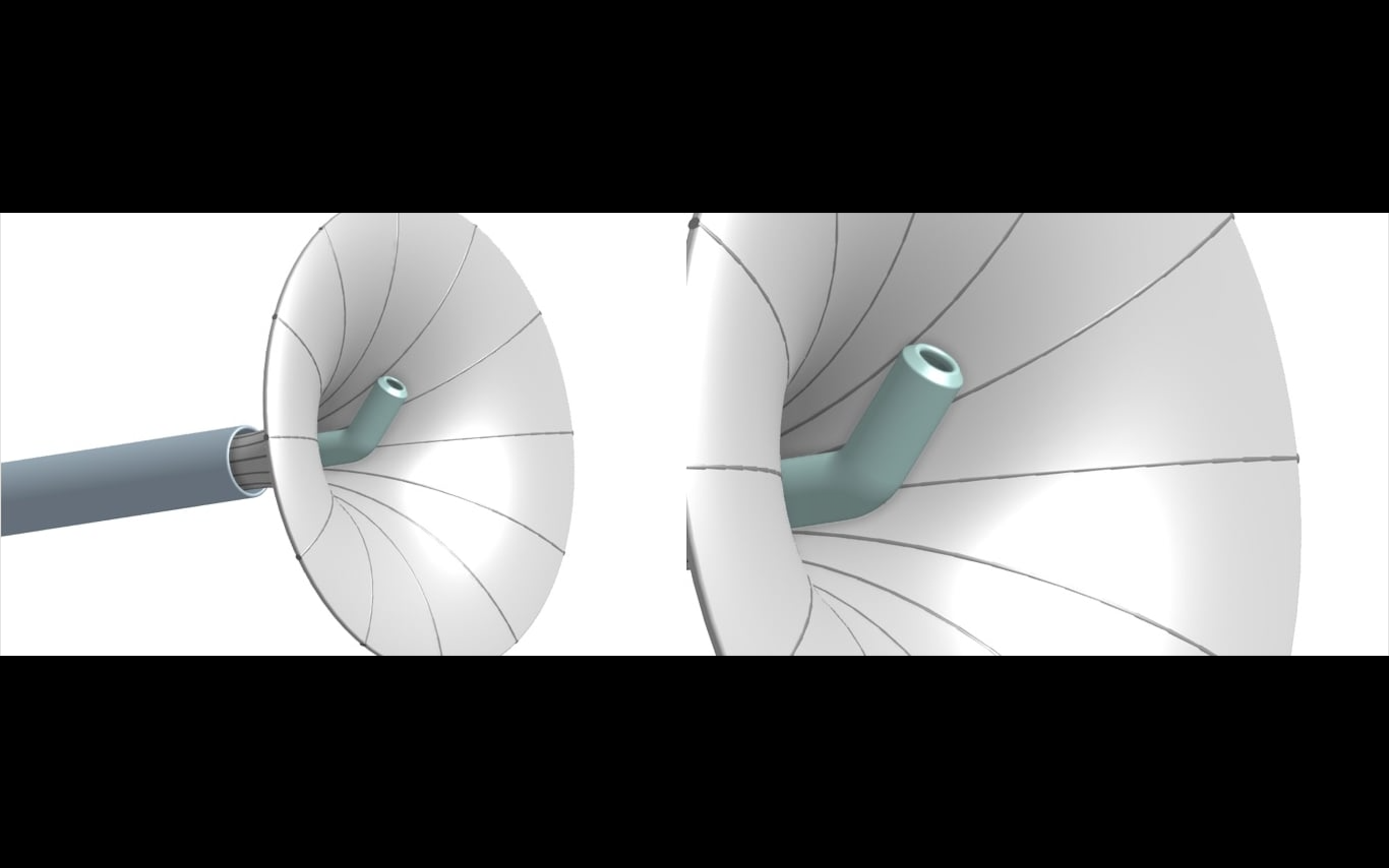
After years of implanting left atrial appendage occlusion (LAAO) devices in atrial fibrillation (AFib) patients, an interventional cardiologist with the University of Chicago Medical Center (UChicago Medicine) has developed a new device that could be a more affordable alternative to Boston Scientific’s Watchman and Abbott’s Amplatzer Amulet LAA Occluder.

Image courtesy of UChicago.

“There's lower risk of trauma to the left atrial appendage, and there's lower risk of clots or leaks because you can get a more effective seal,” Shah said in a UChicago Medicine statement

He also estimates that the new-look device could cost approximately one-third of what hospitals currently pay to implant a Watchman or Amplatzer Amulet. 

Shah founded a new company, Parasol, as he works to help guide the prototype to production. The company’s name is a subtle wink to the shape of the device as it is being used. Throughout this process, he has collaborated with UChicago’s Polsky Center for Entrepreneurship and Innovation to secure his patent and start communicating with manufacturers. 

“I'm very grateful to the university and its ecosystem at the Polsky Center, which has been instrumental in developing it and providing that culture of inquisitiveness to make the world a better place,” he said in the same statement. 

Click here for additional context on the device from UChicago. 

Thursday, May 18, 2017

LAAC Device Reduces Risk of Stroke in Patients With or Without Contraindication to Oral Anticoagulation

To discuss with your doctor.
http://dgnews.docguide.com/laac-device-reduces-risk-stroke-patients-or-without-contraindication-oral-anticoagulation?
May 16, 2017
By Louise Gagnon
CHICAGO -- May 16, 2017 -- Left atrial appendage closure (LAAC) with an implantable device was successful in reducing the risk of stroke in patients with non-valvular atrial fibrillation (AF), with or without contraindication to oral anticoagulation, according to a study presented here at the 38th Annual Scientific Sessions of the Heart Rhythm Society (HRS).
“The device is a permanent implant designed to close the left atrial appendage in the heart in an effort to reduce the risk of stroke,” explained Lucas V. A. Boersma, MD, St. Antonius Ziekenhuis Hospital, Nieuwegein, the Netherlands.
The researchers examined data from 1,025 patients with non-valvular AF (mean age, 73 years) who had the WATCHMAN device implanted.
There was implant success in 98.5% of patients and 91% of active patients had been followed for at least 11 months.
The majority of patients (~73%) were not taking anticoagulants because of a history of major bleeding.
Co-morbidities were common in the study population and included diabetes, hypertension, congestive heart failure, and a history of haemorrhagic and ischaemic stroke.
“The expected stroke rate in this population is 7.2% and the actual stroke rate was 1.2%, giving us a relative risk reduction of 84%,” said Dr. Boersma.
Similarly, the implant reduced the risk of bleeding in patients. Thrombus of the device developed in 27 patients, and it occurred regardless of use of anticoagulants.
“One of the concerns may be the development of device thrombus,” said Dr. Boersma. “We did not find a correlation between patients having thrombus and the lack of use of anticoagulant medications.”
The 1-year mortality was 9.8%, but Dr. Boersma said the mortality was not attributable to the implantation of the device but rather the health status of the patients.
Funding for this study was provided by Boston Scientific Corporation.
[Presentation title: EWOLUTION Trial: 1-Year Efficacy and Safety of Left Atrial Appendage Closure With WATCHMAN in Patients With or Without Contraindication to Oral Anticoagulation. Abstract C-LBCT02-03]