Use the labels in the right column to find what you want. Or you can go thru them one by one, there are only 33,991 posts. Searching is done in the search box in upper left corner. I blog on anything to do with stroke. DO NOT DO ANYTHING SUGGESTED HERE AS I AM NOT MEDICALLY TRAINED, YOUR DOCTOR IS, LISTEN TO THEM. BUT I BET THEY DON'T KNOW HOW TO GET YOU 100% RECOVERED. I DON'T EITHER BUT HAVE PLENTY OF QUESTIONS FOR YOUR DOCTOR TO ANSWER.
Changing stroke rehab and research worldwide now.Time is Brain!trillions and trillions of neuronsthatDIEeach day because there areNOeffective hyperacute therapies besides tPA(only 12% effective). I have 523 posts on hyperacute therapy, enough for researchers to spend decades proving them out. These are my personal ideas and blog on stroke rehabilitation and stroke research. Do not attempt any of these without checking with your medical provider. Unless you join me in agitating, when you need these therapies they won't be there.
What this blog is for:
My blog is not to help survivors recover, it is to have the 10 million yearly stroke survivors light fires underneath their doctors, stroke hospitals and stroke researchers to get stroke solved. 100% recovery. The stroke medical world is completely failing at that goal, they don't even have it as a goal. Shortly after getting out of the hospital and getting NO information on the process or protocols of stroke rehabilitation and recovery I started searching on the internet and found that no other survivor received useful information. This is an attempt to cover all stroke rehabilitation information that should be readily available to survivors so they can talk with informed knowledge to their medical staff. It lays out what needs to be done to get stroke survivors closer to 100% recovery. It's quite disgusting that this information is not available from every stroke association and doctors group.
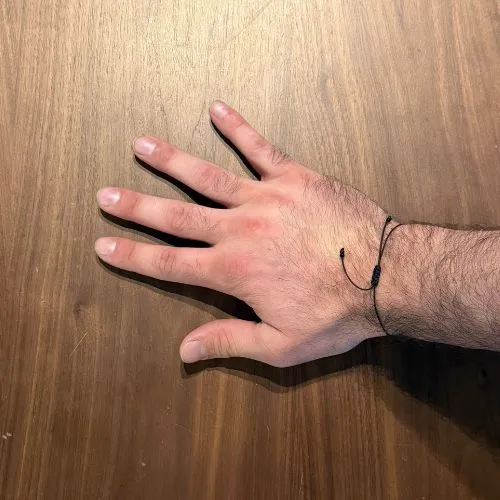
Nothing here will help persons like me recover hand function! There is zero opening of the hand or split fingers because NOBODY HAS CURED SPASTICITY YET!
There is a wide diversity in studies investigating the effects of stretching on spasticity,
and the available evidence on its clinical benefit is overall inconclusive. We recognize
the need for consensus on a paradigm for stretching and for good-quality studies.
Future research should address this issue and should investigate the clinical importance
of the short- and long-term effects.
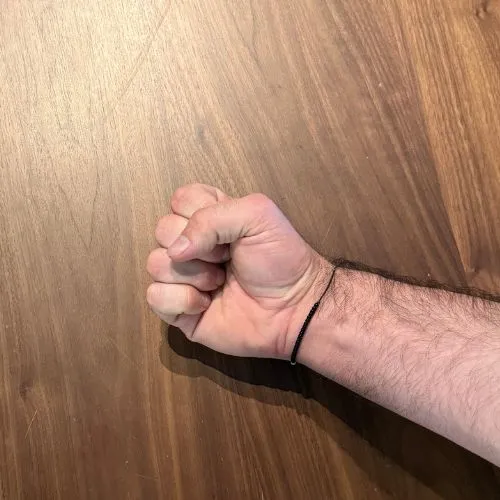
Hand spasticity is one of the most frustrating challenges many stroke survivors face. Muscles in the hand and fingers tighten involuntarily, making it hard to open the palm, pick up objects, or even rest comfortably.
The good news is that stretching can make a meaningful difference. By gently lengthening stiff muscles, you can reduce tension, improve range of motion, and help your hand feel more relaxed. While progress takes time, consistent stretching is one of the most effective ways to support recovery.
In this guide, we’ll cover eight stretching exercises specifically designed for hand spasticity after stroke. Each one targets common problem areas, from clenched fists to tight fingers. In addition, we will also cover some practical tips for how to gradually progress from wherever you are starting out!
Understanding Hand Spasticity After Stroke and Why Stretching Is Important
A stroke disrupts communication between the brain and muscles. When the signals are unclear or blocked, certain muscles can involuntarily contract and don’t release properly. In the hand, this often causes the fingers to curl inward or the thumb to pull tightly across the palm.
Over time, spasticity can lead to:
Reduced flexibility and stiffness
Difficulty grasping or releasing objects
Risk of contractures (permanent shortening of muscles)
Pain or discomfort in the wrist and fingers
Stretching helps combat these issues by gradually loosening the muscles, improving circulation, and maintaining joint mobility. It’s not a quick fix, but when practiced daily, it can improve both comfort and function.
A Few Tips for Stretching Before You Begin
Before trying the stretches, keep these safety tips in mind:
Start slow. Move into each stretch gradually. Forcing your hand open can cause pain or trigger spasms.
Hold gently. Aim to hold each stretch for 15–60 seconds, depending on your comfort level. Ease further into the stretch throughout this time if possible.
Breathe steadily. Deep breathing can help your body relax and reduce resistance.
Stay consistent. Daily practice is more effective than occasional effort.
Use assistance if needed. A caregiver, therapist, or soft object like a rolled-up towel can help with positioning.
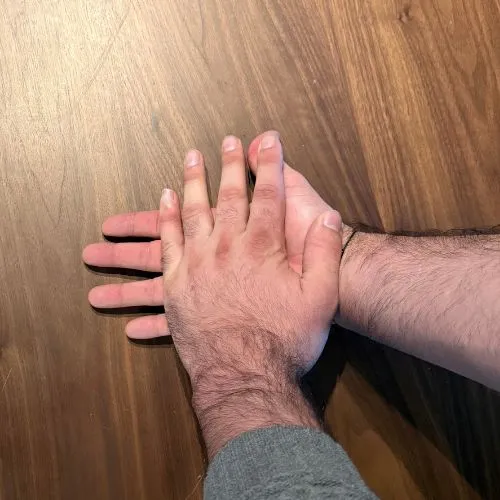
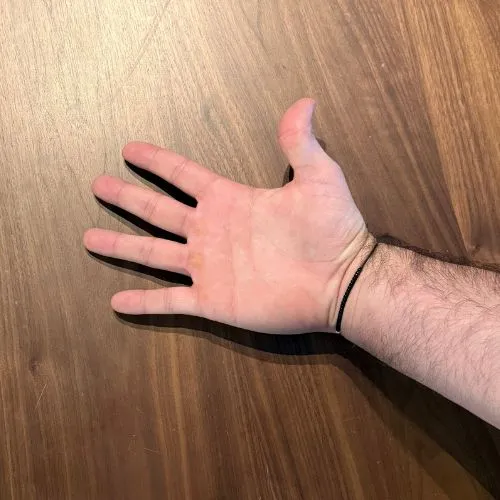
1. Palm Opening Stretch
Why it helps
One of the most common effects of hand spasticity is a clenched fist. This stretch helps gently open the palm and extend the fingers.
How to do it
Rest your affected hand on a flat surface, palm facing upward.
With your other hand, gently press the fingers and thumb outward, encouraging the palm to open.
Hold for 20–40 seconds, then relax.
Repeat 2–3 times.
Tips
If your hand resists, start with small movements.
Don’t worry if you can’t fully open the hand—progress happens gradually.
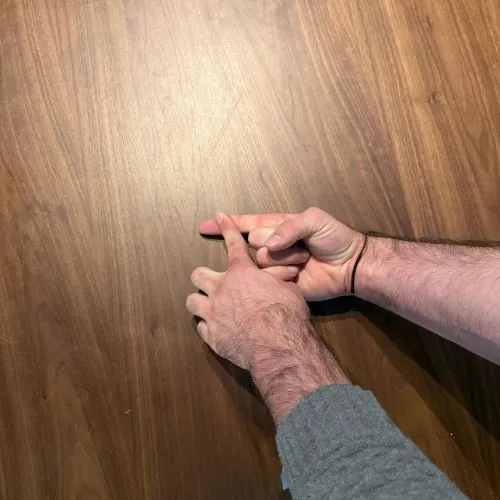
2. Finger Extension Stretch
Why it helps
Tightness in the fingers makes it hard to straighten them. This stretch targets each finger individually to improve flexibility.
How to do it
Place your hand palm-up on a table.
Use your other hand to gently lift one finger at a time, extending it outward.
Hold for 15–30 seconds before moving to the next finger.
Tips
Focus on one finger at a time for better control.
Skip any finger that causes sharp pain and return later when the muscles are more relaxed.
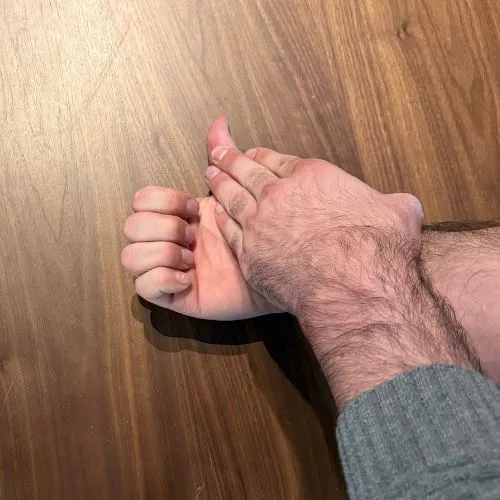
3. Thumb Stretch
Why it helps
Spasticity often pulls the thumb tightly across the palm, making grasping objects very difficult. This stretch increases thumb mobility.
How to do it
Hold your affected hand palm-up.
With your other hand, gently move the thumb away from the palm.
Hold for 20–30 seconds.
Repeat 2–3 times.
Tips
If your thumb is very tight, use a soft ball or rolled-up washcloth to keep the thumb slightly open throughout the day.
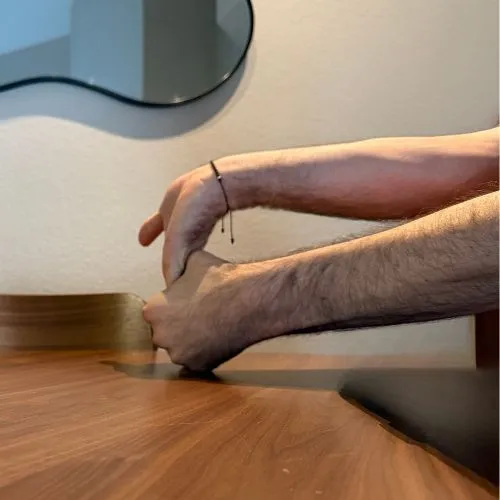
4. Wrist Flexor Stretch
Why it helps
The muscles in the forearm that connect to the hand often tighten during spasticity. Stretching them supports hand relaxation.
How to do it
Rest your forearm on a table with your palm facing upward.
Use your other hand to gently bend the wrist backward, extending the palm.
Hold for 20–40 seconds.
Tips
You should feel the stretch in your forearm, not just the hand.
Move slowly to avoid triggering spasms.
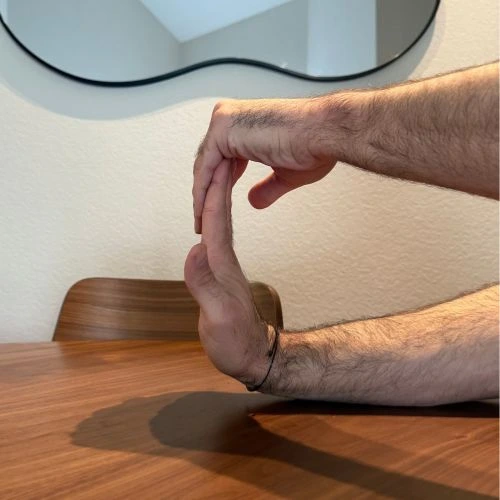
5. Wrist Extensor Stretch
Why it helps
Balancing the muscles that open and close the wrist is important. This stretch targets the opposite group of muscles.
How to do it
Rest your forearm on a table with your palm facing downward.
Use your other hand to gently press the back of your hand downward, bending the wrist.
Hold for 20–30 seconds.
Tips
Keep the movement gentle and steady.
This stretch pairs well with the wrist flexor stretch for balanced relief.
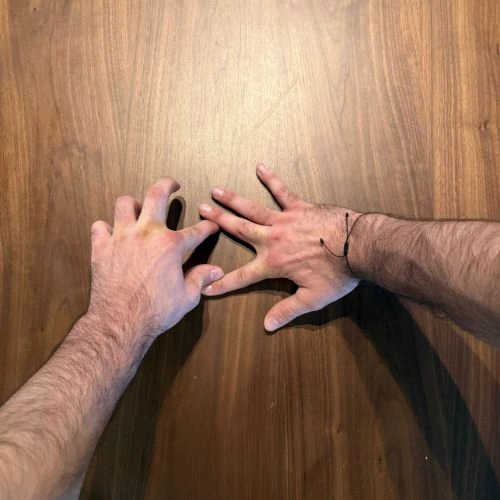
6. Tabletop Finger Spread
Why it helps
Hand spasticity often draws the fingers inward. This exercise encourages the opposite movement by spreading them apart.
How to do it
Place your hand flat on a table, palm down.
Use your other hand to gently guide the fingers apart.
Hold for 20–30 seconds, then relax.
Tips
If you struggle to spread your fingers, start with very small movements.
A therapy putty exercise afterward can help reinforce this stretch.
Try a similar stretch by gently interlocking the fingers together with the palms facing toward each other.
7. Hand Rotation Stretch (Supination to Pronation)
Why it helps
Supination (turning the palm upward) and pronation (turning it downward) are often limited after stroke. Improving rotation helps with daily activities like eating or holding objects.
How to do it
Rest your elbow on a table with your hand raised slightly.
Use your other hand to gently guide your palm upward, then downward.
Hold each position for 10–15 seconds.
Tips
Keep your elbow stable to focus on wrist and hand rotation.
Only rotate as far as feels comfortable.
8. Passive Stretch with Object Support
Why it helps
Sometimes the hand is too tight to stretch manually. Using an object can provide gentle, prolonged stretching without extra effort.
How to do it
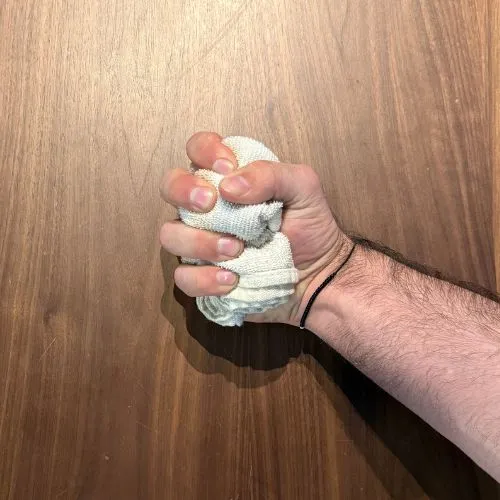
Place a rolled-up washcloth or soft ball in your palm.
Wrap your fingers and thumb around it gently, letting the object keep the hand slightly open.
Hold for several minutes as tolerated.
Tips
This is especially helpful for severe spasticity or during rest periods.
Rotate between different-sized objects for variety.
Building a Routine for Hand Stretching and Improving Spasticity
Stretching once in a while won’t bring lasting changes. To make progress, aim to include hand stretches into your daily routine. Here are some practical strategies:
Morning routine: Stretch after waking to reduce stiffness from the night.
Activity breaks: Stretch after tasks that increase tightness, such as typing or gripping objects.
Evening wind-down: Stretch before bed to help muscles relax for better sleep.
Try to commit to at least 10–20 minutes of stretching each day. Breaking it into smaller sessions can make it easier to stay consistent. Some find stretching after a hot shower to be particularly effective, as heat can help the muscles to relax.
Seeking Help from a Professional for Hand Spasticity After Stroke
If stretching feels too difficult on your own, don’t get discouraged. Physical and occupational therapists can guide you through the safest techniques and provide tools like splints or braces to support your progress.
You should contact your care team if you notice:
Severe pain during stretches
Increasing stiffness despite regular practice
Inability to safely perform stretches independently
Development of skin breakdown from prolonged tightness
Therapists can also suggest advanced techniques, such as functional electrical stimulation, to complement your stretching routine.
Final Thoughts on Hand Stretches For Spasticity After Stroke
Hand spasticity after stroke can interfere with independence and quality of life, but daily stretching is a powerful way to regain control. The eight exercises above ranging from simple palm opening to thumb and finger stretches can help reduce stiffness, improve mobility, and keep your hand more functional.
Recovery takes patience, but every small improvement matters. Whether you’re able to open your palm a little wider, rotate your wrist more smoothly, or hold objects with less effort, these changes add up over time.
By staying consistent and working within your comfort level, you’ll give your hand the best chance to improve.
Flint Rehab is leading the way in neuro-rehabilitation with products that
are backed by research and clinically proven to help you recover more
effectively from stroke, TBI, and SCI. Trusted by over 300+ rehab facilities
I couldn't get into some research for this because I had zero hand opening ability. So what the fuck is the recovery solution for my hand? WHOM do I ask that simple question?
By Vincenza Amoruso, MD – Università Cattolica del Sacro Cuore, Rome
Giuseppe Reale, MD – Fondazione Policlinico Universitario A. Gemelli, Rome
Stroke
Neurorehabilitation involves many different approaches. Alongside the
“conventional” techniques, there are several “unconventional”
treatments, ranging from drugs for recovery (you might want to read the
post on fluoxetine), to robotics and invasive and non-invasive brain stimulation.
Transcranial Direct Current Stimulation (tDCS) is a non-invasive
brain stimulation technique involving low voltage currents applied to
the scalp[1]. Two electrodes generate a 1-2 mA current that flows from
the anode to the cathode in order to enhance or diminish neuronal
excitability of the brain areas just below the electrodes. In
particular, the target area placed under the anode (anodal-tDCS) is
excited and the resting membrane potential shifts towards depolarization
and shows increased rate of spontaneous neuronal firing. On the
opposite, the target area placed under the cathode (cathodal-tDCS) is
inhibited and the resting membrane potential shifts towards
hyperpolarization with reduced neuronal firing[2;3]. The mechanisms of
action underlying the modulation of neuronal activity induced by tDCS
are still not well demonstrated[4;5]. Several reports have suggested
that tDCS could have an effect on cerebral cells, altering the activity
of NMDA and GABA receptors[6]. In particular, anodal tDCS causes a local
reduction in the inhibitory neurotransmitter GABA, whereas cathodal
stimulation causes a reduction in glutamatergic neuronal activity, which
is excitatory[7]. Moreover, tDCS could facilitate the plasticity
cellular processes, such as long-term potentiation and long-term
depression and changes in protein synthesis and gene expression[8;9;10],
and blood flow changes with an increase in oxygen supply on cortical
areas as assessed at a neuroimaging study[11].
In the last decades, tDCS has been tested in several medical
conditions due to its low cost, ease of application, and safety. Several
studies have found that tDCS can improve motor and cognitive functions
both in healthy subjects and in various neurological conditions, such as
stroke, Parkinson’s disease, multiple sclerosis, and many others[1;5].
Regarding stroke neurorehabilitation, two main tDCS approaches have
been studied: stimulation of the affected hemisphere with anodal-tDCS
and/or inhibition of the unaffected hemisphere with cathodal-tDCS. The
latter approach is thought to reduce interhemispheric inhibition, a
well-known phenomenon in which the healthy hemisphere inhibits the
contralateral affected hemisphere, slowing the recovery process[12;13].
Recent studies have shown greater clinical efficacy of cathodal tDCS
applied on the unaffected hemisphere in improving the performance in
activities of daily living in stroke patients[14]. However, the
contribution of tDCS in the various phases of recovery post-stroke
(acute, sub-acute, and chronic) is still object of study[15].
The most recent review concluded that stroke patients who received
tDCS have better clinical outcomes in terms of disability, although no
clear improvement in arm and leg function, muscle strength or cognitive
abilities has been found[16]. This review included 67 studies involving a
total of 1729 adult participants with acute, subacute or chronic
ischemic or hemorrhagic stroke. It must be noted that the included
studies were quite heterogeneous, investigating different types of
stimulation, different treatment durations and different current
features. Besides, the stroke etiology was mixed and the control groups
received sham tDCS (electrodes placed but no or irrelevant current
applied) or an active, different intervention.
In conclusion, future research is needed in this fascinating area to
investigate the reproducibility of the aforementioned findings,
especially regarding arm and leg function, muscle strength and cognitive
abilities (including spatial neglect). This could be done by conducting
larger and more homogeneous randomized controlled trials.
The magic carpet waits for you. So don’t you be late!
REFERENCES
Lefaucheur, J.P., Antal, A., Ayache, S.S., et al. Evidence-based
guidelines on the therapeutic use of transcranial direct current
stimulation (tDCS). Clin. Neurophysiol. 2017;
Nitsche, M.A., Liebetanz, D., Tergau, et al. Modulation kortikaler
erregbarkeit beim menschen durch transkranielle gleichstromstimulation.
2002;
Fritsch B, Reis J, Martinowich K, Schambra HM, Ji Y, et al. Direct
Current Stimulation Promotes BDNF-Dependent Synaptic Plasticity:
Potential Implications for Motor Learning. Neuron 66, 198–204, April 29,
2010
Stagg CJ, Nitsche MA. Physiological basis of transcranial direct current stimulation. Neuroscientist.17(1):37–53;2014.
Santos Ferreira, I., Teixeira Costa, B., Lima Ramos, et al.
Searching for the optimal tDCS target for motor rehabilitation. Journal
of neuroengineering and rehabilitation,2019.
Rothwell JC. Plasticity in the Human Motor System. Folia Phoniatr Logop ; 62(4): 153–157;2010.
Stagg, C.J., Best, J.G., Stephenson, et al.Polarity-sensitive
modulation of cortical neurotransmitters by transcranial stimulation. J.
Neurosci. 29, 5202–5206;2009.
Polanía R, Paulus W, Antal A, et al; Introducing graph theory to
track for neuroplastic alterations in the resting human brain : a
transcranial direct current stimulation study. Neuroimage.54(3):2287–96;
2011.
Ranieri, F., Podda, M. V.,Riccardi, et al; Modulation of LTP at rat
hippocampal CA3-CA1 synapses by direct current stimulation. Journal of
neurophysiology, 107(7), 1868–1880; 2012.
Ahn, S. M., Jung, D. H., Lee, H. J.,et al. Contralesional
Application of Transcranial Direct Current Stimulation on Functional
Improvement in Ischemic Stroke Mice. Stroke, 51(7), 2208–2218; 2020
Zheng X, Alsop DC, Schlaug G. Effects of transcranial direct current
stimulation ( tDCS ) on human regional cerebral blood flow. Neuroimage.
58(1):26–33;2011.
Beaulé, V. , Tremblay, S. , & Théoret, H. Interhemispheric control of unilateral movement. Neural Plasticity, 2012,
Boddington, L. J. , & Reynolds, J. Targeting interhemispheric
inhibition with neuromodulation to enhance stroke rehabilitation. Brain Stimulation, 10(2), 214–222. 2017.
Elsner B, Kwakkel G, Kugler J, Mehrholz J. Transcranial direct
current stimulation (tDCS) for improving capacity in activities and arm
function after stroke: a network meta-analysis of randomized controlled
trials. J Neuroeng Rehabil. 2017;
Kang N, Weingart A, Cauraugh JH. Transcranial direct current
stimulation and suppression of contralesional primary motor cortex
post-stroke: a systematic review and meta-analysis. Brain Inj. ;
32(9):1063-1070.2018.
Elsner B, Kugler J, Pohl M, Mehrholz J. Transcranial direct current
stimulation (tDCS) for improving activities of daily living, and
physical and cognitive functioning, in people after stroke. Cochrane
Database Syst Rev. 2020.