Use the labels in the right column to find what you want. Or you can go thru them one by one, there are only 34,365 posts. Searching is done in the search box in upper left corner. I blog on anything to do with stroke. DO NOT DO ANYTHING SUGGESTED HERE AS I AM NOT MEDICALLY TRAINED, YOUR DOCTOR IS, LISTEN TO THEM. BUT I BET THEY DON'T KNOW HOW TO GET YOU 100% RECOVERED. I DON'T EITHER BUT HAVE PLENTY OF QUESTIONS FOR YOUR DOCTOR TO ANSWER.
Changing stroke rehab and research worldwide now.Time is Brain!trillions and trillions of neuronsthatDIEeach day because there areNOeffective hyperacute therapies besides tPA(only 12% effective). I have 523 posts on hyperacute therapy, enough for researchers to spend decades proving them out. These are my personal ideas and blog on stroke rehabilitation and stroke research. Do not attempt any of these without checking with your medical provider. Unless you join me in agitating, when you need these therapies they won't be there.
What this blog is for:
My blog is not to help survivors recover, it is to have the 10 million yearly stroke survivors light fires underneath their doctors, stroke hospitals and stroke researchers to get stroke solved. 100% recovery. The stroke medical world is completely failing at that goal, they don't even have it as a goal. Shortly after getting out of the hospital and getting NO information on the process or protocols of stroke rehabilitation and recovery I started searching on the internet and found that no other survivor received useful information. This is an attempt to cover all stroke rehabilitation information that should be readily available to survivors so they can talk with informed knowledge to their medical staff. It lays out what needs to be done to get stroke survivors closer to 100% recovery. It's quite disgusting that this information is not available from every stroke association and doctors group.
Cite this article as:
V H, PK M, MG R (August 23, 2024) Extended Reality in Revolutionizing
Neurological Disease: A New Era for Chronic Condition Treatment. Cureus
16(8): e67633. doi:10.7759/cureus.67633
Abstract
Extended reality (XR), which includes virtual reality (VR), augmented
reality (AR), and mixed reality (MR), provides promising advancements
in managing chronic neurological disorders such as Parkinson's disease
(PD), multiple sclerosis (MS), Alzheimer's disease, and stroke. This
review examines the impact of XR technologies on neurological care,
highlighting their ability to create immersive, interactive environments
that enhance rehabilitation through tailored motor and cognitive
exercises. XR supports neuroplasticity by providing engaging,
contextually relevant exercises and real-time feedback, offering
innovative alternatives to traditional methods. The technical issues,
clinical validation, and accessibility must be addressed despite the
potential benefits. Future developments should focus on refining XR
applications, integrating them with complementary technologies, and
establishing robust policies to guide their effective and ethical use.
XR is poised to revolutionize neurological rehabilitation, promising
improved patient outcomes and transforming medical training.
Introduction & Background
According to the World Health Organization (WHO), neurological
disorders have a profound impact on nearly one billion people worldwide.
This extensive category encompasses conditions such as seizures,
Alzheimer's, stroke, migraines, brain injury, multiple sclerosis (MS),
and Parkinson's disease (PD). Approximately 50 million individuals are
affected by epilepsy, while an additional 24 million are affected by
Alzheimer's and other dementias. These disorders do not discriminate and
influence people across all nations, irrespective of their age, gender,
education, or socioeconomic status, contributing to an estimated 6.8
million fatalities annually [1].
These problems are caused by a variety of factors, including head
injuries, strokes, and neurodegenerative diseases, including PD and MS [2].
As the global population ages, the prevalence of neurological disorders
increases. However, advancements in medical research are offering new
hope for those affected by conditions such as Alzheimer's, PD, and MS [3].
Treating neurological disorders often requires complex, long-term
drug therapies to alleviate symptoms and slow disease progression. While
traditional treatments, such as medications, gene therapies, and stem
cell research, have shown promise, they can be tedious, leading to a
loss of motivation and a decline in patient outlook on rehabilitation [2].
New technologies, including assistive devices, communication aids, and
home automation systems, are being developed to help those with
neurological problems live more independently. However, there is no
one-size-fits-all approach to treating neurological conditions, as each
patient's situation is unique [3].(Well, you blithering idiots, FIND THE COMMONALITIES! My directors would have me fired for such lazy excuses!)
In recent years, extended reality (XR) technologies, encompassing
virtual reality (VR), augmented reality (AR), and mixed reality (MR),
have emerged as promising tools in neurological care. XR technologies
differ from traditional therapies by offering immersive, sensory-rich
environments that provide real-time feedback, enhancing therapeutic
engagement and outcomes [4,5].
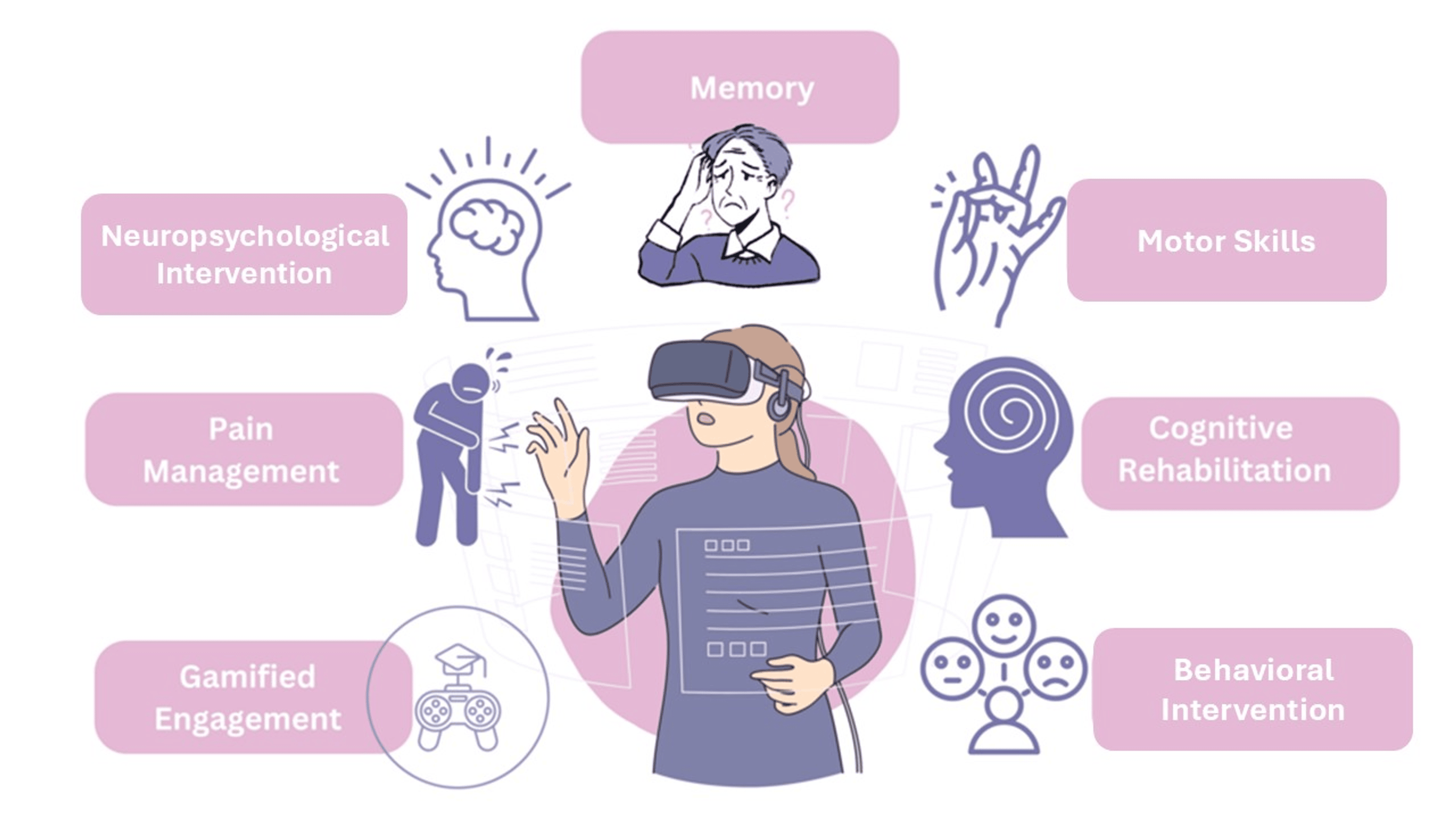
For example, VR is increasingly recognized for its role in cognitive
research, evaluation, and rehabilitation. It allows patients to engage
in realistic activities and receive precise performance measurements in a
safe, controlled setting (Figure 1).
Given the limitations of traditional treatments and the unique benefits
XR technologies offer, this narrative review explores its potential,
current applications, limitations, and future directions of XR
technologies in managing chronic neurological conditions. In examining
how XR can complement or enhance traditional therapies, this review aims
to shed light on the evolving landscape of neurological rehabilitation
and care.
Figure
1:
Role of virtual reality in neurological care
The first thing you need to know is that your doctors and therapists KNOW NOTHING ABOUT 100% RECOVERY! You are completely on your own to figure out how to get recovery accomplished.
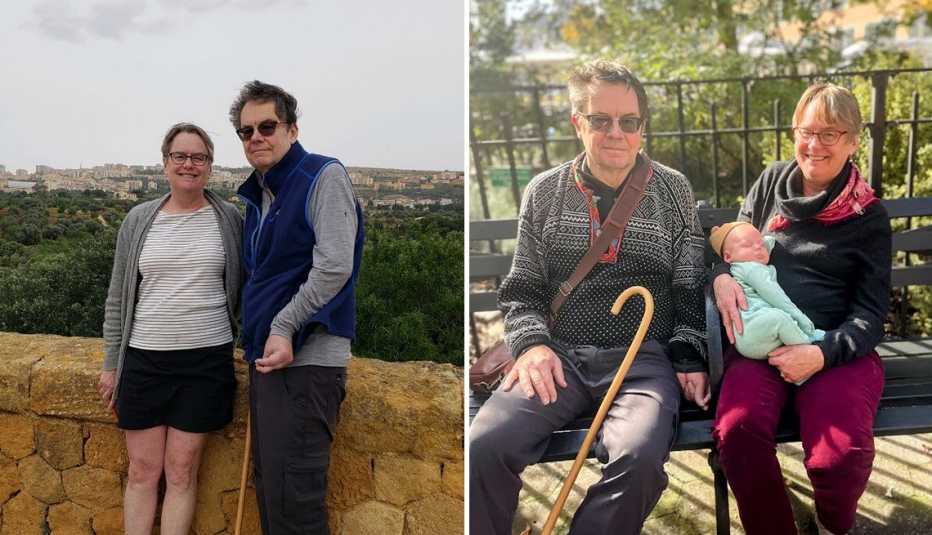
Cressida McKean and Russell Borthwick on a trip to Sicily in May
2023 and with their grandson at the Brooklyn Botanic Garden. Following
his stroke, Borthwick underwent intense physical therapy to relearn how
to walk.
Courtesy Cressida McKean
In an instant, Cressida McKean’s entire life was upended.
One moment, this mother of two was preparing for the day
after a Sunday breakfast with her husband, Russell Borthwick. The next,
she was on the phone with 911, getting emergency assistance for him.
From that morning on, McKean, now 70, joined the ranks of countless others in caregiving for a
The short- and long-term >effects of a stroke
can vary depending on its severity and the area of the brain affected,
but the results can be far-reaching. Language, vision, memory and
spatial perception issues, as well as physical disabilities such as
paralysis, are among the many potential issues.
This can be demoralizing and frustrating for the survivor, who can
become depressed after a stroke. It’s also daunting for those who become
caregivers. These loved ones must learn to support the survivor
physically, mentally and emotionally while often juggling other duties
such as managing medical bills and appointments, preparing meals, doing laundry and going grocery shopping. Adding to the pressure, many caregivers are parents or hold full-time jobs.
As McKean experienced, if a spouse has a stroke, a
caregiver may need to pick up duties the stroke survivor once
handled. For instance, among her many tasks, she had to also “figure out
how to do the taxes, how to bleed the pipes in the winter,” she says.
At first, McKean tried to do it all — taking on the role
of “the ultimate caregiver” — but eventually realized she needed aid
from others to best help herself and Borthwick, who had the stroke in
2007 and is now 67 years old.
That team approach to caregiving is essential, says
rehabilitation psychologist Efrat Hedges Eichenbaum. “Even with the best
intentions and the highest level of motivation, no one can be a 24-hour
caregiver,” Eichenbaum says. “It is important, if you can, to get your
own social and caregiver support.”
To help caregivers on their journey, AARP reached out to
medical professionals and the loved ones of stroke survivors to get
insights and advice. Here’s what they say:
Get expert advice on how to assist
When possible, join your loved one at doctor and therapy
visits. Take notes on how the stroke affected them and how you can help
with the recovery, says Tamilyn Bakas, a national volunteer expert with
the American Stroke Association and a nursing school professor. Hedges
Eichenbaum recommends writing down questions in advance. She also says
to ask for a neuropsychological evaluation if one wasn’t performed. The
testing can determine how a person’s cognitive functions have changed
after a stroke and provide personalized information that can help
caregivers best assist a loved one.
Establish a consistent schedule
To help with memory, Bakas recommends creating a daily
routine and adhering to it. “Provide meals at the same time each day,”
she says. “Schedule routine personal care, exercises, therapy sessions
and social activities.” Incorporate tasks a loved one can do safely,
such as drying dishes and folding laundry. Avoid too many activities
going on at the same time. As you craft your routine, build in breaks
for yourself, adds Hedges Eichenbaum.
Accept help from others
“When someone says, ‘How can I help you?’ you have to be
very specific about what you need. You can’t just say, ‘I’ve got it
under control,’ ” McKean says. Caregivers often need time to recharge,
and that can happen if someone else spends time with the stroke
survivor. Having a written daily schedule, clear care instructions and a
list of critical medical contacts makes it easier for others to fill
in. Welcoming outside help is vital for a caregiver to maintain mental
and physical health, says Susan Ryerson, a physical therapist with
extensive experience in stroke patient care. “Taking care of yourself
while you’re taking care of your loved one is important. If you get
hurt, then who’s going to care for them?” she says.
Prepare the home
It’s important to get individualized advice from an occupational and physical therapist about preparing your living environment,
says Hedges Eichenbaum, as recommendations will differ depending on
each patient’s needs. Getting specific advice will prevent unnecessary
and expensive home modifications.
The ASA says to be mindful about passageway widths (such
as space in hallways and between furniture) if a loved one uses a
wheelchair or walkers. Remove throw rugs that may be a tripping hazard,
and install grab bars in bathrooms to aid with balance, if needed. Put
away clutter, Bakas says, and you may need to remove potentially
dangerous items such as sharp knives and household chemicals. “Make your
home as safe as possible,” she says.
Incorporate tools to enhance memory
Use memory aids such as sticky notes, charts, calendars
or reminders of important happenings coming up, Bakas says. Engage in
activities that stimulate the brain, such as solving crossword puzzles,
playing video and board games, listening to music and taking walks. For
the tech-savvy, there are apps that can be accessed via smartphone or
tablet to assist with memory, cognition and even language skills. The
American Heart Association recommends several, including Elevate, Peak
and Stop, Breathe & Think.
Facilitate more effective communication
Although each case is different, if language skills were
affected, it can be effective to minimize background noise, articulate
clearly and use straightforward language, Bakas says. Posing concise
yes/no questions and using gestures such as a thumbs-up and -down can
also be helpful. “Always verify their understanding instead of
assuming,” Bakas adds. If needed, “give the survivor a card they can
show others when they are trying to communicate. The card can say
something like, ‘It is very hard for me to speak, read or write because I
have had a stroke. I can usually understand what you are saying if you
speak clearly. Thank you for your help and patience.’ ”
Cultivate an ongoing partnership with a health care provider
Like routine dental visits, it’s beneficial to schedule
regular sessions with a professional, such as an occupational therapist
or a psychologist, Ryerson says. It doesn’t have to be a doctor. It just
needs to be a knowledgeable professional with whom you have a good
rapport. The aim is to ensure “you’re not starting at square one every
time there’s a small issue,” Ryerson says. “If you catch the small
issues before they get big, you’re ahead of the game.” Bakas suggests
keeping a list of daily medications — including a medicine’s name,
dosage and any possible side effects — and bring it to all appointments.
Consider a caregiver support group
Those in similar situations can provide not only ideas and resources
for taking care of a loved one, but also insights on how to take better
care of yourself. McKean is active in the Caring Connection at the
nonprofit Stroke Comeback Center in Vienna, Virginia. “I’m not a big
joiner. I’m not a big clubby person,” she says. “But this is important
to me. It gives you a feeling of connectedness in a group that really
understands what it’s like.”
Add more joy to both of your lives
Reimagine activities that you and a loved one enjoyed
together, Ryerson says. For instance, if travel was a shared passion,
you could take a car ride to a beach or through the woods, roll down the
windows and take in the scenery. If dining out with others was part of
your routine, you can order takeout, set a table up outside and invite
two people over to have an alfresco meal with you.
People with mobility challenges
may benefit from working with a recreational therapist who can help
them enjoy hobbies in an adapted manner, says Hedges Eichenbaum. “With
the help of a recreational therapist, people with mobility issues have
even been able to go skydiving and skiing,” she says. In addition, there
are virtual and in-person social events designed for people who have
mobility challenges. Check out your state Brain Injury
Association’s events page for information.
Maintain hope
“There’s no cookie-cutter approach to this. You’ve got to
figure it out in terms of your situation,” McKean says. “You can learn
how to deal with it. A positive attitude goes a really long way.”
That stance — along with McKean’s support, the help of
therapy and Borthwick’s determination — led to substantial progress on
his end. “Russell could barely sit upright and could not walk for the
first year and a half after his stroke,” McKean says. “He now walks
around the house without a cane, and walks with a cane outside the
house. He has much more independence.”
If maintaining hope feels beyond your ability, enlist the
assistance of a therapist or mental health professional to help light
the way.
Laura Petrecca is a contributing writer for AARP. She has written for USA Today, Real Simple, Digiday’s WorkLife, Kiplinger, AARP, Men’s Health, Worth, Crain’s New York Business and Advertising Age.
We don't need 'hope'. Survivors want recovery and results! WHOM is going to do the followup research to find concrete answers? With NO leadership and NO strategy in stroke; NOTHING WILL BE DONE.
Stroke
is the third leading cause of death and disability worldwide.
Post-stroke spasticity (PSS) is the most common complication of stroke
but represents only one of the many manifestations of upper motor neuron
syndrome. As an upper motor neuron, the corticospinal tract (CST) is
the only direct descending motor pathway that innervates the spinal
motor neurons and is closely related to the recovery of limb function in
patients with PSS. Therefore, promoting axonal remodeling in the CST
may help identify new therapeutic strategies for PSS. In this review, we
outline the pathological mechanisms of PSS, specifically their
relationship with CST, and therapeutic strategies for axonal
regeneration of the CST after stroke. We found it to be closely
associated with astroglial scarring produced by astrocyte activation and
its secretion of neurotrophic factors, mainly after the onset of
cerebral ischemia. We hope that this review offers insight into the
relationship between CST and PSS and provides a basis for further
studies.
Introduction
Stroke is the third leading cause of death and disability worldwide [1].
Post-stroke spasticity (PSS) is the most common complication of stroke
but is only one of the many manifestations of upper motor neuron
syndrome. Over time, PSS continues to develop without effective
interventions, and the disease worsens [2]. Twelve months after stroke, 43.2% of survivors develop spasticity [3]. Spasticity is as high as 97% among survivors of chronic stroke with moderate-to-severe dyskinesia [4];
this places a heavy economic burden on patients’ families and wider
society. Therefore, more effective therapies are required to promote
recovery from PSS.
Treatment of PSS has largely focused on
reducing the area of cerebral ischemia and rescuing neurons from damaged
areas of the brain; however, the effects of putative neuroprotectants
are less pronounced in clinical trials [5].
Several recent clinical studies report that the degree of corticospinal
tract (CST) damage correlates with the severity of spasticity in
patients with chronic stroke [6,7,8] and that there is a significant correlation between motor function improvement and CST remodeling in patients with PSS [9].
A few experimental studies have also observed that by destroying the
corresponding CST, the upper motor neurons lose control of the spinal
cord, causing spasticity of the contralateral limb [10].
While the pathogenesis of PSS is more complex, the more established
mechanism is that PSS is a maladaptive manifestation of the loss of
supraspinal inhibitory modulation of spinal reflex pathways, which
occurs through a functional reorganization at different levels,
involving a physiological mechanism of mutual inactivation of motor
centers and excitation of peripheral spinal cord segmental neurons; it
is one of the syndromes of upper motor neurons [2, 11]. The CST, as an upper motor neuron [12],
is the only direct descending motor pathway and is the main pathway
innervating spinal motor neurons closely related to the recovery of limb
function after stroke [13].
This suggests that CST is closely related to the pathological
mechanisms of PSS. Many studies have demonstrated that motor recovery
after stroke depends mainly on the plasticity of the damaged lateral
primary motor area, evident through stroke patients and experimental
animal studies [14,15,16], or on the homologous CST axon integrity [17,18,19,20]. Spasticity is a common disorder that coexists with dyskinesia after stroke [21,22,23,24],
and it does interfere with motor recovery after stroke as PSS and other
dyskinesias are essentially clinical manifestations of abnormal
neuroplasticity and manifestations of common processes [25].
Therefore, promoting axonal regeneration of the damaged side of the CST
may be a novel avenue for the treatment of post-stroke spasticity;
however, only a few studies exist on the specific link between the CST
and PSS, the remodeling of CST after stroke, and the recovery promotion
of PSS.
This review aimed to provide an overview of the
pathophysiological mechanisms of PSS, including the types of spastic
hemiparesis, the close correlation between CST and PSS, and the
relationship between PSS and motor recovery. We further reviewed the
therapeutic strategies to promote axonal regeneration of the CST after
stroke. We found that the astroglial scar and its secreted neurotrophic
factors, mainly associated with the activation of astrocytes after the
onset of cerebral ischemia, are important for remodeling the CST after
stroke. This provides potential novel avenues for the treatment of PSS.
Finally, we briefly describe the clinical treatment of PSS in cases
where the cerebral cortex is severely damaged, and the cortical inputs
are not re-established.
Virtual reality (VR) and augmented reality (AR) applications are
showing promising results in the field of stroke rehabilitation. Doctors
have found that VR and AR games that require patients to perform simple
activities, such as plucking coconuts or stopping a soccer ball, can
help improve mobility and cognitive function.
These games are
designed with different levels of difficulty to cater to the specific
needs of each patient. The speed, intensity, angle, and direction of the
stimuli can be adjusted accordingly. This allows for personalized
rehabilitation plans that target the areas affected by stroke.
Motor
impairments are a common outcome of stroke, with patients often
experiencing paralysis and stiff muscles. VR and AR rehabilitation can
help address these issues by promoting motor re-learning and improving
connectivity within the intact hemispheres of the brain. Research has
shown that incorporating VR and AR techniques alongside conventional
therapy can lead to better motor control and faster recovery.
In
addition to motor rehabilitation, VR and AR can also enhance cognitive
function by triggering mirror neuron circuits in the brain. Patients can
watch videos of the movements they are supposed to execute, which
facilitates recovery and improves overall functionality.
Early
rehabilitation has been found to yield better outcomes, and VR and AR
therapy have been shown to be superior to conventional therapy for upper
limb impairment. Although some individuals may experience nausea as a
side effect, literature has not indicated any major concerns.
Overall,
VR and AR provide a cost-effective approach to stroke rehabilitation,
offering patients a more engaging and stimulating environment for
recovery. These technologies hold great potential in improving the
quality of life for stroke survivors.
Sources:
– Dr. Keshav Kumar, Professor of Neuropsychology, National Institute of Mental Health and Neurosciences (NIMHANS)
– Dr. Bhasi Sukumaran, Professor and Head, Department of Clinical Psychology, SRM Medical College Hospital and Research Centre
– Dr. Manoj Kumar Sharma, Professor of Clinical Psychology and Coordinator of SHUT Clinic, NIMHANS
'Hope'. (This is the whole stroke rehab
problem in a nutshell. 'Hope'. Survivors shouldn't need hope, their
doctors and therapists should have EXACT PROTOCOLS TO DELIVER 100%
RECOVERY! Your hospital doesn't have that? You don't have a functioning
stroke hospital!)
As Phillip Engle watched the blockbuster movie
"Dune" in a theater in December 2021, the Austin father cringed because
the movie sound suddenly became unbearable. After the film ended, he had
trouble walking and needed the handrails for balance.
Once
back at home, his daughter noticed he was talking funny. They rushed
him to the hospital, where he had a stroke while in the emergency room
in the wee hours of the next day.
By the end of
that week, the former marathon runner and mountain climber could not
walk, could not talk and could not pick up a foam cup.
"I was in shock. I felt like I was lost in a frozen body," Engle said.
He
began a journey from the abyss of despair to an extraordinary recovery
and a new path where he now counsels stroke patients on their
rehabilitation journey. Aiding in his recovery, Engle said, is the
desire to return outdoors and climb mountains again with his children.
Yearly,
more than 795,000 people have a stroke in the United States, according
to the Centers for Disease Control and Prevention. More than 137,000 die
of a stroke each year in the U.S., the CDC calculates. The chances of a
recovery are increased if a person gets to a hospital within 4½ hours
after the stroke ― the window in which medication can be given to break
up the blood clot causing it.
One of the most
common risk factors is high blood pressure, which Engle had. For him and
many others, exercise and fitness can create a false sense of security
that they are safe.
"It's
so much easier to prevent a stroke than to go through the years or
thousands of hours to recover from a stroke," said Dr. Robert Lee,
medical director of stroke and neurological recovery at St. David’s
Rehabilitation Hospital, who treated Engle.
Lee also cited other risk factors, including high cholesterol, heart defects, diabetes, obesity and smoking.
Engle's
stroke began as cascading episodes, ministrokes, on Dec. 10. They were
followed by the big stroke Dec. 11 and the worsening of symptoms over
the next week. He had difficulty moving his right side. At one point,
Engle needed a wheelchair to get around.
"It was a weird collection of symptoms," Engle said. "I had gone from being functional to being dysfunctional."
His family doctor explained that stroke symptoms can worsen over time and said Engle needed intense therapy.
Climbing back up
Engle entered St. David's Rehabilitation Hospital to participate in the Young Stroke Survivors Program
— an intense six-hour-a-day regimen of physical, occupational and
speech therapy. When Engle arrived for rehabilitation, he had trouble
moving his hands, dragged his foot and lacked balance, and it took great
effort "just walking from the bed to the door," he said.
On
Engle's second day of rehab, after six hours of therapy, a therapist
handed him putty to squeeze with his right hand. The task seemed
impossible, Engle said, questioning the empathy of his therapists and
nurses for his plight.
Then a man who sat
beside him, who had survived a similar stroke, offered words of comfort.
"I was where you are two weeks ago," he said.
"That
gave me hope," Engle said. "It was hope that got me out of bed in the
morning. It was more significant in my life than the stroke."(This is the whole stroke rehab problem in a nutshell. 'Hope'. Survivors shouldn't need hope, their doctors and therapists should have EXACT PROTOCOLS TO DELIVER 100% RECOVERY! Your hospital doesn't have that? You don't have a functioning stroke hospital!)
Engle
began to push himself, to do more than asked, to practice his exercises
even at night. He gave himself a goal: Go ice climbing a year later.
Retraining the brain
Lee
said goals are important and often more intense for the one-third of
stroke survivors younger than 65. The Young Stroke Survivors Program was
created with this group in mind, but there is no age cutoff. It's more
the state of mind, Lee said. These stroke patients need intensive
therapy, Lee said, because often they want to return to work and need to
relearn the skills to do so.
With strokes, time matters.
Early medical intervention helps lessen the damage, and early intensive
therapy helps rebuild the brain's neural pathways to regain skills that
were lost.
"Usually, three to six months after a stroke the brain is most receptive," Lee said, and patients "make the most gains."
Improvements
can still come after six months, Lee said. Research now shows the brain
can continue to make new pathways. It just takes more intensive therapy
than in the first six months.