Changing stroke rehab and research worldwide now.Time is Brain! trillions and trillions of neurons that DIE each day because there are NO effective hyperacute therapies besides tPA(only 12% effective). I have 523 posts on hyperacute therapy, enough for researchers to spend decades proving them out. These are my personal ideas and blog on stroke rehabilitation and stroke research. Do not attempt any of these without checking with your medical provider. Unless you join me in agitating, when you need these therapies they won't be there.

What this blog is for:

My blog is not to help survivors recover, it is to have the 10 million yearly stroke survivors light fires underneath their doctors, stroke hospitals and stroke researchers to get stroke solved. 100% recovery. The stroke medical world is completely failing at that goal, they don't even have it as a goal. Shortly after getting out of the hospital and getting NO information on the process or protocols of stroke rehabilitation and recovery I started searching on the internet and found that no other survivor received useful information. This is an attempt to cover all stroke rehabilitation information that should be readily available to survivors so they can talk with informed knowledge to their medical staff. It lays out what needs to be done to get stroke survivors closer to 100% recovery. It's quite disgusting that this information is not available from every stroke association and doctors group.

Showing posts with label legalization of marijuana. Show all posts

Wednesday, January 9, 2019

Marijuana legalization leaves doctors wondering ‘What do we tell our patients?’

Well your doctor will reflexively never suggest marijuana use just like alcohol is never recommended. You are completely on your own to figure out the benefits and doses. 


My 13 reasons for marijuana use post-stroke. 

Alcohol for these 12 reasons.


A little daily alcohol may cut stroke risk


An occasional drink doesn't hurt coronary arteries


Six healthy reasons to drink more beer   Red wine benefits are in this one also.


10 Health Benefits of Whiskey

Study: For those over 90, alcohol better than exercise for longevity


Don't follow me, I'm not medically trained.


Marijuana legalization leaves doctors wondering ‘What do we tell our patients?’


The times (and laws) have changed when it comes to marijuana use, leaving many doctors with a big question: “What do we tell our patients?”
Recently, the editors of the Annals of Internal Medicine asked readers to share their perspectives on prescribing or recommending marijuana to patients. From 100 submissions, the editors chose to publish six essays that they say touch on some of the most important issues that clinicians face when discussing marijuana with their patients.
The essays, published in a special section of the new issue of the medical journal, touch on questions from the safety of marijuana use by pregnant and breastfeeding women, to its use in treating pain, to the problem of hard scientific evidence to back claims about its benefits.

The healthcare sector remains in flux as policy, regulation, technology and trends shape the market. FierceHealthcare subscribers rely on our suite of newsletters as their must-read source for the latest news, analysis and data impacting their world. Sign up today to get healthcare news and updates delivered to your inbox and read on the go.
So what’s the current state of marijuana legalization? “States are passing marijuana laws at blistering speed,” writes Jan K. Carney, M.D., of the Larner College of Medicine at the University of Vermont in Burlington, as she called for more research. Medical marijuana is now legal in more than half of the states in the U.S. and the District of Columbia, and a few states have legalized recreational use for adults. Cannabis use is increasing and the perception of its risk is declining, Carney says. However, the federal government still classifies marijuana as a Schedule I drug, in the same category as heroin and LSD—drugs with “no currently accepted medical use.”
Research into the benefits and risks of marijuana use has been limited, leaving most doctors with more questions than answers. “Widespread use of medical cannabis is straining medicine's conventional boundaries, as patients venture without guidance into the unknown and return bearing strange medicines that seem strikingly nonmedical. As physicians and scientists, we must be willing to do our part by listening, showing compassion and using the best available knowledge to support patients and keep them safe on their journey,” write pain researchers Kevin F. Boehnke, Ph.D., and Daniel J. Clauw, M.D., of the University of Michigan Medical School in Ann Arbor.
So as many doctors, who never learned about the once-illegal drug in medical school and find limited scientific studies, struggle to advise patients, here are six takeaways from the commentaries:
Doctors need more scientific evidence about the benefits and risks of marijuana use. “Would I recommend marijuana to patients? Not yet,” writes Carney in her commentary. “Evidence is growing but still inadequate, and marijuana use is associated with risk for harm to pregnant women, adolescents and young adults.”
Doctors must advocate together to remove barriers to marijuana research, create a national strategy and fund those efforts, she says. Researchers need to track the benefits and harms through public health surveillance methods and educate the public to eliminate the differences between what patients believe and what physicians know about the drug.
Doctors should consider marijuana use harmful to pregnant and breastfeeding patients until there is evidence that proves it is safe. Marijuana is the most commonly used illicit substance during pregnancy and has gone mainstream, writes Eli Y. Adashi, M.D., of Warren Alpert Medical School at Brown University in Rhode Island. Without data and approval for a marijuana-based drug from the Food and Drug Administration, physicians should discourage its use by pregnant and lactating patients, he says.
Erring on the side of caution, several professional associations strongly discourage marijuana use in the period immediately before and after birth, he notes. With patients who use marijuana for therapeutic reasons, doctors should replace it with a drug with a pregnancy-specific safety record, he recommends. “Doing no harm requires that uncompromising vigilance not be allowed to lapse. Doing anything less is to ignore the well-being of would-be progeny,” he writes.
Doctors should take a “start-low, go-slow” philosophy when it comes to cannabinoid dosing for managing patients’ chronic pain. Researchers Boehnke and Clauw say they are “underwhelmed” by systematic reviews of clinical trials of cannabinoids but say doctors cannot ignore the reality of its use as a medicine to treat chronic pain. It’s “uncertain territory” for physicians and patients.
The two pain researchers say they do not view cannabinoids as first-line treatments for pain but as adjuvant therapies to be used before opioids if other options fail to control chronic noncancer pain. As with any pain medication, they say marijuana should be used as part of an integrated, patient-centric management program, with emphasis on appropriate nonpharmacologic treatment options such as exercise, cognitive behavioral therapy and mindfulness. They recommend that patients select products verified for safety and potency by third-party testing and propose that patients use oral formulations, such as capsules, for long-term relief, with tinctures for breakthrough pain. Patients who prefer to inhale cannabinoids should try vaping because it probably has fewer adverse effects than smoking, they suggest. “We advocate a “start-low, go-slow” dosing philosophy, applied to both quantity and adverse effect profiles,” they write.
Greater availability of marijuana has unintended consequences for emergency departments, which provide some red flags for doctors and patients. That’s been the case in Colorado, where marijuana for medical use has been available since 2000 and was legalized for recreational use by adults in 2014. Nearly 90,000 Colorado residents have medical cannabis cards and about one-third report daily consumption, write Kennon Heard, M.D., Ph.D., Andrew A. Monte, M.D., Ph.D., and Christopher O. Hoyte, M.D., of the University of Colorado School of Medicine in Aurora.
While the benefits of marijuana for medical conditions continue to be debated, there has been an impact in Colorado emergency departments, the doctors say. One is the increase in hospitalizations of children from exposure to marijuana, often by an ingestible cannabis product such as candy or baked goods. The doctors say they see several cases each month. They’ve also seen a dramatic increase in ED visits for cannaboid hyperemesis, a condition that leads to repeated and severe bouts of vomiting. The hospital sees more than 100 patients for the condition each year, they say, and patients who use cannabis as daily therapy are at risk. Evidence has also linked marijuana use to mental health disorders, and ED visits because of cannabis use were five times more likely to be coded as related to a mental health disorder.
“In summary, as emergency medicine providers in a state with a high level of cannabis use, we have observed a substantial increase in acute medical conditions associated with this substance,” the doctors write. “Providers considering recommending medical cannabis should counsel patients on safe storage, inform them of the symptoms of cannabinoid hyperemesis, and warn them that cannabis use may precipitate mental health crises,” they said.
Evidence is growing that marijuana use is not without risks, including those for patients with cardiovascular disease. Preventive cardiologists are faced with the challenge of properly counseling patients about marijuana use, write Tina M. Kaufman, Ph.D., Sergio Fazio, M.D., Ph.D., and Michael D. Shapiro, D.O., from the Center for Preventive Cardiology at the Knight Cardiovascular Institute at the Oregon Health & Science University in Portland.
They advise doctors to ask patients about their marijuana use in a nonjudgmental way, discussing specific methods for how they use the drug and the reasons why. They say they inform patients about the potential adverse effects of smoking marijuana and let them know more research is needed before they can make definitive recommendations. The method of use probably matters, they say, and from a practical standpoint, smoked marijuana probably carries the greatest cardiovascular risk.
“Until more definitive data are available to guide recommendations, it is incumbent on clinicians to engage in shared decision making, encompassing a thoughtful, open discussion with patients about marijuana use and potentially guiding them to safer alternatives,” they conclude.
As they look for alternatives to opioids, doctors and health insurers face a “cannabis conundrum.” The use of medical marijuana is complicated by the fact that there is no standardization of products from pills to oils and a lack of robust evidence for its use, write Pennsylvania researchers Chester B. Good, M.D., Natasha Parekh, M.D., Kavita Fischer, M.D., James Schuster, M.D.; Chronis Manolis, R.Ph., and William Shrank, M.D.
“The need for adequate clinical substitutes for opioids has never been greater, and optimizing symptom relief for persons with debilitating diseases is a core function of the healthcare system. However, creating policies and providing insurance coverage when high-quality evidence is lacking and products are not standardized runs counter to the responsibilities of health insurers, who are prohibited by federal law from covering these products,” they say.
What’s the solution? They suggest that insurers partner with providers and academics to develop evidence and pave the way for safer patient management and evidence-based decisions about coverage of medical marijuana.

Wednesday, August 22, 2018

The Mental Disorders That Accelerate Brain Damage

I'd have to say that not enough analysis was done since the cannabis consumption was probably done to self treat a mental disorder. We need complete legalization of marijuana although I will just drive 100 miles to Canada and see how tight customs is. Due to the use of SPECT scans by Dr. Amen they have a  reputation as only being used to deceive.

My 13 reasons for marijuana use post-stroke.  

Don't follow me, I'm not medically trained. 

The Mental Disorders That Accelerate Brain Damage

Largest ever study of its type reveals the disorders that accelerate brain aging.
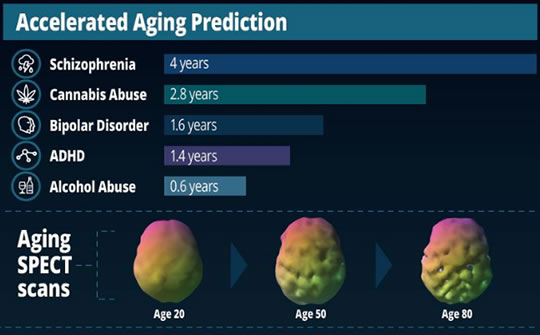
Schizophrenia, cannabis abuse and bipolar disorder accelerate brain aging the most, new research finds.
Schizophrenia ages the brain by an average of 4 years, cannabis abuse by 2.8 years and bipolar disorder by 1.6 years.
→ Enjoying these psych studies? Support PsyBlog for just $4 per month (includes ad-free experience and more articles).
Fifth on the list, behind ADHD, was alcohol abuse, which ages the brain by an average of 1.4 years.
Depression and anxiety, however, were not linked to any premature brain aging.

Dr Daniel G. Amen, who led the study, said:
“Based on one of the largest brain imaging studies ever done, we can now track common disorders and behaviors that prematurely age the brain.
Better treatment of these disorders can slow or even halt the process of brain aging.
The cannabis abuse finding was especially important, as our culture is starting to see marijuana as an innocuous substance.
This study should give us pause about it.”
The conclusions come from the largest ever study of its type of 62,454 brain scans on over 30,000 people.
The SPECT (single photon emission computed tomography) brain scans measured the regional blood flow in the brain and how it is reduced in different disorders.
Dr George Perry, commenting on the study, said:
“This is one of the first population-based imaging studies, and these large studies are essential to answer how to maintain brain structure and function during aging.
The effect of modifiable and non-modifiable factors of brain aging will further guide advice to maintain cognitive function.”
Mr Sachit Egan, co-investigator from Google, said:
“This paper represents an important step forward in our understanding of how the brain operates throughout the lifespan.
The results indicate that we can predict an individual’s age based on patterns of cerebral blood flow.
Additionally, groundwork has been laid to further explore how common psychiatric disorders can influence healthy patterns of cerebral blood flow.”
The study was published in the Journal of Alzheimer’s Disease (Amen et al., 2018; image credit, Dr Daniel G. Amen).

Thursday, March 8, 2018

Endocannabinoid system and cannabinoids in neurogenesis–new opportunities for neurological treatment? Reports from experimental studies

More followup needed which won't occur because we have NO stroke leadership and we have fucking idiots in the federal legislature that haven't reduced marijuana from a Schedule I drug to complete legalization.  4 pages here and all it says is that we need more research. What a fucking waste of time and effort.
Endocannabinoid system and cannabinoids in neurogenesis–new opportunities for neurological treatment? Reports from experimental studies
Aleksandra Drab1, Mirosław Zagaja1, Agnieszka Haratym-Maj2, Jarogniew Jacek Łuszczki1,3, Marta Andres-Mach1 1 Isobolographic Analysis Laboratory, Institute of Rural Health, Lublin, Poland  2 Department of Physiopathology, Institute of Rural Health, Lublin, Poland  3 Department of Patophysiology, Medical University, Lublin, Poland Drab A, Zagaja M, Haratym-Maj A, Łuszczki JJ, Andres-Mach M. Endocannabinoid system and cannabinoids in neurogenesis – new opportunities for neurological treatment? Reports from experimental studies. J Pre-Clin Clin Res. 2017; 11(1): 76–80. doi: 10.26444/jpccr/74636

Abstract 

Neurogenesis is one of the most important phenomenona affecting human life. This process consists of proliferation, migration and differentiation of neuroblasts and synaptic integrations of newborn neurons. Proliferation of new cells continues into old age, also in humans, although the most extensive process of cell formation occurs during the prenatal period. It is possible to distinguish two regions in the brain responsible for neurogenesis: the dentate gyrus (DG) of the hippocampus and the sub-ventricular zone (SVZ). Hippocampal neurogenesis is very sensitive to various physiological and pathological stimuli. The functional integration of the newly-born dentate granule cells into hippocampal circuitry, and their ability to mediate long-term potentiation in DG, has led to the hypothesis that neurogenesis in the adult brain may play a key role in learning and memory function, as well as cognitive dysfunction in some diseases. Brain disorders, such as neurodegenerative diseases or traumatic brain injuries, significantly affect migration, proliferation and differentiation of neural cells. In searching for the best neurological drugs protecting neuronal cells, stimulating neurogenesis, while also developing no side-effects, endocannabinoids proved to be a strong group of substances having many beneficial properties. Therefore, the latest data is reviewed of the various experimental studies concerning the analysis of the most commonly studied cannabinoids and their impact on neurogenesis.

Friday, December 8, 2017

Epilepsy Patients Failing Regular Meds Improved with Medical Cannabis

You might very well need this. So demand your doctor give you a prescription. By the time I have another stroke I will just have to drive 100 miles to Canada and have to smuggle it though customs since our fuckingly stupid federal legislators won't have legalized it yet.
Poststroke epilepsy: update and future directions

Epilepsy Patients Failing Regular Meds Improved with Medical Cannabis


  • by Contributing Writer, MedPage Today

WASHINGTON -- Medically refractory epilepsy (MRE) patients in New York state who regularly used medical cannabis reported improvements in their health, according to a pilot survey presented here this week at the American Epilepsy Society annual meeting.
Researchers with Northeast Regional Epilepsy Group identified 33 patients in their "large, multi-site, regional epilepsy program" who had signed up for New York's medical cannabis program. Among the 17 who then completed a questionnaire about health differences and had consumed cannabis for at least a month, a majority reported improvements in the following measures:
  • Overall quality of life (76% of respondents, average score 4.24 out of 5)
  • Epilepsy (70%, 4.12)
  • Mood (70%, 4.06)
  • Quality of sleep (70%, 4.00)
  • Appetite (70%, 3.94)

"The results of this study suggest that [medical cannabis] may be a promising candidate for the treatment of MRE and its associated comorbidities when used in conjunction with [anti-epileptic drugs]," the authors wrote on a poster prepared for the meeting. Less than half of patients reported improvements in:
  • Stress (47%, 3.71)
  • Anxiety (23%, 3.35)
  • Sedation (47%, 3.65)
  • Aggression (11%, 3.12)
Cannabis use was not without its problems. It was difficult to obtain, many patients reported, citing high costs and inconvenient access. Four patients dropped out of the study because they could no longer afford to purchase the cannabis, which is not covered by insurance in New York. Fifteen of the 17 patients said cannabis was more expensive than anti-epileptic drugs they had previously used, while 10 said it was less convenient to obtain. "The high out-of-pocket costs and lack of insurance coverage of [cannabis] treatment has been a major concern and deterring factor in this study," the authors wrote.
Patients took medical cannabis with a 20:1 ratio of cannabidiol to tetrahydrocannabinol.

They had tried an average of 5.43 anti-epileptic medications on average before turning to cannabis. "The patients come to us because other medications fail," said co-author Juliann Paolicchi, MD, the group's co-director of pediatric epilepsy research, who spoke to MedPage Today at the meeting.
Epileptic patients will continue to try medical cannabis, Paolicchi said, encouraging researchers to thus study the plant's impact on them -- despite major research barriers. "We have to be open to gathering information as best we can. We can't do all these randomized control trials" she said, citing prohibitive laws. "That shouldn't preclude us from getting valuable information in a clinical setting" via other methodologies. Patients in this study expressed their desire to continue using medical cannabis, said Paolicchi, also a professor of pediatrics and neurology at Rutgers and Seton Hall universities, and the results suggest they benefit from it. "That's what's really exciting about this," she added. Paolicchi's team is now working on a larger follow-up study examining how cannabis affects medically refractory epilepsy, quality of life and epilepsy comorbidities. Of the 27 patients who enrolled in the study, 19 were male. Ages ranged from 3 to 48 years old.

They were asked to rate health changes on a 1-5 scale, with 5 representing a "significant positive impact," 1 a "significant negative impact" and 3 "no impact."
The study lacked controls and relied on patients' self-reports, the authors noted.


Friday, May 12, 2017

German Study Finds Marijuana May Reverse Brain Aging, Memory Loss

 Don't do this on your own.
http://247wallst.com/consumer-products/2017/05/11/german-study-finds-marijuana-may-reverse-brain-aging-memory-loss/.

Jokes abound related to how people tend to forget more as they age: “Why did I walk into this room?” “I know I’ve read this book before, but I forgot what happens, so it’s like reading a new book.” If the results of a recently reported study on mice from the University of Bonn are borne out, cannabis may help cut the jokes, to say nothing of improving the quality of life of millions of older people.
The researchers found that altering mice genes to stop the mammalian endocannabinoid system from working properly causes the mice to age faster and display a greater decline in cognitive function. A properly functioning mammalian endocannabinoid system balances a human body’s reaction to stress. The psychoactive component of marijuana, THC, mimics the molecules of that system.
The observed effect is exactly the opposite of the observed effect of marijuana on young mice (and people). Teenagers who use marijuana perform less well on memory and attention tasks while under the influence of THC, but low doses of the substance may have the opposite effect in older people, according to a report in New Scientist.

Here’s a description of the research:
[T]he team gave young (2-month-old), middle-aged (12-month-old) and elderly (18-month-old) mice a steady dose of THC. The amount they received was too small to give them psychoactive effects.
After a month, the team tested the mice’s ability to perform cognitive tasks, such as finding their way around mazes, or recognising other individuals.
In the control groups, which received no THC, the young mice performed far better than the middle-aged and elderly mice. But the middle-aged and elderly mice who had been given THC performed as well as the young mice in the control group.
Further studies showed that THC boosted the number of connections between brain cells in the hippocampus, which is involved in memory formation.
The German researchers are planning to conduct human trials using purified THC in precisely controlled doses to find out if older people experience the same beneficial effects as older mice, and if they do, at what age.
But even if it does work the same way in people, lead researcher Andreas Zimmer told New Scientist that it is unlikely that doctors will prescribe weed for their patients: “Smoking marijuana is very different.” This is why Marijuana needs to be fully legalized, so you, your parents and your grandparents can get these benefits.

Monday, April 17, 2017

These mothers of suicides don’t think marijuana is harmless

While I sympathize with these mothers they are blaming the wrong thing. It is far more likely that the marijuana use was in self-treatment for these psychotic episodes. No one seems to be willing to tell the truth about cause and effect. It is much easier to demonize marijuana than objectively look at pros and cons, that requires no thinking at all. Proper legalization with age limits would address most of these problems.

My 13 reasons for marijuana use post-stroke.  

But don't listen to me, I have absolutely no medical training. And since I'm stroke-addled my reasoning skills are non-existent.


These mothers of suicides don’t think marijuana is harmless


Saturday, January 7, 2017

Is Marijuana Dangerous? These New Stats Suggest So A poorly understood illness in long-term marijuana users appears to be on the rise.

So fucking what? The uses for stroke rehabilitation would likely be short-term. But our stupid federal legislators will glom onto anything negative about marijuana and not even approve research proving the positives. With this mindset aspirin, alcohol and warfarin would have never been approved.  I would suggest moving to one of the legal states or countries.

My 13 reasons for marijuana use post-stroke.  

But don't listen to me, I have absolutely no medical training, you don't need medical training to read and understand research on its' good points.

Your Mom and Grandmother need to be screaming in their faces that marijuana is useful for stroke rehab, so get the fuck out of the way. http://www.fool.com/investing/2017/01/07/is-marijuana-dangerous-these-new-stats-suggest-so.aspx?source=yahoo-2&
Last year was, unquestionably, marijuana's breakout year if there ever was one.
You could certainly argue that 1996, the first year that California approved medical cannabis, or 2012, the first year that Colorado and Washington approved recreational weed, were marijuana's breakout years. But 2016 saw five states approve medical cannabis (two of which did so by entirely legislative means), while four additional states legalized recreational pot, doubling the number of adult-use states to eight. Furthermore, Gallup's poll showed that nationwide approval for pot is now at an all-time high of 60%, and sales of legal weed continue to grow by a double-digit annual percentage.
Marijuana also enters 2017 with a lot of momentum. President-elect Donald Trump placed his support behind the legalization of medical cannabis during his campaign, and he's maintained that the federal "hands-off" approach to regulating pot is probably the best method for now. In other words, marijuana would appear to be on track to grow sales and add more legal states to the medical cannabis and recreational pot columns in the years to come.

Nationwide legalization remains elusive

However, a rescheduling of marijuana at the federal level remains elusive. Republicans in charge of Congress have demonstrated little desire to change its current illicit status, and the U.S. Drug Enforcement Agency passed on its opportunity to reschedule the substance this past August. The DEA suggested in its ruling that marijuana has a high potential for abuse, currently has no accepted medical use, and that it lacks accepted safety measures of use, even under medical supervision.

Pro-legalization advocates, especially those who support the legalization of medical cannabis, have been particularly critical of the stance the DEA has taken with regard to labeling marijuana as having no medical benefits and not being safe. Various clinical studies run by universities and researchers have demonstrated clinical benefits for marijuana and/or its cannabinoids in treating diseases such as glaucoma, epilepsy, type 2 diabetes, chronic pain, and even cancer. What's more, pro-legalization advocates will point to the fact that no one has died from an overdose of marijuana as proof of its safety compared to prescription opioids, which claimed about 15,000 lives in 2015 from overdoses.

Is long-term marijuana use actually dangerous?

But marijuana's safety profile isn't perfect. In fact, according to recent data in the post-legalization environment in select states, marijuana could prove dangerous to some users.
As reported by CBS News last week, the number of incidences of a somewhat rare and mysterious illness characterized by nausea, vomiting, and abdominal pain in long-term marijuana users has been on the rise. The disease, known as cannabinoid hyperemesis syndrome, or CHS, tends to go largely undiagnosed by physicians, especially emergency room physicians, because a patient often has to present with similar symptoms on numerous occasions, and have standard imaging tests done, to rule out other possible causes of their symptoms(So it is impossible to diagnose in the emergency room). It's known to cause dehydration and kidney failure in patients, but resolve with IV fluids and the termination of marijuana use within a few days. Users also note that taking hot showers or baths tended to resolve the symptoms.

According to a study co-authored by Dr. Kennon Heard, an emergency room physician at the University of Colorado Hospital in Aurora, Co., emergency room visits with a CHS diagnosis(impossible to diagnose this quickly) nearly doubled in two Colorado hospitals since 2009, when medical cannabis became widely available within the state. "It is certainly something that, before legalization, we almost never saw. Now we are seeing it quite frequently," said Dr. Heard in his interview with CBS News.
However, Forbes contributor Robert Glatter, MD, also brings up an excellent point. Dr. Heard's study suggests that the propensity of long-term marijuana users to admit their use to a physician in a post-legalization environment may have led to an increase in diagnoses compared to the pre-legalization setting where admitting marijuana use to a physician was viewed as taboo. In other words, the near-doubling in CHS incidences since medical cannabis became widely available may be overstated.
What's also not well understood is what's caused a complete bifurcation from the norm when it comes to marijuana use. Normally, cannabis acts as an antiemetic that keeps people from being nauseous. In this instance, cannabis became the source of nausea in select long-term users. One theory, as pointed out by Glatter, is that a buildup of cannabidiol (CBD), the non-psychoactive component of pot, could be the cause. In animal models, low doses of CBD led to an antiemetic effect, whereas large CBD doses had the opposite effect.

Only time will tell

This recently released data suggests that there are still quite a lot of unknowns with regard to long-term marijuana use. It doesn't necessarily suggest that marijuana is dangerous; but it's not exactly a glowing endorsement for safety, either.
The only way the pot industry is going to sway Congress or the DEA is if there's clear-cut evidence from a Food and Drug Administration-approved clinical trial that the benefits of cannabis outweigh the apparent risks. Of course, getting the FDA's approval to run well-designed and controlled trials has been essentially nonexistent. This is one of the many Catch-22 loops pot is stuck in. Researchers can't offer acceptable evidence to the FDA that marijuana may have medically beneficial properties because of its schedule 1 status, but the DEA won't reschedule marijuana until it has this evidence in hand.
The other Catch-22 for pot is that even if Trump and Congress do wind up legalizing medical marijuana at the federal level, things aren't necessarily going to get easier for the industry. Rescheduling cannabis to schedule 2, the most logical step if it were legalized, would admit that the substance has medically beneficial properties, but it would also place medical cannabis under the strict regulation of the FDA. The FDA could dictate how pot businesses market and package their product, it would likely oversee the manufacturing and processing of pot, and it could require medical marijuana companies to run FDA-approved clinical studies to demonstrate the effectiveness of pot in treating certain ailments. In other words, we're talking about a wave of new regulations that could wind up bankrupting a number of smaller industry players.
2016 was unmistakably a great year for marijuana, but the future for pot isn't nearly as clear.

Thursday, November 10, 2016

This animated map shows where marijuana is legal in the US

For those of us in flyover land we will have very long drives to get legal marijuana,. I wouldn't trust trying to take it on a plane, drug dogs and all. Medical marijuana is useless, have yet to see any state legislation that allows it for stroke unless you try to get it via the PTSD exception.

My 13 reasons for marijuana use post-stroke.  

But don't listen to me, I have absolutely no medical training. You are going to have to figure out how to dose yourself since your doctor will know nothing and no one will do translational research until our fucking federal legislators legalize it.

https://www.yahoo.com/finance/video/animated-map-shows-where-marijuana-171528177.html 

Wednesday, November 9, 2016

Cannabis abuse possible cause of psychosis

It is crappy titles and invalid research like this that is preventing us from getting legalized marijuana. It is far more likely that the cannabis user is trying to self treat psychosis. I wish people would learn about cause and effect.
I am going to do marijuana after my next stroke. I'll have to drive across the country to get it legally.

My 13 reasons for marijuana use post-stroke. 

Cannabis abuse possible cause of psychosis


The risk of developing psychosis is more than tripled for those who abuse cannabis, according to results from a new twin study.
Researchers from the Norwegian Institute of Public Health (NIPH), together with colleagues from Virginia Commonwealth University, examined the relationship between cannabis and psychosis using psychiatric interviews of Norwegian twins. The interviews reveal whether the twins had symptoms of psychosis and cannabis abuse.
“Previous research has shown that patients with psychotic disorders use cannabis more often than the general population. However research has been divided over whether cannabis use was the cause of the psychotic disorders,” says Ragnar Nesvåg, senior researcher at NIPH and the main author of the study.
Genetic factors influence both cannabis abuse and psychosis and the same genes may lead to an increased risk for both problems.
“The relative importance of genes in the causes of a disease is known as heritability, and we know from previous studies at the NIPH that cannabis abuse is very heritable, explains Eivind Ystrom, senior researcher at NIPH.
“In order to determine whether cannabis abuse can lead to psychosis, it is important to account for genetic risk,” he adds.
The researchers therefore tested both the hypotheses that cannabis use causes psychotic symptoms and that psychotic symptoms lead to cannabis abuse.
Abuse increased the risk by 3.5
The hypothesis best suited to the data was that cannabis abuse caused symptoms of psychosis. Within a twin pair, the twin with symptoms of cannabis abuse had a 3.5 times higher risk of developing symptoms of psychosis compared with the twin who did not have symptoms of cannabis abuse.
“Our analyses showed a significant association between cannabis abuse and symptoms of psychosis in the general population. We also tested the hypothesis that symptoms of psychosis caused cannabis abuse, but the hypothesis was less suited to the data. Therefore, it appears that cannabis abuse can be a cause of psychosis,” says Ystrom.
Confirmed high heritability
Previous studies have shown that cannabis abuse is very heritable, which was also confirmed in this study. As much as 88 per cent of the causes of why some people abused cannabis, yet others did not, could be attributed to some people having risk genes.
Despite this, the researchers found that a common genetic risk could not explain the entire association with symptoms of psychosis. Even after genetic risk and risk of childhood environment were taken into account, people with cannabis abuse still had a multiplied risk of developing symptoms of psychosis.
Nesvåg says that psychosis is associated with huge costs to society. These findings should be considered when evaluating the cost of policies for increased cannabis availability, such as decriminalisation or legalisation.
About twin studies
Investigating whether a particular risk factor causes disease requires studies where you look at two people who are otherwise identical, where one is exposed to a risk factor and the other is not. The effects on their health can be investigated. For obvious reasons, these experiments are neither practical, ethical or legally feasible.
Studying twins is a viable option because they have genetic similarity, they have grown up in the same family, and they have the same socioeconomic background.
https://www.fhi.no/en/news/2016/cannabis-abuse-psychosis/

Wednesday, August 31, 2016

5 States Voting on Recreational Marijuana This November

All these states are so damn far away from Michigan. You will need to convince your parents and grandparents that it could be useful in stroke rehab. They have a 1 in 6 chance per WHO of having a stroke.
My 13 reasons for marijuana use post-stroke. I would have to self treat my stroke rehab needs because we have NO stroke leadership or strategy to figure out how to create THC or marijuana protocols. I can't self treat using any form of medical marijuana including legal THC because it would require getting a prescription and with no protocol doctors are not going to write prescriptions. 
http://www.fool.com/investing/2016/08/14/5-states-voting-on-recreational-marijuana-this-nov.aspx


5 States Voting on Recreational Marijuana This November

The cannabis industry landscape is about to shift before our eyes.


Aug 14, 2016 at 9:12AM


Image source: Getty Images.
Ready or not, the marijuana industry could be reshaping right in front of our eyes.
Over the past 20 years we've seen incredible growth in the legal marijuana business. Starting with the passage of a compassionate use law in California in 1996 for medical patients, medical marijuana has become available in half of all U.S. states. Since 2012, four states -- Washington, Colorado, Oregon, and Alaska -- along with Washington, D.C., have passed laws allowing for the legal sale of recreational marijuana to adults aged 21 and up. Based on data from cannabis research firm ArcView, legal marijuana sales hit an estimated $5.4 billion in 2015, and legal sales could grow at an average of 30% per year through 2020.
Yet all of this could be just the tip of the iceberg.

These states are vying to legalize recreational marijuana

The November elections could wind up having a dramatic influence on the marijuana industry. Though there were plenty of state movements that fell short of the required votes or grassroots support to get a marijuana initiative on the ballot, residents in nine states will be voting on whether to give marijuana the thumbs up or thumbs down this fall.
Specifically, five states are vying to legalize recreational marijuana, which would more than double the current legal-state total in one year. Here are the votes that will matter most come November.


I

1. California

Without question, the crown jewel of the marijuana movement would be a victory in California. California has the largest economy among U.S. states by a mile, and if it were a stand-alone country it would represent the eighth-largest annual GDP in the world. Gaining recreational marijuana approval in California would give the industry access to a huge population of potential users, as well as give Congress the ultimate in marijuana guinea pigs to monitor.


2. Nevada

Among the nine states set to vote on marijuana this fall, residents of Nevada were the first to know they had an initiative on the 2016 ballot. Nevada is already home to "Sin City" and a vast network of medical marijuana dispensaries, making a move to legalize recreational marijuana only natural. If Question 2, as the ballot measure is know, is approved, recreational cannabis in Nevada would be subject to a 15% wholesale tax. The revenue generated from this tax would predominantly be shuffled into the K-12 education budget.


3. Maine

Maine was among the earliest states to note that residents would have the opportunity to vote on a marijuana initiative this November. The move isn't surprising given that Maine legalized medical cannabis in 1999, becoming the sixth state in the U.S. to legalize the substance for certain medical ailments.
But will recreational marijuana pass in Maine? Signs are cautiously pointing toward "yes" thus far, but as always anything could happen. A May poll from the Marijuana Policy Project (MPP) showed that 55% of respondents were in favor of seeing recreational marijuana legalized, as opposed to 41% who were against the idea. However, when MPP asked respondents how they felt about taxing and regulating marijuana, regardless of how they felt about it, 59% favored the idea of taxing and regulating the substance.


4. Massachusetts

Massachusetts is where we really see the possibility for an initiative to fail.
Although Massachusetts gathered more than enough signatures to get a recreational cannabis question on the ballot, mixed polling has shown that approval could be an uphill battle. In May, a Suffolk University/Boston Globe poll found that 43% of respondents favored legalizing recreational marijuana, while 46% opposed it. A July 2014 poll from the Boston Globe found a similar mixed bag, with 48% of respondents favoring legalization and 47% opposing it. While well within the margin for error, these figures aren't comforting for industry supporters.


5. Arizona

Perhaps the biggest longshot of all is Arizona, which also collected enough signatures to get a recreational cannabis ballot initiative in front of voters this fall.
A recently released poll from O.H. Predictive Insights showed that a mere 39% of Arizonans support the idea of recreational cannabis compared to 52.5% who oppose it. Another 8.5% of polled people remained undecided. According to Mike Noble, the managing partner of O.H. Predictive Insights, older Americans tend to be more conservative in their views of marijuana, and in Arizona older Americans appear more likely to vote, thus dooming the initiative to failure.

More at link.


Saturday, April 16, 2016

A Group of Doctors, Including One Former Surgeon General, Endorsed Recreational Marijuana

Ask your doctor how marijuana can help your recovery. If s/he doesn't know anything you have a doctor who does not keep up with stroke related research. Fire them. Medical marijuana is worthless, I have yet to see one states' law that covers use for stroke. Yeah, nothing I refer to has been thru clinical trials. But I'm willing to throw the kitchen sink at this fucking stroke since my doctors knew nothing, said nothing, and did nothing.
My 13 reasons for marijuana use post-stroke.
And I loved this image from the article.
http://www.esquire.com/news-politics/news/a44037/a-group-of-doctors-endorsed-legal-marijuana/
The newly-formed Doctors for Cannabis Regulation (DFCR) will call for the legalization of marijuana for recreational use on Monday. The group includes more than 50 physicians and counts a former surgeon general as well as faculty at prestigious medical schools among its ranks.
Members of DFCR believe that the legal, regulated sale of marijuana is better for public health than the current system of prohibition and criminalization.