Changing stroke rehab and research worldwide now.Time is Brain! trillions and trillions of neurons that DIE each day because there are NO effective hyperacute therapies besides tPA(only 12% effective). I have 523 posts on hyperacute therapy, enough for researchers to spend decades proving them out. These are my personal ideas and blog on stroke rehabilitation and stroke research. Do not attempt any of these without checking with your medical provider. Unless you join me in agitating, when you need these therapies they won't be there.

What this blog is for:

My blog is not to help survivors recover, it is to have the 10 million yearly stroke survivors light fires underneath their doctors, stroke hospitals and stroke researchers to get stroke solved. 100% recovery. The stroke medical world is completely failing at that goal, they don't even have it as a goal. Shortly after getting out of the hospital and getting NO information on the process or protocols of stroke rehabilitation and recovery I started searching on the internet and found that no other survivor received useful information. This is an attempt to cover all stroke rehabilitation information that should be readily available to survivors so they can talk with informed knowledge to their medical staff. It lays out what needs to be done to get stroke survivors closer to 100% recovery. It's quite disgusting that this information is not available from every stroke association and doctors group.

Showing posts with label irresponsible. Show all posts

Saturday, April 4, 2020

Comparison of Bilateral and Unilateral Training for Upper Extremity Hemiparesis in Stroke

It has been 11 years, WHERE THE FUCK IS THE PUBLIC VERSION OF THIS STROKE PROTOCOL LOCATED?  If your doctor and stroke hospital don't know, they need to be fired because of incompetence and irresponsibility. 

Comparison of Bilateral and Unilateral Training for Upper Extremity Hemiparesis in Stroke

http://nnr.sagepub.com/content/23/9/945The online version of this article can be found at: DOI: 10.1177/1545968309338190
originally published online 16 June 2009
 Mary Ellen Stoykov, PhD, Gwyn N. Lewis, PhD, and Daniel M. Corcos, PhD
 Background.
 Upper extremity hemiparesis is the most common poststroke disability. Longitudinal studies have indicated that 30% to 66% of stroke survivors do not have full arm function 6 months poststroke. One promising treatment approach is bilateral training. To date, no randomized, blinded study of efficacy comparing 2 groups (bilateral training vs unilateral training) using analogous tasks has been  performed in chronic stroke survivors with moderate upper extremity impairment.
Objective. To compare the effectiveness of bilateral training with unilateral training for individuals with moderate upper limb hemiparesis. The authors hypothesized that bilateral training would be superior to unilateral training in the proximal extremity but not the distal one.
 Methods. Twenty-four subjects participated in a randomized, single-blind training study. Subjects in the bilateral group (n = 12) practiced bilateral symmetrical activities, whereas the unilateral group (n = 12) performed the same activity with the affected arm only. The activities consisted of reaching-based tasks that were both rhythmic and discrete. The Motor Assessment Scale (MAS), Motor Status Scale (MSS), and muscle strength were used as outcome measures. Assessments were administered at baseline and posttraining by a rater blinded to group assignment.
 Results. Both groups had significant improvements on the MSS and measures of strength. The bilateral group had significantly greater improvement on the Upper Arm Function scale (a subscale of the MAS-Upper Limb Items).
Conclusion. Both bilateral and unilateral training are efficacious for moderately impaired chronic stroke survivors. Bilateral training may be more advantageous for proximal arm function.

Saturday, May 18, 2019

This 5-minute workout can save your life

Is this any different than the Kundalini Breath of Fire from 5 years ago which produces nitric oxide thus dilating your blood vessels?  Which of course your doctor irresponsibly did nothing with. NO protocol, no knowledge of it. nothing.  


This 5-minute workout can save your life

Melissa Sammy, MDLinx | May 16, 2019
Five minutes of Inspiratory Muscle Strength Training (IMST) daily can improve cardiovascular health, enhance fitness and sports performance, and sharpen cognitive function, according to preliminary clinical trial results from University of Colorado Boulder (CU Boulder) researchers.

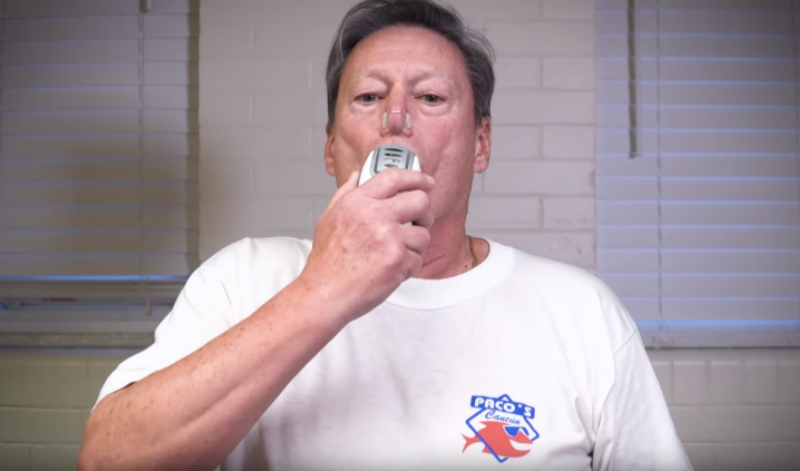
Man using inspiratory muscle training device With IMST, just taking 30 deep breaths daily (5 minutes) using the hand-held inspiratory muscle trainer device can improve your cardiovascular health and boost your physical and cognitive function. (Photo: CU Boulder)
A simple workout, IMST involves vigorous inhalation through a hand-held device called an inspiratory muscle trainer that provides resistance.
“It’s basically strength-training for the muscles you breathe in with,” explained study lead Daniel Craighead, PhD, postdoctoral fellow, Integrative Physiology of Aging Laboratory, CU Boulder, Boulder, CO.
The technique was first developed in the 1980s as a non-pharmacological intervention for the improvement of respiratory symptoms in critically ill patients following mechanical ventilation cessation. However, IMST has also been assessed in other studies for the improvement of various respiratory conditions, notably chronic obstructive pulmonary disease, as well as lung capacity improvement in patients with lung diseases.
In a 6-week trial on the effects of IMST on obstructive sleep apnea, University of Arizona researchers found that 30 inhalations a day using a hand-held device resulted in more restful sleep, stronger inspiratory muscles, and lower systolic blood pressure levels (by about 12 mmHg) among participants.

The promising results from this trial prompted CU Boulder researchers to investigate the potential benefits of IMST for cardiovascular, cognitive, and physical health in a cohort of 50 middle-aged adults in a 6-week study. Participants were assigned either to an IMST intervention group or a control group. In the intervention group, participants were tasked with taking 30 deep breaths daily, which took about 5 minutes to complete, via the inspiratory muscle trainer. In the control group, participants mimicked the same process but used a low-resistance sham breathing device instead.
Now roughly half-way through the study, the researchers have noted significant reductions in blood pressure levels and improvements in large-artery function among IMST intervention participants vs those in the control group. Furthermore, cognitive and treadmill test results were superior among participants in the intervention group vs participants in the control group. Specifically, the IMST group was able to run for longer and keep their heart rate and oxygen consumption low when asked to exercise to exhaustion.
“We suspect that as you improve the function of your respiratory muscles, they don’t need as much blood to work and that blood can be redistributed to your legs, so you exercise longer,” said Dr. Craighead.(If you think that you don't understand the creation of nitric oxide and what it does.)
The researchers hope that the ease of the technique coupled with the comfort of a home setting will encourage people to perform the 5-minute workout regularly and enjoy health benefits they might not otherwise receive.

Wednesday, November 4, 2015

Stroke Rounds: MRI Works for Stent Retriever Tx Selection

So rather than working on coming up with solutions for every stroke patient we have our medical staff working to improve  results for those who have smaller strokes. Lazy irresponsible bastards. This would require staffed MRIs in all stroke hospitals. Managers should be tackling the hard problems not just tweaking the existing recommendations. But we have NO leaders in stroke so we shouldn't complain when they do worthless things.
http://www.medpagetoday.com/Cardiology/Strokes/54471?

Picks patients more likely to do well -- and more of them, study suggests

MRI "compares favorably" with CT for selection of ischemic stroke patients for endovascular thrombectomy when combined with clinical characteristics, an observational study suggested.
A favorable outcome, with modified Rankin Scale (mRS) score of 2 or less at 90 days, occurred in 52.5% of patients determined likely to benefit by the MRI and clinical criteria, compared with 25.0% of patients determined uncertain to benefit by the same criteria but who were treated anyway (P=0.02).
Advertisement
The MRI-based determination was the only factor to remain significantly associated with outcome on multivariable logistic regression, Thabele M. Leslie-Mazwi, MD, of Massachusetts General Hospital in Boston, and colleagues found.
Even among those who actually achieved successful reperfusion, the MRI-based determination still selected a group more likely to do well: 74.1% (20 of 27) in the "likely to benefit" group versus 33.3% (eight of 24) "uncertain to benefit" patients had a favorable outcome (P=0.004).
"Patients prospectively classified as likely to benefit based on diffusion MRI and clinical criteria (including age and time from onset) have a likelihood of favorable outcome after successful thrombectomy similar to that found in recent trials," the authors concluded.
The difference was "that MRI use in a clinical setting produced a higher treated to screened ratio," they wrote in the paper online in JAMA Neurology.
The ratio of treated to screened patients was one to three in their single-center prospective cohort of 72 patients with middle cerebral artery or terminal internal carotid artery ischemic stroke who got thrombectomy from 2012 through 2014.
Advertisement
By comparison, "the most selective recent trials" EXTEND-IA and SWIFT PRIME had ratios of one in 13 and one in 7.5, respectively, Leslie-Mazwi noted in an email to MedPage Today. "These findings may point to a better way of identifying which severe stroke patients will benefit from invasive treatments."
The exact imaging criteria required for entry have varied across the spate of recent positive trials with mechanical clot busters.
EXTEND-IA used perfusion CT imaging to measure salvageable brain as an indication of "likely to benefit." SWIFT PRIME required perfusion imaging by CT or MR angiography, while ESCAPE used noncontrast CT and CT angiography with MRI discouraged as too time consuming.
No clear mandate has emerged for one over the other, and experts have noted that MR CLEAN showed a benefit of thrombectomy over medical treatment alone with little in the way of imaging required to confirm small core infarct.
However, patient selection appears key to the magnitude of benefit, with trials that did require CT selection showing about double the advantage over medical treatment as MR CLEAN and REVASCAT.
Leslie-Mazwi's group labeled those as likely to benefit as age under 80, with a time from stroke onset or last seen well to groin puncture of less than 6 hours, and a premorbid baseline mRS score of 1o or less, as well as more than 12 months of life expectancy, and a diffusion-weighted imaging stroke volume less than 70 mL.
Patients somewhat outside of those criteria -- 80 and older, with a 6 to 8 hour time from onset, premorbid mRS score of 2 to 3, 6 to 12 months' life expectancy, or a lesion volume of 70 to 100 mL -- were considered uncertain to benefit.
"We should rigorously investigate the limits of this therapy," Leslie-Mazwi told MedPage Today. "Imaging selection is part of that rigorous evaluation. We will see attempts being made to understand better who can be treated late, and who can be treated with stroke in the posterior circulation, populations where many questions remain. We think MRI will be essential in defining those parameters."
Meanwhile, centers must commit to speed not just in whatever imaging strategy they choose, but also in priming the interventional team, using bundled kits for material, and every other strategy that can shave precious minutes off the time to reperfusion, SWIFT PRIME primary investigator Jeffrey Saver, MD, of the University of California Los Angeles, told MedPage Today in an earlier interview on best practices.