Use the labels in the right column to find what you want. Or you can go thru them one by one, there are only 33,819 posts. Searching is done in the search box in upper left corner. I blog on anything to do with stroke. DO NOT DO ANYTHING SUGGESTED HERE AS I AM NOT MEDICALLY TRAINED, YOUR DOCTOR IS, LISTEN TO THEM. BUT I BET THEY DON'T KNOW HOW TO GET YOU 100% RECOVERED. I DON'T EITHER BUT HAVE PLENTY OF QUESTIONS FOR YOUR DOCTOR TO ANSWER.
What this blog is for:
My blog is not to help survivors recover, it is to have the 10 million yearly stroke survivors light fires underneath their doctors, stroke hospitals and stroke researchers to get stroke solved. 100% recovery. The stroke medical world is completely failing at that goal, they don't even have it as a goal. Shortly after getting out of the hospital and getting NO information on the process or protocols of stroke rehabilitation and recovery I started searching on the internet and found that no other survivor received useful information. This is an attempt to cover all stroke rehabilitation information that should be readily available to survivors so they can talk with informed knowledge to their medical staff. It lays out what needs to be done to get stroke survivors closer to 100% recovery. It's quite disgusting that this information is not available from every stroke association and doctors group.
Tuesday, February 24, 2026
Pilot feasibility study of implementing 3D-printed assistive devices through user-provider collaboration in hospital-based stroke rehabilitation
Sunday, February 4, 2024
An evaluation of 3D printable elastics for post stroke dynamic hand bracing: A pilot study
Bad research, cherry picked candidates. No survivor should be left behind.
An evaluation of 3D printable elastics for post stroke dynamic hand bracing: A pilot study
NARIC Accession Number: J93191. What's this?
Author(s): Huber, Justin, Slone, Stacey, Bazrgari, Babak.
Publication Year: 2023.
Abstract: Study explored the feasibility of using three-dimensional printable (3DP) elastic materials to create dynamic hand orthoses for stroke survivors. A dynamic orthosis featuring a replaceable finger component was fabricated using 3DP elastic materials. Duplicates of the finger component were printed using different materials ranging from low stiffness (low elastic modulus) to relatively high stiffness (high elastic modulus). Five stroke survivors with predominantly moderate hand impairment(So cherry picking! The only goal in stroke is 100% recovery for all!) were recruited to evaluate usability and impact of orthoses on upper-extremity function and biomechanics. No significant differences in usability were found between 3D-printed orthoses and a commercial orthosis. Increases in stiffness of the 3DP material reduced pincer force and the Box and Block Test (BBT) score. In comparison, the commercial orthosis did not reduce pincer force but may reduce the BBT score to a degree that is clinically significant. These findings suggest that a dynamic orthosis is a feasible clinical application of 3DP elastic materials, and future study is warranted.
Descriptor Terms: ASSISTIVE TECHNOLOGY, DEVICES DESIGN, DEXTERITY, FEASIBILITY STUDIES, LIMBS, MOTOR SKILLS, ORTHOTICS.
Can this document be ordered through NARIC's document delivery service*?: Request Information.
Citation: Huber, Justin, Slone, Stacey, Bazrgari, Babak. (2023.) An evaluation of 3D printable elastics for post stroke dynamic hand bracing: A pilot study. Assistive Technology., 35(6), Pgs. 513-522. Retrieved 1/30/2024, from REHABDATA database.
Saturday, August 5, 2023
The NuroSleeve, a user-centered 3D printed hybrid orthosis for individuals with upper extremity impairment
I couldn't find a picture so ask your doctor how likely this will restore your arm function.
The NuroSleeve, a user-centered 3D printed hybrid orthosis for individuals with upper extremity impairment
- Mehdi Khantan,
- Mikael Avery,
- Phyo Thuta Aung,
- Rachel M. Zarin,
- Emma Hammelef,
- Nabila Shawki,
- Mijail Demian Serruya &
- Alessandro Napoli
Journal of NeuroEngineering and Rehabilitation volume 20, Article number: 103 (2023) Cite this article
Abstract
Background
Active upper extremity (UE) assistive devices have the potential to restore independent functional movement in individuals with UE impairment due to neuromuscular diseases or injury-induced chronic weakness. Academically fabricated UE assistive devices are not usually optimized for activities of daily living (ADLs), whereas commercially available alternatives tend to lack flexibility in control and activation methods. Both options are typically difficult to don and doff and may be uncomfortable for extensive daily use due to their lack of personalization. To overcome these limitations, we have designed, developed, and clinically evaluated the NuroSleeve, an innovative user-centered UE hybrid orthosis.
Methods
This study introduces the design, implementation, and clinical evaluation of the NuroSleeve, a user-centered hybrid device that incorporates a lightweight, easy to don and doff 3D-printed motorized UE orthosis and a functional electrical stimulation (FES) component. Our primary goals are to develop a customized hybrid device that individuals with UE neuromuscular impairment can use to perform ADLs and to evaluate the benefits of incorporating the device into occupational therapy sessions. The trial is designed as a prospective, open-label, single-cohort feasibility study of eight-week sessions combined with at-home use of the device and implements an iterative device design process where feedback from participants and therapists informs design improvement cycles.
Results
All participants learned how to independently don, doff, and use the NuroSleeve in ADLs, both in clinical therapy and in their home environments. All participants showed improvements in their Canadian Occupational Performance Measure (COPM), which was the primary clinical trial outcome measure. Furthermore, participants and therapists provided valuable feedback to guide further development.
Conclusions
Our results from non-clinical testing and clinical evaluation demonstrate that the NuroSleeve has met feasibility and safety goals and effectively improved independent voluntary function during ADLs. The study’s encouraging preliminary findings indicate that the NuroSleeve has met its technical and clinical objectives while improving upon the limitations of the existing UE orthoses owing to its personalized and flexible approach to hardware and firmware design.
Trial Registration: ClinicalTrials.gov identifier: NCT04798378, https://clinicaltrials.gov/ct2/show/NCT04798378, date of registration: March 15, 2021.
Background
Neuromuscular disorders impose a significant socioeconomic burden on society. There are over 7 million stroke survivors in the United States alone [1, 2], 62% of whom have a loss of dexterity in their upper extremities (UE) [3]. Approximately 291,000 Americans are living with disability due to spinal cord injury (SCI) [4], and Duchenne Muscular Dystrophy (DMD) and Becker Muscular Dystrophy (BMD) combined affect around 14 in 100,000 American males [5]. Neurological disorders and diseases often result in permanent disability that prevents individuals from performing Activities of Daily Living (ADLs) independently [4, 6]. Stroke [1, 7, 8], SCI [4, 9, 10], and muscular dystrophy (MD) frequently result in debilitating UE motor impairments that persist beyond rehabilitation discharge [11, 12]. Individuals with moderate to severe neurological UE impairment frequently exhibit limited active movement in their paretic elbow and little to no active movement in their paretic wrists and fingers [13, 14].
Rehabilitation therapies that implement assistive neurotechnology devices tend to improve functional motor recovery, reducing impairment and improving independence in ADLs, quality of life, and community participation [15,16,17,18,19]. Over the past six decades, it has been shown that the use of active wearable neurotechnology devices benefits individuals living with UE impairment by helping them perform ADLs [20,21,22].
Currently, commercially available active UE orthoses for home use can be divided into two groups: (1) mechanically actuated orthoses [23,24,25,26,27], which use either electric or pneumatic motors to achieve motion; and (2) Functional Electrical Stimulation (FES) orthoses [28,29,30] which electrically stimulate muscles to achieve motion. The application of electrical stimulation to a person's muscles depolarizes peripheral neurons and elicits muscle contractions, allowing the individial to perform a movement. FES can benefit individuals by substituting or enhancing movement. Repeated muscle activation using FES may also increase voluntary motor control. This suggests that the use of FES devices improves motor recovery and can serve as a rehabilitation technique as well as assist with ADLs [31, 32]. Thus, FES has evolved into a crucial treatment approach that clinicians may use to help individuals with stroke and SCI regain the capacity to stand, walk, reach, and grasp [33].
Widespread use of the cummercially available active orthoses is hindered by several factors: (1) the challenge of making them form-fitting, comfortable, authentic, easy to use, portable, and lightweight; (2) the inability to customize the placement of sensors as input controls and effectors to optimize user movements; and (3) the lack of rehabilitation professionals skilled in training individuals on how to integrate the orthosis into daily routines. To the best of our knowledge, no currently available commercial orthosis offers all the aforementioned factors for restoring UE functionality during ADLs in “real-world” situations [34,35,36,37,38,39,40,41].
Academically fabricated motorized UE orthoses have their own limitations; they often need to be fixed to a wheelchair or stationary surface (e.g., a table) [42,43,44] or require support from the person’s back and shoulders [45] in order to function. Our clinical experience suggests that most individuals would not find such devices practical to use in ADLs or in the community. Soft robotic sleeves [46,47,48,49,50,51,52] provide an alternative to motor-based approaches; however, such sleeves are not easy to don and doff, and most require an air compressor or compressed gas tanks to function. Hence, soft robotic sleeves may not easily find their market without first addressing their practicality and usability issues.
To overcome the limitations of the currently available UE orthoses, the next generation of UE devices must be simple to use to encourage acceptance and integration in ADLs while having favorable aesthetics for widespread adoption. Specifically, a user-friendly orthosis should be effective, comfortable, portable, form-fitting, safe and easy to use, easy to don and doff, and offer the individual a variety of options for controlling it. Furthermore, it should be lightweight; this is paramount because continuous usage of heavy UE orthoses may have a detrimental effect on user satisfaction and compliance and may contribute to physical problems such as pressure point formation, muscular fatigue, perspiration, and skin irritation. Also, an important requirement for the UE orthoses to be effectively incorporated into ADLs may be the battery life of more than 8 h, making it possible to be used each day on a single battery charge. These numerous requirements cannot be met in devices that are designed following the “one-size-fits-all” principle without accounting for the unique needs of each individual [34,35,36,37,38,39,40,41].
This study introduces the design, development, implementation, and clinical evaluation of the NuroSleeve, a novel user-centric active UE orthosis. The NuroSleeve design accommodates the unique needs and conditions of individuals by integrating (1) a user-specific control mechanism, (2) a custom 3D-printed, lightweight, and easy to don and doff motorized splint, and (3) an off-the-shelf FES unit to take advantage of the electrical stimulation benefits [34,35,36,37, 40]. In addition, the design process incorporates feedback from individuals to tailor the system components and functionality for their personal needs and inform overall design improvements. Our goal in developing the NuroSleeve is to meet the unique needs of individuals and promote the adoption of the technology in clinical settings, at home, and in the community.
More at link.
Tuesday, August 9, 2022
3D Printed Soft Robotic Hand Combining Post-Stroke Rehabilitation and Stiffness Evaluation
I like the fact they are considering treating spasticity but I can't tell from this if spastic fingers could ever get into soft gloves.
3D Printed Soft Robotic Hand Combining Post-Stroke Rehabilitation and Stiffness Evaluation
- Conference paper
- First Online:
-
1 Accesses
Part of the Lecture Notes in Computer Science book series (LNAI,volume 13457)
Abstract
Soft rehabilitation devices have been invented and applied for hand function recovery. In this paper, we propose a new Ring-reinforced 3D printed soft robotic hand, which combines hand rehabilitation and joint stiffness evaluation. The elastomer body of Ring-reinforced Soft-Elastic Composite Actuator (R-SECA) is 3D printed directly for fitting different sizes of fingers and the Iterative learning model predictive control (ILMPC) algorithm is used for controlling. Torque compensating layer inside R-SECA enables finger flexion and extension despite finger spasticity. Plastic rings are used to refrain radial expansion and reinforce the actuator. Bending angle and output tip force at different air pressure inputs are explored with four different R-SECA (120 mm, 112 mm, 96 mm, 72 mm length). Four-stroke survivors are recruited to evaluate the effectiveness of the soft robotic hand, and hand function improvement can be observed from the clinical evaluation data and stiffness evaluation outcomes.
Monday, May 9, 2022
IISc develops customisable 3D printed gloves for rehabilitating stroke patients
I like this since it is not a glove which spastic fingers could never get on.
What is your doctor's EXACT STROKE REHAB PROTOCOL FOR 100% RECOVERY OF YOUR HAND. No protocol, fire them and get the board of directors fired also for not setting correct goals for the stroke department.
IISc develops customisable 3D printed gloves for rehabilitating stroke patients
https://www.news9live.com/science/cold-survival-strategies-of-animals-are-not-mutually-exclusive-alternatives-169165?infinitescroll=1
![]() |
| The soft, wearable device for stroke rehabilitation. (Image credit: Mesoscopic Lab, Department of Physics, IISc) News |
https://www.news9live.com/science/cold-survival-strategies-of-animals-are-not-mutually-exclusive-alternatives-169165?infinitescroll=1
https://www.news9live.com/science/iisc-develops-customisable-3d-printed-gloves-for-rehabilitating-stroke-patients-169155
Monday, September 28, 2020
A HERO for Stroke Patients: a new hand exoskeleton 3D printed on textiles for rehabilitation
This sounds great. Where is the protocol for building it AND the protocol for recovery of your hand? Your hospital should have it available in one month. If not, have the board of directors fired.
A HERO for Stroke Patients: a new handexoskeleton 3D printed on textiles for rehabilitation
, Camille Reategui Silva, Severino Peixoto Nunes Netto, Edgard Morya and
Fabricio Lima Brasil
Abstract
Background:Robotic equipment associated with brain-machine interfaces (BMI) may aid the
motor rehabilitation of these patients. BMIs involving orthotic control by motor
imagery practices have been successful in restoring stroke patients’ movements.
However, there is still little acceptance of the robotic devices available, either by
patients and clinicians, mainly because of the high costs involved. Motivated by
this context, the present work aims to design and construct the Hand
Exoskeleton for Rehabilitation Objectives (HERO) to recover extension and
flexion movements of the fingers.
Methods:
produce a lightweight and wearable device. 3D-printed actuators have also been
designed to reduce equipment costs. The actuator transforms the torque of DC
motors into linear force transmitted by Bowden cables to move the fingers
passively. The exoskeleton was controlled by neuroelectric signal —
electroencephalography (EEG). Concept tests were performed to evaluate control
performance. A healthy volunteer was submitted to a training block with the
exoskeleton, according to the Graz-BCI protocol. Ergonomy was evaluated with a
2D tracking software.
Results:
pleasing. HERO’s glove can be compared to ordinary clothing. The weight over
the hand was around 102 g. The volunteer(Was this a stroke survivor?) was able to control the exoskeleton
with 91.5% accuracy.
Conclusions:
ergonomic, and low-cost device. Its use is not restricted to a clinical setting.
Thus, users will be able to execute motor training with the HERO at hospitals,
rehabilitation clinics, and home, increasing the rehabilitation intervention time.
This may favor motor rehabilitation and improve the life quality of stroke
survivors.
Tuesday, March 24, 2020
Designing One Degree of Freedom Nursing Robot for Stroke Rehabilitation
I can't figure out how to visualize how this looks or works. So impossible to tell my doctor to make something similar using 3d software.
Designing One Degree of Freedom Nursing Robot for Stroke Rehabilitation
IOP Conference Series: Materials Science and Engineering, Volume 767, 1st International Symposium on Engineering and Technology (ISETech) 2019 23 December 2019, Perlis, Malaysia
Abstract
Tuesday, November 12, 2019
A wearable 3D printed elbow exoskeleton to improve upper limb rehabilitation in stroke patients
You'll have to have your doctor get this book from Chinese scientists, the eBook is only $160. Then your doctor can contact a 3d printing contractor to get this built for you.
A wearable 3D printed elbow exoskeleton to improve upper limb rehabilitation in stroke patients
Friday, January 12, 2018
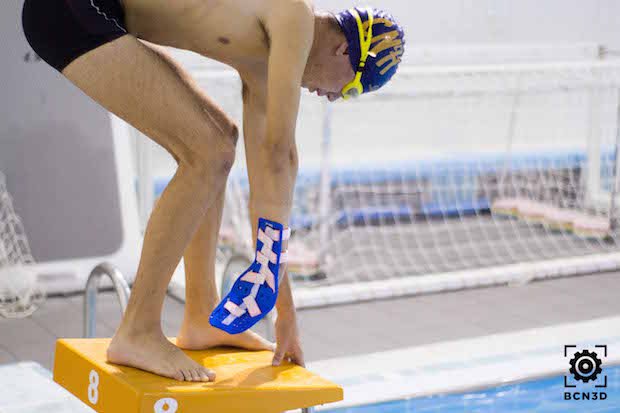
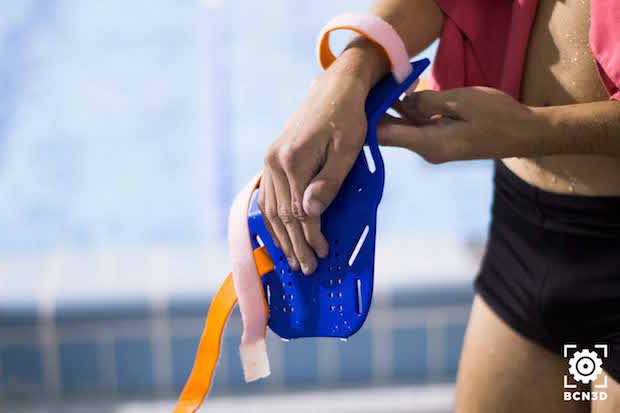
BCN3D Sigma 3D printer helps 16-year-old swimmer in stroke rehabilitation
https://www.tctmagazine.com/3d-printing-news/bcn3d-sigma-3d-printer-swimmer-stroke-rehab/