Does your doctor have enough intelligence to get this immediately implemented
in the hospital food service?
Do you prefer your doctor and hospital incompetence NOT KNOWING? OR NOT DOING?
Plant protein in midlife boosts chances of healthy aging, study finds

A study published in The American Journal of Clinical Nutrition shows that dietary protein intake in midlife can significantly increase the likelihood of healthy aging.
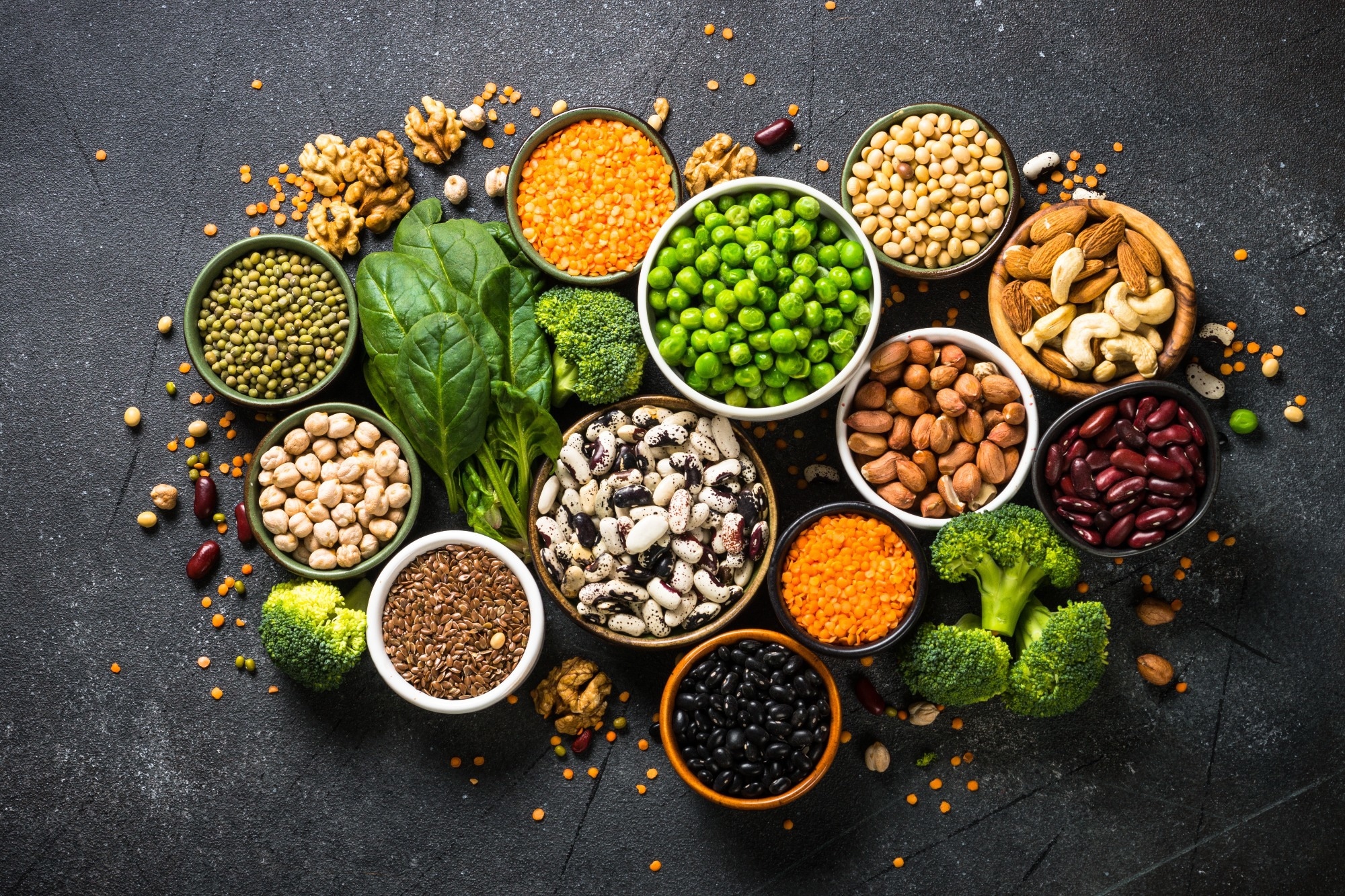 Study: Dietary protein intake in midlife in relation to healthy aging – results from the prospective Nurses’ Health Study cohort. Image Credit: nadianb / Shutterstock
Background
People's life expectancy has increased significantly in recent decades. In the United States, the number of adults aged 60 years and above is expected to increase by 2-fold in 2060. However, an increase in lifespan is not necessarily associated with a concomitant increase in disability-free lifespan because of age-related onset of chronic diseases and decline in physical and cognitive functions.
Diet plays a major role in maintaining a healthy lifespan. In this context, evidence indicates that higher protein intake is associated with improved physical functioning and reduced muscle loss among older adults. Protein intake can also prevent bone loss and fractures in this vulnerable population.
Among various protein sources, a higher animal protein intake in middle adulthood has been found to increase the risk of premature mortality from cardiovascular complications. In contrast, plant protein intake in older adulthood has been found to be associated with a lower risk of frailty.
In this study, scientists have investigated the association between protein intake and healthy aging in middle-aged nurses residing in the United States.
Study design
The study was conducted on a total of 48,762 female nurses whose age was below 60 years in 1984. The participants were selected from the Nurses' Health Study (NHS), established in 1976, with 121,700 registered female nurses aged 30–55 years at enrollment. Lifestyle practices and medical history of the participants were recorded at baseline and every two years thereafter.
Information on total protein, animal protein, dairy protein, and plant protein intake was collected from the participants through food-frequency questionnaires. The healthy aging status of the participants was assessed in 2014 or 2016 through questionnaires. The definition of healthy aging included the absence of eleven major chronic diseases, good mental health, and the absence of any cognitive and physical decline.
Eleven major chronic diseases were cancer, type 2 diabetes, myocardial infarction, coronary artery bypass graft surgery or percutaneous transluminal coronary angioplasty, congestive heart failure, stroke, kidney failure, chronic obstructive pulmonary disease, Parkinson's disease, multiple sclerosis, and amyotrophic lateral sclerosis.
The relationship between protein intake and healthy aging was assessed after adjusting for lifestyle factors, demographic characteristics, and health status of the participants.
Important observations
Complete healthy aging was achieved by 7.6% of participants. In addition, about 31% of participants reported not having any of the eleven major chronic diseases, 47.6% reported not having memory impairments, 15% reported not having impairments in physical functioning, and 37.3% reported having good mental health status.
 CHEMUK - Highlights from 2022 eBook Compilation of the top interviews, articles, and news in the last year. Download the latest edition
Association between protein intake and healthy aging
The comparison analysis between various protein sources indicated that while animal protein intake can reduce the possibility of healthy aging by 6%, consumption of plant protein can increase the possibility of healthy aging by 46% for every 3%-energy increment.
The findings obtained after adjusting for the participant's body mass index (BMI) revealed that total protein and plant protein intake could increase the likelihood of healthy aging by 5% and 31%, respectively, for every 3%-energy increment.
Regarding the major domains of healthy aging, the study found that the intake of total and animal proteins can significantly increase the risk of chronic diseases. In contrast, the intake of dairy and plant proteins was found to reduce the risk of chronic diseases. Furthermore, the study found that animal protein and plant protein can reduce the possibility of physical disabilities by 5% and 41%, respectively. Among all protein sources, only plant protein intake showed a significant association with good mental health status.
The findings of substitution analysis indicated that isocaloric substitution of animal or dairy protein, total or refined carbohydrate, total fat, or saturated fatty acid with plant protein could increase the likelihood of healthy aging, reduce the risk of chronic diseases, and improve physical and mental health.
Study significance
The study finds that higher dietary protein intake, especially plant protein intake, in middle adulthood can lead to disease and disability-free healthy aging. Future studies are needed to ascertain the amount of protein intake to promote healthy aging.
Plants rich in protein
- Lentils: A great source of protein, also provides good amounts of fiber, iron, and potassium.
- Chickpeas: Another excellent source of protein and can be used in many dishes, including hummus and chana masala.
- Black Beans: Not only high in protein but also rich in fiber and antioxidants.
- Quinoa: A complete protein, also gluten-free.
- Almonds: A protein-rich nut, rich in healthy fats, vitamin E, and magnesium.
- Peanuts: High in protein and healthy fats.
- Chia Seeds: High in protein but also rich in omega-3 fatty acids and fiber.
- Hemp Seeds: A complete protein source, rich in essential fatty acids.
- Spirulina: Blue-green algae protein that contains a good amount of B vitamins, iron, and other nutrients.
- Korat AVA. 2024. Dietary protein intake in midlife in relation to healthy aging – results from the prospective Nurses' Health Study cohort. The American Journal of Clinical Nutrition, https://www.sciencedirect.com/science/article/pii/S0002916523662823

