Changing stroke rehab and research worldwide now.Time is Brain! trillions and trillions of neurons that DIE each day because there are NO effective hyperacute therapies besides tPA(only 12% effective). I have 523 posts on hyperacute therapy, enough for researchers to spend decades proving them out. These are my personal ideas and blog on stroke rehabilitation and stroke research. Do not attempt any of these without checking with your medical provider. Unless you join me in agitating, when you need these therapies they won't be there.

What this blog is for:

My blog is not to help survivors recover, it is to have the 10 million yearly stroke survivors light fires underneath their doctors, stroke hospitals and stroke researchers to get stroke solved. 100% recovery. The stroke medical world is completely failing at that goal, they don't even have it as a goal. Shortly after getting out of the hospital and getting NO information on the process or protocols of stroke rehabilitation and recovery I started searching on the internet and found that no other survivor received useful information. This is an attempt to cover all stroke rehabilitation information that should be readily available to survivors so they can talk with informed knowledge to their medical staff. It lays out what needs to be done to get stroke survivors closer to 100% recovery. It's quite disgusting that this information is not available from every stroke association and doctors group.

Showing posts with label abdication. Show all posts

Friday, August 7, 2020

Low-Dose Aspirin Prophylaxis in Elderly Ups Risk of Serious GI Bleeds

Well then do the research that precisely identifies which persons will have this problem. Not doing so is just abdicating responsibility. 

Low-Dose Aspirin Prophylaxis in Elderly Ups Risk of Serious GI Bleeds

Overall increase of about 60%, large study shows


Low-dose prophylactic aspirin increased overall baseline gastrointestinal (GI) bleeding risk by approximately 60% in elderly users -- 87% for upper- and 36% for lower-GI bleeds -- according to a large randomized placebo-controlled trial. While the absolute 5-year risk of serious bleeding was a modest 0.25% (95% CI 0.16-0.37) for a 70-year-old not on aspirin, the risk rose to 5.03% (2.56-8.73) for an 80-year-old aspirin user who had additional risk factors, reported Suzanne E. Mahady, MD, of Monash University in Melbourne, Australia, and colleagues.

As shown in the team's study online in Gut, risk factors for GI bleeding included advancing age (especially 80 and older), smoking, hypertension, truncal obesity, chronic kidney disease, and non-steroidal anti-inflammatory use.

The Aspirin in Reducing Events in the Elderly (ASPREE) study was conducted from 2010 to 2017 in 19,114 community-dwelling U.S. and Australian persons ages 70 and older, and was designed to address the lack of robust trial data on significant GI bleeding in older people on low-dose enteric-coated aspirin.

The researchers calculated the incidence, risk factors, and absolute risk, with the endpoint of major GI bleeding involving transfusion, hospitalization, surgery, or death, as determined independently by two physicians blinded to trial arms.

Over a median follow-up of 4.7 years (88,389 person-years), there were 264 clinically significant GI bleeding episodes, 137 upper-GI bleeds, 89 in aspirin users (total of 9,525 assigned to that group) and 48 in placebo recipients (9,589 individuals), for a hazard ratio of 1.87 (95% CI 1.32-2.66, P<0.01). The event rates were 2.1 per 1,000 person-years and 1.1 per 1,000 person-years, respectively.

In addition, there were 127 lower-GI bleeds overall, 73 and 54 in the aspirin and placebo arms, respectively (HR 1.36, 95% CI 0.96-1.94, P=0.08). The event rates were 1.7 and 1.3 per 1,000 person-years in the aspirin and placebo groups, respectively. Two fatal bleeds occurred in the placebo arm. Multivariable analyses indicated that age, smoking, hypertension, chronic kidney disease, and obesity increased bleeding risk in 80-year-old aspirin users with risk factors by 5.03% (range of 2.56-8.73).

The event rate for upper GI bleeding was 2.1 per 1,000 person-years in the aspirin group vs 1.1 per 1,000 person-years in the placebo group.

As for lower-GI bleeding events, 73 occurred in the aspirin group (73/9,525, 0.8%) and 54 in the placebo group (54/9,589, 0.6%), for a hazard ratio (HR) of 1.36 (95% CI 0.96-1.94, P=0.08).

There was no increase in the fatal bleeding rate in the aspirin arm, but two fatal bleeds occurred in the placebo arm. Stage 3 or higher chronic kidney disease, which affected 25% of the study population at entry, was associated with a 46% higher overall bleeding risk.

"Clinicians may use these data to assess bleeding risk, review the indication for aspirin, and target modifiable risk factors to reduce harm," the investigators wrote.

Asked for her perspective, Yamini Natarajan, MD, of Baylor College of Medicine in Houston, who was not involved with the study, noted that recent research has highlighted the limitations of widespread aspirin use for primary prevention.

"These trials, including the original ASPREE trial, led to a modification of guidelines by the American Heart Association and the American College of Cardiology, with the new guidelines suggesting a more nuanced approach to prescribing aspirin, taking into account the risk of adverse effects such as bleeding versus the benefit of preventing cardiovascular disease," she told MedPage Today.

Since this analysis further demonstrates that aspirin increases GI bleeding in the elderly, this risk should therefore be considered before prescribing aspirin therapy, she said.

Natarajan added that further studies are needed to evaluate the risk of bleeding in patients who are taking aspirin for secondary prevention and the protective effect of proton pump inhibitors in patients who need aspirin for primary or secondary prevention. "Patients should not stop aspirin on their own," she emphasized. "They should discuss with their doctors their risks of both bleeding and cardiovascular disease and determine if aspirin therapy is appropriate for them."

In a 2018 analysis of ASPREE data, daily aspirin not only failed to help generally healthy older people reduce their risk of disability-free survival and cardiovascular disease, but also appeared to raise overall mortality, particularly death from cancer. A recent British meta-analysis of 13 trials of aspirin for primary prevention in mainly younger populations found a similar risk of serious GI bleeding (HR 1.56, 95% CI 1.38 -1.78).

Mahady and co-authors urged more research on how bleeding impacts patients in the long term; how it influences survival, disability-free survival, and quality of life; and how chronic kidney disease affects bleeding risk.

In the meantime, the current study "provides population-based data on GI bleeding in older populations and the impact of aspirin, providing robust and clinically meaningful estimates for use in clinical practice and future epidemiological studies," the researchers wrote.

Study limitations, they said, included the exclusion of individuals with a previous major bleeding episode or a high risk of bleeding. In addition, the uncertainty surrounding the point estimates for absolute risk illustrated by widening confidence intervals in the presence of more risk factors reflected insufficient statistical power. Future meta-analyses of bleeding events from trials may provide improved precision. Moreover, the investigators said, it was not possible to ascertain Helicobacter pylori status, which might have been useful for analyzing upper-GI bleeds. Finally, the restrictive definition of serious bleeding excluded nasal and nasopharyngeal bleeding events that may have been of significant concern to patients but did not result in hospitalization.

Disclosures

ASPREE was supported by the National Institute on Aging and the National Cancer Institute at the National Institutes of Health, the National Health and Medical Research Council of Australia Monash University, and the Victorian Cancer Agency.

Mahady reported funding from the Vincent Fairfax Family Foundation Establishment Fellowship & Hugh Rogers Fellowship.

Natarajan reported having no competing interests with regard to her comments.


Wednesday, February 19, 2020

Abstract WP206: Cognitive Functioning Predicts Engagement in Inpatient Stroke Rehabilitation

Well then it is obvious that your first task is to get the survivor back to their original cognitive ability. This is your doctor's responsibility. Don't let them abdicate responsibility by using the statement: 'All strokes are different, all stroke recoveries are different.'. Screaming may be required, no excuses are allowed from your stroke medical 'professionals.'

Abstract WP206: Cognitive Functioning Predicts Engagement in Inpatient Stroke Rehabilitation

Originally publishedStroke. ;51:AWP206

Introduction: Patient engagement during inpatient stroke rehabilitation (ISR) is critical to long-term outcomes. Cognitive deficits have demonstrated impact on engagement in rehabilitation. Here, we prospectively investigated the relationship between specific cognitive domains and patient engagement during ISR.
Methods: Of 423 patients completing ISR, 127 (30%) had complete data with mean age=67.63+15.46 years, NIHSS=6.78+5.68, and onset from stroke to ISR admission=8.55+7.72 days. The sample comprised 55% males and 56.7% had a college education or more. The National Institute of Neurologic Disorders - Canadian Stroke Network (NINDS-CSN) 30-minute cognitive screening battery was administered within 72 hours of ISR admission to assess verbal fluency, executive functioning, and memory. The Hopkins Rehabilitation Engagement Ratings Scale (HRERS; total score 0-30, higher=greater engagement) was completed by treating therapists at ISR discharge. Spearman rank-order correlations (rs) examined the relationships between the HRERS total score and the NINDS-CSN total (the mean z-score across subtests) as well as its 8 subtests. Items with correlations p<.10 were entered into a logistic regression (controlling for age, comorbidity, and stroke severity) to predict low (HRERS ≤ 25) versus high engagers (HRERS > 26).
Results: NINDS-CSN total and 6 subtests assessing verbal fluency and executive function were weakly to moderately correlated with HRERS scores (rs=0.23-.38, all p’s <.01). Memory subtests were not associated with HRERS. Higher NINDS-CSN total score and subtests reflecting executive functions modestly increased the odds of being a high engager (Odds Ratios ranged from 1.03-1.08, 95% CIs ranged from 1.013-1.134, all p’s < .01).
Conclusion: Poor executive functioning may pose a barrier to patient engagement in ISR. Executive functions may impact patients’ ability to shift among activities, maintain attention, and rapidly process information during therapy. Rehabilitation therapists should consider making environmental modifications, providing more frequent guidance and positive reinforcement, and presenting simplified material to increase engagement in stroke patients with executive dysfunction.

Monday, January 13, 2020

9 Foods that Help Stroke Recovery (Backed by the Latest Science)

From Flint Rehab, so quality info but still almost totally useless. No amounts given, so our stroke medical professionals are still abdicating their responsibility to get us recovered.  Start guessing.

9 Foods that Help Stroke Recovery (Backed by the Latest Science)


Here are the healthiest foods that help stroke recovery, backed by the latest science.

1. Flaxseeds (Alpha-Linolenic Acid)

Flaxseeds are a great source of alpha-linolenic acid, which is a plant-based essential omega-3 fatty acid that must be obtained through the diet. Your body cannot produce ALA on its own – it must be eaten.
A recent review article highlighted that ALA boosts brain-derived neurotrohpic factor and boosts neuroprotection and neuroplasticity.
Not only can ALA help with stroke recovery, but it can also help protect against stroke, too. This is critical for stroke patients who are at a higher risk of having another stroke.

2. Salmon (EPA)


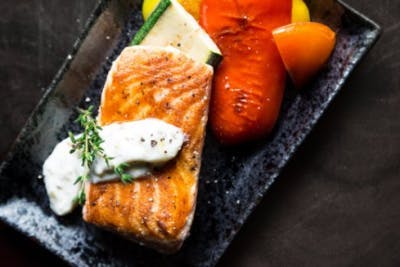
platter of salmon and foods that help stroke recovery
Omega-3 fatty acids have been shown to help normalize BDNF levels and protect against reduced neuroplasticity. That’s why they are one of the top 7 vitamins for stroke recovery.
However, if you can get your vitamins from food, that’s the better choice. Fatty fish like salmon contain an omega 3 called EPA, which your body needs. Your body does produce some EPA on its own, so it’s a good idea to add natural sources of it to your diet.

3. Blueberries (Flavonoids)

Blueberries have been shown to improve cognitive abilities likely due to their flavonoids, which are known to boost BDNF. If your doctor has suggested a reduced-fat diet to help manage stroke risk factors like high cholesterol, blueberries could make a great addition to your diet.

4. Pomegranate (Antioxidants)

Whether you’re eating them or drinking their juice, pomegranates are high in potent antioxidants, which help protect you from the damage caused by free radicals. Since the brain is most sensitive to free radical damage, pomegranates easily make the list of best foods for stroke recovery.

5. Tomatoes (Lycopene)


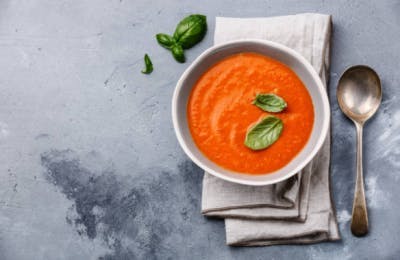
bowl of tomato soup diet for stroke patients
Tomatoes became a fad once they were discovered to be a rich source of the antioxidant lycopene. Although the buzz has faded, it’s still a great dietary choice for stroke patients.
Lycopene was found to provide neuroprotective benefits and reduce the effect of brain damage due to ischemic stroke in rats.
Many lycopene supplements now exist, but we recommend getting your lycopene straight from the source: tomatoes. If you opt for tomato soup, be careful to avoid brands with lots of added sugars.

6. Nuts and Seeds (Vitamin E)

Nuts and seeds are a good source of vitamin E, an antioxidant that corresponds with less cognitive decline as we get older. Although more studies are needed to prove that vitamin E specifically helps with recovery from stroke, it made the list because the brain-boosting benefits are clear.

7. Avocados (Oleic Acid)

The grey matter in your brain that processes information relies on oleic acid to perform at optimal speed, and avocados are an excellent source of oleic acid. It’s also a great source of antioxidants.
One review article claimed that the unique antioxidants in avocados “may be promising as effective neuroprotective agents.”
Try adding a quarter of an avocado to your sandwich, salad, or smoothie.

8. Beans (Magnesium)

Magnesium offers “significant neuroprotection” in different models of stroke in rats. While more studies are needed to prove its benefit for stroke recovery in humans, magnesium makes the list due to its role in neuromuscular function.
Beans are an excellent source of magnesium. Some tasty ways to get them into your diet include hummus and black bean dip.
Learn about magnesium oil for stroke recovery »

9. Red Wine (Polyphenol)

Research has shown that the relative risk of developing ischemic stroke is lowered by moderate alcohol consumption. However, it’s still unclear if the benefit comes from alcohol itself or red wine in particular, which contains a well-known polyphenol called resveratrol.
One study found significant increases in BDNF concentration in rats treated with resveratrol, which puts red wine on the list of foods that help stroke recovery.

Monday, February 26, 2018

Action Plan for Stroke in Europe 2018-2030 - European Stroke Organization


Looking at just two sections this is a complete abdication of responsibility to solve any of the problems in stroke and get to 100% recovery.  Your doctors should be commenting on this and what a pile of shit this is. Oops, I'm not playing by the polite rules of Dale Carnegie, 'How to Win Friends and Influence People'. 
All these incredibly smart people and they don't realize that the goal is 100% recovery and they are doing absolutely nothing to get there.

https://eso-stroke.org/eso/action-plan-for-stroke-in-europe-2018-2030/?
3. RESEARCH AND DEVELOPMENT PRIORITIES

Stroke shares risk factors with cardiovascular disease. Research initiatives in primary prevention of stroke should not be undertaken in isolation; close collaboration with primary prevention initiatives from cardiology, primary health care and public health is strongly recommended and should be covered by a national NCD action plan.

  1. Which factors are at the origin of major health disparities in Europe, including with respect to risk factor prevalence and control, including access and adherence to primary prevention and the influence of low socio-economic status and other social factors?

  1. Can the current risk prediction models be improved by extending the current 10-year risk to 20-year or life-time risk for those at younger age and 5-year or life-time risk for those over 75?

  1. Can further individualisation of primary prevention strategies, for example by investigating how multi-morbidity, poly-pharmacy, geographic and ethnic differences and polygenetic risk profiles, enhance effectiveness?

  1. Can awareness of the potential for primary prevention of stroke be improved by personalized health education about modifiable risk factors?

  1. What are the benefits and harms of screening for stroke risk factors in different populations using different approaches including systematic and opportunistic screening?

  1. Can adherence to primary prevention interventions be improved by using eHealth or mHealth approaches to encourage self-management and by using combination drugs (polypill) and combine individualized approaches with public health interventions?

4. TARGETS FOR 2030


As for the research and development priorities, close collaboration and alignment with cardiovascular disease prevention targets is essential.

  1. To have universal access in Europe to primary preventive treatment based on improved and better-personalized risk prediction models

  1. To have national strategies to implement multisectorial public health interventions promoting and facilitating a healthy life-style, and reducing environmental, socioeconomical and educational factors that increase the risk of stroke

  1. To have evidence-based screening programs at the population level for stroke risk factors using a combination of systematic and opportunistic screening implemented in all European countries

  1. To have blood pressure detected and controlled in 80% of persons with hypertension