Changing stroke rehab and research worldwide now.Time is Brain! trillions and trillions of neurons that DIE each day because there are NO effective hyperacute therapies besides tPA(only 12% effective). I have 523 posts on hyperacute therapy, enough for researchers to spend decades proving them out. These are my personal ideas and blog on stroke rehabilitation and stroke research. Do not attempt any of these without checking with your medical provider. Unless you join me in agitating, when you need these therapies they won't be there.

What this blog is for:

My blog is not to help survivors recover, it is to have the 10 million yearly stroke survivors light fires underneath their doctors, stroke hospitals and stroke researchers to get stroke solved. 100% recovery. The stroke medical world is completely failing at that goal, they don't even have it as a goal. Shortly after getting out of the hospital and getting NO information on the process or protocols of stroke rehabilitation and recovery I started searching on the internet and found that no other survivor received useful information. This is an attempt to cover all stroke rehabilitation information that should be readily available to survivors so they can talk with informed knowledge to their medical staff. It lays out what needs to be done to get stroke survivors closer to 100% recovery. It's quite disgusting that this information is not available from every stroke association and doctors group.

Showing posts with label craptastic. Show all posts

Tuesday, May 3, 2022

More is better than less when it comes to physical activity and cardiovascular disease

Ask your doctor EXACTLY HOW  you're going to do more exercise when they haven't gotten you 100% recovered. THIS IS YOUR DOCTOR'S RESPONSIBILITY. Don't let them weasel out of it by quoting the craptastic saying; 'All strokes are different, all stroke recoveries are different.' That lazy excuse should never come out of any competent stroke medical person. 

Oops, I'm not playing by the polite rules of Dale Carnegie,  'How to Win Friends and Influence People'. 

Telling supposedly smart stroke medical persons they know nothing about stroke is a no-no even if it is true. 

Politeness will never solve anything in stroke. Yes, I'm a bomb thrower and proud of it. Someday a stroke 'leader' will try to ream me out for making them look bad by being truthful , I look forward to that day.

More is better than less when it comes to physical activity and cardiovascular disease


In this interview, we speak to Esmée Bakker about her latest research which investigated the impact physical activity has on cardiovascular disease.

Please could you introduce yourself, tell us about your background in physiology, and what inspired your latest research into cardiovascular disease?

I am a postdoctoral researcher and epidemiologist at the Department of Physiology at the Radboud university medical center (the Netherlands). During my Bachelor's and Master’s Biomedical Sciences degree, I developed a strong interest in cardiovascular/exercise physiology, physical activity, and epidemiology. Thereafter, I enthusiastically started a dual Ph.D. position entitled ‘Physical Activity and Sedentary Behaviour in the Prevention of Cardiovascular Disease’ at Radboudumc (the Netherlands) and Liverpool John Moores University (UK).

During my Ph.D. work, I found that CVD patients are generally highly sedentary and physically inactive. In addition, literature about the dose-response relationship between physical activity and health was limited and inconsistent in this population. Therefore, we started this study where we investigated the dose-response relationship of physical activity in groups with different cardiovascular health statuses.

Often, moderate physical activity is recommended to help with risk reduction surrounding non-communicable disease and mortality. Why is this?

Regular physical activity provides important health benefits by improving cardiorespiratory fitness, blood pressure, glucose and cholesterol levels, bone health, balance and coordination, someone’s mental health, and overcoming weight gain.

By improving these so-called risk factors, physical activity plays an important role in the prevention of chronic diseases such as cardiovascular diseases, brain-related diseases, and cancer.
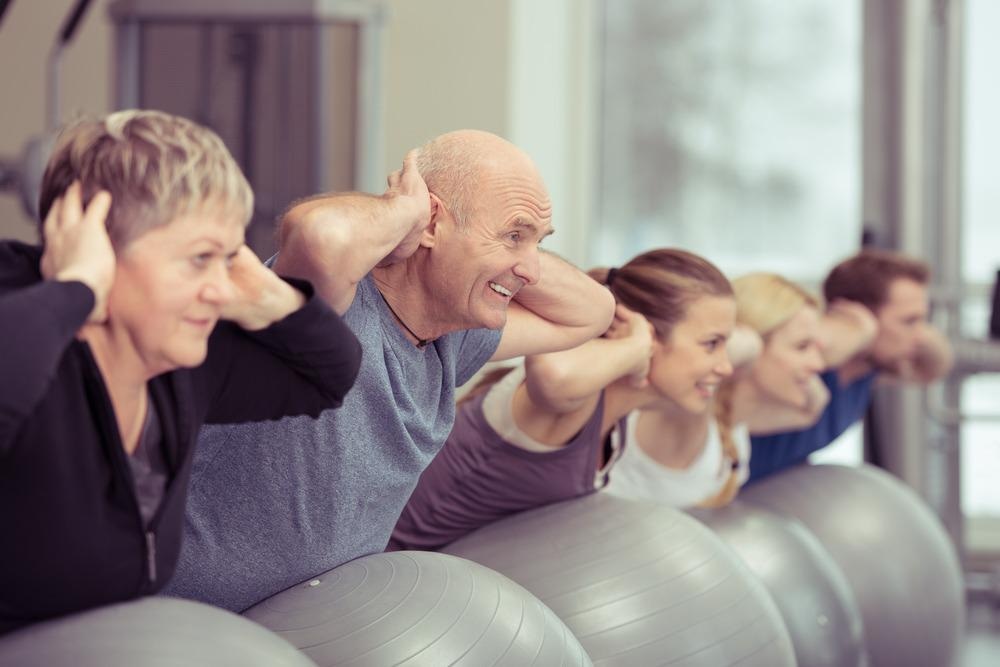
Adults Exercising

Image Credit: ESB Professional/Shutterstock.com

Until now, the relationship between cardiovascular health status and physical activity has remained unknown. Why is this?

Most studies examining the dose-response relationship between physical activity and cardiovascular health are performed in the general population. Some studies were performed in CVD patients, but the results were inconsistent and studies only included CVD patients. This is one of the first studies which compared the dose-response association between different cardiovascular health status groups.

Can you describe how you carried out your latest research into how cardiovascular health status affects the relationship between physical activity and health outcomes? What did you discover?

For this study, we used data from the Lifelines cohort, a database with information of more than 150,000 people of the Northern Provinces of the Netherlands. Participants of the Lifelines cohort have been examined very extensively. They have completed various questionnaires, including one on exercise. We linked this information to data from Statistics Netherlands and used information from the national death and hospital registry. This allowed us to examine the relationship between physical activity and major cardiovascular diseases and mortality.

We found that for healthy individuals and those with cardiovascular risk factors, such as hypertension, hypercholesterolemia, and diabetes, increasing physical activity volumes led to a gradual risk reduction up to a point at which a plateau occurs. Cardiovascular disease patients demonstrated a different pattern, however, with every increase in physical activity volume leading to a further risk reduction of mortality and cardiovascular events. This finding emphasizes that more exercise is better for CVD patients.

Your research also discovered that health benefits appear to level off above a certain level of physical activity in healthy individuals. Why might this be?

This question is not fully answered yet, but we speculate that physical activity improves your risk factors until a certain point. When your blood pressure, glucose, and cholesterol level are healthy and normal, it will not further decrease after a certain point if you perform more physical activity.

When we look at the literature, we see that some studies showed a similar dose-response relationship as we found when they examined the effects of physical activity on for example diabetes and obesity. This might explain the plateau phase that we see in our study, in which individuals do not further improve their health after a certain amount of physical activity.

However, the point where health benefits appear to level off is around 4-6 times the international physical activity guidelines, which advise individuals to perform at least 150 minutes of moderate-intensity physical activity, or 75 minutes of vigorous physical activity or an equivalent combination per week. In general, people do not perform these high volumes of physical activity, so this study finding should not withhold individuals to be physically active.

Furthermore, in this study, we looked at mortality and major cardiovascular diseases. If you are physically active to improve your mental health, you should perform as much physical activity as you like.
Cardiovascular Health

Image Credit: santoelia/Shutterstock.com

Were there any limitations to your research? If so, what are they, and what further research needs to be carried out to further validate your findings?

The most important limitation of our study was that physical activity was self-reported. People tend to overestimate their physical activity, which could result in an overestimation of physical activity volumes in our study.

In addition, the design of this study was observational. Randomized controlled trials are necessary to confirm our results, however for this, we need trials including a large group of people and those people need to perform physical activity for a long time, which makes it difficult to perform those studies.

How will your research help individuals suffering from cardiovascular disease?

Hopefully, our study motivates individuals with cardiovascular diseases to increase their physical activity as much as possible. Furthermore, the outcomes from this study are useful to further optimize physical activity recommendations by taking cardiovascular health status into account, so that every individual, irrespective of cardiovascular health status, can optimally benefit from a physically active lifestyle.

Your research has shown that a ‘one-guideline-fits-all’ approach is not adequate. Why is this and what should be recommended to individuals instead?

Our study showed that the shape of the dose-response relationship is different for healthy individuals and those with risk factors compared to individuals with cardiovascular diseases.

In individuals with cardiovascular diseases, we should encourage that ‘more is better’ regarding physical activity.

What are the next steps for you and your research?

Our study included moderate to vigorous physical activity. In future studies, I will examine the effect of other types of activities such as light intensity physical activity, resistance exercise, and reduced sitting. In addition, I will continue my research in individuals with cardiovascular diseases.

Where can readers find more information?

The paper is available at https://journals.plos.org/plosmedicine/article/authors?id=10.1371/journal.pmed.1003845

More information about physical activity and the international physical activity guidelines could be found at https://www.who.int/news-room/fact-sheets/detail/physical-activity

About Esmée Bakker

This paper was part of my Ph.D. thesis which I defended in March 2020. Currently, I work at the Department of Physiology of the Radboud university medical center (Netherlands) as a postdoctoral researcher, where I combine physiology with epidemiology.Esmée Bakker
In the upcoming years, I aim to continue this line of research in which my long-term goal is to find the best physical activity prescription to improve cardiovascular health for primary and secondary prevention.

Thursday, December 5, 2019

The Stroke Rehabilitation Paradigm

The overriding paradigm in stroke is that NOBODY KNOWS ANYTHING CONCRETE ABOUT RECOVERY. But you will hear the craptastic  excuse, 'All strokes are different, all stroke recoveries are different.' You need to laugh in their faces for trying to use that 'Get Out of Jail Free' card. 

None of the following problems have any solution and your doctor will sputter if you demand solutions.  


No one is even addressing all these problems;


Here is their list of problems to solve. 'WHY THE HELL WON'T THEY WORK ON THEM? 

1. 30% get spasticity NOTHING THAT WILL CURE IT.


2. At least half of all stroke survivors experience fatigue Or is it 70%?


Or is it 40%?


NOTHING THAT WILL CURE IT.


3. Over half of stroke patients have attention problems.


NOTHING THAT WILL CURE IT.


4.  The incidence of constipation was 48%.


NO PROTOCOLS THAT WILL CURE IT.


5. No EXACT stroke protocols that address any of your muscle limitations.


6. Poststroke depression(33% chance)


NO PROTOCOLS THAT WILL ADDRESS IT. 


7.  Poststroke anxiety(20% chance) NO PROTOCOLS THAT WILL ADDRESS IT. 


8. Posttraumatic stress disorder(23% chance)  NO PROTOCOLS THAT WILL ADDRESS IT.


  912% tPA efficacy for full recovery NO ONE IS WORKING ON SOMETHING BETTER.


10.  10% seizures post stroke NO PROTOCOLS THAT WILL ADDRESS IT. 


11. 21% of patients had developed cachexia NO PROTOCOLS THAT WILL ADDRESS IT. 


12. You lost 5 cognitive years from your stroke  NO PROTOCOLS THAT WILL ADDRESS IT.


13.  33% dementia chance post-stroke from an Australian study?


       Or is it 17-66%?


       Or is it 20% chance in this research?


NO PROTOCOLS THAT WILL ADDRESS THIS


To prove your doctor knows nothing about stroke recovery ask what the prescriptions said to the therapists. If E.T.(Evaluate and Treat) your doctor knows nothing. 

The latest nothing burger here:

The Stroke Rehabilitation Paradigm


Sunday, June 24, 2018

Orland Park teacher caps off stroke recovery by finishing Wisconsin Marathon

Congratulations. Since this guy is a complete outlier in getting fully recovered every single stroke doctor and hospital in the world should be analyzing the objective diagnosis of his damage and the protocols he used for recovery. Then apply those learnings to their own stroke program and patients. But if your doctor responds to this with; 'All strokes are different, all stroke recoveries are different', then you have a craptastic doctor, get rid of her/him and find someone better. Someone who keeps up-to-date with all the latest research. We have to start removing all the dead wood in stroke, it is taking too long to fall down on its own(I can provide chainsaws). Patients are going to have to do this removal, stroke hospital presidents have failed in this task as evidenced by keeping around any person who uses that 'All strokes' quote.  But if we had a great stroke association then that doctor could give the diagnosis and protocols to them and that great stroke association would get it distributed to every stroke doctor.

Orland Park teacher caps off stroke recovery by finishing Wisconsin Marathon


The thing about stroke is that it can happen to anyone, even super healthy athletic young people who “win every FitBit challenge.”
Fortunately, for Chris Scholten, his wife Crystal was there when it happened to him.
Though risk of stroke increases with age, it can occur in anyone, according to the Centers for Disease Control and Prevention. More than 795,000 people in the United States have a stroke each year, and about 610,000 of these are first or new strokes, the CDC states.
Early detection and treatment made possible by new hospital partnerships, and the fact that Chris was in good shape when his stroke occurred, have enabled the 30-year-old Orland Park special education teacher to not only make a complete recovery but run a marathon a year and a half later.


“My drive helped in my recovery,” said Chris, who just finished his third year teaching at Prairie View Middle School in Tinley Park. “But without Crystal, I wouldn’t be here. If she had not been there when the stroke happened, I wouldn’t have called (for help) and then it would have been too to late to call.”
Dr. Michael Schneck, stroke care specialist at Loyola University Medical Center, where Chris was treated, said, when it comes to stroke, put simply “Time is Brain.”
A rule of thumb for anything in medicine, Schneck said, is that the sooner you get medical help, the better off you are.
“We teach in our clinics and public ads if you think you’re having a stroke don’t delay,” he said.


Loss of vision in one eye, loss of sensation in your face, arm or leg, talking or walking like you’re drunk when you haven’t been drinking all can be symptoms of stroke, Schneck said.
“More people do better if they get (to a hospital) in time,” Schneck said. “The most important thing to remember is it’s better to cry wolf than say ‘I’m not sure if I’m having a stroke’ and stay home and wait. Don’t wait until it gets better. Don’t wait to call your doctor the next day. Get to a hospital.”
On Sept. 20, 2016, Chris said he and Crystal had just sat down to watch the premier of “This Is Us” on NBC when an ache in the back of his head intensified.
“I’d had a headache for about a month,” Chris recalled. “But I was being stubborn and didn’t get it checked out.”
That night, he was massaging the area when he suddenly felt a “pop” and began sweating profusely.
Thinking her athletic husband had simply worked out too hard that day, Crystal, a physical therapist, quickly jumped up to start a cool shower. By the time she returned from the bathroom, Chris had vomited “everywhere,” she said.
She suggested they head to the emergency room, and Chris responded, “You’re gonna need to call your dad because I can’t move.
“The room was spinning,” he recalled. “I had my hand on the ottoman and just couldn’t move. I couldn’t stand. I couldn’t even walk to the car.”
Crystal called 911.
By the time they reached Palos Community Hospital, Crystal said Chris’ speech sounded like that of a child. She said she knew her husband’s condition was something more than heat exhaustion, she said.
“I was thinking the worst because you do when you’re in this field,” she said.
Doctors at Palos teleconferenced with Schneck at Loyola, a connection made possible through a partnership that many academic hospitals that specialize in specific conditions such as stroke have with other hospitals where patients can be triaged. Loyola is a comprehensive stroke center, Schneck said. Its partnership with Palos enables stroke patients to be diagnosed and then receive comprehensive care, he said.
A microphone and full-color, high-definition camera at Chris’ bedside at Palos enabled the specialist at Loyola to chat with him, his family and his doctors and nurses.
Through the telestroke program Chris was diagnosed and transferred to Loyola, Schneck said.
Schneck said he does not know the basis of Chris’ stroke, which is often referred to as a “brain attack” because it occurs when blood flow to an area is cut off. Common factors that can lead to stroke, such as carotid artery disease and atrial fibrillation, did not apply in this case.
Schneck said doctors think he suffered a dissection, which is caused by a separation of the inner lining from the outer lining of a blood vessel, something that can happen suddenly.
“But why (it happened) is speculation,” Schneck said.
Because Chris experienced swelling in the cerebellum, the part of the brain that controls breathing, doctors performed a craniectomy, permanently removing a part of his skull, Schneck said.


“By doing the surgery we relieved the pressure and gave him a chance for a better outcome. And he had a great outcome as it turned out,” Schneck said. “He was fortunate.”
Afterward, Chris began the arduous road to recovery.
As rough as that was, he insists if not for his wife, he wouldn’t have recovered as quickly, if at all.
Even before his prescribed physical therapy was to begin, he said, “Crystal had me walking circles around the building. The first few times, I couldn’t walk in a straight line. I was weaving in and out like I’d been drinking all night.
“It was definitely frustrating. I played sports my whole life, worked out my whole life and suddenly I couldn’t walk in a straight line,” he said.
Family also helped, he said, as did friends who pooled money to get the couple tickets to Game 1 of the Cubs-Giants playoffs the next month.
Chris and Crystal met while attending Sandburg High School. They reconnected years later through mutual friends while she was a student at Bradley University and he was attending Illinois State University.
They had been married just more than a year when the stroke occurred.
“Recovery was the worst and best time of my life,” Chris said. “If it wasn’t for her, I probably wouldn’t be here walking and capable of everything I am today.”
On May 5, Chris finished the Wisconsin Marathon in just under 4:26. His decision to enter the Kenosha event, he said, is symbolic of his new “live your life like every day is your last” mantra.
“Running a marathon has always been on my mind. It’s always been something I wanted to do. I knew the longer I waited, it would just get harder,” he said. “So after the stroke I thought ‘Do it now.’
“Because you never know what can happen. You’ll have regrets about the things you didn’t do,” he said.
In addition to “seizing the day,” he advised, in times of crises “lean on your loved ones, use their support and appreciate it.”

His prognosis is good. Schneck said. “The likelihood (of Chris having another stroke) is small but not zero. Anybody who’s had a stroke is at risk for another stroke.
“But he’s doing wonderfully,” Schneck said. “That’s a testament to his wife’s faith in him, Chris’s faith in himself and the work of our nurses and staff here at Loyola.”
Teamwork, he added, makes a difference in health care and relationships.
Chris and Crystal, he said, are “a great family. I am very pleased that they can be a profile of what happens when you do things to the best of your ability. I wish every stroke turned out as well as his did.”
Crystal recently took a new job near Fox Lake and so she and Chris are moving from Orland Park to Wisconsin. Chris said the stroke experience has made him rethink his career goals. Though he still enjoys working with kids and will continue to coach soccer, he said, “Now I want to go into physical therapy.”
Crystal said such events can be life changing, even when they turn out well.
She said she’s come to realize the importance of not taking things for granted because “even competitive health nuts who win every FitBit challenge” can get sick.
“Life is too short to get mad at each other over stupid things. Just enjoy what you have. Enjoy each other’s company because that’s what being together is all about,” she said.
Although Schneck has given Chris the all-clear, Chris says he plans to stay connected.
“I told him I’ll see him as needed,” Schneck said, “and he told me ‘I’ll see you every year.’”


Friday, April 6, 2018

2 forms of exercise are the best way to stave off the effects of aging — here's how to incorporate them into your life

So your doctor will be REQUIRED to get you jogging. NO excuses can be accepted from your doctors and therapists. Screaming may be required, they will use the fuckingly craptastic excuse of 'All strokes are different, all stroke recoveries are different'. Call them liars to their face, they know nothing about stroke recovery. They don't even have protocols, just lazy guidelines which can't be measured.
http://www.businessinsider.com/best-exercises-slow-aging-2018-4?amp%253Butm_medium=referral
Aerobic exercises like jogging may help reverse some heart damage from normal aging.
Strength-training moves like tai chi are best for preserving muscles from age-related decline.
There may be a powerful link between regular cardio, like swimming and walking, and a lower risk of dementia.
Activities like cycling may also protect your immune system from some age-related decline.
Other types of strength training can include moves like planks and squats.
Aerobic workouts may guard against age-related decline because of reduced brain connectivity.
Cardio may also be tied to increases in the size of brain areas linked to memory, but more research is needed.

More details at link.

Wednesday, May 25, 2016

Ambulatory assessment of walking balance after stroke using instrumented shoes

And just when the hell will stroke survivors get a walking protocol? These earlier posts have obviously not done one bit of good getting to useful stroke walking analysis and rehab. With NO stroke leadership following up a stroke strategy it takes decades longer to get something useful for survivors.  With this objective analysis of walking problems maybe we can finally get stroke protocols that address those problems. Rather than the craptastic support I got from one of my PTs, 'Walk this way'.

A Personalized Self-Management Rehabilitation System with an Intelligent Shoe for Stroke Survivors: A Realist Evaluation

What does your doctor think about comparing it to these?

Sensoria™ Fitness Socks

Sensor embedded socks

The Parkinson's shoe

The latest here:

Ambulatory assessment of walking balance after stroke using instrumented shoes 

  • Fokke B. van MeulenEmail author,
  • Dirk Weenk,
  • Jaap H. Buurke,
  • Bert-Jan F. van Beijnum and
  • Peter H. Veltink
Contributed equally
Journal of NeuroEngineering and Rehabilitation201613:48
DOI: 10.1186/s12984-016-0146-5
Received: 14 October 2015
Accepted: 13 April 2016
Published: 19 May 2016


Abstract

Background

For optimal guidance of walking rehabilitation therapy of stroke patients in an in-home setting, a small and easy to use wearable system is needed. In this paper we present a new shoe-integrated system that quantifies walking balance during activities of daily living and is not restricted to a lab environment. Quantitative parameters were related to clinically assessed level of balance in order to assess the additional information they provide.

Methods

Data of 13 participants who suffered a stroke were recorded while walking 10 meter trials and wearing special instrumented shoes. The data from 3D force and torque sensors, 3D inertial sensors and ultrasound transducers were fused to estimate 3D (relative) position, velocity, orientation and ground reaction force of each foot. From these estimates, center of mass and base of support were derived together with a dynamic stability margin, which is the (velocity) extrapolated center of mass with respect to the front-line of the base of support in walking direction. Additionally, for each participant step lengths and stance times for both sides as well as asymmetries of these parameters were derived.

Results

Using the proposed shoe-integrated system, a complete reconstruction of the kinematics and kinetics of both feet during walking can be made. Dynamic stability margin and step length symmetry were not significantly correlated with Berg Balance Scale (BBS) score, but participants with a BBS score below 45 showed a small-positive dynamic stability margin and more asymmetrical step lengths. More affected participants, having a lower BBS score, have a lower walking speed, make smaller steps, longer stance times and have more asymmetrical stance times.

Conclusions

The proposed shoe-integrated system and data analysis methods can be used to quantify daily-life walking performance and walking balance, in an ambulatory setting without the use of a lab restricted system. The presented system provides additional insight about the balance mechanism, via parameters describing walking patterns of an individual subject. This information can be used for patient specific and objective evaluation of walking balance and a better guidance of therapies during the rehabilitation.

Trial registration

The study protocol is a subset of a larger protocol and registered in the Netherlands Trial Registry, number NTR3636.


Wednesday, April 6, 2016

Effects of action observation therapy on hand dexterity and EEG-based cortical activation patterns in patients with post-stroke hemiparesis

When the FUCKING HELL is this going to be written up into a publicly available stroke protocol? I'm guessing never because we have totally craptastic stroke associations doing nothing for survivors.
Damn it all, what is taking so fucking long to get useful information out to all survivors. It is almost as if we should bypass our stroke medical team completely if they are that damned incompetent.
http://www.tandfonline.com/doi/abs/10.1080/10749357.2016.1157972
DOI:
10.1080/10749357.2016.1157972
Eun-Ju Kuka, Jong-Man Kimb, Duck-Won Oh*c & Han-Jeong Hwangd

Abstract

Background: Previous reports have suggested that action observation training (AOT) is beneficial in enhancing the early learning of new motor tasks; however, EEG-based investigation has received little attention for AOT.
Objective: The purpose of this study was to illustrate the effects of AOT on hand dexterity and cortical activation in patients with post-stroke hemiparesis.Method: Twenty patients with post-stroke hemiparesis were randomly divided into either the experimental group (EG) or control group (CG), with 10 patients in each group. Prior to the execution of motor tasks (carrying wooden blocks from one box to another), subjects in the EG and CG observed a video clip displaying the execution of the same motor task and pictures showing landscapes, respectively. Outcome measures included the box and block test (BBT) to evaluate hand dexterity and EEG-based brain mapping to detect changes in cortical activation.
Results: The BBT scores (EG: 20.50 ± 6.62 at pre-test and 24.40 ± 5.42 at post-test; CG: 20.20 ± 6.12 at pre-test and 20.60 ± 7.17 at post-test) revealed significant main effects for the time and group and significant time-by-group interactions (p < 0.05). For the subjects in the EG, topographical representations obtained with the EEG-based brain mapping system were different in each session of the AOT and remarkable changes occurred from the 2nd session of AOT. Furthermore, the middle frontal gyrus was less active at post-test than at pre-test.
Conclusions: These findings support that AOT may be beneficial in altering cortical activation patterns and hand dexterity.

Sunday, March 13, 2016

The 4 Rituals That Will Make You An Expert At Anything

And YOU are going to have to become the expert survivor because your doctor and therapists know almost nothing about how to get you 100% recovered. Ask them and they will lie or quote you this craptastic statement; 'All strokes are different, all stroke recoveries are different'. Good luck.  Has your doctor or therapists seen 10,000 survivors or reviewed that many case studies?


http://www.bakadesuyo.com/2016/03/expert/
We hear a lot about “10,000 hours” being what it takes to become an expert. But the majority of people totally misunderstand the idea.
So I decided to go to the source and talk to the guy who actually created the theory.
Anders Ericsson is a professor of psychology at Florida State University. His wonderful new book is Peak: Secrets from the New Science of Expertise.
So what does everybody get wrong? 2 things.
First, the “10,000 hour rule” is not a rule and it’s not an exact number. The amount of time varies from field to field. It’s an average. But it’s always a lot and more is better. Here’s Anders:
In most domains it’s remarkable how much time even the most “talented” individuals need in order to reach the highest levels of performance. The 10,000 hour number just gives you a sense that we’re talking years of 10 to 20 hours a week which those who some people would argue are the most innately talented individuals still need to get to the highest level.
What’s the second mistake? Becoming an expert is not merely doing something over and over for 10,000 hours. There’s a right way — and an awful lot of wrong ways — to spend that time.
Let’s learn the right way…

1) Find A Mentor

2) It’s Not “Try Harder”, It’s “Try Different”

3) It’s About Doing, Not Knowing

4) Study The Past To Have A Better Future

Sum Up

Here’s what Anders says can make you an expert:
  • Get Help: Find a mentor who can help you develop that image in your head of the best way to do something.
  • It’s Not “Try Harder”, It’s “Try Different”: Design specific activities to address your weak points.
  • It’s About Doing, Not Knowing: Remember the three F’s: Focus, Feedback, Fix it.
  • Study The Past To Have A Better Future: Find examples that have been judged and quiz yourself.
Don’t worry; you do not have to be a genius to become an expert at most things. In fact, Anders says it might be an advantage not to be a genius.
When elite chess players were studied, the ones with lower IQ’s often worked harder and then did better because they felt they were at a disadvantage.

Well we as stroke survivors are all screwed, we have NO mentors to follow 
I most assuredly am not a mentor; my hand is non-functional, I swing my leg like a log, can't get my arm above my shoulder, biceps and triceps barely work, dorsiflexion works most of the time.


Tuesday, March 1, 2016

Stroke awareness of all the failures in stroke

Yes, we need this but not what is normally thought of as stroke awareness.
We need to publicly and forcefully make the world aware that everything in stroke is a failure.
Shout it from the rooftops. Don't let any apologists tell you the craptastic answer of  'All strokes are different, all stroke recoveries are different'. Anyone who uses that term  should not be listened to.

1. There is no fast, easy and objective way to diagnose a stroke.
2.  tPA may save your life with tPA having a 88% failure rate for full recovery.
3. Your neurologist doesn't have any concrete stroke protocols to save all the neurons that are dying in the first week.
4. Your neurologist or physiatrist doesn't have any clue about how to get you to full recovery. (Ask them exactly how to do it), you'll get excuses.
5.  Only 10% get to full recovery..
6.  No protocols to prevent your 33% dementia chance post-stroke from an Australian study.
7.  Nothing to alleviate your fatigue.
8.  Nothing that will cure your spasticity.
9.  Nothing on cognitive training unless you find this yourself.
10. No published stroke protocols.
11. No way to compare your stroke hospital results vs. other stroke hospitals.
Everything in stroke is a complete failure. 

Wednesday, February 24, 2016

Stroke Patients’ Speech Loss Linked to Loss of Brain Interconnections

The solution to this problem would be enhancing the axon pathfinding and neurite outgrowth. But because we have NO stroke leadership or strategy no one will be looking for these solutions. You as a stroke survivor are fucking screwed for as long as we have craptastic stroke leaders.
http://www.alphagalileo.org/ViewItem.aspx?ItemId=161318&CultureCode=en

Imaging Reveals Disruption of Language Network “Structural Hubs” Directly Associated with Aphasia Following Stroke, Reports Restorative Neurology and Neuroscience
When brain regions that control speech and reading comprehension are destroyed due to blockage of blood flow, patients are often unable to speak or comprehend spoken or written language. These difficulties with language, or “aphasia,” are a common symptom in the aftermath of stroke. However, in a new study published in Restorative Neurology and Neuroscience, researchers report that damage to the underlying connections among different areas of the brain can also affect the severity of aphasia.
The brain’s macro architecture of connections can be reproduced as a “connectome” composed of nodes representing various regions of the brain and their edges, the connections between such nodes. Some of these nodes function as hubs, which are fundamental to the overall organization and distribution of information throughout the brain. When a network hub has an excess of interconnections, it is part of a so-called “rich club network.” There is a growing body of evidence that damage to this rich club network can impair various speech and reading functions in much the same way as direct damage to brain regions normally associated with speech and comprehension.
This investigation involved 44 patients who had experienced a left hemisphere ischemic stroke at least six months prior to the study. Aphasia testing used the Western Aphasia Battery, which determined overall aphasia severity, as well as sub-assessments of speech fluency, auditory comprehension, speech repetition, and naming. Each participant was assigned an Aphasia Quotient (WAB-AQ) as a measure of severity. MRI Diffusion Tensor Imaging (MRI-DTI), which can map the interconnections between brain regions, was used to identify the rich club network in each individual patient.
Investigators found that when imaging revealed that the post-stroke patients studied had different distributions of rich club nodes, their aphasia could differ markedly. They present a striking example in which two patients had similar volumes of stroke damage but very dissimilar numbers of rich club nodes remaining nearby. Patient B had more severe aphasia (lower WAB-AQ = 23.6) than patient A (WAB-AB = 64.6).
“Subjects whose spared cortical language regions are integrated into the remaining network as rich club nodes are less likely to have more severe forms of aphasia,” explained lead investigators Ezequiel Gleichgerrcht, MD, PhD, and Leonardo Bonilha, MD, PhD, from the Department of Neurology, Medical University of South Carolina.
While clinical practice has often focused on the direct damage to the grey matter of the brain, new mapping techniques such as MRI-DTI can examine the white matter connections throughout the brain. The investigators stressed that, “These findings further highlight the potential relevance and utility of mapping the neural connectome of individual subjects. Identifying patterns of white matter integrity has the potential to add valuable information to the well-established volume-based analysis of clinical, neuropsychological, and language outcomes from both theoretical and clinical perspectives.”

Attached files

  • Two representative participants were drawn from our sample to demonstrate the relationship between number of rich club nodes in each hemisphere and language performance. Despite comparable lesion volumes (A = 5796 voxels, B= 5614 voxels) and number of right-hemisphere rich club nodes, patient B – who had one isolated left-hemisphere rich club node – showed remarkably low language performance compared to patient A, who had fourteen nodes participation in the rich club on the left hemisphere.