Changing stroke rehab and research worldwide now.Time is Brain! trillions and trillions of neurons that DIE each day because there are NO effective hyperacute therapies besides tPA(only 12% effective). I have 523 posts on hyperacute therapy, enough for researchers to spend decades proving them out. These are my personal ideas and blog on stroke rehabilitation and stroke research. Do not attempt any of these without checking with your medical provider. Unless you join me in agitating, when you need these therapies they won't be there.

What this blog is for:

My blog is not to help survivors recover, it is to have the 10 million yearly stroke survivors light fires underneath their doctors, stroke hospitals and stroke researchers to get stroke solved. 100% recovery. The stroke medical world is completely failing at that goal, they don't even have it as a goal. Shortly after getting out of the hospital and getting NO information on the process or protocols of stroke rehabilitation and recovery I started searching on the internet and found that no other survivor received useful information. This is an attempt to cover all stroke rehabilitation information that should be readily available to survivors so they can talk with informed knowledge to their medical staff. It lays out what needs to be done to get stroke survivors closer to 100% recovery. It's quite disgusting that this information is not available from every stroke association and doctors group.

Showing posts with label better outcomes. Show all posts

Saturday, March 20, 2021

Stroke Thrombectomy: 6-Hour Threshold Not So Relevant?

 Until we get these status quo people(better outcomes!) out of stroke, survivors will never get stroke solved to 100% recovery.

Stroke Thrombectomy: 6-Hour Threshold Not So Relevant?

Pooled trial analysis supports move to imaging-based criteria

The stricter criteria for stroke thrombectomy presenting more than 6 hours after onset might not be warranted, according to a pooled trial analysis that found no different outcomes before and after that threshold with broader criteria.

Thrombectomy increased the odds of better functional outcomes, reflected in a shift in modified Rankin Scale scores, 2.54-fold compared with medical therapy alone in the adjusted model (P<0.0001).

That impact was just as good as the 2.49 odds ratio found in the HERMES meta-analysis of trials treating strokes before 6 hours, Tudor Jovin, MD, of Cooper University Healthcare in Camden, New Jersey, reported at the virtual International Stroke Conference.

Notably, in subgroup analysis, the treatment effect was even stronger among patients treated in the 12- to 24-hour window than in the 6- to 12-hour window.

"Why 6 hours? This cutoff point is somewhat arbitrarily chosen, but it is highly consequential," Jovin said. "Virtually all guidelines recommend different approaches to patients whether they present within 6 hours or beyond 6 hours. The beyond 6 hour selection is more restrictive, comes with more strings attached."

That was based on the stringent enrollment criteria of the two large trials, DAWN and DEFUSE, that helped push guidelines to expand the thrombectomy threshold to within 24 hours of onset.

However, for safety, the results were again similar in Jovin's pooled analysis:

  • Symptomatic intracerebral hemorrhage was not significantly greater with thrombectomy after 6 hours last known well than with medical treatment alone (5.3% vs 3.3%, OR 1.74, P=0.2313), the same as in HERMES (4.4% vs 4.3%, OR 1.07, P=0.81)
  • Mortality at 90 days was nonsignificantly lower with thrombectomy in that later window than medical therapy alone (16.5% vs 19.3%, OR 0.96, P=0.8774), the same as in HERMES with the earlier window (15.3% vs 18.9%, OR 0.73, P=0.16).

It would take treating only three patients to improve the functional outcomes of one, Jovin noted at the late-breaking trial session.

"We are in the dawn of the era of moving toward selection of patients-based physiological data rather than on time," Jovin said, expressing hope that his analysis would push in that direction.

Session moderator and conference chair Louise McCullough, MD, PhD, of the University of Texas Health Science Center at Houston, agreed: "More patients getting treated is always our goal."

The AURORA collaboration pooled individual patient data from those two large trials, DAWN and DEFUSE, along with four small trials: ESCAPE, RESILIENT, POSITIVE, and REVASCAT. The latter four were much smaller but all randomized patients to best medical therapy alone or with thrombectomy, whether stent retriever use only or mixed together with aspiration catheters.

The time window ranged from 6 to 24 hours in DAWN, 6 to 16 hours in DEFUSE, 6 to 12 in ESCAPE and POSITIVE, and 6 to 8 in RESILIENT and REVASCAT. Median time from stroke onset to randomization was about 10.5 hours, to puncture was 11 hours, and to reperfusion was about 12 hours.

All the trials required a proven proximal occlusion. The minimum NIH Stroke Scale score ranged from 6 to 10 (median ended up at 16), and imaging criteria varied.

Subgroup analyses favored intervention across age, sex, occlusion location, mode of presentation (witnessed or wake-up stroke), and when comparing the two largest trials against all others.

Disclosures

AURORA was funded by Stryker Neurovascular.

Jovin reported relationships with Anaconda, Route92, Viz.ai, FreeOx, Blockade Medical, Methinks, Corindus, Cerenovus, Contego Medical, Fundacio Ictus, Medtronic, and Stryker Neurovascular.


Thursday, November 26, 2020

Auckland DHB opens New Zealand’s first integrated stroke and rehabilitation unit

Better outcomes is NOT GOOD ENOUGH! Since you don't tell us actual results I'm assuming they are pitiful. You don't want to go here if they don't tell you EXACTLY how good they are.

Auckland DHB opens New Zealand’s first integrated stroke and rehabilitation unit

Today Auckland DHB launched Taiao Ora, or Ward 51, at Auckland City Hospital, the first integrated stroke and rehabilitation unit in the country.

The project was initiated in 2019, when former Health Minister David Clark announced the investment of $30 million for the unit.

Taiao Ora, which was built in what was previously an administration suite on Level 5 of Auckland City Hospital, adds a much-needed 41 new beds to the hospital. It enables stroke patients to have all their care delivered in a single, specially designed facility, from hyper-acute (including clot retrieval) and acute care to rehabilitation.

The ward will also accommodate acute neurology patients and people under 65 years of age who require intensive rehabilitation and will benefit from the rehabilitation environment and specialist expertise of the clinical team.

Auckland DHB Neurologist Professor Alan Barber says: “We’re delighted to be opening Taiao Ora which will care for people from Auckland and around New Zealand.

“We know from research that stroke patients treated in an integrated unit have much better outcomes. Recovering from a stroke can be a daunting experience for patients and their whānau, but the journey will be that much easier in our world-class unit(NO proof of this claim), which is one of a kind in New Zealand.”

Anna McRae, Allied Health Director for Adult Community and Long-Term Conditions at Auckland DHB, says: “Stroke is the third largest killer in New Zealand. Every year in our country around 9,000 people have a stroke and about 2,500 people die of a stroke. Stroke is also a leading cause of long-term disability. It’s vital for us as clinicians to optimise rehabilitation opportunities for our stroke patients to give them the best chance of recovery.

“We’ve created Taiao Ora, meaning a wellness environment, as a safe, healing space to support patients on their rehabilitation journey to improved health and well being; as well as a number of shared spaces to encourage whānau involvement. We’ve brought in natural elements – including harakeke, kawakawa, tui, pōhatu and awa through the use of large murals, colours, textures, lighting and flooring.”

Barry Snow, Director of Adult Medical for Auckland DHB, says: “I’m proud of our team who have led and contributed to Taiao Ora, which puts patients and whānau at the centre and enables our patients to have the very best recovery journey. Every part of the design has been clinically led with input from patients and whānau and draws on international best practice.”

Taiao Ora is the first project in Building for the Future, Auckland DHB’s programme of work to create sufficient hospital capacity to continue to provide safe, high quality care for Auckland’s rapidly growing and aging population.

The Auckland Health Foundation, which fundraises for Auckland DHB’s adult health services, has contributed more than $188,000 to Taiao Ora for additional state-of-the-art equipment to accelerate patient recovery, and help create spaces to improve the physical and mental health of patients.


Sunday, August 23, 2020

Better Outcomes Seen with Thrombectomy Even Long After Stroke Onset

 Massive tyranny of low expectations here. FUCKING 'BETTER OUTCOMES' IS NOT GOOD ENOUGH!

Better Outcomes Seen with Thrombectomy Even Long After Stroke Onset

Korean study supports imaging criteria for selection 16+ hours after onset

A computer rendering of a blood clot being removed from a blood vessel

Endovascular treatment (EVT) was associated with better outcomes for some stroke patients even if they presented more than 16 hours since last known well, according to a retrospective study.

Among 150 such patients with emergent large vessel occlusion (LVO), EVT was associated with more than 11-fold greater odds of functional independence as reflected in a modified Rankin Scale (mRS) score of 0-2 compared with medical therapy alone (54% vs 33% at 90 days).

Favorable 90-day mRS score shift was also more common with EVT (common adjusted OR 5.17, 95% CI 1.80-15.62), reported a group led by Beom Joon Kim, MD, PhD, of Seoul National University Bundang Hospital, in a study published online in JAMA Neurology.

EVT was associated with a favorable mRS score shift (common adjusted OR 10.54, 95% CI 2.18-59.34) even in the 109 patients who presented more than 24 hours from time last known well. This subgroup did not show significantly better odds of achieving mRS 0-2 compared with matched controls, though.

Thus, the study provides more evidence for "tenacious tissues resisting ischemic injury" beyond 16 hours from the time last known well and the possibility of salvageable tissue in "slow progressors," according to Kim and colleagues.

Roughly a third of the cohort fit imaging criteria of the three major EVT trials -- DAWN (n=50), DEFUSE 3 (n=58), and ESCAPE (n=57) -- and 16% ultimately received EVT.

"Although the absolute number of additional candidates for EVT in the very late period is small, approximately one-third of the patients with LVO presenting 16 hours or more from the time LKW [last known well] may benefit from the recanalization," the investigators suggested.

"A consensus has not been reached on the best imaging criteria to identify treatable tissues in clinical practice. The image criteria for the DEFUSE 3 trial may have the potential to determine the treatment response based our subgroup analyses, which requires further study," they continued.

DEFUSE 3 imaging criteria included an initial infarct volume (ischemic core) of less than 70 mL, a ratio of volume of ischemic tissue-to-initial infarct volume of 1.8 or more, and an absolute penumbra volume of 15 mL or more.

In 2018, American Heart Association/American Stroke Association guidelines expanded the treatment window for EVT out to 24 hours after patient was last known well following the publication of DAWN and DEFUSE 3.

One downside to EVT in the present study was the increased risk of type 2 parenchymal hemorrhage (13% vs 3%, adjusted OR 4.06, 95% CI 0.63-26.30). Symptomatic hemorrhage (with an increase in the NIH Stroke Scale score of 4 points or more) occurred in two patients, both of whom had received EVT.

Patients included in the study arrived at Kim's institution at a median 43.5 hours since last known well.

The case-control study relied on a single hospital's stroke registry to retrospectively identify stroke patients who had been admitted in 2012-2018. Eligible individuals were those who had an acute ischemic stroke with internal carotid artery or middle cerebral artery occlusion, had a baseline NIH Stroke Scale score of 6 or more, and arrived 16 hours or more from time last known well.

The 150 study participants were 54% men, with an average age of 70.1 years. They presented with a median NIH Stroke Scale score of 12, median ischemic core volume of 11.5 mL, median penumbra volume (of >6 sec lesions) of 55.0 mL, and a median mismatch ratio of 4.0.

Propensity score matching was performed 1:2 to adjust for baseline imbalances between EVT and medical management groups. Those baseline differences included the EVT group being numerically more likely to have had unwitnessed stroke onset and shorter time from last known well to presentation.

Follow-up images were taken a median of 93 hours after arrival to assess patients' final infarct and presence of hemorrhagic transformation.

"EVT in our study showed a modest benefit in saving tissues with perfusion delay but failed to reverse baseline ischemic cores. This finding delineates the role of EVT in the very late time period to save the penumbral tissues, but [not] in the so-called DWI [diffusion-weighted image] reversal phenomenon," according to Kim and colleagues.

Limitations of the study included the possibility of confounding despite efforts of statistical adjustment and the inclusion of highly selected cases. What's more, EVT techniques and devices might have changed drastically since the beginning of the study period.

"Future randomized clinical trials are warranted to address the effectiveness of EVT and to determine the best imaging features for determining treatment responses," study authors wrote.

  • author['full_name']

    Nicole Lou is a reporter for MedPage Today, where she covers cardiology news and other developments in medicine. Follow

Disclosures

Kim had no disclosures listed.

Study coauthors reported ties to Circle NVI.


Tuesday, August 18, 2020

Mobile stroke unit versus standard medical care in the management of patients with acute stroke: A systematic review and meta-analysis

What fucking stupidity, you are not even measuring 100% recovery.  Better clinical outcome is NOT GOOD ENOUGH. If you don't know how fast tPA needs to be delivered to get 100% recovery you have no goal to shoot for and you don't know what you are doing.  I personally think mobile stroke units are way too slow as currently setup. You have to get the neurologist out of the picture, because of all the diagnosis failures.


Maybe one of these much faster possibilities?

Hats off to Helmet of Hope - stroke diagnosis in 30 seconds   February 2017


Microwave Imaging for Brain Stroke Detection and Monitoring using High Performance Computing in 94 seconds March 2017


New Device Quickly Assesses Brain Bleeding in Head Injuries - 5-10 minutes April 2017

The latest here:

Mobile stroke unit versus standard medical care in the management of patients with acute stroke: A systematic review and meta-analysis

 
First Published June 9, 2020 Review Article Find in PubMed 

Mobile stroke units have recently been introduced in the care of patients suspected of having an acute stroke, leading to shortening in the time to thrombolytics. We aimed to compare the clinical effectiveness in terms of functional outcome and survival among patients treated in mobile stroke unit and/or conventional care.

A systematic search of electronic databases, comparing the clinical outcomes among patients with acute stroke in the same study was conducted from 1990 to 2019. Pooled and subgroup analysis were performed using the random- and fixed-effect model based upon the I2 heterogeneity.

A total of 21,297 patients from 11 publications (seven randomized controlled trials and four non-randomized controlled trials including prospective cohort studies) were retrieved. This included 6065 (n = 28.4%) of the patients treated in the mobile stroke unit and 71.6% (n = 15,232) of the patients managed in the conventional care. The mean age at clinical presentation (70.1 ± 14.5 vs. 71.05 ± 15.8) and National Institute Health Stroke Scale (9.8 ± 1.7 vs. 8.4 ± 1.5) was comparable (p > 0.05) in patients treated with mobile stroke unit and conventional care, respectively. The mean time-to-treatment window was significantly shorter among the patients treated in mobile stroke unit compared to conventional care (62.0 min vs. 75.0 min; p = 0.03, respectively). The pooled analysis of clinical outcome at day 7 indicated that patients treated in mobile stroke unit had 1.46-folds higher likelihood of better clinical outcome (modified Rankin scale 0–2) than those in the hospital (odds ratio: 1.46, 95% confidence interval: 1.306–2.03, p = 0.02). However, there was no significant difference in terms of mortality (odds ratio: 0.98, 95% confidence interval: 0.81–1.18, p = 0.80), stroke-related neurological deficits (odds ratio: 1.37, 95% confidence interval: 0.81–2.32, p = 0.24), and other serious adverse events (odds ratio: 0.69, 95% confidence interval: 0.39–1.20, p = 0.19) among patients treated in mobile stroke unit versus conventional care.

Our results corroborate that patients treated in mobile stroke unit lead to short-term recovery following acute stroke without influencing the mortality rate. Further prospective studies are needed to validate our results.

Monday, April 8, 2019

State Policies Might Keep Stroke Patients From the Care They Need

This is where a stroke strategy is needed, not focusing solely on thrombectomy and tPA. By stopping the 5 causes of the neuronal cascade of death in the first week there would be vastly less dead and damaged neurons.

State Policies Might Keep Stroke Patients From the Care They Need 


State Policies Might Keep Stroke Patients From the Care They Need


Stateline March22


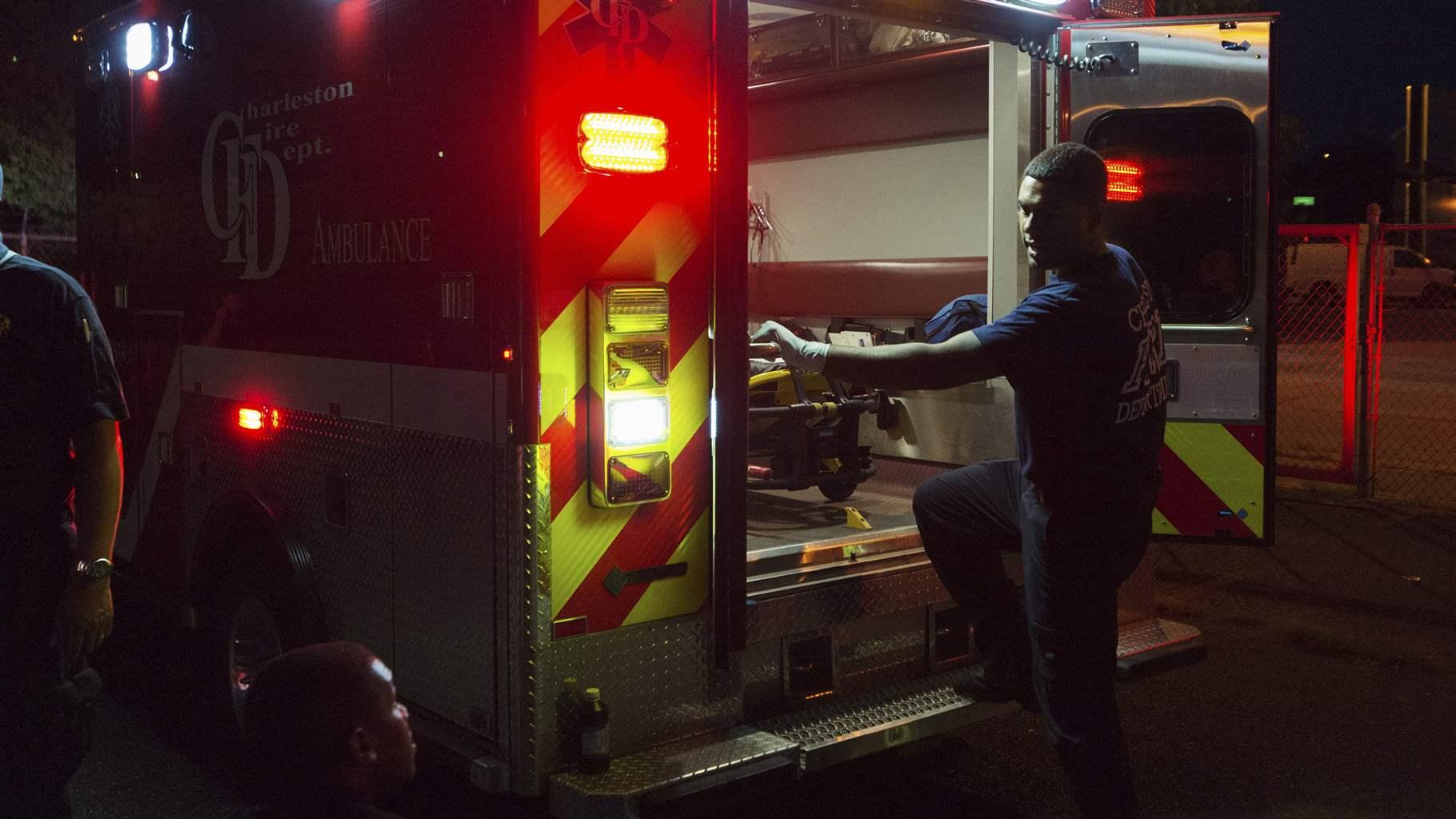
Only half of all stroke victims get to a hospital by ambulance. And among those who do, only a fraction who need treatment in a comprehensive stroke unit end up there.
Craig Hudson/Charleston Gazette-Mail via AP

Editor’s note: This story has been updated to remove information about Hollywood actor Luke Perry being taken by ambulance to Cedars-Sinai Medical Center after a Feb. 27 stroke. Contrary to local news reports, a representative of the hospital stated that the actor was not taken there.
More than 140,000 Americans die from stroke every year. But getting to the best hospital as quickly as possible after a stroke improves your chances of survival. And where an ambulance takes you could depend on state law.
Unlike state rules for accident victims, which uniformly require first responders to take severely injured patients to the most advanced trauma unit available, state policies for stroke patients vary widely.
Most state rules direct paramedics to the closest hospital with a stroke unit, regardless of the attack’s severity. And some states limit paramedics to taking stroke patients to hospitals within state borders.
But most of those rules came before the recent advent of thrombectomy surgery to remove blood clots from the brain. New research shows the procedure gives patients who suffer a severe stroke a much better chance of survival without impairments.
As a result, about half of states are working to change their EMS rules and policies to ensure the most-critical patients get the surgery as quickly as possible. Neurological professional groups recommend that if a comprehensive stroke unit is within a two-hour flight or drive, then severe stroke patients should be transported there, even if a lower-level stroke unit is closer.

In January, Ohio joined Arizona, Colorado, Rhode Island, Tennessee and Virginia in requiring paramedics to take patients with a severe stroke directly to a hospital with a comprehensive stroke center that has been licensed to perform thrombectomies, provided it’s possible to reach one within a specified amount of time.
Florida, Massachusetts and New York are close to adopting similar updates to their emergency stroke policies this year.
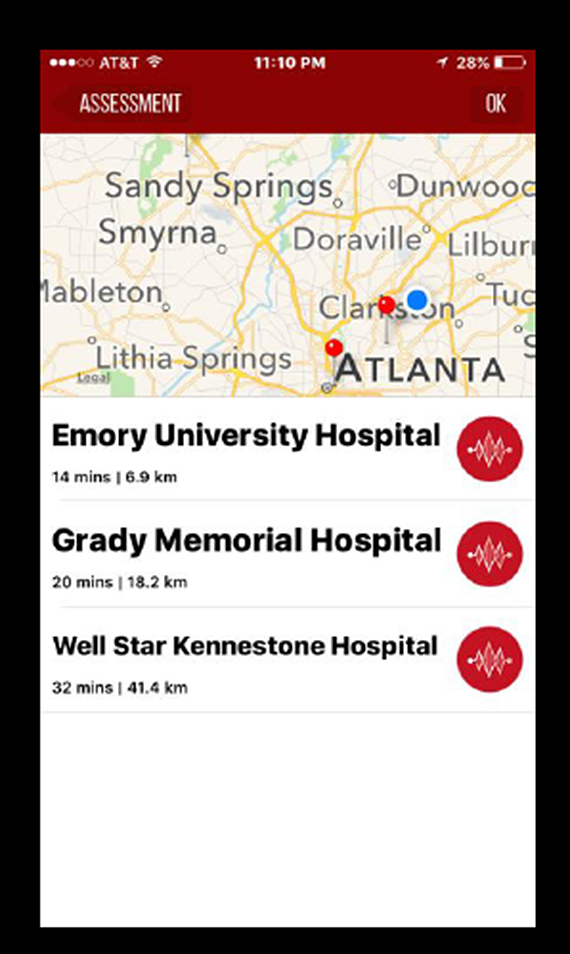
Statewide mandatory stroke protocols don’t require paramedics in Florida, Georgia, Indiana and Oklahoma to transport severe stroke patients directly to a hospital that can perform thrombectomies. But some paramedics in those states are using a free smartphone app called Fast-ED to screen stroke patients for severity, locate a comprehensive stroke unit, notify the unit, and drive there as quickly as possible.
Other local and regional cooperative efforts among hospitals and paramedics are helping ensure that patients are transported to the most appropriate hospital. But nationwide, emergency stroke protocols are a jumble.


Stroke app


The Fast-ED smartphone app shows comprehensive stroke centers near Atlanta.
Courtesy of Dr. Raul Nogueira, Emory University
“In any state in the country, if a person is shot, first responders know where the trauma unit is. They’ll bypass a little community hospital and go straight to the trauma center. The same thing needs to happen for stroke victims,” said Dr. Adam Arthur, a neurosurgeon at the Semmes Murphey Clinic in Memphis, Tennessee.
Still, not everyone agrees that getting more patients to comprehensive stroke centers is the most critical issue in preventing stroke fatalities.
U.S. Centers for Disease Control and Prevention stroke expert Dr. Sallyann Coleman King said it wouldn’t be practical to take every patient to a comprehensive stroke center. “Even if we had all the money and resources needed to make all centers a comprehensive stroke center,” she said, “it just wouldn’t make sense.”
First, the public needs to know to call 911 if someone is having a stroke, she said.
About half of all stroke patients arrive at a hospital by other means than an ambulance. They get a ride from a friend or neighbor, or they take a taxi. “We’re trying to get the word out that stroke care starts in the ambulance,” King said.
“What makes sense is creating a system of care where the community and patients know the signs and symptoms of stroke and to call 911,” she said. “The EMS system is prepared to gather the needed information, assess the patient, and take them to the appropriate facility to best treat their stroke.”

Growing Evidence

The need for new emergency stroke protocols sprang largely from the results of recent clinical trials showing that thrombectomies are highly effective at preventing stroke fatalities and limiting disabilities.
In 2004, the U.S. Food and Drug Administration approved the first device for manual thrombectomy surgery — in which a catheter is inserted into an artery in the groin and threaded up through the neck until it reaches an arterial blood clot in the brain. Then the artery is expanded and the clot is grabbed by a special device at the end of the catheter and removed.
It took 11 years to improve the device design and ultimately prove the surgery’s effectiveness at treating stroke.


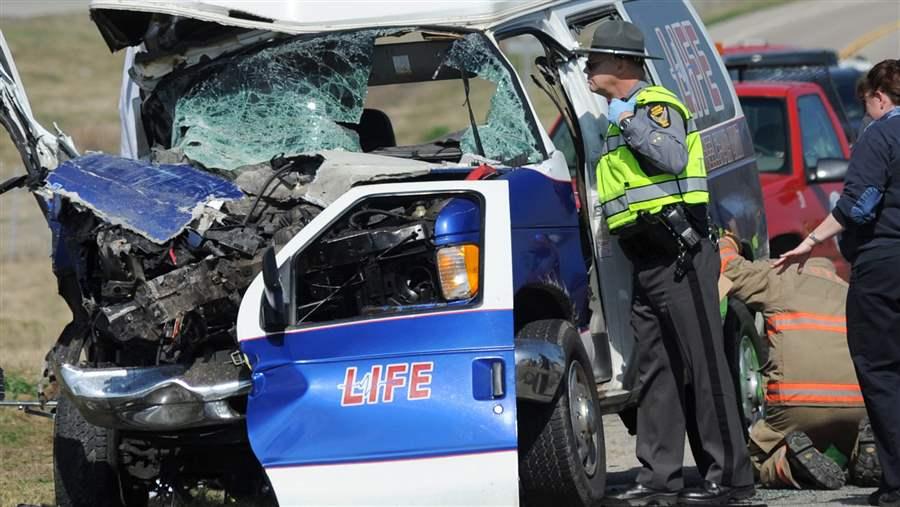
Ambulance crash

Stateline Story

Lax Ambulance Rules Put Paramedics, Patients at Risk

By 2015, the surgery had been performed on thousands of patients, and catheters and instruments designed to remove arterial clots had improved. More recently, two landmark clinical trials — one in Germany and one in the Netherlands — proved its effectiveness for wider use.
Increasingly, paramedics and emergency physicians began realizing that thrombectomy surgery could be more important for patients with blood clots in large brain arteries than lower levels of treatment, such as clot-busting medications that, in many cases, could be administered more quickly. 
A 2018 study conducted by researchers at Grady Memorial Hospital in Atlanta and the University of Pittsburgh Medical Center showed that severe stroke patients who received a thrombectomy within 24 hours of a stroke survived without disabling brain damage at a much higher rate than those who received only traditional treatments.
Until recently, however, nearly all first responders were taking stroke patients to the closest hospital, where emergency physicians typically would decide whether to transfer patients by ground or air to a comprehensive stroke unit for a thrombectomy.
A study published in January by Duke University researchers showed that patients who were taken directly to a hospital capable of performing a thrombectomy had better outcomes(but we expect 100% recovery. What are you doing to get there?) than those who were first transported to a local hospital and later transferred to a comprehensive stroke center.
A dose of clot-busting medicine costs more than $6,000. Mechanical thrombectomy costs about twice as much.

Stroke Mortality Rates in 2017

Stroke death rate per 100,000 total population

37.6

U.S. age-adjusted rate of stroke death
24
52
Show Data Table
The rate of stroke deaths varies widely among states. Some states are enacting laws and policies to improve the chances of survival for stroke victims by ensuring that emergency medical services take patients to the closest and most appropriate stroke emergency center available.
Source: U.S. Centers for Disease Control and Prevention, “Stroke Mortality by State”

The vast majority of strokes, nearly 800,000 a year in the United States, are ischemic strokes involving a blood clot in an artery in the brain. Of those, about 11 percent are severe, involving clots in large arteries that cut off a substantial amount of blood flow. Those patients could benefit from a thrombectomy.
But fewer than 10 percent of eligible patients receive the surgery, according to the Society of NeuroInterventional Surgery, an international scientific organization that advocates for greater public access to thrombectomies.
In 2018, in a set of guidelines on emergency procedures for stroke victims, the American Heart Association wrote: “When several [stroke] capable hospital options exist within a defined geographic region, the benefit of bypassing the closest to bring the patient to one that offers a higher level of stroke care, including mechanical thrombectomy, is uncertain. Further research is needed.”
But after an outcry from neurosurgeons familiar with the procedure and the research behind it, the organization retracted the guidelines. A representative of the American Heart Association wrote in an email to Stateline that the organization is working on an update.


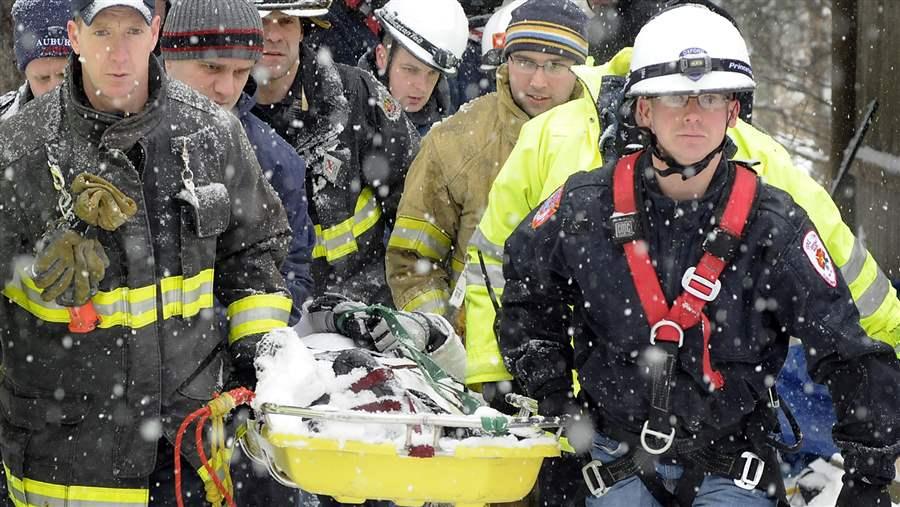
Rescue team

Stateline Story

Rescue Workers Use Apps to Help Save Lives


Improving Survival(With no strategy you can't fix the problems in stroke)

Stroke and related heart disease are the leading cause of death in the world, accounting for a combined 15.2 million deaths in 2016, according to the World Health Organization
The fifth-leading cause of death in the United States, strokes also are a major cause of adult disability. The condition, sometimes called a “brain attack,” occurs every 40 seconds, according to the CDC.
Thanks to improved diets, increased physical activity and reduced smoking, the incidence of strokes has been declining in the United States since the 1970s, according to a statement by the American Heart Association. At the same time, survival rates have been rising.
But among patients who survive a major stroke, about 40 percent have impairments that require specialized care, sometimes for life. Age and the severity of a stroke are major determinants of how a person will fare following a stroke.
According to the Society of NeuroInterventional Surgery, 65 percent of patients taken directly to a comprehensive stroke center survive without long-term disabilities, compared with 42 percent of people taken to the nearest hospital with a less-advanced stroke center.
Advocates predict that as more hospitals develop the expertise to perform thrombectomies, and as more patients get access to the surgery, disability-free survival rates for stroke victims will rise even higher.