Changing stroke rehab and research worldwide now.Time is Brain! trillions and trillions of neurons that DIE each day because there are NO effective hyperacute therapies besides tPA(only 12% effective). I have 523 posts on hyperacute therapy, enough for researchers to spend decades proving them out. These are my personal ideas and blog on stroke rehabilitation and stroke research. Do not attempt any of these without checking with your medical provider. Unless you join me in agitating, when you need these therapies they won't be there.

What this blog is for:

My blog is not to help survivors recover, it is to have the 10 million yearly stroke survivors light fires underneath their doctors, stroke hospitals and stroke researchers to get stroke solved. 100% recovery. The stroke medical world is completely failing at that goal, they don't even have it as a goal. Shortly after getting out of the hospital and getting NO information on the process or protocols of stroke rehabilitation and recovery I started searching on the internet and found that no other survivor received useful information. This is an attempt to cover all stroke rehabilitation information that should be readily available to survivors so they can talk with informed knowledge to their medical staff. It lays out what needs to be done to get stroke survivors closer to 100% recovery. It's quite disgusting that this information is not available from every stroke association and doctors group.

Showing posts with label pay for performance. Show all posts

Wednesday, October 15, 2025

Reclaiming wellness: Key factors in restoring optimal well-being in the Canadian Longitudinal Study on Aging

 You may have to do this if your incompetent? doctor DID NOT GET YOU 100% RECOVERED!

Why are you paying them for failure? Pay for performance is the only way your doctors will ever try to solve stroke to 100% recovery

Reclaiming wellness: Key factors in restoring optimal well-being in the Canadian Longitudinal Study on Aging


Mabel Ho, Esme Fuller-Thomson https://doi.org/10.1371/journal.pone.0329800

Abstract

This study examines characteristics of older adults who have regained optimal well-being at the end of the three-year study. The definition of optimal well-being used in this study refers to having adequate social support, high levels of older adults’ subjective perception of their aging process, physical health, mental health, happiness and life satisfaction and being free of limitations in Activities of Daily Living (ADLs) and Instrumental Activities of Daily Living (IADLs), disabling pain or discomfort, severe mental illness or cognitive decline in the preceding year.A secondary data analysis was conducted using the first two waves of data from the comprehensive cohort of the Canadian Longitudinal Study on Aging (CLSA), a large, national, longitudinal study on aging. The sample included 8332 older adults who were not in optimal well-being at baseline and aged 60+ at time 2. Bivariate and multivariable binary logistic regression analyses were used to examine which baseline characteristics were associated with achieving optimal well-being approximately three years later.The prevalence of optimal well-being at time 2 was higher among respondents who, at baseline, were younger, married, physically active, not obese, non-smokers, had higher income, without sleeping problems, diabetes, arthritis, osteoporosis, and achieved at least two of the four wellness domains (i.e., physical, psychological and emotional, social, and self-rated wellness) were more likely to be in optimal well-being at time 2 than their counterparts.Old age does not necessarily result in poor physical health, nor is a decline in well-being inevitable. Almost one in four respondents who were in less than optimal well-being at baseline regained well-being over the ensuing approximately 3 years. Further research could investigate the association between policies and programs and their support for older adults in regaining optimal well-being in later life after a period of suboptimal well-being.

Sunday, September 28, 2025

Blood pressure trajectory of inpatient stroke rehabilitation patients from the Determining Optimal Post-Stroke Exercise(DOSE) trial over the first 12 months post-stroke

 Once again, our incompetent stroke medical 'professionals' still haven't figured out an EXACT BLOOD PRESSURE MANAGEMENT PROTOCOL post stroke! And YOU bear the failure of that! Hope your competent? doctor guesses correctly because the poor outcome happens to you! Your doctor gets off scot-free and still gets paid! Pay for performance would solve that problem pretty fast.

Blood pressure trajectory of inpatient stroke rehabilitation patients from the Determining Optimal Post-Stroke Exercise(DOSE) trial over the first 12 months post-stroke

You'll have to read at link.

Sunday, August 10, 2025

Crocus sativus(saffron) and Neurological Health: A Review on Depression and Impaired Neurogenesis

 I'm sure your competent? doctor never got further research going on saffron almost a decade ago, right? Oh NO, you DON'T have a functioning stroke doctor, do you? Well, so what, they are still getting paid while being incompetent. Until we get pay for performance our doctors will never improve!

  • saffron (10 posts to January 2017)
  • Crocus sativus and Neurological Health: A Review on Depression and Impaired Neurogenesis


    Abstract

    Crocus sativus (saffron) is a valuable medicinal plant with a rich phytochemical profile, including bioactive carotenoids, flavonoids, and terpenoids. The key constituents of saffron-crocin, crocetin, picrocrocin, and safranal-exhibit potent neuroprotective properties, with crocin, a water-soluble carotenoid, playing a crucial role in promoting neurogenesis and mitigating depressive symptoms. Depression, affecting approximately 280 million individuals globally (WHO, 2023), is closely associated with impaired neurogenesis, highlighting the need for novel treatment strategies. Crocus sativus, particularly in its nanotherapeutic form, offers promise in the treatment of depression by effectively crossing the blood-brain barrier and modulating neurotransmitter systems. In addition to its carotenoids, saffron contains flavonoids, such as kaempferol and quercetin derivatives, which contribute to its antioxidant and anti-inflammatory activities. This review explores the phytochemical composition of Crocus sativus, its role in neurogenesis, and its potential as a therapeutic agent for depression and neurodegenerative disorders.

    Keywords: Crocin; crocetin; depression; neurogenesis; saffron; safranal..

    Antidepressant-Like Effect of Saffron (Crocus sativus L.) in Mice Exposed to Chronic Unpredictable Mild Stress via Attenuating Neuroinflammation and Recovering Neuroplasticity


    I'm sure your competent? doctor never got further research going on saffron almost a decade ago, right? Oh NO, you DON'T have a functioning stroke doctor, do you? Well, so what, they are still getting paid while being incompetent. Until we get pay for performance our doctors will never improve!
  • saffron (10 posts to January 2017)
  • Antidepressant-Like Effect of Saffron (Crocus sativus L.) in Mice Exposed to Chronic Unpredictable Mild Stress via Attenuating Neuroinflammation and Recovering Neuroplasticity


    Affiliations 

    Abstract

    Saffron (Crocus sativus L.), a traditional food coloring and flavoring ingredient, has shown potential antidepressant activity in several preclinical and clinical studies. This study investigated the antidepressant effect and underlying mechanism of saffron extract (SE) using a chronic unpredictable mild stress (CUMS)-induced depressive mouse model. Mice subjected to 8-week CUMS were orally administered with SE or positive medicine fluoxetine for 6 weeks. Behavioral tests, histopathological analysis, proinflammatory cytokine levels, and protein/mRNA expression were evaluated to characterize the antidepressant effects of SE. Results showed SE improved depression-like behaviors, ameliorated hippocampal and neuronal damage, remitted neuroinflammation, and restored neuroplasticity in mice. The antineuroinflammatory effect of SE may be attributed to inhibition of microglial activation, NF-κB signaling pathway, and proinflammatory cytokines' secretion. In addition, the upregulation of hippocampal Creb, Bdnf, and Trkb, and related proteins by SE treatment may be a mechanism for neuroplasticity recovery. These results demonstrated the antidepressant effects of SE in a CUMS-induced depressive model and manifested the potential of saffron as a functional food for relieving depression.

    Keywords: depression‐like behavior; hippocampus; microglia; neural plasticity; neuroinflammation.

    Monday, July 21, 2025

    Multimodal closed-loop strategies for gait recovery after spinal cord injury and stroke via the integration of robotics and neuromodulation

    I'm sure your competent? doctor knows all this already and has EXACT PROTOCOLS FOR YOUR RECOVERY! NO? So, you DON'T have a functioning stroke doctor, do you? You're not 100% recovered! Why is your doctor getting paid at all? This is all just beating around the bush because NO PROTOCOL FOR GAIT RECOVERY EXISTS!

    And that is directly the result of our  fucking failures of stroke associations that aren't solving stroke!

     Multimodal closed-loop strategies for gait recovery after spinal cord injury and stroke via the integration of robotics and neuromodulation


    • 1CHUV, Department of Clinical Neurosciences, University Hospital Lausanne, Lausanne, Switzerland
    • 2Bertarelli Foundation Chair in Translational Neural Engineering, Neuro-X Institute, Ecole Polytechnique Federale de Lausanne, Lausanne, Switzerland
    • 3Modular Implantable Neurotechnologies (MINE) Laboratory, Università Vita Salute San Raffaele & Scuola Superiore Sant'Anna, Milan, Italy

    Restoring the ability to walk is a priority for individuals with neurological disorders or neurotraumatic injuries, given its significant impact on independence and quality of life. Multimodal closed-loop strategies that integrate robotic assistance and neuromodulation present promising avenues for personalized and physiological gait recovery. These approaches capitalize on residual motor activity, fostering neuroplasticity and motor relearning. This narrative review emphasizes the importance of mobile brain/body imaging (MoBI) for guiding the development of closed-loop systems that integrate volitional brain signals with residual motor activity in stroke and spinal cord injury patients. We explore the potential of rehabilitative and assistive interventional strategies based on robotic devices, such as exoskeletons and powered orthoses, and neuromodulation techniques like functional electrical stimulation and spinal cord stimulation. We highlight the limitations of the single interventional strategies and the potential of the synergistic combination of MoBI, robotics, and neuromodulation for gait recovery. By leveraging residual motor functions and integrating multimodal data from the different domains involved in motor recovery (i.e., brain, muscle, and biomechanics), the complementarity of these interventional strategies has the potential to enable dynamic patient-specific interventions. We outline a perspective framework on how future directions can exploit such integration to promote physiological recovery of lower limb functions and personalized therapies that are both challenging and feasible. Advancing along this path holds the promise of enhancing rehabilitative strategies, ultimately promoting functional recovery and long-term independence for individuals with neuromotor disorders.

    1 Introduction

    Neurological disorders and neurotraumatic injuries often result in severe motor impairments that significantly impact patients' independence (Oczkowski and Barreca, 1993; Catz et al., 1997; Scivoletto et al., 2013) and quality of life (King, 1996; Dijkers, 1997; Westgren and Levi, 1998). However, residual motor activity, which is preserved in many affected patients, can be harnessed to promote neuroplasticity and enhance muscle strength, ultimately resulting in significant functional improvements (Dobkin, 2004; van Hedel and Dietz, 2010; Langhorne et al., 2011; Nas et al., 2015; Stinear et al., 2020; Somers and Bender-Burnett, 2024). For instance, spinal cord injuries (SCI) are typically subdivided into complete and incomplete, with incomplete SCIs sparing at least some sensorimotor functions (Kang et al., 2018). Even in the case of complete SCIs, where no residual sensorimotor function is observable, some studies have suggested that electrical stimulation and intensive rehabilitation may lead to the restoration of voluntary movements (Angeli et al., 2014). Thus, the absence of observable residual function does not necessarily correspond to a complete lack of neural traffic through the cortico-spinal tract, which may be leveraged through rehabilitation (Wahlgren et al., 2021). Similarly, even though stroke typically causes limb paresis contralateral to the produced brain lesion, substantial functional recovery can be attained by exploiting residual motor functions and the plasticity of nearby brain regions (Virani et al., 2020).

    When SCI or stroke results in lower limb paralysis, restoring the ability to walk safely and independently becomes a primary goal for affected individuals. In particular, individuals with SCI-related paraplegia consistently rank gait restoration among their highest priorities, second only to the recovery of bladder, bowel, and sexual functions (Simpson et al., 2012). Although stroke more commonly causes unilateral motor impairments, it is estimated that approximately one-third of stroke survivors do not regain independent ambulation (Hendricks et al., 2002). Among those who do, many continue to exhibit pathological gait asymmetries and reduced walking speed (Veerbeek et al., 2014). Furthermore, even in patients who retain some degree of mobility, residual muscle weakness can contribute to balance deficits, a problem exacerbated by advanced age (Beyaert et al., 2015). While regaining the ability to walk is a central aim of rehabilitation in individuals with lower limb paralysis, even achieving upright standing can yield systemic benefits. These include improvements in cardiovascular regulation (Dunn et al., 1998; Eng et al., 2001; Edwards and Layne, 2007), as well as enhanced bowel (Dunn et al., 1998; Walter et al., 1999; Eng et al., 2001; Hoenig et al., 2001; Netz et al., 2007) and urinary function (Dunn et al., 1998; Walter et al., 1999; Eng et al., 2001).

    In recent years, a variety of technology-based interventional strategies have been explored as add-ons to traditional physical therapy for the rehabilitation of lower limb function. In this context, here we focus on two key approaches: powered orthoses and exoskeletons, robotic devices designed to provide mechanical support and passive movement to paralyzed limbs (Herr, 2009), and neuromodulation, which facilitates muscle contractions through the electrical stimulation of the neuromuscular system (Hamid and Hayek, 2008; Popović et al., 2009). Initial proof-of-concept studies have demonstrated the potential of these technologies to restore gait (Asselin et al., 2016; Wagner et al., 2018; Haufe et al., 2020; Romeni et al., 2025) and to support the execution of basic functional tasks such as standing (Hankov et al., 2025), sit-to-stand transitions (Li et al., 2023; Romeni et al., 2025), and stair climbing (Hankov et al., 2025; Romeni et al., 2025). These encouraging results have catalyzed efforts to translate such technologies into real-world applications and activities of daily living (van Dijsseldonk et al., 2020; Rowald et al., 2022), which require more sophisticated control strategies as well as improvements in portability and ease of use in unstructured environments.

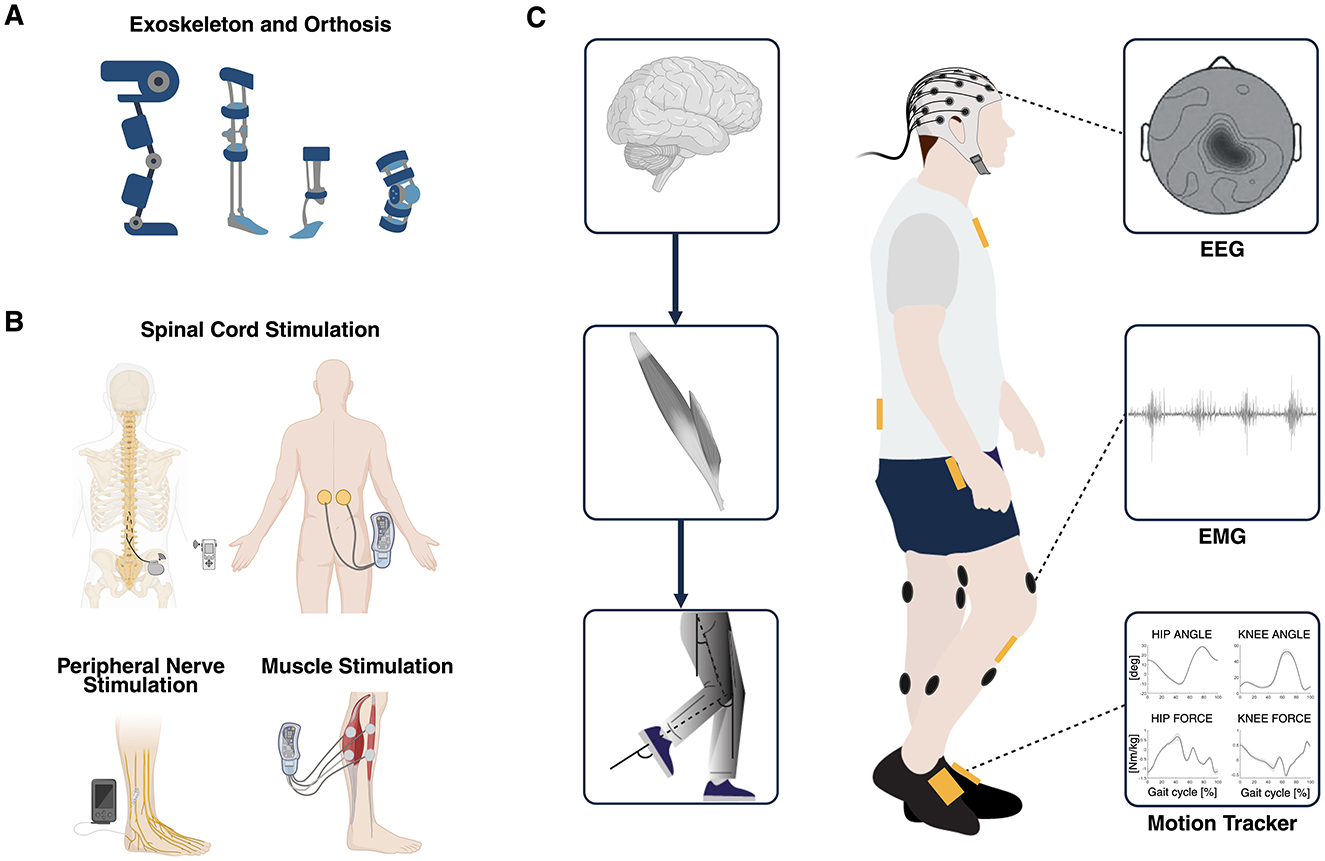
    Over time, various control strategies have been developed with the dual aim of enabling intuitive and continuous user-driven control to enhance device usability and acceptance (Semprini et al., 2022) and promoting activity-dependent plasticity in the nervous system to maximize neurological recovery (Roy et al., 2012; Mrachacz-Kersting et al., 2019). Wearable mobile brain/body imaging (MoBI) systems, capable of continuously capturing high-density brain and muscle signals along with body movement's kinematics, offer a comprehensive way to optimize and adapt the control of interventional devices (He et al., 2018b) (Figure 1).

    Figure 1
    www.frontiersin.org

    Figure 1. (A) Overview of robot-assisted devices such as exoskeletons and powered orthoses used as established interventional strategies for gait recovery. (B) Overview of electrical stimulation of the spinal cord, the nerves, and the muscles used as established interventional strategies for gait recovery. (C) Multimodal data used to simultaneously explore different domains of the hierarchical organization of the neuromusculoskeletal system: brain, muscles, and biomechanics (MoBI framework). Multimodal biomarkers of residual motor activity can be extracted from EEG, EMG, and kinematics signals and can be exploited to control in real-time different closed-loop interventions aimed at recovering walking through personalized assistance and therapy. MoBI, mobile brain/body imaging; EEG, electroencephalography; EMG, electromyography. Created with BioRender. de Seta V and Romeni S (2025). https://BioRender.com.

    In this narrative review, we aim to explore how robotic devices and neuromodulation can be controlled for assistive and rehabilitative interventions, and how different interventional strategies can be integrated to provide personalized gait rehabilitation, leveraging complementary mechanisms of action. First, we will present the state-of-the-art in robotic devices and neuromodulation for lower limb movement restoration; then, we will describe how patients' residual motor activity recorded through various approaches exploiting kinematic, muscle, and neural signals has been used in the past to control such technologies. Finally, we will provide indications and highlight potential issues in the integration of MoBI techniques with different combinations of robotic devices and neuromodulation technologies to achieve functional and physiological recovery of lower limb abilities. The main goal of this review is to provide an overview of rehabilitative interventions for the recovery of lower limb motor functions through the exploitation of residual motor functions, robotic devices, neuromodulation, and monitoring of neurophysiological correlates of movement.

    More at link.


    Thursday, July 3, 2025

    New AI Tool Accurately Detects Nine Types of Dementia Using Single Brain Scan: Study Shows

     Maybe you want your incompetent? doctor and hospital to use this on you so the EXACT DEMENTIA PREVENTION PROTOCOLS can be implemented! Oh no, they don't have any, do they? You're screwed and your doctors still get paid for incompetence! Aren't you lucky pay for results doesn't exist? Until we get pay for performance our stroke medical 'professionals' won't lift a hand to solve stroke.

    New AI Tool Accurately Detects Nine Types of Dementia Using Single Brain Scan: Study Shows

    Tuesday, July 1, 2025

    Can saffron treat Alzheimer’s and depression?

    I'm sure your competent? doctor got further research going on saffron almost a decade ago, right? Oh NO, you DON'T have a functioning stroke doctor, do you? Well, so what, they are still getting paid while being incompetent. Until we get pay for performance our doctors will never improve!
  • saffron (9 posts to January 2017)
  •  Can saffron treat Alzheimer’s and depression?


    Can a spice transform brain health? New research finds saffron rivals conventional drugs for mood and memory, offering hope for safe, natural therapies if future studies confirm the results.
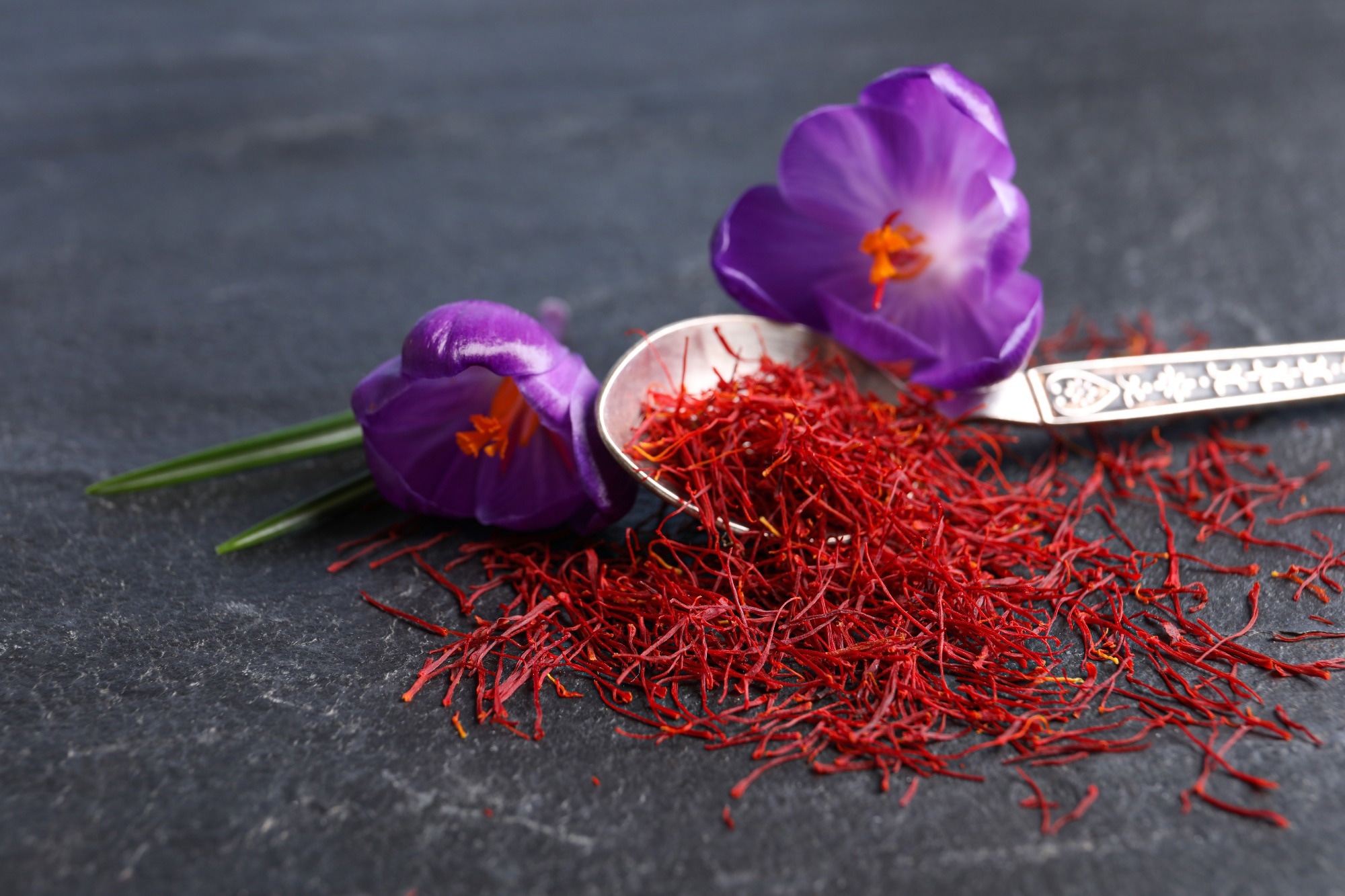
    Review: From Mood to Memory: Unlocking Saffron’s Potential in Brain Health. Image Credit: New Africa / ShutterstockReview: From Mood to Memory: Unlocking Saffron’s Potential in Brain Health. Image Credit: New Africa / Shutterstock

    With age, the risk of becoming clinically depressed or anxious rises. Older adults are also more likely to develop mild cognitive impairment (MCI), which often progresses to Alzheimer’s disease (AD). There are limited pharmaceutical treatment options for these conditions. Moreover, most available medications act slowly, produce small benefits, and have adverse side effects.

    A recent review article in the journal Cureus describes the neuroprotective potential of saffron, a traditional spice and natural medicine.

    Introduction

    Neurodegeneration and neuropsychiatric disturbances become more common as people age. They create many disabilities, put increasing burdens on caregivers, and massively increase healthcare costs. Depression and anxiety may be the earliest signs of developing neurodegeneration or may help cause it.

    Saffron (Crocus sativus) has been used as food and medicine in South Asia, Persia, and the Mediterranean for ages. Now, however, its neuroprotective activity and potential to prevent or counter anxiety and depression are attracting attention. These effects are mediated by its key constituents, crocin, crocetin, and safranal.

    Saffron has multiple neuroprotective and mood-enhancing mechanisms of action. It modulates monoaminergic neurotransmission, including serotonin, dopamine, and norepinephrine, and inhibits acetylcholinesterase. It boosts antioxidant capacity and displays potent anti-inflammatory activity. It also inhibits the NLRP3 inflammasome pathway.

    Despite promising clinical results backed by data on its mechanism of action, its clinical use is limited. Issues with its introduction include the lack of safety data with long-term use, non-standardized extracts, and its largely unregulated nature. For instance, the concentrations of crocin and safranal show a wide variation, depending on the source of the saffron, the season in which it was harvested, and the processing method used. Insurance reimbursement and regulatory approval are also barriers to broader clinical use.

    Study findings

    The authors reviewed randomized controlled trials, systematic reviews, and meta-analyses. The results demonstrate that saffron is associated with consistent improvement in mild-to-moderate depression, equivalent to first-line conventional antidepressants like fluoxetine, a selective serotonin reuptake inhibitor (SSRI). Saffron is also well tolerated as an antidepressant medication, with mild adverse effects such as nausea, headache, and appetite changes. Similar results were obtained when used in a group with heart disease, underlining its suitability in people with comorbidities. In one trial, crocin (a key saffron constituent) was used as an adjunct to SSRIs, showing additive antidepressant effects.

    Among individuals with cognitive impairment (AD or MCI), saffron improved cognitive outcomes as much as standard drugs like memantine or donepezil. In patients with moderate-to-severe AD, changes were assessed using the Severe Cognitive Impairment Rating Scale (SCIRS) and the Functional Assessment Staging Tool (FAST), with both memantine and saffron showing comparable improvements. Adverse events were similar in both groups.

    Importantly, saffron was administered at a consistent dosage of 30 mg/day across all cognitive trials, adding value to the findings. Thus, saffron may be a potential option for AD patients who cannot tolerate conventional medications because of their side effects; however, current evidence is insufficient to recommend its use as a replacement for standard therapies.

    Mechanisms of action

    Several studies have examined the mechanisms of action of saffron, describing five distinct mechanisms.

    Monoamine neurotransmitters

    Crocin and safranal regulate the levels of the excitatory monoamine neurotransmitters serotonin, dopamine, and norepinephrine. The increase in serotonin levels with saffron was comparable to that with fluoxetine, resulting in similar antidepressant effects.

    Cholinesterase inhibition

    Acetylcholinesterase is an enzyme that breaks down the neurotransmitter acetylcholine in the synaptic cleft. Saffron binds to the active site of this enzyme, inhibiting its activity and thereby increasing acetylcholine concentrations. It therefore has a similar mechanism of action as donepezil and rivastigmine. Since acetylcholine deficiency causes cognitive symptoms in AD, this finding is important.

    Antioxidant activity

    Both crocin and crocetin help prevent neurodegeneration and mood disorders via their powerful antioxidant effects. They scavenge reactive oxygen species and neutralize free radicals. They also reduce lipid peroxidation, causing malondialdehyde levels to fall, a molecule associated with membrane lipid damage.

    Saffron also enhances antioxidant buffer molecules, such as superoxide dismutase and glutathione, thereby preventing oxidative stress.

    Anti-inflammatory effects

    Chronic low-grade inflammation and microglial activation are key to neurodegenerative disease, causing neuronal injury and more rapid functional worsening. Microglia are immune-inflammatory cells in the central nervous system.

    Saffron inhibits multiple inflammatory pathways, involving factors such as nuclear factor-kappa B (NF-κB), TNF-α, IL-6, and IL-1β. In a two-pronged defense, it inhibits the NLRP3 inflammasome pathway while increasing the transcription of genes with antioxidant and anti-inflammatory activity.

    Synaptic plasticity

    Crocin modulates potentially neurotoxic signaling pathways such as glutamate-induced excessive excitation. Its antioxidant effects inhibit apoptosis. It also increases the level of brain-derived neurotrophic factor (BDNF), which mediates synaptic plasticity and enhances learning and memory. Saffron bioactives promote neurogenesis from stem cells, helping to maintain cognitive reserve after neuronal injury. The paper emphasizes the need for future studies to incorporate biomarkers of treatment response, supporting precision medicine approaches.

    Conclusion

    The attractive safety profile and natural origin of saffron are offset by its extremely high price and lack of regulatory approval. Notably, these studies were all small-scale, conducted over brief periods, and primarily from Iran. This underlines the need for more rigorous research.

    Saffron could fill a gap in the market due to its multifaceted neurocognitive effects; however, its adoption is limited by high costs, a lack of standardization, and regulatory hurdles. However, there are significant gaps, such as the need for standardization and dose optimization, and most importantly, confirming long-term safety. Future research should also focus on biomarker identification to enable personalized treatment.

    “If these challenges are addressed, saffron may transition from a traditional herbal remedy to an evidence-based adjunct or alternative in the treatment of mood and cognitive disorders.” However, saffron should not yet replace first-line treatments, given the limitations of existing evidence.

    Journal reference: