Changing stroke rehab and research worldwide now.Time is Brain! trillions and trillions of neurons that DIE each day because there are NO effective hyperacute therapies besides tPA(only 12% effective). I have 523 posts on hyperacute therapy, enough for researchers to spend decades proving them out. These are my personal ideas and blog on stroke rehabilitation and stroke research. Do not attempt any of these without checking with your medical provider. Unless you join me in agitating, when you need these therapies they won't be there.

What this blog is for:

My blog is not to help survivors recover, it is to have the 10 million yearly stroke survivors light fires underneath their doctors, stroke hospitals and stroke researchers to get stroke solved. 100% recovery. The stroke medical world is completely failing at that goal, they don't even have it as a goal. Shortly after getting out of the hospital and getting NO information on the process or protocols of stroke rehabilitation and recovery I started searching on the internet and found that no other survivor received useful information. This is an attempt to cover all stroke rehabilitation information that should be readily available to survivors so they can talk with informed knowledge to their medical staff. It lays out what needs to be done to get stroke survivors closer to 100% recovery. It's quite disgusting that this information is not available from every stroke association and doctors group.

Showing posts with label FINGER. Show all posts

Thursday, April 21, 2022

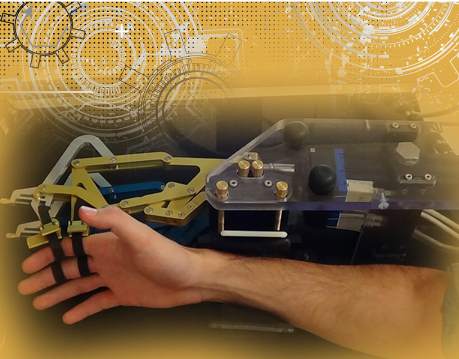
Design and preliminary evaluation of the FINGER rehabilitation robot: controlling challenge and quantifying finger individuation during musical computer game play

 I like this but you have motivation wrong. Write up 100% recovery protocols on this and survivors will do the millions of reps needed, no external motivation required.  8 years and I bet your hospital doesn't even know about this.  Pictures and calculations at the link.

Design and preliminary evaluation of the FINGER rehabilitation robot: controlling challenge and quantifying finger individuation during musical computer game play

Abstract

Background

This paper describes the design and preliminary testing of FINGER (Finger Individuating Grasp Exercise Robot), a device for assisting in finger rehabilitation after neurologic injury. We developed FINGER to assist stroke patients in moving their fingers individually in a naturalistic curling motion while playing a game similar to Guitar Hero®a. The goal was to make FINGER capable of assisting with motions where precise timing is important.

Methods

FINGER consists of a pair of stacked single degree-of-freedom 8-bar mechanisms, one for the index and one for the middle finger. Each 8-bar mechanism was designed to control the angle and position of the proximal phalanx and the position of the middle phalanx. Target positions for the mechanism optimization were determined from trajectory data collected from 7 healthy subjects using color-based motion capture. The resulting robotic device was built to accommodate multiple finger sizes and finger-to-finger widths. For initial evaluation, we asked individuals with a stroke (n = 16) and without impairment (n = 4) to play a game similar to Guitar Hero® while connected to FINGER.

Results

Precision design, low friction bearings, and separate high speed linear actuators allowed FINGER to individually actuate the fingers with a high bandwidth of control (−3 dB at approximately 8 Hz). During the tests, we were able to modulate the subject’s success rate at the game by automatically adjusting the controller gains of FINGER. We also used FINGER to measure subjects’ effort and finger individuation while playing the game.

Conclusions

Test results demonstrate the ability of FINGER to motivate subjects with an engaging game environment that challenges individuated control of the fingers, automatically control assistance levels, and quantify finger individuation after stroke.

Monday, May 17, 2021

Hand Rehabilitation Following Stroke: A Pilot Study of Assisted Finger Extension Training in a Virtual Environment

 Since this is for chronic you'll never get insurance to pay for it. Hope you can figure oure how to do this on your own.

Our fucking failures of stroke associations should be creating protocols for this but they DO NOTHING.

Hand Rehabilitation Following Stroke: A Pilot Study of Assisted Finger Extension Training in a Virtual Environment


2007, Topics in Stroke Rehabilitation
 Heidi C. Fischer, Kathy Stubblefield, Tiffany Kline, Xun Luo, Robert V. Kenyon, and Derek G. Kamper
Top Stroke Rehabil
 2007;14(1):1–12© 2007 Thomas Land Publishers, Inc.www.thomasland.comdoi: 10.1310/tsr1401-1
1
Heidi C. Fischer, MS, OTR/L,
 is Clinical ResearchCoordinator, Sensory Motor Performance Program,Rehabilitation Institute of Chicago, Chicago, Illinois.
Kathy Stubblefield, OTR/L,
 is Research OccupationalTherapist, Rehabilitation Institute of Chicago, Chicago, Illinois.
Tiffany Kline, MS,
 is Software Engineer, Northstar Neuroscience, Seattle, Washington.
 Xun Luo, MS,
 is Doctoral Student, Computer ScienceDepartment, University of Illinois at Chicago.
 Robert V. Kenyon, PhD,
 is Associate Professor, Computer Science Department, University of Illinois at Chicago.
Derek G. Kamper, PhD,
 is Research Scientist, Sensory Motor Performance Program, Rehabilitation Institute of Chicago, and Assistant Professor, Department of Biomedical Engineering,Illinois Institute of Technology, Chicago, Illinois.
 A
Background and Purpose:
 The purpose of this pilot study was to investigate the impact of assisted motor training in avirtual environment on hand function in stroke survivors.
Participants:
 Fifteen volunteer stroke survivors (32–88 years old)with chronic upper extremity hemiparesis (1–38 years post incident) took part.
Method:
 Participants had 6 weeks of training in reach-to-grasp of virtual and actual objects. They were randomized to one of three groups: assistance of digit extension provided by a novel cable orthosis, assistance provided by a novel pneumatic orthosis, or no assistance provided.Hand performance was evaluated at baseline, immediately following training, and 1 month after completion of training.Clinical assessments included the Wolf Motor Function Test (WMFT), Box and Blocks Test (BB), Upper Extremity Fugl-MeyerTest (FM), and Rancho Los Amigos Functional Test of the Hemiparetic Upper Extremity (RLA). Biomechanical assessments included grip strength, extension range of motion and velocity, spasticity, and isometric strength.
Results:
 Participants demonstrated a significant decrease in time to perform functional tasks for the WMFT (p = .02), an increase in the number of blocks successfully grasped and released during the BB (p = .09), and an increase for the FM score (p = .08). There were no statistically significant changes in time to complete tasks on the RLA or any of the biomechanical measures. Assistance of extension did not have a significant effect.
Discussion and Conclusion:
 After the training period, participants in all 3 groups demonstrated a decrease in time to perform some of the functional tasks. Although the overall gains were slight, the general acceptance of the novel rehabilitation tools by a population with substantial impairment suggests that a larger randomized controlled trial, potentially in a subacute population, may be warranted.
Key words:
 
hand, finger extension orthosis, stroke,virtual reality
approximately 60% of stroke survivors experience upper extremity dysfunction limiting participation in functionalFunctional magnetic resonance imaging and transcranial magnetic stimulation studies in hu-mans provide evidence for functional adaptation of the motor cortex following injury.8–12 Imaging performed after constraint-induced training proto-cols has shown evidence of cortical plasticity as well.13,14
 Furthermore, many studies have demonstrated that neuroplasticity can occur even in the chronic stages of stroke.14–18
Rehabilitation is more effective when individuals are allowed opportunities for massed practice in a task oriented context.4
 Robotics emerged in an effort to provide opportunities for this massed practice, which may be difficult for therapists to provide due to time and staffing limitations. For example, in lower extremity rehabilitation, body weight supported treadmill training has been found to be effective for individuals with decreased sensorimotor control.19,20
However, this type of treadmill training is labor intensive, requiring assistance from up to three therapists for walking. Robotic machines have been introduced to assist with this task and to,ideally, make this treatment more readily available to clients.21
 Similarly, for the upper extremity, robots have been created to assist with therapeutic training of the arm and shoulder.22–25
 Robotic devices have also been investigated as tools in upper extremity rehabilitation for chronic stroke survivors20,24,26,27
 in an effort to allow rehabilitation professionals to focus on functional independence and increased motor recovery for their clients. Research studies indicate that devices which incorporate intensive training of active repetitive movements increase upper extremity function following stroke.
20,28–30
However, few devices have been designed specifically for hand rehabilitation,31,32
 especially for stroke survivors with moderate to severe impairments.Robots and mechatronics also provide a convenient interface with virtual reality environments.These virtual environments have been recently applied to rehabilitation paradigms for stroke survivors.31,33–38
 The use of virtual reality in rehabilitation affords the opportunity for individuals to practice movements in several different environments, allows rapid transition between tasks, and provides unlimited options for object size, type,and location. Researchers have previously integrated a hand actuator with a virtual reality system for the purposes of rehabilitation after stroke, but the hand actuator was intended for individuals with relatively mild impairment and could not be used with real objects.33,34,36–38
In previous studies, we have found that individuals with moderate to severe chronic hemiplegia subsequent to stroke have directionally dependent weakness, such that finger extension is impaired to a greater extent than finger flexion.39 Thus, we have developed two devices to assist finger extension when needed: a portable, cable orthosis (CO) with which the user could provide self-assistance, and a pneumatic orthosis (PO) that could provide automatic assistance. These devices were integrated with a virtual reality system. The purpose of this study was to explore whether repetitive practice with finger extension assistance could improve hand function in stroke survivors with moderate to severe upper extremity hemiparesis.

Sunday, December 6, 2020

A comprehensive scheme for the objective upper body assessments of subjects with cerebellar ataxia

 I could have done none of these tests, dead brain kinda prevents that. So what protocols are out there to recover hand/finger function due to dead brain? 

So you accurately described a problem, but provided NOTHING to solve that problem. Good to know how useless this research was.


finger chase test (FCT), finger tapping test (FTT), finger to nose test (FNT) and dysdiadochokinesia test (DDKT))

A comprehensive scheme for the objective upper body assessments of subjects with cerebellar ataxia


Abstract

Background

Cerebellar ataxia refers to the disturbance in movement resulting from cerebellar dysfunction. It manifests as inaccurate movements with delayed onset and overshoot, especially when movements are repetitive or rhythmic. Identification of ataxia is integral to the diagnosis and assessment of severity, and is important in monitoring progression and improvement. Ataxia is identified and assessed by clinicians observing subjects perform standardised movement tasks that emphasise ataxic movements. Our aim in this paper was to use data recorded from motion sensors worn while subjects performed these tasks, in order to make an objective assessment of ataxia that accurately modelled the clinical assessment.

Methods

Inertial measurement units and a Kinect© system were used to record motion data while control and ataxic subjects performed four instrumented version of upper extremities tests, i.e. finger chase test (FCT), finger tapping test (FTT), finger to nose test (FNT) and dysdiadochokinesia test (DDKT). Kinematic features were extracted from this data and correlated with clinical ratings of severity of ataxia using the Scale for the Assessment and Rating of Ataxia (SARA). These features were refined using Feed Backward feature Elimination (the best performing method of four). Using several different learning models, including Linear Discrimination, Quadratic Discrimination Analysis, Support Vector Machine and K-Nearest Neighbour these extracted features were used to accurately discriminate between ataxics and control subjects. Leave-One-Out cross validation estimated the generalised performance of the diagnostic model as well as the severity predicting regression model.

Results

The selected model accurately (96.4%) predicted the clinical scores for ataxia and correlated well with clinical scores of the severity of ataxia (, rho=0.8, p<0.001). The severity estimation was also considered in a 4-level scale to provide a rating that is familiar to the current clinically-used rating of upper limb impairments. The combination of FCT and FTT performed as well as all four test combined in predicting the presence and severity of ataxia.

Conclusion

Individual bedside tests can be emulated using features derived from sensors worn while bedside tests of cerebellar ataxia were being performed. Each test emphasises different aspects of stability, timing, accuracy and rhythmicity of movements. Using the current models it is possible to model the clinician in identifying ataxia and assessing severity but also to identify those test which provide the optimum set of data.

Trial registration Human Research and Ethics Committee, Royal Victorian Eye and Ear Hospital, East Melbourne, Australia (HREC Reference Number: 11/994H/16).

Wednesday, September 18, 2019

Support Vector Machine-Based Classifier for the Assessment of Finger Movement of Stroke Patients Undergoing Rehabilitation

Brunnstrom stages are not objective either so your suggested analysis falls flat on its face.  Why the fuck are you predicting classification, if you are objectively measuring this you slot them exactly into the categories you have objectively set up.

Support Vector Machine-Based Classifier for the Assessment of Finger Movement of Stroke Patients Undergoing Rehabilitation


  • Toyohiro HamaguchiEmail author
  • Takeshi Saito
  • Makoto Suzuki
  • Toshiyuki Ishioka
  • Yamato Tomisawa
  • Naoki Nakaya
  • Masahiro Abo
  1. 1.Department of Rehabilitation, Graduate School of Health SciencesSaitama Prefectural UniversityKoshigaya CityJapan
  2. 2.Department of RehabilitationTokyo Dental College Ichikawa General HospitalChibaJapan
  3. 3.Takei Scientific Instruments Corporation LimitedNiigataJapan
  4. 4.Department of Rehabilitation MedicineTokyo Jikei University School of MedicineTokyoJapan

Open Access
Original Article
  • 112 Downloads

Abstract

Purpose

Traditionally, clinical evaluation of motor paralysis following stroke has been of value to physicians and therapists because it allows for immediate pathophysiological assessment without the need for specialized tools. However, current clinical methods do not provide objective quantification of movement; therefore, they are of limited use(Use the correct term, useless.) to physicians and therapists when assessing responses to rehabilitation. The present study aimed to create a support vector machine (SVM)-based classifier to analyze and validate finger kinematics using the leap motion controller. Results were compared with those of 24 stroke patients assessed by therapists.

Methods

A non-linear SVM was used to classify data according to the Brunnstrom recovery stages of finger movements by focusing on peak angle and peak velocity patterns during finger flexion and extension. One thousand bootstrap data values were generated by randomly drawing a series of sample data from the actual normalized kinematics-related data. Bootstrap data values were randomly classified into training (940) and testing (60) datasets. After establishing an SVM classification model by training with the normalized kinematics-related parameters of peak angle and peak velocity, the testing dataset was assigned to predict classification of paralytic movements.

Results

High separation accuracy was obtained (mean 0.863; 95% confidence interval 0.857–0.869; p = 0.006).

Conclusion

This study highlights the ability of artificial intelligence to assist physicians and therapists evaluating hand movement recovery of stroke patients.


Monday, October 17, 2016

Playing cards are just the trick to help stroke victims improve their motor skills

What a joke. Any finger/hand exercises will bring back functionality if those control areas are in the penumbra.  Come up with a solution when that area is dead and I will be impressed. But this was totally useless research, the outline of this type of recovery has been known for decades. And it would not have been repeated if we have a publicly available database of stroke protocols. And since this was for recent survivors you can't distinguish between spontaneous recovery and these interventions.
http://www.mirror.co.uk/lifestyle/health/playing-cards-just-trick-help-9059772
My mum and dad used to play card games endlessly as they got older, and they were both alive and kicking into their late 80s. Now we may know why – it was playing cards.
Playing these, especially ones like snap, can even help stroke patients recover. Canadian researchers have found they improve patients’ motor skills because of the need for coordinated movement, mobility and dexterity.
Playing Jenga, bingo or a games console such as a Nintendo Wii works just as well. It seems the actual task might be less important than how long, how intensively and how often it’s repeated to get hands and arms moving.
The study was designed to test whether virtual reality gaming, which is increasingly being used as rehab therapy for stroke patients, is any better than more traditional games for preserving movement skills in the upper limbs.


After recruiting 141 patients who’d recently suffered a stroke, and now had impaired movement in one or both of their hands and arms, half the patients were allocated to Wii rehab, while the rest did other recreational activities, such as playing cards.
All the patients continued to receive the usual stroke rehabilitation care and support on top of the 10, one-hour sessions of gaming or card playing for a fortnight. Both groups showed ­significant improvement in their motor skills at the end of two weeks and then four weeks. The researchers were impressed that both groups did equally well.
While it’s not clear from this study how much of the improvement was from the regular stroke care the participants received, other research suggests adding in more therapy is beneficial. Investigator Dr Gustavo Saposnik, from St Michael’s Hospital in Toronto, Canada, said: “We all like technology and have the tendency to think new technology is better than old-fashioned strategies, but ­sometimes that’s not the case. In this study, we found that simple recreational activities that can be implemented anywhere may be as effective as technology.”
Alexis Wieroniey, of the UK’s Stroke Association, said the findings were ­particularly encouraging because they suggest that inexpensive, easily ­accessible activities can help some stroke survivors in their recovery.
“Thousands of stroke survivors are left with mobility problems and this can lead to a devastating loss of independence,” she added.
If you have a relative or friend who’s had a stroke, suggest getting out the cards or dominoes. Both of these are good because they require not only fine movements of the arms, hands and fingers, but clear thinking.


Monday, February 10, 2014

Design and preliminary evaluation of the FINGER rehabilitation robot: controlling challenge and quantifying finger individuation during musical computer game play

I could have used something like this. When will your therapy department get this? It talks about assisting finger movement so I can't tell if this would even work for me. I would need maximum assistance, I have no individual control of finger movements.
Picture and more explanations from here:
https://www.asme.org/engineering-topics/articles/robotics/designing-a-soft-robot


http://www.jneuroengrehab.com/content/11/1/10/abstract
Hossein Taheri, Justin B Rowe, David Gardner, Vicki Chan, Kyle Gray, Curtis Bower, David J Reinkensmeyer and Eric T Wolbrecht
For all author emails, please log on.
Journal of NeuroEngineering and Rehabilitation 2014, 11:10  doi:10.1186/1743-0003-11-10
Published: 4 February 2014

Abstract (provisional)

Background

This paper describes the design and preliminary testing of FINGER (Finger Individuating Grasp Exercise Robot), a device for assisting in finger rehabilitation after neurologic injury. We developed FINGER to assist stroke patients in moving their fingers individually in a naturalistic curling motion while playing a game similar to Guitar Hero(R)1. The goal was to make FINGER capable of assisting with motions where precise timing is important.

Methods

FINGER consists of a pair of stacked single degree-of-freedom 8-bar mechanisms, one for the index and one for the middle finger. Each 8-bar mechanism was designed to control the angle and position of the proximal phalanx and the position of the middle phalanx. Target positions for the mechanism optimization were determined from trajectory data collected from 7 healthy subjects using color-based motion capture. The resulting robotic device was built to accommodate multiple finger sizes and finger-to-finger widths. For initial evaluation, we asked individuals with a stroke (n = 16) and without impairment (n = 4) to play a game similar to Guitar Hero(R) while connected to FINGER.

Results

Precision design, low friction bearings, and separate high speed linear actuators allowed FINGER to individually actuate the fingers with a high bandwidth of control (-3 dB at approximately 8 Hz). During the tests, we were able to modulate the subject's success rate at the game by automatically adjusting the controller gains of FINGER. We also used FINGER to measure subjects' effort and finger individuation while playing the game.

Conclusions

Test results demonstrate the ability of FINGER to motivate subjects with an engaging game environment that challenges individuated control of the fingers, automatically control assistance levels, and quantify finger individuation after stroke.