Changing stroke rehab and research worldwide now.Time is Brain! trillions and trillions of neurons that DIE each day because there are NO effective hyperacute therapies besides tPA(only 12% effective). I have 523 posts on hyperacute therapy, enough for researchers to spend decades proving them out. These are my personal ideas and blog on stroke rehabilitation and stroke research. Do not attempt any of these without checking with your medical provider. Unless you join me in agitating, when you need these therapies they won't be there.

What this blog is for:

My blog is not to help survivors recover, it is to have the 10 million yearly stroke survivors light fires underneath their doctors, stroke hospitals and stroke researchers to get stroke solved. 100% recovery. The stroke medical world is completely failing at that goal, they don't even have it as a goal. Shortly after getting out of the hospital and getting NO information on the process or protocols of stroke rehabilitation and recovery I started searching on the internet and found that no other survivor received useful information. This is an attempt to cover all stroke rehabilitation information that should be readily available to survivors so they can talk with informed knowledge to their medical staff. It lays out what needs to be done to get stroke survivors closer to 100% recovery. It's quite disgusting that this information is not available from every stroke association and doctors group.

Showing posts with label resiliency. Show all posts

Monday, July 12, 2021

Thursday, August 6, 2020

3 secrets of resilient people

You will need this since your doctors and therapists HAVE NOTHING THAT WILL GET YOU 100% RECOVERED. You would think they would be responsible for that but ask them and you will get excuses and the tyranny of low expectations.

This is a great TED talk.

3 secrets of resilient people

So number one, resilient people get that shit happens. They know that suffering is part of life. This doesn't mean they actually welcome it in, they're not actually delusional. Just that when the tough times come, they seem to know that suffering is part of every human existence. And knowing this stops you from feeling discriminated against when the tough times come. Never once did I find myself thinking, "Why me?" In fact, I remember thinking, "Why not me? Terrible things happen to you, just like they do everybody else. That's your life now, time to sink or swim." The real tragedy is that not enough of us seem to know this any longer. We seem to live in an age where we're entitled to a perfect life, where shiny, happy photos on Instagram are the norm, when actually, as you all demonstrated at the start of my talk, the very opposite is true.


Number two, resilient people are really good at choosing carefully where they select their attention. They have a habit of realistically appraising situations, and typically, managing to focus on the things that they can change, and somehow accept the things that they can't. This is a vital, learnable skill for resilience. As humans, we are really good at noticing threats and weaknesses. We are hardwired for that negative. We're really, really good at noticing them. Negative emotions stick to us like Velcro, whereas positive emotions and experiences seems to bounce off like Teflon.

Being wired in this way is actually really good for us, and served us well from an evolutionary perspective. So imagine for a moment I'm a cave woman, and I'm coming out of my cave in the morning, and there's a saber-toothed tiger on one side and a beautiful rainbow on the other. It kind of pays for my survival for me to notice this tiger. The problem is, we now live in an era where we are constantly bombarded by threats all day long, and our poor brains treat every single one of those threats as though they were a tiger. Our threat focus, our stress response, is permanently dialed up. Resilient people don't diminish the negative, but they also have worked out a way of tuning into the good.


Monday, June 15, 2020

3 secrets of resilient people

You will need this because your doctor, therapists and stroke hospital have completly failed at getting you 100% recovered. Leaving YOU to figure out the best way to get at least a little better.  I have no idea where my resilience came from but it did;

Why my stroke was the best thing to ever happen to me

3 secrets of resilient people


Everyone experiences loss, but how do you cope with the tough moments that follow? Resilience researcher Lucy Hone shares three hard-won strategies for developing the capacity to brave adversity, overcome struggle and face whatever may come head-on with fortitude and grace.
This talk was presented to a local audience at TEDxChristchurch, an independent event. TED's editors chose to feature it for you.

1.  So number one, resilient people get that shit happens.

2.  Number two, resilient people are really good at choosing carefully where they select their attention.

3.  Resilient people ask themselves,"Is what I'm doing helping or harming me?"

Saturday, May 30, 2020

Geometric algorithms for predicting resilience and recovering damage in neural networks

No clue.

Geometric algorithms for predicting resilience and recovering damage in neural networks

GuruprasadRaghavan Caltech Pasadena, CA 91106 graghava@caltech.edu
JiayiLi UCLA Los Angeles, CA 90095 jiayi.li@g.ucla.edu
MattThomson Caltech Pasadena, CA 91106 mthomson@caltech.edu

Abstract

Biological neural networks have evolved to maintain performance despite significant circuit damage. To survive damage, biological network architectures have both intrinsic resilience to component loss and also activate recovery programs that adjust network weights through plasticity to stabilize performance. Despite the importance of resilience in technology applications, the resilience of artificial neural networks is poorly understood, and autonomous recovery algorithms have yet to be developed. In this paper, we establish a mathematical framework to analyze the resilience of artificial neural networks through the lens of differential geometry. Our geometric language provides natural algorithms that identify local vulnerabilities in trained networks as well as recovery algorithms that dynamically adjust networks to compensate for damage. We reveal striking vulnerabilities in commonly used image analysis networks, like MLP’s and CNN’s trained on MNIST and CIFAR10 respectively. We also uncover high-performance recovery paths that enable the same networks to dynamically re-adjust their parameters to compensate for damage. Broadly, our work provides procedures that endow artificial systems with resilience and rapid recovery routines to enhance the irintegration with IoT devices as well as enable their deployment for critical applications.
1 Introduction
Brains are remarkable machines whose computational capabilities have inspired many breakthroughs in machine learning [1, 2, 3, 4]. However, the resilience of the brain, its ability to maintain computational capabilities in harsh conditions and following circuit damage, remains poorly developed in current artificial intelligence paradigms [5] . Biological neural networks are known to implement redundancy and other architectural features that allow circuits to maintain performance following loss of neurons or lesion to sub-circuits [6, 7, 8, 9, 10]. In addition to architectural resilience, biological neural networks across species execute recovery programs that allow circuits to repair themselves through the activation of network plasticity following damage [11, 12, 13]. For example, recovery algorithms reestablish olfactory and visual behaviors in mammals following sensory specific cortical circuit lesions [14, 15]. Through resilience and recovery mechanisms, biological neural networks can function over the life of an animal, in difficult environments and maintain performance following seemingly catastrophic injuries like the loss of the entire visual cortex or hippocampus [16, 17, 18, 19]. Like brains, artificial neural networks also face difficult operating conditions that can induce component damage at different scales. Hardware failures in modern compute clusters due to accumulation of errors in Dynamic random access memory (DRAM) devices that occur at surprising rates, could be a disaster [20] for networks being used for critical applications, such as (i) decision-making in the healthcare industry, (ii) self-driving cars and (iii) for robots deployed in extreme environments.

Further the rising implementation of neural networks on physical hardware (like neuromorphic, edge devices) [21, 22] where networks can be disconnected from the internet and are under control of an end user necessitates the need for damage-resilient and dynamically recovering artificial neural networks. Yet, the resilience and recovery properties of biological neural networks are currently absent in the design of artificial neural networks. The resilience of living neural networks motivates theoretical and practical efforts to understand the resilience of artificial neural networks and to design new algorithms that reverse engineer resilience and recovery into artificial systems [23]. Recent studies [24, 25] have demonstrated that MLP and CNN architectures can be surprisingly robust to large scale node deletion. However, little is known about what induces network robustness, how do networks ultimately fail, or how to define recovery procedures that can maintain network performance during damage. We propose a mathematical framework grounded in differential geometry to study the resilience and the recovery of artificial neural nets. Globally, we formalize damage/response behavior as dynamic movement on a curved pseudo Riemannian manifold. Our geometric language provides new procedures for identifying network vulnerabilities by predicting local perturbations that adversely impact the functional performance of the network, and for uncovering high performance recovery paths that the network can traverse to maintain performance while it is being damaged. Our algorithms allow networks to maintain high performance during rounds of damage and repair through computationally efficient update algorithms that do not require conventional retraining. Broadly, our work provides procedures that will endow artificial systems with resilience and autonomous recovery policies to emulate the properties of biological neural networks and to enhance their deployment in critical technology applications.

Wednesday, May 13, 2020

Flourishing After a Stroke: A Nationally Representative Portrait of Resilience and Mental Health Among Older Canadians

Everyone should flourish after a stroke. You just need to get the stroke medical world to focus on 100% recovery for all, they don't even have 100% recovery as a goal. They seem to be quite satisfied with the appalling failure rate of 90% that don't get fully recovered.  If that describes your hospital you need to have the board of directors fired. 

Flourishing After a Stroke: A Nationally Representative Portrait of Resilience and Mental Health Among Older Canadians 

First Published January 9, 2019 Research Article Find in PubMed


Objectives:
The objective of this study is to estimate the prevalence of, and factors associated with, complete mental health (CMH) among stroke survivors aged 50+ years.  
Method:
Bivariate and logistic regression analyses of nationally representative data from the 2012 Canadian Community Health Survey–Mental Health of 11,157 older adults aged 50+ years (300 stroke survivors). CMH included all of these elements: (a) absence of any past-year mental illness (measured by the World Health Organization version of the Composite International Diagnostic Interview [WHO-CIDI] scales), (b) almost daily happiness or satisfaction, and (c) psychological and social well-being.  
Results:
Two thirds of the stroke survivors (68%) were in CMH.(So approximately a 33% failure rate, unacceptable.) Among stroke survivors, the odds of CMH were higher among those with at least one confidant (odds ratio [OR] = 4.34; 95% confidence interval [CI] = [1.52, 12.41]), those without disabling chronic pain (OR = 2.34; 95% CI = [1.24, 4.41]), and those without a history of childhood maltreatment (OR = 2.10; 95% CI = [1.09, 4.05]), depression (OR = 3.83; 95% CI = [1.10, 13.37]), or generalized anxiety disorders (OR = 3.42; 95% CI = [1.19, 9.79]).  
Discussion:
These findings provide encouraging information for stroke survivors.(Not really, they have accepted the fact they will be disabled for the rest of their life but you didn't ask happiness about recovery.)

Thursday, January 2, 2020

Are You Resilient?

You are going to have to be because your doctor has no clue on how to get you 100% recovered.  So you will likely be disabled for the rest of your life. I will be disabled for 50% of my life, age 50 till death at 101.  You can thank your doctor for not doing one damn thing after all her previous stroke patients did not 100% recover.

Are You Resilient?


Resilience has become the hot topic of today. You can barely enter a parenting, business, or school conversation without hearing about it.
Some resilience researchers worry that we’re asking narrow questions about individual behavior and overlooking social context. They’re working to elevate the conversation to include systems analysis so we can foster collective resilience.
Using social network analysis theory, an interdisciplinary research team comprised of Jessica Shaw, Kate McLean, Bruce Taylor, Kevin Swartout, and Katie Querna point out that most of our stories of resilience are conjured up through the lens of highly romanticized, individualistic, against-the-odds ideals. We can’t get enough of rags-to-riches and setback-to-comeback stories, but we rarely stop and look at why they were necessary at all.
The authors make the point that hyping displays of grit and mental strength while ignoring the social context, which created the need for these traits, to begin with, reinforces a narrow, dominant group view of resilience.
There is also a lot of public judgment and blaming that goes on, which critiques and points fingers, making people internalize shame instead of seeing the social forces bearing down upon us.
This can give the toxic inner critic license to nag. We think and say things like:
If I haven’t earned perfect scores or followed a straight and narrow academic or job path, I’m a failure. If I didn’t do well in school early in life, I’m done. This string of bad relationships means I’ll never find love. When I mess up, I’m an idiot. 
Resilient people know that it’s not productive to marinate in anxiety and take everything personally without factoring in context.
Research shows that resilient people have learned to catch themselves in the act when thoughts start to spiral downwards. Instead, they rely on the mindsets and behaviors that allow them to push through and ignore the chirping of the toxic inner critic.
Resilient people:
Refuse to have a myopic world view. They see themselves in context and work to unlearn and resist the social conditioning that breeds disparities and discrimination.
Align values to behavior. They know their strengths, worth, and value set. They do not fall for pressures to be someone else, socially compare, or end up striving for definitions of success that do not allow them to engage in life creatively.
Are agile. When things don’t go as planned, they readjust expectations and work to construct a new approach. They are masters at pivoting, avoiding rigid thoughts and behaviors that cause us to lament when change is the only constant.
Invest themselves in a strong support network. They have moved from “me” to “we” and know that growth, healing, learning, unlearning, and resilience all happen in a community. They avoid isolation and loneliness, which are major health risks in today’s always-on world.
Are tireless discoverers. They see that learning is everything, and everything is learning. When they don’t know something, it generates curiosity and excitement, not fear.
Engage in self-care. They know that sustainability doesn’t magically appear, given the intensity of life. They give themselves permission to take regular, ritualized breaks within their day. They pay attention to nurturing and protecting their mind, body, and soul.
Reach out for help. They do not fall for the bait of their toxic inner critic, which wants to conjure up shame and imposter feelings. They recognize asking for help is a sign of strength, not weakness.
Work to make social context better. They know that by investing themselves as conscientious citizens, they can foster needed social change. They do not just seek to protect those they think like or affiliate with but invest in spreading kindness and compassion that fosters resilience for all.
Reflect on your own resilience. What shifts might help you cultivate it? Who can you enlist to help you?
References
Shaw, J., McLean, K. C., Taylor, B., Swartout, K., & Querna, K. (2016). Beyond resilience: Why we need to look at systems too. Psychology of Violence, 6(1), 34–41.
Lee, K (2018). Mentalligence: A New Psychology of Thinking: Learn what it takes to be more agile, mindful and connected in today's world. HCI Books: Deerfield Beach.

Wednesday, August 21, 2019

The Neurobiology of Resilience Psychological Resilience is an Active, Distinct Neurobiological Process

You will need this since your doctor will completely fail you in providing any protocols that lead to any form of recovery. You are completely on your own to find other survivors who have found things that work. Not me, I can't get past my spasticity, I'm great at compensation and taking risks, not so good at recovery.

Resilience should never be necessary. If necessary, your doctor has completely failed you in getting you to 100% recovery. 


The Neurobiology of Resilience 


by Brenda Patoine
August 07, 2019


Resilience Briefing
Credit: Shutterstock
What makes one person more resilient to stress than another? How do some people seemingly take even extreme stress in stride while others succumb to depression or anxiety disorders when faced with trauma or tragedy? Could differences in brain structure or function explain it?
These questions have been asked by social scientists for decades, and a fairly comprehensive description has emerged of the kinds of emotional and behavioral characteristics that tend to describe a “stress-resilient” person–optimism, a strong social support system, an ability to find purpose in life, or a grounding in faith or spirituality, for example. A “glass-half-full” kind of person, in popular vernacular.
More recently, neuroscience has begun to tackle the question of what resilience looks like in the brain. The hope is that understanding the neurobiological mechanisms that contribute to resilience in humans will lead to better-targeted, more potent interventions. While treatment breakthroughs have been elusive, recent work has begun to shed light on what makes a brain resilient.
Eric Nestler, M.D., Ph.D., professor and chair of neuroscience at the Icahn School of Medicine at Mount Sinai and a member of the Dana Alliance for Brain Initiatives, has made the study of resilience a primary focus of his neuroscience research. “The question of what drives resilience neurobiologically or genetically has been really hard to get any kind of a handle on,” he says.
That’s beginning to change, albeit incrementally. One surprising finding of recent work is that contrary to what one might expect, resilient brains don’t look very different than vulnerable ones, at least on a whole-brain level. In 2016, Martin Teicher, M.D., Ph.D., and colleagues at Harvard Medical School/McLean Hospital reviewed some 30 imaging studies examining people who were abused as children, to identify differences in the brains of those who went on to develop psychological pathology versus those who did not, and found remarkably similar network architecture (that is, overall neural connectivity) in both groups. The finding was unexpected, and contrary to their hypothesis.
Digging deeper to try to understand this puzzling result, Teicher’s group used diffusion tensor imaging, which measures white matter integrity, to analyze structural connectivity in 192 young adults who had been maltreated as children, along with a large group of age-matched controls who had not been maltreated. These latest findings, reported in April 2019, showed reduced connectivity across the brains of resilient individuals compared to individuals with a history of psychological disorders. The most prominent changes were in the amygdala, a region strongly linked to fear learning, and suggested a sort of isolating of this key area for emotional reactions.
Hugh Garavan, Ph.D., a psychiatrist at the University of Vermont who wrote an invited commentary on the research, said in an interview that the work underscores the idea that “there are specific markers for resilience that are over and above the markers for maltreatment.” Resilience, he says, is a separate and distinct entity.
These kinds of data suggest a fundamental rethinking of resilience, Garavan says. “There has always been this implicit assumption that if you understand the disease and its cause, that resilient animals will probably have less of whatever goes wrong. I think the literature on resilience suggests that is not the case. Rather, some people have additional resources to combat disease, which we don’t understand.”
In light of this, he argues that therapeutic development needs to go beyond “just finding out what’s wrong in maltreatment and changing that, but should instead work to promote the resilience element.”
Stress Vulnerability as a ‘Failure of Plasticity’

The findings fit with the idea of resilience as an active progression of events. “The most important and interesting principle is that resilience is not a passive process,” Nestler says. He points to mouse studies that have examined the “social-defeat model,” in which animal are exposed over time to severe stress, resulting in a well-characterized syndrome of behaviors deemed comparable to depression in humans. Yet, about a third of the mice exhibit natural resilience.
“It’s not that the mice that are resilient simply don’t show the bad effects of stress that are seen in susceptible mice; some of those changes are seen,” he says. “But by far the most predominant phenomenon is that the resilient mice show a whole additional set of changes that help the animal cope with stress.”
Nestler conceptualizes the vulnerability to stress in susceptible mice as a “failure of plasticity.” Vulnerable individuals, mouse or human, suffer the consequences of a brain that has changed in response to stress or trauma but which, for reasons yet unknown, is unable to continue to adapt in ways that compensate for those damaging alterations. Put another way, they get the “bad” side of plasticity–stress-induced adaptations–but not the “good” side–compensatory adaptations. This leaves them stuck in a disordered psychological state.
A 2014 paper published in Science by Ming-Hu Han, Ph.D., and colleagues is a beautiful example of “active” resilience from a genetic perspective. Han, an assistant professor in pharmacology and systems therapeutics at Mount Sinai’s Icahn School, found in earlier work using the social-defeat model that global gene expression was vastly different in resilient vs. susceptible mice. For every 100 genes that changed in stress-susceptible mice, either up or down, 300 genes changed in resilient mice.
“This was a very interesting finding because it means that resilient animals are not actually insensitive to stress, but rather are actively using more genes during stress,” says Han.
Han and his team embarked on an investigative mission to hunt down the cause of these dramatic gene effects, eventually zeroing in on a particular ion channel, the Ih channel. Activity in the channel was markedly increased in susceptible mice but, to the researchers’ surprise, even more greatly increased in resilient mice. They went on to pinpoint a potassium channel that mediates the Ih channel’s increased activity in resilient animals only. This work suggests a clear neurobiological mechanism underlying resilience and elegantly demonstrates the active nature of resilience at the molecular level.
The finding attracted the attention of then-NIMH Director Thomas R. Insel, M.D., who in a statementhighlighted its potential to “hold clues to future antidepressants that would act through this counterintuitive resilience mechanism.”
Han’s group also showed that lamotrigine, a drug used to treat depressive episodes in bipolar disorder, increased Ih channel activity in stress-susceptible animals, effectively rendering them resilient. But there was a catch: before things got better, they got worse. Since depression already carries a risk of suicide, pushing patients into a physiological state that may represent more intense depression could carry an unacceptable risk, making lamotrigine an untenable treatment. Still, there was proof of concept.
A New Direction for Drug Discovery in Psychiatry?
Han’s findings have already informed drug-discovery efforts in psychiatric illness. Nestler’s team has identified a compound, cilopradine, that blocks the Ih channel and has shown promise in an animal model of depression. Nestler hopes to procure and clinically test the drug, a proprietary chemical that was previously studied in cardiovascular disease but abandoned by its manufacturer.
This approach is in line with a clinical effort currently underway with a different type of drug, a potassium channel blocker called ezogabine, which has shown promise in an open-label pilot study in people with depression. Ezogabine was identified as part of a large NIH-funded effort that screened chemical libraries of existing drugs to discover candidate molecules with specific actions and evaluate them in laboratory and animal models as a possible precursor to human clinical trials. The pilot trial published last year is the culmination of work dating back to 2007, when Nestler’s group showed in animal studies that a prominent mechanism of natural resilience is the induction of a potassium channel subtype in the ventral striatum, a brain area linked to reward processing.
The story of ezogabine demonstrates what a long, slow road drug discovery is, and how resilience research has the potential to take it in a new direction. “Most efforts in drug development for depression in the last half century have focused on looking for ways to undo the bad effects of stress,” says Nestler. “But based on what we’ve learned, maybe a better way is to look for new ways to induce resilience.”
Until such drugs are developed, behavioral therapies try to fill the gaps in therapy. In depression, cognitive behavioral therapy–a form of talk therapy conducted in concert with a trained psychotherapist–has been shown to be as effective as antidepressant medications in most patients. In post-traumatic stress disorder (PTSD), the gold standards of treatment are behavioral interventions: prolonged exposure therapy, in which survivors repeatedly re-experience their traumatic event in safe environments, and cognitive processing therapy, a talk therapy focused on challenging and modifying maladaptive beliefs related to the trauma.
Kathleen Chard, Ph.D., a Veteran’s Administration researcher and professor of psychiatry and behavioral neuroscience at the University of Cincinnati, is leading a large, multisite VA-funded study to try to determine which of these therapies works best in which people, an outstanding question that has hampered best practices. The study has just been completed and data are currently being analyzed.
As director of the Trauma Recovery Center at the Cincinnati VA Medical Center, Chard is interested in understanding which enlisted men and women are more susceptible to having a traumatic response to military service, and ensuring that those who are exposed to trauma get the right treatment to help prevent a downward cascade into chronic psychopathology. The “right” treatment might be different based on one’s genetic make-up and various interpersonal characteristics that seem to be linked to PTSD, such as temperament, the culture in which one is raised, and the environment that one is in after trauma occurs, she says.
“I think we have to be very cautious to adopt resiliency protocols that are actually proven to be effective in the area that we’re using them,” Chard says. “I don’t know that we can say that a resiliency protocol that’s good for high school students is good for police officers. We need to think about resilience as not being one size fits all.”
Updated April 2019; Originally Published July 2014


Tuesday, August 20, 2019

Factors associated with quality of life early after ischemic stroke: The role of resilience

Resilience should never be necessary. If necessary, your doctor has completely failed you in getting to 100% recovery. 

Factors associated with quality of life early after ischemic stroke: The role of resilience

Topics in Stroke Rehabilitation , Volume 26(5) , Pgs. 335-341.

NARIC Accession Number: J81269.  What's this?
ISSN: 1074-9357.
Author(s): Liu, Zhihui; Zhou, Xuan; Zhang, Wei; Zhou, Lanshu.
Publication Year: 2019.
Number of Pages: 7.
Abstract: Study estimated the prevalence and association of resilience with quality of life (QOL) among patients at hospitalization and whether the association was independent of physical function, anxiety, depression, and other population characteristics. A cross-sectional study at a tertiary hospital included 215 individuals. The Chinese version of the Connor-Davidson Resilience Scale was used to evaluate resilience. Stroke Scale Quality of life was used to measure QOL. Other validated questionnaires were used to assess physical function (Functional Independency Measure), and anxiety and depression (Hospital Anxiety and Depression Scale). Hierarchical regression analysis was applied to determine the association between psychological factors and QOL. Multiple linear regression was also used to examine whether resilience independently affects QOL. The mean score of the 215 participants’ resilience was 62.36. Resilience, anxiety, and depression were separately significantly associated with QOL. Resilience was negatively associated with anxiety and depression. Subjects with high scores of resilience showed a higher QOL at patients’ hospitalization, independent of physical function, anxiety, depression, disease-related characteristics, and sociodemographic characteristics. In this study, resilience was found to be an independent predictor of QOL beyond anxiety and depression in patients with ischemic stroke. Interventions aimed at improving resilience at acute hospitalization might be a worthwhile addition to improve QOL early after stroke.
Descriptor Terms: ADJUSTMENT, ANXIETY DISORDERS, DEPRESSION, OUTCOMES, PSYCHOLOGICAL ASPECTS, QUALITY OF LIFE, STROKE.


Can this document be ordered through NARIC's document delivery service*?: Y.

Citation: Liu, Zhihui, Zhou, Xuan, Zhang, Wei, Zhou, Lanshu. (2019). Factors associated with quality of life early after ischemic stroke: The role of resilience.  Topics in Stroke Rehabilitation , 26(5), Pgs. 335-341. Retrieved 8/20/2019, from REHABDATA database.
 

Monday, June 3, 2019

Do you even know how to breathe? This article will teach you

There is even resilience breathing in there which you will need because of the failure of your doctor to have anything that will get you close to 100% recovery. You are going to have to be resilient enough to keep going with exercises millions of times with no idea when they will work. 

Do you even know how to breathe? This article will teach you


Wednesday, May 1, 2019

The science of resilience

You need massive amounts of resilience since your doctor has no clue how to get you 100% recovered. And even worse, doesn't know enough that you need to be educated in resilience for that incompetency. 

The science of resilience

Saturday, April 20, 2019

The secret to living past 100

Well I got the worse physical health out of the way at age 50 so I get to be disabled for half my life. All because our stroke medical world has completely failed at even attempting to get survivors to 100% recovery. Even chronic survivors like me should recover, you just need to solve neuroplasticity and neurogenesis and make them repeatable on demand.  Fuck them, I'm going for 100 regardless. 

The secret to living past 100

Naveed Saleh, MD, MS, for MDLinx | April 18, 2019
The idea of living past 100 years of age may be a difficult sell for some, but to others it’s alluring. Granted, an elderly person who is relatively healthy may have a much stronger desire to live past 100 than a younger person who is cushioned from the inevitability of aging.

Positive mindset plays an important role in exceptional longevity.
Throughout the world, the global population is aging at a historic rate. The number of nonagenarians (people in their 90s) rose from 7.8 million to 16.5 million between 2000 and 2015. The number of centenarians (people age 100 and older) is expected to jump from 180,000 in 2000 to 3.2 million by 2050.
In nonagenarians and centenarians, exceptional longevity is characterized by positive psychological traits and mindset, hard work, and strong bonds with family, faith, and land, according to the results of a mixed-methods quantitative-qualitative study recently published in International Psychogeriatrics.
“Studying the strategies of exceptionally long-lived and lived-well individuals, who not just survive but also thrive and flourish, enhances our understanding of health and functional capacities in all age groups,” wrote the authors, led by Anna Scelzo, PsyD, MSc, Department of Mental Health and Substance Abuse, Azienda Sanitaria Locale 4, Chiavarese, Italy.
The investigators examined positive psychological traits among 29 nonagenarians and centenarians and 51 “young-old” family members (aged 51-75 years) by using standardized rating scales of mental and physical well-being, resilience, optimism, anxiety, depression, and perceived stress.
The researchers also conducted qualitative interviews to detail personal narratives, such as migrations, beliefs, and traumatic events. Next, they interviewed the young-old family members regarding the personality traits of their nonagenarian and centenarian relatives.
The researchers found that nonagenarians and centenarians experienced worse physical health but maintained better mental well-being vs their younger relatives. This superior mental well-being was negatively associated with levels of depression and anxiety. This “paradox” of better well-being in the elderly despite worsened physical state jibes with previous research on the topic.
In qualitative interviews, themes that emerged included positivity (resilience and optimism), working hard, and strong ties to both family and religion(neither for me).
Nonagenarian and centenarian subjects exhibited a strong need for control (ie, domineering). These older individuals also wanted to be in charge of their own social lives and were described as “stubborn” by their younger relatives. Among all subjects, engagement in social activities was cited as a necessity to feel responsible, important, and connected.
Resilience was also identified an integral part of nonagenarian and centenarian identity. The authors highlighted that centenarians are role models for resilience because they have survived decades of risk and threats. They have had to adapt to countless daily stressors through a long life. Furthermore, exceptional longevity could represent sustainability, which involves a complex mix of identity, tradition, and change—thus indicating the importance of resilience, optimism, and purpose in life.
This study was conducted in Cilento, a city in southern Italy, which is the “Birthplace of the Mediterranean diet.” The investigators suggested that, based on previous research in this population, there could be partially linked heritability of longevity and positive traits.
One major limitation of this study is that it relied on retrospective accounts of life experiences, which could be biased. The investigators also used semi-structured vs in-depth interviews, which could make it more difficult to elicit themes.
“Exceptional longevity was characterized by a balance between acceptance of and grit to overcome adversities along with a positive attitude and close ties to family, religion, and land, providing purpose in life,” the researchers concluded.

Wednesday, April 10, 2019

Concepts for brain aging: resistance, resilience, reserve, and compensation

You will need this with your likely chance of getting dementia after your stroke. What is your doctor doing to prevent that?  I probably used up all my brain reserve just surviving my stroke.

Concepts for brain aging: resistance, resilience, reserve, and compensation

  • ,
  • ,
  • ,
  • Email authorView ORCID ID profile,
  • ,
  • ,
  • and
Alzheimer's Research & Therapy201911:22
  • Published:


Abstract

A primary goal of research in cognitive impairment and dementia is to understand how some individuals retain sufficient cognitive function for a fulfilling life while many others are robbed of their independence, sometimes their essence, in the last years and decades of life. In this commentary, we propose operational definitions of the types of factors that may help individuals retain cognitive function with aging. We propose operational definitions of resistance, resilience, reserve, with an eye toward how these may be measured and interpreted, and how they may enable research aimed at prevention. With operational definitions and quantification of resistance, resilience, and reserve, a focused analytic search for their determinants and correlates can be undertaken. This approach, essentially a search to identify protective risk factors and their mechanisms, represents a relatively unexplored pathway toward the identification of candidate preventive interventions.

Keywords

  • Reserve capacity
  • Resistance
  • Resilience
  • Alzheimer’s disease

Commentary

A primary goal of research in cognitive impairment and dementia is to understand how some individuals retain sufficient cognitive function for a fulfilling life while many others are robbed of their independence, sometimes their essence, in the last years and decades of life. Here, we propose to define key concepts for which there is not yet a consensus. At the outset, we recognize that our focus is biological (molecules, cells, systems, organism), appreciate the major impact of environmental and social determinants of health and admit our prejudice that environmental and social factors ultimately impact cognition through biological processes.
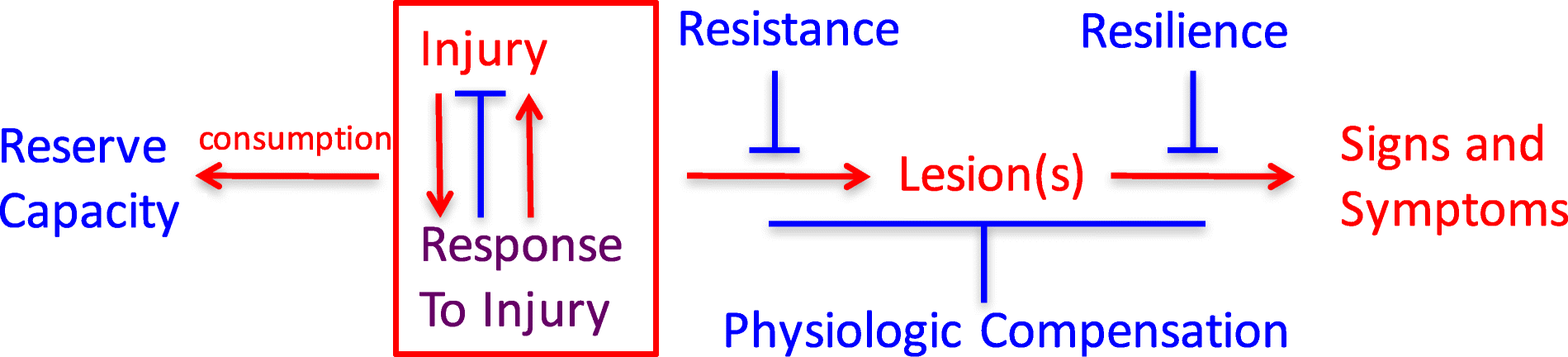
It seems likely that a host of diverse factors active during fetal development, childhood, and throughout adult life may initiate, aggravate, or protect against relevant pathophysiologic processes that underlie neurodegeneration and its clinical expression. These factors—some adverse and some protective—may operate independently, synergistically, antagonistically, sequentially, or even differentially (Fig. 1). While some may be examined individually and in exquisite molecular detail in animal or in vitro models, most will require careful, longitudinal validation in humans. From this perspective, it is not surprising that so far we have had only limited success in identifying risk factors and their underlying mechanisms to guide effective primary and secondary preventive interventions.

Fig. 1
Fig. 1
Relationships among adverse (red), protective (blue), and mixed (purple) processes that culminate in signs and symptoms of neurodegenerative diseases
Until quite recently, “late onset Alzheimer’s disease” was widely viewed as a specific disease entity responsible for the vast majority of late-life dementia. However, longitudinal epidemiologic studies of brain aging and cognitive decline with brain autopsy have consistently demonstrated a central role for multiple co-morbidities as the dominant determinants of late-life dementia. It is important to recognize that current intra vitam measures of these several common diseases of the aging brain are limited, and consequently, despite limitations, brain histopathologic evaluation remains the only means to assess comprehensively the impact of co-morbid diseases on cognitive performance during life.
In combination with functional assessments obtained during life, histopathologic features (lesions) determined with brain autopsy define the presence of specific clinico-pathologic entities, which may or may not reliably correspond to specific mechanism(s) of disease. As a result of the highly consistent findings from longitudinal epidemiologic studies with brain autopsy from across the globe, the view of cognitive decline and dementia in older adults is shifting from being the result of a single disease to a conspiracy of multiple, common age-related disease processes that combine idiosyncratically in each individual. The most common is Alzheimer’s disease, defined by amyloid beta accumulation and neurofibrillary degeneration in certain regions of the brain. Four other commonly recognized pathophysiologic processes that can contribute to cognitive decline and dementia in late life include Lewy body disease, vascular brain injury (especially from small vessel disease), hippocampal sclerosis, and generalized atrophy beyond what can be explained by these other diseases. While the brain lesions of AD are more prevalent at autopsy than any of the other lesions, the combined frequencies of the non-AD abnormalities are usually greater. Indeed, in both the Nun Study and the Honolulu Asia Aging Study, > 90% of participants with severe cognitive impairment can be fully attributed to the collective or individual influences of these five abnormalities [1]. It is critically important, but infrequently appreciated, that the exponential influence of co-morbid disease is reflected in the multiplication of individual relative risks (or odds ratios) for each disease related to cognitive impairment or dementia (Table 1).

Table 1
Point estimates of odds ratios (OR) from ordinal logistic regression of the impact of the coprevalence of five brain lesions on cognitive performance within 2 years of death
Lesion co-morbidity index
OR for the Nun Study (n = 334)
OR for the Honolulu Asia Aging Study (n = 774)
0
1.0 (reference)
1.0 (reference)
0.4–0.8
2.8
2.4
1.0–1.8
5.0
4.6
2.0–2.4
23.1
16.3
2.6–4.4
99.1
37.6
Severity of each of the five brain lesions (Braak stage for neurofibrillary degeneration, cerebral cortical Lewy body disease, cerebral cortical microinfarcts, hippocampal sclerosis, low brain weight) was scored as none/mild (0), moderate (0.4), or severe (1.0) by established criteria, and the lesion co-morbidity index was calculated as the sum of scores for each of the five lesions [1]
To frame a discussion of resistance, resilience, reserve, and compensation, we conventionally consider the diseases that cause late-life cognitive impairment and dementia to derive from injury and response to injury that begin before there are signs or symptoms, but that the resulting damage, distortion, disruption, and/or degeneration ultimately becomes overwhelmingly evident as impairments of cognitive and behavioral function.
The recognition of risk factors linked to measures of different types and amount of brain lesions may illuminate fundamental mechanisms and primary instigating exposures. A systematic search to identify specific protective factors and the mechanisms that underlie them has been conducted relatively infrequently. We propose the following operational definitions as a step toward systematically investigating each of these processes in individuals:
Resistance is inferred from an observed absence or lower level of dementia-associated brain injury, relative to an expected greater frequency or severity based on age, genetic factors, or other characteristics of the individual. This state of unexpectedly low or absent brain injury theoretically may be intrinsic, meaning in someone with greater defenses to forces that usually lead to brain lesions, or environmental, meaning in someone with usual defenses but who avoided exposure to these forces. While resistance now can be assessed comprehensively only with neuropathologic evaluation, specific facets (e.g., beta amyloid, pathologic tau burden, neuron damage) can be estimated during life with biomarkers and imaging.
Resilience is inferred from an observed level of cognitive functioning higher than expected in the face of demonstrated brain injury. Resilience only can be recognized or measured when injury exists and can be related to (near) coincident assessment of function. We prefer to consider two forms of resilience: apparent and essential. Apparent resilience refers to a specific lesion type without consideration of common co-morbidities. Consider two individuals who both are positive by PET imaging for fibrillar amyloid and pathologic tau; one is cognitively normal and the other has dementia. The first person has apparent resilience to AD neuropathologic change. Imagine further a future state when there also is a PET ligand for pathologic alpha-synuclein. Now, we learn that the first person lacks Lewy body disease and the second has co-morbid neocortical Lewy body disease. Is the difference between these two individuals explained by resilience to AD neuropathologic change or by resistance to Lewy body in the first person? Once comprehensive assessment of brain lesions associated with dementia is achieved, then essential resilience can be evaluated. Currently, this is accomplished best with neuropathologic assessment, but even this approach is limited. Our brain autopsy data suggest that much, and perhaps most, of what is referred to currently as (apparent) resilience actually is resistance to co-morbid disease.
Consumption or retention of reserve can be measured or inferred either as brain structural and/or physiological pre-morbid capacity. Examples might be greater than usual synaptic density (analogous to computational “hardware”) or enhanced cognitive effectiveness or redundancy because of learned language, educational richness, or occupational complexity (analogous to computational “software”) prior to the onset of disease. The salutary influence of such resources may be apparent in cognitive test performance well before the onset of cognitive decline. This definition requires that measures of reserve capacity must have been estimated or inferred prior to the development of brain injury. Mechanisms underlying physiologic compensation also may be changes in “hardware” or “software,” but in distinction to pre-existing reserve capacity, physiologic compensation occurs following injury rather than developing prior to injury/response to injury. An example of physiologic compensation might be recruitment of additional regions of the brain to subserve memory function following damage to the hippocampus or in recovery of language functioning after an infarction or brain injury.

Conclusions

With operational definitions of resistance, resilience, and reserve, a focused analytic search for their predictors and correlates can be undertaken. This will require distinguishing and measuring each independently, and then employing those measures as distinct endpoints to identify their individual determinants. This approach, essentially a search to identify protective risk factors and their mechanisms, represents a relatively unexplored pathway toward the identification of candidate preventive interventions.

Saturday, March 16, 2019

Concepts for brain aging: resistance, resilience, reserve, and compensation

You probably lost all your brain reserve just surviving your stroke. Your doctor needs to provide an EXACT PROTOCOL on how to rebuild that brain reserve. 

Concepts for brain aging: resistance, resilience, reserve, and compensation

  • ,
  • ,
  • ,
  • Email authorView ORCID ID profile,
  • ,
  • ,
  • and
Alzheimer's Research & Therapy201911:22
  • Published:

Abstract

A primary goal of research in cognitive impairment and dementia is to understand how some individuals retain sufficient cognitive function for a fulfilling life while many others are robbed of their independence, sometimes their essence, in the last years and decades of life. In this commentary, we propose operational definitions of the types of factors that may help individuals retain cognitive function with aging. We propose operational definitions of resistance, resilience, reserve, with an eye toward how these may be measured and interpreted, and how they may enable research aimed at prevention. With operational definitions and quantification of resistance, resilience, and reserve, a focused analytic search for their determinants and correlates can be undertaken. This approach, essentially a search to identify protective risk factors and their mechanisms, represents a relatively unexplored pathway toward the identification of candidate preventive interventions.

Keywords

  • Reserve capacity
  • Resistance
  • Resilience
  • Alzheimer’s disease

Commentary

A primary goal of research in cognitive impairment and dementia is to understand how some individuals retain sufficient cognitive function for a fulfilling life while many others are robbed of their independence, sometimes their essence, in the last years and decades of life. Here, we propose to define key concepts for which there is not yet a consensus. At the outset, we recognize that our focus is biological (molecules, cells, systems, organism), appreciate the major impact of environmental and social determinants of health and admit our prejudice that environmental and social factors ultimately impact cognition through biological processes.
It seems likely that a host of diverse factors active during fetal development, childhood, and throughout adult life may initiate, aggravate, or protect against relevant pathophysiologic processes that underlie neurodegeneration and its clinical expression. These factors—some adverse and some protective—may operate independently, synergistically, antagonistically, sequentially, or even differentially (Fig. 1). While some may be examined individually and in exquisite molecular detail in animal or in vitro models, most will require careful, longitudinal validation in humans. From this perspective, it is not surprising that so far we have had only limited success in identifying risk factors and their underlying mechanisms to guide effective primary and secondary preventive interventions.
Fig. 1
Fig. 1
Relationships among adverse (red), protective (blue), and mixed (purple) processes that culminate in signs and symptoms of neurodegenerative diseases
Until quite recently, “late onset Alzheimer’s disease” was widely viewed as a specific disease entity responsible for the vast majority of late-life dementia. However, longitudinal epidemiologic studies of brain aging and cognitive decline with brain autopsy have consistently demonstrated a central role for multiple co-morbidities as the dominant determinants of late-life dementia. It is important to recognize that current intra vitam measures of these several common diseases of the aging brain are limited, and consequently, despite limitations, brain histopathologic evaluation remains the only means to assess comprehensively the impact of co-morbid diseases on cognitive performance during life.
In combination with functional assessments obtained during life, histopathologic features (lesions) determined with brain autopsy define the presence of specific clinico-pathologic entities, which may or may not reliably correspond to specific mechanism(s) of disease. As a result of the highly consistent findings from longitudinal epidemiologic studies with brain autopsy from across the globe, the view of cognitive decline and dementia in older adults is shifting from being the result of a single disease to a conspiracy of multiple, common age-related disease processes that combine idiosyncratically in each individual. The most common is Alzheimer’s disease, defined by amyloid beta accumulation and neurofibrillary degeneration in certain regions of the brain. Four other commonly recognized pathophysiologic processes that can contribute to cognitive decline and dementia in late life include Lewy body disease, vascular brain injury (especially from small vessel disease), hippocampal sclerosis, and generalized atrophy beyond what can be explained by these other diseases. While the brain lesions of AD are more prevalent at autopsy than any of the other lesions, the combined frequencies of the non-AD abnormalities are usually greater. Indeed, in both the Nun Study and the Honolulu Asia Aging Study, > 90% of participants with severe cognitive impairment can be fully attributed to the collective or individual influences of these five abnormalities [1]. It is critically important, but infrequently appreciated, that the exponential influence of co-morbid disease is reflected in the multiplication of individual relative risks (or odds ratios) for each disease related to cognitive impairment or dementia (Table 1).
Table 1
Point estimates of odds ratios (OR) from ordinal logistic regression of the impact of the coprevalence of five brain lesions on cognitive performance within 2 years of death
Lesion co-morbidity index
OR for the Nun Study (n = 334)
OR for the Honolulu Asia Aging Study (n = 774)
0
1.0 (reference)
1.0 (reference)
0.4–0.8
2.8
2.4
1.0–1.8
5.0
4.6
2.0–2.4
23.1
16.3
2.6–4.4
99.1
37.6
Severity of each of the five brain lesions (Braak stage for neurofibrillary degeneration, cerebral cortical Lewy body disease, cerebral cortical microinfarcts, hippocampal sclerosis, low brain weight) was scored as none/mild (0), moderate (0.4), or severe (1.0) by established criteria, and the lesion co-morbidity index was calculated as the sum of scores for each of the five lesions [1]
To frame a discussion of resistance, resilience, reserve, and compensation, we conventionally consider the diseases that cause late-life cognitive impairment and dementia to derive from injury and response to injury that begin before there are signs or symptoms, but that the resulting damage, distortion, disruption, and/or degeneration ultimately becomes overwhelmingly evident as impairments of cognitive and behavioral function.
The recognition of risk factors linked to measures of different types and amount of brain lesions may illuminate fundamental mechanisms and primary instigating exposures. A systematic search to identify specific protective factors and the mechanisms that underlie them has been conducted relatively infrequently. We propose the following operational definitions as a step toward systematically investigating each of these processes in individuals:
Resistance is inferred from an observed absence or lower level of dementia-associated brain injury, relative to an expected greater frequency or severity based on age, genetic factors, or other characteristics of the individual. This state of unexpectedly low or absent brain injury theoretically may be intrinsic, meaning in someone with greater defenses to forces that usually lead to brain lesions, or environmental, meaning in someone with usual defenses but who avoided exposure to these forces. While resistance now can be assessed comprehensively only with neuropathologic evaluation, specific facets (e.g., beta amyloid, pathologic tau burden, neuron damage) can be estimated during life with biomarkers and imaging.
Resilience is inferred from an observed level of cognitive functioning higher than expected in the face of demonstrated brain injury. Resilience only can be recognized or measured when injury exists and can be related to (near) coincident assessment of function. We prefer to consider two forms of resilience: apparent and essential. Apparent resilience refers to a specific lesion type without consideration of common co-morbidities. Consider two individuals who both are positive by PET imaging for fibrillar amyloid and pathologic tau; one is cognitively normal and the other has dementia. The first person has apparent resilience to AD neuropathologic change. Imagine further a future state when there also is a PET ligand for pathologic alpha-synuclein. Now, we learn that the first person lacks Lewy body disease and the second has co-morbid neocortical Lewy body disease. Is the difference between these two individuals explained by resilience to AD neuropathologic change or by resistance to Lewy body in the first person? Once comprehensive assessment of brain lesions associated with dementia is achieved, then essential resilience can be evaluated. Currently, this is accomplished best with neuropathologic assessment, but even this approach is limited. Our brain autopsy data suggest that much, and perhaps most, of what is referred to currently as (apparent) resilience actually is resistance to co-morbid disease.
Consumption or retention of reserve can be measured or inferred either as brain structural and/or physiological pre-morbid capacity. Examples might be greater than usual synaptic density (analogous to computational “hardware”) or enhanced cognitive effectiveness or redundancy because of learned language, educational richness, or occupational complexity (analogous to computational “software”) prior to the onset of disease. The salutary influence of such resources may be apparent in cognitive test performance well before the onset of cognitive decline. This definition requires that measures of reserve capacity must have been estimated or inferred prior to the development of brain injury. Mechanisms underlying physiologic compensation also may be changes in “hardware” or “software,” but in distinction to pre-existing reserve capacity, physiologic compensation occurs following injury rather than developing prior to injury/response to injury. An example of physiologic compensation might be recruitment of additional regions of the brain to subserve memory function following damage to the hippocampus or in recovery of language functioning after an infarction or brain injury.

Conclusions

With operational definitions of resistance, resilience, and reserve, a focused analytic search for their predictors and correlates can be undertaken. This will require distinguishing and measuring each independently, and then employing those measures as distinct endpoints to identify their individual determinants. This approach, essentially a search to identify protective risk factors and their mechanisms, represents a relatively unexplored pathway toward the identification of candidate preventive interventions.