Changing stroke rehab and research worldwide now.Time is Brain! trillions and trillions of neurons that DIE each day because there are NO effective hyperacute therapies besides tPA(only 12% effective). I have 523 posts on hyperacute therapy, enough for researchers to spend decades proving them out. These are my personal ideas and blog on stroke rehabilitation and stroke research. Do not attempt any of these without checking with your medical provider. Unless you join me in agitating, when you need these therapies they won't be there.

What this blog is for:

My blog is not to help survivors recover, it is to have the 10 million yearly stroke survivors light fires underneath their doctors, stroke hospitals and stroke researchers to get stroke solved. 100% recovery. The stroke medical world is completely failing at that goal, they don't even have it as a goal. Shortly after getting out of the hospital and getting NO information on the process or protocols of stroke rehabilitation and recovery I started searching on the internet and found that no other survivor received useful information. This is an attempt to cover all stroke rehabilitation information that should be readily available to survivors so they can talk with informed knowledge to their medical staff. It lays out what needs to be done to get stroke survivors closer to 100% recovery. It's quite disgusting that this information is not available from every stroke association and doctors group.

Showing posts with label 'Get out of jail free card'. Show all posts

Sunday, July 12, 2026

Dementia Prevention Is Not One-Size-Fits-All, Study Shows

 This is NOT  a 'get out of jail free card ' for your doctor! Demand AN EXACT PREVENTION PROTOCOL!

Dementia Prevention Is Not One-Size-Fits-All, Study Shows

Modifiable dementia risk factors varied widely from country to country and a one-size-fits-all approach to dementia prevention will not work everywhere, data from 14 countries and regions showed.

Both differences and similarities emerged in a global analysis of risks for 214,000 older adults, reported Emma Nichols, PhD, of the University of Southern California in Los Angeles, at the Alzheimer's Association International Conference.

Low education was a prevalent dementia risk factor for 85.6% of people in China compared with 12.0% of Americans, Nichols said. Obesity was a risk factor for 44.9% of older adults in the U.S., but only 13.3% of people in India.

Despite differences in prevalence, similar factors -- like cardiovascular risks (high cholesterol, hypertension, and diabetes) or risky behaviors (smoking and drinking) -- tended to cluster together. Poor hearing, poor vision, and low education also co-occurred frequently.

Risk factors often overlapped, with more than 50% of individuals having at least two risk factors, Nichols pointed out. In 11 countries and regions, the prevalence of at least four risk factors exceeded 20%.

The findings were published in Lancet Healthy Longevity.

"To create policies and programs that can help lower the burden of dementia, we need to understand where dementia risk factors are most common and how they differ across countries," Nichols said.

"This study offers the most detailed international data to date on how dementia risk factors vary from place to place. The findings show both important differences and shared patterns across settings," she told MedPage Today.

"This information can help governments, health systems, and communities design better prevention efforts focusing not only on individual risk factors, but also on the broader social and structural conditions that impact dementia risk," Nichols added.

The findings have direct implications for dementia prevention, noted Michal Schnaider Beeri, PhD, of Rutgers University in New Brunswick, New Jersey, and Yian Gu, MD, MS, PhD, of Columbia University in New York City.

"The consistent emergence of cardiovascular, behavioral (smoking and excessive alcohol consumption), and sensory-social clusters provides empirical support for multidomain intervention models and suggests that prevention strategies tailored to these clusters might be both efficient and necessary," Beeri and Gu wrote in a comment accompanying the study.

It's not clear whether interventions structured around these empirically derived clusters would outperform the existing multidomain approaches used in the POINTER and FINGER trials, they observed.

"The cross-sectional design of the study also precludes assessment of how risk profiles evolve over time," they added.

In 2024, the Lancet Commission identified 14 risk factors that were linked with dementia. Most evidence in the commission's report came from high-income countries, creating a knowledge gap about risks in other places.

Using the Gateway to Global Aging platform, Nichols and colleagues combined harmonized survey data collected between 2009 and 2023 from 214,251 participants in 11 long-running studies of aging in 14 places -- the U.S., England, Ireland, Northern Ireland, four regions of Europe, Korea, Mexico, China, Malaysia, Brazil, and India. U.S. data came from the Health and Retirement Study.

The researchers analyzed 12 of the Lancet Commission's risk factors that were commonly available in the studies: low education, hearing loss, high LDL cholesterol, depression, physical inactivity, diabetes, smoking, hypertension, obesity, excessive alcohol use, social isolation, and vision loss. They evaluated the prevalence of each risk factor and patterns of occurrence.

Low education (particularly in low-income and middle-income countries), hypertension, and smoking were among the most prevalent risk factors in most areas. In the U.S., hypertension, smoking (former or current), high LDL cholesterol, obesity, and physical inactivity were the five most prevalent dementia risk factors.

The analysis was restricted to the risk factors reported in the Lancet Commission report and future updates should include additional variables as new evidence emerges, Nichols noted.

The researchers used binary versions of all risk factors to simplify interpretation comparisons. In some cases, continuous measures -- pack-years of smoking, for example -- can provide more detailed information.

Disclosures

Data harmonization for the Gateway to Global Aging Data project was supported by the NIH and National Institute on Aging.

Nichols and co-authors had no conflicts of interest.

Beeri and Gu declared no competing interests.


Thursday, October 20, 2022

Beyond steps per day: other measures of real-world walking after stroke related to cardiovascular risk

It is YOUR DOCTOR'S ABSOLUTE RESPONSIBILITY to get you recovered enough to do this and reduce your CVD risk. If they don't take responsibility you don't have a functioning stroke doctor or hospital.  I.E. they spout the craptastic 'get out of Jail Free card'; 'All strokes are different, all stroke recoveries are different.'

Beyond steps per day: other measures of real-world walking after stroke related to cardiovascular risk

Abstract

Background

Significant variability exists in how real-world walking has been measured in prior studies in individuals with stroke and it is unknown which measures are most important for cardiovascular risk. It is also unknown whether real-world monitoring is more informative than laboratory-based measures of walking capacity in the context of cardiovascular risk. The purpose of this study was to determine a subset of real-world walking activity measures most strongly associated with systolic blood pressure (SBP), a measure of cardiovascular risk, in people with stroke and if these measures are associated with SBP after accounting for laboratory-based measures of walking capacity.

Methods

This was a cross-sectional analysis of 276 individuals with chronic (≥ 6 months) stroke. Participants wore an activity monitor for ≥ 3 days. Measures of activity volume, activity frequency, activity intensity, and sedentary behavior were calculated. Best subset selection and lasso regression were used to determine which activity measures were most strongly associated with systolic blood pressure. Sequential linear regression was used to determine if these activity measures were associated with systolic blood pressure after accounting for walking capacity (6-Minute Walk Test).

Results

Average bout cadence (i.e., the average steps/minute across all bouts of walking) and the number of long (≥ 30 min) sedentary bouts were most strongly associated with systolic blood pressure. After accounting for covariates (ΔR2 = 0.089, p < 0.001) and walking capacity (ΔR2 = 0.002, p = 0.48), these activity measures were significantly associated with systolic blood pressure (ΔR2 = 0.027, p = 0.02). Higher systolic blood pressure was associated with older age (β = 0.219, p < 0.001), male gender (β = − 0.121, p = 0.046), black race (β = 0.165, p = 0.008), and a slower average bout cadence (β = − 0.159, p = 0.022).

Conclusions

Measures of activity intensity and sedentary behavior may be superior to commonly used measures, such as steps/day, when the outcome of interest is cardiovascular risk. The relationship between walking activity and cardiovascular risk cannot be inferred through laboratory-based assessments of walking capacity.

Introduction

Low physical activity is an important modifiable risk factor for stroke and future cardiovascular events [1,2,3,4,5]. In fact, low physical activity may be the second most important modifiable risk factor for stroke, aside from blood pressure [6]. Thus, controlling a person’s risk factors for stroke often involves modifications to their activity behavior to reduce these risks [2]. This is a particularly salient concept in people who have already sustained a stroke who typically demonstrate lower activity levels and greater sedentary behavior compared to persons without stroke [7,8,9,10,11].

The application of sensor technology has enabled rehabilitation professionals to measure real-world activity (i.e., activity that occurs outside the clinic or laboratory setting) to better understand the activity levels of individuals with stroke and its effects on cardiovascular risk [1, 12,13,14]. In general, two lines of work have garnered significant attention in the sensor field, one related to the measurement of activity and the other focused on understanding predictors of activity. In terms of measurement, the most common way that real-world walking activity has been quantified in stroke rehabilitation studies is by calculating average steps/day (ASPD) [15,16,17,18,19]. Using this measure, a person’s daily stepping activity is monitored over a period of time (preferably at least 7 days) [20, 21], summed and averaged across the number of valid recording days [22, 23]. Thus, ASPD is easy to calculate and interpret, likely contributing to its ubiquitous use in studies in individuals with stroke. There is, however, significant variability in how real-world activity is measured in studies in people with stroke [7, 10, 11, 14, 24,25,26,27,28,29], with some studies emphasizing the importance of measuring sedentary behavior [11, 25, 28, 30, 31] and others examining measures of activity intensity using metabolic equivalents of task (METS) or cadence [14, 26, 27, 32], among other measures. Thus, it remains unknown which measures of real-world walking activity are most important for cardiovascular risk in people with stroke.

A second line of work has focused on examining predictors of real-world walking activity in people with stroke [15, 28, 33,34,35]. This line of work has revealed that measures of walking capacity are strongly related to real-world walking activity after stroke. A recent meta-analysis by Thilarajah and colleagues found that the 6-Minute Walk Test, a measure of walking capacity, explains 37% of the variance in physical activity in people with stroke [15]. This suggests that measures of walking capacity are critically important and could potentially serve as a proxy for real-world walking activity in people with stroke. Real-world activity monitoring can be costly and cumbersome [36]; thus, if rehabilitation professionals were able to utilize laboratory-based measures of walking capacity as a proxy for real-world walking activity, this could potentially save time and resources. However, other work suggests that performance on laboratory-based measures of walking capacity does not necessarily translate to real-world walking behavior [18, 37,38,39]. Thus, whether real-world monitoring is more informative than laboratory-based measures of walking capacity in understanding the relationship with cardiovascular risk is not known at this time.

These lines of work have exposed two critical knowledge gaps. The first is that it remains unknown which measures of real-world walking activity are most important for cardiovascular risk in people with stroke. While previous studies have selected measures of potential importance, the first objective of this work was to determine which measures of real-world activity are most important to identify cardiovascular risk in people with stroke. Elevated systolic blood pressure (SBP) is an important cardiovascular risk factor and likely the strongest risk factor for stroke [3, 6, 40]. We therefore examined the relationship between measures of real-world walking activity and SBP. The second knowledge gap is that it is not known whether real-world monitoring is more informative than laboratory-based measures of capacity in the context of cardiovascular risk. Therefore, our second objective was to determine if measures of real-world walking activity would be associated with SBP after accounting for measures of walking capacity (6-Minute Walk Test, 6MWT). We hypothesized that average steps/day, average number of walking bouts/day, the percent time spent in sedentary behaviors, and the fragmentation index would be significantly associated with SBP and that these activity measures would be significantly associated with SBP after accounting for the 6MWT.

Wednesday, November 17, 2021

Initiative to Improve Sleep and Clearance of the Brain

 You'll have to ask your doctor if your brain glymphatic system was impaired from your stroke and what protocols they have to restore that system. You do expect your doctor to know EXACTLY what damage your stroke caused AND THE PROTOCOLS that will fix them. Or are you OK with your doctor's incompetence in not getting you 100% recovered? Getting you recovered is your doctor's responsibility,don't let him/her dump it on you by using the 'get out of jail free' statement: 'All strokes are different,all stroke recoveries are different.' Laugh maniacally in their face and ask them;'You expect me to believe that crapola excuse?'

Initiative to Improve Sleep and Clearance of the Brain


Summary: A new study aims to assess the usefulness of a new technology that could speed up and enhance the clearing of metabolic waste via the glymphatic system as a person sleeps.

Source: University of North Carolina

The U.S. Department of Defense is funding the first human trial of a device to speed up and enhance the natural system of brain cleansing that occurs when we sleep. 

The trial will be conducted among 90 people at three trial sites – University of North Carolina, University of Washington School of Medicine, and a collaboration between Oregon Health & Science University and the Brain Electrophysiology Laboratory (BEL). Results are expected in the fall of 2022.

Recent discoveries point to the importance of quality sleep for clearance of brain metabolic waste through the newly-discovered brain glymphatic system.

If sleep is disrupted, so are these crucial processes, leading to cognitive impairment – things like faulty motor coordination, attention deficits, slower processing speed, decreased decision-making capabilities, and hampered short-term memory, in addition to increasing risk of neurodegenerative disease later in life.

These issues can have life-or-death consequences for service members in the U.S. military, which is why the Department of Defense is funding innovative research initiatives, including this three-year, $4.3-million, project with the ultimate goal of helping service members overcome acute sleep deprivation and chronic sleep restriction.

The scientists leading this effort are from UNC-Chapel Hill, the University of Washington School of Medicine, the Brain Electrophysiology Lab Oregon Health & Science University, and Montana State University.

“Our approach is to continue to validate novel imaging approaches of the human glymphatic system while assessing novel technology to improve glymphatic clearance and cognitive function,” said co-principal investigator Dawn Kernagis, PhD, assistant professor of neurosurgery at UNC School of Medicine.

“If this works, it would have major implications for service members and potentially anyone with diagnosed sleep dysfunction. It could also have implications for people with other neurological conditions, such as traumatic brain injury, Alzheimer’s disease, and other dementias.”

This project, titled “Augmented Neurophysiology of Sleep and Performance Readiness,” is part of the Medical Technology Enterprise Consortium, a collaboration between industry and academia to facilitate research and development activities, in cooperation with the U.S. Army Medical Research and Development Command and other Department of Defense agencies in the biomedical sciences to protect, treat, and optimize the health and performance of military personnel.

This effort was years in the making, starting with the discovery of the glymphatic system by co-principal investigator Jeffrey Iliff, PhD and Maiken Nedergaard, MD. In 2013, Science Magazine called it one of the Top 10 discoveries of the year.

Iliff, a professor of psychiatry and behavioral sciences and neurology at the University of Washington School of Medicine, said the biology is straightforward. Cerebral spinal fluid surrounds the brain, and as we sleep, fluid washes through brain cells and supports clearance of difference wastes. Iliff’s TED Talk on this process has been viewed more than 5 million times.

Scientists think this glymphatic function is at the heart of the restorative power of sleep. And so, scientists think disrupting sleep disrupts the glymphatic system, impairing cognition and potentially impacting long-term brain health.

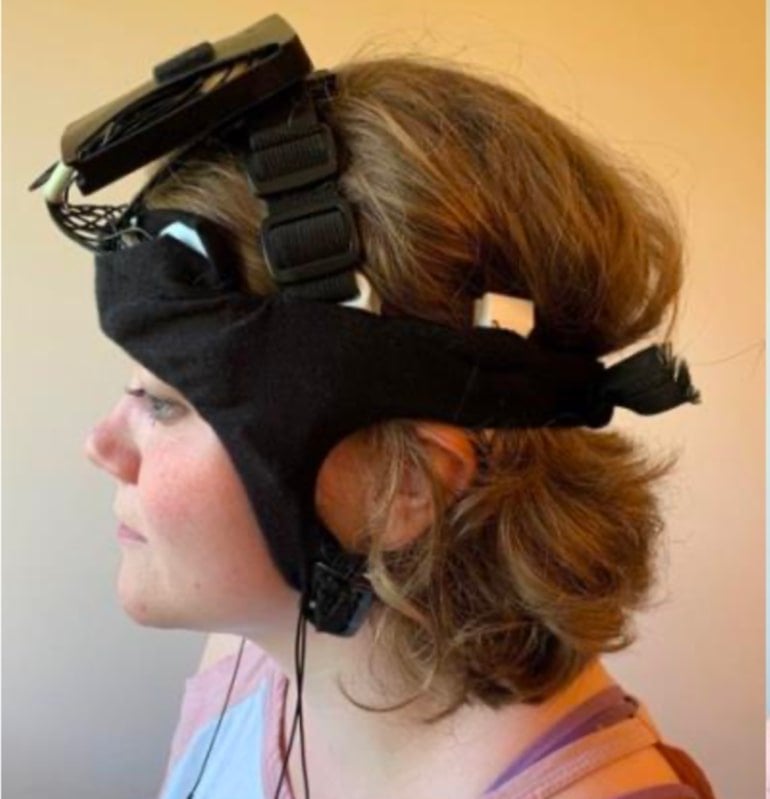
This shows a woman in the headband device
Functional prototype to test in-home sleep treatment. Electronics and battery are perched on top of the head. Next generation of the device will have electronics/battery integrated in the headband. Credit: BEL Company

“Improving glymphatic function, whether pharmacologically or by means of a device, could improve the cognitive effects of acute sleep deprivation and chronic sleep restriction,” said Iliff.. “Our lab’s research over the past eight years on brain-waste clearance in animals has helped define glymphatic biology. Now we hope to see if we can use what we’ve learned to help people overcome poor or interrupted sleep and the brain dysfunction that follows.”

Tuesday, June 22, 2021

Evidence for a window of enhanced plasticity in the human motor cortex following ischemic stroke

Useless. We've known about neuoplasticity for decades. But we still have no understanding of why a neuron drops its' function and takes on a neighboring function. Since we don't know that we can't make neuroplastictity repeatable on demand. NO PROTOCOLS CAN BE WRITTEN ON NEUROPLASTICITY UNTIL WE KNOW THAT. We get useless guidelines instead.  Until we get exact protocols our stroke medical 'professionals' can blame the survivor for not recovering. It's the best 'get out of jail free' card there is. Your stroke medical team has just pushed all responsibility for recovering off their backs and onto yours.

YOU have to put the monkey(responsibility for your recovery) on their back and never let them transfer it back to you. Tell them you know all about the Harvard Business Review article on monkey on the back tossing.

 Evidence for a window of enhanced plasticity in the human motor cortex following ischemic stroke

Neurorehabilitation and Neural Repair , Volume 35(4) , Pgs. 307-320.

NARIC Accession Number: J86353.  What's this?
ISSN: 1545-9683.
Author(s): Hordacre, Brenton ; Austin, Duncan ; Brown, Katlyn E. ; Graetz, Lynton ; Pareés, Isabel ; De Trane, Stefania ; Vallence, Ann-Maree ; Koblar, Simon ; Kleinig, Timothy ; McDonnell, Michelle N. ; Greenwood, Richard ; Ridding, Michael C. ; Rothwell, John C..
Publication Year: 2021.
Number of Pages: 14.

Abstract: 

Study measured synaptic plasticity at a neural level in human stroke survivors to test whether there is an early period of enhanced synaptic plasticity in the weeks and months after ischemic stroke. Continuous theta burst stimulation (cTBS) was used to activate synapses repeatedly in the motor cortex and initiate early stages of synaptic plasticity that temporarily reduces cortical excitability and motor-evoked potential amplitude. Thus, the greater the effect of cTBS on the motor-evoked potential, the greater the inferred level of synaptic plasticity. Data were collected from separate cohorts (Australia and United Kingdom). In each cohort, serial measurements were made in the weeks to months following stroke. Data were obtained for the ipsilesional motor cortex in 31 stroke survivors (Australia) over 12 months and the contralesional motor cortex in 29 stroke survivors (United Kingdom) over 6 months. Depression of cortical excitability by cTBS was most prominent shortly after stroke in the contralesional hemisphere and diminished over subsequent sessions. cTBS response did not differ across the 12-month follow-up period in the ipsilesional hemisphere. Results provide the first neurophysiological evidence consistent with a period of enhanced synaptic plasticity in the human brain after stroke. Behavioral training given during this period may be especially effective in supporting poststroke recovery.
Descriptor Terms: BODY MOVEMENT, BRAIN, ELECTRICAL STIMULATION, HEALTH PROMOTION, INTERNATIONAL REHABILITATION, LIMBS, MOTOR SKILLS, STROKE.


Can this document be ordered through NARIC's document delivery service*?: Y.

Citation: Hordacre, Brenton , Austin, Duncan , Brown, Katlyn E. , Graetz, Lynton , Pareés, Isabel , De Trane, Stefania , Vallence, Ann-Maree , Koblar, Simon , Kleinig, Timothy , McDonnell, Michelle N. , Greenwood, Richard , Ridding, Michael C. , Rothwell, John C.. (2021). Evidence for a window of enhanced plasticity in the human motor cortex following ischemic stroke.  Neurorehabilitation and Neural Repair , 35(4), Pgs. 307-320. Retrieved 6/22/2021, from REHABDATA database.
 

Wednesday, April 14, 2021

Quality of plant-based diet and risk of total, ischemic, and hemorrhagic stroke

I absolutely hate research like this. It gives ammunition to your doctor to blame the patient and is a 'get out of jail free' card for the doctor in not having 100% recovery rehab protocols.

Quality of plant-based diet and risk of total, ischemic, and hemorrhagic stroke

Baden MY, Shan Z, Wang F, et al.
Neurology|April 13, 2021
Journal Summary

Researchers looked at the links between plant-based diet quality and the risk of total, ischemic, and hemorrhagic stroke to see if a healthful plant-based diet is linked to a lower risk of stroke. Participants included 73,890 women from the Nurses' Health Study (NHS; 1984–2016), 92,352 women from NHSII (1991–2017), and 43,266 men from the Health Professionals Follow-Up Study (1986–2012) who were free of cardiovascular disease and cancer at baseline. Six thousand two hundred forty-one total stroke cases (including 3,015 ischemic and 853 hemorrhagic strokes) were documented during the follow-up. Despite the small number of cases, no link was found between a vegetarian diet and total stroke. Those who followed a healthful plant-based diet had a lower risk of total stroke.

Journal Summary

Read the full article on Neurology.


Friday, January 29, 2021

Neuroplasticity is a 'Get out of jail free card' for your stroke medical team

 Since there is NO PROTOCOL  on how to make neuroplasticity EXACTLY REPEATABLE, this allows your stroke team to be able to shift blame for not recovering onto the survivor.  I however think ALL BLAME for lack of recovery lies on the doctors, knowing how fucking bad stroke recovery has been for decades and not specifying the needs to researchers to get correct rehab research done.

Thursday, December 10, 2020

Pedicure woes

 In order for me to easily and competently get my toenails trimmed I get a pedicure. One handed trimming of toenails doesn't work because the left toes are still curling due to spasticity. As you can see from the picture the left foot angles out even when at rest. This also affects my walking. I should be able to go to any physical therapist in the world and get EXACT STROKE PROTOCOLS to fix that problem. But NO,  we have to deal with the lazy excuse of 'All strokes are different,all stroke recoveries are different.' That is a 'get out of jail free card' that is completely and totally wrong.  I dare anyone to send me the research proof on that. 

The hot towels at the end


Saturday, November 7, 2020

The Impact of Sleep Disorders on Functional Recovery and Participation Following Stroke: A Systematic Review and Meta-Analysis

Useless.

So fucking what, you described a problem but offered NO SOLUTION.

The Impact of Sleep Disorders on Functional Recovery and Participation Following Stroke: A Systematic Review and Meta-Analysis

First Published November 5, 2020 Research Article Find in PubMed 

Adequate sleep is vital for health and quality of life. People with stroke and a concomitant sleep disorder may have poorer outcomes than those without a sleep disorder.

To systematically evaluate the published literature to determine the impact of sleep disorders on physical, functional recovery at the activity and participation level after stroke.

A systematic review was conducted using PubMed, CINAHL, Scopus, and PsycINFO. Studies were selected that reported outcomes on physical, functional recovery at the activity and participation levels in participants with stroke and a diagnosed sleep disorder. A meta-analysis was performed on included studies that reported Barthel Index (BI) and modified Rankin Scale (mRS) scores. Results: A total of 33 studies were included in the systematic review with 9 of them in the meta-analysis. The mean mRS score was 0.51 points higher in participants with stroke and sleep disorders versus participants with stroke without sleep disorder [95% CI: 0.23-0.78]. The mean BI score was 10.2 points lower in participants with stroke and sleep disorders versus participants with stroke without sleep disorder [95% CI: −17.9 to −2.6].

People with stroke and a sleep disorder have greater functional limitations and disability than those without a sleep disorder. Rehabilitation professionals should screen(So you are doing NOTHING! Good to know how fucking useless you are.) their patients with stroke for potential sleep disorders and further research(So this is your get out of jail free card for doing nothing?) is needed to develop sleep and rehabilitation interventions that can be delivered in combination. PROSPERO registration number: CRD42019125562.

Access Options