Changing stroke rehab and research worldwide now.Time is Brain! trillions and trillions of neurons that DIE each day because there are NO effective hyperacute therapies besides tPA(only 12% effective). I have 523 posts on hyperacute therapy, enough for researchers to spend decades proving them out. These are my personal ideas and blog on stroke rehabilitation and stroke research. Do not attempt any of these without checking with your medical provider. Unless you join me in agitating, when you need these therapies they won't be there.

What this blog is for:

My blog is not to help survivors recover, it is to have the 10 million yearly stroke survivors light fires underneath their doctors, stroke hospitals and stroke researchers to get stroke solved. 100% recovery. The stroke medical world is completely failing at that goal, they don't even have it as a goal. Shortly after getting out of the hospital and getting NO information on the process or protocols of stroke rehabilitation and recovery I started searching on the internet and found that no other survivor received useful information. This is an attempt to cover all stroke rehabilitation information that should be readily available to survivors so they can talk with informed knowledge to their medical staff. It lays out what needs to be done to get stroke survivors closer to 100% recovery. It's quite disgusting that this information is not available from every stroke association and doctors group.

Showing posts with label penumbra. Show all posts

Sunday, March 1, 2026

Breaking Down the 2026 Acute Ischemic Stroke Guidelines

 What a FUCKING SHITSHOW! Guidelines; NOT PROTOCOLS! Doesn't anyone in stroke have a functioning brain?


Send me personal hate mail on this: oc1dean@gmail.com. I'll print your complete statement with your name and my response in my blog. Or are you afraid to engage with my stroke-addled mind? No excuses are allowed! You're medically trained; it should be simple to precisely state EXACTLY WHY you aren't working on 100% recovery protocols with NO EXCUSES! I've never received any communications from any stroke association. You'd think they would want to talk to their fiercest critic, but no, they are hiding under a rock someplace, probably don't even know I exist! Swearing at me is allowed, I'll return the favor. Don't even attempt to use the excuse that brain research is hard.

Breaking Down the 2026 Acute Ischemic Stroke Guidelines
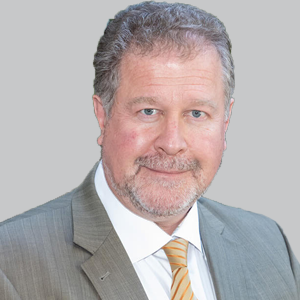
Andrei Alexandrov, MD, an award-winning leader in stroke research and clinical care, discussed the clinical impact of the latest stroke guidelines and their implications for diagnosis and care.

Acute ischemic stroke (AIS) occurs when a cerebral artery becomes suddenly occluded, leading to interruption of blood flow and oxygen delivery to brain tissue. It accounts for approximately 85% of all strokes and represents a neurologic emergency in which rapid diagnosis and treatment are critical to preserving brain function and reducing long-term disability.¹

The recently published stroke guidelines, developed and maintained by the American Heart Association in collaboration with its stroke-focused division, the American Stroke Association, were written by experts in vascular neurology, emergency medicine, neurointervention, neurosurgery, neuroradiology, and rehabilitation medicine. Final documents underwent peer review and were published in the journal Stroke to support evidence-based stroke care across diverse health care settings.²

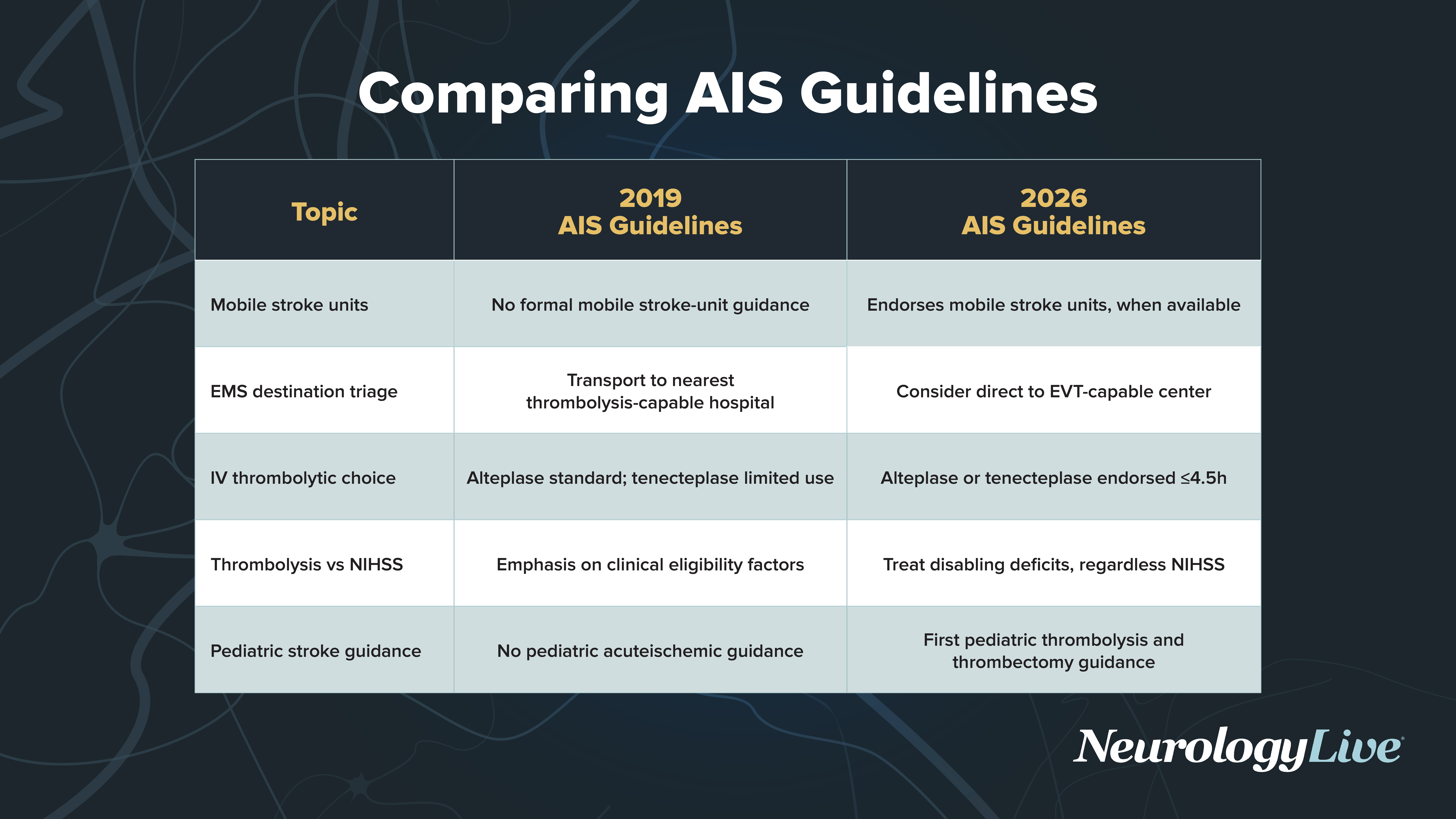
The updated stroke guidelines span the full continuum of acute ischemic stroke care, from prehospital triage and selection of intravenous thrombolytic agents to refined criteria for mechanical thrombectomy and post-procedural management. They clarify indications for tenecteplase and basilar artery thrombectomy, offer more cautious guidance for medium and distal vessel occlusions, and introduce structured recommendations for pediatric stroke and post-stroke dysphagia treatment. In addition to informing real-world clinical decision-making, the guidelines identify ongoing gaps in areas such as blood pressure management after reperfusion and device optimization, helping to shape future clinical trials and innovation in stroke systems of care.

As part of ongoing coverage, NeurologyLive® spoke with Andrei Alexandrov, MD, an award-winning leader in stroke research and clinical care, for an in-depth discussion of the updated guidelines. In this interview, Alexandrov shared key takeaways from the recommendations, examined their implications for everyday clinical practice, and highlighted remaining challenges in post-stroke blood pressure management. He also offered insight into how the revised criteria may shape future research priorities and therapeutic development in the field.


Top Takeaways From the 2026 Stoke Guidelines

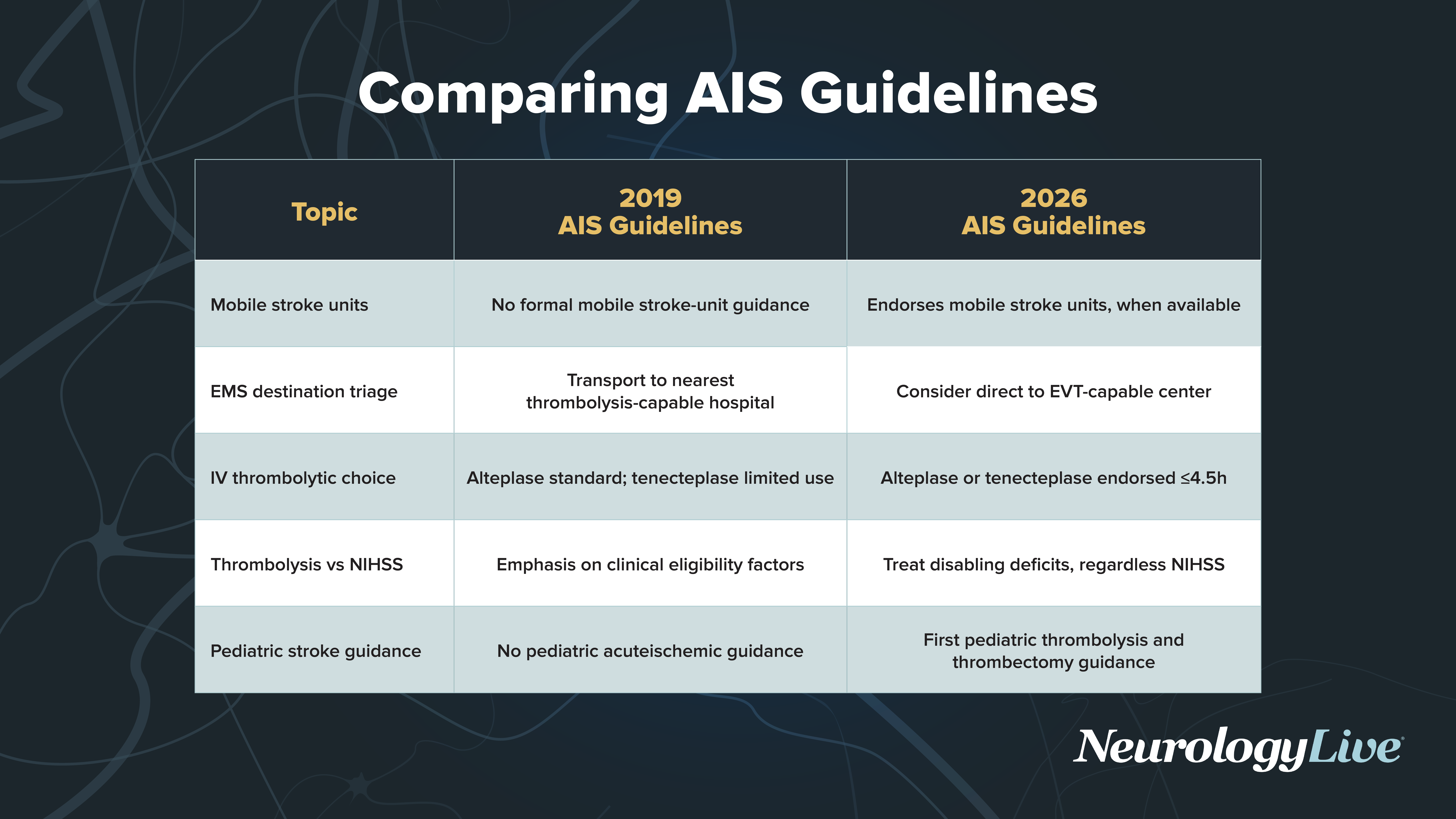
Alexandrov explained that the updated 2026 stroke guidelines align formal recommendations with evolving real-world practice. Most notably, tenecteplase (TNK) is now recommended alongside alteplase as an acceptable agent for intravenous thrombolysis, reflecting widespread adoption at advanced stroke centers. The guidelines also formally endorse mobile stroke units for rapid thrombolysis delivery and triage where available, and, for the first time, incorporate structured recommendations for pediatric stroke, including imaging, registry development, and treatment considerations.
Major Takeaways

  1. Tenecteplase is now recommended alongside alteplase as an acceptable intravenous thrombolytic agent.
  2. Mobile stroke units are endorsed for rapid thrombolysis delivery and triage where available.
  3. Pediatric stroke is formally included, with guidance on imaging, registries, and treatment considerations.
  4. The guidelines are among the most comprehensive and detailed stroke updates published to date.

Unanswered Questions: Blood Pressure management and Reperfusion injury

Alexandrov noted that optimal blood pressure management after successful reperfusion remains unsettled. Although cerebral hyperperfusion is recognized after thrombectomy, trials of intensive blood pressure lowering have not improved outcomes and may cause harm. The field now faces the challenge of determining whether more individualized and standardized approaches are needed.

Major Takeaways

  1. Cerebral hyperperfusion occurs in a substantial subset of patients after successful reperfusion.
  2. Intensive blood pressure lowering has not consistently improved outcomes in trials.(Why should it? You're reducing the blood flow and oxygen delivery to the brain when it needs it most to prevent penumbra death! Can't you think at all?)
  3. Individualized blood pressure strategies may be preferable to one-size-fits-all approaches.
  4. More rigorous and standardized trials are needed to guide post-thrombectomy management.

Expanding the Scope of Stroke Care: Dysphagia and Rehabilitation

('care' NOT RECOVERY! For that alone, you're fired!)

Alexandrov spotlighted guidelines expansion beyond acute reperfusion, highlighting pharyngeal electrical stimulation (PES) as a recommended option for post-stroke dysphagia. With FDA approval supported by European data, this therapy represents a shift toward more active treatment of neurogenic dysphagia rather than relying solely on compensatory measures.

Major Takeaways

  1. Pharyngeal electrical stimulation is now recommended for selected patients with post-stroke dysphagia.
  2. FDA approval was supported by European data demonstrating safety and efficacy.
  3. The guidelines may accelerate adoption of more active dysphagia therapies in US practice.
  4. Stroke care continues to expand beyond acute reperfusion to include rehabilitation innovation.

Looking Ahead: A Tool for Practice Change and Future Research

Alexandrov concluded by mentioning that the 2026 update serves both as a consolidation of current evidence and a roadmap for future investigation. It equips clinicians to implement updated protocols while identifying research gaps in thrombectomy expansion, device development, and post-reperfusion management.

Major Takeaways

  1. The guidelines can help clinicians advocate for updated institutional protocols.
  2. Research gaps are clearly identified, guiding future clinical trials.
  3. Mechanical thrombectomy, thrombolysis, and rehabilitation strategies continue to evolve.
  4. The 2026 update represents both consolidation of progress and a roadmap for future innovation.

Transcript edited for clarity. Click here to view more of our coverage on Stroke.

REFERENCES
1. American Heart Association / American Stroke Association. 2026 Guideline for the Early Management of Patients With Acute Ischemic Stroke. Published in Stroke. 2026.
2. American Heart Association. Guideline Development Manual. American Heart Association Scientific Statements and Clinical Practice Guidelines Methodology.

Tuesday, January 27, 2026

Mitochondria magic: Exercise’s value soars with this news


Great Catch-22 here; you need exercise to recover, but you really need 100% recovery to do the required exercises. Have your competent? doctor EXACTLY EXPLAIN HOW TO GET AROUND THAT PROBLEM!

I can almost guarantee your doctor and hospital will KNOW NOTHING AND DO NOTHING! 

No human research will occur; nothing will be done! That is how fucking incompetent the whole stroke medical world is. Hopefully comeuppance will hit them all with a stroke. And they can regret their incompetence in not solving stroke to 100% recovery!

Al this incompetence is a result of NO leadership firing the incompetent persons!

Mitochondria magic: Exercise’s value soars with this news

Japanese researchers found that exercise triggers muscle cells to send mitochondria through the bloodstream to protect and repair brain tissue after stroke
Mit
Photo credit: Shutterstock.com / LightField-Studios-2

Scientists at Juntendo University School of Medicine have uncovered a remarkable process that explains how exercise protects the brain from stroke damage. The research team discovered that physical activity triggers muscle cells to produce mitochondria that travel through the bloodstream and deliver healing benefits directly to injured brain tissue.

The study, published in the journal MedComm on Jan. 15, reveals that blood platelets act as tiny transport vehicles, carrying these cellular powerhouses from muscles to the brain. Once they arrive, the mitochondria help damaged neurons survive oxygen deprivation and support the repair of critical brain structures. The findings could eventually lead to new treatments for stroke patients who are too frail to exercise on their own.(Slight problem here, the penumbra resolves itself into dead brain in the first week, so you need this exercise immediately! HOW THE FUCK WILL YOUR DOCTOR ACCOMPLISH THAT?)


Research Assistant Professor Toshiki Inaba led the investigation alongside colleagues Nobukazu Miyamoto and Nobutaka Hattori at Juntendo’s Department of Neurology. The team conducted experiments using mouse models designed to replicate both stroke and dementia conditions, providing insights into how cellular communication might be harnessed for therapeutic purposes.

Watching mitochondria travel between cells

Miyamoto’s interest in mitochondrial migration began during a research fellowship at Massachusetts General Hospital and Harvard Medical School, where he first observed these cellular structures moving from one cell to another. That observation sparked the realization that mitochondrial transfer might offer treatment possibilities for various neurological conditions.


For the current study, researchers divided mice into groups and had some perform low-intensity treadmill exercise while others remained sedentary. The team then carefully tracked brain damage, movement abilities, memory function and changes in brain and muscle cells among both groups. They also measured mitochondrial levels and activity throughout the experiment.

The results showed clear advantages for the mice that exercised. These animals experienced less damage to white matter and myelin, the protective coating around nerve fibers. They also demonstrated better memory retention and movement capabilities compared to sedentary mice, while experiencing fewer complications following stroke events.

Mitochondria magic: Exercise's value soars with this news
Researchers have demonstrated how mitochondria, which are abundant in muscle, could aid in stroke recovery through exercise-induced migration.(Photo courtesy of Dr. Toshiki Inaba from Juntendo University School of Medicine, Japan)

Platelets serve as cellular delivery system

The research revealed that exercise significantly increased mitochondrial production in both muscle tissue and the bloodstream. Blood platelets, typically known for their role in clotting, took on an unexpected function by capturing mitochondria from muscle cells and transporting them to the brain.

Once in the brain, these traveling mitochondria didn’t just reach neurons. They also made their way to support cells including oligodendrocytes, which produce protective myelin, and astrocytes, star-shaped cells that help form the blood-brain barrier. The mitochondria provided crucial support to cells in the damaged area and the surrounding region called the penumbra, where brain tissue remains vulnerable but potentially salvageable.

Inside these brain cells, the delivered mitochondria helped them endure low-oxygen conditions that typically cause widespread cell death after stroke. They supported the repair of white matter, the brain’s communication infrastructure, and reduced the cascade of complications that often follow stroke events.

Limited options drive search for new approaches

Current stroke treatment relies heavily on clot removal or dissolution, but these interventions only work within a narrow window after symptoms begin. Once that critical time frame passes, patients face limited therapeutic options. Physical rehabilitation and symptom management become the primary focus, yet many stroke survivors continue struggling with walking difficulties, speech problems and memory decline.

Exercise has long been recognized as beneficial for both stroke prevention and recovery. However, many stroke patients are elderly and lack the physical stamina required to exercise intensively enough to gain those protective benefits. This reality makes the search for alternative approaches particularly urgent.

Inaba acknowledged that while the research team has identified several technical and biological challenges through additional experiments, the approach holds promise for reducing neurological problems after stroke. The applications might extend beyond stroke to include mitochondrial diseases and related neurodegenerative conditions where current treatment options remain limited.

From mice to potential human therapies

The pathway from laboratory findings to clinical treatments typically spans years and requires extensive testing for safety and effectiveness. If the mitochondrial transfer approach proves successful in human trials, it could potentially allow stroke patients to receive the benefits of exercise through transfusions of platelet preparations enriched with mitochondria.

Such a treatment would be particularly valuable for patients who cannot engage in physical rehabilitation due to age, frailty or the severity of their condition. The approach might also offer hope for preventing the progression of vascular dementia, a condition that currently has no established treatments.

The research team’s work builds on growing scientific understanding of how cells communicate and share resources. By revealing the specific mechanism through which exercise protects the brain, the scientists have opened a new avenue for developing therapies that could help millions of stroke survivors worldwide maintain better neurological function and quality of life.

SOURCE: juntendo