Changing stroke rehab and research worldwide now.Time is Brain! trillions and trillions of neurons that DIE each day because there are NO effective hyperacute therapies besides tPA(only 12% effective). I have 523 posts on hyperacute therapy, enough for researchers to spend decades proving them out. These are my personal ideas and blog on stroke rehabilitation and stroke research. Do not attempt any of these without checking with your medical provider. Unless you join me in agitating, when you need these therapies they won't be there.

What this blog is for:

My blog is not to help survivors recover, it is to have the 10 million yearly stroke survivors light fires underneath their doctors, stroke hospitals and stroke researchers to get stroke solved. 100% recovery. The stroke medical world is completely failing at that goal, they don't even have it as a goal. Shortly after getting out of the hospital and getting NO information on the process or protocols of stroke rehabilitation and recovery I started searching on the internet and found that no other survivor received useful information. This is an attempt to cover all stroke rehabilitation information that should be readily available to survivors so they can talk with informed knowledge to their medical staff. It lays out what needs to be done to get stroke survivors closer to 100% recovery. It's quite disgusting that this information is not available from every stroke association and doctors group.

Showing posts with label Lactobacillus bacteria. Show all posts

Friday, December 1, 2023

Lactobacillus Bacteria May Guard Against Anxiety and Depression

 You want your doctor to prevent post stroke depression and anxiety the proper way; 100% RECOVERY PROTOCOLS!  Not this after the fact intervention.

Post stroke depression(33% chance).

Post stroke anxiety(20% chance).  

But didn't your competent doctor already have this in your diet protocol? Oh, you don't have a competent doctor, do you?


Lactobacillus Bacteria May Guard Against Anxiety and Depression

Summary: Researchers have discovered the significant role of Lactobacillus, a bacterium in fermented foods and yogurt, in managing stress and potentially preventing depression and anxiety.

This research is crucial for its specific focus on Lactobacillus, distinguishing it from other microbiota. The study found that Lactobacillus maintains interferon gamma levels, crucial for stress response and mental well-being.

These insights offer a new avenue for developing treatments for mental health conditions.

Key Facts:

  1. Lactobacillus, found in fermented foods, plays a crucial role in regulating the immune system and influencing mood disorders.
  2. The study successfully isolated the effects of Lactobacillus, showing its specific role in maintaining interferon gamma levels, important for stress management.
  3. This groundbreaking research opens the door to new probiotic treatments for mental health conditions like anxiety and depression.

Source: University of Virginia

University of Virginia School of Medicine researchers have discovered how Lactobacillus, a bacterium found in fermented foods and yogurt, helps the body manage stress and may help prevent depression and anxiety.

The findings open the door to new therapies to treat anxiety, depression and other mental-health conditions.

The new research from UVA’s Alban Gaultier, Ph.D., and collaborators is notable because it pinpoints the role of Lactobacillus, separating it out from all the other microorganisms that naturally live in and on our bodies.
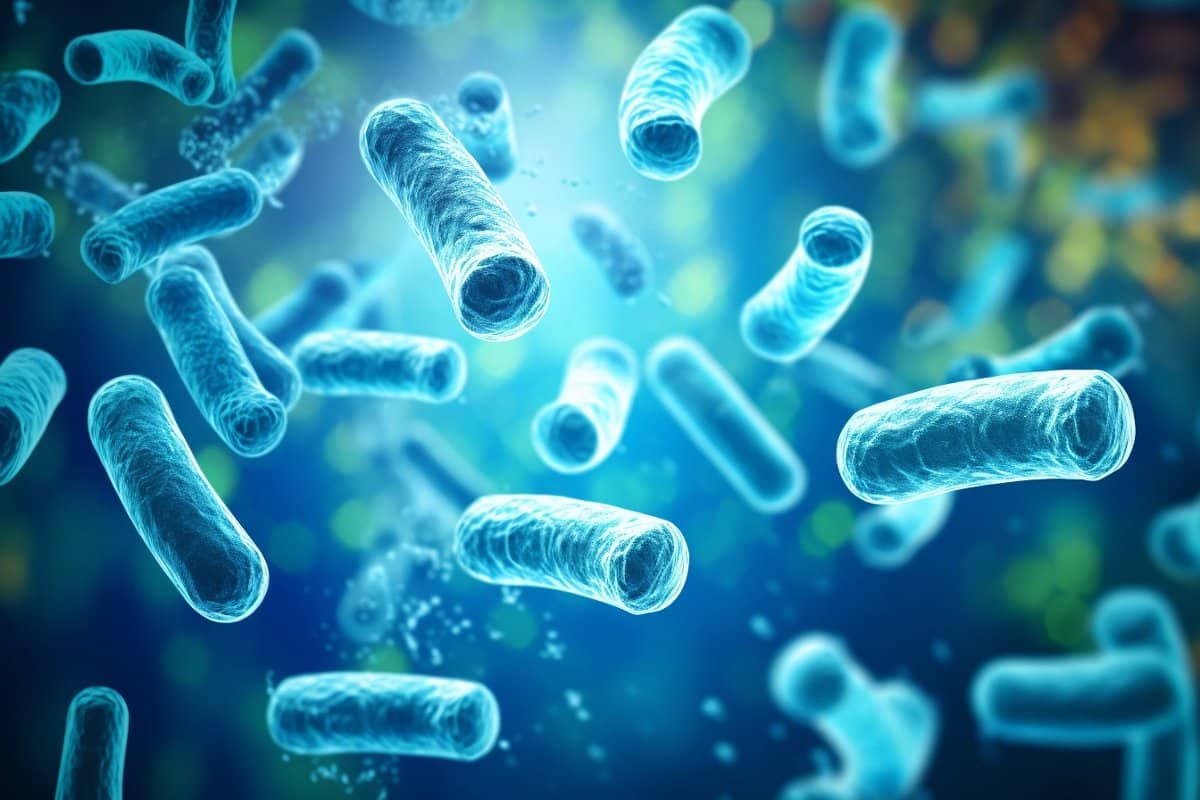
This shows AI representations of bacterria. figcaption class="wp-element-caption">Our guts are naturally home to countless bacteria, fungi, and viruses. Credit: Neuroscience News

These organisms are collectively known as the microbiota, and scientists have increasingly sought to target them to battle disease and improve our health. UVA’s new research represents a major step forward in that effort, providing scientists an innovative new approach to understand the role of individual microbes that could facilitate the development of new treatments and cures for a wide variety of diseases, both mental and physical.

“Our discovery illuminates how gut-resident Lactobacillus influences mood disorders, by tuning the immune system,” said Gaultier, of UVA’s Department of Neuroscience, the Center for Brain Immunology and Glia (BIG Center) and the TransUniversity Microbiome Initiative. “Our research could pave the way towards discovering much-needed therapeutics for anxiety and depression.”

The Microbiota and Depression

Our guts are naturally home to countless bacteria, fungi, and viruses. There are more microorganisms living in and on us than there are cells in our bodies. That may sound disgusting, even alarming, but scientists have increasingly realized that these tiny organisms and their endless interactions are critical to our immune systems’ health, our mental health, and many other facets of our well-being.

Disruptions of the microbiota, whether from illness, poor diet, or other causes, are known to contribute to many diseases and even help cancer spread. So, researchers have been hugely excited in recent years about the potential to battle diseases by targeting the microbiota.

Early attempts to manipulate the gut flora with beneficial bacteria, called probiotics, have produced mixed results. A big part of the problem has been the sheer complexity of the microbiome.

It’s estimated that there are 39 trillion microorganisms inside each of us, so trying to understand what specific bacteria or fungi do – much less how they interact with all the other microorganisms and their host – can be like trying to count grains of sand on the beach.

Gaultier and his team took an innovative approach to hone in on Lactobacilli in specific. Prior research from Gaultier’s lab suggested that the bacteria could reverse depression in lab mice – a hugely promising finding. But the researchers needed to understand how.

“We were aware from our prior research that Lactobacillus was beneficial in improving mood disorders and was lost following psychological stress, but the underlying reasons remained unclear, primarily due to the technical challenges associated with studying the microbiome.”

Gaultier and his team decided to continue their depression research using a collection of bacteria, known as Altered Schaedler Flora, which includes two strains of Lactobacillus and six other bacterial strains.

With this rarely used bacterial community, the team was able to create mice both with and without Lactobacillus,circumventing the need for antibiotics.  

Sure enough, the Altered Schaedler Flora produced exciting results. Gaultier and his colleagues were able to explain exactly how Lactobacilli influence behavior, and how a lack of the bacteria can worsen depression and anxiety. Lactobacilli in the family Lactobaccillacea, they found, maintain the levels of an immune mediator called interferon gamma that regulates the body’s response to stress and helps stave off depression.  

Armed with this information, researchers are poised to develop new ways to prevent and treat depression and other mental-health conditions in which Lactobacillus plays an important role. For example, patients struggling with (or at risk for) depression might one day take specially formulated probiotic supplements that will optimize their levels of helpful Lactobacillus.

“With these results in hand, we have new tools to optimize the development of probiotics, which should speed up discoveries for novel therapies,” said researcher Andrea R. Merchak, Ph.D.

“Most importantly, we can now explore how maintaining a healthy level of Lactobacillus and/or interferon gamma could be investigated to prevent and treat anxiety and depression.” 

Findings Published

The UVA scientists have published their findings in the journal Brain Behavior and Immunity. The research team consisted of Merchak, Samuel Wachamo, Lucille C. Brown, Alisha Thakur, Brett Moreau, Ryan M. Brown, Courtney Rivet-Noor, Tula Raghavan and Gaultier. The researchers have no financial interest in the work.

Funding: The work was supported by the National Institutes of Health, grants T32 NS115657, T32 GM008136, F31 AI174782, T32 GM007267 and T32 GM148379; the Owens Family Foundation; the Miller Family; the UVA TransUniversity Microbiome Initiative; and the UVA Presidential Fellowship in Neuroscience.

About this psychology research news

Author: Josh Barney
Source: University of Virginia
Contact: Josh Barney – University of Virginia
Image: The image is credited to Neuroscience News

Wednesday, May 3, 2017

The Everyday Food That Could Help to Reverse Depression - Lactobacillus - yoghurt with live-cultures

But do you want to use SSRIs because they also help stroke recovery? Ask your doctor for pros and cons.

Common antidepressant can help stroke patients improve movement and coordination Sept. 2015 

Antidepressants may help people recover from stroke even if they are not depressed Jan. 2013


The Everyday Food That Could Help to Reverse Depression - Lactobacillus - yoghurt with live-cultures

There’s absolutely no doubt that a healthy gut is important for mental health. We’re still discovering the detail of the connection, but what we do know is that the relationship between the two is a strong one, and that together they form an integral part of the clockwork that keeps us happy, healthy and functioning well. 

Happy Gut, Happy Head – What’s the Connection?

In the intricately folded tissue that lines the gastrointestinal tract are 200-600 million neurons. This is affectionately known as ‘the brain in our gut’ or ‘our second brain’. Messages are sent back and forth between our main brain and the brain in our gut, directly influencing mood and feelings of stress, anxiety and sadness, as well as memory, decision-making and learning. Our gut also stores 90-95% of the body’s serotonin, the neurochemical that is responsible for mood. 

For some time now, the importance of the gut microbiome (the collection of good and bad bacteria and in our gut) has drawn immense interest from researchers who are keen to unravel their importance to mental health.

‘When you’re stressed you increase your chance of being depressed, and that’s been known for a long, long time. So the question that we wanted to ask is, does the microbiome participate in depression?’ – Alban Gaultier PhD, the UVA Department of Neuroscience and its Center for Brain Immunology and Glia.

Easing depression through the gut. The research. 

New research from the University of Virginia School of Medicine has found that a diet that includes Lactobacillus, a probiotic bacteria found in yoghurt with live-cultures, could help to reverse the symptoms of depression.

The study was conducted in mice, but don’t let that take away from the importance of the findings. Mice are often used in these sort of experiments because of their various similiarities to humans, including biological and behavioural.

The researchers looked at the gut microbiome of the mice before they were stressed, and again after. There was a fascinating difference in the make-up of the gut microbiome before and after the mice were exposed to stress, with the mice showing a noticeable loss of Lactobacillus following their exposure to stress. Depression, or ‘despair behaviour’ emerged following the loss of Lactobacillus, but when the mice were given Lactobacillus with their food, they returned to almost normal.

‘A single strain of Lactobacillus is able to influence mood.’ – Alban Gaultier PhD.

How does Lactobaccilus make such a difference to mood?

The researchers explored further to try to understand how Lactobaccillus influences depression. They discovered that the levels of Lactobacillus in the gut affects a metabolite in the blood called kynurenine. This metabolite has been shown to drive depression. When Lactobacillus in the gut dropped, kynurenine increased. When kynurenine increased, and depression set in.

‘[Kynurenine is] something produced with inflammation that we know is connected to depression.’ – Ioana Marin, researcher.

Where to now?

The researchers are now intending to explore the relationship between Lactobacillus and depression in humans. Given the strength of their recent findings, they will see similar results in people as they did in the mice.

‘The big hope for this kind of research is that we won’t need to bother with complex drugs and side effects when we can just play with the microbiome. It would be magical just to change your diet, to change the bacteria you take and fix your health – and your mood.’ – Alban Gaultier PhD.

A caution.

Further study is needed to understand the connection between Lactobacillus and depression in people. In the meantime, taking yoghurt with Lactobacillus won’t hurt, but it’s critical that if you are taking medication for depression, you don’t stop taking it without close consultation with a doctor.

The introduction of probiotics to has to happen slowly. Introducing large quantities of probiotics into your diet can lead to a worsening of symptoms because when probiotics kill off pathogens, they release toxins. It is these toxins that are likely to be already contributing to symptoms (depression, anxiety, physical illnesses), but when the release of toxins is suddenly increased (by the increase of probiotics), the symptoms may also increase. Go gently, and if you are unsure, talk to a pharmacist, doctor or naturopath for guidance.

And finally …

Depression is far too common. According to researchers, about 7 percent of people will experience a major depressive episode. This doesn’t take into account the people who have symptoms that aren’t at clinical levels, but which still cause some level of disruption to day to day life. 

Depression is so much more than sadness. It steals feelings and leaves a heavy-hearted hopelessness in its place. It can be relentless like that. The medication available at the moment can be helpful, but not for everyone. Research has shown that many lifestyle factors that are healthy for all of us, such as meditation, social connection, exercise, and gut health can have a significant impact on the symptoms of depression. Although more research is needed to confirm the effect of Lactobacillus on depression, anything that won’t cause harm, but which has the potential to improve symptoms is certainly worth trying, and could actually make an important difference.

Friday, April 14, 2017

UVA Reverses Depression Symptoms in Mice Using Probiotics

But is treating depression and getting better stroke recovery at the same time a better reason to use SSRIs?

Common antidepressant can help stroke patients improve movement and coordination Sept. 2015 

Antidepressants may help people recover from stroke even if they are not depressed Jan. 2013


UVA Reverses Depression Symptoms in Mice Using Probiotics


Researchers at the University of Virginia School of Medicine have reversed depression symptoms in mice by feeding them Lactobacillus, a probiotic bacteria found in live-cultures yogurt. Further, they have discovered a specific mechanism for how the bacteria affect mood, providing a direct link between the health of the gut microbiome and mental health.
Based on their findings, the researchers are optimistic that their discovery will hold true in people and are planning to confirm their findings in patients with depression.
“The big hope for this kind of research is that we won’t need to bother with complex drugs and side-effects when we can just play with the microbiome,” lead researcher Alban Gaultier said. “It would be magical just to change your diet, to change the bacteria you take, and fix your health – and your mood.”

Treating Depression

Depression is one of the most common mental health conditions in the United States, with up to 7 percent of people experiencing a major depressive episode, Gaultier noted. “It’s a huge problem and the treatments are not very good, because they come with huge side-effects,” he said.
The role of the gut microbiome – the bacteria that live inside us – has been of tremendous interest to researchers studying depression and other health conditions, both mental and physical. Gaultier, of the UVA Department of Neuroscience and its Center for Brain Immunology and Glia, set out to see if he could find a concrete link between depression and gut health.
“When you’re stressed, you increase your chance of being depressed, and that’s been known for a long, long time,” he said. “So the question that we wanted to ask is, does the microbiome participate in depression?”
The answer appears to be yes. Looking at the composition of the gut microbiome before and after mice were subjected to stress, Gaultier’s team found that the major change was the loss of Lactobacillus. With the loss of Lactobacillus came the onset of depression symptoms. Feeding the mice Lactobacillus with their food returned them to almost normal. “A single strain of Lactobacillus,” Gaultier observed, “is able to influence mood.”
He and his team then went on to determine the mechanism by which Lactobacillus influences depression. They found that the amount of Lactobacillus in the gut affects the level of a metabolite in the blood called kynurenine, which has been shown to drive depression. When Lactobacillus was diminished in the gut, the levels of kynurenine went up – and depression symptoms set in.
“This is the most consistent change we’ve seen across different experiments and different settings we call microbiome profiles,” explained researcher Ioana Marin, a graduate student who is finishing her Ph.D. work. “This is a consistent change. We see Lactobacillus levels correlate directly with the behavior of these mice.”

Testing in Humans

Gaultier was careful to call the symptoms seen in mice as “depressive-like behavior” or “despair behavior,” as mice have no way to communicate that they are feeling depressed. But those symptoms are widely accepted as the best available model for looking at depression in creatures other than humans.
Based on the new findings, Gaultier plans to begin studying the effect in people as soon as possible. He intends to examine the effects of Lactobacillus on depression in patients with multiple sclerosis, a group in which the disorder is common. Promisingly, the same biological substances and mechanisms Lactobacillus uses to affect mood in mice are also seen in humans, suggesting the effect may be the same.
In addition to looking at the effects in people, the researchers are continuing to explore the important role of kynurenine.
“There has been some work in humans and quite a bit in animal models talking about how this metabolite, kynurenine, can influence behavior,” Marin said. “It’s something produced with inflammation that we know is connected with depression. But the question still remains: How? How does this molecule affect the brain? What are the processes? This is the road we want to take.”

inline.jpg

From left: Ioana Marin, Jennifer Goertz and Alban Gaultier (Contributed photo)
While there is no harm in people with depression eating yogurt – assuming they have no reasons to avoid dairy – people receiving treatment for depression should not stop taking their medications without consulting their physicians. More studies, the researchers noted, are needed.
(For more on this discovery, including answers to questions such as whether the strain of Lactobacillus influences its effect on depression, visit the UVA School of Medicine’s research blog, the Making of Medicine.)

Findings Published

The findings have been published online by the scientific journal Scientific Reports. This interdisciplinary study is the product of a collaboration among several laboratories and centers at UVA. The article is the work of Marin, Jennifer E. Goertz, Tiantian Ren, Stephen S. Rich, Suna Onengut-Gumuscu, Emily Farber, Martin Wu, Christopher C Overall, Jonathan Kipnis and Gaultier.
The research was made possible by an initial seed grant from UVA’s Office of the Vice President for Research. The work then received financial support from the National Multiple Sclerosis Society and the National Institutes of Health’s National Institute of Mental Health, grant R21 MH108156.

Media Contact

UVA Health System


Thursday, November 17, 2016

This Dietary Supplement Improves Cognition And Fights Dementia

Don't worry, this will never get to a diet protocol for you because your doctor will do fucking nothing about any research that might help you. Don't do this on your own, supplements are extremely dangerous.

This Dietary Supplement Improves Cognition And Fights Dementia

The dietary supplement has already been linked to lower depression, treating autism and reducing social anxiety.
For the first time, probiotics have been shown to improve cognition and fight dementia.
Probiotics are live bacteria that can be taken as dietary supplements.
The study showed that just 12 weeks of daily doses of Lactobacillus and Bifidobacterium bacteria had a beneficial effect.
Elderly people with Alzheimer’s showed improvements in cognition.
Probiotics have already been linked to:
Professor Mahmoud Salami, a study author, said:
“In a previous study, we showed that probiotic treatment improves the impaired spatial learning and memory in diabetic rats, but this is the first time that probiotic supplementation has been shown to benefit cognition in cognitively impaired humans.”

Probiotic dietary supplement

The study compared two groups of Alzheimer’s patients, who were between 60 and 95 years-old.
Half received milk that was fortified with four probiotic bacteria:
  • Lactobacillus acidophilus,
  • L. casei,
  • L. fermentum,
  • and Bifidobacterium bifidum.
The others received just the milk.