Changing stroke rehab and research worldwide now.Time is Brain! trillions and trillions of neurons that DIE each day because there are NO effective hyperacute therapies besides tPA(only 12% effective). I have 523 posts on hyperacute therapy, enough for researchers to spend decades proving them out. These are my personal ideas and blog on stroke rehabilitation and stroke research. Do not attempt any of these without checking with your medical provider. Unless you join me in agitating, when you need these therapies they won't be there.

What this blog is for:

My blog is not to help survivors recover, it is to have the 10 million yearly stroke survivors light fires underneath their doctors, stroke hospitals and stroke researchers to get stroke solved. 100% recovery. The stroke medical world is completely failing at that goal, they don't even have it as a goal. Shortly after getting out of the hospital and getting NO information on the process or protocols of stroke rehabilitation and recovery I started searching on the internet and found that no other survivor received useful information. This is an attempt to cover all stroke rehabilitation information that should be readily available to survivors so they can talk with informed knowledge to their medical staff. It lays out what needs to be done to get stroke survivors closer to 100% recovery. It's quite disgusting that this information is not available from every stroke association and doctors group.

Showing posts with label dumb down the goals. Show all posts

Monday, February 23, 2026

Perceived importance of walking among hospitalized patients with stroke: a thematic analysis

 ABSOLUTELY FUCKING USELESS! You deliver EXACT REHAB PROTOCOLS! Don't you know anything about survivor requirements? 'Perceived' has nothing to do with getting recovered. DELIVER RECOVERY!

Perceived importance of walking among hospitalized patients with stroke: a thematic analysis


  • 1. Department of Neurorehabilitation, Graduate School of Health Sciences, Kio University, Nara, Japan

  • 2. Department of Rehabilitation, Nishiyamato Rehabilitation Hospital, Nara, Japan

Abstract

Introduction: 

Improved walking ability is a common rehabilitation goal for individuals following a stroke.(WRONG! They want back to normal; 100% recovery! You're fired for using the tyranny of low expectations to dumb down survivor goals!) However, the reasons why hospitalized individuals with stroke consider walking to be important are not yet fully understood. This study aimed to elucidate the perceived importance of walking among hospitalized patients with stroke.

Methods: 

This qualitative study employed thematic analysis. Hospitalized individuals with stroke undergoing gait rehabilitation were purposively sampled to capture variation in sex, age, and walking ability. The participants underwent in-person semi-structured interviews regarding the importance of walking, which were audio-recorded, transcribed verbatim, and systematically coded to generate themes.


Results: 


A total of 19 patients participated in the study. Thematic analysis revealed six major themes. (1) Resumption of daily life: walking was perceived as essential for returning to pre-stroke activities and routines. (2) Health promotion and prevention of functional decline: participants viewed walking as important for maintaining health and preventing deterioration. (3) Uncomfortable walking: participants described physical and environmental challenges associated with walking. (4) Relationships with others: concerns were expressed about how walking difficulties might affect relationships with family and others. (5) Labeling of decreased walking ability: participants were conscious of how their walking was perceived by others. (6) Social environment: walking was linked to broader social factors such as work and transportation.


Conclusion: 

The importance of walking for hospitalized patients with stroke ranges from impersonal and generalizable reasons to highly individualized and diverse factors, with implications for individualized walking rehabilitation.

1 Introduction

Stroke is a sudden-onset condition, with approximately 80% of people who have experienced stroke experiencing impaired walking ability (1), with gait disturbance as one of the most critical issues (2). Currently, many stroke rehabilitation programs focus on enhancing the biomechanical and neurological aspects of individuals post-stroke (3). While such approaches offer structured methods for functional recovery, the use of standardized assessments and interventions may inadvertently limit the extent to which the preferences and values of people post-stroke are incorporated into their rehabilitation (4). Schoeb and Bürge (5) reported that individuals undergoing physical therapy desire to more actively express their opinions, goals, and preferences. For example, even when a person post-stroke sets “improving walking ability” as a goal, there may be underlying intentions, such as a desire to walk independently, safely, or with a more natural gait. This suggests a potential gap between clinical priorities and patients’ own hopes for recovery (6), indicating the possibility that even among healthcare professionals involved in gait rehabilitation, the perspectives of individuals post-stroke may not be fully captured. Therefore, for post-stroke gait recovery, it is necessary to not only examine the factors that affect walking ability, such as independence, speed, endurance, and quality, but also the relationship between walking performance and the environment (7), and to provide rehabilitation that considers the opinions and preferences of individuals regarding their gait post-stroke.

A report by Bohannon et al. (8) is frequently cited in studies on the importance of and preference for walking among individuals post-stroke. This study found that individuals post-stroke considered walking independence the most critical factor, followed by distance, appearance, and speed. In addition, Combs et al. (9) reported that individuals with chronic stroke tend to prioritize walking distance over walking speed during outdoor activities. Furthermore, a qualitative analysis of the reasons for preference for specific walking elements revealed that, in terms of walking distance, some participants desired engagement in community activities and social participation, whereas others wished to walk longer distances, even at a slower speed. Some participants prioritized walking speed because they wanted to reach their destination more quickly. These findings suggest that the perceived importance of walking among people post-stroke may vary depending on background factors, such as the lifestyle roles they wish to resume and the range of their desired activity. Although Bohannon et al. (8) identified which walking elements individuals post-stroke prioritize, the reasons behind these choices were not the main focus of the study. Similarly, although Combs et al. (9) highlighted walking distance and speed, the motivations for prioritizing other walking factors remain open for further investigation. Building on these valuable insights, additional research is needed to better understand why individuals consider walking important after stroke and how their individual backgrounds affect these preferences.

The subacute phase, commonly defined as the period from approximately 7 days to 6 months after stroke onset (10), is the primary period during which hospitalized people with stroke receive intensive rehabilitation. During this phase, the incorporation of walking training is recommended in clinical practice guidelines (11), and the assessment of multiple walking-related outcomes is also considered necessary (12). During this period, it is essential to support individuals in achieving the highest possible functional level through interventions focused on improving physical function, sensorimotor impairments, and activities of daily living (13, 14). In addition, individuals post-stroke seek to reconstruct their identities and roles in preparation for reintegration into society after hospital discharge (6). Thus, the period of inpatient rehabilitation for people post-stroke is positioned as a critical phase not only for focusing on physical recovery but also for exploring post-discharge life and reconstructing a way of life, considering the individual’s social context. Based on these findings, in addition to interventions aimed at improving the walking ability, approaches that incorporate the psychosocial aspects (15) of individuals post-stroke are required for gait rehabilitation. However, knowledge of such approaches is limited. Exploring the perceptions of walking among people post-stroke during this stage of rehabilitation could help improve the understanding of the broader meaning of walking ability, which may produce rehabilitation interventions that align with individual preferences and their perceived importance.

The importance of walking varies among stroke survivors, making qualitative methods well suited to exploring their values and experiences. Therefore, this study aimed to clarify why hospitalized individuals post-stroke perceive walking to be important during inpatient rehabilitation.

More at link.

Tuesday, June 17, 2025

Attitudes and practices of physiotherapists towards goal-setting for stroke rehabilitation: A wide online survey

 You're THAT STUPID that you don't know the only goal in stroke is 100% recovery!  Get the hell out of stroke and do something easier like basket weaving. All you're trying to do with your goal setting is dumb down the goals of your patients because you know you're a failure as a therapist for stroke patients! STOP THAT AND DELIVER RECOVERY!

Send me hate mail on this: oc1dean@gmail.com. I'll print your complete statement with your name and my response in my blog. Or are you afraid to engage with my stroke-addled mind? Your patients need an explanation of why you don't have 100% recovery protocols.

Why isn't your 'professional' solving stroke?

Laziness? Incompetence? Or just don't care? NO leadership? NO strategy? Not my job? Not my Problem!

Attitudes and practices of physiotherapists towards goal-setting for stroke rehabilitation: A wide online survey


https://doi.org/10.1016/j.gerinurse.2025.103390Get rights and content
Under a Creative Commons license
Open access

Highlights

  • •
    17 % of physiotherapists reported not setting goals with stroke survivors.
  • •
    Physiotherapists reported heterogeneous practices regarding goal-setting in stroke.
  • •
    Organizational and professional characteristics were associated with goal-setting.
  • •
    Future research should explore the factors found to optimize goal-setting.

Abstract

Goal-setting in stroke rehabilitation is poorly understood(NO it's not! You just don't like to do the work to accomplish your survivor goal of 100% recovery!). This study examined attitudes, practices, and factors related to goal-setting in stroke rehabilitation among Portuguese physiotherapists. An online cross-sectional exploratory survey was conducted, collecting data on sociodemographic and service profiles, patient-centeredness, attitudes and practices of goal-setting, using the Patient-Practitioner Orientation Scale, and Attitudes toward Goal-Setting and Practices toward Goal-Setting Scales. Logistic regression identified factors associated with goal-setting. From 347 physiotherapists, mostly high scores were obtained for attitudes toward goal-setting. Heterogeneous practices were verified and 17 % reported no involvement in goal-setting. Working from the stroke survivor's home (OR10.218 [1.267–82.389], p=0.029) or from an inpatient rehabilitation unit (OR6.443 [1.918–21.636], p=0.003) were the strongest predictors of goal-setting, followed by positive attitudes toward goal-setting (OR1.111 [1.028–1.201], p=0.008). The identified organizational and professional characteristics should be considered to improve suboptimal goal-setting, namely by advocating the core contribution of goal-setting, disseminating best practices, and providing training.

Tuesday, August 23, 2022

Tricycle with an Electric Drive Mechanism for Post-stroke Rehabilitation

 Sorry but I think it is more important to deliver recovery on a two wheel bicycle rather than this compensation of tricycle and electric assist.  Ask your patients what they want rather than using your tyranny of low expectations to dumb down the recovery goals.

Tricycle with an Electric Drive Mechanism for Post-stroke Rehabilitation

  • 2 Accesses

Part of the Lecture Notes in Mechanical Engineering book series (LNME)

Abstract

The manual pedal tricycle is helpful in recovering the limb motor function for post-stroke patients. In certain conditions, they have to pedal the tricycle manually through hilly roads as hard as possible, whereas they still have muscle weakness and strongly discourage to do hard physical activities. Therefore, this research will be focused on developing the tricycle with an electric drive mechanism and finding the benefit for post-stroke mobility. Based on the ergonomics of the Indonesian body, an e-tricycle prototype is designed and manufactured in the delta concept. Assuming that the e-tricycle will be used on hilly or rough roads by 100 kg of rider’s weight, so it requires a 500 W of electric motor power and a 48 V-14Ah lithium battery. Furthermore, the e-tricycle tested strength and stability based on SNI 7519:2009 and braking based on SNI 4404:2008 and SNI 1049:2008. The resulting test showed that the e-tricycle can move and brake well on flat and hilly roads at 13° slope angle with 18.9 km/h maximum speed. The e-tricycle is stable at 10° slope angle. The effect of road terrain and speed from electric support setting is significant on cycling time, heart rate, VO2 max, and energy expenditure (P < 0.05). Cycling without electric support makes the leg muscles pedal harder when passing hilly roads. Therefore, the cyclists who are post-stroke patients are strongly recommended to use electric support so that the pedaling is lighter, the heart beats normally, and less energy expenditure. Thus, the second stroke attack does not relapse.

Thursday, May 24, 2018

UCI study shows in-home therapy effective for stroke rehabilitation

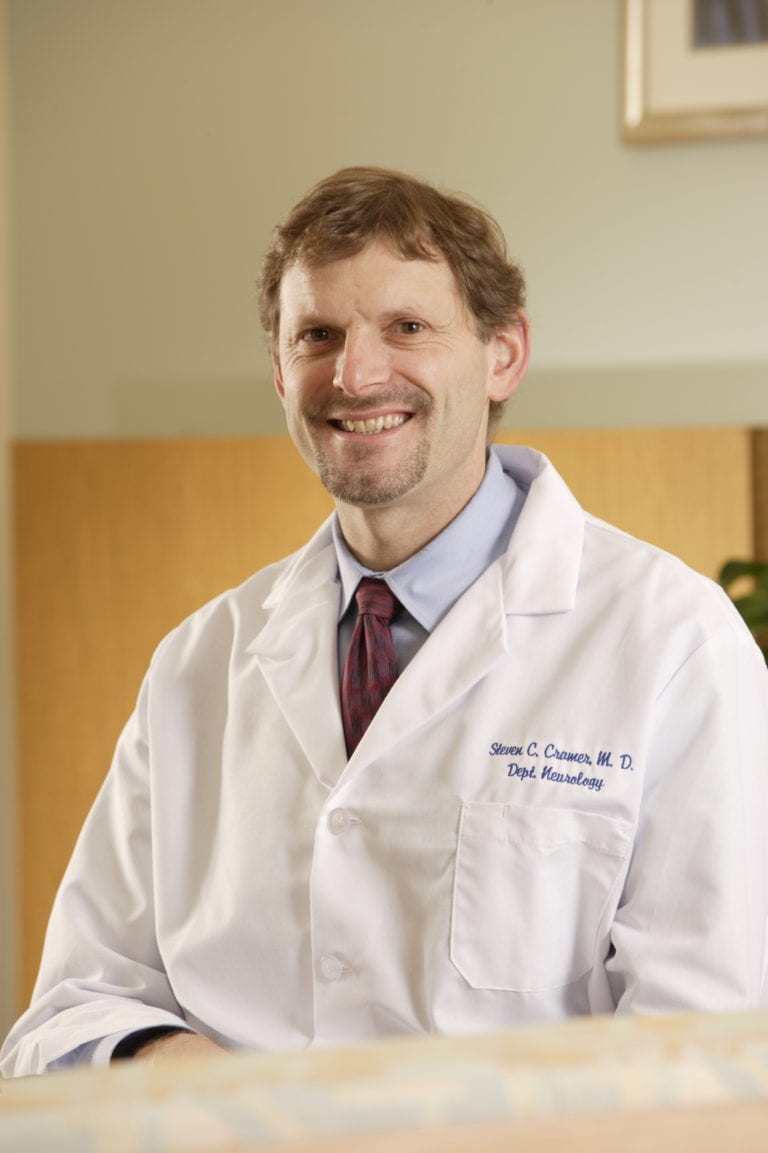
To me it shows no such effectiveness. We are talking ineffective in-hospital therapy(not getting 100% recovered) to in-home therapy which is just a bit worse than the hospital. The goal is 100% recovery NOT these dumbed down goals your stroke medical professionals are setting for you. And I've got 9 posts on Dr. Steven Cramer so he is actually one of the good guys, I just disagree on goals for therapy. 

UCI study shows in-home therapy effective for stroke rehabilitation


A multisite US clinical trial compared home-based telerehabilitation program with traditional in-clinic rehabilitation therapy

May 24, 2018
UCI study shows in-home therapy effective for stroke rehabilitation
Dr. Steven Cramer a professor of neurology in the UCI School of Medicine. UCI Health
Irvine, Calif., May 24, 2018 — In-home rehabilitation, using a telehealth system and supervised by licensed occupational/physical therapists, is an effective means of improving arm motor status in stroke survivors, according to findings presented by University of California, Irvine neurologist Dr. Steven C. Cramer at the recent 2018 European Stroke Organisation Conference in Gothenburg, Sweden.
“Motor deficits are a major contributor to post-stroke disability, and we know that occupational and physical therapy improve patient outcomes in a supervised rehabilitation program,” said Cramer, a professor of neurology in the UCI School of Medicine. “Since many patients receive suboptimal therapy for reasons that include cost, availability and difficulty with travel, we wanted to determine whether a comprehensive in-home telehealth therapy program could be as effective as in-clinic rehabilitation.”
In a study conducted at 11 U.S. sites, 124 stroke survivors underwent six weeks of intensive arm motor therapy, with half receiving traditional supervised in-clinic therapy and half undergoing an in-home rehabilitation program supervised via a videoconferenced telemedicine system.
Subjects were on average 61 years old, 4.5 months post-stroke, and had moderate arm motor deficits at study entry. When examined 30 days after the end of therapy, subjects in the in-clinic group improved by 8.4 points on the Fugl-Meyer scale, which measures arm motor status and ranges from 0 to 66, with higher numbers being better. Subjects in the telerehab group improved by 7.9 points, a difference that was not statistically significant.(But still a COMPLETE FAILURE OF 100% RECOVERY! The only goal in stroke!)
“The current findings support the utility of a computer-based system in the home, used under the supervision of a licensed therapist, to provide clinically meaningful rehab therapy,” Cramer said. “Future applications might examine longer-term treatment, pair home-based telerehab with long-term dosing of a restorative drug, treat other neurological domains affected by stroke (such as language, memory, or gait), or expand the home treatment system to build out a smart home for stroke recovery.”
He said that the demand for rehabilitation services will likely increase, due to an aging population and increased stroke survival as a result of better access to advanced acute care. Telehealth, defined as the delivery of health-related services and information via telecommunication technologies, can potentially address this growing unmet need.
“We reasoned that telerehabilitation is ideally suited to efficiently provide a large dose of useful rehab therapy after stroke,” said Cramer, whose research team is part of the NIH StrokeNet consortium.
This research builds on the findings of a pilot study of 12 patients with late subacute stroke and arm-motor deficits who were provided 28 days of home-based telerehab program. The results, published in November 2017 in the journal Neurorehabilitation and Neural Repair, found that patient compliance was excellent (97.9 percent) and participants experienced significant arm-motor gains (Fugl-Meyer scale increase of 4.8 points). The study also found that patients did not need any additional computer skills training due to the design of the telerehab system.
“Getting patients to remain engaged and comply with therapy is a key measure of success of any rehabilitation program,” Cramer said. “Greater gains are associated with therapy that is challenging, motivating, accompanied by appropriate feedback, interesting and relevant. Telerehab achieves this because therapy is provided through games, provides user feedback, can be adjusted based on individual needs, is easy to use – and is fun.”
This study was supported by the Eunice Kennedy Shriver National Institute of Child Health & Human Development as well as the National Institute of Neurological Disorders and Stroke (grant U01 NS091951), the NIH StrokeNet Clinical Trials Network, the 11 U.S. enrollment sites, the research team at the primary study site at UC Irvine, and the patients and families who participated.
About the UCI School of Medicine
Each year, the UCI School of Medicine educates more than 400 medical students, as well as 200 doctoral and master’s students. More than 600 residents and fellows are trained at UC Irvine Medical Center and affiliated institutions. The UCI School of Medicine offers an M.D. degree, a dual M.D./Ph.D. medical scientist training program, Ph.D.s and master’s degrees in anatomy and neurobiology, biomedical sciences, genetic counseling, epidemiology, environmental health sciences, pathology, pharmacology, physiology and biophysics, and translational sciences. Medical students also may pursue an M.D./M.B.A. program, a combined M.D./Master’s in public health or a dual M.D./master’s program called the Program in Medical Education for the Latino Community. UCI School of Medicine is accredited by Liaison Committee on Medical Accreditation, and ranks among the top 50 nationwide for research. For more information, visit: som.uci.edu.
About the University of California, Irvine
Founded in 1965, UCI is the youngest member of the prestigious Association of American Universities. The campus has produced three Nobel laureates and is known for its academic achievement, premier research, innovation and anteater mascot. Led by Chancellor Howard Gillman, UCI has more than 30,000 students and offers 192 degree programs.  Located in one of the world’s safest and most economically vibrant communities, UCI is Orange County’s second-largest employer, contributing $5 billion annually to the local economy. For more on UCI, visit www.uci.edu.

Thursday, April 12, 2018

What Works For Me: 'Running Gives Me Freedom After Doctors Said I'd Never Walk Again'

Does your doctor even allow you a goal of running? Or has your doctor dumbed down your goals to walking with a cane? Does s/he even know of and recommend the book, 'Teaching Me to Run' by Tommye-K. Mayer? 

What Works For Me: 'Running Gives Me Freedom After Doctors Said I'd Never Walk Again'

https://www.huffingtonpost.co.uk/entry/what-works-for-me-stroke-survivor-running_uk_5ac49da6e4b093a1eb208cd7


Nine years after a debilitating stroke, Rachel Farrant finds running - whether a short-distance park run or this year's London Marathon - helps remind her how far she's come.

In ‘What Works For Me’ - a new series of articles considering how we can find balance in our lives - we talk to people about their self-care strategies. If you’d like to contribute your story, email us.

When Rachel Farrant tightens her trainers and races through her local park, the sense of freedom lifts her. “I really like the nature - the trees, the horses,” she says. “I’m running through the woods and it’s all enclosed, and then suddenly I come out into this wide open space and I feel like I’m flying. It’s the best.”
While a lot of people take the ability to run and the liberty that comes with it for granted, Farrant, 27, is very aware of how lucky she is to be able to do such things. At the age of 18 she suffered a stroke which left her unable to see, walk or feed herself. The university student forgot everything about her life, including who her parents were, and doctors said she probably wouldn’t walk or study again.
Fast forward nine years and Farrant, from Brentwood, Essex, has defied the odds: she’s made a full recovery, is back at university and is set to run the London Marathon this year, which will be her second marathon event.
While short-distance park runs are her forte, 26-mile marathons are a powerful reminder to herself of how far she’s come. “When you’ve been unable to go out or just walk around when you want to, to then be able to go running, the sense of freedom is amazing,” she says. “You’re just absolutely free.”
- ADVERTISEMENT -