My personal sauna just being put together by NuRecover. Will use a cold shower for the cold plunge, not sure I could climb out of an ice bath one-handed. 39" x 32" floor

Handling Editor: Toby Mundel
The authors gratefully acknowledge funding by SPATEX and the British and Irish Spa and Hot Tub Association (BISHTA) Grant Number: 00229288; and the Ceperich Educational Trust.
Ageing is associated with cognitive decline and increased risk of developing neurodegenerative disease. Repeated passive heating, using hot water immersion (HWI), may improve cognitive performance via improved cerebral oxygenation, but this is yet to be examined in older adults. Twelve healthy older adults (aged: 69.2 ± 10.0 years; body mass index: 25.2 ± 4.1 kg m−2) completed a 6-week pre–post intervention study consisting of two to three weekly 1 h HWIs in 40°C water. Rectal temperature was maintained in a target range of 38.5–39.0°C during HWI. Cognitive performance (working memory via 1 and 2-back, inhibition via 2-choice reaction time, logical reasoning via logical relations) and cerebral oxygenation (Δoxyhaemoglobin, Δdeoxyhaemoglobin, Δtotal haemoglobin and Δtissue saturation index) were assessed during the first and final HWI sessions (pre-, immediately post- and 3 h post-HWI). Common carotid artery blood flow (CCA-BF), sleep quality (7-day baseline and final week), plasma [amyloid-β] 42 (Aβ42), and [phosphorylated tau] (p-tau), were measured pre- and post-intervention. Repeated HWI improved 1-back (P = 0.023) and logical reasoning (P = 0.002) performance, but not 2-back or 2-choice reaction time (P > 0.05). Cerebral oxygenation was acutely reduced immediately post-HWI (all parameters P < 0.05), but returned to baseline 3 h post-HWI, with no chronic adaptation. CCA-BF, sleep quality, [Aβ42] and [p-tau] all remained unchanged at 6 weeks (P > 0.05). Repeated HWI improves cognitive domains of logical reasoning and working memory without altering cerebral oxygenation, CCA-BF, sleep or neurodegenerative biomarkers. Further investigation into the underlying mechanisms for cognitive performance improvements via HWI is warranted.
ageing, exercise mimetic, passive heat therapy, working memory
What is the central question of this study?
Can 6 weeks of hot water immersion improve cognitive performance, cerebrovascular function, sleep and neurodegenerative biomarkers in healthy older adults?
What is the main finding and its importance?
Six weeks of two to three hot water immersions per week improved working memory and logical reasoning in healthy older adults, but did not alter common carotid artery blood flow or oxygenation, sleep, or neurodegenerative biomarkers. The results suggest that hot water immersion may offer a simple, non-pharmacological, therapeutic approach to support cognitive performance in older adults, though mechanisms remain to be clarified.
A sweeping review shows how the brain’s immune defenses can both fight and fuel neurodegeneration, revealing why timing, cell type, and disease context may be crucial for future therapies.
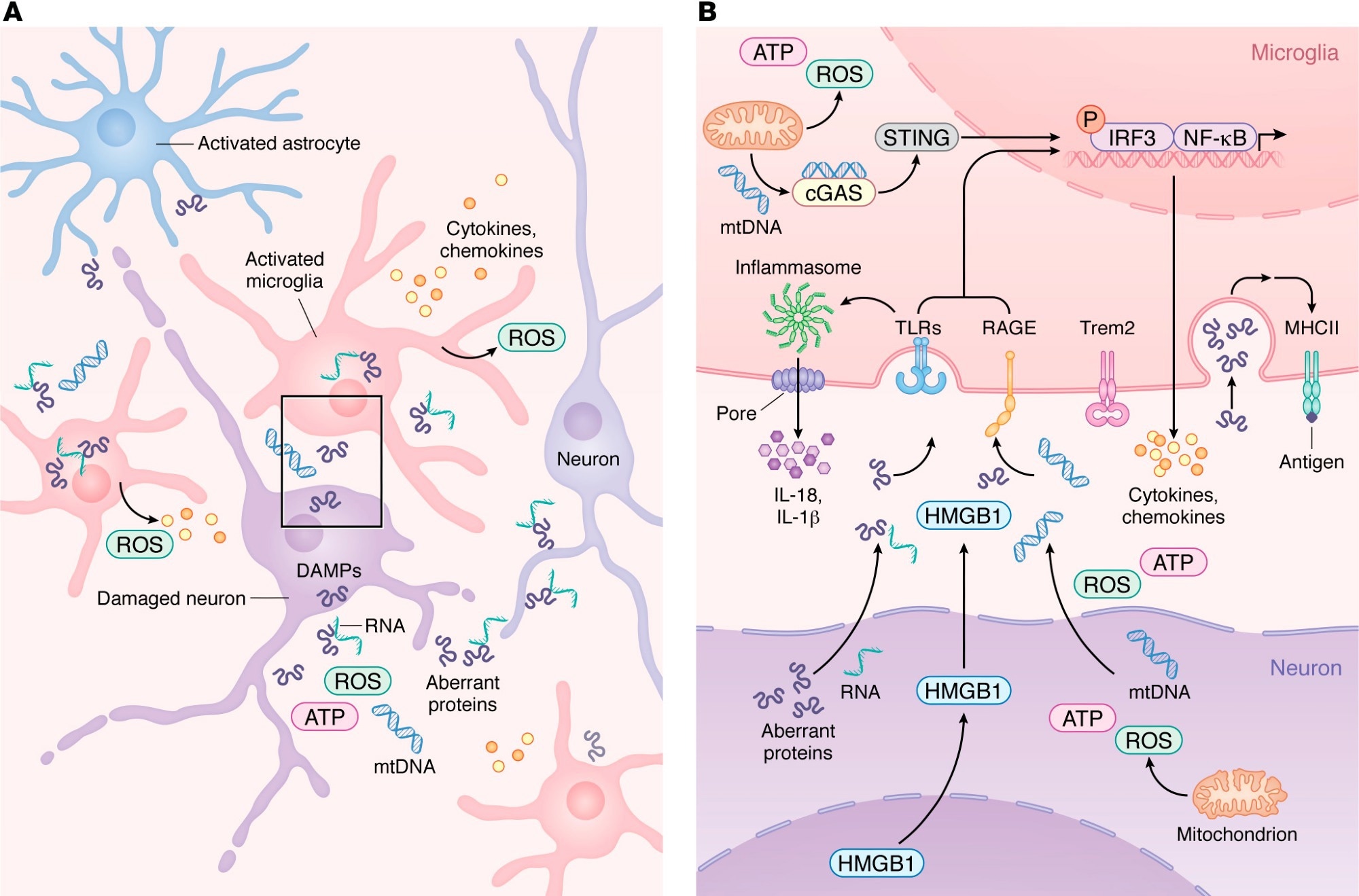
Innate immune activation and microglial transition during neurodegeneration. (A) During neurodegeneration, distressed neurons release DAMPs such as mtDNA, ROS, HMGB1, aberrant proteins, and pTau–bound RNA. These signals activate resident microglia and astrocytes, which then recruit peripheral immune cells. As shown in more detail in B, activated microglia upregulate PRRs, including TLRs, RAGE, and cGAS, enabling detection of neuron-derived DAMPs. Engagement of PRRs induces proinflammatory gene expression programs and activates inflammasome pathways that promote release of chemokines and cytokines into the CNS parenchyma. As microglia transition from homeostatic to reactive states in a TREM2-dependent manner, damage-associated microglia increase MHC-II expression to support antigen presentation and coordination of adaptive immune responses that attempt to limit neurodegeneration.
A recent review published in the Journal of Clinical Investigation synthesized current evidence on immune mechanisms in neurodegeneration. Accumulating evidence suggests that the immune system not only drives the progression of neurodegenerative diseases but also contributes to their onset through maladaptive cellular signaling and activation. The central nervous system (CNS) parenchyma depends on resident immune cells to maintain the blood-brain barrier (BBB) and respond to dysfunctional cells, pathogens, or cellular damage under steady-state conditions.
Neurons activate signaling pathways to respond to cellular dysfunction, while microglia and astrocytes alleviate danger signals and recruit peripheral immune cells. However, these responses can aggravate aberrant protein deposition during neurodegeneration, and the balance between detrimental and beneficial immune involvement is poorly defined. In the present review, researchers reviewed current knowledge of immune mechanisms in neurodegeneration.
Aberrant proteins, including phosphorylated tau, amyloid β (Aβ), and α-synuclein, have been identified as damage-associated molecular patterns (DAMPs) that activate pattern recognition receptors in the CNS. Toll-like receptor 2 (TLR2) and TLR4 are upregulated in mouse models of Alzheimer’s disease (AD) and in the brains of AD patients.
The binding of Aβ to TLR4 or TLR2 elevates the expression of cytokines, including tumor necrosis factor (TNF)-α, interleukin (IL)-6, IL-1β, IL-17, and IL-10, in microglia and astrocytes. Pharmacological inhibition or genetic ablation of these TLRs worsens cognitive decline and increases Aβ burden in the brain by decreasing microglial activation. The review also highlighted inflammasome and DNA-sensing pathways, including NLRP3 and cGAS-STING, as additional contributors to neuroinflammation across neurodegenerative diseases.
Studies have consistently reported increased expression of the receptor for advanced glycation end products (RAGE) on neurons, astrocytes, and microglia in AD, Parkinson’s disease (PD), and amyotrophic lateral sclerosis. RAGE overexpression in mouse AD models accelerated cognitive impairment, while its deficiency decreased memory deficits.
Genetic studies in AD patients identified two single-nucleotide polymorphisms (SNPs) in the triggering receptor expressed on myeloid cells 2 (TREM2), which is highly expressed by microglia, as risk factors of a magnitude comparable to carrying the apolipoprotein E (APOE) ε4 allele. These observations indicate that microglia are key players in neurodegenerative pathogenesis.
A growing body of evidence indicates that cluster of differentiation 4 (CD4+) T cells have disease-specific functions across neurodegenerative diseases. Aβ-restricted CD4+ T cell transfusion into a transgenic AD mouse model was neuroprotective, preventing cognitive decline. In contrast, α-synuclein-specific CD4+ T cells were neurotoxic in PD models, promoting inflammation.
α-synuclein overexpression increased recruitment of CD4+ T cells producing interferon-γ, while depleting these cells decreased neuronal loss. These observations indicate that CD4+ T cells can be protective in some neurodegenerative diseases and pathogenic in others. In addition, CD8+ T cells have garnered increasing attention as contributors to CNS pathology. CD3+ and CD8+ T cells have been detected in the hippocampus in AD, with CD3+ T cell numbers correlating with tau pathology.
Similarly, increased CD8+ T cell numbers were observed in PD and correlated with neuronal death, although whether this relationship is causative or reactive remains uncertain. Further, the accumulation of neuroprotective CD8+ T cells in the brains of AD mice has been reported and shown to restrict amyloid plaque growth. Overall, studies reveal that CD8+ T cells have diverse roles in neurodegenerative diseases, shaped by antigen specificity, microglial interactions, and tissue residency. The review also noted growing interest in granzyme K-expressing CD8+ T cells as potentially specialized players in several neurodegenerative conditions.
Aging is a major risk factor for neurodegenerative diseases. In youth, microglia survey the CNS, astrocytes maintain the BBB, and only a small number of T cells enter the parenchyma. However, in advanced ages, chronic low-grade inflammation occurs, during which many immune pathways become dysregulated.
Further, repetitive head injury can accelerate neurodegeneration. Traumatic brain injury is linked to the development of PD, AD, and chronic traumatic encephalopathy, even when it occurs in childhood. Following mild traumatic brain injury, the release of DAMPs by distressed cells triggers microglial activation, which clears debris and reinforces weakened BBB regions.
Repetitive injuries may increase reactivity and trigger microglial death, thereby allowing the entry of myelomonocytic cells. Like repetitive injuries, viral infections can alter CNS immunity and influence vulnerability to neurodegeneration. Recent studies have linked non-neurotropic and neurotropic viral infections to a higher risk of neurodegenerative diseases.
Taken together, neurodegenerative diseases stem from a complex interplay of environmental and biological factors that govern the magnitude and timing of immune activation and the programming of T cells, microglia, and other leukocytes. Viral infection, repetitive head injury, and aging restructure the CNS immune environment. Many immune pathways involved exhibit stage-dependent and context-specific functions.
Microglial activation may initially help clear aberrant proteins, but could become maladaptive with protracted stimulation. Similarly, CD8+ T cells can promote neuronal injury or support tissue repair based on antigen specificity, local signaling cues, and effector programming. As such, appreciating the cell-intrinsic states and temporal dynamics of immune cells is crucial for understanding immune signatures and determining when immunomodulatory interventions will be beneficial.
New research reveals how a brief Finnish sauna session mobilizes immune defenses within minutes, offering fresh clues into how heat exposure may influence human health.
 Study: Acute Finnish sauna heat exposure induces stronger immune cell than cytokine responses. Image credit: Mr. Tempter/Shutterstock.com
Heat exposure is harmful but can sometimes have beneficial effects. Finnish sauna bathing (FSB) is an example of controlled acute heat stress that may influence immune function by altering immune cells and cytokines. A 30-minute Finnish sauna session rapidly increases circulating immune cells while leaving most cytokine levels unchanged, according to a study published in the journal Temperature.
FSB involves exposing people to relatively dry air at 70–100 °C for 10-30 minutes per session. It is part of Finnish culture and is shown to offer multiple health benefits. Existing literature reports lower risks of cardiovascular disease, dementia, psychosis, and some respiratory conditions. FSB is also associated with fewer adverse outcomes in disadvantaged socioeconomic settings and with better physical fitness.
Prior research suggests that regular FSB is associated with lower levels of systemic inflammation. The current study examined how heat stress associated with FSB manifests as acute changes in white blood cells and cytokines up to 30 minutes after the sauna.
Participants were free of known cardiovascular disease (CVD) but had one or more risk factors, such as smoking, hypertension, or obesity. The study included 51 middle-aged adults who were regular sauna users. During the 30-minute sauna session, body temperature, measured at the ear, increased steadily, reflecting the heat stress exposure, while plasma volume remained unchanged on average.
Among women, hemoglobin and hematocrit levels were lower, while platelet counts were higher than in men. In both sexes, all these factors increased with FSB. White cells also rose in women, and remained slightly higher at 30 minutes post-sauna.
Among white cells, neutrophils and lymphocytes returned to baseline at 30 minutes, unlike the persistent elevation seen with the combined MXD cell category (monocytes, eosinophils, and basophils). Overall, white cell proportions were preserved.
Only two cytokines changed significantly after FSB, and both decreased, while one additional marker showed a borderline increase. Immediately after FSB exposure, body temperature was correlated with circulating cytokine levels, though not with white cell counts. These included several interferons and interleukins, which were positively associated with raised ear temperature. Conversely, two cytokines were inversely correlated with ear temperature. These changes were independent of the frequency of sauna use across the week.
These findings suggest that white cells are mobilized in association with FSB exposure, but there was no direct correlation with increased temperature. Significant associations were observed for only a few cytokines, whereas a larger number showed correlations with temperature change in the immediate post-sauna period. The associations between temperature change and cytokines were largely unchanged after adjustment for sex or body mass index.
The authors propose that physiological challenge caused by FSB-induced heat stress may underlie these changes. The increase in hemoglobin concentration and hematocrit suggests a possible loss of plasma volume in the hot, dry FSB conditions, although average plasma volume did not change, and results were adjusted for individual variation.
The increase in neutrophil and lymphocyte counts could be due to immune cell mobilization in response to heat stress. The generalized nature of the response is suggested by the overall preservation of the differential count.
Apparently, a large temperature change is not required for such mobilization, as no correlation was found between temperature change and white cell count. Conversely, the former was associated with cytokine changes in the immediate post-sauna period, suggesting a heat-stress response.
The authors report that to the best of their knowledge, few prior studies have explored both immune cells and cytokines in relation to FSB-induced heat stress. The sauna use pattern in this study closely resembled that in real life and in some earlier research.
A few other studies have shown changes in some interleukins using different sauna protocols. This highlights the need for further research to distinguish sauna-induced responses in habitual sauna users (who are likely heat-adapted) from those in individuals who seldom or never use it.
The authors measured three main white cell categories (neutrophils, lymphocytes, and the combined MXD group), but did not assess monocytes, eosinophils, and basophils separately. A more detailed lymphocyte assessment could have better assessed the heat-stress response to the FSB.
The physiological effects of cytokines correlated with temperature change following FSB remain unknown. The origin of the possibly mobilized white cells is unclear. The possibility of low plasma volume remains relevant, but was not factored into the analysis. Moreover, the study measured only the acute physiological response rather than chronic resting conditions.
Future directions should include research on the relevance of intermittent heat and cold stress exposure and whether these acute responses translate into long-term health effects.
Download your PDF copy by clicking here.
Heinonen, I. H. A., Koivula, T., Hollmén, M., Immonen, J., Kunutsor, S. K., Jalkanen, S., & Laukkanen, J. A. (2026). Acute Finnish sauna heat exposure induces stronger immune cell than cytokine responses. Temperature. DOI: https://doi.org/10.1080/23328940.2026.2645467. https://www.tandfonline.com/doi/full/10.1080/23328940.2026.2645467#abstract
As with exercise, this "acute stressor" is then followed by improvements in these markers of cardiovascular health and a calming of the nervous system during the recovery period, he says.
While cardiovascular health has the most supporting data, large-scale studies have also linked sauna use to lower rates of respiratory illness and even some neurodegenerative conditions like dementia and Alzheimer's.
There are a number of mechanisms that could explain the decreased risk of chronic disease, among them the effects on systemic inflammation and oxidative stress. In a 2018 study, Kunutsor and his colleagues showed that Finns who frequently sauna have lower levels of inflammatory markers. Experiments have revealed that sauna and other forms of heat therapy also cause the secretion of various hormones and boost immune cells, at least in the short-term. The role of heat shock proteins is of particular interest. Sauna enthusiasts sit inside a barrel sauna during the Seattle Sauna Festival. According to Christopher Minson, a human physiologist at the University of Oregon, growing evidence shows that regular sauna use can combat inflammation. Mike Kane for NPR Minson says these help combat harmful molecules called reactive oxygen species that can build up inside of us and trigger a cascade of inflammation.The evidence base has grown considerably in the last decade. But Kunutsor says there's still a need for large, well-controlled trials, particularly in populations that are "sauna naive," to tease out the effects. He thinks more evidence may lead medical societies to consider incorporating sauna use into official health guidelines.
For many sauna enthusiasts, the biggest draw is how it makes them feel.
As with the cold plunging craze, saunas increasingly serve as a kind of social lubricant, a place where people can find connection and a brief reprieve from their phones.
However, the link to mental health also has a physiological basis that researchers like Dr. Charles Raison are trying to understand.
"High heat administered for a time-limited period is an antidepressant and a pretty good one," says Raison, a professor of psychiatry and human ecology at the University of Wisconsin-Madison.
This research spans various forms of heat therapy, not just traditional Finnish saunas.
For example, Raison's group uses a special hyperthermia machine so participants can reach a core body temperature of 101.3 Fahrenheit – hotter than you could typically achieve in a sauna. Their heads, cooled with ice packs, stick out of the machine.
The data gathered so far suggest a linear relationship: The hotter a person gets, up to a certain point, the less depressed they feel in the following days and weeks.
"These studies are small, but the signal is pretty clear," he says.
For example, a randomized-controlled trial of about 30 people, published in 2016, found significant reductions in symptoms of depression after just one session of whole body hyperthermia, compared to a group that received a sham treatment.
"The pathways in the brain and body that mediate thermoregulation overlap spectacularly with the pathways that mediate mood, desire, the state of emotions," Raison says.
An intriguing finding from this research relates to an immune-signaling molecule called Interleukin-6, or IL-6. An acute spike in IL-6 following heat exposure appears to correlate with how much depressive symptoms improve.
More broadly, scientists interested in leveraging heat for mental health have noticed a link to body temperature, specifically that people with depression tend to run hotter, according to a 2024 study of more than 20,000 adults.
"What that shows is people with depression may have some thermoregulatory challenges such that they're not able to cool down so well," says Ashley Mason, a researcher at the University of California San Francisco Osher Center for Integrative Health, whose lab published those findings and is running several trials on heat exposure and sauna.
Given that pattern, it may seem counterintuitive to then expose someone to high heat, but in reality, data suggest this can actually improve a person's ability to thermoregulate, she says.
If you don't have a sauna available, the researchers who spoke with NPR said the health benefits of sauna bathing extend to other forms of passive heat therapy, including steam rooms and hot tubs, provided they're hot enough.
There aren't large, well-controlled trials that have compared how outcomes differ based on the amount of time you spend in a sauna week-to-week or the precise temperature.
The Finnish data suggest you need at least three to four sauna visits a week, with each session lasting a minimum of 15 minutes to get the "optimal benefits," says Kunutsor at the University of Manitoba.
While it can be a similar stimulus as light exercise, he stresses sauna is by no means a substitute — and his research shows you stand to gain the most by doing both.
Minson, who advises professional athletes on using heat to improve performance, recommends aiming for about 20 to 30 minutes in the sauna immediately after a workout.
"If you're doing that smartly, then you're getting the best benefits of exercise training and potentially increasing some of the oxygen-carrying capacity of your blood," he says.
But proceed with caution, particularly if you're a newcomer or have an underlying health condition. Heat-related illness like heat exhaustion is a risk — symptoms tend to crop up when people are already vulnerable because they're fighting a cold or some underlying infection.
The notion that you can "sweat out the toxins" — whether that's due to a bug or last night's round of shots — is "simply not true," says Minson.
And like exercise, even the experienced sauna-goer can overdo it.
On a scale of 1 to 10 – where 10 feels like you're on the surface of the sun – he suggests aiming for about a 6 or 7.
"You don't want to feel uncomfortably hot," he says, "You can push that for a little while, but if you go for too long, there's no real added benefit."


