Showing posts with label lower mortality. Show all posts
Showing posts with label lower mortality. Show all posts
Saturday, July 18, 2026
Do You Need Three Beverages At All Times? It's Actually A Longevity Hack by mindbodygreen
I bet your incompetent? doctor and hospital still has created a 24 hour coffee station!


Wednesday, March 18, 2026
Statins After Age 80 May Cut Risk for Death and Coronary Events
FYI.
Statins After Age 80 May Cut Risk for Death and Coronary Events
TOPLINE:
Statin therapy for primary prevention of cardiovascular disease in adults aged 80 years or older was associated with reduced risks for all-cause mortality and new coronary events.
METHODOLOGY:
- Researchers conducted a population-based retrospective cohort study using data from electronic medical records and a pharmacy dispensing database in Israel, covering the years 2015 to 2020.
- They assessed the clinical benefits of statin therapy for primary prevention in 15,745 adults aged 80 years or older, with 8413 being statin users (average age, 83.7 years; 95.2% initiated before the age of 80 years) and 7332 nonusers (average age, 85.5 years).
- The outcomes assessed were all-cause mortality and incident coronary events, myopathy, dementia, and diabetes, identified from diagnostic codes.
- Researchers assessed the associations between the use of statins and clinical outcomes over a mean follow-up duration of 4 years; adherence was determined using the medication possession ratio (MPR), categorized as ≥ 80% vs < 80%.
TAKEAWAY:
- Statin-treated patients had a lower risk for all-cause mortality than nonusers (adjusted hazard ratio [aHR], 0.69; P < .001).
- Statin use for primary prevention was associated with a 20% reduction in the risk for new coronary events (aHR, 0.80; P = .008).
- Across adherence strata, the risk for mortality was lower for those with MPR ≥ 80% (aHR, 0.58) and those with MPR < 80% (aHR, 0.74) compared with nonusers.
- No significant differences were observed between statin users and nonusers in the incidence of new-onset myopathy, diabetes, or dementia.
IN PRACTICE:
"[The study] provides support for the argument that statin treatment improves clinical outcomes even in patients older than 80 years of age," the authors wrote.
SOURCE:
The study was led by Ophir Lavon of the Clinical Pharmacology and Toxicology Unit at the Carmel Medical Center in Haifa, Israel. It was published online on March 7, 2026, as a brief report in the Journal of the American Geriatrics Society.
LIMITATIONS:
The retrospective design of the study prevented independent data validation, and all data were obtained from a single region in Israel. Residual confounding cannot be ruled out. Cardiovascular mortality outcomes could not be validated and were excluded from the analysis.
DISCLOSURES:
The authors reported no specific funding. The authors disclosed having no conflicts of interest.
Thursday, December 11, 2025
One Minute of Intensity Delivers the Benefits of 156 Minutes of Light Movement
Almost impossible for stroke survivors, I don't seem to have any functioning fast twitch muscles anymore. E.g. I can't jump at all.
One Minute of Intensity Delivers the Benefits of 156 Minutes of Light Movement
One minute of hard effort delivers the same physiological benefit as 6 minutes of moderate exercise, or up to 156 minutes of light movement.
A massive new study on 74,000 adults tracked with accelerometers just rewrote the math on how intensity shapes health and lifespan. And yes, it’s more dramatic than anyone expected.
Published in Nature Communications, this study mapped “biological equivalence ratios,” i.e. how much moderate or light activity it takes to equal the health impact of vigorous exercise. The bottom line: Intensity is exponential.
Why This Matters for Anyone Training for [lon-jev-i-tee]nounLiving a long life; influenced by genetics, environment, and lifestyle.Learn More
Most guidelines suggest a 1:2 exchange: 1 minute of vigorous activity equals 2 minutes of moderate movement. This dataset shows something wildly different:
- 1 minute of vigorous movement = 4 to 9 minutes moderate movement
- 1 minute of vigorous movement = up to 156 minutes of light movement
That means the old playbook underestimated the power of intensity by a factor of 2–10!
Vigorous activity was the strongest predictor of lower [awl kawz mawr-tal-i-tee]nounThe risk of death from any cause.Learn More, even after controlling for total movement volume, age, sex, BMI, and disease. It wasn’t just about moving more. It was about how hard you move.
This reinforces a growing truth across longevity science: VO₂ max and power output are among the most important biomarkers of aging. And both respond most efficiently to intensity.
Athlete-scientist, Dr. Stacy Sims, says, “High-intensity exercise isn’t just for performance. It’s a massive driver of long-term health. Those short, sharp efforts you sprinkle into your week matter more than we realized.”
And if you’re sedentary and starting out, she says: “And for people who are more sedentary, the implications are huge. “Just move” is always a good starting point, but this shows us how the real goal needs to be gradually building toward intensity to unlock the major benefits.
Intensity Hits Different
The researchers used wearable data to quantify how different intensities shifted mortality risk over time. These device-based measures provide more accurate estimates of intensity, showing that vigorous activity is more strongly associated with reduced mortality and disease risk than previously thought. In other words, the benefits look “outsized” because past studies underestimated it.
Vigorous exercise produces outsized benefits because it stimulates:
- Greater mitochondrial biogenesis (more energy-producing capacity)
- Higher mechanical tension and muscle fiber recruitment
- Improved cardiac output and vascular elasticity
- Metabolic flexibility—your ability to flip between fuel sources
- Hormetic stress (challenges that trigger the body’s repair and [ri-zil-yuhns]nounThe ability to recover quickly from stress or setbacks.Learn More systems to come back stronger) up-regulates cellular repair and resilience pathways linked to healthy aging.
Moderate movement is wonderful. Light movement is foundational. But vigorous movement is what lifts the ceiling.
What This Means for Your Training (Especially If You’re Already Active)
You don’t need hour-long sufferfests. The data points to something much more sustainable, especially for the 40–75 Super Age audience:
1. Add 5–10 minutes of purposeful intensity to 2–3 workouts per week.
Think:
- 8 × 20-second bike intervals
- 5 × 1-minute threshold pushes during your run
- 10 minutes of kettlebell complexes
- 4 × 30-second hill sprints
Short. Sharp. Precise. This is how you increase longevity-efficient load without increasing injury risk.
2. Cycle your intensity the same way you cycle your strength.
Your nervous system and connective tissues need recovery. Intensity should feel like a signal, not a punishment.
3. If you’re sedentary or rebuilding, start by increasing movement frequency, then effort, then intensity.
A smart ramp: Start with light movement, then move to moderate, before adding vigorous intensity. Intensity is a progression, not a starting line.
4. If you’re training for performance, this study validates what many coaches already know:
Intensity is the shortest path to improving VO₂ max, power, and metabolic biomarkers.
This study doesn’t diminish everyday movement. It simply clarifies the hierarchy:Move often. Lift heavy. But sprinkle in intensity if you want to age like an athlete.
Friday, November 15, 2024
Light exposure linked to mortality risk
But should it be one of these? Has your doctor incompetently done nothing with any of these?
intermittent light exposure (1 post to March 2021)
flickering light (3 posts to February 2020)
bright light stimulation (1 post to April 2017)
bright light therapy (2 posts to February 2017)
bright lighting (1 post to April 2022)
blue light (9 posts to February 2017)
60 Hertz flickering light (1 post to July 2021)
40 Hertz flickering light (1 post to July 2021)
led lights (1 post to August 2017)
light therapy (10 posts to December 2011)
light-activated therapy (1 post to October 2013)
low-level laser/light therapy (3 posts to December 2014)
naturalistic light (2 posts to August 2019)
near infrared light (5 posts to August 2015)
sunlight (2 posts to December 2016)
ultraviolet light (2 posts to May 2018)
Light exposure linked to mortality risk
Key takeaways:
- Those with the highest day light exposure had a 17% to 34% reduced mortality vs. those with the lowest.
- Earlier and later circadian phase and lower circadian amplitude also increased the risk for mortality.
Perspective from Roger Seheult, MD
Individuals experiencing more frequent exposure to light during nighttime hours may have a higher risk for death, results from a retrospective cohort analysis published in PNAS showed.
Meanwhile, researchers reported a converse link suggesting a decrease
in mortality risk among those who had longer exposure to light during
daytime hours.
The findings support seeking day light and minimizing night light, the researchers noted.
The disruption of circadian rhythm from light exposure can lead to various negative health outcomes, Daniel P. Windred, from Flinders University in Australia, and colleagues wrote, but whether personal day and night light exposure could predict the risk for mortality has not been thoroughly assessed.
In the study, the researchers evaluated over 13 million hours of light exposure data recorded by wrist sensors worn byt 88,905 U.K. Biobank participants over the course of a week.
The analysis revealed 3,750 deaths in the study cohort over a follow-up period of 8 years, 798 of which experienced cardiometabolic deaths.
Windred and colleagues found that people in the 70th to 90th and 90th to 100th percentiles of night light exposure had a 15% to 17% and 21% to 34% increased risk for all-cause mortality, respectively, vs. those in the 0 to 50th percentiles.
Meanwhile, those in the 70th to 90th percentile of night light exposure had a 22% to 26% increased risk for cardiometabolic morbidity vs. those with the lowest night light exposure, while those in the 90th to 100th percentile had a 33% to 46% increased risk.
The researchers explained that these findings may be due to night light exposure disrupting circadian rhythms, which could lead to cardiometabolic outcomes like stroke, diabetes and obesity and subsequently death.
They also pointed out that disrupted circadian rhythms predicted mortality, as each standard deviation reduction in circadian amplitude corresponded with a 4% to 10% higher risk for all-cause mortality risk and a 7% to 13% higher risk for cardiometabolic mortality.
People in the 50th to 70th, 70th to 90th and 90th to 100th percentiles of day light exposures had a 10% to 16%, 16% to 26% and 17% to 34% reduced risk for all-cause mortality, respectively, compared with those in the 0 to 50th percentiles.
This relationship may be the result of the enhancing effects of day light on circadian rhythm, “which protect against the negative health effects of circadian disruption,” Windred and colleagues wrote.
“Co-occurrence of physical activity with day light exposure is another plausible explanation for relationships of day light with mortality risk,” they added.
The researchers acknowledged some study limitations. The study cohort comprised mostly white individuals — making the general applicability of findings’ to other diverse populations unclear — although it is possible the associations had unmeasured factors.
Ultimately, the data “demonstrate the importance of maintaining a dark environment across the late night and early morning hours, when the central circadian pacemaker is most sensitive to light, and seeking bright light during the day to enhance circadian rhythms,” Windred and colleagues wrote. “Protection of lighting environments may be especially important in those at risk for both circadian disruption and mortality, such as in intensive care or aged-care settings.”
Monday, January 9, 2023
Stroke survivors have 54 percent lower mortality with a 30-minute daily walk
Do you really think your doctor takes responsibility for you to be able to do this immediately upon discharge from the hospital? If s/he doesn't take responsibility and have EXACT STROKE REHAB PROTOCOLS to accomplish that, then you don't have a functioning stroke doctor. Fire them. Right now I do 1.5-2 hours daily on challenging unimproved nature trails.
Stroke survivors have 54 percent lower mortality with a 30-minute daily walk
August 13, 2021
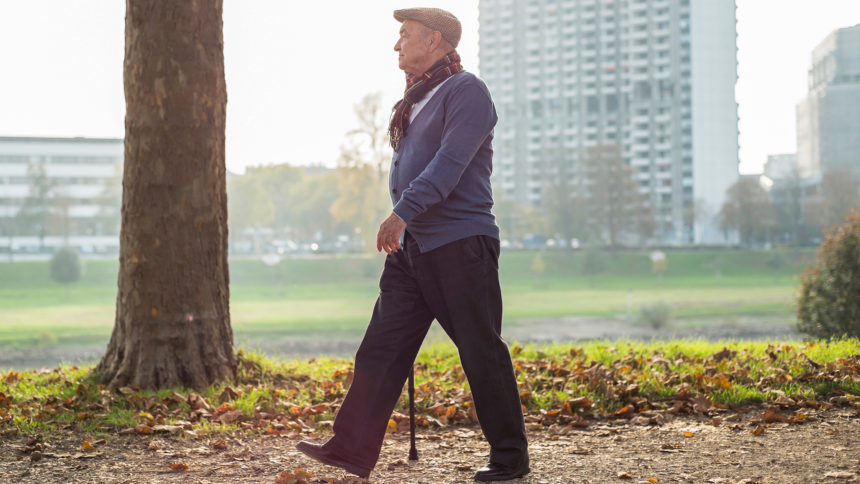
Thirty minutes a day of walking or gardening is enough to cut the mortality risk in half for stroke survivors, a new study finds.
Study participants included two groups of older adults, one of nearly 900 people who had experienced a prior stroke, and more than 97,000 who had never had a stroke. Investigators determined average weekly self-reported physical activity, and followed the participants’ health outcomes for an average of four and a half years.
During the study period, 25% of stroke survivors died from any cause compared to 6% of their peers with no stroke. But stroke survivors who exercised for the equivalent of three to four hours or more of walking each week had a 15% death rate during follow-up when compared to 33% among survivors who did not exercise that amount, the researchers said.
Stroke survivors aged 75 years and younger had the largest reduction in mortality risk tied to exercise. In that group, participants who met the minimum level of physical activity were about 80% less likely to die during study follow-up than those who did not. But there was still a significant benefit for participants over 75 years of age who exercised the minimum amount. They were 32% less likely to die when compared to their peers who did not meet the equivalent of three to four hours of weekly walking.
“Our results suggest that getting a minimum amount of physical activity may reduce long-term mortality from any cause in stroke survivors,” Raed A. Joundi, M.D., Ph.D., of the University of Calgary in Canada, wrote. “We should particularly emphasize this to stroke survivors who are younger in age, as they may gain the greatest health benefits from walking just thirty minutes each day.”
Perhaps not surprisingly, participants achieved even greater benefits when they walked six to seven hours per week.
“A better understanding of the role of physical activity in the health of people who survive stroke is needed to design better exercise therapies and public health campaigns so we can help these individuals live longer,” Joundi and colleagues concluded.
The study was published in the journal Neurology.
Subscribe to:
Posts (Atom)