Changing stroke rehab and research worldwide now.Time is Brain! trillions and trillions of neurons that DIE each day because there are NO effective hyperacute therapies besides tPA(only 12% effective). I have 523 posts on hyperacute therapy, enough for researchers to spend decades proving them out. These are my personal ideas and blog on stroke rehabilitation and stroke research. Do not attempt any of these without checking with your medical provider. Unless you join me in agitating, when you need these therapies they won't be there.

What this blog is for:

My blog is not to help survivors recover, it is to have the 10 million yearly stroke survivors light fires underneath their doctors, stroke hospitals and stroke researchers to get stroke solved. 100% recovery. The stroke medical world is completely failing at that goal, they don't even have it as a goal. Shortly after getting out of the hospital and getting NO information on the process or protocols of stroke rehabilitation and recovery I started searching on the internet and found that no other survivor received useful information. This is an attempt to cover all stroke rehabilitation information that should be readily available to survivors so they can talk with informed knowledge to their medical staff. It lays out what needs to be done to get stroke survivors closer to 100% recovery. It's quite disgusting that this information is not available from every stroke association and doctors group.

Showing posts with label sleep deprivation. Show all posts

Saturday, August 5, 2023

A Geriatrician's Top 10 Ways to Protect Brain Health in Aging

Your doctor is responsible for you being able to do all of these.

A Geriatrician's Top 10 Ways to Protect Brain Health in Aging

Have you ever wondered how to maintain your brain health as you age? 

Or wanted to know what are the best things to do, to prevent memory loss, cognitive decline, or even diseases such as Alzheimer's dementia?

I get asked about this quite a lot. And after spending years following the research on cognitive health and cognitive decline, I've settled on ten suggestions.


1. Avoid brain-slowing medications. 

Blood pressure meds, statins and aspirin are mine, so good.

Why: Several types of commonly-used medications diminish brain function in the short-term and are linked to higher rates of Alzheimer's in the longer term. Learn to identify these medications, so that you can avoid them, or at least use them only as a last resort when the likely benefits outweigh the risks.

Common health problems often treated with risky medications include anxiety, insomnia, overactive bladder, vertigo, and allergies. In many cases, such problems can effectively be treated with non-drug approaches, or with safer medications.


2. Avoid chronic sleep deprivation. 

Getting retired solved most of this problem.
Why: Chronic sleep deprivation can cause irritable mood, worse thinking, and many other problems. Fortunately, most sleep problems can be treated if properly identified.Note: Many sleep problems are due to health problems, such as sleep apnea. But it's also common to have insomnia due to stress, worry, or even suboptimal sleep habits (like long naps in the afternoon and looking at screens late at night). If you have anxiety or frequent insomnia, it's very important to learn to sleep without sedatives or sleeping pills. This usually requires a big effort in the short term, but it is worthwhile for long-term brain health and will reduce fall risk as well. Clinical studies have shown that older adults who depend on tranquilizers can successfully wean off of them. For More Information: 5 Top Causes of Sleep Problems in Aging, & Proven Ways to Treat Insomnia

 3. Avoid delirium.Why: Delirium is a state of worse-than-usual mental function, brought on by some kind of illness or stress. (If you've ever known an older adult who got confused while hospitalized, that was almost certainly delirium.)Note: Studies have found that delirium is associated with acceleration of cognitive decline. In older adults, delirium is often brought on by the stress of hospitalization or serious illness. Although not all delirium can be avoided or prevented, older adults and families should be careful about elective surgeries, and can learn ways to reduce the chance of developing delirium. For more information: 10 Things to Know About Delirium. 

4. Identify and treat hearing loss as early as possible.

 You can have your doctor verify if your are at dementia risk in here and thus need to get hearing aids.

This Common Device Can Slow Cognitive Decline, Trial Shows July 2023

 Why: Research shows that hearing loss in midlife and later life is clearly associated with a higher risk of cognitive decline. Experts are still teasing out why this is, but it's probably in part due to many people cutting back on social engagement when there is untreated hearing loss. We also know that the part of the brain responsible for processing sound and speech (the auditory cortex) starts to wither if it's not getting used properly.Note: The longer hearing loss has gone untreated, the harder it is for a person to adapt to hearing aids successfully. For these reasons and more, if you've noticed any signs of hearing impairment in yourself or a loved one, be sure to check for hearing loss and get treatment with some form of hearing assistance technology.

 5. Pursue positive social activities, purposeful activities, and whatever activities nourish the soul. 

My writing this blog.

Why: Loneliness and boredom are harmful to brain health and emotional health. Studies find that older adults feel better when they are socially engaged, and also when they feel a sense of purpose. This may also help prevent or delay cognitive decline.Note: Purposeful activities and social activities provide stimulation and satisfaction to the brain, and are definitely associated with better brain health in later life. 

6. Find constructive ways to manage chronic stress.  

Your doctors are responsible for your stress. You are under massive stress because your doctor has nothing to get you 100% recovered.


Why: Chronic stress is an important quality of life issue. It also can change the brain, and has been linked to changes in cognitive function.Note: To manage chronic stress, it's best to combine general approaches (such as improving sleep, exercising, meditation, relaxation strategies, etc) with approaches that can help you cope with your specific source of stress, such as caregiving coping skills or relationship counseling. 

7. Seek treatment if any signs of depression or chronic anxiety. 

It is your doctor's responsibility to prevent post stroke depression and anxiety with 100% RECOVERY PROTOCOLS. Your doctor doesn't have that? THEN YOU DON'T HAVE A FUNCTIONING STROKE DOCTOR!

Solve the primary problem of 100% recovery and you don't have to work on the secondary problem of depression.


Why: Although studies find that many people feel happier as they age, it's still quite common for older adults to experience late-life depression. Chronic anxiety is also common, and can co-exist with depression. These problems diminish quality of life, and also have been linked to cognitive decline. Fortunately, they are treatable.Note: It's most common for these problems to be treated with medication. However, a number of non-drug treatments are available for depression and anxiety, such as cognitive-behavioral therapy. Research has found these can be as effective as medication. These are often safer for older adults in that there's less risk of side-effects or interactions with any treatment for other health problems, so it's often worthwhile to ask about non-drug treatments.

For more information: Depression in Aging: Diagnosis & Treatment When the Golden Years are Blue

8. Stay physically active and exercise regularly.

I get 2-3 hours of walking in challenging trails 3-4 times weekly.

Why: Regular physical activity has been shown to benefit brain health as well as mood. Studies have found that exercise can help treat depression or anxiety, and is also linked to a lower risk of developing a dementia such as Alzheimer's.

Note: This CDC resource clarifies how much exercise to get. But research has also shown that even less-than-recommended exercise brings health benefits. So remember: it's better to do a little bit every day than nothing at all!

9. Address risk factors for cardiovascular disease.

Taking blood pressure meds and statins, no sign of pre-diabetes. No obesity, no smoking and I'm active. 

Why: Cardiovascular disease includes cerebrovascular disease, which means brain health problems related to blood vessels in the brain. Reducing cardiovascular risk factors helps preserve good blood flow to the brain. This reduces the risk of a major stroke, and may help prevent the smaller brain vessel blockages that cause vascular dementia.

The main cardiovascular risk factors to address are high blood pressure, high cholesterol, diabetes and pre-diabetes, smoking, obesity, and physical inactivity. Exercise (plus a brain-healthy diet) is a safe and effective way to help treat most of these risk factors, but medications or other approaches may also be necessary.

10. Eat a brain-healthy diet that keeps glucose, inflammation, and weight in good control.

 Well since neither of these have any objectivity at all, I'm just doing salmon several times a week, lots of fiber and spinach and red wine.

For the vast majority of people, this will be the Mediterranean diet or the MIND (Mediterranean-DASH Intervention for Neurodegenerative Delay) diet.

Why: Several studies over the past several years have indicated that the Mediterranean diet and the MIND diet are associated with maintaining better cognitive function. They also improve other health outcomes.

The likely reason these diets work well for the brain is that they often help control blood glucose in a healthier range (not too high) and also they reduce inflammation in blood vessels and elsewhere in the body.

The exact specifics of what to eat and not eat on these diets can vary, depending on which diet and which version you find. Here are the general principles:

  • Eat lots of vegetables, greens, fruits, whole grains, beans, and lentils.
  • Minimize added sugars, fast food, and processed foods, including processed meats.
  • Minimize simple starches (e.g. refined flour, most sweets), especially if your bloodwork suggests problems managing blood sugar.
  • Research has also suggested that intake of several specific types of foods may be beneficial to older adults. Some to consider include:
  • Nuts and seeds (especially flaxseed)
  • Foods containing polyphenols, which include olive oil and berries
  • Cocoa and tea
  • Fish, especially oily fish, which contains omega-3 fatty acids. (Randomized control trial data of fish oil supplements often does not find much effect, so supplements may not be as effective.)

Note: The medical literature on dietary vitamins and supplements for cognitive health is mixed. I personally believe it's more useful to focus on maintaining a diet that is generally healthy for the body, such as the Mediterranean diet, than it is to focus on taking specific foods or vitamins for brain health.

How Are You Doing on Promoting Brain Health & What Will You Do Next?

Don't panic if you realize you aren't doing most of the ten things I recommend.

Do, however, give yourself credit for any items you are doing well on. And then make a plan to improve just one thing, and pick one little next step. It might be committing to walk 20 minutes every day. Or scheduling an appointment with the pharmacist to review medications.

Whatever it is, pick one thing and schedule it. And then commit to reviewing this list and taking one more action next month.

If you take an action at least once a month, you'll eventually be on track for maintaining better brain health while aging.

Saturday, April 18, 2020

Sleep deprivation increases Alzheimer’s protein

Maybe this to counteract sleep deprivation? Good thing I'm retired now, I was vastly sleep deprived while working.

Flavanol-rich chocolate acutely improves arterial function and working memory performance counteracting the effects of sleep deprivation in healthy individuals

Notice this says healthy individuals, none of us stroke survivors are healthy.

Sleep deprivation increases Alzheimer’s protein

At a Glance

  • In a small study, losing just one night of sleep led to an increase in beta-amyloid, a protein in the brain associated with impaired brain function and Alzheimer’s disease. 
  • The results suggest that sleep deprivation may increase the risk for beta-amyloid build-up.
Tired man drinking coffee The study adds to growing evidence that sleep deprivation can affect buildup of beta-amyloid in the brain. lolostock/iStock/Thinkstock
Beta-amyloid is a metabolic waste product that’s found in the fluid between brain cells (neurons). A build-up of beta amyloid is linked to impaired brain function and Alzheimer’s disease. In Alzheimer’s disease, beta-amyloid clumps together to form amyloid plaques, which hinder communication between neurons.
Impaired sleep has been associated with Alzheimer’s disease. Studies suggest that sleep plays a role in clearing beta-amyloid out of the brain. Moreover, lack of sleep has been shown to elevate brain beta-amyloid levels in mice. Less is known about the impact of sleep deprivation on beta-amyloid levels in people.
To investigate the possible link between beta-amyloid and sleep in people, lead author Dr. Ehsan Shokri-Kojori, in a team led by Drs. Nora D. Volkow and Gene-Jack Wang of NIH’s National Institute on Alcohol Abuse and Alcoholism (NIAAA), used positron emission tomography (PET) to scan the brains of 20 healthy participants, aged 22 to 72. To measure beta-amyloid they used a radiotracer called 18F-florbetaben that has been shown to bind beta-amyloid. Results were published online on April 9, 2018, in the Proceedings of the National Academy of Sciences.
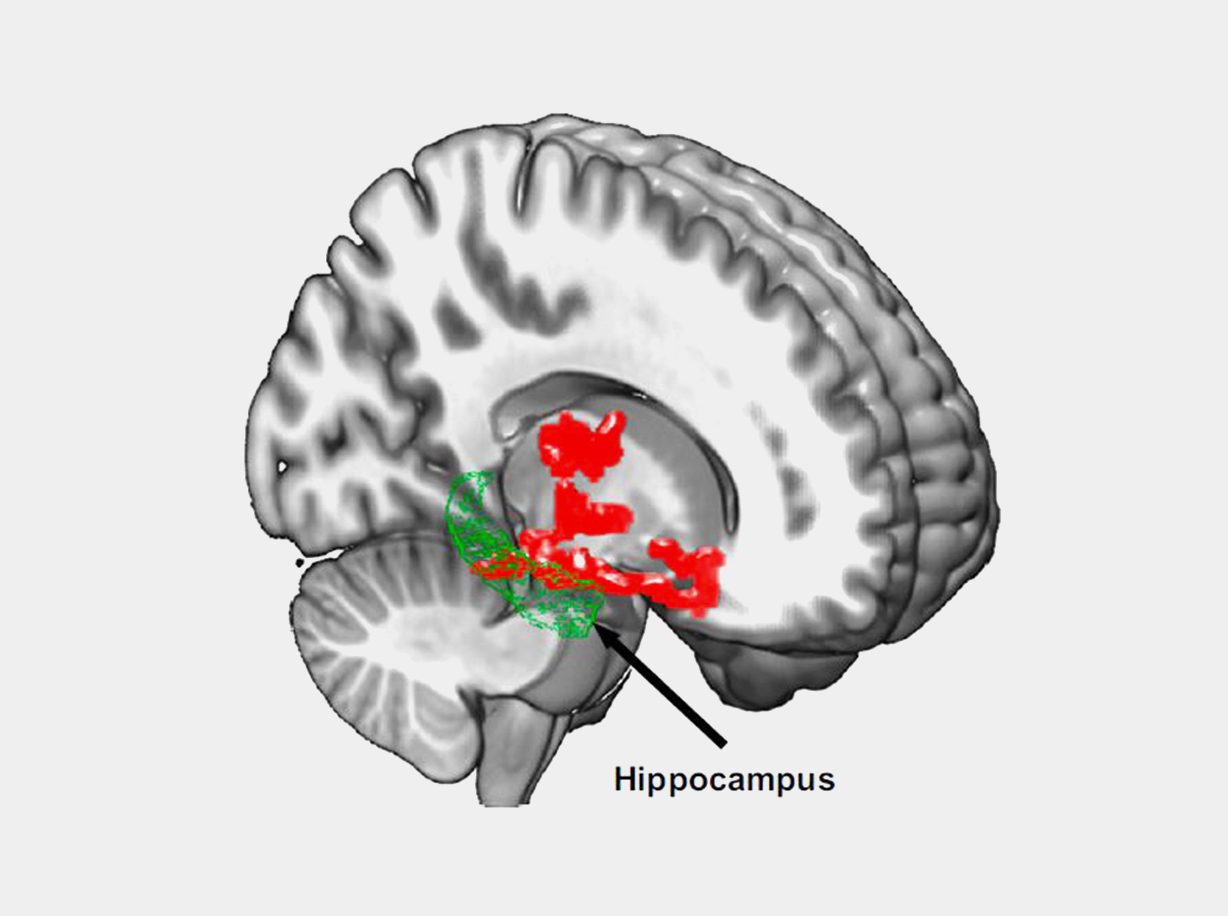
Illustration of beta-amyloid accumulationBrain imaging after one night of sleep deprivation revealed beta-amyloid accumulation (red) in the hippocampus and nearby regions. Proceedings of the National Academy of Sciences
The researchers scanned participants’ brains after getting a full night’s rest and after a night of sleep deprivation (about 31 hours without sleep). Beta-amyloid increased about 5% in the participants’ brains after losing a night of sleep. These changes occurred in brain regions that included the thalamus and hippocampus, which are especially vulnerable to damage in the early stages of Alzheimer’s disease.
The scientists also found that study participants with larger increases in beta-amyloid reported worse mood after sleep deprivation. These findings support other studies that have found that the hippocampus and thalamus play a role in mood disorders.
“Even though our sample was small, this study demonstrated the negative effect of sleep deprivation on beta-amyloid burden in the human brain,” Shokri-Kojori says. “Future studies are needed to assess the generalizability to a larger and more diverse population.”
“This research provides new insight about the potentially harmful effects of a lack of sleep on the brain and has implications for better characterizing the pathology of Alzheimer's disease,” says Dr. George F. Koob, director of NIAAA.
More studies are needed to identify the precise biological mechanism underlying the observed increase in beta-amyloid. It’s also important to note that the link between sleep disorders and Alzheimer’s risk is thought to go both ways. Elevated beta-amyloid may also lead to trouble sleeping.

Sunday, October 1, 2017

The Simple Depression Treatment That Works In 24 Hours

With a 33% chance of depression after stroke, is your doctor ANY GOOD AT ALL in how to prevent(NOT TREAT!)? Either short term or long term? Taking antidepressants helps stroke recovery even if not depressed. Remember, I'm not medically trained so I know nothing and should never be followed even to asking your doctor these questions.

Common antidepressant can help stroke patients improve movement and coordination Sept. 2015 


Antidepressants may help people recover from stroke even if they are not depressed Jan. 2013 

The latest here:

 The Simple Depression Treatment That Works In 24 Hours

30 years worth of research reveals that 50% of people benefit from this simple treatment.
Sleep deprivation can rapidly reduce the symptoms of depression, 30 years of research suggests.
Around half of people with depression who are sleep deprived under controlled, inpatient conditions feel better quickly.
Many see improvements in just 24 hours, in comparison to the weeks it can take for antidepressants to start working.
‘Wake therapy’, as it is sometimes called, involves staying awake all night and the next day.
Around 50% of people find their depression improves — until they sleep again.
There is evidence that staying awake for half the night, instead of the whole night, can be effective.
The problem, however, is that the therapy is not a long-term solution.
People typically feel depressed again after one full night’s sleep.
Sometimes taking a nap is enough for the depression to return.
However, the technique can help bridge the gap until antidepressants start working.
Wake therapy is sometimes referred to as a ‘response inducer’ or accelerator.
In other words, it is used when the patient needs a very quick release.
The conclusions come from a new review of 66 studies carried out over 36 years.
Dr Philip Gehrman, a study author, said:
“More than 30 years since the discovery of the antidepressant effects of sleep deprivation, we still do not have an effective grasp on precisely how effective the treatment is and how to achieve the best clinical results.
Our analysis precisely reports how effective sleep deprivation is and in which populations it should be administered.”
They found that around half of people who were depressed responded to sleep deprivation.
It didn’t matter whether or not they were taking medication, what age or gender they were, or even the method of sleep deprivation used.
Dr Elaine Boland, the study’s first author, said:
“These studies in our analysis show that sleep deprivation is effective for many populations.
Regardless of how the response was quantified, how the sleep deprivation was delivered, or the type of depression the subject was experiencing, we found a nearly equivalent response rate.”


Monday, June 6, 2016

Flavanol-rich chocolate acutely improves arterial function and working memory performance counteracting the effects of sleep deprivation in healthy individuals

Fairly useless since it gives no amounts. And our fucking failures of stroke associations and doctors will not followup this with translational research. We are all screwed until a leader steps up to the plate.Bet you don't have a sleep protocol?
http://www.ncbi.nlm.nih.gov/pubmed/27088635

Abstract

BACKGROUND:

Sleep deprivation is a risk factor for cardiovascular disease. Cocoa flavonoids exert cardiovascular benefits and neuroprotection. Whether chocolate consumption may mitigate detrimental effects of sleep loss on cognitive performance and cardiovascular parameters has never been studied.

AIM:

We investigated the effects of flavanol-rich chocolate consumption on cognitive skills and cardiovascular parameters after sleep deprivation.

METHODS:

Thirty-two healthy participants underwent two baseline sessions after one night of undisturbed sleep and two experimental sessions after one night of total sleep deprivation. Two hours before each testing session, participants were randomly assigned to consume high or poor flavanol chocolate bars. During the tests were evaluated, the Psychomotor Vigilance Task and a working memory task, office SBP and DBP, flow-mediated dilation and pulse-wave velocity.

RESULTS:

Sleep deprivation increased SBP/DBP. SBP/DBP and pulse pressure were lower after flavanol-rich treatment respect to flavanol-poor treatment (SBP: 116.9 ± 1.6 vs. 120.8 ± 1.9 mmHg, respectively, P = 0.00005; DBP: 70.5 ± 1.2 vs. 72.3 ± 1.2 mmHg, respectively, P = 0.01; pulse pressure: 46.4 ± 1.3 vs. 48.4 ± 1.5 mmHg, P = 0.004). Sleep deprivation impaired flow-mediated dilation (5.5 ± 0.5 vs. 6.5 ± 0.6%, P = 0.02), flavanol-rich, but not flavanol-poor chocolate counteracted this alteration (flavanol-rich/flavanol-poor chocolate: 7.0 ± 0.6 vs. 5.0 ± 0.4%, P = 0.000001). Flavanol-rich chocolate mitigated the pulse-wave velocity increase (P = 0.001). Flavanol-rich chocolate preserved working memory accuracy in women after sleep deprivation. Flow-mediated dilation correlated with working memory performance accuracy in the sleep condition (P = 0.04).

CONCLUSION:

Flavanol-rich chocolate counteracted vascular impairment after sleep deprivation and restored working memory performance. Improvement in cognitive performance could be because of the effects of cocoa flavonoids on blood pressure and peripheral and central blood flow.
PMID:
27088635
[PubMed - in process]
 

Saturday, April 30, 2016

The molecular neurobiology of the sleep-deprived, fuzzy brain

What is your doctors sleep protocol? I got nightly Ambien, still wonder if sleeping pill induced sleep is equivalent to regular sleep.
http://stke.sciencemag.org/content/9/425/fs7.abstract
Sci. Signal.  26 Apr 2016:
Vol. 9, Issue 425, pp. fs7
DOI: 10.1126/scisignal.aaf6196
You are currently viewing the abstract.
View Full Text

Abstract

Sleep deprivation is well established to cause diminution of cognitive function, including disruption of both minute-to-minute working memory and decrements in the stabilization of long-term memories. Moreover, “replay” during sleep of episodes and sequences of events that were experienced during wakefulness has been implicated in consolidation of long-term memories. However, the molecular mechanisms underlying the role of sleep in memory function are just starting to be defined. In this issue of Science Signaling, Tudor et al. identify one molecular component underlying the effects of sleep on memory function: dynamic experience-dependent regulation of protein synthesis in the hippocampus.

Monday, January 4, 2016

The brain functional connectome is robustly altered by lack of sleep

What is your doctors sleep protocol? Does use of a sleeping pill constitute 'real' sleep? I was completely exhausted every day while in the hospital. I never got enough sleep. I had these fucking vampires drawing blood every morning from someone in the 4 plex at 7am. Who is most important? The workers at the hospital or the patients? This likely requires a call to the president. For your best recovery your doctor should know exactly how many hours of sleep you require.
http://www.ncbi.nlm.nih.gov/pubmed/26712339

Abstract

Sleep is a universal phenomenon necessary for maintaining homeostasis and function across a range of organs. Lack of sleep has severe health-related consequences affecting whole-body functioning, yet no other organ is as severely affected as the brain. The neurophysiological mechanisms underlying these deficits are poorly understood. Here, we characterize the dynamic changes in brain connectivity profiles inflicted by sleep deprivation and how they deviate from regular daily variability. To this end, we obtained functional magnetic resonance imaging data from 60 young, adult male participants, scanned in the morning and evening of the same day and again the following morning. 41 participants underwent total sleep deprivation before the third scan, whereas the remainder had another night of regular sleep. Sleep deprivation strongly altered the connectivity of several resting-state networks, including dorsal attention, default mode, and hippocampal networks. Multivariate classification based on connectivity profiles predicted deprivation state with high accuracy, corroborating the robustness of the findings on an individual level. Finally, correlation analysis suggested that morning-to-evening connectivity changes were reverted by sleep (control group)-a pattern which did not occur after deprivation. We conclude that both, a day of waking and a night of sleep deprivation dynamically alter the brain functional connectome.

Tuesday, June 2, 2015

Detrimental role of prolonged sleep deprivation on adult neurogenesis

One more thing you'll have to make sure your doctor is taking care of for you. You want lots of neurogenesis. What exactly is your doctors' protocol to accomplish that? No protocol? Then call the hospital president and ask why they are employing incompetent doctors.
Excuses like 'All strokes are different, all stroke recoveries are different' ARE NOT ALLOWED.
http://journal.frontiersin.org/article/10.3389/fncel.2015.00140/full?
Carina Fernandes1,2, Nuno Barbosa F. Rocha3, Susana Rocha4, Andrea Herrera-Solís5, José Salas-Pacheco6, Fabio García-García7, Eric Murillo-Rodríguez8, Ti-Fei Yuan9, Sergio Machado10,11 and Oscar Arias-Carrión5*
  • 1Faculty of Medicine, University of Porto, Porto, Portugal
  • 2Laboratory of Neuropsychophysiology, Faculty of Psychology and Education Sciences, University of Porto, Porto, Portugal
  • 3School of Health Technologies, Polytechnic Institute of Porto, Porto, Portugal
  • 4School of Accounting and Administration of Porto, Polytechnic Institute of Porto, Porto, Portugal
  • 5Unidad de Trastornos del Movimiento y Sueño, Hospital General Dr. Manuel Gea González/Instituto de Fisiología Celular, Universidad Nacional Autónoma de México, Mexico City, Mexico
  • 6Instituto de Investigación Científica, Universidad Juárez del Estado de Durango, Durango, Mexico
  • 7Departamento de Biomedicina, Instituto de Ciencias de la Salud, Universidad Veracruzana, Xalapa, Mexico
  • 8División Ciencias de la Salud, Laboratorio de Neurociencias Moleculares e Integrativas, Escuela de Medicina, Universidad Anáhuac Mayab, Mérida, México
  • 9School of Psychology, Nanjing Normal University, Nanjing, China
  • 10Panic and Respiration, Institute of Psychiatry of Federal University of Rio de Janeiro, Rio de Janeiro, Brazil
  • 11Physical Activity Neuroscience, Physical Activity Sciences Postgraduate Program, Salgado de Oliveira University, Niterói, Brazil
Adult mammalian brains continuously generate new neurons, a phenomenon called adult neurogenesis. Both environmental stimuli and endogenous factors are important regulators of adult neurogenesis. Sleep has an important role in normal brain physiology and its disturbance causes very stressful conditions, which disrupt normal brain physiology. Recently, an influence of sleep in adult neurogenesis has been established, mainly based on sleep deprivation studies. This review provides an overview on how rhythms and sleep cycles regulate hippocampal and subventricular zone neurogenesis, discussing some potential underlying mechanisms. In addition, our review highlights some interacting points between sleep and adult neurogenesis in brain function, such as learning, memory, and mood states, and provides some insights on the effects of antidepressants and hypnotic drugs on adult neurogenesis.

Introduction

Thousands of new neurons are daily added to the adult brain of different species, including humans (Yuan et al., 2014), and this constant lifelong generation implies significant structural changes (Eriksson et al., 1998; Curtis et al., 2007). Neurogenesis is involved in numerous brain processes but its association with sleep deprivation was only recently addressed. Previous research has focused on how generation and development of new neurons are affected by sleep loss. Short periods of sleep deprivation do not significantly alter the basal rate of cell proliferation, whereas long periods result in a decrease of cell proliferation and survival in the hippocampus (Mirescu et al., 2006). In this review, we will discuss the possible effects of sleep deprivation on the natural course of neurogenesis, and address the potential connections between sleep and neurogenesis that may influence other cognitive and neuropsychobiological functions, such as learning, memory, and mood disorders.

Adult Neurogenesis

Neurogenesis includes the generation, proliferation, fate specification and integration of new functional neurons in the existing neural circuits from undifferentiated progenitor cells. Traditionally, it was believed that neurogenesis mainly occurred during the embryonic stages of the central nervous system (CNS), ending permanently at puberty (Ming and Song, 2005; Meerlo et al., 2009).
New findings, based on techniques such as [3H]-thymidine autoradiography (Sidman et al., 1959) and 5-bromo-2′-deoxyuridine (BrdU; Nowakowski et al., 1989), which mark cells in S phase of mitosis, electronic microscopy (Kaplan, 1977, 1981, 1984, 1985) and combining retroviral-based lineage tracing with electrophysiological methods (Sanes et al., 1986; Price et al., 1987) revealed the continuous adult neurogenesis and synaptic integration. Newborn neurons were found in certain CNS regions of birds (Goldman and Nottebohm, 1983), rats (van Praag et al., 1999), monkeys (Kornack and Rakic, 1999), and humans (Eriksson et al., 1998; Curtis et al., 2007), throughout life.
Neurogenesis occurs in specific areas of the CNS, namely in the subventricular zone (SVZ), lining the wall of the lateral ventricles, and in the subgranular zone (SGZ) of the hippocampal dentate gyrus (Alvarez-Buylla and Lim, 2004). The neurogenic behavior of these areas appears to be determined by signals of endothelial cells and astrocytes (Alvarez-Buylla and Lim, 2004).
Similarly, a cohort of glucogenic and neurogenic signals (Lim et al., 2000) regulates the underlying molecular mechanisms of neuronal differentiation, fate specification (Ming and Song, 2005; Arias-Carrión et al., 2007; Yuan and Arias-Carrion, 2011; Höglinger et al., 2014) and migration of new generated cells (Hu et al., 1996; Conover et al., 2000; Murase and Horwitz, 2002; Bolteus and Bordey, 2004). Newly formed neurons in the SVZ reach the olfactory bulb, by the rostral migratory stream (Saghatelyan et al., 2004), forming granule and periglomerular neurons. These neurons establish dendro-dendritic synapses with tufted cells (Abrous et al., 2005), beginning a maturation process by receiving GABAergic and glutamatergic synaptic inputs (Belluzzi et al., 2003). When maturate, the granule neurons secrete GABA, while periglomerular neurons secrete GABA and dopamine (Wang et al., 2000; Arias-Carrión et al., 2007). In the dentate gyrus, newborn neurons reach the anterior layer of the granule cells (Hastings and Gould, 1999), maintaining their neuronal maturation and synaptogenesis over several months (van Praag et al., 2002). It is believed that these neurons receive initially GABAergic and later glutamatergic inputs (Ming and Song, 2005). Once mature, most of these neurons secrete glutamate, while a small population releases GABA (Wang et al., 2000).
Adult neurogenesis is modulated by intrinsic and extrinsic factors (Table 1), being possible that several modulating factors remain unknown (Kempermann, 2002).

More at link.