Changing stroke rehab and research worldwide now.Time is Brain! trillions and trillions of neurons that DIE each day because there are NO effective hyperacute therapies besides tPA(only 12% effective). I have 523 posts on hyperacute therapy, enough for researchers to spend decades proving them out. These are my personal ideas and blog on stroke rehabilitation and stroke research. Do not attempt any of these without checking with your medical provider. Unless you join me in agitating, when you need these therapies they won't be there.

What this blog is for:

My blog is not to help survivors recover, it is to have the 10 million yearly stroke survivors light fires underneath their doctors, stroke hospitals and stroke researchers to get stroke solved. 100% recovery. The stroke medical world is completely failing at that goal, they don't even have it as a goal. Shortly after getting out of the hospital and getting NO information on the process or protocols of stroke rehabilitation and recovery I started searching on the internet and found that no other survivor received useful information. This is an attempt to cover all stroke rehabilitation information that should be readily available to survivors so they can talk with informed knowledge to their medical staff. It lays out what needs to be done to get stroke survivors closer to 100% recovery. It's quite disgusting that this information is not available from every stroke association and doctors group.

Showing posts with label bad teaching. Show all posts

Wednesday, March 12, 2025

YORK UNIVERSITY Neurorehabilitation course offers students real-world insights

 I bet they learn noting about the complete failure of everything in stroke!

YORK UNIVERSITY
Neurorehabilitation course offers students real-world insights 

Students in Professor George Mochizuki's Principles of Neurorehabilitation course get an up-close view of the work of neurorehabilitation physiotherapists by interviewing, via Zoom, a clinician and their patient.(You don't interview the clinician at the same time as the patient, you won't get factual answers from the patient about how fucking bad recovery is and the fact that their stroke medical 'professionals' KNOW NOTHING CONCRETE ABOUT GETTING RECOVERED!)
 

Mochizuki, an associate professor in the School of Kinesiology & Health Science in York University's Faculty of Health, developed the fourth-year undergraduate course in 2022 to provide practical insights into the challenges and successes of neurorehabilitation.
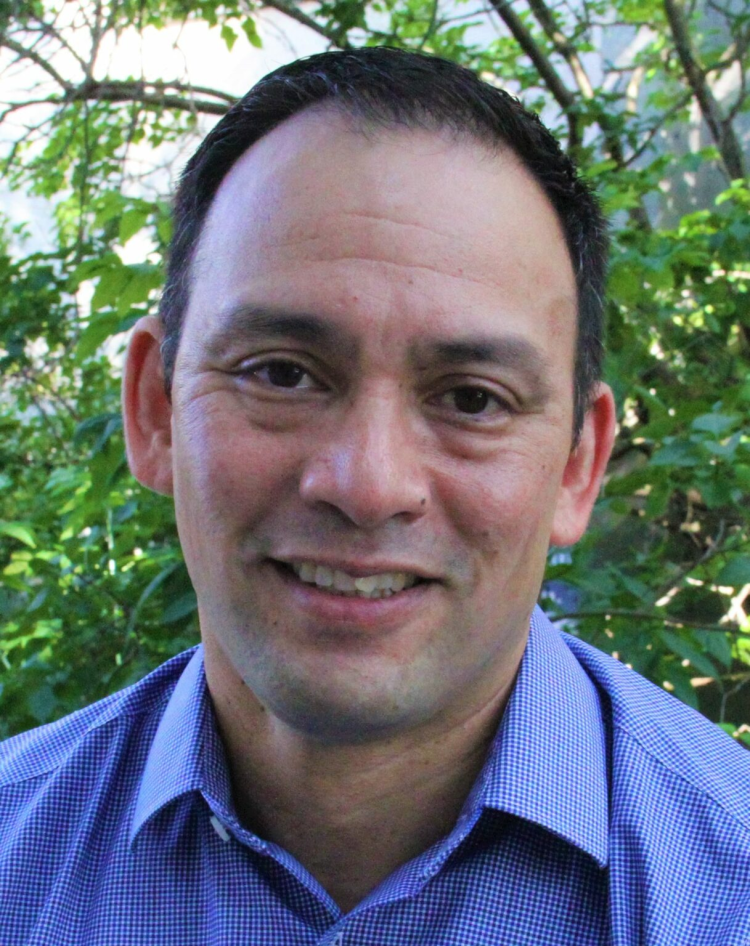

George Mochizuki

Neurorehabilitation is the process that helps people recover and learn anew how to perform daily activities following neurological injuries, such as stroke, concussion and spinal cord injuries, or while living with diseases, such as multiple sclerosis or Parkinson's disease.  

Mochizuki says occupational therapy and physiotherapy training used to be an undergraduate program, but about 25 years ago, training was moved to the master's degree level. He decided to develop an opportunity for undergraduate students who are contemplating a career in occupational therapy (OT) or physiotherapy (PT) to learn what their training - and what the reality of working in those careers - would be like.  

His course's structure includes a workshop on professionalism and interview skills, a group presentation and a final reflection exercise. The highlight of the course, however, is the 90-minute session small groups of students have with clinicians and their patients who are guests in the course, as it highlights the value of field experiences that can complement and challenge classroom theory. 

"Students get to hear first-hand about the benefits, challenges and barriers people are experiencing in real life," Mochizuki says. "Students hear about limitations of time or perspectives on situations in which better access to care can result in a better recovery. It's not just, here's the definition of a stroke and this is how the typical stroke recovery pattern looks.' The activity focuses on the interaction between the clinician and client and how the personalized plan contributes to rehabilitation for that individual."  

Students will often tell Mochizuki that what they hear in their sessions with the clinician and patient is different from what they have discussed in class.  

"We talk about how people of the same age, same sex, same socioeconomic background, same location of injury and same type of injury experience differences in how the injury impacts them," Mochizuki says. "This real-life variability doesn't always align with information in textbooks."  

That reality calls for a personalized, holistic approach to treatment. That's what drew Emily D'Alessandro to occupational therapy studies after taking Mochizuki's class, and seeing how a stroke patient's life was changed through neurorehabilitation.  

"I saw the impact that the physio had on the client's life and how the client lit up and how happy they were to be able to do things. And that's when I knew: this is the path I have to take," says D'Alessandro, who is enrolled in the University of Toronto's occupational therapy master's program after earning a BSc in neuroscience at York. 

Occupational therapy focuses on upper limb rehabilitation and developing fine motor skills, while physical therapy tends to focus on lower limb rehab. "We help people get back to the activities that are important to them. It could be going back to work, going back to school, even just getting dressed in the morning or typing on your computer," she says. "Physio will help you walk, but OT will help you get dressed so that you can go out and do what you have to do."  

D'Alessandro credits the experiential education element of Mochizuki's class for helping her find her career path.  

"Not a lot of professors teach courses like this," she says, "with experiential learning aspects that actually get us integrated into the real world and show us how we can apply our information."

This story was originally featured in YFile, York University's community newsletter.


Saturday, August 27, 2022

Characteristics of Intralimb Kinetic Coordination in the Lower Limbs During Gait in Patients with Hemiparesis Due to Stroke

But you didn't answer the overriding question! Did survivor walking improve?  You didn't measure the 10 meter walking test? Or the Berg Balance Scale? And you're obviously not learning the right things at University.  Bad teaching.

“What's measured, improves.” So said management legend and author Peter F. Drucker 

The latest here:

Characteristics of Intralimb Kinetic Coordination in the Lower Limbs During Gait in Patients with Hemiparesis Due to Stroke

Yusuke Sekiguchi,1 Dai Owaki,2 Keita Honda,1 Shin-ichi Izumi1,3
1Department of Physical Medicine and Rehabilitation, Tohoku University Graduate School of
Medicine, 2-1, Seiryo-machi, Sendai 980-8575, Japan
2Department of Robotics, Graduate School of Engineering, Tohoku University, 6-6-01Aoba,
Aramaki, Aoba-ku, Sendai, 980-8579, Japan
3Graduate School of Biomedical Engineering, Tohoku University, 2-1, Seiryo-machi, Sendai
980-8575, Japan

Abstract

Background: 
 
The main objective of the present study is to investigate the relationship
between the principal components (PCs) of the sagittal kinetic variables in the lower limb and the ground reaction forces (GRFs) during gait in patients with hemiparesis.
 
Methods: 
 
We recruited 21 patients with hemiparesis and 12 healthy 
controls. The 3-dimensional (3-D) coordinates of 33 markers were measured with a 3-D motion analysis system operating at 120 Hz and force plates as the subjects walked along a 7-meter walkway. The correlation coefficients between the over-time series of PCs, which is calculated using principle component analysis (PCA), and GRFs were compared among the left side of the controls and the paretic side (PS) and non-PS of the patients by using analysis of variance(ANOVA).
 
Results: 
 
The correlation coefficient of the non-PS between the first PC and GRF in the anteroposterior-direction was significantly higher than that on the PS (P < 0.05) and that of the non-PS in the vertical-direction was lower than the PS (P < 0.05).
 
Conclusions: 
 
The results indicated that intralimb kinetic coordination on the PS plays an essential role in weight support in patients with hemiparesis, whereas the kinetic coordination on the non-PS plays a role in generation of propulsion.