Changing stroke rehab and research worldwide now.Time is Brain! trillions and trillions of neurons that DIE each day because there are NO effective hyperacute therapies besides tPA(only 12% effective). I have 523 posts on hyperacute therapy, enough for researchers to spend decades proving them out. These are my personal ideas and blog on stroke rehabilitation and stroke research. Do not attempt any of these without checking with your medical provider. Unless you join me in agitating, when you need these therapies they won't be there.

What this blog is for:

My blog is not to help survivors recover, it is to have the 10 million yearly stroke survivors light fires underneath their doctors, stroke hospitals and stroke researchers to get stroke solved. 100% recovery. The stroke medical world is completely failing at that goal, they don't even have it as a goal. Shortly after getting out of the hospital and getting NO information on the process or protocols of stroke rehabilitation and recovery I started searching on the internet and found that no other survivor received useful information. This is an attempt to cover all stroke rehabilitation information that should be readily available to survivors so they can talk with informed knowledge to their medical staff. It lays out what needs to be done to get stroke survivors closer to 100% recovery. It's quite disgusting that this information is not available from every stroke association and doctors group.

Showing posts with label E-Textiles. Show all posts

Wednesday, February 8, 2023

Design and Test of E-Textiles for Stroke Rehabilitation

I like this out of the box thinking, now just add measurements in there that will objectively tell what the disabilities are. Then we could map the protocols that fix those disabilities and get survivors recovered. See how fucking simple this is?

 Design and Test of E-Textiles for Stroke Rehabilitation

1
Electronics and Computer Science, University of Southampton, Southampton SO17 IBJ, UK
2
Winchester School of Art, University of Southampton, Southampton SO23 8DL, UK
3
Odstock Medical Ltd., Salisbury SP2 8BJ, UK
*
Author to whom correspondence should be addressed.
Presented at the 4th International Conference on the Challenges, Opportunities, Innovations and Applications in Electronic Textiles, Nottingham, UK, 8–10 November 2022.
Eng. Proc. 2023, 30(1), 16; https://doi.org/10.3390/engproc2023030016
Published: 6 February 2023

Abstract

This work presents the design and test of an e-textile based functional electrical stimulation system for post-stroke upper limb rehabilitation. The prototype was tested on five stroke survivors to assess stimulation comfort, the stimulation intensity required to achieve hand opening, and ease of use. Wrist extension was measured using two inertial measurement units. The wearable e-textile prototype achieved similar stimulation comfort compared to high-quality hydrogel electrodes with a score difference of between 0 and 1. The stimulation intensity to achieve full hand opening was the same for the hydrogel electrodes and the e-textiles for all five participants. A second design based on a knitted sleeve has been assessed in terms of usability. Additional new designs have been proposed to improve the usability.

1. Introduction

Stroke occurs when there is a blockage or bleeding of the blood vessels affecting the supply of blood to the brain. There are 1.3 million stroke survivors in the UK [1] and stroke costs the UK National Health Service and wider society £26 billion per annum [2]. Over half of stroke survivors have weak arm/hand movement affecting their independence and quality of life. Functional Electrical Stimulation (FES) is a technology used for stroke rehabilitation. It applies a safe electrical impulse through electrodes placed on the skin to strengthen weak muscles and improve movement functions. FES has been used to exercise muscles and assist walking for people with mobility issues since the 1960s [3]. Systematic reviews with meta-analysis have concluded that FES improves the ability to perform activities [4,5,6]. Existing FES products are difficult to set-up by stroke survivors without help from their carers or healthcare professionals which significantly constrains usage. Our previous work has received positive feedback regarding wearable e-textile FES for home-based stroke rehabilitation [7]. This work presents the test results of a fabric electrode based wearable FES in terms of user comfort, stimulation intensity, and functional movement (wrist extension for hand opening) on five stroke survivors (ethics approval ID: University of Southampton ERGO 70296). Ease of use has been assessed. A second knitted design has been assessed and additional new designs to improve the usability have been proposed for future study.

2. Materials and Methods

2.1. Electrodes

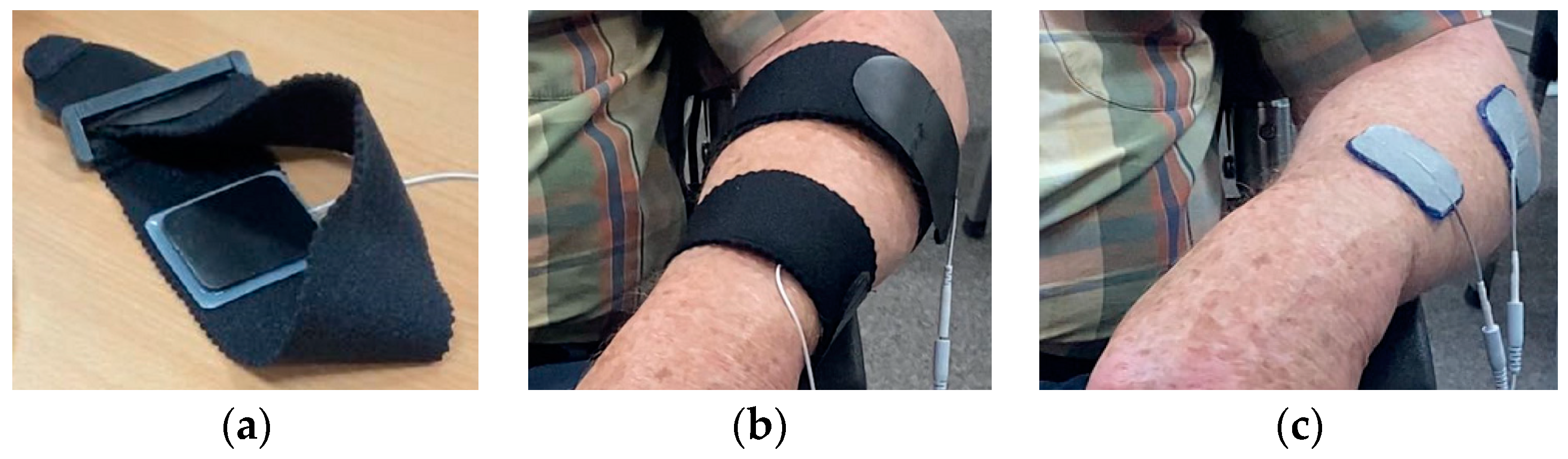
Wearable electrodes (5 cm × 5 cm) were fabricated by stacking in turn: a non-woven fabric, conductive wires leading to a connector, a conductive carbon film and a carbon rubber electrode layer. Encapsulating the edges holds the entire assembly together. The electrode was attached to a fabric arm band as shown in Figure 1. The wearable electrodes were compared with commercial high quality hydrogel electrodes (PALS, Axelgaard, Fallbrook, CA, USA).
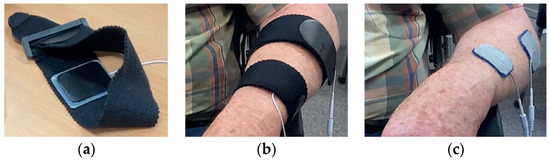
Figure 1. (a) fabric electrode arm band. (b) fabric electrode arm bands being worn by a stroke survivor. (c) hydrogel electrodes being worn by a stroke survivor.

2.2. FES

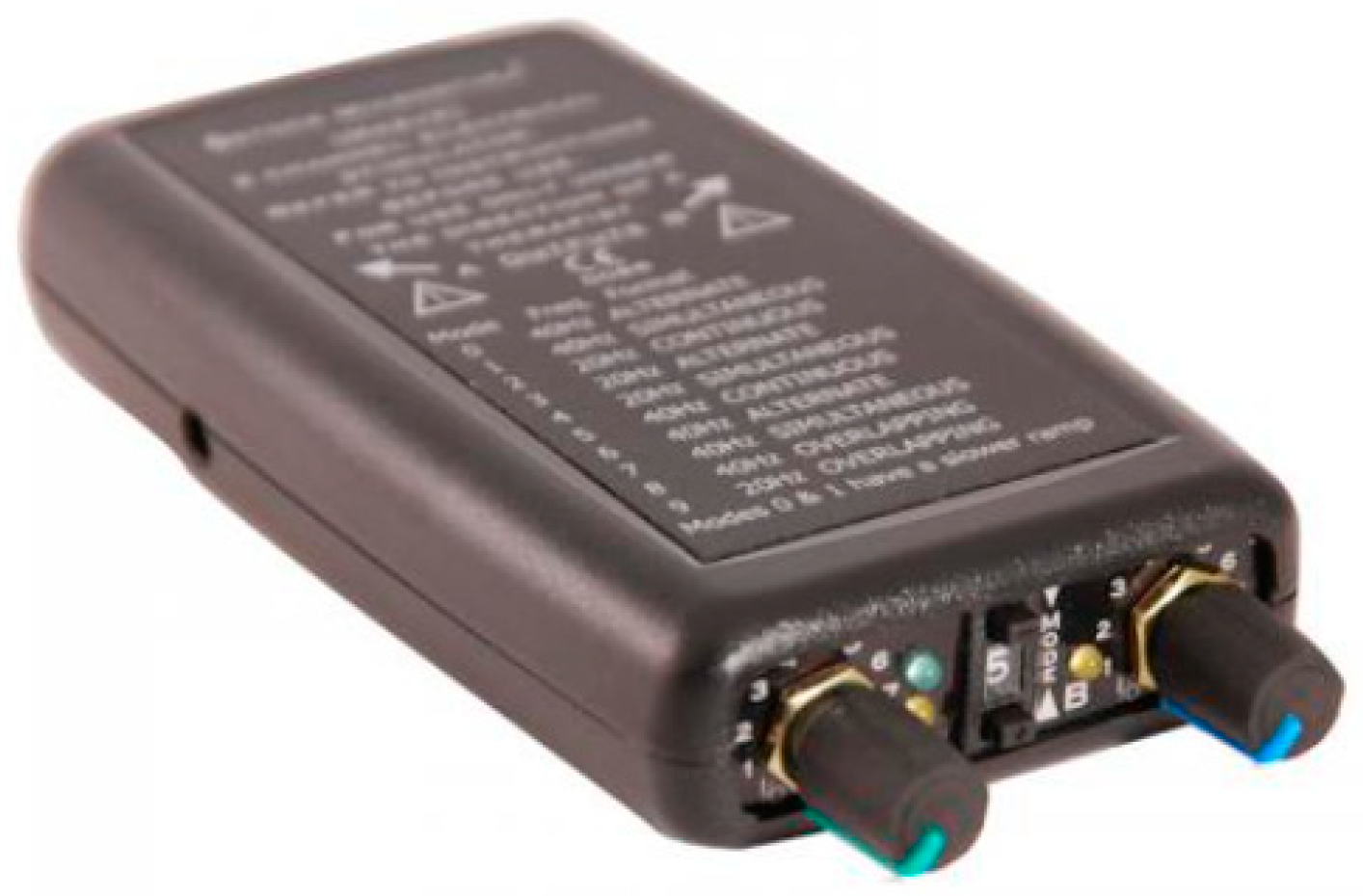
The OML Microstim 2V2 neuromuscular stimulator (Figure 2) was used in this study. Stimulation was set-up by a clinician to optimise the electrode positions and stimulation intensity. Water was sprayed on the electrodes and the skin before applying the fabric electrode to improve user comfort and stimulation effectiveness. Stimulation comfort was rated in a scale from 0 to 10 with 0 is the most comfortable and 10 being very painful. The stimulation intensity was recorded.
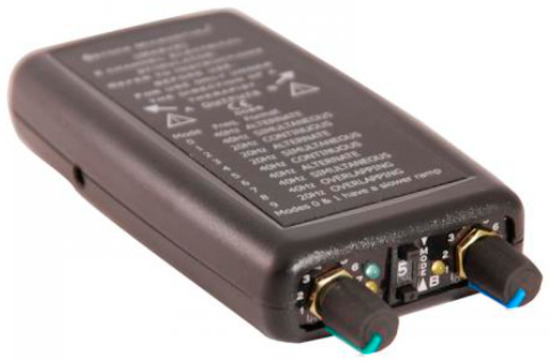
Figure 2. OML Microstim 2V2.

2.3. Inertial Measurement Unit (IMU) Sensors for Wrist Bending Measurement

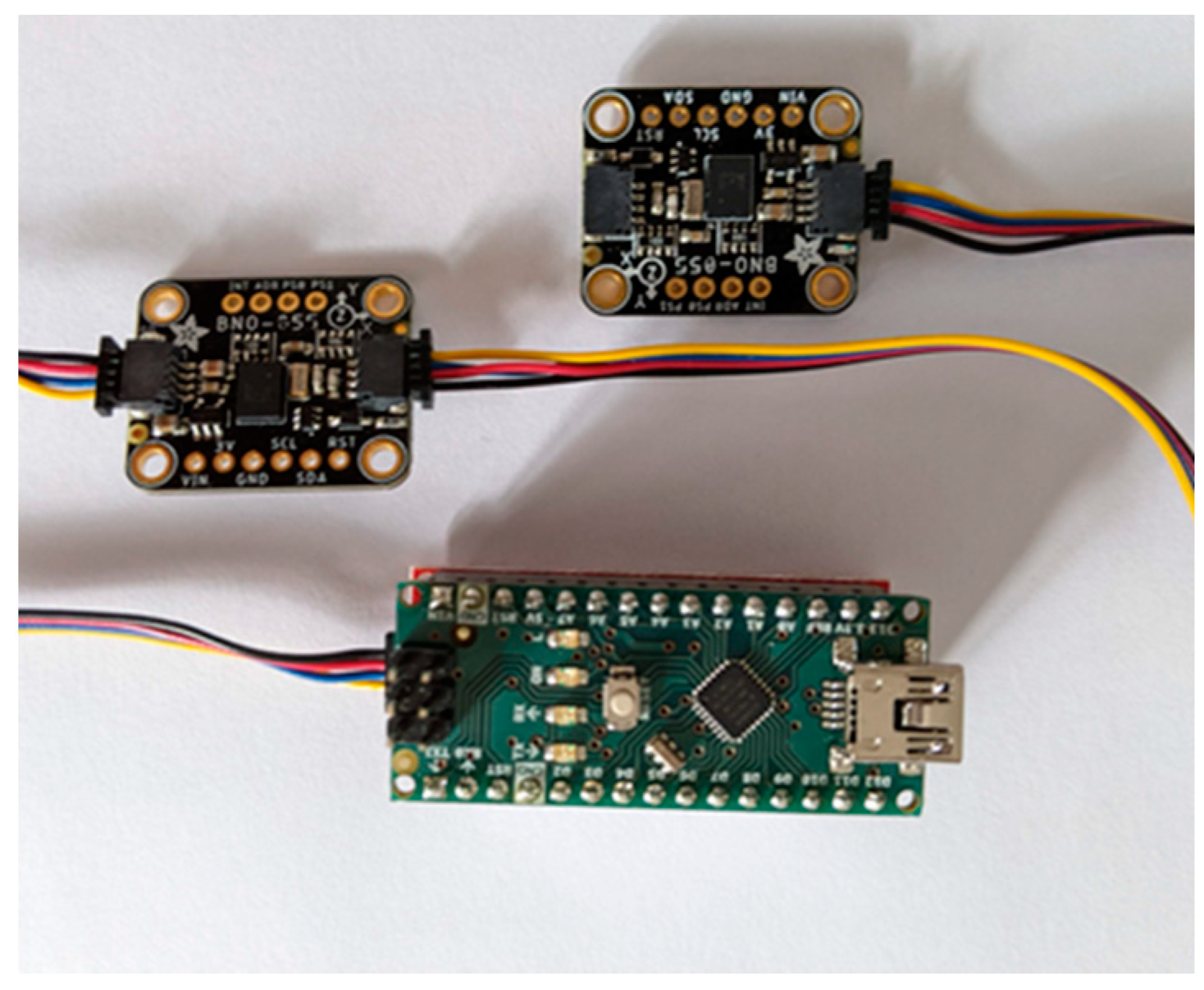
The wrist angle was measured using a pair of BNO055 IMU sensor breakouts from Adafruit (Figure 3) which reports the absolute angular position of the sensor. The IMUs were attached to the user by using Velcro straps with one attached to the hand and the other to the arm. An Arduino Micro was used to gather the data from the sensors and sent it to the computer recording the data. The computer then calculated the wrist angle by taking the difference between the two absolute positions from the sensors.
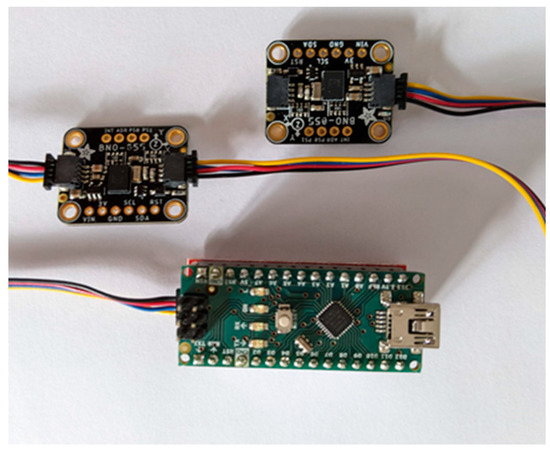
Figure 3. BNO055 IMU sensor.

2.4. Usability Test

Participants were asked to put on and take off both the hydrogel electrodes and fabric electrode arm bands to assess their capability of using the products independently.

3. Test Results and Discussion

Five participants were recruited for the testing. Age: 56–76, Years of stroke: 3–17 years. Genders: 1 female and 4 males.

3.1. Stimulation Comfort

All participants reported the same or similar stimulation comfort with only 0 to 1 score difference between the two electrode types as shown in Table 1. One participant (P1) reported the fabric electrode was more comfortable than the hydrogel electrodes. One participant (P4) reported the same comfort scale. The other three reported the hydrogel electrodes were more comfortable than fabric electrodes. No pain sensation was reported.

Table 1. Stimulation comfort scale results by participant.

3.2. Stimulation Intensity

There was no difference in the stimulation level required to achieve full hand opening between the two types of electrodes (Table 2). The required stimulation levels vary from 40 mA to 50 mA. This indicates the fabric electrodes were as effective as the hydrogel electrodes in generating a functional movement.
Table 2. Stimulation intensity required to achieve hand opening.

3.3. Wrist Bending Measurement

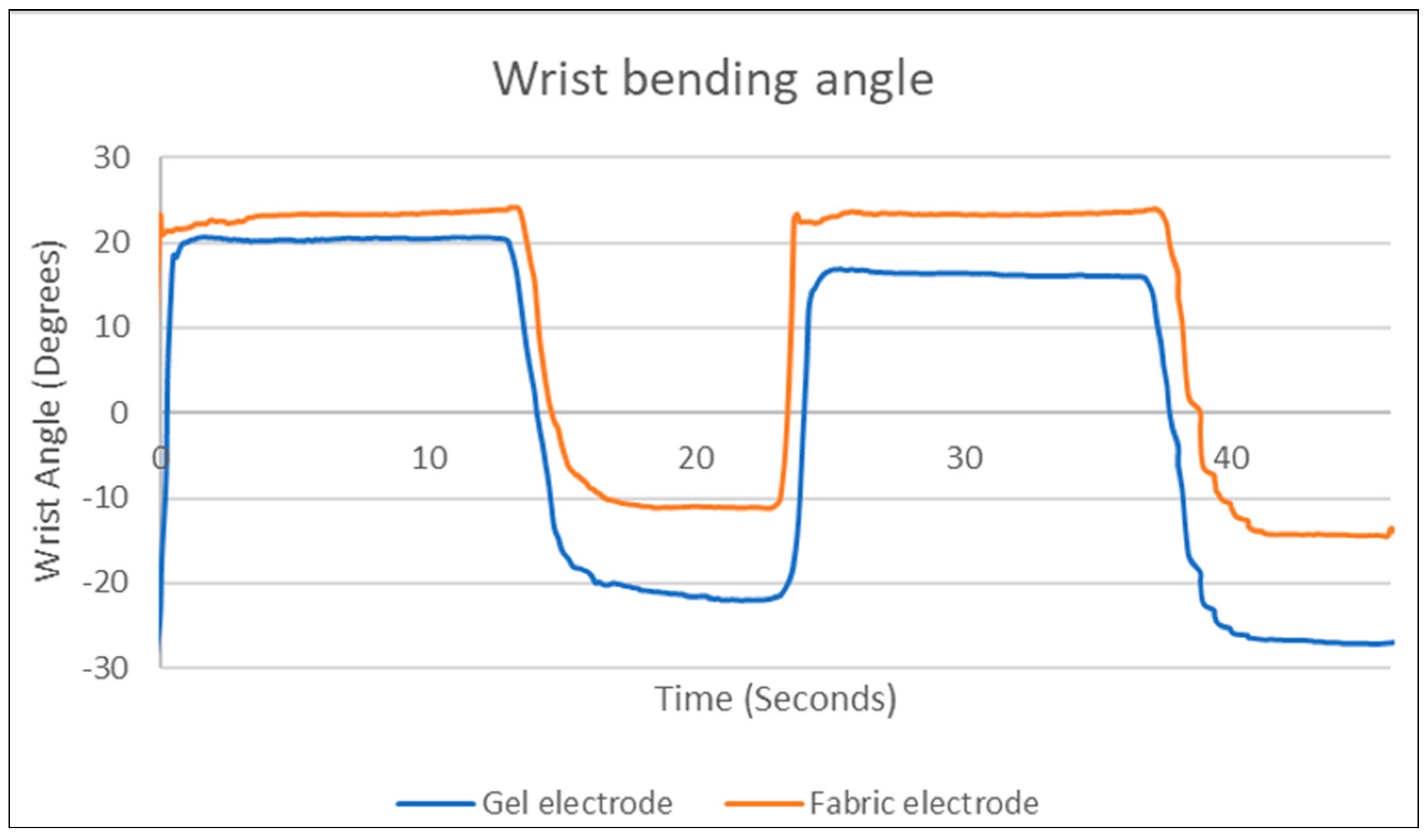
Wrist movement was measured during the stimulation. All participants achieved a similar movement for the two types of electrodes. Figure 4 is a representative example of the wrist bending angle for the two electrode types.
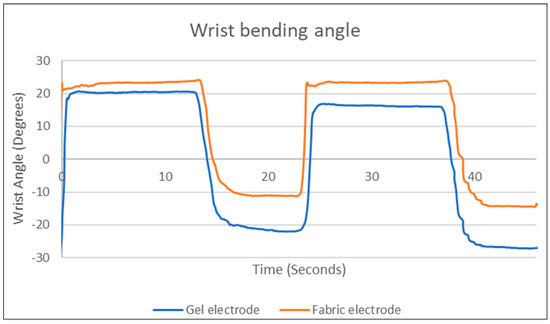
Figure 4. Wrist bending angle.

3.4. Usability

Researchers observed that it was a challenging task for participants to peel off the hydrogel electrodes from the protective plastic film because the hydrogel electrodes are very sticky. It was even more challenging for them to take out the electrodes from the sealed bag and put them back after use. With the electrode arm band, although all participants were able to put it on and take it off independently, they found it challenging to keep the electrode in place because it moved around before it was fastened and secured in place. In addition, it was challenging to put the Velcro hook fastener through a loop. All participants were able to spray water on the electrodes and the arm using a single hand.

3.5. Second Design: Knitted Sleeve

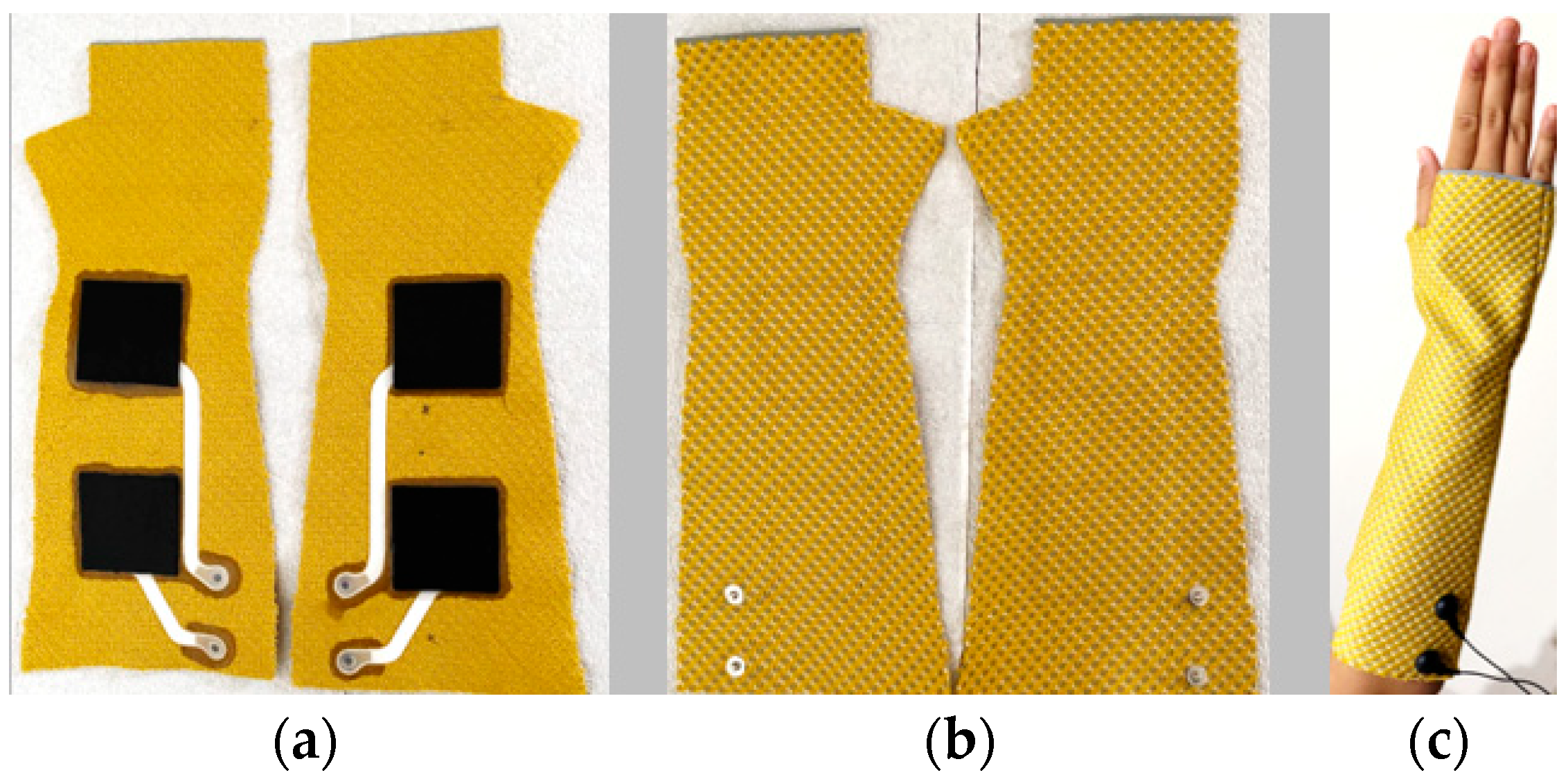
Two pairs of electrodes were printed on a knitted fabric made of wool and Lycra yarns to stimulate muscles for both hand extension and flexion (Figure 5). The electrode fabric was assembled to form a pull-on sleeve. It was noticed the electrode sleeve was difficult to put on or take off because of the strong friction between the electrodes inside the sleeve and the skin. Discussions with the stroke survivors have indicated that an open, or partially open structure, would allow the user to put on the electrode sleeve easily, then tighten the sleeve to ensure the electrodes and skin contact sufficiently.
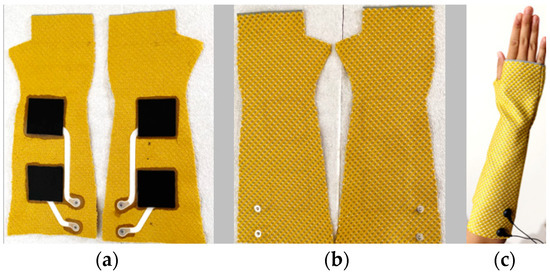
Figure 5. (a) electrodes printed on knitted fabric. (b) electrode fabric with snap buttons. (c) electrode sleeve worn on an arm and connected to a stimulator via snap buttons.

4. Conclusions and Future Work

This work has demonstrated the stimulation comfort and functional movement delivered by a wearable e-textile activated with the OML FES stimulator Microstim 2V2. The fabric electrode achieved similar stimulation performance while providing the advantage of being suitable for wearable application and offering a long service life. All participants were able to put on and take off the fabric electrode arm bands independently, but it is time consuming and a better design is required. A new design with electrodes printed on a knitted stretchable sleeve was investigated but it was difficult to put on and take off due to the friction between the electrodes inside the sleeve and the skin. New designs, required to improve the ease of use, will be addressed in future work.

Author Contributions

Conceptualization, M.L., J.T. and K.Y.; methodology, M.L., T.W., O.K., P.T. and K.Y.; software, T.W.; validation, M.L., Y.Y., P.T. and K.Y.; formal analysis, T.W. and K.Y.; investigation, M.L. and K.Y.; resources, P.T. and K.Y; writing—original draft preparation, M.L. and K.Y.; review and editing, All; funding acquisition, J.T. and K.Y. All authors have read and agreed to the published version of the manuscript.

Funding

This research was funded by the SIAH HEIF Research Stimulus Fund at the University of Southampton and the Medical Research Council (MRC) under grant number MR/N027841/1.

Institutional Review Board Statement

The study was approved by the Faculty of Arts and Humanities Ethics Committee at the University of Southampton on 21/02/2022 with a submission ID of ERGO 70296.

Wednesday, August 17, 2016

How E-Textiles Could Engineer a New Era of Smart Materials

With just the most miniscule amount of thought we could have embedded sensors in our clothing that provide objective measurements of incorrect movements and provide biofeedback instructions to correct those problems. As compared to one of my physical therapists who gave me the 'Walk this way ' demonstration, totally useless. Have we no one in the stroke world with more than one neuron?
http://www.rdmag.com/article/2016/08/how-e-textiles-could-engineer-new-era-smart-materials?

Digital Editor

Electronic textiles (e-textiles) is a nascent research field where scientists and engineers are exploring how to incorporate an array of digital components into traditional clothing. Intrepid researchers at Ohio State have tested how silver metal wires woven into fabric could boost your cellphone reception whereas other organizations are exploring the concept of morphing human skin into a live computer screen.
Dr. Khasha Ghaffarzadeh, Ph.D., is the research director at IDTechEx, which is a global business intelligence firm covering emerging technologies like e-textiles and conductive inks.
He worked with his colleague technology analyst James Hayward on a report entitled E-Textiles 2016-2026: Technologies, Markets, Players that was published this past June.
Dr. Ghaffarzdeh answered a few questions for R&D Magazine through email summarizing the report along with highlighting key trends to watch in this developing market.
Please discuss your background. Where are you from? Where did you go to school? What did you study?
“Prior to working at IDTechEx, I completed my masters and Ph.D. at Cambridge and University College London, respectively. For my Ph.D., I collaborated with Samsung to develop and characterize advanced IGZO transistors. We identified a major instability mechanisms, explained its origin and proposed ways of remedying it.
I have been working with James Hayward on this topic. He is a well-known figure in the emerging e-textile industry, and has been covering the broader topic of wearable technology since joining the company two years ago. Prior to this, James completed a MSci in chemistry at Imperial College London.”
Please discuss your report on e-textiles. Which market sector do you feel will be the most lucrative and/or has the most potential for innovative ideas?
“The majority of the recent commercial focus has been on the sports and fitness sectors. This creates a spectrum of products: at one extreme, companies are targeting near-consumer, or more specifically “weekend warrior” users in the hope to reach a larger volume; at the other, companies focus carefully on elite sports, where the extra comfort and form factors from e-textiles can be an advantage over existing systems using other non-textile devices.
Please follow R&D Magazine on LinkedIn
However, growth here has been slow, so we have identified areas such as home textiles and the medical space as two areas that have excellent potential. For the former, many examples so far have been solutions looking for problems; we have an arsenal of technology that can be put in textiles, but only now are the larger textile companies beginning to creatively apply these innovative solutions to some of their needs.
In medical, the problems are clearer but the lead times are longer. So far, we’ve seen examples in patient monitoring, wound care, in hospital use (e.g. on beds, as moisture, pressure or temperature sensors), and more, but we need to understand that development and adoption is lower when the regulation is tighter and the stakes are higher.”
Google unveiled project jacquard a few months ago, which weaves interactive features into clothes through standard looms. This could be one of the most high-profile e-textile projects, but can you elaborate on any potential opportunities or challenges you see for this venture?
“It was great to see the Levi’s urban cycling jacket with the technology directly integrated after about 18 months of work. It’s an interesting collaboration that will hopefully give the space exposure, and encourage large players (from both the apparel and technology side) that have been working on relevant technology for some time to push towards more commercial endpoints. In theory, all of the technology used has been achievable previously (e.g. wireless connectivity, textile connectors, woven touch pads, etc.), but the Google project does it with an elegance and design-first approach that resonates well with many textiles players, and a marketing message that will make a splash.
As ever, we must be wary of hype; Google projects have a track record of letting the evangelical marketing run away with itself before a product or market is ready (exhibit A = Glass c. 2013), and much of this technology is, on paper, nothing new. However, with the technology understanding beginning to flow through the the textiles value chain all the way to the roots, we forecast that many of the previous problems over scalability, platform viability and understanding will begin to be overcome over the next decade enabling faster growth.”
Are there any companies/startups you know of that are working on intriguing e-textile projects that may warrant more attention?
“We’ve tracked over 80 companies in the space, and the variety is significant. One thing I would outline is the true global nature of the industry. We’re hosting a conference covering e-textiles this November in Santa Clara, CA with e-textiles speakers already confirmed from Sri Lanka, India, Korea and Japan, as well as the US and Europe, we’ll hopefully represent the truly global nature of this industry.
It will sit alongside a large exhibition of around 250 companies including both e-textiles and wearables, but also related areas such as printed electronics, energy storage & harvesting and more. To name just a few relevant e-textiles exhibitors at the event, it’s worth taking a look at Bebop Sensors (fresh from closing a new $5m convertible note just yesterday), Ohmatex and Fisk Alloy to see the breadth of companies that are involved.”
What role will conductive inks play in the future of wearable devices? What issues do conductive ink suppliers need to address in order to stay competitive? 
“Conductors are a central part of any e-textile systems.  This is a complex space since conductive inks are one of many approaches being concurrently developed for e-textiles. To name a few, these approaches include metal cabling, textile cabling, conducting knits, conductive wovens, conductive inks, etc. all of which we cover in our latest report on the topic: E-Textiles 2016-2026.  There is no clear-cut winner. This is because some approaches win, say, on ease of integration with existing processes or maturity, whereas others win on increased clothing-like appearance and feel.  The technology composition will therefore be a mixed bag in the medium-term as e-textile manufacturers will likely select their conductor of choice based on the specific requirements of each application and their own existing production processes.
In the long-term, e-textile conductive inks will have a larger addressable market than all the other solutions. This is because they offer the highest degree of universal applicability: their integration is a post-production process that can be used by almost any textile manufacturer unless the fabrics cannot withstand high laminating temperatures or are very loose.
The ink technology however is not yet finished article. Achieving washability, direct-on-fabric printability, and high stretchability are challenging technical requirements. The industry is only beginning to accumulate expertise here. Therefore, this is the beginning of the beginning and we expect better e-textile conductive inks in the future.
The process currently is also too complicated because the inks need to be printed and cured on a substrate such as TPU before being encapsulated using a similar substrate. The film then needs to be hot laminated over the fabric. This approach improves washability and durability, and does away with the technical headache of having to develop a different ink optimised for each fabric substrate, but screams out to be simplified.”