Use the labels in the right column to find what you want. Or you can go thru them one by one, there are only 34,155 posts. Searching is done in the search box in upper left corner. I blog on anything to do with stroke. DO NOT DO ANYTHING SUGGESTED HERE AS I AM NOT MEDICALLY TRAINED, YOUR DOCTOR IS, LISTEN TO THEM. BUT I BET THEY DON'T KNOW HOW TO GET YOU 100% RECOVERED. I DON'T EITHER BUT HAVE PLENTY OF QUESTIONS FOR YOUR DOCTOR TO ANSWER.
Changing stroke rehab and research worldwide now.Time is Brain!trillions and trillions of neuronsthatDIEeach day because there areNOeffective hyperacute therapies besides tPA(only 12% effective). I have 523 posts on hyperacute therapy, enough for researchers to spend decades proving them out. These are my personal ideas and blog on stroke rehabilitation and stroke research. Do not attempt any of these without checking with your medical provider. Unless you join me in agitating, when you need these therapies they won't be there.
What this blog is for:
My blog is not to help survivors recover, it is to have the 10 million yearly stroke survivors light fires underneath their doctors, stroke hospitals and stroke researchers to get stroke solved. 100% recovery. The stroke medical world is completely failing at that goal, they don't even have it as a goal. Shortly after getting out of the hospital and getting NO information on the process or protocols of stroke rehabilitation and recovery I started searching on the internet and found that no other survivor received useful information. This is an attempt to cover all stroke rehabilitation information that should be readily available to survivors so they can talk with informed knowledge to their medical staff. It lays out what needs to be done to get stroke survivors closer to 100% recovery. It's quite disgusting that this information is not available from every stroke association and doctors group.
When your competent? doctor explains how these games are part of getting you 100% recovered, you'll HAVE ZERO MOTIVATION PROBLEMS!
You create EXACT 100% recovery protocols, and your survivor will be motivated
to do the millions of reps needed because they are looking forward to
100% recovery.
We are providing an unedited version of this manuscript to give early access to its findings. Before final publication, the manuscript will undergo further editing. Please note there may be errors present which affect the content, and all legal disclaimers apply.
Abstract
Background
Stroke often leads to motor disabilities, and effective rehabilitation is crucial for restoring limb function. Gamified rehabilitation programs have emerged to increase stroke survivor motivation through engaging environments and rewards. However, it is uncertain whether stroke survivors respond to video game environments and challenges in the same way as healthy individuals do, given the potential impact of stroke on mood and intrinsic motivation.
Methods
EEG data were collected from stroke survivors and healthy controls under multiple conditions. Initially, a cognitively activated state was identified via an N-back task. The participants subsequently engaged with an upper limb rehabilitation game featuring an immersive 3D environment. The brain activity patterns during this engaging game were then compared to those during a version of the same task without a 3D, gamified environment. Finally, responses to a more challenging iteration of the engaging game were assessed.
Results
While healthy controls showed brain activity indicative of effort and attention in N-back and subsequent games, stroke survivors displayed similar brain activation patterns only when playing the engaging version of the game. Notably, increasing the game difficulty increased attentional states in controls but not in stroke survivors.
Conclusions
Our findings suggest that an engagement mental state, as indexed by EEG markers, is more difficult to achieve in stroke survivors during repetitive tasks than in healthy controls. However, engaging in video game environments can significantly increase stroke survivors’ motivation and participation, provided that the difficulty level is appropriately adjusted. We believe this provides evidence that video game-based rehabilitation is a promising approach to promote stroke survivor engagement through enhanced motivation.
I'd suggest you call up the hospital
president and ask if they have a research analyst whose only job is to
monitor and implement stroke research. If they don't have one, YOU DON'T HAVE A FUNCTIONING STROKE HOSPITAL! RUN AWAY!
Stroke affects a person in many ways,
depending upon the severity. It leaves the patient paralyzed, unable to
perform daily activities un-assisted, or damages a part of the brain,
affecting memory, slurred speech, etc. Also, a paralyzed limb can take a
long time to regain some strength or sometimes remains dysfunctional
forever. Unfortunately, the Black population is impacted more due to
stroke. According to the U.S. Department of Health and Human Services,
Black people are twice as likely affected by stroke as white people.
Without specialized medical care, the Black population is 70 percent
more at risk of death due to stroke than the white population.
Therapy for stroke requires several
office visits or many sessions with a therapist at home to encourage
physical and mental exercises. Our brain can overcome some damage by
re-assigning the tasks from damaged to unaffected areas in due course.
Gaming is an integral component of rehabilitation upon stroke. Several
studies have shown that playing games makes the healing process much
faster. The Black population feels challenged to receive the right kind
of in-office therapy upon stroke. However, they can easily participate
in gaming activities for a faster healing process. Here, we explain
three types of games that the Black population can play in the comfort
of their homes for recovering from a stroke with little or no therapist
involvement.
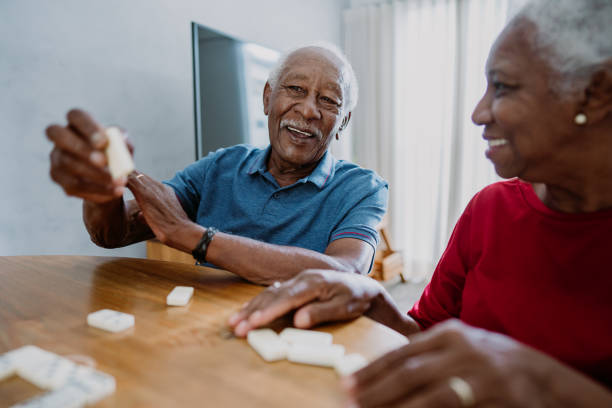
1. Board and card games
Board games played at home are
time-tested for being a fun activity for healthy people at all stages.
However, the same board games can miraculously help a stroke patient
recover.
Classic games like puzzles, Sudoku,
Connect4, and Guess-Who challenge the stroke survivor to think deeper
and, in turn, help in regaining or fortifying the memory. Who doesn’t
remember the game Monopoly played during childhood? A stroke survivor
feels the warmth of childhood memories, and making strategies while
playing Monopoly helps a lot in improving memory.
Amongst the card games, Catch-a-Fish
is an excellent game that assists a stroke patient in re-learning the
patterns. If nothing else, the good old memory cards help a stroke
survivor regain or relearn the lost vocabulary.
These board and card games also
require slow but constant arm movement, providing excellent physical
exercise without putting the patients under undue pressure to perform.
These games are affordable and readily available at grocery or
convenience stores. Also, some of these games require a companion to
play that boosts up a stroke patient’s social life.
Studies have shown that video games
are a great source of rehabilitation for stroke patients. Playing most
classic games does not require a therapist’s supervision and can be
played at a convenient corner of your home.
Research conducted at Lancaster
University showed that playing Nintendo Wii helped significantly in
improving arm movement as compared to only physiotherapy in stroke
patients. Other recent studies have shown that Microsoft Xbox 360 Kinect
games, Peggle, IREX, and HTC Vive help stroke patients improve
cognitive and motor skills.
Recently, many specialized video
games have been developed that can be played at home under the
supervision of a tele-therapist. These video games focus on the affected
body area and stimulate them for a better recovery. These video games
are
Neuroscience
and neurotechnology are transforming stroke rehabilitation. Robotic
devices, in addition to telerehabilitation, are increasingly being used
to train the upper limbs after stroke, and their use at home allows us
to extend institutional rehabilitation by increasing and prolonging
therapy. The aim of this study is to assess the usability of the MERLIN
robotic system based on serious games for upper limb rehabilitation in
people with stroke in the home environment.
Methods
9
participants with a stroke in three different stages of recovery
(subacute, short-term chronic and long-term chronic) with impaired
arm/hand function, were recruited to use the MERLIN system for 3 weeks: 1
week training at the Maimonides Biomedical Research Institute of
Cordoba (IMIBIC), and 2 weeks at the patients’ homes. To evaluate
usability, the System Usability Scale (SUS), Adapted Intrinsic
Motivation Inventory (IMI), Quebec User Evaluation of Satisfaction with
assistive Technology (QUEST), and the ArmAssist Usability Assessment
Questionnaire were used in the post-intervention. Clinical outcomes for
upper limb motor function were assessed pre- and post-intervention.
Results
9
patients participated in and completed the study. The usability
assessment reported a high level of satisfaction: mean SUS score 71.94 %
(SD = 16.38), mean QUEST scale 3.81 (SD = 0.38), and mean Adapted IMI
score 6.12 (SD = 1.36). The results of the ArmAssist Questionnaire
showed an average of 6 out of 7, which indicates that MERLIN is
extremely intuitive, easy to learn and easy to use. Regarding clinical
assessment, the Fugl-Meyer scores showed moderate improvements from pre-
to post-intervention in the total score of motor function (p = 0.002).
There were no significant changes in the Modified Ashworth scale
outcomes (p = 0.169).
Conclusions
This
usability study indicates that home-based rehabilitation for upper
limbs with the MERLIN system is safe, useful, feasible and motivating.
Telerehabilitation constitutes a major step forward in the use of
intensive rehabilitation at home.
Strokes are among the leading causes of death, physical disability and economic burden worldwide [1, 2].
The prevalence of people living with the effects of stroke has
increased over the last few years, thus creating a higher demand for
rehabilitation services [3]. The paralysis of the upper limbs is a common impairment after strokes, and only 10–20% of patients recover completely [4, 5]: for these patients, the main aim of arm rehabilitation is to recover lost functions [6].
Nowadays, the key aspects to make rehabilitation effective for people
with stroke are considered to be intensity, repetition and using
suitably challenging and function-oriented activities [7,8,9].
However, the increase in the number of people affected and the current
limitation of health resources make it very difficult to provide
services using a traditional approach.
Continuous advances in neuroscience and neurotechnology are transforming stroke rehabilitation [10].
At a time when the rehabilitation services resources are unable to meet
the demand, robot-assisted rehabilitation and home-based
telerehabilitation are gaining greater acceptance [11].
Robot-based neurorehabilitation systems provide a solution to increase
the number of movements, involve safe, intensive rehabilitation
exercises [12, 13] and have the advantage that the precise movements of the robot are able to measure the patients’ movements objectively [14, 15].
On the other hand, home-based telerehabilitation allows us to extend
institutional rehabilitation by increasing and prolonging the therapy [16].
What is more, the combination of game-based telerehabilitation and
robotic systems creates a motivating, engaging environment for patients [17].
The enjoyment patients derive from playing these so called ‘serious
games’, designed specifically for the rehabilitation tasks, can greatly
increase the quality and quantity of the therapy delivered [18].
MERLIN
is a robotic system based on serious games for the upper limb tele
rehabilitation in patients with a stroke. It is presented as an
affordable and easy to use solution to allow the patient to carry out an
intensive rehabilitation at home, with a continuous remote monitoring
and communication with the therapist. The system is composed of an
upper-limb rehabilitation robot and a software platform which guides and
measures the patient’s movements and allows physicians to customize the
therapeutic plan and to monitor the patients’ evolution.
The
purpose of this manuscript is to present the usability validation of
MERLIN system. In this study, we evaluate the ease to use, consistency
and acceptance of the system have been evaluated. The research carried
out also aims to demonstrate the feasibility of including the robotic
therapy as a complement to a regular daily rehabilitation program.
Only 6 pages for your doctor to decipher and use for your recovery. Is your doctor competent enough to read six pages and do the work necessary for your recovery needs? Or did the incompetency start by not even knowing about this research.? Which incompetency do you prefer? Not knowing? Or not doing?
Our fucking lack of stroke leadership would make sure that these gaming systems were compared to others rather than standard therapy. These 18 posts on games. These 5 posts on gaming devices. These 62 posts on video games. https://vulcanpost.com/623137/techcare-gamification-rehab-medical-tech/
Despite winning 30 awards, acceleration from MaGIC, our PM Najib’s note of their product, and pretty extensive media attention in 2014, this year sees a rehab-based startup called Techcare toiling away in relative silence.
While the team of three founders has expended a lot of effort and
research into developing a product that can be accessible to those who
might need it most, what is immediately striking is how they’ve gamified
what can be a demoralising and stressful rehabilitation process for
those with limited mobility, either due to age or illness.
Techcare is a notable Malaysian blip in a rising trend towards
gamified rehab, which saw a lot of attention in 2016 among
medtech players internationally.
In fact, we’ve seen some of the technology available internationally
use the Kinect, while others are also approaching it using VR.
In our own quick search on the matter, it’s clear that
rehabilitation for stroke, in particular, is one of the more researched
aspects of medical gamification.
Techcare puts a more portable and affordable spin on their offerings,
which allows them to supply to the National Stroke Association of
Malaysia (NASAM) to benefit local stroke victims.
Since 2014, Techcare has produced three products that have expanded
beyond just stroke, and tackling a wider range of health verticals.
Fitness Balance Board (Fibod): To help retain the
crucial balancing skills that usually begin to decrease after 30 years
of age—reducing falls due to ageing. The balancing board
gamifies improving your balancing capability, strengthens core muscles,
helps with body coordination and improves ankle flexibility to reduce injuries.
Instant Feedback: It’s able to record all of a
user’s sport movements, from golf, to swimming, and any others that
require a strong form. Instead of having to rely on coaches to observe
and give direct feedback, this device allows users to just plug and
play.
CR2-Haptic: A compact and portable rehabilitation
robot for hand exercises, suitable for the elderly and stroke patients.
Patients play games on the device, which tests the patient’s hand
dexterity and sends assessment reports on a cloud-based platform. The
robot is able to train for different functional movements, and also
provides cloud-based assessment reports for family and healthcare
practitioners to check.
Techcare didn’t delve into gamified rehab business just to jump on the bandwagon.
UTM graduate Khor Kang Xiang told us that this all started during the first year of doing his degree, when he wasn’t sure what to do with his life.
“I had a simple life. A lot changed when I was in university. I
joined a robot competition called RoboCon. I learned a lot of skills. We
represented Malaysia to Egypt and won Best Design. ”
“I then thought what now? Is that all? I kept looking for
something better until I visited a stroke centre in Johor. Then, I
decided to build rehab robots to help. This was 6 years ago. It started
during my university life.”
Once part of his PhD project, Techcare grew into his business. Kang
Xiang’s lecturer, Dr Yeong Che Fai—who already has a few robotics
company notches on his belt—eventually became his co-founder. Their
team-up picked up their CTO in Patrick Chin.
This eventually led to the development of a robot that would benefit
the shoulder and elbow. Kang Xiang brought the robot around to sell it,
but it was then he realised that this isn’t exactly what his customers
are looking for.
So for Kang Xiang’s final year in university, he went to about 20
rehab centres and hospitals to understand how they’re traditionally
doing, and what are the limits.
It was there he understood: user experience is important.
In fact, Kang Xiang’s beginnings with the NASAM centre cycled back
home when Techcare began working with the organisation 3 to 4 years ago.
An NGO that was started by a stroke survivor, this organisation is
better equipped to provide advice and refinement on their robots meant
for stroke patients. Now Techcare’s robots has been used by the NGO for
two years, across the 9 centres they have in Malaysia.
“Working in healthcare is tough because there aren’t many people doing this in Malaysia.”
It means more to the team
when they hear about patients who are able to engage with their
rehabilitation themselves, especially if a therapist is too expensive
for them.
With 70% of his employees coming from PhD backgrounds, they came together wanting to actually create an impact with their education.
Techcare has received inquiries from Hong Kong, France, the USA, and others, despite not being the first players in the market.
On top of that, the team informs us that of those who used the
portable robot, 16% showed significant improvement after 6 weeks of
training, and of those, they showed 67% improvement in how much they
could move.
Despite that, the team needs a bit more help with traction.
The Fibod, their latest market offering / Image Credit: Techcare
Unfortunately, bleeding hearts don’t pay the bills. And after
graduating the MaGIC program with their idea, the team is now in the
Cyberview Living Lab Accelerator to turn the startup into a viable,
profitable business.
“As engineers, we’re not that good in business. We always
want to push ourselves to different level, and last year, we decided to
push a bit more in business. We want to join this [accelerator] and
explore new opportunities, as well as learn the business world and how
it works.”
As for their future goals, it’s all very down-to-earth.
“Firstly, we want to achieve more customers, and get more partners to work with us. We hope to raise funds as well, so that our company can be more established.”
Again, they are definitely not the first players in the market. Even
if we ignore the CR2-Haptic for stroke patients, something like their
Instant Feedback definitely rings familiar to us, even though they’re
definitely giving the tech their own little spin.
But if there was ever a space that could benefit from more players
and competition, it would definitely be in the medical tech scene, which
help the quality of life enjoyed by our species as a whole.
The
AbleX system was presented to delegates in a workshop at the recent
South GP CME, by AbleX Healthcare clinical director, Anne Recordon, a
physiotherapist who specialises in neurological rehabilitation.
Physiotherapist Anne Recordon with the AbleX system which helps rehabilitate stroke patients
The system, which can be purchased for $2000 or rented for $140 a
month, includes a handlebar and arm skate that patients use to play
computer games. These are designed to engage their brain and restore its
control over the muscle activity in their upper limb.
Upper limbs neglected
Inpatient rehabilitation following a stroke tends to be on lower limb
training, Ms Recordon says, and evidence suggests upper limb
rehabilitation is often neglected, even though most stroke survivors
have some form of paralysis in their arms and hands.
Ms Recordon
introduces her patients to the system and sets them up to use it
independently, or with the help of a carer, at home.
Because the
AbleX system can be used by a patient at home, it allows them to train
more fre-quently than if they were relying on physiotherapy
appointments, and frequent training is a key part of effective
rehabilitation, Ms Recordon says.
Acute phase rehabilitation is
funded for 12 weeks only, so a solution like AbleX allows people to
continue their rehabilitation and regain more control of their upper
limbs.
Her patients have been “hugely” motivated to use the AbleX
system, while either sitting or standing, as opposed to more
rudimentary training, such as putting pegs in a round board.
“Sometimes
it’s the only thing they can do confidently by themselves,” Ms Recordon
says. “The other exciting aspect about using robotics is that it’s a
cognitively driven task.”
Keeping track of progress remotely
Auckland-based AbleX Healthcare has also developed an online
application for the system, allowing clinicians to keep track of their
patients’ progress remotely.
The company has so far focused its
work in Australia, partnering with the Perron Institute for Neurological
and Translational Science and The Royal Melbourne Hospital, where a
randomised clinical trial of the system and online application is being
conducted. The trial involves 200 patients using the AbleX system at
home.
In New Zealand, about 9000 people have a stroke each year, and there are about 60,000 stroke survivors.
A
2015 Treasury report found stroke survivors aged between 20 and 59 were
more likely to be unemployed and in need of income support than those
who faced other major illnesses, including cancer and heart disease.
The fulltext of this document has been downloaded 1 times since 2017
Abstract:
Purpose
Strokes
are the most common cause of long-term disability of adults in
developed countries. Continuous participation in rehabilitation can
alleviate some of the consequences, and support recovery of stroke
patients. However, physical rehabilitation requires commitment to
tedious exercise routines over lengthy periods of time, which often
cause patients to drop out of this form of therapy. In this context,
game-based stroke rehabilitation has the potential to address two
important barriers: accessibility of rehabilitation, and patient
motivation.
Design/methodology/approach
This
paper provides a review of design efforts in human-computer interaction
(HCI) and gaming research to support stroke rehabilitation.
Findings
Based
on extensive review, this paper highlights challenges and opportunities
in this area, and discusses an architecture guideline for a game-based
stroke rehabilitation system.
What games are in your stroke hospital? Has your doctor and therapists given you a list of games that are proven to help stroke recovery? With efficacy percentages? ANYTHING AT ALL? http://link.springer.com/chapter/10.1007/978-3-319-49879-9_8
Mehran Kamkarhaghighi
, Pejman Mirza-Babaei
, Khalil El-Khatib
* Final gross prices may vary according to local VAT.
Strokes are the most
widely recognized reason of long-term disability of adults in developed
countries. Continuous participation in rehabilitation can alleviate
some of its consequences and support recovery of stroke patients.
However, physical rehabilitation requires commitment to tedious exercise
routines over lengthy periods of time, which often causes patients to
drop out of therapy routines. In this context, game-based stroke
rehabilitation has the opportunity to address two important barriers:
accessibility of rehabilitation, and patient motivation. This chapter
provides a comprehensive analysis on the advances in human-computer
interaction (HCI) and development of games to support stroke
rehabilitation. There are existing cases in the field of game-based
stroke rehabilitation studied, for example the development of
motion-based video games particularly addressing rehabilitation among
stroke patients. This chapter discusses the effectiveness of design
efforts in HCI and games research to support stroke rehabilitation by
integrating findings from medical research that consider health outcomes
of game based stroke rehabilitation. Based on these findings,
challenges and opportunities in game based stroke rehabilitation are
discussed. Critical components that influence the effectiveness of
Tele-rehabilitation are identified and further design opportunities in
the field of game-based stroke rehabilitation are explored as an
important step toward the creation of games that are accessible,
motivating and enjoyable for stroke patients. Finally, the chapter
presents the challenges and opportunities in game-based stroke
rehabilitation.
We'll never know because we have NO stroke strategy or stroke leadership in any part of stroke. A great stroke association would be working this like mad to create rehab applications to be sold to survivors and use the proceeds to fund stroke research. But we don't have anyone in stroke with enough brains to do something so fuckingly simple. And the boards of directors must be ok with such incompetency. http://www.theverge.com/2015/12/23/10656592/apple-3d-touch-johns-hopkins-medical-games-new-ios-apps
Don't tap the white tile as it slides by. I'll have to watch this quite a few times for action observation before I even attempt this. It is almost too fast for my good hand. I currently have no individual finger movement on my left hand. Piano Tiles is a single-player mobile game launched on March 28, 2014 by Umoni Studio, specifically by creator Hu Wen Zeng.
Or you could wait for your doctor and therapist to suggest a finger rehabilitation protocol. You'll be waiting decades. Don't listen to me, this is obviously way too dangerous to be done without your doctors prescription.
This chapter describes how serious games can be used to improve the rehabilitation of stroke patients. Determining ideal training conditions for rehabilitation is difficult, as no objective measures exist and the psychological state of patients during therapy is often neglected. What is missing is a way to vary the difficulty of the tasks during a therapy session in response to the patient needs, in order to adapt the training specifically to the individual. In this chapter, we describe such a method. A serious game is used to present challenges to the patient, including motor and cognitive tasks. The psychological state of the patient is inferred from measures computed from heart rate variability (HRV) as well as breathing frequency, skin conductance response, and skin temperature. Once the psychological state of the patient can be determined from these measures, it is possible to vary the tasks in real time by adjusting parameters of the game. The serious game aspect of the training allows the virtual environment to become adaptive in real time, leading to improved matching of the activity to the needs of the patient. This is likely to lead to improved training outcomes and has the potential to lead to faster and more complete recovery, as it enables training that is challenging yet does not overstress the patient.
Do you really think your doctor and hospital are going to embrace this cheap and easy fix for cognitive decline? Of Course not, they will do absolutely nothing. Don't you dare bring in your own games, you know how damned dangerous checkers is if it is not prescribed by your doctor. http://www.spring.org.uk/2014/07/playing-games-increases-brain-size.php
Along with a brain scan, they were surveyed to see how cognitively
active they were: how much they played games, read books, went to
museums and so on.
The results showed that people who played the most games — like
crosswords, checkers, cards and puzzles — also had the largest brain
volume.
Stroke remains a major cause of human disability. Stroke rehabilitation is a challenging process. Movement impairments after stroke typically require intensive treatments, and hands-on physical and occupational therapy for
several weeks after the initial injury. An important goal for Rehabilitation Engineering is to develop technologies that allow individuals with stroke to practice intensive movement training without the expense of an always
present therapist. We propose to develop and assess a set of low-
cost, Spatial Augmented Reality games that allow individuals
with stroke to practice controlled hand and arm movement exercises at home or at clinic with minimal interventions of a therapist. With Augmented Reality, the patients can interact with augmented real-world objects while being precisely monitored. This will allow us to design games that better reflect the physical actions that support Activities of Daily Living. We posit that the natural cognitive model of Augmented Reality and its integration with ordinary objects will have a more positive impact on the patients’ recovery than computer-assisted technologies that are centered on computer peripherals. This proposal aims to find out to what extent this hypothesis holds.
1.
Specific Aims of the Research Program
We propose to develop and evaluate a low-cost, Spatial Augmented Reality (spAR) game platform that allows individuals with stroke to practice functionally-rich hand and arm movement exercises at home, in hospital, or at clinic with minimal intervention by a therapist.
Augmented Reality technology has great potential to build upon traditional rehabilitation techniques and thereby overcome some of the limitations associated with current forms of stroke rehabilitation. A chief example is the use of a high ecology environment that is maximally relevant to functional goals. Performing tasks in an Augmented Reality
environment can be expected to generalize to real life settings to a greater extent than with other approaches, including other computer-based methods. As an extension of this, object affordance can be directly adjusted in therapy based on Augmented Reality, with real objects incorporated into tasks as desired. This approach can also provide a means for a therapist or patient to control the therapy environment with precision, for example, by minimizing (or increasing) extraneous distractions and consequences associated with real life stroke therapy environments, or by modulating the cognitive demands of therapy, for example, by changing how many extraneous objects are included in various therapy trials.
The specific aims are to address the following hypotheses:
1) Patients receiving treatment through spAR games will show greater gains in body function (Fugl-Meyer scale,FM) than patients receiving traditional therapy, with no difference in safety measures.
2) Patients receiving treatment through spAR games will achieve better gains in activities limitation(Action Research Arm Test, ARAT; and Barthel Index) than patients receiving traditional therapy.
3) Patients receiving treatment through spAR games will achieve better gains in quality of life (Stroke Impact Scale, a self-report measure) than patients receiving traditional therapy.
4) spAR games are more engaging and will provide greater gains in the trained task as compared to Virtual Reality(niVR) games
This would be an easy way to get patients to socialize and work on cognition. I think it was Peter Levine who mentioned that the amount of actual therapy each day while in the hospital was appallingly low. Counting, adding, multiplying, recognition of different suits and cards. Cheap too. All because I've joined a meetup group that plays cribbage every couple of weeks. An added bonus is that its held at a microbrewery. Beer, beer and more beer, I'm working on preventing that dementia.
Card holders available here; Playing Card Holder Curved Wood Set of 2