Changing stroke rehab and research worldwide now.Time is Brain! trillions and trillions of neurons that DIE each day because there are NO effective hyperacute therapies besides tPA(only 12% effective). I have 523 posts on hyperacute therapy, enough for researchers to spend decades proving them out. These are my personal ideas and blog on stroke rehabilitation and stroke research. Do not attempt any of these without checking with your medical provider. Unless you join me in agitating, when you need these therapies they won't be there.

What this blog is for:

My blog is not to help survivors recover, it is to have the 10 million yearly stroke survivors light fires underneath their doctors, stroke hospitals and stroke researchers to get stroke solved. 100% recovery. The stroke medical world is completely failing at that goal, they don't even have it as a goal. Shortly after getting out of the hospital and getting NO information on the process or protocols of stroke rehabilitation and recovery I started searching on the internet and found that no other survivor received useful information. This is an attempt to cover all stroke rehabilitation information that should be readily available to survivors so they can talk with informed knowledge to their medical staff. It lays out what needs to be done to get stroke survivors closer to 100% recovery. It's quite disgusting that this information is not available from every stroke association and doctors group.

Showing posts with label motivate stroke medical 'professionals'. Show all posts

Thursday, October 24, 2024

The influence of scaffolding on intrinsic motivation and autonomous adherence to a game-based, sparsely supervised home rehabilitation program for people with upper extremity hemiparesis due to stroke. A randomized controlled trial.

My conclusion is you don't understand ONE GODDAMN THING ABOUT SURVIVOR MOTIVATION, DO YOU? You create EXACT 100% recovery protocols and your survivor will be motivated to do the millions of reps needed because they are looking forward to 100% recovery. GET THERE!

There would be no need for this useless research!

The problem is stroke researchers are not motivated to solve stroke. What the fuck is your solution to that failure? We still don't know how to motivate stroke medical 'professionals' to solve stroke to 100% recovery! 

 The influence of scaffolding on intrinsic motivation and autonomous adherence to a game-based, sparsely supervised home rehabilitation program for people with upper extremity hemiparesis due to stroke. A randomized controlled trial.

Journal of NeuroEngineering and Rehabilitation. Volume 21(143)

NARIC Accession Number: J94181. What's this?
Author(s): Fluet, Gerard, Qiu, Qinyin, Gross, Amanda, Gorin, Holly, Patel, Jigna, Merians, Alma, Adamovich, Sergei.
Publication Year: 2024.
Abstract: This randomized controlled trial examined motivation, adherence, and motor-function improvement in subjects with upper-extremity hemiparesis due to stroke who performed one of two different game-based, autonomous training programs at home. Thirty-three people with moderate-to-mild hemiparesis were taught to perform rehabilitation games using the home virtual rehabilitation system in their homes. Subjects were instructed to train twenty minutes per day for 12 weeks but were allowed to train as much as they chose. Seventeen subjects played scaffolded games, presenting eight to twelve discrete levels of increasing difficulty. Sixteen subjects performed the same activities controlled by success algorithms that modify game difficulty incrementally. Participants were evaluated using the Action Research Arm Test, Upper Extremity Fugl Meyer Assessment (UEFMA), Stroke Impact Scale, and Intrinsic Motivation Inventory (IMI) before and after training. Adherence was measured using timestamps generated by the gaming system. Group outcomes were compared. Correlations between subject demographics and adherence, as well as motor outcome, were evaluated using Pearson correlation coefficients. There were 5 dropouts and no adverse events. The main effect of time was statistically significant for four of the five clinical outcome measures. There were no significant training group-by-time interactions. Measures of adherence did not differ significantly between groups. Twenty-one subjects from both groups demonstrated improvements in UEFMA scores of at least 5 points, exceeding the minimal clinically important difference of 4.25. IMI scores were stable training. Scaffolding challenges during game-based rehabilitation did not elicit higher levels of adherence compared to algorithm control of game difficulty. Both sparsely supervised programs of game-based treatment in the home were sufficient to elicit clinically meaningful improvements in motor function.
Descriptor Terms: COMPLIANCE, HEMIPLEGIA, HOME BASED, LIMBS, MOTIVATION, MOTOR SKILLS, RECREATION, REHABILITATION, REHABILITATION TECHNOLOGY, STROKE, THERAPEUTIC TRAINING.


Can this document be ordered through NARIC's document delivery service*?: Request Information.
Get this Document: https://jneuroengrehab.biomedcentral.com/articles/10.1186/s12984-024-01441-7(link is external).

Citation: Fluet, Gerard, Qiu, Qinyin, Gross, Amanda, Gorin, Holly, Patel, Jigna, Merians, Alma, Adamovich, Sergei. (2024.) The influence of scaffolding on intrinsic motivation and autonomous adherence to a game-based, sparsely supervised home rehabilitation program for people with upper extremity hemiparesis due to stroke. A randomized controlled trial. Journal of NeuroEngineering and Rehabilitation., 21(143) Retrieved 10/24/2024, from REHABDATA database.

Sunday, August 4, 2024

Robots in rehabilitation: Enhancing physiotherapy with socially assistive robots

 A few comments embedded in the article

Robots in rehabilitation: Enhancing physiotherapy with socially assistive robots

Socially assistive robots (SARs) are transforming physiotherapy for post-stroke patients, significantly improving rehabilitation outcomes by providing consistent, encouraging guidance and interaction.

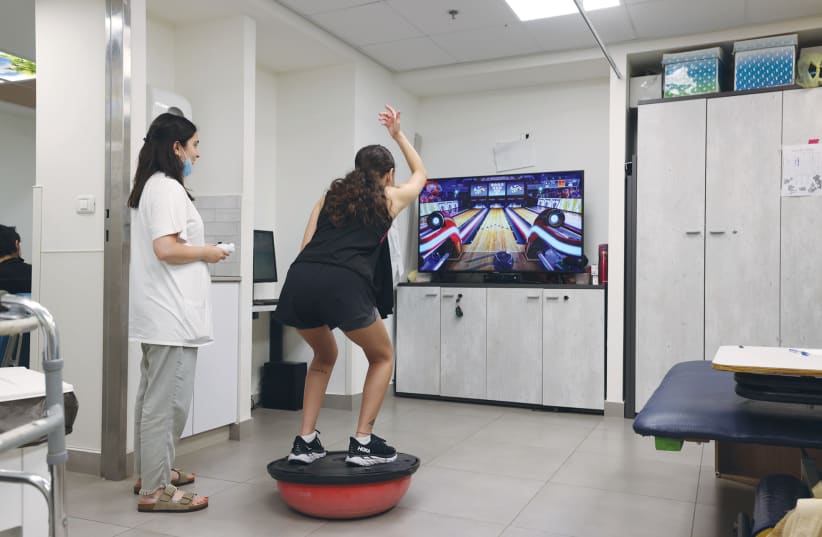
 A PATIENT undergoes physiotherapy treatment combined with innovative technology. (photo credit: ZIV KOREN)
A PATIENT undergoes physiotherapy treatment combined with innovative technology.
(photo credit: ZIV KOREN)

Glad to see this patient round side down on the Bosu. It's more difficult to stay upright but I thought that standing on the round side increased the chances of rolling my ankle.

Most people know nothing about what a physiotherapist does until they, a friend, or a relative needs one. These well-trained and licensed healthcare professionals, working according to evidence-based protocols, can treat a large number of injuries and conditions – from arthritis, stroke, and back pain to bone fractures, carpal-tunnel syndrome, and sciatica.

Although the four Israeli public health funds provide physiotherapists for many patients even at no cost but with a limited number of sessions, for some conditions and in many countries, physiotherapists are hard to get, and queues are long.

For physiotherapy to succeed, the patient must cooperate and perform exercises as instructed on a regular basis. Patient cooperation and active involvement in the process are vital for successful rehabilitation, and a lack of motivation is often one of the main reasons for poor outcomes.

--------------------------------------------------------------------------------------------------

 User engagement/motivation is simple.

You don't understand ONE GODDAMN THING ABOUT SURVIVOR MOTIVATION, DO YOU? You create EXACT 100% recovery protocols and your survivor will be motivated to do the millions of reps needed because they are looking forward to 100% recovery. GET THERE! 

The problem is stroke researchers are not motivated to solve stroke. What the fuck is your solution to that failure? We still don't know how to motivate stroke medical 'professionals' to solve stroke to 100% recovery! 

---------------------------------------------------------------------------------


Can robots supplement the work of human physiotherapists? Using a socially assistive robot (SAR) in post-stroke rehabilitation improves outcomes, according to researchers at Beersheba’s Ben-Gurion University of the Negev (BGU). They conducted the first long-term study of using robots for physical therapy, opening a totally new method for rehabilitation exercises.

Given the fact that over 10,000 soldiers were wounded in the Gaza war and on the northern front since October 7, the need for physical rehabilitation is immense.

Socially assistive robots use speech, gestures, and facial expressions to guide and coach patients. There is no need to make an appointment; they will be brought to your home and stay with you. In addition, they are programmed to provide endless encouragement without judging the patient!

Prof. Shelly Levy-Tzedek, Dr. Ronit Feingold-Polak, and Oren Barzel found that SARs worked better than computers or no technological intervention when combined with the usual care. 

 Professor Shelly Levy-Tzedek  (credit: DANI MACHLIS)Enlrage image
Professor Shelly Levy-Tzedek (credit: DANI MACHLIS)

Levy-Tzedek is a member of BGU’s physical therapy department in the Recanati School for Community Health Professions and a member of the Institute for Advanced Studies at Germany’s University of Freiburg. Feingold-Polak is also a member of that department, as well as at Jerusalem’s Herzog Medical Center, while Barzel works at Sheba Medical Center at Tel Hashomer and the Adi-Negev Rehabilitation Center, the first and only rehabilitation hospital in southern Israel.

THEIR FINDINGS have just been published in IEEE Transactions on Neural Systems and Rehabilitation Engineering – one of the leading rehab journals – under the title “Socially assistive robot for stroke rehabilitation: a long-term in-the-wild pilot randomized controlled trial.”

“The use of robots could greatly improve the results of rehabilitation by encouraging people to continue their treatment in what they feel is a non-judgmental setting. Our study found that people enjoyed their interactions with the SAR, as they helped improve their recovery over working with a computer or without any technological assistance,” Levy-Tzedek said in a press release issued by BGU.

A total of 26 patients receiving the usual care were randomly divided into three groups: also training with a SAR, also training with a computer, and getting no additional intervention. The intervention sessions took place three times weekly for 15 sessions per patient over two years, with 306 sessions held.

In five of the games, the patient had to arrange a set of real objects used daily such as cups or jars according to an image shown on the robot’s or the computer’s screen. The other two games were an interactive card game. In the first five sets there were several difficulty levels that increased by changing the height of the platform, as well as the weight and the number of the objects.

The Kaylie Rehabilitation Medical Center at ADI Negev-Nahalat Eran has improved the care of Negev residents in need of inpatient rehabilitation following a serious illness, accident, or terror attack by implementing revolutionary rehabilitation techniques, using international experts in various fields to train its medical residents and offering services unavailable anywhere else in Israel.

By providing inpatient and long-term outpatient services and treatments, the facility is keeping families together throughout the rehabilitation process while also immersing them in the village’s inclusive environment offering physiotherapy, hydrotherapy, occupational therapy, communication therapy, and a sports center.

Those in the SAR group significantly improved their smoothness of movement, the action research arm test, and the Fugl-Meyer upper-extremity assessment. No significant improvement was found in the computer or the control groups. Each of the SAR participants gained improvement that reached or exceeded the gold standard for activity performance of the upper limbs after a stroke.

In a press release, Feingold Polak concluded that, “We showed both the feasibility and the clinical benefit of using a SAR for long-term interaction with post-stroke individuals as part of their rehabilitation program.” 

Thursday, July 25, 2024

Advancing Stroke Rehabilitation: Designing an Augmented Reality System for Enhanced User Engagement and Recovery

 User engagement/motivation is simple.

You don't understand ONE GODDAMN THING ABOUT SURVIVOR MOTIVATION, DO YOU? You create 100% recovery protocols and your survivor will be motivated to do the millions of reps needed because they are looking forward to 100% recovery. GET THERE! 

The problem is stroke researchers are not motivated to solve stroke. What the fuck is your solution to that failure? We still don't know how to motivate stroke medical 'professionals' to solve stroke to 100% recovery!

Advancing Stroke Rehabilitation: Designing an Augmented Reality System for Enhanced User Engagement and Recovery

Publisher: IEEE

Abstract:

A rising trend of stroke incidence, deaths, prevalence, and Disability Adjusted Life Year (DALYS) creates an ever-growing demand and service of rehabilitation. Bottlenecked by resource constraints, traditional rehabilitation struggles to meet rising demand, necessitating innovative solutions. The purpose of this project is to address the service gap by developing an augmented reality (AR) stroke rehabilitation desktop application to be used by stroke patients at the comfort of their home. This application detects and tracks user body positions as patients are tasked to complete a series of exercises related to stroke rehabilitation. The developed application utilizes Kinect for Windows SDK 2.0 for skeleton and joint tracking, allowing users to interact with augmented virtual objects added to the real-world in real time, coupled with audiovisual feedback. The survey results were collected from the participants of doctors, nurses, medical lab technologist, mild stroke patients, and healthy individuals with family members suffering from stroke. The results supported that this application has successfully provided tele-rehabilitation services of equal efficacy to traditional rehabilitation with improved engagement and flexibility.
Date of Conference: 24-25 May 2024
Date Added to IEEE Xplore: 08 July 2024
ISBN Information:

ISSN Information:

Sunday, June 30, 2024

@MCollOmana Discussing gaming and involvement of VR in recovery- it has the potential to meet therapeutic needs but more research needed to look at use of Exergames following rehab principles @TheARM_Lab #QSUL11

You can see that they know NOTHING about motivation! Slide 2.

You don't understand ONE GODDAMN THING ABOUT SURVIVOR MOTIVATION, DO YOU? You create 100% recovery protocols and your survivor will be motivated to do the millions of reps needed because they are looking forward to 100% recovery. GET THERE! 

The problem is stroke researchers are not motivated to solve stroke. What the fuck is your solution to that failure? We still don't know how to motivate stroke medical 'professionals' to solve stroke to 100% recovery!

Monday, June 10, 2024

The inuence of scaffolding on intrinsic motivation and autonomous adherence to a game-based, unsupervised home rehabilitation program for people with upper extremity hemiparesis due to stroke. A randomized controlled trial.

You don't understand ONE GODDAMN THING ABOUT SURVIVOR MOTIVATION, DO YOU? You create 100% recovery protocols and your survivor will be motivated to do the millions of reps needed because they are looking forward to 100% recovery. GET THERE! 

The problem is stroke researchers are not motivated to solve stroke. What the fuck is your solution to that failure? We still don't know how to motivate stroke medical 'professionals' to solve stroke to 100% recovery!

 The influence of scaffolding on intrinsic motivation and autonomous
adherence to a game-based, unsupervised home rehabilitation program for
people with upper extremity hemiparesis due to stroke. A randomized
controlled trial.

Gerard Fluet fluetge@shp.rutgers.edu
Rutgers, The State University of New Jersey
Qinyin Qiu
Rutgers, The State University of New Jersey
Amanda Gross
Holly Gorin
Rutgers, The State University of New Jersey
Jigna Patel
Rutgers, The State University of New Jersey
Alma Merians
Rutgers, The State University of New Jersey
Sergei Adamovich
New Jersey Institute of Technology
Research Article
Keywords: serious games, rehabilitation, hand, arm, telerehabilitation, stroke
Posted Date: June 7th, 2024
DOI: https://doi.org/10.21203/rs.3.rs-4438077/v1
License:   This work is licensed under a Creative Commons Attribution 4.0 International License. Read Full License
Additional Declarations: Competing interest reported. Alma Merians, Qinyin Qiu, Sergei Adamovich and Amanda Gross are inventors of NJIT - HoVRS. Qinyin
Qiu and Amanda Gross are founders and employees of NeuroTechR3, a company that is bringing R3THA, a subsequent iteration of NJIT HoVRS to market.

Abstract

Background: 
 
This parallel, randomized controlled trial examines intrinsic motivation, adherence and motor function improvement demonstrated by two groups of subjects that performed a twelve-week, home-based upper extremity rehabilitation program. Seventeen subjects played games presenting eight to twelve discrete levels of increasing difficulty. Sixteen subjects performed the same activities controlled by success algorithms that modify game difficulty incrementally.
 
Methods: 
 
33 persons 20 to 80 years of age, at least six months post stroke with moderate to mild hemiparesis were randomized using a random number generator into the two groups. They were tested using the Action Research Arm Test, Upper Extremity Fugl Meyer Assessment, Stroke Impact Scale and
Intrinsic Motivation Inventory pre and post training. Adherence was measured using timestamps generated by the system. Subjects had the Home Virtual Rehabilitation System [1]systems placed in their homes and were taught to perform rehabilitation games using it. Subjects were instructed to train twenty minutes per day but were allowed to train as much as they chose. Subjects trained for twelve weeks without appointments and received intermittent support from study staff. Group outcomes were compared using ANOVA. Correlations between subject demographics and adherence, as well as motor outcome,
were evaluated using Pearson Correlation Coecients. Classication and Regression Tree (CART) models were generated to predict responders using demographics and baseline measures.
 
Results: 
 
There were 5 dropouts and no adverse events. The main effect of time was statistically significant for four of the ve clinical outcome measures. There were no significant training group by time interactions. Measures of adherence did not differ between groups. 21 subjects from both groups, demonstrated clinically important improvements in UEFMA score of at least 4.25 points. Subjects with pretraining UEFMA scores below 53.5 averaged a seven-point UEFMA increase. IMI scores were stable pre to post training.
 
Conclusions: 
 
Scaffolding did not have a meaningful impact on adherence or motor function improvement. A sparsely supervised program of game-based treatment in the home was sufficient to elicit meaningful improvements in motor function and activities of daily living. Common factors considered barriers
to the utilization of telerehabilitation did not impact adherence or motor outcome.
Trial registration: Clinical Trials.gov - NCT03985761, Registered June 14, 2019.

Introduction

Despite decades of research attempting to remediate upper extremity impairments following stroke, a rehabilitation approach that elicits substantial improvements in function that do not decay over time has not been developed [2]. This points to a need for opportunities for persons with residual impairments following stroke to work on their arm and hand function away from the clinical environment with relative independence [3]. The use of traditional and technology-supported home-based rehabilitation programs has increased steadily in the last two decades and was further accelerated by the COVID –19 pandemic [4]. Short term and directly supervised telerehabilitation programs produce comparable outcomes to clinic-based treatments [5, 6]. Longer programs and sparsely supervised programs have not been studied as well, and outcomes are less consistent. In general, adherence to programs of activity designed to improve or maintain motor function following a stroke is relatively low [7]. Multiple barriers to consistent performance of motor function training activities exist, including low motivation as well as a lack of interest in, or enjoyment of, training activities [8]. Multiple authors have proposed that game-based rehabilitation activities may help overcome these barriers and provide a solution to low adherence to home based rehabilitation programs [9-11]. This said, the published evidence presents a range of adherence rates to gamified, home based rehabilitation, suggesting that simply presenting a rehabilitation activity as a game might not result in across the board improvements in adherence [9, 12-17]. Multiple factors have been identified as possible causes for varied adherence to technology supported rehabilitation interventions in the home [9, 18, 19]. Various authors have speculated that personal attributes such
as computer literacy, age and level of education, as well as socioeconomic factors such as employment status and income, might have an impact on the ability of persons with rehabilitation needs to accept and utilize technology based rehabilitation effectively [20, 21]. However, few studies have evaluated
these speculations. This study will evaluate the impact of personal and socioeconomic factors on 1) adherence to a technology supported rehabilitation program and 2) the ability to make motor function improvements after participating in a technology supported rehabilitation program. The gaming industry utilizes a wide variety of gaming mechanics, processes that govern the way a game flows, information is presented, and player success or failure is communicated to influence the frequency players pick up a game and play it, as well as the amount of time they play a game after initiating [22]. This study focused on scaffolding, a very common gaming mechanism that presents a relatively easy version of a game, followed by gradually ascending levels of difficulty as a participant succeeds [23]. This affords the participant immediate initial feelings of self-efficacy and then proceeds to challenge them.
Appropriate levels of challenge [24] and feelings of self-efficacy [25] are both associated with higher levels of motivation, as is the clear knowledge of results feedback [24] a participant receives when they are presented with a new challenge after they succeed or they are required to repeat a level if they fail.
This study will utilize a parallel randomized clinical trial to examine the adherence levels of subjects with stroke performing a twelve-week, home-based upper extremity rehabilitation program incorporating simulations that used scaffolding to that of a control group of subjects that performed the same activities
controlled by success algorithms that increase and decrease game difficulty incrementally and undetectably [26, 27]. We compared these approaches to controlling game difficulty using 1) the Intrinsic Motivation Inventory to measure the impact of the two approaches on motivation, 2) system-collected
measurement of actual game play frequency and total training time to measure adherence and 3) clinical measures of upper extremity function to determine the effectiveness of the training programs. Our study focused on autonomous adherence to the training program by setting the subjects up with the system
and having them perform their training without direct supervision or appointments in an attempt to approximate a sparsely supervised rehabilitation program conducted by a therapist.

Wednesday, June 5, 2024

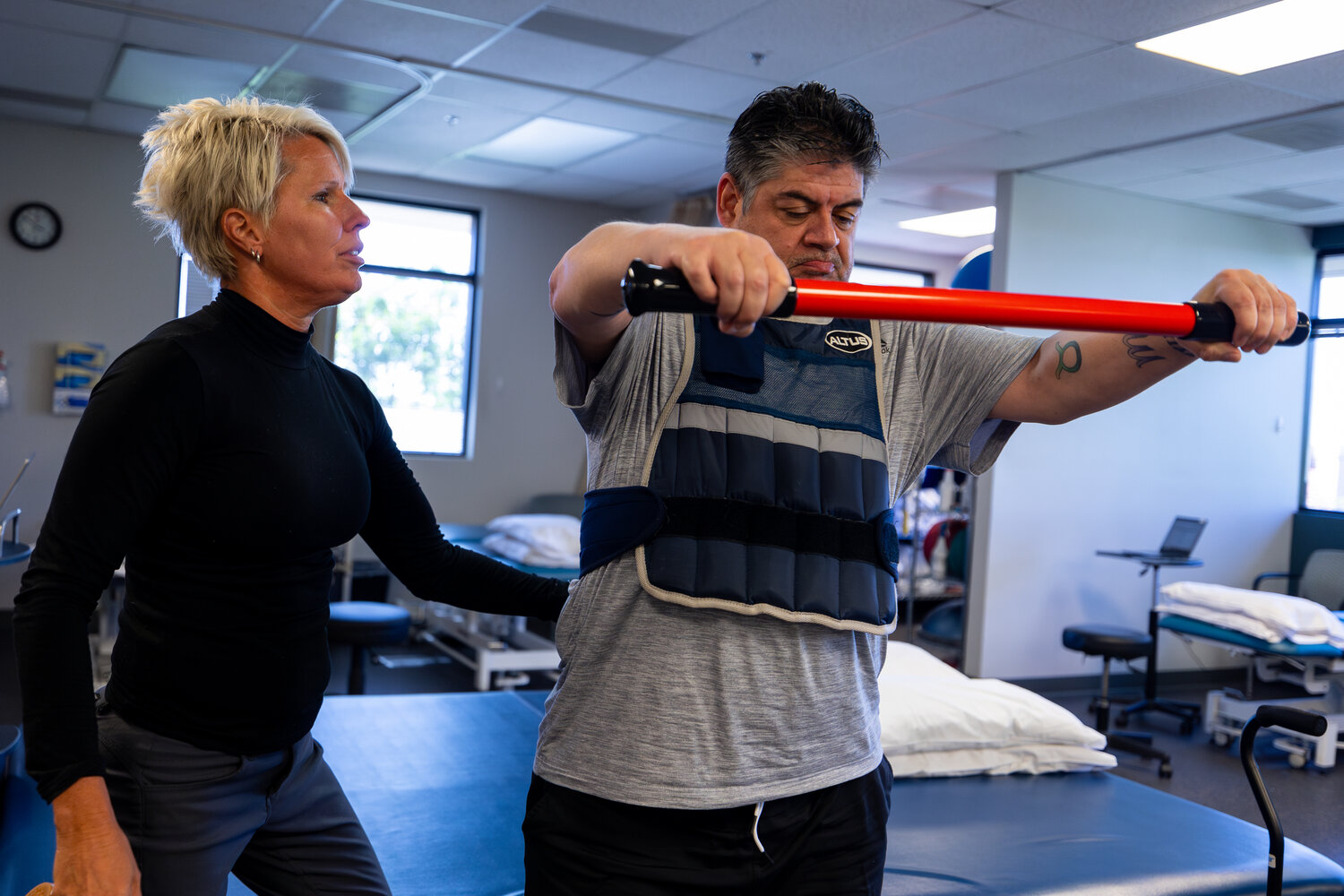
Peoria man shines light on physical therapy journey as a recovering stroke patient

 You can obviously see that this facility doesn't understand patient motivation at all.

You don't understand ONE GODDAMN THING ABOUT SURVIVOR MOTIVATION, DO YOU? You create 100% recovery protocols and your survivor will be motivated to do the millions of reps needed(NO pushing required!) because they are looking forward to 100% recovery. GET THERE! 

The problem is stroke researchers are not motivated to solve stroke. What the fuck is your solution to that failure? We still don't know how to motivate stroke medical 'professionals' to solve stroke to 100% recovery!

Peoria man shines light on physical therapy journey as a recovering stroke patient

Posted

Peoria resident Oscar Martinez always thought he was invincible.

That is, until he suffered a stroke the day after Christmas in 2022.

“I remember, we were waiting for our daughter and grandson to come over so we could give my grandson his Christmas presents,” Martinez, 51, recalls. “That’s when I started to sweat a lot. I called out to my wife for help, and she immediately noticed I wasn’t okay. I couldn’t move or speak. That’s when she realized I was having a stroke.”

Martinez was rushed to the hospital, and when he woke up, he was unsure of what had happened.

“The nurse came into the room and told me that I had a stroke,” Martinez says.

While a setback, Martinez remembers thinking he would bounce back in a few months. However, six months post-stroke, he realized it would be a much longer road to recovery. One he’s still facing today.

“It’s been a rollercoaster of emotions and challenges,” Martinez explains.

The symptoms of a stroke are discussed often, but Martinez and his physical therapist, Stephanie Larson with Banner Physical Therapy, want to shine a spotlight on what the rehabilitation process looks like for someone recovering from a stroke; highlighting some of the trials and tribulations that aren’t usually talked about.

“We focus on helping the patient do things like getting in and out of bed, in and out of the car, sitting down, standing up, balance training, and then of course help our patients, like Oscar, get back to activities they enjoy doing,” Larson said.

Larson added that one of the most surprising activities of rehabilitating a stroke patient is the fall prevention exercises that include practicing getting on and off the floor, as well as practicing falling safely to prevent further injury.

“Another surprising factor of rehab might be how hard we have to push these patients following a stroke in order to regain as much function as possible,” Larson says.

Martinez said the activities and encouragement Larson mentions have helped fast-track his progress.

“Thanks to these activities, I’m able to walk with the assistance of a cane and an ankle foot orthosis (AFO) - which is a device that helps stabilize my ankle,” Martinez said. “When I started physical therapy, I was in a wheelchair.”

However, Larson states that physical therapy recovery for stroke patients isn’t a "one-size fits all."

“The recovery time and process are different for every single patient,” Larson notes. “No two patients with a stroke are the same and they need to be treated with an individualized treatment plan focused on attaining their goals and regaining as much function as possible.”

Martinez is hopeful and remains positive.

“To anyone who might be going through a similar situation right now – keep pushing and believe in yourself,” urges Martinez. “Look for help in family and your community, be okay with your new normal, don’t take anything for granted. Take care of your health and your loved ones. Life really is too short.”

Banner Physical Therapy is part of a joint venture partnership between Banner Health and Select Medical’s Outpatient Division, a nationally prominent, locally driven provider of outpatient physical rehabilitation. Banner Physical Therapy offers 60 convenient locations throughout Arizona. The centers provide a wide range of services to patients, including physical therapy, hand/occupational therapy, pelvic health, cancer rehabilitation, pediatric therapy, sports medicine and work injury prevention and management.

For more information, visit selectmedical.com/outpatient.

Monday, June 3, 2024

Improving rehabilitation motivation and motor learning ability of stroke patients using different reward strategies: study protocol for a single-center, randomized controlled trial

You don't understand ONE GODDAMN THING ABOUT SURVIVOR MOTIVATION, DO YOU? You create 100% recovery protocols and your survivor will be motivated to do the millions of reps needed because they are looking forward to 100% recovery. GET THERE! 

The problem is stroke researchers are not motivated to solve stroke. What the fuck is your solution to that failure? We still don't know how to motivate stroke medical 'professionals' to solve stroke to 100% recovery!

Improving rehabilitation motivation and motor learning ability of stroke patients using different reward strategies: study protocol for a single-center, randomized controlled trial

Jingwang Zhao&#x;Jingwang Zhao1Jiangling Guo,&#x;Jiangling Guo2,3Yeping Chen&#x;Yeping Chen4Wenxi LiWenxi Li5Ping ZhouPing Zhou6Guangyue ZhuGuangyue Zhu1Peipei HanPeipei Han3Dongsheng Xu,,
Dongsheng Xu4,7,8*
  • 1School of Rehabilitation Science, Shanghai University of Traditional Chinese Medicine, Shanghai, China
  • 2Graduate School, Shanghai University of Traditional Chinese Medicine, Shanghai, China
  • 3College of Rehabilitation Sciences, Shanghai University of Medicine and Health Sciences, Shanghai, China
  • 4The Second Rehabilitation Hospital of Shanghai, Shanghai University of Traditional Chinese Medicine, Shanghai, China
  • 5Yueyang Hospital of Integrated Traditional Chinese and Western Medicine, Shanghai University of Traditional Chinese Medicine, Shanghai, China
  • 6Zhongshan Hospital, Fudan University, Shanghai, China
  • 7Engineering Research Center of Traditional Chinese Medicine Intelligent Rehabilitation, Ministry of Education, Shanghai, China
  • 8Institute of Rehabilitation Medicine, Shanghai University of Traditional Chinese Medicine, Shanghai, China

Background: Stroke survivors often face challenges in motor learning and motivation during rehabilitation, which can impede their recovery progress. Traditional rehabilitation methods vary in effectiveness, prompting the exploration of novel approaches such as reward strategies. Previous research indicates that rewards can enhance rehabilitation motivation and facilitate motor learning. However, most reward paradigms have utilized fixed reward amounts, which also have limitations. Exploring alternative, more effective reward strategies, such as probabilistic rewards, is warranted to optimize stroke patient rehabilitation.

Methods: A total of 81 stroke patients will be recruited and randomly assigned to control, fixed reward, or probabilistic reward groups at a ratio of 1:1:1 using a randomized number table method. Participants will undergo 10 days of daily hand motor function rehabilitation training, with sessions lasting 20 min each. The training will involve pegboard tests and box and block tests. Control group participants will receive standard training, while fixed reward group members will receive monetary incentives for completing tests, and probabilistic reward group members will have the chance to win monetary rewards through a lottery box. Rehabilitation motivation and motor performance and functional near-infrared spectroscopy brain imaging will be conducted at designated time points. The primary outcome measure is the stroke rehabilitation motivation scale, and the second outcome measures include motor performance, simple test for evaluating hand function, motivation and pleasure scale self-report, and Pittsburgh rehabilitation participation scale.

Discussion: Reward-based training enhance rehabilitation participation and adherence, it also improve motor learning speed and memory retention of stroke patients. The fixed reward applied in the past studies could diminish the sensitivity of stroke patients to rewards, while probabilistic reward may provide unpredictable or variable incentives or reinforcements for motor rehabilitation. This study will compare the efficacy of different reward strategies in enhancing motor learning ability and rehabilitation motivation among stroke patients. By conducting a randomized controlled trial, the study seeks to provide valuable insights into optimizing stroke rehabilitation protocols and improving patient outcomes.

Clinical Trial Registration:https://www.chictr.org.cn/, ChiCTR2400082419.

Monday, May 27, 2024

Applying a Motivational Instructional Design Model to Stroke Rehabilitation: A Feasibility Study on Occupational and Swallowing Therapies

 You don't understand ONE GODDAMN THING ABOUT SURVIVOR MOTIVATION, DO YOU? You create 100% recovery protocols and your survivor will be motivated to do the millions of reps needed because they are looking forward to 100% recovery. GET THERE! 

The problem is stroke researchers are not motivated to solve stroke. What the fuck is your solution to that failure? We still don't know how to motivate stroke medical 'professionals' to solve stroke to 100% recovery!

 Applying a Motivational Instructional Design Model to Stroke Rehabilitation: A Feasibility Study on Occupational and Swallowing Therapies

, , , , , , , , , ,
https://doi.org/10.1016/j.arrct.2024.100344Get rights and content
Under a Creative Commons license
open access

Abstract

Objective

To investigate the feasibility of post-stroke interventions using a motivational instructional design model with occupational and swallowing therapies and the model's potential physical and mental health effects.

Design

An open-label, single-arm, feasibility study on the Attention, Relevance, Confidence, and Satisfaction (ARCS) model.

Setting

Two convalescent rehabilitation wards.

Participants

Twenty-five patients with stroke (19 males; mean age 62.4 ± 11.9 years; 61.9 ± 36.8 days from the first stroke) were recruited.

Interventions

Twelve participants received a motivational approach based on the ARCS model during occupational therapy (OT group), and 13 received it during swallowing therapy (ST group). The intervention lasted 40–60 min daily, 5 days weekly, for 4 weeks.

Main Outcome Measures

The primary outcomes included the drop-out rate, an adverse event, and the participants’ acceptability of the intervention. Paretic arm function was assessed in the OT group, swallowing ability in the ST group, and activities of daily living, depressive symptoms, and apathy in both groups.

Results

No participants dropped out of the intervention or experienced an adverse event. Twenty-one participants (84%) were satisfied with the intervention, and 19 (76%) hoped to continue receiving it. The OT group showed statistically significant improvements in paretic arm function and activities of daily living for the OT group (Cohen's r = 0.68–0.77), whereas the ST group improved in swallowing ability, activities of daily living, and depressive symptoms (Cohen's r = 0.62–0.85).

Conclusions

The interventions using the motivational instructional model with occupational and swallowing therapies were feasible and could improve post-stroke paretic arm function, swallowing ability, and activities of daily living after stroke.


Thursday, May 23, 2024

Improving Rehabilitation Motivation and Motor Learning Ability of Stroke Patients Using Different Reward Strategies: Study Protocol for A Single-Center, Randomized Controlled Trial

 You don't understand ONE GODDAMN THING ABOUT SURVIVOR MOTIVATION, DO YOU? You create 100% recovery protocols and your survivor will be motivated to do the millions of reps needed because they are looking forward to 100% recovery. GET THERE! 

The problem is stroke researchers are not motivated to solve stroke. What the fuck is your solution to that failure? We still don't know how to motivate stroke medical 'professionals' to solve stroke to 100% recovery!

Improving Rehabilitation Motivation and Motor Learning Ability of Stroke Patients Using Different Reward Strategies: Study Protocol for A Single-Center, Randomized Controlled Trial

  • 1 School of Rehabilitation Science, Shanghai University of Traditional Chinese Medicine, Shanghai, China
  • 2 Graduate School, Shanghai University of Traditional Chinese Medicine, Shanghai, Shanghai Municipality, China
  • 3 The Second Rehabilitation Hospital of Shanghai, Shanghai, China
  • 4 Yueyang Hospital of Integrated Traditional Chinese and Western Medicine, Shanghai University of Traditional Chinese Medicine, Shanghai, China
  • 5 Zhongshan Hospital, Fudan University, Shanghai, Shanghai Municipality, China
  • 6 Shanghai University of Medicine and Health Sciences, Shanghai, China
  • 7 Engineering Research Center of Traditional Chinese Medicine Intelligent Rehabilitation, Shanghai, China
  • 8 Institute of Rehabilitation Medicine, Shanghai University of Traditional Chinese Medicine, Shanghai, China

The final, formatted version of the article will be published soon.

You have multiple emails registered with Frontiers:

Please enter your email address:

Background: 

 Stroke survivors often face challenges in motor learning and motivation during rehabilitation, which can impede their recovery progress. Traditional rehabilitation methods vary in effectiveness, prompting the exploration of novel approaches such as reward strategies. Previous research indicates that rewards can enhance rehabilitation motivation and facilitate motor learning. However, most reward paradigms have utilized fixed reward amounts, which also have limitations.Exploring alternative, more effective reward strategies, such as probabilistic rewards, is warranted to optimize stroke patient rehabilitation.

 Methods: 

A total of 81 stroke patients will be recruited and randomly assigned to control, fixed reward, or probabilistic reward groups at a ratio of 1:1:1 using a randomized number table method.Participants will undergo ten days of daily hand motor function rehabilitation training, with sessions lasting 20 minutes each. The training will involve pegboard tests and box and block tests. Control group participants will receive standard training, while fixed reward group members will receive monetary incentives for completing tests, and probabilistic reward group members will have the chance to win monetary rewards through a lottery box. Rehabilitation motivation and motor performance and functional near-infrared spectroscopy brain imaging will be conducted at designated time points. The primary outcome measure is the stroke rehabilitation motivation scale, and the second outcome measures include motor performance, simple test for evaluating hand function, motivation and pleasure scale self-report, and Pittsburgh rehabilitation participation scale.

Discussion: 

Reward-based training enhance rehabilitation participation and adherence, it also improve motor learning speed and memory retention of stroke patients. The fixed reward applied in the past studies could diminish the sensitivity of stroke patients to rewards, while probabilistic reward may provide unpredictable or variable incentives or reinforcements for motor rehabilitation. This study will compare the efficacy of different reward strategies in enhancing motor learning ability and rehabilitation motivation among stroke patients. By conducting a randomized controlled trial, the study seeks to provide valuable insights into optimizing stroke rehabilitation protocols and improving patient outcomes.

Saturday, March 23, 2024

Design strategies to improve patient motivation during robot-aided rehabilitation

 In the 17 years since this came out our stroke medical 'professionals' still don't understand ONE GODDAMN THING ABOUT SURVIVOR MOTIVATION! You create 100% recovery protocols and your survivor will be motivated to do the millions of reps needed because they are looking forward to 100% recovery. GET THERE! 

The problem is stroke researchers are not motivated to solve stroke. What the fuck is your solution to that failure? We still don't know how to motivate stroke medical 'professionals' to solve stroke to 100% recovery!


Design strategies to improve patient motivation during robot-aided rehabilitation

Published: 19 February 2007 Journal of NeuroEngineering and Rehabilitation 2007, 4:3 doi:10.1186/1743-0003-4-3 Received: 31 March 2006 Accepted: 19 February 2007 This article is available from: http://www.jneuroengrehab.com/content/4/1/3
 
Roberto Colombo* 1 , Fabrizio Pisano 2 , Alessandra Mazzone 1 , Carmen Delconte 2 , Silvestro Micera 3 , M Chiara Carrozza 3 , Paolo Dario 3 and Giuseppe Minuco 1 Address: 1 Service of Bioengineering, Salvatore Maugeri Foundation, IRCCS Via Revislate 13, 28010 Veruno (NO), Italy, 2 Division of Neurology, Salvatore Maugeri Foundation, IRCCS Via Revislate 13, 28010 Veruno (NO), Italy and 3 ARTS Lab Scuola Superiore Sant'Anna V.le Piaggio 34, 56025 Pontedera (PI), Italy Email: Roberto Colombo* - rcolombo@fsm.it; Fabrizio Pisano - fpisano@fsm.it; Alessandra Mazzone - amazzone@fsm.it; Carmen Delconte - cdelconte@fsm.it; Silvestro Micera - micera@sssup.it; M Chiara Carrozza - carrozza@sssup.it; Paolo Dario - dario@sssup.it; Giuseppe Minuco - gminuco@fsm.it * Corresponding author Abstract  
Background:  
 
Motivation is an important factor in rehabilitation and frequently used as a determinant of rehabilitation outcome. Several factors can influence patient motivation and so improve exercise adherence. This paper presents the design of two robot devices for use in the rehabilitation of upper limb movements, that can motivate patients during the execution of the assigned motor tasks by enhancing the gaming aspects of rehabilitation. In addition, a regular review of the obtained performance can reinforce in patients' minds the importance of exercising and encourage them to continue, so improving their motivation and consequently adherence to the program. In view of this, we also developed an evaluation metric that could characterize the rate of improvement and quantify the changes in the obtained performance.  
Methods:  
 
Two groups (G1, n = 8 and G2, n = 12) of patients with chronic stroke were enrolled in a 3-week rehabilitation program including standard physical therapy (45 min. daily) plus treatment by means of robot devices (40 min., twice daily) respectively for wrist (G1) and elbow-shoulder movements (G2). Both groups were evaluated by means of standard clinical assessment scales and the new robot measured evaluation metric. Patients' motivation was assessed in 9/12 G2 patients by means of the Intrinsic Motivation Inventory (IMI) questionnaire.  
Results:  
 
Both groups reduced their motor deficit and showed a significant improvement in clinical scales and the robot measured parameters. The IMI assessed in G2 patients showed high scores for interest, usefulness and importance subscales and low values for tension and pain subscales.  
Conclusion:  
 
Thanks to the design features of the two robot devices the therapist could easily adapt training to the individual by selecting different difficulty levels of the motor task tailored to each patient's disability. The gaming aspects incorporated in the two rehabilitation robots helped maintain patients' interest high during execution of the assigned tasks by providing feedback on performance. The evaluation metric gave a precise measure of patients' performance and thus provides a tool to help therapists promote patient motivation and hence adherence to the training program.

Saturday, March 16, 2024

Heart attack and stroke survivors face barriers to get healthier - Canada

The absolute worst barrier for stroke recovery is the COMPLETE FAILURE OF YOUR STROKE MEDICAL 'PROFESSIONALS' to solve stroke to 100% recovery! 

You don't understand ONE GODDAMN THING ABOUT SURVIVOR MOTIVATION, DO YOU? You create 100% recovery protocols and your survivor will be motivated to do the millions of reps needed because they are looking forward to 100% recovery. GET THERE! 

The problem is stroke researchers are not motivated to solve stroke. What the fuck is your solution to that failure? We still don't know how to motivate stroke medical 'professionals' to solve stroke to 100% recovery!


Heart attack and stroke survivors face barriers to get healthier - Canada

Some survivors of a heart attack or stroke struggle to get moving, manage stress and maintain a healthy weight, says a new Canadian report that stresses how important rehabilitation programs and family support can be.

About 165,000 Canadians survived a heart attack or stroke last year, but there are still 350,000 hospitalizations for the diseases each year, the Heart and Stroke Foundation said in its report released Monday.

The report includes highlights of an online poll of 2,010 Canadians who’d survived a heart attack or stroke, or were the loved ones of survivors. About seven in 10 survivors said they’d made healthy changes since the scare.

Survivors were most successful in eating a healthier diet, quitting smoking and reducing alcohol consumption.

But among people who needed to make those changes, more than half couldn’t maintain the change and others didn’t try.

"The biggest barrier was related to motivation, which was defined as a lack of interest in making the change, a feeling that the goals were unrealistic and that there was too much required all at once," the report’s authors said.

Other barriers included not understanding what changes were needed or how to make them, loss of physical or cognitive abilities since the event, and cost and time constraints.

The report’s authors also looked at how to support recovery, calling rehabilitation referral rates "unacceptably low." Evidence shows that about one-third of cardiac survivors who are eligible for rehabilitation are referred.

The main reason people gave for not starting or completing rehabilitation as recommended was, "I just didn’t want to do it," which can be an indicator of other factors such as anxiety, depression and lack of a clear endorsement from their doctor on the benefits.

"The number 1 benefit of rehabilitation is that it keeps survivors surviving," Dr. Neville Suskin, medical director of cardiac rehabilitation and secondary prevention at St. Joseph's Health Care in London, Ont., said in a release. Suskin pointed to other benefits: it makes people feel better, improves their quality of life, and reduces hospital readmissions as well as costs to the health-care system.

More than eight in 10 survivors said they feel that their family support helped them achieve a healthy lifestyle, such as assisting with chores during recovery and keeping stress levels in check.

The poll was conducted online by Environics Research Group between Nov. 25 and Dec. 3, 2013.

Friday, March 15, 2024

Implementation and Evaluation of a Motivational Robotic Coach for Repetitive Stroke Rehabilitation

You don't understand ONE GODDAMN THING ABOUT SURVIVOR MOTIVATION, DO YOU? You create 100% recovery protocols and your survivor will be motivated to do the millions of reps needed because they are looking forward to 100% recovery. GET THERE! 

The problem is stroke researchers are not motivated to solve stroke. What the fuck is your solution to that failure? We still don't know how to motivate stroke medical 'professionals' to solve stroke to 100% recovery!


Implementation and Evaluation of a Motivational Robotic Coach for Repetitive Stroke Rehabilitation 


Martin K. Ross
School of Mathematical and
Computer Sciences
Heriot-Watt University
Edinburgh, United Kingdom
mkr30@hw.ac.uk
 
Frank Broz
Intelligent Systems
Delft University of Technology
Delft, Netherlands
f.broz@tudelft.nl
 
Lynne Baillie
School of Mathematical and
Computer Sciences
Heriot-Watt University
Edinburgh, United Kingdom
l.baillie@hw.ac.uk

ABSTRACT

Repetitive, individual exercises can improve the functional ability
of stroke survivors over the long term. With the aim of providing
extra motivation to adhere to repetitive, individual rehabilitation,
this paper presents a robotic coach for stroke rehabilitation. Our
system uses the Pepper robot and performs one of twelve data-
driven coaching policies. The policies were learned from human-
human observations of professional stroke physiotherapists and
provide high-level personalisation based on user information and
training context. A within subjects evaluation of the system was
conducted in-person involving short interactions with 3 stroke
survivors. The system was able to engage the target end users and
there were indications that decreased workload could be possible
when using the system compared to exercising alone.

Wednesday, February 28, 2024

Implementing ward-based practice books to increase the amount of practice completed during inpatient stroke rehabilitation: a mixed-methods process evaluation

You don't understand ONE GODDAMN THING ABOUT SURVIVOR MOTIVATION, DO YOU? You create 100% recovery protocols and your survivor will be motivated to do the millions of reps needed because they are looking forward to 100% recovery. GET THERE! 

The problem is stroke researchers are not motivated to solve stroke. What the fuck is your solution to that failure? We still don't know how to motivate stroke medical 'professionals' to solve stroke to 100% recovery!

 Implementing ward-based practice books to increase the amount of practice completed during inpatient stroke rehabilitation: a mixed-methods process evaluation

To cite this article: Claire Stewart, Emma Power, Annie McCluskey, Suzanne Kuys & Meryl
Lovarini (22 Feb 2024): Implementing ward-based practice books to increase the amount
of practice completed during inpatient stroke rehabilitation: a mixed-methods process
evaluation, Disability and Rehabilitation, DOI: 10.1080/09638288.2024.2315502
To link to this article: https://doi.org/10.1080/09638288.2024.2315502
Claire Stewarta, Emma Powerb,c, Annie McCluskeyc,d, Suzanne Kuyse and Meryl Lovarinic
aaustralasian Rehabilitation outcomes Centre, University of Wollongong, Wollongong, australia; bthe University of technology sydney, Graduate
school of health, sydney, australia; csydney school of health sciences, the University of sydney, sydney, australia; dthe strokeed Collaboration,
sydney, australia; eschool of allied health, australian Catholic University, banyo, australia

ABSTRACT

Purpose: Stroke survivors must complete large amounts of practice to achieve functional improvements
but spend many hours inactive during their rehabilitation. We conducted a mixed methods process
evaluation exploring factors affecting the success of a 6-month behaviour change intervention to
increase use of ward-based practice books.
Methods: Audits of the presence, quality and use of ward based-practice books were conducted,
alongside focus groups with staff (n = 19), and interviews with stroke survivors (n = 3) and family
members (n = 4). Quantitative data were analysed descriptively. Focus group and interview transcripts
were analysed using qualitative analysis.
Results: Personal (patient-related) factors (including severe weakness, cognitive and communication
deficits of stroke survivors), staff coaching skills, understanding and beliefs about their role, affected
practice book use. Staff turnover, nursing shift work and a lack of action planning reduced success of
the behaviour change intervention.
Conclusions: Staff with the necessary skills and understanding of their role in implementing ward practice
overcame personal (patient-related) factors and assisted stroke survivors to successfully practice on the ward.
To improve success of the intervention, repeated training of new staff is required. In addition to audit and
feedback, team action planning is needed around the presence, quality, and use of ward practice books.
h IMPLICATIONS FOR REHABILITATION
• Ward-based practice books are one evidence-based strategy that can be used by rehabilitation
teams to increase the amount of practice completed by stroke survivors during inpatient rehabilitation.
• Stroke survivors’ personal factors (including severe weakness, cognitive and communication deficits),
staff beliefs about their role and coaching skills, affected stroke survivors ability to practice on the
ward using practice books.
• Staff with the necessary skills, understanding and belief about their role in implementing ward
practice can overcome personal (patient related) factors (such as severe weakness) and assist stroke
survivors to successfully practice on the ward.
• To increase the success of ward practice, repeated booster training of staff is required along with audit
and feedback and team action planning on the presence, quality, and use of ward practice books

Saturday, February 24, 2024

Design strategies to improve patient motivation during robot-aided rehabilitation

You don't understand ONE GODDAMN THING ABOUT SURVIVOR MOTIVATION, DO YOU? You create 100% recovery protocols and your survivor will be motivated to do the millions of reps needed because they are looking forward to 100% recovery. GET THERE! And get out of stroke research, you don't belong there!

The problem is stroke researchers are not motivated to solve stroke. What the fuck is your solution to that failure? We still don't know how to motivate stroke medical 'professionals' to solve stroke to 100% recovery!


Design strategies to improve patient motivation during robot-aided rehabilitation

Abstract

Background

Motivation is an important factor in rehabilitation and frequently used as a determinant of rehabilitation outcome. Several factors can influence patient motivation and so improve exercise adherence. This paper presents the design of two robot devices for use in the rehabilitation of upper limb movements, that can motivate patients during the execution of the assigned motor tasks by enhancing the gaming aspects of rehabilitation. In addition, a regular review of the obtained performance can reinforce in patients' minds the importance of exercising and encourage them to continue, so improving their motivation and consequently adherence to the program. In view of this, we also developed an evaluation metric that could characterize the rate of improvement and quantify the changes in the obtained performance.

Methods

Two groups (G1, n = 8 and G2, n = 12) of patients with chronic stroke were enrolled in a 3-week rehabilitation program including standard physical therapy (45 min. daily) plus treatment by means of robot devices (40 min., twice daily) respectively for wrist (G1) and elbow-shoulder movements (G2). Both groups were evaluated by means of standard clinical assessment scales and the new robot measured evaluation metric. Patients' motivation was assessed in 9/12 G2 patients by means of the Intrinsic Motivation Inventory (IMI) questionnaire.

Results

Both groups reduced their motor deficit and showed a significant improvement in clinical scales and the robot measured parameters. The IMI assessed in G2 patients showed high scores for interest, usefulness and importance subscales and low values for tension and pain subscales.

Conclusion

Thanks to the design features of the two robot devices the therapist could easily adapt training to the individual by selecting different difficulty levels of the motor task tailored to each patient's disability. The gaming aspects incorporated in the two rehabilitation robots helped maintain patients' interest high during execution of the assigned tasks by providing feedback on performance. The evaluation metric gave a precise measure of patients' performance and thus provides a tool to help therapists promote patient motivation and hence adherence to the training program.