Changing stroke rehab and research worldwide now.Time is Brain! trillions and trillions of neurons that DIE each day because there are NO effective hyperacute therapies besides tPA(only 12% effective). I have 523 posts on hyperacute therapy, enough for researchers to spend decades proving them out. These are my personal ideas and blog on stroke rehabilitation and stroke research. Do not attempt any of these without checking with your medical provider. Unless you join me in agitating, when you need these therapies they won't be there.

What this blog is for:

My blog is not to help survivors recover, it is to have the 10 million yearly stroke survivors light fires underneath their doctors, stroke hospitals and stroke researchers to get stroke solved. 100% recovery. The stroke medical world is completely failing at that goal, they don't even have it as a goal. Shortly after getting out of the hospital and getting NO information on the process or protocols of stroke rehabilitation and recovery I started searching on the internet and found that no other survivor received useful information. This is an attempt to cover all stroke rehabilitation information that should be readily available to survivors so they can talk with informed knowledge to their medical staff. It lays out what needs to be done to get stroke survivors closer to 100% recovery. It's quite disgusting that this information is not available from every stroke association and doctors group.

Showing posts with label heart attack risk. Show all posts

Friday, August 28, 2026

A 30-year study found a surprising link between alcohol, survival and heart attack risk

But this is impossible! Safest level of alcohol consumption is none, worldwide study shows

A 30-year study found a surprising link between alcohol, survival and heart attack risk

Three decades of follow-up suggest that alcohol and beverage type may relate differently to longevity and heart attack risk, but the observational findings do not prove that drinking itself is protective or harmful.

In a recent study published in the Scandinavian Journal of Primary Health Care, a group of researchers evaluated the associations of alcohol consumption and beverage type with myocardial infarction (MI), stroke, and all-cause mortality among middle-aged Swedish male automotive workers followed for 30 years.

Background

Cardiovascular disease remains a leading cause of death even as Swedish men’s life expectancy increased by about two years between 2001–2010 and 2011–2020. Alcohol’s relationship with cardiovascular health is complex: research has described a J-shaped pattern, while concerns include the “sick quitter” hypothesis and evidence that even low intake can adversely affect health. Findings also vary by region and beverage type.

Alcohol has been associated with MI in some studies, whereas other research has emphasized drinking frequency or reported possible effects of beer or wine. International guidance states that no level of alcohol consumption is risk-free, underscoring the need for further research.

About the study
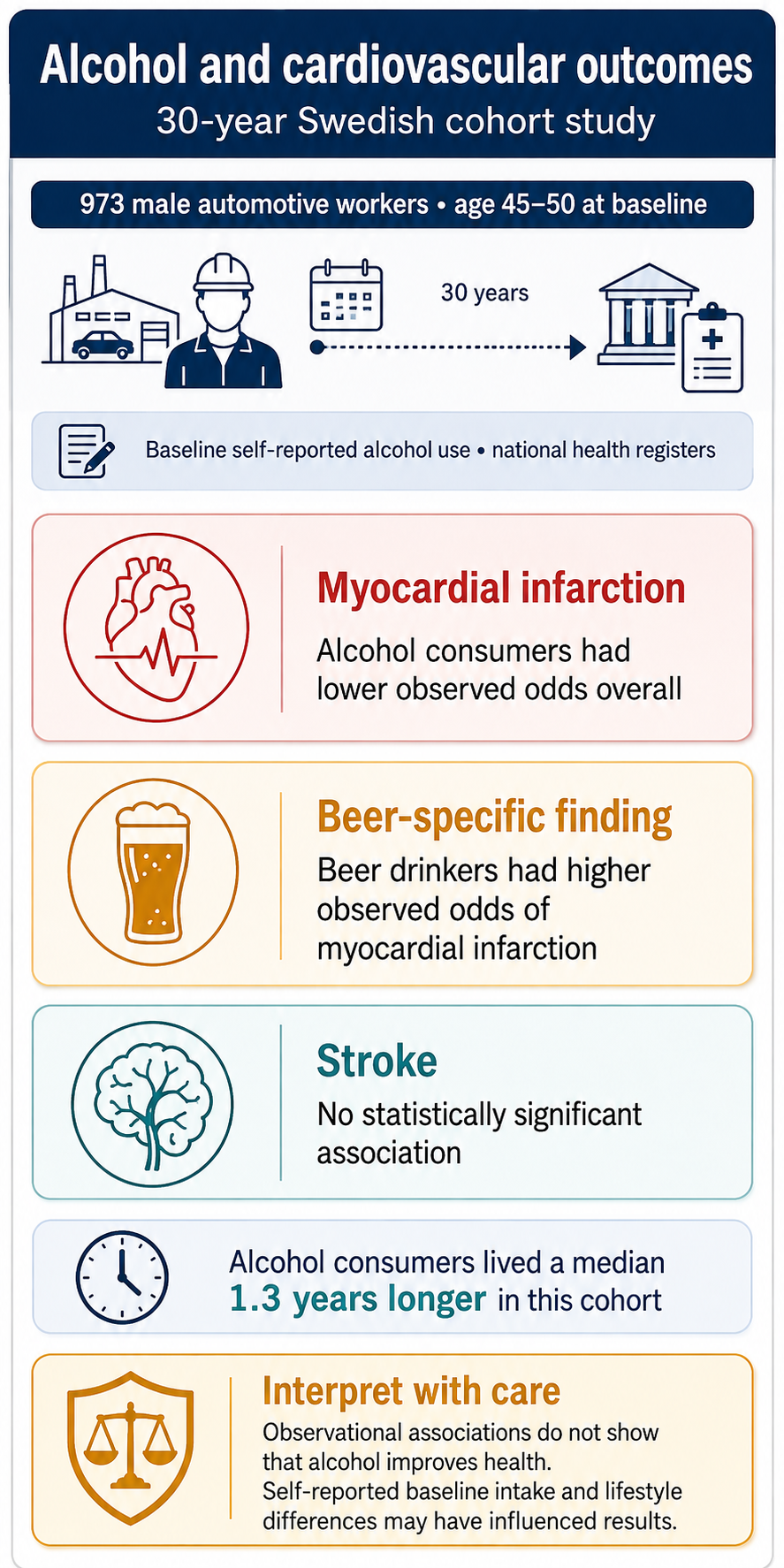
The prospective longitudinal analysis used data from the Coeur study, initiated in 1993 among 1,144 men aged 45-50 years employed at Volvo in Gothenburg, Sweden. After exclusions for refusal, illness, cardiovascular treatment, one outlier in alcohol consumption, and 26 participants with missing data, 973 men were included.

Baseline information included alcohol use, blood pressure, laboratory tests, smoking, exercise, diabetes, occupational status, and household status. A 1995 sub-study provided 173 blood samples and 84 questionnaires for additional analyses.

Total alcohol intake was calculated from self-reported drinks per week and estimated pure alcohol per beverage: 6 g for beer, 14 g for wine, and 13 g for hard liquor. Participants were categorized by total intake, beverage type, ranked consumption groups, and risk consumption of at least 120 g/week.

Outcomes were all-cause mortality, MI, and stroke, identified through national health registers through December 31, 2023, using International Classification of Diseases (ICD) codes. Descriptive data used medians and interquartile ranges (IQRs); statistical analyses used odds ratios (ORs), Spearman’s rho, Kaplan-Meier estimates, chi-square tests, and Cox regression in the Statistical Package for the Social Sciences (SPSS).

Cox regression models were adjusted for relevant cardiovascular and socioeconomic factors, with the covariates varying by outcome. Some beverage-specific models were also adjusted for consumption of another beverage type.

Study results

Among 973 participants, 237 (24%) died, 100 (10%) experienced MI, and 89 (9%) experienced strokes. Alcohol drinkers had a median intake of 56 g/week versus 0 g/week among non-drinkers.

Alcohol and wine drinkers had slightly higher high-density lipoprotein cholesterol levels than non-drinkers. Drinking groups also contained higher proportions of clerical workers and married or cohabiting participants. Single, divorced, or widowed workers had nearly twice the mortality rate of married or cohabiting workers, while manual workers had almost 59% higher mortality than clerical workers.

Spearman’s rho analysis showed positive correlations between high-density lipoprotein cholesterol and total alcohol, wine, and beer intake. No correlation was found between self-reported alcohol use and gamma-glutamyl transferase in the 1995 sub-cohort; however, self-reported total alcohol intake correlated moderately with the 1995 diet-study assessment (R = 0.58).

Crude all-cause mortality was lower among alcohol drinkers, who had substantially lower mortality odds than non-drinkers. Wine and beer consumption showed similar patterns, while several ranked total-alcohol consumption groups also had lower odds than abstainers. The risk-drinking group, however, did not differ significantly from the non-risk group.

For MI, the direct comparison between alcohol drinkers and non-drinkers was not significant. However, the second-lowest total-alcohol consumption group had about twice the odds of MI compared with non-drinkers.

Beer consumption was associated with MI: 76 beer drinkers (12%) versus 24 non-beer drinkers (7%) experienced events, corresponding to about 70% higher odds of MI among beer drinkers. The highest beer-consumption group also had significantly higher odds of MI than non-beer drinkers. Wine consumption was not significantly associated with MI in the 30-year cohort.

No significant association was found between alcohol consumption and stroke, with event rates similar among drinkers and non-drinkers.

Adjusted Cox regression indicated a small association between total alcohol intake and all-cause mortality after accounting for relevant cardiovascular and socioeconomic factors. The corresponding adjusted association for wine was not statistically supported.

For MI, the adjusted model also indicated a small association with beer consumption. Adjusted analyses for stroke showed no significant associations with total alcohol, beer, or wine.

Kaplan-Meier analysis showed a longer estimated mean time to death during follow-up among alcohol drinkers than non-drinkers: 28.1 versus 26.8 years, a difference of 1.3 years. Wine drinkers had an estimated mean time to death of 28.5 years versus 27.1 years among non-wine drinkers, while the corresponding estimates were 28.1 and 27.1 years for beer drinkers and non-beer drinkers, respectively.

For MI, beer drinkers experienced the event at a mean of 28.5 years, compared with 29.1 years among non-beer drinkers, a difference of 0.6 years. Stroke differences were not significant across beverage groups.

Conclusions

After 30 years of follow-up, alcohol consumption among these middle-aged Swedish male automotive workers was associated with a longer estimated time to death during follow-up and lower odds of all-cause mortality, while beer consumption was associated with a higher likelihood of MI and an earlier MI event. No significant association was observed between alcohol consumption and stroke.

Maybe this explains it a bit: 

Men must drink with male friends twice a week to stay healthy, study finds

The findings require cautious interpretation because the cohort consisted of middle-aged Swedish men with stable employment, alcohol exposure was based on self-reporting, high-risk drinkers were underrepresented, and lifestyle factors could change during follow-up. Drinking groups also differed substantially in socioeconomic characteristics, and unmeasured factors such as diet and cultural context could have contributed to the observed associations. The study therefore cannot establish that alcohol itself improved survival or that beer directly increased MI risk.

Larger and more diverse studies with detailed drinking and lifestyle assessments are needed.

Journal reference:
  • Asp, H., & Dimberg, L. (2026). Link between alcohol consumption and myocardial infarction, stroke, and all-cause mortality among Swedish male automotive workers over 30 years. Scandinavian Journal of Primary Health Care. 44(1). DOI: 10.1080/02813432.2026.2712981, https://www.tandfonline.com/doi/full/10.1080/02813432.2026.2712981

Tuesday, July 21, 2026

How much coffee is safe for the heart? Doctors explore the benefits and risks of caffeine


 Not worried! The benefits vastly outweigh the risks.

I do coffee all day, takes that long to get in a 12 cup pot of coffee. This won't change my habit, it's mainly to reduce my dementia and Parkinsons risk and no one knows the amounts for that.

I'm still doing a 12 cup pot of coffee daily to prevent Parkinsons and frailty! Much more important than any problems it can cause.

How coffee protects against Parkinson’s Aug. 2014 

Coffee May Lower Your Risk of Dementia Feb. 2013

Coffee drinkers rejoice! Drinking coffee could lower the risk of Alzheimer’s disease 

And this: Coffee's Phenylindanes Fight Alzheimer's Plaque December 2018

New research suggests drinking coffee may reduce the risk of frailty May 2025

I think I'm in this category:  I never get the jitters or flushed skin.

Genetics determine how much coffee you can drink before it goes wrong

I'm doing a 12 cup pot of coffee a day with full fat milk to lessen my chances of dementia and Parkinsons. Tell me EXACTLY how much coffee to drink for that and I'll change. Yep, that is a lot more than the 400mg. suggested limit, I don't care! Preventing dementia and Parkinsons is vastly more important than whatever problems it can cause! 

Of course, your fuckingly incompetent? doctor did nothing with this from 2+ years ago! And still hasn't created a 24 hour coffee station

This line is great: The findings indicate that even the Espresso Martini cocktail contains the espresso's beneficial compounds - and can contribute to staving off dementia.

The latest here: 

How much coffee is safe for the heart? Doctors explore the benefits and risks of caffeine

Coffee has been associated with key cardiovascular benefits over the years. But how much is too much? It has remained unclear just how many cups of coffee a person can drink on a daily basis without overdoing it.

According to a scientific statement published in Circulation, adults can safely consume up to five cups of caffeinated coffee—good for approximately 400 mg of caffeine—each day. In fact, drinking that much coffee is linked to multiple benefits, including a lower risk of heart failure, heart disease and even stroke

Higher daily doses of caffeine, however, may increase a person’s risk of high blood pressure or lead to heart rhythm issues. Researchers specifically pointed to energy drinks and their high caffeine levels as a potential health hazard. 

The new scientific statement was prepared by a volunteer writing group with support from the American Heart Association (AHA). Co-authors included specialists from the fields of cardiology, nutrition, epidemiology and public health. The scientific statement does not include specific treatment recommendations, but it will help guide future recommendations developed by the AHA and other medical societies.

“Although research suggests that caffeine consumption may be associated with certain cardiovascular benefits for some people, it’s important to remember that there is no ‘one-size-fits-all’ strategy for safe caffeine consumption,” wrote electrophysiologist Gregory M. Marcus, MD, chair of the statement’s writing group and a professor of medicine at the University of California, San Francisco School of Medicine. “People can respond very differently to caffeine based on various factors, such as age, medications, underlying health conditions, genetics and how quickly their bodies metabolize it. What may be a reasonable amount for one person could cause unwanted effects in another, such as heart palpitations, anxiety or sleep disruption. That's why it’s important to pay attention to how your body responds to caffeine and talk with your healthcare team about what is right for you.”

Click here to read the full scientific statement in Circulation. Read about another recent analysis on this topic here.

Wednesday, July 8, 2026

Is coffee bad for the heart? New research links it to a major risk—and multiple benefits

 Not worried! The benefits vastly outweigh the risks.

I do coffee all day, takes that long to get in a 12 cup pot of coffee. This won't change my habit, it's mainly to reduce my dementia and Parkinsons risk and no one knows the amounts for that.

I'm still doing a 12 cup pot of coffee daily to prevent Parkinsons and frailty! Much more important than any problems it can cause.

How coffee protects against Parkinson’s Aug. 2014 

Coffee May Lower Your Risk of Dementia Feb. 2013

Coffee drinkers rejoice! Drinking coffee could lower the risk of Alzheimer’s disease 

And this: Coffee's Phenylindanes Fight Alzheimer's Plaque December 2018

New research suggests drinking coffee may reduce the risk of frailty May 2025

I think I'm in this category:  I never get the jitters or flushed skin.

Genetics determine how much coffee you can drink before it goes wrong

I'm doing a 12 cup pot of coffee a day with full fat milk to lessen my chances of dementia and Parkinsons. Tell me EXACTLY how much coffee to drink for that and I'll change. Yep, that is a lot more than the 400mg. suggested limit, I don't care! Preventing dementia and Parkinsons is vastly more important than whatever problems it can cause! 

Of course, your fuckingly incompetent? doctor did nothing with this from 2+ years ago! And still hasn't created a 24 hour coffee station

This line is great: The findings indicate that even the Espresso Martini cocktail contains the espresso's beneficial compounds - and can contribute to staving off dementia.

The latest here: 

Is coffee bad for the heart? New research links it to a major risk—and multiple benefits

Adults who drink a lot of coffee may face an increased heart attack risk, according to new meta-analysis published in BMC Cardiovascular Disorders.[1] On the other hand, high coffee intake was linked to a multiple benefits in the same study.

“At low doses, caffeine stimulates the central nervous system, resulting in diuresis, smooth muscle relaxation, cardiac/heart muscle stimulation and increased gastric secretion in adults,” wrote first author Eman E. Shaban, MBBCh, a researcher with the cardiology department at Al Jufairi Diagnosis and Treatment in Qatar, and colleagues. “Moreover, caffeine consumption(Really, you think it's the caffeine? 

How did you manage to miss that caffeine is likely not the beneficial compound?

How Coffee May Protect Brain Health: A New Study Suggests The Benefits Aren't Just From Caffeine December 2018 WOW! Great amount of incompetence displayed there, world class!)

has been recognized to have several positive effects on human health, including the prevention of type 2 diabetes mellitus, cardiovascular disease, cancer and Parkinson's disease. However, the mechanism behind these benefits is not clearly understood and is not believed to be related to caffeine since decaffeinated coffee also shows similar effects. On the other hand, high doses of caffeine have been shown to contribute to anxiety, nausea, and nervousness.”

With all of that context in mind, Shaban et al. hoped to provide an updated snapshot at the relationships between coffee intake and cardiovascular health. The group’s meta-analysis focused on 38 different studies involving more than 2.8 million patients.

Overall, researchers found that coffee consumption was not associated a patient’s risk of coronary heart disease or heart failure. Patients who drink a lot of coffee, however, were linked to a significantly higher risk of experiencing a myocardial infarction (MI).

“This positive association is biologically plausible, since high coffee consumption can activate the sympathetic nervous system, causing physiological changes such as increased heart rate, myocardial contractility, and oxygen demand, that can precipitate ischemic events in susceptible populations,” the authors wrote. “In addition, high coffee consumption has been associated with elevated levels of plasma homocysteine, which may further increase the risk of cardiovascular diseases such as MI.(Unless you are in the fast caffeine reduction like me) Nonetheless, inconsistencies across individual studies, including those reporting no significant associations even at high coffee consumption levels, highlight that the association between coffee consumption and MI is context-dependent, and might be influenced by baseline cardiovascular risk, lifestyle factors, genetic factors and coffee preparation method.”

The study’s authors also found that drinking coffee may reduce an adult’s risk of stroke or cardiac arrhythmia. Coffee has been previously linked to enhanced endothelial function and reduced levels of certain inflammation biomarkers, which helps explain the stoke benefit. The reduced arrhythmia risk, meanwhile, may be related to the fact that coffee drinkers develop a tolerance, “which diminishes the initial pro-arrhythmic properties of caffeine with time.”

“Moreover, coffee drinking has been associated with enhanced insulin sensitivity and a decreased incidence of type 2 diabetes, both of which are significant risk factors for atrial and ventricular arrhythmias,” the authors wrote. “The anti-inflammatory and antioxidant characteristics of coffee-derived polyphenols, including chlorogenic acid, may also aid in stabilizing cardiac electrophysiology.”

One final takeaway from the group’s research was the fact that a higher caffeine intake may be linked to a survival benefit for patients who present with hypertension. Society guidelines have previously recommended that hypertension patients consume less caffeine. However, as the authors explained, this finding implies “tailored guidance may be more suitable.”  

Click here to read the full study.

Thursday, May 7, 2026

This Single Test Might Reveal Your Heart Risk Decades Before Symptoms Appear by mindbosygreen

 Since you are also concerned about your heart, ask your competent? doctor for this test. And why doesn't your doctor know about this? I'd suggest flaming incompetence!

This Single Test Might Reveal Your Heart Risk Decades Before Symptoms Appear

When it comes to heart health, most of us rely on the usual checkpoints: cholesterol levels, blood pressure readings, and lifestyle questionnaires. These markers are helpful, but they often don't raise red flags until damage is already underway. In a recent study, researchers introduced a way to spot risk much earlier, potentially decades before any warning signs show up, using a single genetic test1.

How polygenic risk scores work

Most genetic tests look at one gene or one condition at a time. This tool takes a different approach. It analyzes thousands of tiny genetic variations across your DNA and combines them into one overall risk picture, called a polygenic risk score (or PRS). Think of it like a weather forecast for your heart health, built from your unique genetic blueprint.
What sets this test apart is its scope: rather than running separate tests for each condition, it pulls together risk information for eight major cardiovascular conditions (including heart disease, type 2 diabetes, and high cholesterol) into one report.

Elevated risk was far more common than expected

A large portion of people in the study had elevated genetic risk for at least one of the eight conditions tested. This isn't a rare concern affecting only a small group; it's relevant to many of us.

The tool is already being rolled out in a real health system, which signals a shift toward catching risk earlier and tailoring prevention to the individual.

Earlier awareness opens a longer window for prevention

Your baseline risk may be shaped by your genes, but what you do with that information is what really matters. This isn't about your DNA deciding your fate; it's about getting a heads-up sooner so you can act smarter.

When you know your risk profile earlier, you have a longer runway to make changes: lifestyle shifts, more targeted screenings, or deeper conversations with your doctor. Research consistently shows that eating well, staying active, managing stress, and not smoking can meaningfully lower your risk, even if your genes suggest you're more vulnerable. Taking a heart-mind approach may be especially helpful for long-term protection.

Steps you can take before genetic testing goes mainstream

Even if you don't have access to this kind of testing yet, there's plenty you can do today:

Know your family history: It's still one of the best clues to your genetic risk. If heart disease, diabetes, or high cholesterol runs in your family, take it as a nudge to be more proactive.
Ask about deeper testing: If you have risk factors or a concerning family history, talk to your doctor about tests beyond the basics. Lipoprotein(a), for example, is a strongly genetic marker that's often overlooked in routine bloodwork.
Build heart-healthy habits now: You don't need a test result to eat more vegetables, move your body, protect your sleep, and manage stress. These basics matter at every age.
Think bigger picture: Just as new tools can spot decline early, the future of heart care is moving toward catching problems sooner across the board.
Support your metabolism: Simple daily choices to support metabolic function can work hand-in-hand with your heart-healthy efforts.

The takeaway

Your genes aren't your destiny; they're information. Knowing your cardiovascular risk earlier opens a window for prevention when it matters most. Whether or not genetic testing is available to you right now, the fundamentals still apply: build heart-healthy habits, know your family history, and have honest conversations with your healthcare provider.

Wednesday, February 4, 2026

Heart Attack, Stroke Risk Rises After Serious RSV, Study Says

 Your competent? doctor IMMEDIATELY got you the RSV vaccine when available, right? 

Heart Attack, Stroke Risk Rises After Serious RSV, Study Says

Level of risk peaked in the week after a hospital admission but lingered through 6 months


Key Takeaways

  • In this self-controlled case series, myocardial infarction rates were nearly 9 times greater in the week after an RSV-related hospitalization compared with a control period prior to infection.
  • Stroke rates were more than 7 times higher compared with the control period.
  • Recent research has suggested that RSV vaccination lowers the risk of cardiorespiratory hospitalizations.

Adults hospitalized with an acute respiratory syncytial virus (RSV) infection may face a sharp risk of cardiorespiratory events such as heart attack or stroke in the weeks afterward, according to a retrospective self-controlled case study.

Compared with a control period preceding infection and after 6 months and beyond, patients had myocardial infarction (MI) rates 2.6 to 8.7 times greater during each of the first 3 weeks following an RSV-related admission (P<0.001 for all), with the level of increased risk highest over those initial 7 days, reported researchers led by Caihua Liang, MD, PhD, of Pfizer in New York City.

Stroke rates increased 7.4-fold in that first week, while rates of chronic obstructive pulmonary disease (COPD) or congestive heart failure (CHF) exacerbations were over 23 times and 12 times higher, respectively. Rates of arrhythmia were 16.5 times greater as well (P<0.001 for all), findings in JAMA Network Open showed. Relative risks remained significant even among patients who had no prior history of cardiorespiratory events.

Adults 75 and older saw even greater cardiorespiratory event risks, with MI rates 10.1 times greater and CHF exacerbation rates 14.6 times greater in the first week after an RSV-related admission (P=0.01 for both).

"Results of our study support a potential role of RSV infection in triggering cardiorespiratory complications in adults, especially older adults, and present a clinical and economic burden beyond the acute phase of the illness," Liang and colleagues wrote. "Additionally, our study highlights the importance of preventive efforts, such as vaccinations, in decreasing the risk of RSV infection and its complications in adults."

RSV infection in the U.S. causes an estimated 100,000 to 150,000 hospitalizations annually among adults 60 and older.

Of note, the current study was sponsored by Pfizer, which markets a bivalent RSV prefusion F vaccine (Abrysvo), one of the three RSV vaccines to have received FDA approval. The CDC currently recommends a one-time dose for all adults 75 and older, as well as a single dose for those ages 50 to 74 who have an increased risk of developing severe disease.

Researchers from Denmark recently reported trial results showing that RSV vaccine recipients were less likely than the unvaccinated to experience all-cause cardiorespiratory hospitalizations.

RSV is not alone, as respiratory illnesses such as influenza and COVID-19 have been linked to greater cardiorespiratory risks.

For their study, Liang and colleagues used the Optum Market Clarity Dataset to analyze 11,887 adult patients ages 18 and older who had an RSV-related hospitalization and a cardiorespiratory event. Cardiorespiratory events included MI (2,421 events), stroke (1,622 events), COPD exacerbations (5,018 events), CHF exacerbations (4,204 events), and arrhythmia (5,844 events).

Patients were their own cases and controls, with two observation periods. The control period included more than 21 days before hospital admission or RSV diagnosis, plus more than 180 days after admission or diagnosis. The case period ran from the date of hospital admission or RSV diagnosis to 180 days after.

Patients' mean age was 69 years, 61% were women.

Post-hospitalization cardiorespiratory event rates at 180 days fell for all conditions, though they remained significantly greater than the control period for stroke (incidence rate ratio 1.6, P<0.001).

The researchers cautioned that the study findings may not be applicable to uninsured populations and that the use of ICD-10-CM codes only to identify cardiorespiratory events may have led to misclassification and bias. In addition, limited RSV testing led to low sensitivity among older adults, which may have excluded some RSV cases with cardiorespiratory events.

Wednesday, October 29, 2025

This Emotion Is Now Linked to Stroke and Heart Attack Risk

You would be justified in being blazing angry at your INCOMPETENT? DOCTOR FOR NOT HAVING 100% RECOVERY PROTOCOLS! 

 I can't remember ever being really angry. 

Venting would be good for you. Your doctor has known of the shitshow of stroke recovery since medical school and incompetently decided to DO NOTHING! And you're the recipient of that laziness!

This Emotion Is Now Linked to Stroke and Heart Attack Risk

1:12 video, I'm not watching it.

11 Signs You Might Be Headed For a Heart Attack

 Stroke probably also falls into this.

11 Signs You Might Be Headed For a Heart Attack

1.  You get angry over the littlest things

Tend to morph into the Incredible Hulk when you’re upset? Those fiery emotions may increase your risk for a heart attack, according to research published in 2015 in the European Heart Journal.

Researchers at the University of Australia questioned 313 patients who had  suspected heart attacks about their anger levels before the onset of symptoms. They found that patients were 8.5 times more likely to have a heart attack in the two hours following an intense outburst of anger, defined as “very angry, body tense, clenching fists or teeth” compared with other times when they were less angry.

The findings suggest that if you have an episode of intense anger, it could increase your risk of heart attack in the subsequent hours. Here are the 9 best ways to control your anger and avoid getting to that point.

(I'm incredibly calm all the time, don't get flustered about anything.)

2.  You spend most of your time in front of a screen©Maskot/Getty Images

Yes, that includes working on your computer. A study published in the Journal of the American College of Cardiology in 2011 found that people who watch TV or work on a computer for four or more hours a day have more than double the risk of a cardiovascular disease event, like a heart attack, than those who spend less than two hours looking at a screen.

Long periods of sitting deplete the body’s supply of lipoprotein lipase, an enzyme that breaks down fat and prevents clogged arteries. If you spend most of your day plopped behind a desk, take a brief walk after every 20 minutes or try a standing desk. You can burn 30 percent more calories when you stand than when you sit. (Don't miss these 15 doctor-approved tips to prevent heart disease.)

(Yeah, doing this blog and my brain games is about 4-5 hours per day; not worried, my outdoor walking keeps me moving. And pee and water/coffee breaks mean doing steps in my 4 level condo, so moving quite regularly.)

3.  You log less than six hours of sleep each night©fizkes/Getty Images

Many adults struggle to get the recommended seven to nine hours of sleep each night, but consistently missing that mark could be bad for your heart. A study published in the Scandinavian Journal of Work, Environment & Health found that Japanese men who got less than six hours of sleep were five times more likely to have a heart attack than men who slept seven or eight hours a night. Don't miss what causes heart disease and how you can prevent it.

(Usually about 7 hours a night, starting at 2-3am. It's great being retired, getting up late is not a problem.

Reading in these 11 posts seems to consider napping very beneficial until you get longer than an hour.

4.  You live in a smoggy area©Maik Mitschke / EyeEm/Getty Images

Smog is just as bad for your heart as it is for your lungs. For a 2016 study published in Environment International, researchers used hourly air pollution measurements in South Boston to determine how exposure to particulate matter (small combustion particles that come from fuel burning and vehicle emissions) affected patients in this area who had heart attacks.

They found that exposure to high concentrations of air pollution increased the likelihood of a heart attack by 48 percent in the two hours before patients first experienced heart attack symptoms. The risk went up to 69 percent when people were exposed to high levels of air pollution for 24 hours before the onset of symptoms. (Here are 9 more things you should know about heart attacks before you have one.)

(Nope.)

5.  It’s daylight saving time©SrdjanPav/Getty Images

Several studies have found that the risk of heart attack goes up the first few days after daylight saving time starts, reports the American Heart Association. One study by Swedish researchers found about a 6.7 percent greater risk of a heart attack in the first three days after we spring forward. U.S. researchers tracked hospital records and found a 24 percent increase in heart attacks on the Monday after the spring time change. The risk slowly dropped the rest of the week.

Since the total heart attack counts for those weeks were not drastically different from other weeks, researchers determined that the time changes didn’t necessarily make the heart attacks happen, but rather made them likely to occur sooner than they otherwise would have. This is probably due to disrupted sleep-wake cycles and increased stress at the start of a new week of work.

(Being retired means this really has no effect on me at all.)

6.  You’re divorced©simarik/Getty Images

Divorce can cause literal heartache and be a heart attack risk factor. Researchers at the Duke University School of Medicine conducted an 18-year-study of nearly 16,000 men and women between the ages of 45 and 80 who had been married at least once. Every two years, researchers assessed the participants’ marital status and overall health.

Divorced women were 25 percent more likely to have a heart attack than those who stayed married. Women who had two or more divorces were 77 percent more likely to have a heart attack.

As for the men, the risk of heart attack stayed the same regardless of whether they were married or divorced—at first. But if they divorced at least twice, their heart attack risk increased by 30 percent.

(Very happily divorced! 

 I'm sure my divorce vastly improved my chances of not getting dementia. My social connections have exploded since then. My epigenetic aging was vastly improved by getting divorced. 

My story; I would still be leading a life of quiet desperation.

Why my stroke was the best thing to ever happen to me)

7.  You live in an area with extreme temperatures©Jeff Greenough/Getty Images

Studies show that both extreme cold and extreme heat can put people at risk for heart attacks. Using data from cardiac patients in the Worcester Heart Attack Study, a study in the journal Epidemiology found that exposure to temperatures lower than 17 degrees F in the two days prior to a heart attack increased patients’ risk by 36 percent.

On the other end of the spectrum, British researchers found that once the temperature reaches 68 degrees F, each increase of 1.8 degree F increased the risk of heart attack by 2 percent over the next one to six hours. On the first day of a hot spell, that risk jumps up to 6.5 percent per 1.8 degree F increase.

(Central Michigan; while summers can get in the 90's, winters have definitely wimped out. In the 13 years living here, maybe 1 year the ground actually froze. I barely ever wear my heaviest winter coat. And with a condo, no snow shoveling or lawn work.)

8.  You lived through a natural disaster©Stocktrek Images/Getty Images

Having a hurricane or earthquake devastate your hometown not only affects you mentally and emotionally but physically as well. Researchers at Tulane Medical Center in New Orleans studied the number of patients that were admitted with heart-related problems in the years after Hurricane Katrina hit the area in 2005.

They found that the number of people admitted to the hospital for heart attacks increased three-fold in the 10 years after Katrina, compared to the number of admissions in 2003 and 2004. Patients were also more likely to have heart attack risk factors after the hurricane, including high blood pressure, coronary artery disease, and diabetes.

(Nope, never got close to being in a tornado.)

9.  You didn't go to college©Sengchoy Inthachack / EyeEm/Getty Images

The four or more years you spend in college may be good for more than a diploma. A study published in the International Journal for Equity in Health analyzed data from more than 267,000 Australian men and women.

The results showed that people with no certifications or degrees were more than twice at risk of a heart attack compared to those with a university degree or higher. Bottom line: The more time you spend in school, the lower your risk for a heart attack.

(Bachelor degrees in Data Processing and Accounting. Got within two courses of a master's in finance.)

10.  You got the flu©PixelsEffect/Getty Images

The American College of Cardiology has long recommended that those with heart disease get annual flu shots, but research shows just how important that shot is.

A 2018 study in the New England Journal of Medicine looked at 364 people hospitalized for heart attacks and found that they were six times more likely to have a heart attack in the week after being infected with the flu.

If you're feeling under the weather, look out for these 7 silent signs you're having a heart attack.

(Have regularly gotten flu shots for the last 20 years. The last time I remember getting the flu was probably 35 years ago.)

11.  Your mother had a heart attack©ER Productions Limited/Getty Images

Or maybe it was your father, or grandparent, or siblings. No matter which relative it was, the American Heart Association says that heart disease and risk factors for heart disease are strongly linked to family history.

There are at least 67 sites in the DNA sequence, or variants, that can increase your risk of a heart attack. Each of these variants raises your risk of cardiovascular disease by about 10 percent. But if you have more variants, your risk adds up.

The good news is, having a family history of heart attacks doesn't guarantee you will have one. Actively maintaining a healthy lifestyle can lower your overall risk. (Start with these 30 proven ways to reduce your risk of heart disease.)

(One grandparent died of a heart attack, one died of a stroke. Dad died of Parkinsons and dementia at 91. Mom still living alone at 96. I'm going to easily break 100 if I'm not too wild in my extracurricular activities. I had my stroke at age 50, so got that out of the way early.)