Changing stroke rehab and research worldwide now.Time is Brain! trillions and trillions of neurons that DIE each day because there are NO effective hyperacute therapies besides tPA(only 12% effective). I have 523 posts on hyperacute therapy, enough for researchers to spend decades proving them out. These are my personal ideas and blog on stroke rehabilitation and stroke research. Do not attempt any of these without checking with your medical provider. Unless you join me in agitating, when you need these therapies they won't be there.

What this blog is for:

My blog is not to help survivors recover, it is to have the 10 million yearly stroke survivors light fires underneath their doctors, stroke hospitals and stroke researchers to get stroke solved. 100% recovery. The stroke medical world is completely failing at that goal, they don't even have it as a goal. Shortly after getting out of the hospital and getting NO information on the process or protocols of stroke rehabilitation and recovery I started searching on the internet and found that no other survivor received useful information. This is an attempt to cover all stroke rehabilitation information that should be readily available to survivors so they can talk with informed knowledge to their medical staff. It lays out what needs to be done to get stroke survivors closer to 100% recovery. It's quite disgusting that this information is not available from every stroke association and doctors group.

Showing posts with label green spaces. Show all posts

Sunday, June 28, 2026

Green Space Exposure May Lower Neurodegenerative Disease Risk


Didn't your competent? doctor create protocols on blue and green spaces years ago? NO? So, completely and totally incompetent then? And still employed?

Green Space Exposure May Lower Neurodegenerative Disease Risk

Greater residential green space exposure was associated with a lower risk for neurodegenerative diseases among middle-aged and older adults, with the strongest association observed within a 250-meter residential buffer. Higher residential green space exposure is associated with a lower risk for neurodegenerative diseases among middle-aged and older adults, according to a study published in the Archives of Public Health. Previous studies have linked residential green space exposure with lower mortality and hospitalization risks related to neurodegenerative diseases. To better characterize this association, researchers conducted a systematic review and meta-analysis of studies published through March 2025. The analysis included 12 observational studies, comprising 6 studies from Asia, 5 from North America, and 1 from the United Kingdom. Study designs included cohort (n=6), cross-sectional (n=3), case-control (n=1), combined cross-sectional and cohort (n=1), and ecological (n=1) studies. Most studies defined green space exposure using the Normalized Difference Vegetation Index (NDVI) or Land Use (LU)-Land Cover (LC). Our results support the potential of residential green space as a public health strategy to promote healthy aging and mitigate the risk of [neurodegenerative diseases].The pooled study population exceeded 1.7 million individuals, with baseline ages ranging from 48.9 to 100.3 years. Compared with lower exposure, greater residential green space exposure was associated with a lower risk for neurodegenerative diseases (hazard ratio [HR], 0.85; 95% CI, 0.79-0.91; I2, 91.08%).

Similar findings were observed in sensitivity analyses excluding studies that used LU/LC data (HR, 0.76), excluding studies with multiple disease endpoints (HR, 0.83), restricting the analysis to cohort studies (HR, 0.76), and including only studies reporting HRs (HR, 0.78). Leave-one-out analyses also yielded protective associations with effect sizes in similar ranges.

In disease-specific analyses, higher green space exposure was associated with a significant;y lower risk for Alzheimer disease (HR, 0.86; 95% CI, 0.79-0.95). Associations for Parkinson disease (HR, 0.75; 95% CI, 0.56-1.00) and cognitive impairment (HR, 0.79; 95% CI, 0.61-1.02) did not reach statistical significance.

Sex-stratified analyses showed similar associations among men (HR, 0.75; 95% CI, 0.70-0.81) and women (HR, 0.74; 95% CI, 0.63-0.87). The association was stronger among nonsmokers (HR, 0.75; 95% CI, 0.65-0.85) than among smokers (HR, 0.87; 95% CI, 0.76-0.98), and was most pronounced among adults aged younger than 65 years (HR, 0.69; 95% CI, 0.58-0.82).

The strongest association was observed for green space exposure within a 250-meter buffer around residences (HR, 0.69; 95% CI, 0.61-0.78).

Dose-response analyses indicated a nonlinear association between NDVI and neurodegenerative disease risk. Protective associations were observed at an NDVI of 0.4 (HR, 0.78; 95% CI, 0.73-0.82) and 0.6 (HR, 0.54; 95% CI, 0.47-0.62). The association plateaued at higher NDVI levels and was no longer significant at an NDVI of 1.0 (HR, 0.53; 95% CI, 0.27-1.03).

Study limitations include the risk for green space misclassification and the overall uncertainty of evidence.

The researchers concluded, “Our results support the potential of residential green space as a public health strategy to promote healthy aging and mitigate the risk of [neurodegenerative diseases].”

References:

Thursday, June 18, 2026

Exploring how hospital based green spaces support stroke rehabilitation: A mixed methods multiple case study protocol

 Didn't your competent? doctor create protocols on blue and green spaces years ago? NO? So, completely and totally incompetent then? And still employed?

Exploring how hospital based green spaces support stroke rehabilitation: A mixed methods multiple case study protocol


Abstract

Background

In-patient treatment and rehabilitation after stroke represent an important period for recovery, yet recommended levels of rehabilitation activity are challenging to achieve, and many patients remain inactive and at risk of low mood. Research in other conditions suggests that the use of green spaces can benefit in-patients, providing opportunities for activity and social interaction, and improving mood and wellbeing. However, little is known about the use of green spaces post-stroke.

Aim

To explore how, for whom, and under what conditions hospital based green spaces influence recovery, wellbeing and engagement with rehabilitation among stroke in-patients.

Methods

A mixed-method multiple case study will involve three hospital sites with different types of green spaces including those used for therapy, those newly designed for stroke survivors, and long-established spaces. Data collection will include gathering of contextual data (documentary analysis, mapping of the green space, interviews with green space designers and informal survey) to understand the setting, design, rationale, and maintenance; behavioural mapping (10-day period, two seasons per site) to understand usage; and semi-structured interviews with 45 in-patients and their visitors (including those who have and have not used the green space) and 30 multidisciplinary staff, to understand their experiences. Interview data will be analysed using the Framework approach. Mixed methods data will be integrated within and across cases to develop and refine a programme theory explaining how green space could support stroke recovery and wellbeing. Programme theory will be refined by expert groups of stroke survivors, carers and staff in three other locations.

Discussion

This study will generate a transferable programme theory and context-sensitive recommendations to inform the design, implementation and evaluation of green space in stroke care. We will disseminate findings widely to relevant audiences to influence future policy and practice.


Wednesday, July 30, 2025

Nature and Mental Health in Urban Texas: A NatureScore-Based Study

 Your competent? doctor instituted blue and green spaces a long time ago, right? Oh no, IT WASNT DONE? So, incompetence reigned and you're still paying them?

  • green spaces (6 posts to January 2019)
  • blue space (7 posts to May 2016)
  • Nature and Mental Health in Urban Texas: A NatureScore-Based Study

                                     by 1, 2, 1,3,* and 1
    1
    Center for Health & Nature, Houston Methodist Research Institute, Houston, TX 77030, USA
    2
    Center for Health Data Science and Analytics, Houston Methodist Research Institute, Houston, TX 77030, USA
    3
    Department of Environmental and Occupational Health, School of Public Health, Texas A&M University, 1266 TAMU, College Station, TX 77843, USA
    *
    Author to whom correspondence should be addressed.
    Int. J. Environ. Res. Public Health 2024, 21(2), 168; https://doi.org/10.3390/ijerph21020168
    Submission received: 14 December 2023 / Revised: 13 January 2024 / Accepted: 29 January 2024 / Published: 1 February 2024

    Abstract

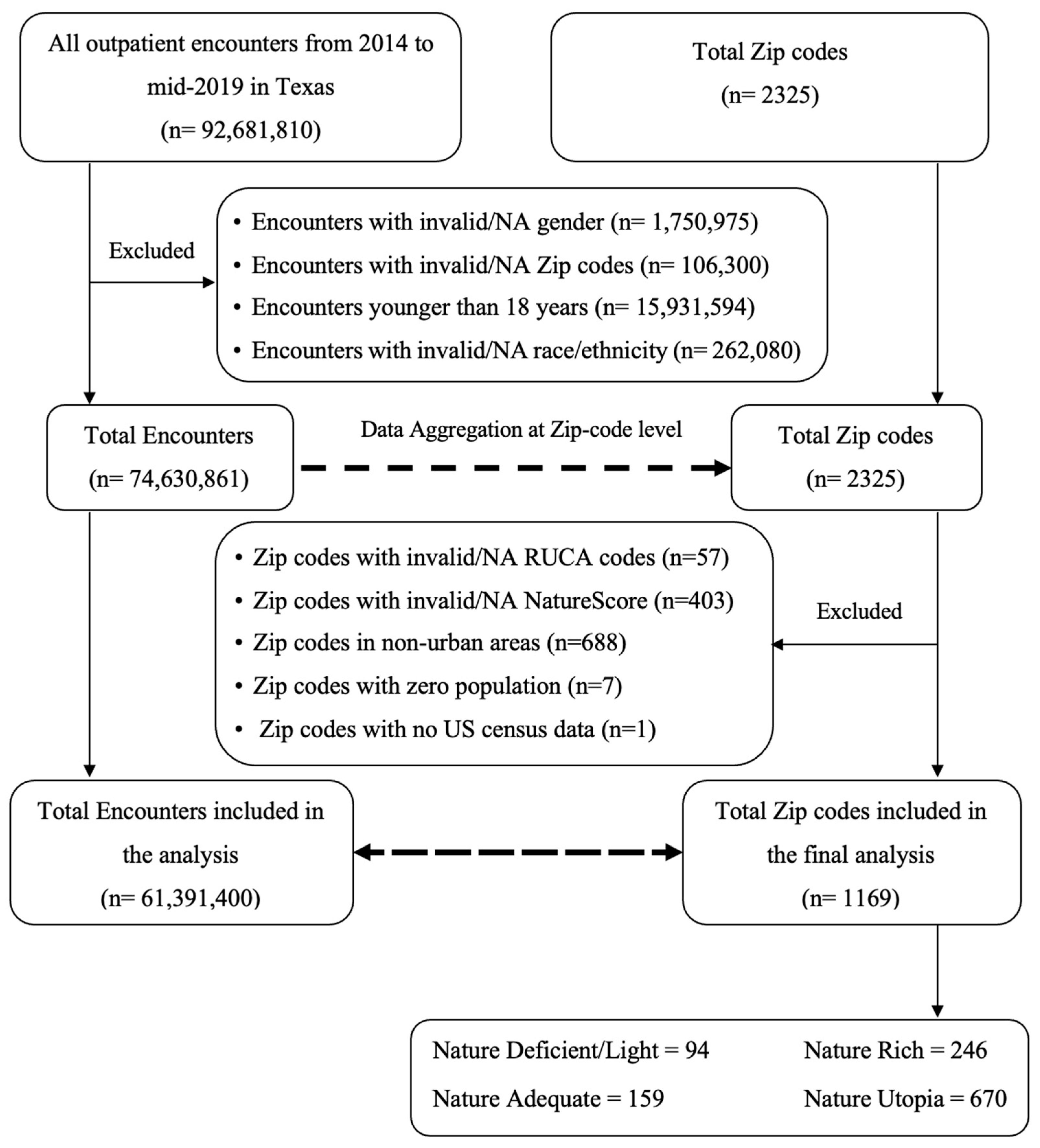
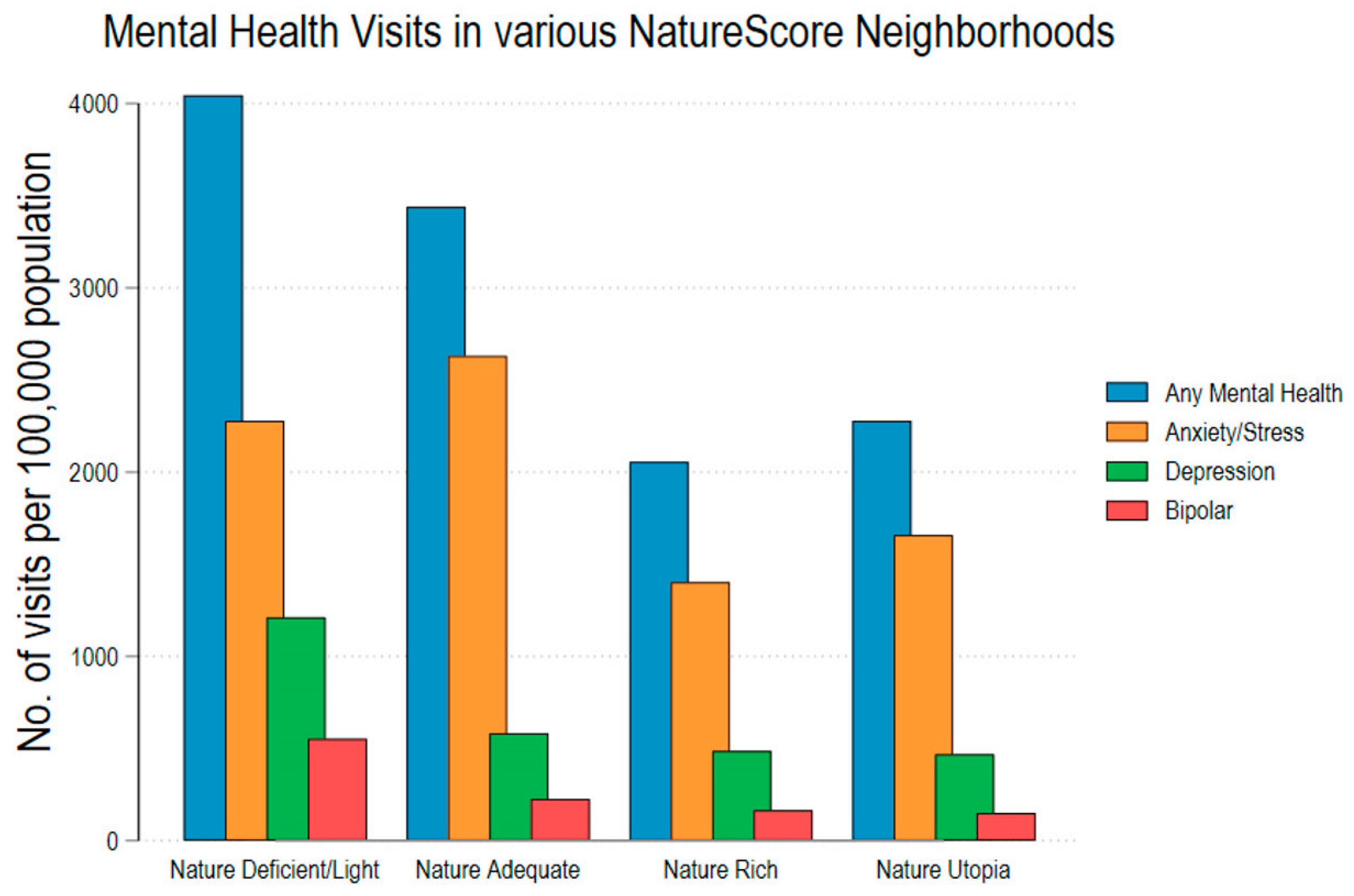
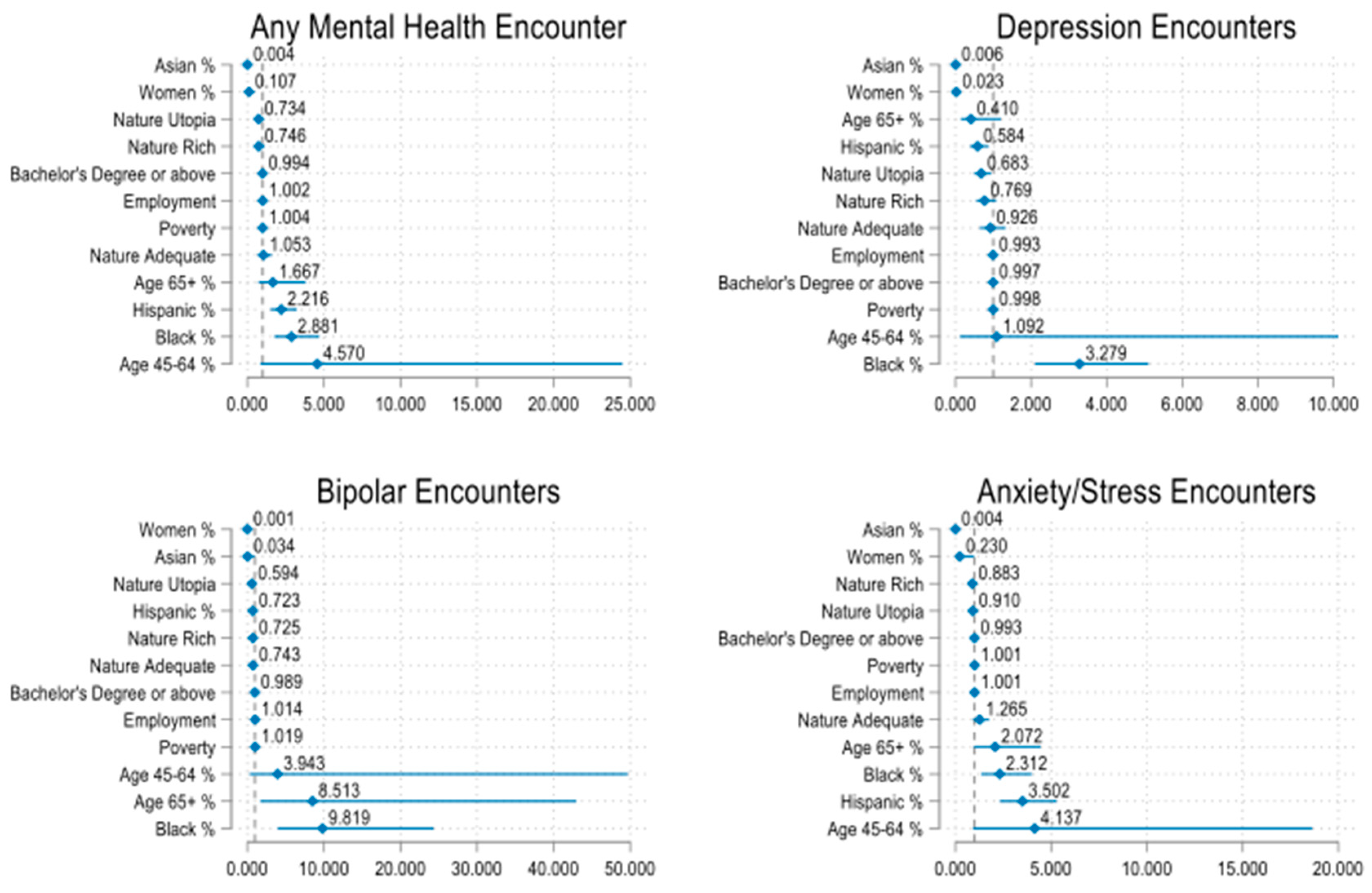
    In this cross-sectional study, we examined the impact of access to nature on mental health utilization in urban neighborhoods using Texas outpatient encounters data merged with NatureScoreTM (0–100; low to high nature levels) and US census data (household income, education, employment, poverty, and insurance coverage) at the zipcode level. Our sample size included 61 million outpatient encounters across 1169 zipcodes, with 63% women and 30% elderly. A total of 369,344 mental health encounters were identified, with anxiety/stress and depression encounters representing 68.3% and 23.6%, respectively. We found that neighborhoods with a NatureScore of 60+ had lower overall mental health utilization than those below 40 (RR 0.51, 95%CI 0.38–0.69). This relationship persisted for depression, bipolar disorder, and anxiety/stress and in neighborhoods with a NatureScore above 80 (p < 0.001). Compared to neighborhoods with a NatureScore below 40, those above 80 had significantly lower depression (aRR 0.68, 95%CI 0.49–0.95) and bipolar (aRR 0.59, 95%CI 0.36–0.99) health encounters after adjusting for demographic and socioeconomic factors. This novel approach, utilizing NatureScore as a proxy for urban greenness, demonstrates the correlation between a higher NatureScore and reduced mental health utilization. Our findings highlight the importance of integrating nature into our healthcare strategies to promote well-being and mental health.

    1. Introduction

    Nature has been an essential component of human life for thousands of years. It has played a critical role in human development and social experience. Interaction with the natural environment, like parks and forests, has significantly impacted both physical and mental health [1]. Health benefits occur both through immersive nature experiences, such as forest bathing [2], and also shorter, less intense exposures, including urban nature [3,4]. Access to nature, especially in urban areas, also promotes increased physical activity [5].
    The prevalence of mental health disorders in the United States has been surging over the last few years, affecting more than 22% of the adult population [6]. With a substantial increase in mental health issues, a few studies have found a relationship between the various social determinants of health and mental health outcomes [7,8]. A significant association between urban green space and improved mental health has been found in Australia, Finland, and Florida, USA [9,10,11]. However, defining nature and relying on subjective measures in these studies might limit comprehension of the full-scale impact of nature access and the built environment on human health.

    In this study, we aimed to explore the relationship between access to nature in urban neighborhoods across Texas, measured in the form of NatureScore, and mental health visits. To our knowledge, only one peer-reviewed paper has been published using NatureScore as a comprehensive measure of nature exposure by geographic location [12]. Most studies of nature and mental health outcomes have only been able to capture one or two elements of nature at low granularity (e.g., average normalized difference vegetation index—NDVI—or tree canopy) at a time. The complex nature of NatureScore allows for a more comprehensive look at nature exposure and its potential benefits on mental health.

    More at link.      

    Tuesday, July 29, 2025

    Living Near the Ocean May Add Years to Your Life

     Higher incomes providing better health care would be my best guess why.

    Check out other blue and green space research:
  • green spaces (6 posts to January 2019)
  • blue space (7 posts to May 2016)
  • Living Near the Ocean May Add Years to Your Lifeng Near the Ocean May Add Years to Your Life

    Key Questions Answered

    Q: Does living near water improve life expectancy?
    A: Yes—but only for those living within 30 miles of a coastline. People in coastal areas tend to live longer than the national average, while those in urban areas near inland rivers or lakes may live slightly shorter lives.

    Q: Why is the ocean different from inland water?
    A: Coastal areas offer milder temperatures, better air quality, more recreation, and higher income—all of which support longevity. In contrast, inland urban waterways are often linked to pollution, poverty, and flood risks.

    Q: Are rural areas near water any different?
    A: Rural residents near water appear to gain some health and lifespan benefits, though not as consistently as coastal dwellers.

    Summary: A new study shows that living near the ocean may be linked to a longer life—while living near inland rivers or lakes in urban areas may actually shorten it. Researchers analyzed data from over 66,000 U.S. census tracts and found coastal residents live, on average, at least a year longer than the national average.

    Benefits may be tied to cleaner air, better weather, and increased physical activity near coastlines, while inland water areas—especially in cities—were associated with pollution, poverty, and increased health risks. The findings suggest not all “blue spaces” are equal when it comes to your lifespan.

    Key Facts:

    • Longevity Boost: Coastal residents may live one year longer than the U.S. average.
    • Urban Inland Risk: City dwellers near rivers or lakes may have lower life expectancy.
    • Environmental Divide: Air quality, temperature, and socioeconomic conditions likely explain the difference.

    Source: Ohio State University

    Living within miles of the ocean breeze may be linked to a longer life, but you shouldn’t count on the same benefits if you live in a riverside city, suggests a recent study.

    Researchers from The Ohio State University analyzed population data — including life expectancy — in more than 66,000 census tracts throughout the U.S. and compared it based on proximity to waterways. 

    Their study was published online in the journal Environmental Research.

    A correlation between longer life expectancy and water was clear for those who live within about 30 miles of an ocean or gulf. But for those who live in urban settings and near an inland body of water larger than 4 square miles, the opposite was true.

    Rural residents who live near water may also reap some lifespan advantages, according to the research.

    “Overall, the coastal residents were expected to live a year or more longer than the 79-year average, and those who lived in more urban areas near inland rivers and lakes were likely to die by about 78 or so. The coastal residents probably live longer due to a variety of intertwined factors,” said lead researcher Jianyong “Jamie” Wu.

    The analysis suggested that milder temperatures, better air quality, more opportunities for recreation, better transportation, less susceptibility to drought, and higher incomes could all be contributors to a better outlook for coastal residents compared to those who live inland.

    “On the other side, pollution, poverty, lack of safe opportunities to be physically active and an increased risk of flooding are likely drivers of these differences,” said Yanni Cao, a postdoctoral researcher who worked on the study.

    The most critical difference the researchers found is that coastal areas experience fewer hot days and lower maximum temperatures compared to inland water areas. 

    Previous research has found a connection between living near water and better health measures, including higher physical activity levels, lower obesity rates and improved heart health.

    That prompted Wu to wonder if there could be a link between “blue space” living and longer lives, and how that relationship might differ depending on the type of neighborhood people call home, he said.

    “We thought it was possible that any type of ‘blue space’ would offer some beneficial effects, and we were surprised to find such a significant and clear difference between those who live near coastal waters and those who live near inland waters,” said Wu, an assistant professor of environmental health sciences at The Ohio State University College of Public Health.

    “We found a clear difference — in coastal areas, people are living longer,” said Wu, adding that the study is the first to comprehensively and systematically examine the relationship between various types of “blue space” and longevity in the U.S.

    Cao said she was especially curious about how this data might provide insights into the trends in life expectancy in the U.S. compared to other wealthy nations. In the past several years, the U.S. experienced a sharper decline and a slower rebound in life expectancy than peer countries.

    “It’s likely that various social determinants of health, including complex environmental factors, that contribute to health inequities are playing a key role in the differences we saw,” she said.

    Ria Martins, a graduate student in public health, was also a co-author.

    About this longevity and neuroscience research news

    Author: Misti Crane
    Source: Ohio State University
    Contact: Misti Crane – Ohio State University
    Image: The image is credited to Neuroscience News

    Original Research: Open access.
    “Unveiling complexity in blue spaces and life expectancy” by Jianyong “Jamie” Wu et al. Environmental Research


    Abstract

    Unveiling complexity in blue spaces and life expectancy

    Although growing evidence supports the positive impact of blue spaces on human health, research on their association with life expectancy remains limited.

    This study examines the association between coastal and inland waters and life expectancy across 66,263 census tracts in the United States, incorporating socioeconomic, demographic, and geographic factors through multiple linear and multi-level regression as well as spatial regression models, supplemented by sensitivity analyses.

    Our findings indicate that proximity to coastal waters is positively associated with life expectancy, whereas proximity to inland waters is negatively associated. We used the mutual information model to identify key factors contributing to these differences.

    Through a comparative analysis of coastal and inland water environments, we found that longer life expectancy near coastal waters may be linked to more favorable environmental and socioeconomic conditions.

    These include milder temperatures, better air quality, enhanced recreational opportunities, improved transportation, lower drought susceptibility, and higher income levels.

    The urban–rural analysis further reveals that proximity to coastal waters is positively associated with life expectancy in both settings, whereas inland waters show differing associations, being negative in urban areas and positive in rural areas.

    In addition to examining these blue space patterns, this study also considers broader socioeconomic and environmental factors related to life expectancy.

    These findings highlight the importance of integrating blue spaces and other key environmental and socioeconomic factors into urban planning, residential development, and healthcare environment design to improve life expectancy and health equity.

    Thursday, May 1, 2025

    Nature-based interventions and nature interaction for people with acquired brain injury: A systematic scoping review

     If your doctor was competent this would have been provided years ago! Why the fuck are you seeing and paying an incompetent doctor?

  • forest bathing (28 posts to September 2015)
  • green spaces (3 posts to January 2019)
  • blue space (3 posts to May 2016)
  • Nature-based interventions and nature interaction for people with acquired brain injury: A systematic scoping review

    , ,
    https://doi.org/10.1016/j.jenvp.2025.102612
    Get rights and content
    Under a Creative Commons license
    Open access

    Highlights

    • •
      Nature is important in all stages of recovery and rehabilitation
    • •
      Incidental hospital interaction reduced psychological distress, increased wellbeing
    • •
      Intentional interaction in hospital was usually through gardening/gardens
    • •
      Community interaction can be more intense/challenging
    • •
      Inaccessible nature is frustrating, virtual approaches may provide a solution

    Abstract

    Substantial evidence demonstrates natural environments benefit human health, but lesser known is specific knowledge on benefits for people with acquired brain injury (ABI), including impacts across the continuum of recovery or the breadth of nature interaction. This systematic scoping review aimed to report on research exploring nature-based interventions and nature interaction for people with ABI, and to identify gaps in the research. Six databases were searched. Eligibility criteria were 1) majority of participants (more than 50%) are adults (18 years and above) with ABI, or therapists/health professionals' perspectives on nature or nature-based interventions for people with ABI, 2) nature-based intervention or nature interaction, 3) all contexts including hospital, rehabilitation, community and home environments, 4) primary research studies and metanalysis reporting on nature-based intervention or nature exposure/immersion and, 5) in English or translated to English. Out of the 16,490 articles screened 38 relevant articles were identified. Most studies were completed during inpatient (n = 13) and outpatient rehabilitation (n = 10), with less research occurring post rehabilitation (n = 12) and during acute care (n = 2); one was longitudinal across these phases, and one was unable to be determined. The interaction, or exposure, to nature was incidental in fourteen of the studies, and intentional for the remaining (n = 24). Most of the studies explored nature in outdoor environments, with gardens and green space being most common (n = 28) and nature in indoor environments explored in only seven studies. Quantitative research most often evaluated depression and anxiety outcomes (n=12), followed by well-being and quality of life (n = 5); and independence, activity performance and participation (n = 5). Quantitative results indicated that nature positively impacts depression, anxiety and mood, along with well-being and quality of life. But there were mixed results for sleep and fatigue, stress, self-efficacy, and independence/activity participation. Common qualitative study outcomes were well-being and quality of life (n=7), restoration (n=7), self-efficacy and motivation (n=6), depression, anxiety and mood (n=5), and benefits to the rehabilitation process (n=5). Overall, nature interactions offer significant benefits for people with ABI, and wherever possible healthcare professionals are encouraged to incorporate nature into the rehabilitation process. Research is needed to provide robust further evidence and understand the best methods of intentionally using nature in rehabilitation, with stage of recovery an important consideration. Two areas for future research with very little exploration to date were nature exposure in the acute care stage of recovery and incidental nature exposure. The need and value of involving people with ABI in the development of intentional nature interactions, healthcare building design, and research design, was highlighted as critical to ensure nature is incorporated to its full potential.

    Thursday, August 1, 2024

    Re-Imagining Hospital Patient Room Design for People After stroke: A Randomized Controlled Study Using Virtual Reality

     Was this considered? Blue and green spaces?

    Stroke survivors denied best chance of recovery by rehab design December 2023 

    The latest here:

    Re-Imagining Hospital Patient Room Design for People After stroke: A Randomized Controlled Study Using Virtual Reality

    Abstract

    BACKGROUND:

    The hospital’s physical environment can impact health and well-being. Patients spend most of their time in their hospital rooms. However, little experimental evidence supports specific physical design variables in these rooms, particularly for people poststroke. The study aimed to explore the influence of patient room design variables modeled in virtual reality using a controlled experimental design.

    METHODS:

    Adults within 3 years of stroke who had spent >2 nights in hospital for stroke and were able to consent were included (Melbourne, Australia). Using a factorial design, we immersed participants in 16 different virtual hospital patient rooms in both daytime and nighttime conditions, systematically varying design attributes: patient room occupancy, social connectivity, room size (spaciousness), noise (nighttime), greenery outlook (daytime). While immersed, participants rated their affect (Pick-A-Mood Scale) and preference. Mixed-effect regression analyses were used to explore participant responses to design variables in both daytime and nighttime conditions. Feasibility and safety were monitored throughout. Australian New Zealand Clinical Trials Registry, Trial ID: ACTRN12620000375954.

    RESULTS:

    Forty-four adults (median age, 67 [interquartile range, 57.3–73.8] years, 61.4% male, and a third with stroke in the prior 3–6 months) completed the study in 2019–2020. We recorded and analyzed 701 observations of affective responses (Pick-A-Mood Scale) in the daytime (686 at night) and 698 observations of preference responses in the daytime (685 nighttime) while continuously immersed in the virtual reality scenarios. Although single rooms were most preferred overall (daytime and nighttime), the relationship between affective responses differed in response to different combinations of nighttime noise, social connectivity, and greenery outlook (daytime). The virtual reality scenario intervention was feasible and safe for stroke participants.

    CONCLUSIONS:

    Immediate affective responses can be influenced by exposure to physical design variables other than room occupancy alone. Virtual reality testing of how the physical environment influences patient responses and, ultimately, outcomes could inform how we design new interventions for people recovering after stroke.

    REGISTRATION:

    URL: https://anzctr.org.au; Unique identifier: ACTRN12620000375954.

    Wednesday, December 13, 2023

    Stroke survivors denied best chance of recovery by rehab design

    Well duh! That knowledge has been out for years.

    Stroke survivors denied best chance of recovery by rehab design

    The Novell project found that new stroke rehabilitation units should provide better access and visual connection to the outdoors. Picture supplied 
    The Novell project found that new stroke rehabilitation units should provide better access and visual connection to the outdoors. Picture supplied

    Victorian stroke survivors are being denied the best chance of recovery because most of the state's rehabilitation centres are not "purpose built" to aid rehabilitation.

    That's the view of Julie Bernhardt from brain research institute The Florey, who said research suggests people with potential to recover from stroke could do much better in the right environment.

    Professor Bernhardt said about 70 per cent of rehabilitation facilities in Victoria are not adequately built for purpose, and many more were designed using an acute care model.


    "Rather than encouraging stroke survivors to be active, many facilities subliminally encourage them to stay in their rooms, often in bed and alone," Professor Bernhardt said.

    "This is not helpful in promoting recovery after stroke."

    Professor Bernhardt is co-lead researcher of the Neuroscience Optimised Virtual Environments Living Lab (NOVELL) project.

    The project aims to inspire healthcare providers and designers to create stroke rehab spaces that are innovative, more supportive of patient autonomy, and encourage activity and rest as part of the recovery journey.

    According to The Stroke Foundation, about 10,000 people with stroke were admitted for inpatient rehabilitation across Australia in 2020, with an average stay of 14 days.

    The 'living lab' approach incorporates virtual reality technology and a collaborative design strategy, integrating ideas from stroke survivors, clinicians, architects, neuroscientists and policy makers.

    "Our wards include carefully designed shared bedrooms where stroke survivors would have access to essential privacy and quiet time for rest, while also having opportunity to be stimulated through incidental social interactions with fellow stroke survivors, visitors and staff," Professor Bernhardt said.

    "There's also some evidence suggesting that people in shared rooms are less likely to fall."

    Foundation objectives were to build:

    • A positive and stimulating environment, including communal spaces and other destinations to encourage people to get out of their bedrooms and keep active
    • Versatile spaces that can be adapted to meet different preferences and needs
    • Bedrooms that have all the benefits of both a single room and a shared bedroom
    • Easier navigation to build patient confidence in leaving the room
    • Better lines of sight and visibility between stroke survivors and staff
    • Better access and visual connection to the outdoors

    For more information click here.

    Sunday, October 29, 2023

    Can living near parks and lakes boost your mental health? A 10-year study says yes

    Well your competent doctor told you about this years ago.

    Acute effects of walking in forest environments on cardiovascular and metabolic parameters.  December 2016 


    Can living near parks and lakes boost your mental health? A 10-year study says yes

    In a recent study published in the journal Planetary Health, research conducted a massive, long-term, population-scale study comprising 2.3 million individuals from Wales to elucidate whether greater exposure to green and blue spaces (GBS) could be linked with mental health outcomes. Results from this 10-year-long longitudinal dynamic panel study revealed that greater exposure was associated with reduced common mental disorders (CMD), with these results more significant for individuals from more socio-economically deprived quintiles. These findings can help inform government policy on GBS, especially those planning GBS set-up to improve the mental health of their communities.

    Study: Ambient greenness, access to local green spaces, and subsequent mental health: a 10-year longitudinal dynamic panel study of 2·3 million adults in Wales. Image Credit: Dmitrijs Bindemanis / ShutterstockStudy: Ambient greenness, access to local green spaces, and subsequent mental health: a 10-year longitudinal dynamic panel study of 2·3 million adults in Wales. Image Credit: Dmitrijs Bindemanis / Shutterstock

    Mental health and GBS

    Common mental disorders (CMD) remain a primary contributor to the worldwide disease burden, resulting in an estimated 4.9% reduction in disability-adjusted life-years. Recent research has hypothesized that increased exposure to greener and blue spaces (GBS) or living close to green spaces may be responsible for improved mental health outcomes. Unfortunately, there is a dearth of longitudinal scientific evidence to support this hypothesis.

    GBS comprises open-air natural settings, including parks, gardens, forests, beaches, lakes, and ponds, and has long been categorized as cultural ecosystem services. High-quality GBS accessibility and distribution, however, is unequal, with individuals living in deprived areas, older adults, the sick and disabled, and minority ethnic communities being far more deprived than their more affluent, younger, and more mobile counterparts.

    Small-scale cross-sectional and longitudinal studies have suggested that increased GBS exposure may result in better mental health and well-being. However, they have predominantly included area- rather than household-level census data and been restricted to urban settings. Furthermore, the results from these pilots have been inconclusive, differing in estimated lag times between GBS exposure and beneficial mental health outcomes.

    About the study

    In the present study, researchers investigated the adult (>16 years) outcomes of accrued household GBS availability, with explicit consideration of health inequalities. They further delinked GBS exposure and living in greener areas, allowing them to analyze the benefits of each separately. Since households may change location over time, the research methodology accounted for these shifts and periodically tracked household movement (anonymously) via a routine updation of household residence, as opposed to previous studies, which focused on the region rather than families or households.

    The study cohort comprised adult individuals from Wales, United Kingdom (UK), tracked electronically between 2008 and 2019. The dataset was derived from the Welsh Demographic Service Dataset and consisted of anonymized individual-level demographic characteristics of citizens registered with National Health Service (NHS) general practitioners (GPs). This dataset comprises 80% of the total Welsh population. Geographical location was participant-provided and updated when a participant or GP reported a change in household residency. The study design nested all individuals above 16 years within a household.

    The demographic data thus obtained was linked to GP records, including CMD reports. Data from the Annual District Death Extract from the Office for National Statistics mortality register was used to periodically add individuals who had attained the age of adulthood and remove those who had died from the dataset. The Welsh Index of Multiple Deprivation and rural-urban Office for National Statistics classifications for Lower Layer Super Output Areas were used for the socioeconomic and demographic classification of study cohort participants.

    This study defined ‘household ambient greenness’ as living within 300 m of a GBS and ‘local GBS access’ as 1. living within 1600 m of a GBS easily accessible via foot or 2. living in proximity to a GBS with a road-accessible network buffer. Greenness was measured using the Enhanced Vegetation Index (EVI), which improves over the hitherto prevalent Normalized Difference Vegetation Index (NDVI) by correcting for atmospheric conditions (e.g., cloud cover) and canopy background noise. EBI and NDVI are obtained from geospatial satellite imagery, with data for this study from Landsat 2008-2019.

    “The substantial topographical variation in our study area (Wales, UK) made EVI the most appropriate measure as it is less susceptible to the effects of topographic seasonal factors. We calculated this within 300 m of each home in Wales.:

    Building on earlier research, this study posited that certain advantages of green-blue space (GBS) exposure, such as serene natural views and lower noise levels compared to industrial environments, could be experienced without direct physical interaction with the GBS. To minimize noise from cloud cover, images were extracted during the springtime between May and June of each year.

    “We used the cloud masks to set pixels covered by cloud in the satellite imagery to NULL to prevent these values from influencing the final greenness density. A larger EVI score does not necessarily equate to more greenness by area but instead represents a larger volume (increased biomass) of green. A small forest, for example, could produce the same EVI score as a large area covered in grass.”

    Obtained GBS imagery in tandem with local authority technical advice notes (TAN 16) was used to classify GBS into those that can be 1. seen and 2. physically accessed. The CMD (anxiety or depression) data was categorized into 1. no CMD, 2. CMD diagnosed one year prior to study commencement, and 3. CMD was diagnosed within the eight years preceding study initiation, for which medication was ongoing.

    Statical covariates included sex, age group, household births and deaths, area-level socioeconomic deprivation, household movement, and region category (urban or rural). Statistical analyses comprised the application of multivariate logistic regression to elucidate correlations between normalized time-aggregated EVI and access measures.

    Study findings

    Results from this study highlight that both increased ambient greenness and GBS access were independently associated with a reduced likelihood of future CMD. Stratified statistical analyses showed that this association was strongest for people living in deprived areas (10% reduction per 0·1-unit increase) compared to those living in areas with low deprivation (6% reduction).

    These results also discovered that individuals’ CMD history alters the benefits of ambient greenness and GBS access – individuals with a previous history of CMD were found to benefit more than those without prior CMD diagnoses. However, both showed positive associations, indicating that GBS has both restorative and preventive functions in combatting CMD.

    “Although the study period for this research preceded the COVID-19 pandemic, the need for GBS to access or view was brought to the fore during the early stages of the pandemic, particularly for those living in urban areas with poor or no access to private or communal garden spaces. Our results suggest that investing in improved ambient greenness, as well as making public GBS accessible, might lead to future mental health benefits for adults with and without a history of CMD.”

    In combination with the above, GBS, especially in urban settings, might provide additional co-benefits, including food and job creation, flood prevention, carbon sequestration, and biodiversity promotion. GBSs can, therefore, be thought of as both public health and social investments. This study thus forms the scientific repository that policymakers and urban planners can use in their decision-making processes, thereby helping their respective communities from both ecological and mental health standpoints.

    Journal reference: