Changing stroke rehab and research worldwide now.Time is Brain! trillions and trillions of neurons that DIE each day because there are NO effective hyperacute therapies besides tPA(only 12% effective). I have 523 posts on hyperacute therapy, enough for researchers to spend decades proving them out. These are my personal ideas and blog on stroke rehabilitation and stroke research. Do not attempt any of these without checking with your medical provider. Unless you join me in agitating, when you need these therapies they won't be there.

What this blog is for:

My blog is not to help survivors recover, it is to have the 10 million yearly stroke survivors light fires underneath their doctors, stroke hospitals and stroke researchers to get stroke solved. 100% recovery. The stroke medical world is completely failing at that goal, they don't even have it as a goal. Shortly after getting out of the hospital and getting NO information on the process or protocols of stroke rehabilitation and recovery I started searching on the internet and found that no other survivor received useful information. This is an attempt to cover all stroke rehabilitation information that should be readily available to survivors so they can talk with informed knowledge to their medical staff. It lays out what needs to be done to get stroke survivors closer to 100% recovery. It's quite disgusting that this information is not available from every stroke association and doctors group.

Showing posts with label Scotland. Show all posts

Monday, August 24, 2026

Glasgow stroke patients  'failed' for eighth year as charity warns of 'devastating' impact

 Measuring 'care', NOT RECOVERY means you don't know what the fuck you need to do! Let survivors run the show, not you blithering idiots!

Glasgow stroke patients  'failed' for eighth year as charity warns of 'devastating' impact


Chest, Heart and Stroke Scotland has warned that four in every ten stroke patients in Greater Glasgow & Clyde didn’t receive the necessary stroke care(NOT RECOVERY) last year.

View Image

Stroke is still one of the biggest causes of long-term adult disability in Scotland.(Image: Julian Hamilton/Daily Miiror)

A charity has warned that Glasgow stroke patients are facing 'potentially devastating' outcomes after NHS treatment failed to meet Scottish Government targets for the eighth year in a row.

 Chest, Heart and Stroke Scotland has warned that four in every ten stroke patients in Greater Glasgow & Clyde didn’t receive the necessary stroke 

care(NOT RECOVERY)

 last year. It comes as the latest figures released by Public Health Scotland revealed that the country has failed to reach its target of 80 per cent of patients receiving an inpatient bundle for the eighth straight year.

The charity says that the stroke bundle, which includes aspirin, access to a stroke unit, brain imaging and swallow screening, gives patients the best chance of survival in the critical hours after a stroke. In Greater Glasgow & Clyde, 59.1 per cent of the region’s 2,454 patients received the bundle.

The charity says that across Scotland, 56 per cent of the 11,048 stroke patients received the 

care(NOT RECOVERY)

 set by national standards.

Joanne Graham, Director of Service Delivery at CHSS, said: “While we welcome the number of strokes dropping in Greater Glasgow & Clyde and the increase in people receiving the inpatient bundle, work remains to be done to achieve the Scottish Government’s 80% target.

“Unfortunately, this is the eighth straight year that the Scottish Government has failed to hit its own targets for stroke 

care(NOT RECOVERY)

. They are failing stroke survivors and our NHS colleagues in Greater Glasgow & Clyde who are doing the absolute best they can with the inadequate resources they’re currently being given. It’s having a potentially devastating impact on outcomes for stroke survivors in the region.

"We need the Scottish Government to build on today's marginal progress and continue driving better outcomes for people affected by stroke over the next five years.

"Investing in stroke services, rehabilitation and recovery support can improve quality of life, reduce disability and deliver long-term benefits for both patients and the wider health system. We know access to that support, as well as supported self management programmes and community services, can dramatically improve quality of life and help people regain independence.

"CHSS is already supporting stroke survivors across Scotland and we remain ready to build upon our current support in Greater Glasgow & Clyde to ensure more people can rebuild their lives after stroke, regardless of where they live or their circumstances."

Dr Claire Harrow, Deputy Medical Director for Acute Services at NHS Greater Glasgow and Clyde, said: "Across Greater Glasgow and Clyde we are committed to improving stroke 

care(NOT RECOVERY)

 for all our patients.(You're a complete fucking failure at that, so resign!)

“The stroke bundle covers a range of important aspects of 

care(NOT RECOVERY)

 for patients presenting with an acute stroke. Performance against each of these is monitored by each of our sector stroke teams focused on their own performance as well as areas for improvement and is overseen by the Stroke Improvement Group.

“Some of the developments in progress include extended weekday thrombolysis hours at Glasgow Royal Infirmary site, from 9am-5pm to 8am-7pm, from 17th August. We have also established a common stroke imaging pathway, and are working with the Scottish Ambulance Service to strengthen pre-alert processes so that patients are seen as promptly as possible on arrival.

“We are grateful for the ongoing hard work and commitment of the NHSGGC Stroke teams across the health board who continue to strive to deliver the best possible 

care(NOT RECOVERY)

 for stroke patients.”

Public Health Minister Maree Todd said: “We are focused on ensuring people who have had a stroke receive the best possible 

care(NOT RECOVERY)

 as quickly as possible to enable them to live longer, healthier and more independent lives.

“Whilst we have seen an improvement in stroke bundle performance, we know there is more to do, and we will continue to work with individual health boards to drive up standards of stroke 

care(NOT RECOVERY)

, for example, through funding hyperacute stroke nurses to identify patients earlier in their journey and through the stroke pathway.”Stroke is still one of the biggest causes of long-term adult disability in Scotland.

If you’re living with the effects of a chest, heart or stroke condition or Long Covid and are looking for advice and information, please contact Chest Heart & Stroke Scotland’s Advice Line on 0808 801 0899. You can also text ADVICE to 66777 or email adviceline@chss.org.uk.

Wednesday, August 12, 2026

Scotland misses stroke care target for eighth year in a row

 Your first problem is measuring 'care'; NOT RECOVERY! 

Any hospital that touts 'care' instead of publishing actual recovery statistics, IS A FAILED HOSPITAL, DON'T GO THERE!

Survivors want 100% recovery OR DON'T YOU CARE ABOUT THAT? 

Anyone who touts standards/'care' and NOT RECOVERY! IS A COMPLETE FUCKING FAILURE!

I'd fire everyone associated with setting goals for 'care' rather than recovery!

Scotland misses stroke care target for eighth year in a row

The Scottish Government is still “failing stroke patients”, a charity has warned after targets were missed for an eighth consecutive year.

The annual stroke care(NOT RECOVERY!) report published by Public Health Scotland found a 3.6 percentage point increase in patients receiving the care(NOT RECOVERY!) bundle: a swallow screen, brain imaging, aspirin and admission to a stroke unit.

However, the figure remains just over half, at 56.7 per cent, well below the government target of 80 per cent.

There was also a small increase in the number of people receiving thrombolysis, to 11.6 per cent.

But the number of patients who underwent thrombectomy remained unchanged at 1.9 per cent. International comparisons suggest the proportion of stroke patients typically suitable for the procedure is nearer 10 per cent.

Joanne Graham, director of service delivery at Chest, Heart and Stroke Scotland, said while there had been some “welcome progress”, improvements were “not being achieved at the pace required”.

She said: “These challenges have been recognised for many years, and we need the Scottish Government to build on today’s marginal progress and continue driving better outcomes for people affected by stroke over the next five years.

“Investing in stroke services, rehabilitation and recovery support can improve quality of life, reduce disability and deliver long-term benefits for both patients and the wider health system.

“Too often the conversation about stroke ends when a patient leaves hospital, but recovery can continue for months and years afterwards.”

A total of 11,048 people had a stroke in Scotland last year, down from 11,367 in 2024.

While the vast majority of patients received aspirin, at 92.2 per cent, and brain imaging, at 91.6 per cent, fewer were admitted to a stroke unit, at 72.1 per cent, or given a swallow screen, at 70.8 per cent.

No health board in Scotland hit the 80 per cent target for all four elements of the bundle.

NHS Shetland performed best, while NHS Borders performed worst.

NHS Highland, NHS Forth Valley and NHS Lanarkshire made statistically significant improvements compared with 2024.

Public health minister Maree Todd(She needs to be fired for incompetence in setting a goal for 'care' NOT RECOVERY!) said: “We are focused on ensuring people who have had a stroke receive the best possible care(NOT RECOVERY!) as quickly as possible to enable them to live longer, healthier and more independent lives.

“Whilst it is welcome to see an improvement in stroke bundle performance, we know there is more to do, and we will continue to work with health boards to drive up standards of stroke care(NOT RECOVERY!).

“We have committed to supporting new community gyms for stroke rehabilitation and we have invested over £63m to date on expanding access to thrombectomy procedures. We are clearly focused on delivering a 24/7 thrombectomy service so that thrombectomies are available regardless of location.”

Scottish Labour said the figures showed Scots were “being let down”.

Deputy leader Jackie Baillie said: “Despite the tireless efforts of NHS staff, patients are still facing dangerously long waits for care(NOT RECOVERY!) and limited treatment options.

“The SNP must admit that this is not good enough and set out a real plan to deliver the standard of care(NOT RECOVERY!) stroke patients need right across the country.”

Wednesday, February 18, 2026

More younger Scots dying from stroke

 If your hospital isn't measuring 30-day deaths and putting together protocols to prevent those deaths; 

THEY ARE TOTALLY FUCKING INCOMPETENT! 

No excuses allowed, everyone needs to be fired! Why would you go to a failed hospital?

More younger Scots dying from stroke

The number of people aged under 65 dying from a stroke across Scotland is increasing, despite an overall reduction in stroke rates and deaths across all ages. The charity Chest Heart & Stroke Scotland says there is a widening health inequality gap, with deprivation emerging as one of the strongest predictors of stroke-related death.

The Scottish Stroke Statistics issued by Public Health Scotland report on patient numbers and incidence of cerebrovascular disease in Scotland, including stroke, brain haemorrhage and Transient Ischaemic Attacks, or ‘mini strokes’.

The incidence rate for cerebrovascular disease decreased over the decade between 2015/16 and 2024/25 by 12%. Incidence was consistently 25% higher in males than females.

The overall death rate reduced by 28% in the ten years to the end of 2024.

However, Chest Heart & Stroke Scotland (CHSS) says the overall picture hides a worrying trend of 16% more deaths in younger people under the age of 65 from stroke and wider cerebrovascular conditions over those ten years.

CHSS says there is a ‘stark gap’ in outcomes for people in more disadvantaged areas, with the 2024 death rate in the most deprived areas of Scotland 52% higher than in the least deprived.

Of the 19,098 people who died from cerebrovascular disease between 2020 and 2024, 1,871 were under 65. 35% of those deaths occurred in the most deprived areas of Scotland, compared to 19% of those aged 65 and over living in these communities.

The charity is calling for a fundamental shift in how the country tackles the root causes of stroke, and the impact on outcomes of deprivation, lack of early intervention and uneven access to rehabilitation.

Chief Executive, Jane-Claire Judson says politicians need to focus on these gaps as a matter of urgency:

“This isn’t just a statistical anomaly, it's a wake-up call. People under 65 should not be dying from strokes in increasing numbers in 2026.

“Behind every one of these deaths is a story of lost potential, devastated families, and avoidable tragedy.

“What this trend shows us is that progress isn’t being felt equally. If we don’t act to reverse this now, more families will face the heartbreak of losing loved ones far too soon.”

Focus on five factors

In its manifesto ahead of May’s Holyrood elections, CHSS calls on the next Scottish government to focus on five key areas: prevention and early detection, acute care – included access to 24/7 thrombectomy services – rehabilitation, support beyond healthcare, and prioritising lived experience.(But not 100% recovery! Are you that fucking stupid? YOU have to call out their incompetence!)

The organisation says a failure to invest in these areas will see the current cost of stroke to the NHS in Scotland increase beyond £1 billion a year.

Former MP Amy Callaghan survived a haemorrhagic stroke in 2020 aged 28.

Now Strategic Political Advisor at CHSS, she says delivering on the 2017 promise of universal access to 24/7 thrombectomy services, must be a priority:(YOU are that stupid! Access does not deliver recovery; ONLY EXACT PROTOCOLS DO!  My god, the absolute stupidity in stroke is appalling!)

“If someone has a blood clot in their brain, they need to get on the table to receive a thrombectomy within three hours.(And the failure rate of that is 88% Right now, that simply isn’t happening.

“If you arrive just minutes too late you may miss the service and could be left with a lifelong disability.”

This contrasts, CHSS says, with outcomes for those receiving timely access to thrombectomy treatment, who are three times more likely to return to independent lives.

Jane-Claire Judson says uniform national access to cardiovascular risk detection, timely diagnosis and treatments such as thrombectomy, with stronger support for rehabilitation, can help address the growing number of deaths of younger people from more deprived communities, adding:

“Too many lives are being half lived, or lost entirely, because we are failing to make the right decisions now. The data is clear. The solutions exist. What’s needed is political will.”

Sunday, August 24, 2025

Aboyne man: ‘I can still barely walk because having stroke at 9pm meant I didn’t get proper treatment’

 A competent? stroke hospital will have 100% recovery protocols regardless of time presented. ANYTHING LESS IS PURE FUCKING INCOMPETENCE! 

Send me personal hate mail on this: oc1dean@gmail.com. I'll print your complete statement with your name and my response in my blog. Or are you afraid to engage with my stroke-addled mind? No excuses are allowed! You're medically trained; it should be simple to precisely state EXACTLY WHY you aren't creating EXACT recovery protocols with NO EXCUSES! Your definition of competence in stroke is obviously much lower than stroke survivors' definition of your competence! Swearing at me is allowed, I'll return the favor. Don't even attempt to use the excuse that brain research is hard.

Aboyne man: ‘I can still barely walk because having stroke at 9pm meant I didn’t get proper treatment’

A stroke left Graham McGowan fighting to walk again - but the emergency treatment that could have helped wasn’t available after-hours.

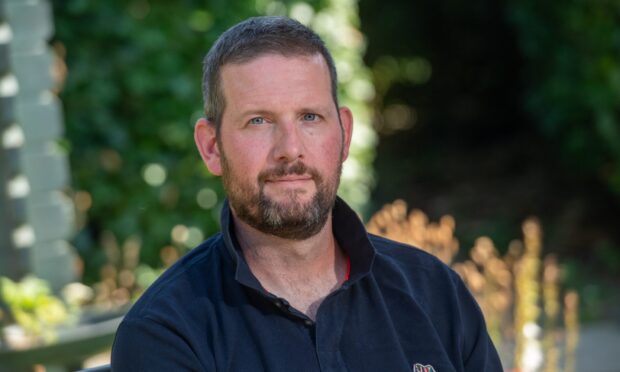
Graham McGowan, 53, at home in Aboyne.
Graham McGowan at home in Aboyne. The 53-year-old is still living with the consequences of his stroke. Image: Kath Flannery.

“It feels a little bit like you were killed on the last day of a war,” he says after a pause and a half-apology. “Like your plane crashed on the way back home.”

On May 20 2022, Graham – then 49 – was at his home in Aboyne gearing up for a trip to Northern Ireland.

The avid outdoorsman was planning a 20-mile run along the north coast with his brother-in-law to celebrate his upcoming 50th.

Instead, a small tear in his carotid artery sent a clot to his brain, triggering a stroke leaving his left hand numb.

His wife, Heather, immediately called an ambulance, and by the time Graham reached Aberdeen Royal Infirmary, it was about 9.30pm.

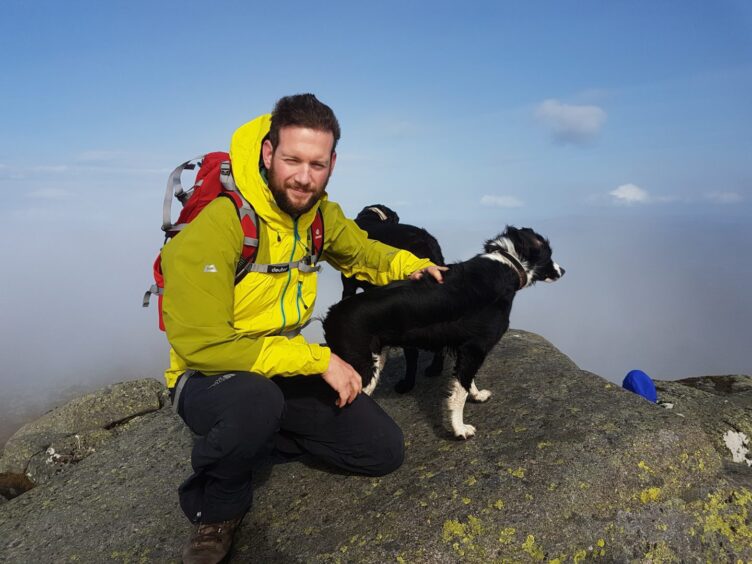
Graham McGowan on a hill walk with two collies.
Before his stroke in 2022, Graham was a hiker, skier and runner. Image: Stroke Association.

Graham didn’t realise it then, but the timing was significant.

It was outside the hours when Dundee’s Ninewells Hospital performs thrombectomies, a clot-removal procedure that can greatly reduce the risk of long-term disability when done quickly.

If he’d had his stroke earlier, say 3pm, he was told, he’d have been blue-lighted down the A92.

Instead, Graham stayed at ARI and was given thrombolysis — a clot-busting drug. When he woke up, he had no movement down his left side.

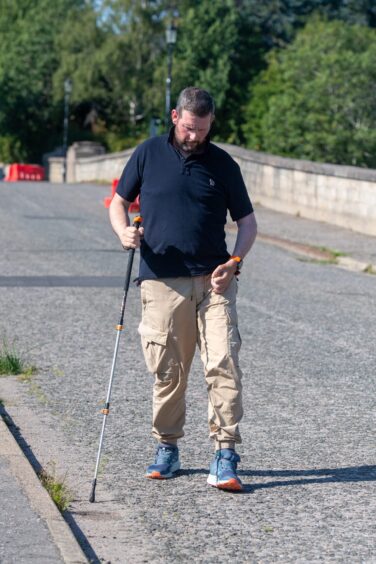
Three years on, his left arm remains almost entirely paralysed, and even walking short distances requires a brace, a stick and monumental effort.

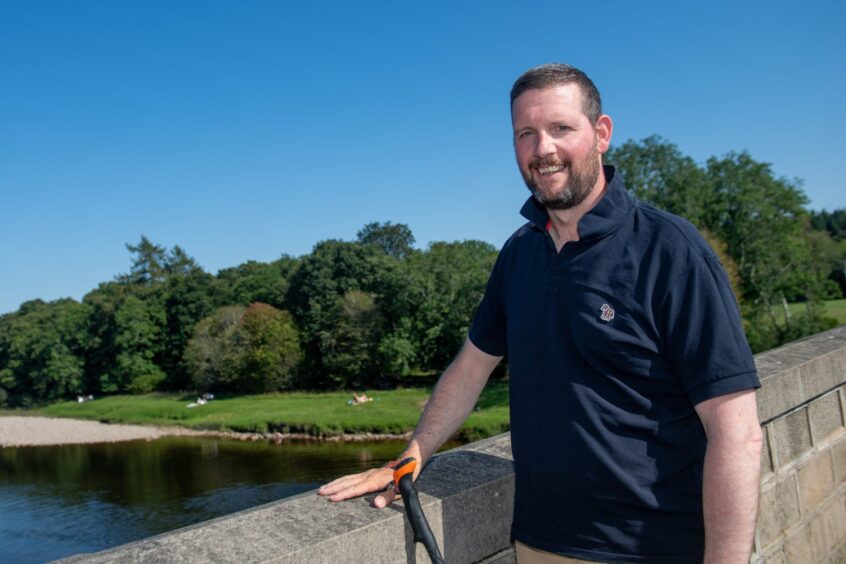
Graham walking with a stick on Aboyne Bridge.
Graham is still unable to walk without the aid of a brace and stick. Image: Kath Flannery/DC Thomson.

The long-term effects leave him with the question of what if. What if he’d been transferred to Dundee for a thrombectomy instead of given thrombolysis in Aberdeen? What if the timing had been different, or the service available around the clock?

“I do try not to think about it too much because I focus more on what I can do,” he says. “But it’s crazy, really crazy.”

A postcode lottery of care

Across Scotland, only three hospitals — in Dundee, Edinburgh and Glasgow — perform thrombectomies, and none operates a 24/7 service.

Stroke charities say this leaves patients at the mercy of the clock, with those who fall ill outside limited weekday hours missing out on treatment that could transform their recovery.

The Scottish Government, through Public Health Scotland, has committed itself to increasing access to thrombectomies but the care(Notice that godawful excuse of 'care'; NOT RECOVERY! Which just proves Public Health Scotland is fucking incompetent! Get everyone there fired!)  gap continues.

According to new figures from Public Health Scotland, less than a fifth of eligible patients in Scotland get one, while a 2024 national stroke audit shows the thrombectomy rate elsewhere in the UK is more than double that in Scotland.

As one study puts it, thrombectomy access in the UK is a “considerable postcode lottery”.

In the north and north-east the situation is even more bleak: with only a six-hour treatment window, patients like Graham are often too far from the Central Belt hubs.

“He had his stroke in the wrong place, at the wrong time of day,” says John Watson, associate director for the Stroke Association in Scotland.

Why a thrombectomy can improve the odds

As for outcomes, research shows a thrombectomy can more than double the odds of a good stroke recovery compared with clot-busting drugs alone.

Around half of patients treated with the procedure are able to walk and live independently afterwards, compared with fewer than one in five given thrombolysis.

One story from two years ago illustrates just how stark that difference can be.

Ian Aitchison, from Aberdeen, had a stroke in August 2023, a year and three months after Graham.

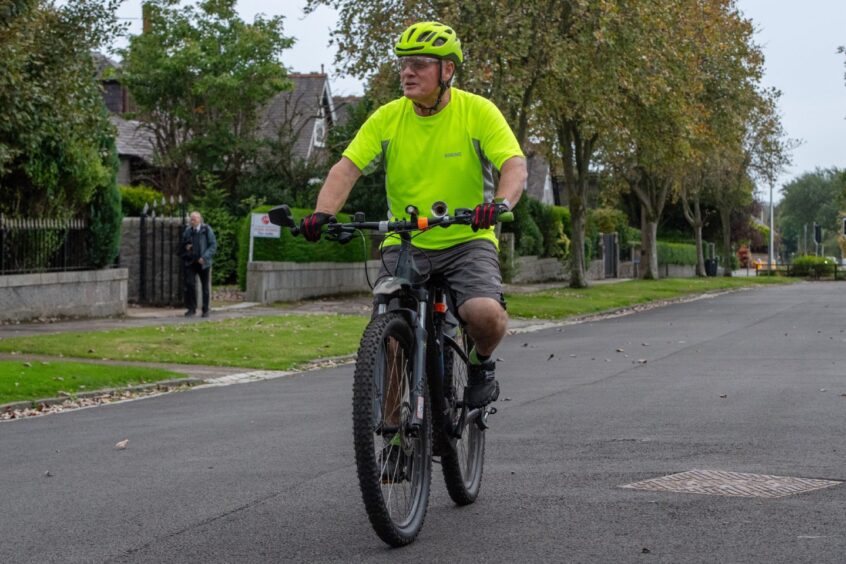
The 71-year-old was rushed to Ninewells for a thrombectomy and just weeks later was back on his bike — a recovery almost unthinkable without the clot-removal procedure.

Ian Aitchison on his bike.
Ian Aitchison on his bike. The Aberdonian had a thrombectomy following his stroke. Image: Kenny Elrick/DC Thomson.

For Graham, the implications of his out-of-office-hours stroke only sank in months later, while watching a YouTube clip of former athlete Michael Johnson.

Johnson, who had a mini-stroke in 2018 and was unable to walk, spoke to a fellow patient who’d had a thrombectomy — and ran out of hospital three days later.

“That brought it home to me quite hard,” Graham says.

Scottish Government responds

As stroke charities call for the Scottish Government to create a 24/7 national thrombectomy service, ministers point to improvements over the past few years.

Scotland’s Public Health Minister Jenni Minto told The P&J that between 2022 and 2024 the number of patients able to access thrombectomy treatment from NHS Scotland almost doubled.

However, she added: “There is more to do and we will continue to increase access to these procedures.

“We want to make sure people who have had a stroke receive the best possible care(NOT RECOVERY!) as quickly as possible to enable them to live longer, healthier and more independent lives.”

A spokesperson for NHS Grampian echoed the government response, highlighting the improvement in thrombectomy treatment across Scotland.

“We understand work continues to further improve access to this vital treatment, which we are fully in support of,” the spokesperson added.

What Graham’s life is like after his stroke

More than three years on from Graham’s stroke, and despite intensive rehabilitation work the former runner, skier and hillwalker still struggles with simple tasks.

“I sometimes think about this: how much effort is walking now in comparison to what it was before?” he asks. “And I think that number is probably at least somewhere between 10 times and 20 times harder now than it used to be.”

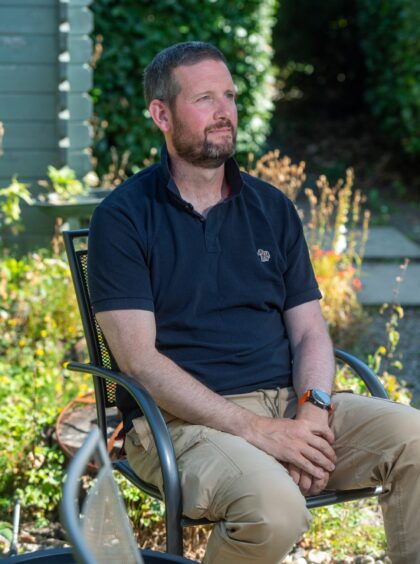
Graham seated outdoors on a garden chair.
Graham doesn’t like to dwell on what might have been if he’d had a thrombectomy after his stroke. Image: Kath Flannery/DC Thomson.

Graham always prided himself on standing on his own two feet. Now, he struggles with having to depend on others, unable to shake the feeling that he has become a burden.

And alongside independence comes the loss of another aspect of life many take for granted — spontaneity.

“I can’t decide on a weekend, ‘I’ll go down to Edinburgh to see my mates and go to the pub,’” he says. “I can’t walk onto a beach and put my feet in the sea. Those little spontaneous things in my life, I miss them enormously.”

‘It’s tiny little things, but you do notice them’

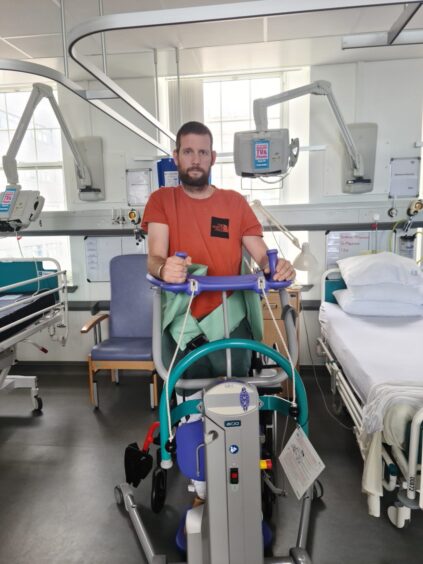
Graham has made good progress since the days following his stroke when his paralysis was so severe he had to be winched in and out of bed.

When Graham first returned home from hospital, he relied on a wheelchair and could barely manage a few steps without exhaustion.

Graham in the stroke ward at ARI.
Graham in the stroke ward at ARI. Image: Graham McGowan.

Now, though progress is slow, he can push himself to walk up to two-and-a-half miles.

“It’s tiny little things, but you do notice them,” he says. “You couldn’t do it six months ago, and now you can.”

Still, he adds, there’s no getting away from it: “The loss of what I had is huge.”

He continues: “I know that I may never fully recover. I know that I’ll never really get back to where I was. That’s quite apparent to me, and I may struggle for the rest of my life.”

Benefits of living in Aboyne

Meanwhile, he is aware he’s one of the lucky ones. He can no longer work but his previous well-paid contract job in oil and gas means he has a limited financial safety net that some stroke survivors lack.

Also, he can’t think of a better place to live than Aboyne, with Heather and their two dogs.

“It’s a beautiful part of the world, and we’ve got a nice little house in a nice area,” he says. “It’s just ideal.”

Graham loves living in Aboyne.
Graham loves living in Aboyne. Image: Kath Flannery/DC Thomson.

For the sake of others, however, people who will have the misfortune of having a stroke at the wrong time and in the wrong place, he has a clear wish.

“If somebody in the NHS who makes these decisions,” he says, “if they come and live with me, then they could see for themselves just how I live my life now.”

Anyone affected by stroke can find out more at www.stroke.org.uk/scotland. Or call the dedicated Stroke Support Helpline on 0303 3033 100.