Use the labels in the right column to find what you want. Or you can go thru them one by one, there are only 33,685 posts. Searching is done in the search box in upper left corner. I blog on anything to do with stroke. DO NOT DO ANYTHING SUGGESTED HERE AS I AM NOT MEDICALLY TRAINED, YOUR DOCTOR IS, LISTEN TO THEM. BUT I BET THEY DON'T KNOW HOW TO GET YOU 100% RECOVERED. I DON'T EITHER BUT HAVE PLENTY OF QUESTIONS FOR YOUR DOCTOR TO ANSWER.
Changing stroke rehab and research worldwide now.Time is Brain!trillions and trillions of neuronsthatDIEeach day because there areNOeffective hyperacute therapies besides tPA(only 12% effective). I have 523 posts on hyperacute therapy, enough for researchers to spend decades proving them out. These are my personal ideas and blog on stroke rehabilitation and stroke research. Do not attempt any of these without checking with your medical provider. Unless you join me in agitating, when you need these therapies they won't be there.
What this blog is for:
My blog is not to help survivors recover, it is to have the 10 million yearly stroke survivors light fires underneath their doctors, stroke hospitals and stroke researchers to get stroke solved. 100% recovery. The stroke medical world is completely failing at that goal, they don't even have it as a goal. Shortly after getting out of the hospital and getting NO information on the process or protocols of stroke rehabilitation and recovery I started searching on the internet and found that no other survivor received useful information. This is an attempt to cover all stroke rehabilitation information that should be readily available to survivors so they can talk with informed knowledge to their medical staff. It lays out what needs to be done to get stroke survivors closer to 100% recovery. It's quite disgusting that this information is not available from every stroke association and doctors group.
David Cernik1,2*Jiri Neumann3Jarmila Neradova2Veronika Hlinena2Pavol Viglas2,5David Cihlar5Filip Cihlar6
1Department of Neurology, Univerzita Palackeho v Olomouci Lekarska fakulta, Olomouc, Czechia
2Department of Neurology, Masarykova nemocnice Usti nad Labem oz, Ústí nad Labem, Czechia
3Department of Neurology, Krajska zdravotni as Nemocnice Chomutov oz, Chomutov, Czechia
4Department of Physical Education and Sport, Faculty of Education, Univerzita Jana Evangelisty Purkyne v Usti nad Labem, Ústí nad Labem, Czechia
5Department of Radiology, Faculty of Medicine in Hradec Kralove, Charles University, Hradec Kralove, Czechia
6Department of Radiology, J. E. Purkinje University, Masaryk Hospital Krajska zdravotni as, Ústí nad Labem, Czechia
Background: The success of the technical implementation of mechanical thrombectomy (MT) depends on many factors. Considering the experience of the interventional radiologist and the anatomical vascular differences of individual patients, it has technical limits. In our group, we focused on verifying the effectiveness and safety of eptifibatide intra-arterial administration when a sufficient degree of recanalization was not achieved with standard instruments.
Methods: The study included 1,350 patients who underwent MT between 2008 and 2022. Neurological deficit was assessed with National Institutes of Health Stroke Scale (NIHSS) and clinical outcome with modified Rankin scale (mRS). Presence of symptomatic intracerebral hemorrhage (SICH) was assessed according to the SITS-MOST criteria. In some patients, eptifibatide was administered in the case of insufficient recanalization or in the case of an acute periprocedural tendency to reocclusion. Achieved recanalization using the Thrombolysis in Cerebral Infarction scale (TICI).
Results: Eptifibatide was administered during the procedure to 181 patients (age 67.8 ± 12.2 years, 57.5% men). In the eptifibatide group, successful recanalization (≥TICI2b) was achieved in 80.1%, the incidence of ICH was 21.6% and SICH 3.9%. In the group without eptifibatide, successful recanalization was achieved in 80.5%, ICH 19.9% and SICH 5.2%.
Conclusion: The use of eptifibatide is an effective and safe procedure in technically more difficult cases of MT. It enables a similar degree of recanalization to be achieved without increasing the risk of SICH.
Introduction
Mechanical thrombectomy (MT) is a standard, highly effective and safe treatment for symptomatic cerebral artery occlusion in patients with acute ischemic stroke (AIS). Unfortunately, not all patients achieve a good clinical outcome. One of the most important factors is successful recanalization. Currently, a wide range of instruments are available, which differ in size, design and principle of use. The choice of instrument or technique can have a major impact on the outcome of the intervention. In positive randomized studies, stent-retrievers were used exclusively, which are currently completely dominant worldwide. Another technique is aspiration thrombectomy. In 2017, a randomized study ASTER (The Contact Aspiration vs. Stent Retriever for Successful Revascularization) was published, which did not demonstrate a significant difference in the number of achieved recanalizations between stent-retrievers and aspiration, however, patients treated with aspiration more often needed additional treatment compared to stent-retrievers (1). The combination of aspiration and stent-retriever after failure of the primary thrombectomy method can increase the success rate of recanalization, so some centers primarily use various combinations of aspiration thrombectomy and stent-retriever, e.g., the ARTS (Aspiration-Retriever Technique for Stroke, ARTS) method (2). Despite the use of various techniques, a significant proportion of procedures still fail to achieve successful recanalization of the occluded artery. Currently, the ADAPT (A Direct Aspiration first-Pass Technique) technique is increasingly used, where the primary recanalization technique is the use of aspiration (6). Despite various techniques and instruments, a significant proportion of patients still fail to achieve a sufficient level of recanalization. Eptifibatide is a glycoprotein IIB/IIIA receptor antagonist that is used in combination with a fibrinolytic agent to treat myocardial infarction. Efforts to improve recanalization rates by administering eptifibatide (or other glycoprotein IIb/IIIa inhibitors) in endovascular procedures have generally not yielded conclusive results. The approach in our work is different. Eptifibatide is administered only in the case of primary endovascular failure. The aim of the work is to show that this rescue technique can achieve a significant degree of recanalization in previously almost hopeless cases.
Methods
Patients with acute ischemic stroke due to large vessel occlusion who underwent mechanical thrombectomy were included into a monocentric retrospective study. Intravenous thrombolysis was administered to most patients.
Initial neurological deficit was assessed using the National Institutes of Health Stroke Scale (NIHSS). The achieved recanalization was evaluated using the Thrombolysis in Cerebral Infarction scale (TICI). Eptifibatide (Integrilin, Glaxo Operations UK Ltd.) was applied as rescue therapy after careful consideration of the risks in case of unsuccessful recanalization (TICI <2b) or a clear tendency for immediate reocclusion already during the endovascular procedure.
The indication criteria for the use of eptifibatide were intracranial artery occlusion intractable to mechanical thrombectomy, periprocedural rethrombosis of atherosclerotic stenosis of intracranial arteries, implantation of an intracranial stent with a clear periprocedural tendency to reocclusion, acute stent thrombosis of carotid or vertebral arteries. In the case of rethrombosis of stenosis and occlusion of the intracranial artery, eptifibatide was administered intraarterially according to the effect of the treatment. The maximum dose for an i.v. bolus (180 micrograms/kg) was not exceeded. Continuous administration was followed by continuous infusion at a dose of 2 micrograms/kg/min if the bolus intra-arterial administration was ineffective until the patient was switched to dual antiplatelet therapy (but not longer than 8 h). Before starting eptifibatide administration, cone beam CT was performed since 2015 to exclude periprocedural hemorrhage.
We evaluated the safety of the chosen procedure (occurrence of bleeding), the resulting degree of recanalization at the end of the procedure and the clinical effect.
Symptomatic intracerebral hemorrhage (SICH) on follow-up CT scan 24 h later was assessed according to the SITS-MOST criteria. The presence of intracerebral hemorrhage (ICH) was strictly defined as any new hyperdensity on follow-up CT. As part of secondary prevention, a statin and antiplatelet therapy were used (preferably dual antiplatelet therapy in the form of acetylsalicylic acid and clopidogrel, if ICH was not present on the control CT). In the case of ICH, antiplatelet monotherapy (acetylsalicylic acid) was used at a safe interval according to the size of the ICH. In the case of cardioembolization etiology of AIS, secondary anticoagulant prevention was preferred. Clinical outcome was assessed using the modified Rankin Scale (mRS).
The aim of the study was to determine efficacy, qualified by achieving successful recanalization of TICI2b ≥2b and achieving self-sufficiency at a three-month interval, assessed by the mRS scale ≤2. The second, equally important endpoint was the assessment of safety, qualified by the rate of hemorrhagic complications during rescue therapy.
STATISTICA 13.0 (Tibco Software Inc., 2018, United States) was used for statistical data processing. The Shapiro–Wilk test was used to determine the normality of the data. Due to the non-normal distribution of frequencies, non-parametric statistical procedures were used. The Mann Whitney test was used to determine any differences and the chi-square test for possible connections. For both tests, statistical significance was defined as p < 0.05.
Results
Patients who underwent mechanical thrombectomy from 2008 to 2022 were included in the study.
Of the 1,350 MTs, 409 patients (30.3% of all MTs performed) failed to achieve successful recanalization. 181 patients were given eptifibatide (44.3% of MTs with primary inadequate recanalization) and 145 of them subsequently achieved successful recanalization (35.5% of MTs with primary inadequate recanalization, 80.1% of MTs in which eptifibatide was administered).
Patients with eptifibatide were younger (67.8 vs. 73.7%, p < 0.00001), more often male (57.5 vs. 45%, p = 0.002), with a milder baseline clinical condition (15 vs. 17 points in NIHSS, p = 0.009). Patients also suffered from fewer comorbidities. The incidence of arterial hypertension was lower (69.6 vs. 77.4%, p = 0.021), the incidence of atrial fibrillation was also lower (22.1 vs. 38.9%, p = 0.00001) and occlusion in the carotid basin was significantly less common (76.8 vs. 89.8%, p < 0.00001). There were also significant differences in previous use of anticoagulant therapy (6.6 vs. 15.7, p = 0.001) and administration of intravenous thrombolysis before endovascular procedure (68 vs. 76.9%, p = 0.009). The basic and demographic characteristics of the group are summarized in Table 1.
Table 1
Table 1. Demographic and baseline clinical characteristics of enrolled patients.
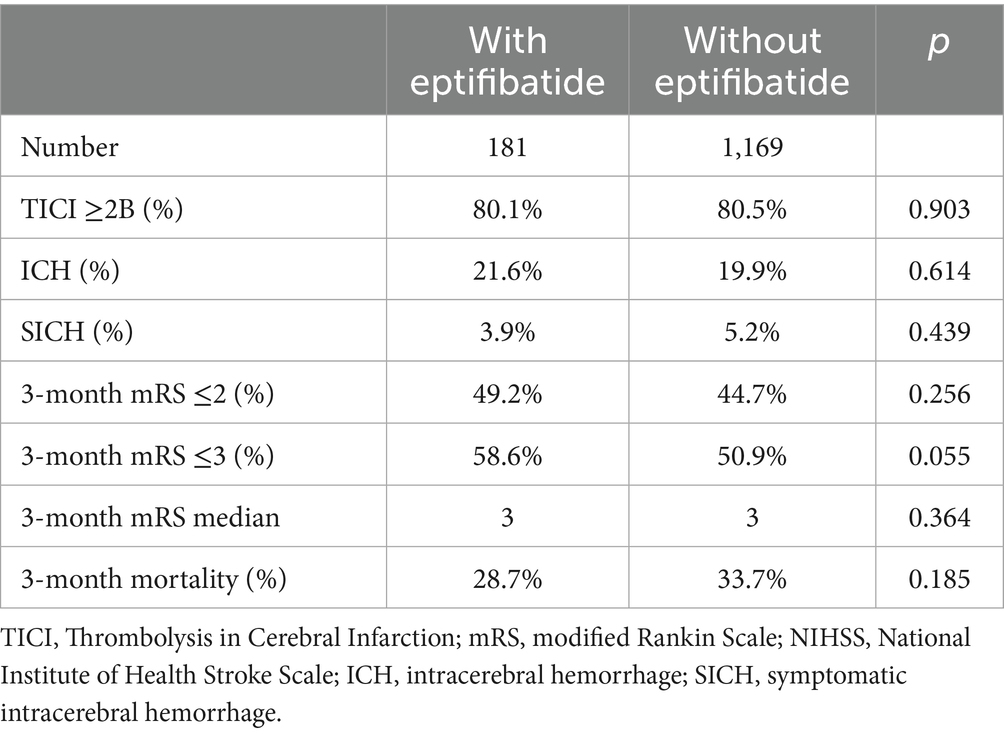
In the group initially treated with endovascular failure, successful recanalization was achieved in 80.1% (TICI ≥2b) thanks to the administration of eptifibatide. No statistically significant difference was found compared to the group without eptifibatide (80.5%, p = 0.903).
The incidence of complicating intracerebral hemorrhage was statistically insignificantly higher in the eptifibatide group (21.6 vs. 19.9%, p = 0.614). However, the incidence of symptomatic intracerebral hemorrhage was statistically insignificantly lower (3.9 vs. 5.2%, p = 0.439).
The clinical outcome tended to be better in the eptifibatide group, but no statistically significant difference was found. Good clinical status was achieved by 49.2 vs. 44.7% (mRS ≤2, p = 0.256) at 3 months. Relatively good outcome (mRS ≤3) was achieved by 58.6 vs. 50.9%, when the difference was already on the verge of statistical significance (p = 0.055). Three-month mortality was also lower (28.7 vs. 33.7%, p = 0.185). The results are summarized in Table 2.
Table 2
Table 2. Results—comparison between the patients with eptifibatide and standard treatment.
Discussion
In our study, no difference in the recanalization rate was found between the eptifibatide group and the group without eptifibatide. However, this result is excellent with regard to our basic criterion for administering eptifibatide (primary failure of the basic endovascular procedure). Without salvage therapy, successful recanalization would not have occurred in this group. With the use of eptifibatide, the rate of successful recanalization reached 80%. The clinical outcome is significantly dependent on the success of recanalization. Full self-sufficiency was achieved with the use of salvage therapy in 49% of patients (without successful recanalization, the chance of a good clinical outcome is at the level of a few percent according to common clinical experience). The safety profile of the selected treatment was favorable. There was no significantly higher incidence of ICH and SICH. The number of ICHs was numerically slightly higher in the eptifibatide group, however, the difference was not statistically significant. Such a small difference may also be significantly influenced by the asymmetry of the two groups (there are numerically one order of magnitude fewer patients with eptifibatide).
Ma et al. (3) in a matched control analysis show the effectiveness of eptifibatide administration within the framework of endovascular procedure (162 patients, 81 with eptifibatide and 81 controls, successful recanalization 91.3% versus 81.5%). No significant difference in ICH or SICH was found. Latacz et al. (4) in a cohort with AIS treatment for tandem lesions (115 patients with eptifibatide) also did not find an increased incidence of ICH or SICH. Rana et al. (5) (54 patients with eptifibatide for MT) also report a favorable safety profile with the use of eptifibatide (no significant difference in the incidence of ICH or SICH compared to the two control groups). The mentioned studies are consistent with our safety results. They also show efficacy similar to our case. However, there is a fundamental difference in the approach to administering eptifibatide. In our case, it is only in the case of primary failure of mechanical thrombectomy. For the same reason, we cannot compare the clinical results with these studies. Here again, we can state that the patients who were administered eptifibatide largely benefited.
In our study, patients with eptifibatide tended to have a better clinical outcome (58.6 vs. 50.9%, assessed for mRS ≤3, p = 0.055). However, this group was younger and had fewer significant comorbidities (see Table 1).
The limitations of our study are primarily its retrospective nature and the absence of an appropriate control group. The administration of eptifibatide was entirely at the discretion of the interventional radiologist. As shown by the basic characteristics of the group, there is a certain tendency to treat younger patients more intensively. Another limitation of the study is that clinical status was monitored only after 3 months. However, clinical outcome is traditionally dependent on the achievement of recanalization, not on the method by which it is achieved. Due to the safety profile of the treatment, longer follow-up is irrelevant. Given the indication for eptifibatide administration only as salvage therapy, based on our data we cannot clearly comment on the general benefit of eptifibatide as adjuvant therapy to MT, nor was this our goal. However, our data show that if eptifibatide is rationally administered, it does not carry a statistically significant risk of hemorrhagic complications and, on the contrary, provides a very significant chance of successful recanalization.
Conclusion
Despite advances in endovascular treatment, there are still patients in whom this procedure fails. In our study, eptifibatide was used as salvage therapy in primary failure of endovascular treatment. In 80% of patients primarily without the possibility of recanalization with standard endovascular techniques, this procedure led to successful recanalization. Given the above limitations, we draw two conclusions from our data. The administration of eptifibatide, after careful individual consideration, can be a highly effective salvage therapy in primary failure of mechanical thrombectomy (the last therapeutic option). The second conclusion is the favorable safety profile of the treatment in this indication, which is consistent with the general results of previously published studies using eptifibatide as adjuvant therapy to mechanical thrombectomy. A larger randomized trial would be needed to verify the results.
Data availability statement
The raw data supporting the conclusions of this article will be made available by the authors, without undue reservation.
Opeolu
Adeoye, MD, and Peter Panagos, MD, (right) both professors of emergency
medicine at Washington University School of Medicine in St. Louis,
analyze a brain scan for stroke damage. Adeoye led a national clinical
trial that found that two anti-coagulant medications are ineffective at
improving post-treatment outcomes for stroke patients.
Stroke patients who survive a blood clot
in the brain’s blood vessels are prone to developing new blockages
during their recovery periods, even if they receive vessel-clearing
interventions. In an effort to avoid further clots, doctors at 57 sites
around the U.S. tested a possible solution: the addition of
anti-coagulant drugs to medicine that dissolves blood clots.
But results from the clinical trial, led by Opeolu Adeoye, MD, head of the Department of Emergency Medicine at Washington University School of Medicine in St. Louis, indicate two such drugs did not improve outcomes.
The findings are available Sept. 4 in The New England Journal of Medicine.
“We’re a little disappointed in the results,” said Adeoye, who is
also the BJC HealthCare Distinguished Professor of Emergency Medicine.
“But it’s meaningful to optimal patient care that we’ve answered the
question definitively. Neither of the drugs helps prevent further
clots.”
The goal of the Multi-arm Optimization of Stroke Thrombolysis (MOST)
clinical trial that Adeoye led was to test the efficacy of adding
argatroban, a blood thinner, or eptifibatide, which inhibits blood
platelets from sticking together, to the routine intravenous
thrombolysis treatment.
The trial closed the chapter on this potential use of these medications, but Peter Panagos, MD,
professor of emergency medicine and co-author on the study, said that
efforts like these inform future advances in medicine, including
potential new anti-coagulant treatments.
“Without negative trials, we would not know how to design new
trials,” Panagos said. “Future success is built upon the hard work of
previous research effort.”
Physicians do not have a lot of treatment options for patients who
experience a stroke. Some patients undergo a procedure to remove the
clot. Others receive intravenous thrombolysis to relieve the affected
blood vessel through clot-dissolving medication delivered to the
bloodstream. A number of patients receive both interventions.
“Even with those treatments, over half of patients still have a
significant disability three months after their stroke," said Adeoye,
who treats patients at Barnes-Jewish Hospital and Missouri Baptist
Medical Center and also provides stroke telemedicine consultation.
"After you give the thrombolysis, the clot can re-form, which
contributes to the stroke worsening or persisting.”
Preventing these clots with an additional treatment of anti-coagulant
drugs seemed like a promising idea, especially as there are
FDA-approved medications that earlier studies had suggested could be
effective.
In the MOST trial, patients were randomly assigned to receive either
argatroban, eptifibatide or placebo. Adeoye explained that the study had
checkpoints built in to ensure that treatment outcomes were meeting
efficacy thresholds in order to continue. The first checkpoint was set
at 500 patients, which the team reached in 2023.
“When we looked at the data, it was readily apparent that neither
drug was going to come anywhere close to our threshold,” he said.
In fact, the probability that either drug was helpful was less than
1%. Worse still, argatroban and eptifibatide were linked to greater
incidences of disability and mortality within the three-month
post-treatment observation window.
This correlation was not necessarily alarming; the safety monitors on
the project found that the deaths appeared to have causes unrelated to
the medications. The lack of improvement noted with the medications
compared with what was noted with the placebo was reason enough to call
off the trial.
There are more options to pursue in seeking to improve stroke
outcomes. Adeoye said there are drugs in development that target
different parts of the blood coagulating and clotting processes that may
prove to be more effective than argatroban or eptifibatide, and other
procedures such as direct arterial delivery through which such drugs
might be more effective.
Panagos, who directs the new Section of Neurologic Emergencies in the
Department of Emergency Medicine, added that WashU Medicine’s
leadership in trials such as this one benefits the 1,700 stroke patients
who are treated by WashU Medicine physicians at Barnes-Jewish Hospital
every year.
“Because we are involved in and lead most of the key basic science
and clinical research for stroke and cerebrovascular patients nationally
and internationally, we can bring the latest interventions to our
patients in St. Louis and help advance treatment and prevention
strategies,” Panagos said. “Our involvement in clinical trials helps
bring the highest quality, most innovative treatments to our community.”
Adeoye O, Broderick J, Derdeyn CP, Grotta JC, Barsan W, Bentho O,
Berry S., Concha M, Davis I, Demel S, Elm J, Gentile N, Graves T,
Hoffman M, Huang J, Ingles J, Janis S, Jasne AS, Khatri P, Levine SR,
Majjhoo A, Pancioli A, Panagos P, Pizzella S, Ranasinghe T, Sabagha N,
Sivakumar S, Streib C, Vagal A, Wilson A, Wintermark M, Yoo AJ, Barreto
AD. Adjunctive intravenous argatroban or eptifibatide for ischemic
stroke. The New England Journal of Medicine. Sept. 4, 2024.
1Cooper Medical School of Rowan University, Camden, NJ, United States
2Cooper Research Institute, Cooper University Hospital, Camden, NJ, United States
3Department of Radiology, Cooper University Hospital, Camden, NJ, United States
4Cooper Neurological Institute, Cooper University Hospital, Camden, NJ, United States
Introduction: Small studies have
suggested that eptifibatide (EPT) may be safe in acute ischemic stroke
(AIS) following intravenous thrombolysis or during endovascular therapy
(EVT) for large vessel occlusion (LVO). However, studies are called upon
to better delineate the safety of EPT use during EVT.
Methods: A comprehensive stroke center
registry (09/2015-12/2020) of consecutive adults who had undergone EVT
for anterior LVO was queried. Patients treated with EPT were matched
with 2 control groups based on known factors associated with
intracranial hemorrhage (ICH) risk - age, Alberta Stroke Program Early
Computed Tomography Score (ASPECTS), and number of thrombectomy passes.
Safety outcomes (intracranial hemorrhage [ICH], parenchymal hematoma
[PH-2] grade hemorrhagic transformation, symptomatic ICH [sICH]) and
efficacy outcomes (TICI 2B/3 recanalization, 24-h National Institutes of
Health Stroke Scale [NIHSS] score), were compared between matched
groups using descriptive statistics. In addition, multivariable logistic
regression was used to assess for an association between EPT and
PH-1/PH-2 grade hemorrhages.
Results: A total of 162 patients were included, 54 of whom (33%) received EPT. The rate of ICH was similar between groups (p = 0.62), while PH-2 was significantly more frequent with EPT (16.7% EPT vs. 3.7 vs. 1.9%; p = 0.009), but without significant differences in sICH (5.6% EPT vs. 7.4 vs. 3.7%; p = 0.72). Rates of TICI Score ≥ 2B were nominally higher with EPT use (83.3 vs. 77.8 vs. 77.8%, p = 0.70). Between the EPT and control groups, there were no differences in 24-h NIHSS (p = 0.09) or 90-day mortality (p = 0.58). Our adjusted multivariate analysis identified that the number of passes (p < 0.01), EPT use (p < 0.01), and tandem occlusion (p
= 0.03) were independent predictors of PH1/PH2 grade hemorrhage.
Additionally, every unit increase in number of passes resulted in a 1.5
times greater odds of a high-grade hemorrhagic transformation in
EPT-treated patients (adjusted OR = 1.594).
Conclusion: In this single-center
analysis, EPT use during EVT was associated with a significantly higher
rate of PH1/PH2 grade hemorrhages, but not with differences in sICH,
24-h NIHSS, or 90-day mortality. Randomized prospective trials are
needed to determine the safety and efficacy of EPT in this population.
Introduction
Stroke is the eighth most common cause of death worldwide and the number one cause of disability within the United States (1). Endovascular therapy (EVT) is the standard of treatment for ischemic stroke due to large vessel occlusion (2),
however in 2–20% of cases, patients experience reocclusion of the
treated vessel after initial recanalization. Predictors of reocclusion
include site of occlusion, more complex procedure such as those
requiring multiple passes, atherosclerotic etiology of stroke, or
residual thrombus or stenosis after recanalization attempt (3).
In this subset of patients with high risk of reocclusion, or in cases
of difficulty with initial recanalization, emergent antithrombotic
therapies, such as eptifibatide (EPT), are often utilized (3).
EPT is a glycoprotein IIB/IIIA receptor antagonist that
was first used in combination with reduced-dose fibrinolytic agent for
treatment of myocardial infarction (4).
Since then, multiple studies have tested the safety and efficacy of EPT
in various combinations with recombinant tissue plasminogen activator
(tPA). CLEAR, a 2008 multicenter randomized controlled trial, was one of
the first studies to demonstrate the safety of EPT use in combination
with low-dose recombinant tissue plasminogen activator (tPA). The study
found no increased risk of symptomatic intracranial hemorrhage (sICH)
when compared with full-dose tPA for the treatment of ischemic stroke (5). Subsequently, both the CLEAR-ER and CLEAR-FDR also demonstrated the comparable safety of EPT with full-dose tPA (6, 7).
More recently, the use of EPT in EVT for carotid
occlusions with stent placement and for tandem occlusions has been
investigated (3, 8).
However, these studies did not include matched control groups of
patients who did not receive EPT, and thus safety comparisons could not
be made. The objective of our study is to examine the safety and
efficacy of EPT when used during EVT using a matched control analysis.
Molloy
C, Yao Y, Kammoun H, Bonnard T, Hoefer T, Alt K, Tovar-Lopez F,
Rosengarten G, Ramsland P, van der Meer A, van den Berg A, Murphy A,
Hagemeyer C, Peter K, Westein E; Journal of Thrombosis and Haemostasis
(Mar 2017)
BACKGROUND
Myocardial infarction and stroke remain the leading causes of mortality
and morbidity. The major limitation of current antiplatelet therapy is
that their effective concentrations are limited due to bleeding
complications. Targeted delivery of antiplatelet drug to sites of
thrombosis would overcome these limitations.
OBJECTIVES Here, we have exploited a key biomechanical feature
specific to thrombosis; significantly increased blood shear stress due
to a reduction in the lumen of the vessel, to achieve site directed
delivery of the clinically used antiplatelet agent eptifibatide using
shear-sensitive phosphatidylcholine based nanocapsules.
METHODS 2.8x10(12) PC based nanocapsules with high dose encapsulated
eptifibatide were introduced in microfluidic blood perfusion assays and
in in vivo models of thrombosis and tail bleeding.
RESULTS Shear-triggered nanocapsule delivery of eptifibatide
inhibited in vitro thrombus formation selectively under stenotic and
high shear flow conditions above 1,000 s(-1) shear rate while leaving
thrombus formation under physiological shear rates unaffected.
Thrombosis was effectively prevented in in vivo models of vessel wall
damage. Importantly, mice infused with shear sensitive antiplatelet
nanocapsules did not display prolonged bleeding times.
CONCLUSIONS Targeted delivery of eptifibatide by shear-sensitive
nanocapsules offers site specific antiplatelet potential and may form a
basis for developing more potent and safer antiplatelet drugs. This
article is protected by copyright. All rights reserved.
Molloy
C, Yao Y, Kammoun H, Bonnard T, Hoefer T, Alt K, Tovar-Lopez F,
Rosengarten G, Ramsland P, van der Meer A, van den Berg A, Murphy A,
Hagemeyer C, Peter K, Westein E; Journal of Thrombosis and Haemostasis
(Mar 2017)
BACKGROUND
Myocardial infarction and stroke remain the leading causes of mortality
and morbidity. The major limitation of current antiplatelet therapy is
that their effective concentrations are limited due to bleeding
complications. Targeted delivery of antiplatelet drug to sites of
thrombosis would overcome these limitations.
OBJECTIVES Here, we have exploited a key biomechanical feature
specific to thrombosis; significantly increased blood shear stress due
to a reduction in the lumen of the vessel, to achieve site directed
delivery of the clinically used antiplatelet agent eptifibatide using
shear-sensitive phosphatidylcholine based nanocapsules.
METHODS 2.8x10(12) PC based nanocapsules with high dose encapsulated
eptifibatide were introduced in microfluidic blood perfusion assays and
in in vivo models of thrombosis and tail bleeding.
RESULTS Shear-triggered nanocapsule delivery of eptifibatide
inhibited in vitro thrombus formation selectively under stenotic and
high shear flow conditions above 1,000 s(-1) shear rate while leaving
thrombus formation under physiological shear rates unaffected.
Thrombosis was effectively prevented in in vivo models of vessel wall
damage. Importantly, mice infused with shear sensitive antiplatelet
nanocapsules did not display prolonged bleeding times.
CONCLUSIONS Targeted delivery of eptifibatide by shear-sensitive
nanocapsules offers site specific antiplatelet potential and may form a
basis for developing more potent and safer antiplatelet drugs. This
article is protected by copyright. All rights reserved.
The
Combined Approach to Lysis Utilizing Eptifibatide and rt-PA in Acute
Ischemic Stroke-Enhanced Regimen (CLEAR-ER Stroke) trial is a Phase II
trial and part of the Specialized Program on Translational Research in
Acute Stroke (SPOTRIAS). The overall goals of SPOTRIAS are to enhance
delivery of acute stroke patient care and train acute stroke
translational researchers.
Stroke most often occurs
when blood flow to the brain stops because it is blocked by a blood
clot. When a blood clot blocks the blood supply to the brain, parts of
the brain may not get enough blood and oxygen to survive. As a result,
permanent brain damage can occur, which can affect a person's ability to
walk, talk, and function independently. In order to reduce the risk of
permanent damage, it is important to restore blood flow to the brain as
quickly as possible.
rt-PA, used alone, is
already approved by the Food and Drug Administration (FDA) as treatment
for patients with a stroke caused by blockage of an artery in the brain
and when given within 3 hours of the onset of stroke symptoms.
Eptifibatide is also already FDA-approved as a treatment for blood clots
causing heart attack. The investigational aspect of this study is the
use of eptifibatide for a stroke victim in combination with rt-PA.
The CLEAR Stroke Trial
demonstrated that the combination of low dose rt-PA plus eptifibatide
can be safely given to acute ischemic stroke patients within 3 hours of
symptom onset.
The CLEAR-ER Stroke Trial
is designed to provide data concerning the risks and benefits of
combining eptifibatide with medium dose intravenous rt-PA in 126 acute
ischemic stroke patients within 3 hours of symptom onset. Patients will
be randomized to a combined intravenous medium-dose rt-PA and
eptifibatide regimen, or standard dose rt-PA in a 5 to 1 ratio. This
will result in a total of 105 patients treated with a combined regimen,
and 21 patients treated with standard dose IV rt-PA alone.
 David Cernik1,2*
 Jiri Neumann3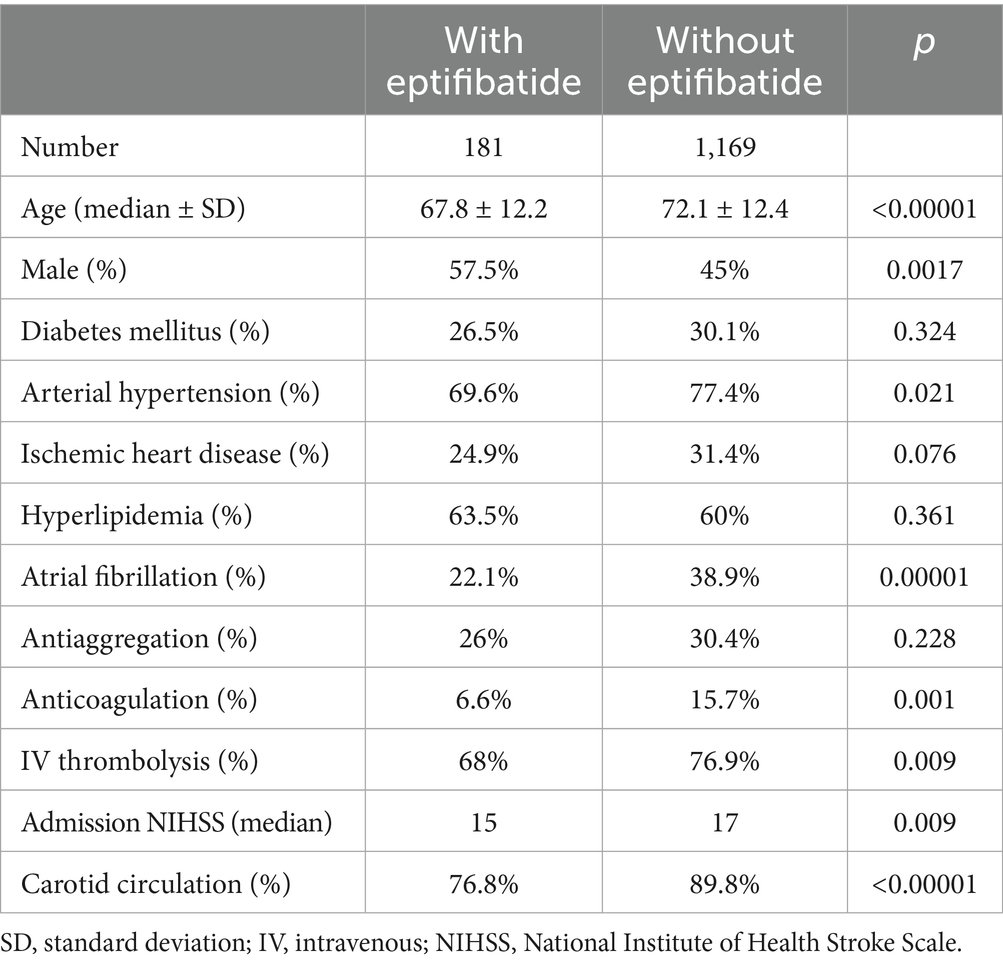


 Ameena Rana
 Siyuan Yu
 Savina Reid-Herrera1,
  Scott Kamen
 Krystal Hunter
 Tudor Jovin
 James E. Siegler
 Jesse M. Thon