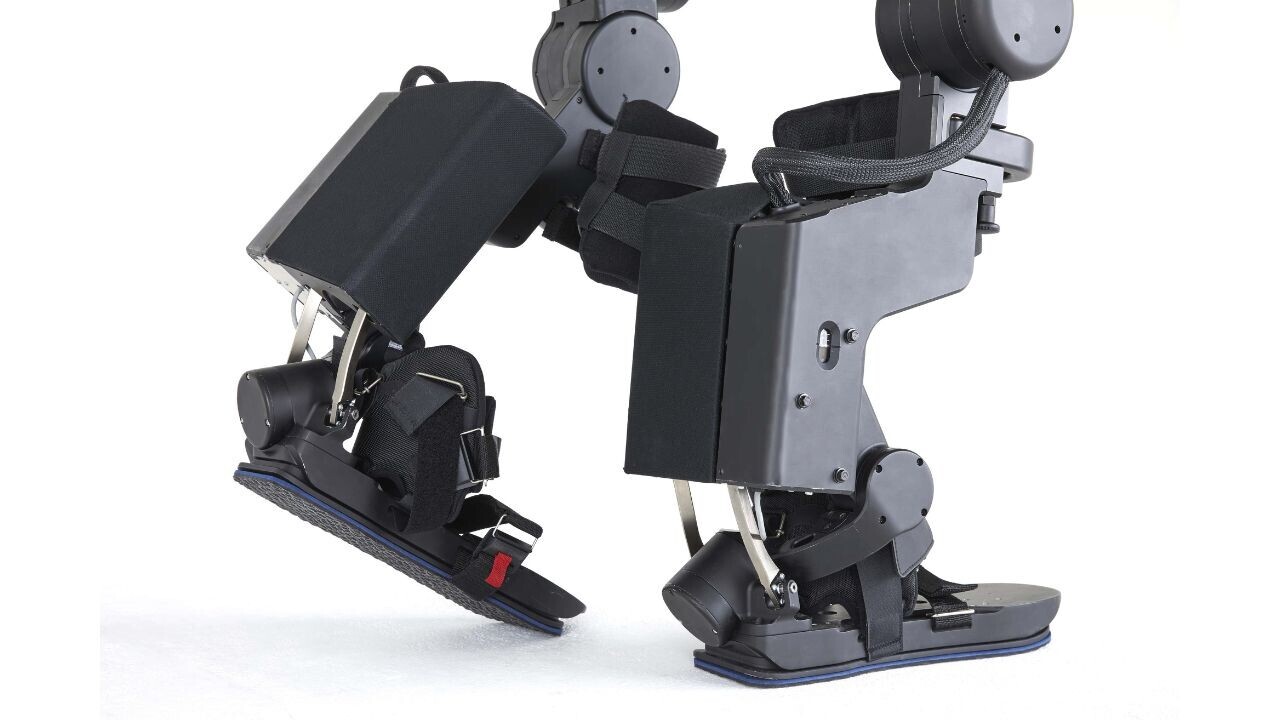
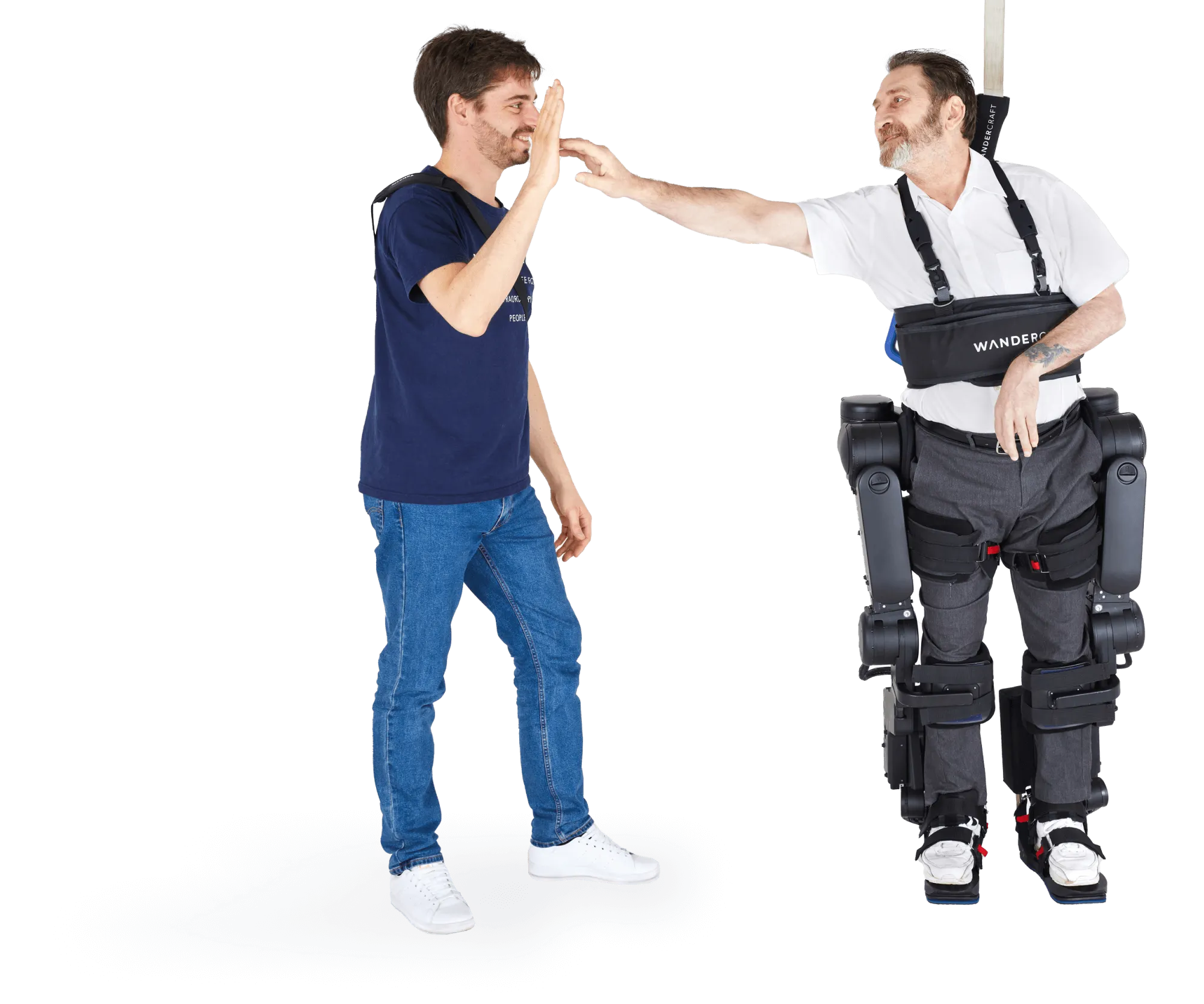
This had better get you 100% walking recovery in the hospital, it'll never be able to be used outside the clinic.
Functional Ambulation Categories (FAC) is a 6-point functional walking test. I guess I'm a 5.
Scoring and Score Interpretation[2]:
| Score | Category | Interpretation |
| 0 | Nonfunctional ambulator | |
| 1 | Ambulator, dependent on physical assistance – level I | Indicates a patient who requires continuous manual contact to support body weight as well as to maintain balance or to assist coordination. |
| 2 | Ambulator, dependent on physical assistance – level II | Indicates a patient who requires intermittent or continuous light touch to assist balance or coordination. |
| 3 | Ambulator, dependent on supervision | Indicates a patient who can ambulate on level surface without manual contact of another person but requires standby guarding of one person either for safety or verbal cueing. |
| 4 | Ambulator, independent level surface only | Indicates a patient who can ambulate independently on level surface but requires supervision to negotiate (e.g. stairs, inclines, nonlevel surfaces). |
| 5 | Ambulator, independent | Indicates a patient who can walk everywhere independently, including stairs |
Atalante X features demonstration
EarlyExo: Effects of Atalante X exoskeleton on gait recovery in non- or poorly ambulatory patients with hemiparesis in the acute/subacute phase
M. Steinböck 1 , A. Buetikofer 1 , L. M. Huber 1 , K. Jahn 1,2 , F. Müller 1 1 Schoen Clinic Bad Aibling, Department of Neurology, Research Group, Bad Aibling, Germany 2 German Center for Vertigo and Balance Disorders (DSGZ), Ludwig-Maximilians University of Munich, Germany
Background:
According to recent studies approximately 30 % of stroke survivors experience significant disability lasting beyond one month following their stroke [1]. This prolonged disability not only contributes to extended hospital stays but also poses challenges in returning home and resuming work activities, thereby incurring substantial financial burdens [2]. --is acknowledged to enhance overall recovery [3, 4]. Numerous robotic aids designed for physiotherapeutic neurological rehabilitation are available on the mar- ket, one of them being motorized exoskeletons. These devices comprise orthoses attached to limbs, offering motorized assistance during walking. The Atalante X exoskeleton (Wandercraft, France) allows individuals with significant walking impairments to stand and walk without hands support. Its functionalities extend to facilitating strength and balance exercises. Previous research has shown that robotic-supported gait therapy effectively assists post-stroke patients in regaining their ability to walk [5, 6, 7]. The interventional, international and multicentre study EarlyExo is a prospective randomized controlled trial (RCT), which investigates the therapeutic efficacy of Atalante X gait therapy. Its focus lies on non- or poorly ambulatory stroke patients experiencing hemiparesis during the acute/subacute phase, particularly within one to four months post-stroke.
Methods:
In the acute/subacute phase following a stroke, patients with hemiparesis and a Functional Ambulation Category (FAC) value below 2 are eligible for participation. The FAC is a 6-point scale assessing walking ability based on required physical support or supervision. Below FAC 2 identifies individuals in need of continuous manual assistance for mobility. Patients are enrolled across five European centers located in Spain, France, and Germany. After providing written informed consent, patients are randomly assigned to either the control or intervention group, both of which undergo a six-week, intensive therapy regimen. The intervention group, which uses the Atalante X exoskeleton, engages in three weekly sessions, complemented by two conventional physiotherapy sessions. Each session lasts one hour. The control group receives five one-hour sessions of conventional physiotherapy per week, with no access to electromechanical devices dedicated to gait training during the study. At baseline, throughout the intervention period, at discharge and six months post-stroke, a blinded evaluator assesses the patients. Additionally, therapists are surveyed regarding the workload experienced during therapy sessions and patients are requested to provide self-assessments of their health-related quality of life.
Hypothesis and Objectives:
It is hypothesized that a higher proportion of patients will attain a FAC score of ≥ 4 upon completion of the intervention phase, indicating their ability to walk independently on level ground. The overall aim of this study is to test whether early and intensive walking therapy using the Atalante X exoskeleton leads to a superior recovery of functional walking compared to the control group, specifically in hemiparetic patients with limited or poor ambulatory capacities. Secondarily, various walking parameters, clinical evalu- ations of leg muscle strength, the subjective experiences of patients, and therapists reported outcomes, are recorded.
Outlook:
In the current recruitment phase, four patients have been enrolled in the German neurological rehabilitation centre Schoen Clinic Bad Aibling. We aim to gather a total sample size of 66 participants across the designated sites, emphasizing a meticulous recruitment process for a representative stroke population.