Changing stroke rehab and research worldwide now.Time is Brain! trillions and trillions of neurons that DIE each day because there are NO effective hyperacute therapies besides tPA(only 12% effective). I have 523 posts on hyperacute therapy, enough for researchers to spend decades proving them out. These are my personal ideas and blog on stroke rehabilitation and stroke research. Do not attempt any of these without checking with your medical provider. Unless you join me in agitating, when you need these therapies they won't be there.

What this blog is for:

My blog is not to help survivors recover, it is to have the 10 million yearly stroke survivors light fires underneath their doctors, stroke hospitals and stroke researchers to get stroke solved. 100% recovery. The stroke medical world is completely failing at that goal, they don't even have it as a goal. Shortly after getting out of the hospital and getting NO information on the process or protocols of stroke rehabilitation and recovery I started searching on the internet and found that no other survivor received useful information. This is an attempt to cover all stroke rehabilitation information that should be readily available to survivors so they can talk with informed knowledge to their medical staff. It lays out what needs to be done to get stroke survivors closer to 100% recovery. It's quite disgusting that this information is not available from every stroke association and doctors group.

Showing posts with label brisk walking. Show all posts

Saturday, September 26, 2026

Column: Dr Watkins On Brain Health & More

 I bet your doctor is so incompetent that NO PROTOCOL HAS BEEN CREATED ON BDNF! Let's check how long incompetence reigned and still not fired!

BDNF (214 posts to April 2011)

Column: Dr Watkins On Brain Health & More

[Column written by Dr Kimberley Watkins]

Over the past few weeks we’ve looked at cardiovascular disease and at stroke and rehabilitation. This week we zoom in on a tiny protein with a mighty job in your brain, and one that exercise helps boost: BDNF.

Why exercise matters for the brain

Exercise is famous for helping your heart, your waistline and your mood. But your brain gets a share of the benefits too. Studies link regular activity with sharper memory, a better mood and a lower risk of stroke and dementia. Physical inactivity as one of 14 risk factors we can actually do something about.

What is BDNF?

BDNF stands for brain-derived neurotrophic factor. Think of it as fertilizer for your brain cells. It helps them grow, stay healthy and form new connections with each other. That ability to build and rewire connections is called neuroplasticity. It’s why you can learn new things, and it’s why rehabilitation after a brain injury can work. Higher BDNF levels are linked to better learning and memory.

Neuroplasticity: the brain building and strengthening connections. Amber lines show new pathways forming.
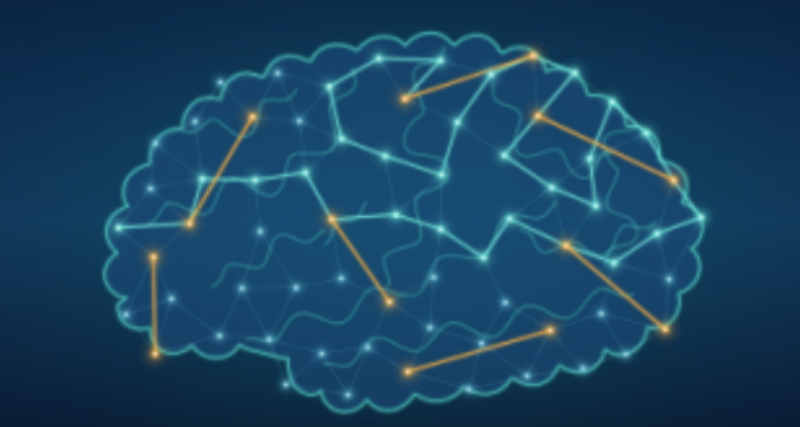
Dr Watkins On Brain Health Column Bermuda Sept 2026

The exercise-BDNF connection

Did you know that moving your body can help keep your brain healthy? When you exercise, your brain makes more of a special protein that helps your brain cells grow and stay strong. Think of it like plant food, but for your brain.

But not all exercise works the same way. Activities that make you breathe harder, like brisk walking, jogging, or cycling, seem to help your brain the most. In one study, just 30 minutes of hard bike riding made a big difference, while easy riding didn’t. In another study, older adults who walked regularly for a year grew the part of their brain that supports memory, while those who only stretched saw it shrink a little. The more of this brain-boosting protein people had, the bigger the benefits.

This is good news for people recovering from a stroke, too. Studies show that more intense exercise, like brisk walking or cycling can boost this protein and may help the brain heal and adapt, which is a key part of recovery.(Your doctors' responsibility to get you recovered enough to do this!)

The bottom line: regular, heart-pumping exercise is not just good for your body, it’s great for your brain, too!

Good for your brain, and for everything else

Scientists are still working out exactly how much of the BDNF boost turns into better memory or recovery, and it varies from person to person. But you don’t have to wait for the final answer. Exercise already comes with a long list of proven benefits, for your heart, your mood, your energy and your risk of stroke and dementia, and the evidence suggests your brain is part of that same package.

Practical takeaways

  • Start with a conversation. Talk to your doctor or physiotherapist before you begin, especially if you’ve had a stroke or heart condition, or haven’t exercised in a while. Ask questions until you feel comfortable and confident about what’s safe and right for you.
  • Aim for 150 minutes a week. The World Health Organization recommends at least 150 minutes of moderate activity like brisk walking [about 30 minutes, five days a week], or 75 minutes of vigorous activity. Some exercise is always better than none.
  • Turn up the effort gradually. The research favours getting your heart rate up. Build toward a pace where chatting gets difficult.
  • Be consistent. Do something every day, and make it something you enjoy. You’re far more likely to keep doing it.
  • Mix it up. Aerobic exercise has the strongest BDNF evidence, and the WHO also recommends regular muscle-strengthening activity for all ages.

The bottom line

Exercise does far more than build a stronger body. It supports the organ that makes you who you are: your memory, your mood, your ability to learn, adapt and recover. BDNF is one exciting piece of that story, and scientists are still uncovering more. But the message is already clear: what’s good for your body is good for your brain. Better still, there’s no wrong time to start.

So how do you keep moving as life changes, from childhood through to your later years? Join us next time for Move More at Every Age, where we’ll share simple ways to stay active at every stage of life, with tips to improve your health along the way.

- Dr Kimberley Watkins

Friday, January 23, 2026

The 15-Minute Walk That Extends Your Life by Super Age

 It does mean your competent? doctor has to get you recovered enough to do a 15 minute brisk walk. In my opinion, your doctor is incompetent in getting that done! Prove me wrong! If I do fast walking, I'll destroy my knees, so I do the hours long walking. My doctor and therapists completely fucking failed at getting me recovered enough to do this.

The 15-Minute Walk That Extends Your Life

Sunday, June 15, 2025

Walking at this specific speed reduces mortality by 36% more than regular walking

 Ask your competent? doctor for SPECIFIC REHAB PROTOCOLS that will get you walking at 3+ mph! Can't do that? Fire that person and find someone competent. Your fuckingly incompetent doctor has been failing at this requirement for almost two years!

Walking at this specific speed reduces mortality by 36% more than regular walking

Most people assume walking for fitness means hitting 10,000 steps daily, but cutting-edge research reveals that optimal walking strategies for rehabilitation depend on far more complex factors than simple step counting. The latest interdisciplinary studies show that personalized walking protocols, enhanced by biomechanical analysis and emerging technologies, can dramatically accelerate recovery outcomes while preventing chronic diseases more effectively than traditional approaches.

Walking rehabilitation has evolved from basic step-counting to sophisticated, data-driven interventions. Recent epidemiological studies demonstrate that walking intensity matters more than duration, with brisk walking at 3+ mph reducing all-cause mortality by 36% compared to slower paces. For stroke survivors, higher therapeutic exercise doses of 2 hours daily show significantly improved walking endurance that persists for up to 12 months.

Revolutionary findings transform walking rehabilitation approaches

Advanced gait analysis reveals that walking engages a complex network of muscles including quadriceps, hamstrings, hip adductors, and glutes in precise coordination patterns. Metabolic adaptations occur at the cellular level, triggering oxidative phosphorylation and mitochondrial biogenesis that enhance energy efficiency far beyond simple cardiovascular benefits.

Biomechanical precision drives recovery outcomes

Modern wearable technology enables real-time monitoring of stride length, joint angles, and weight distribution patterns. This data allows practitioners to identify gait asymmetries and customize interventions with unprecedented precision. Motor learning through repetitive practice creates neuroplasticity changes that are particularly crucial for stroke rehabilitation, where tailored protocols show superior outcomes compared to standard care approaches.

Just as proper footwear can significantly impact walking performance – with some individuals finding that Italian handmade flats helped extend daily walking by 3 miles – biomechanical optimization through technology creates measurable improvements in rehabilitation outcomes.

Metabolic benefits extend beyond cardiovascular health

Walking protocols trigger enhanced collagen synthesis and improved endothelial function, while also supporting liver health through improved metabolic function. Combined with omega-3 rich seeds that support cardiovascular health, walking creates synergistic effects that amplify chronic disease prevention.

Technology revolutionizes personalized walking interventions

Artificial intelligence systems now analyze user data including step cadence and heart rate variability to recommend intensity-adjusted intervals. Predictive algorithms could forecast recovery trajectories and automatically adjust training intensity based on real-time biomechanical feedback, potentially improving post-surgery outcomes through adaptive interventions.

Future innovations include AI-powered adaptive systems with cerebellar-controlled exoskeletons for personalized stroke rehabilitation, and wearable neurofeedback devices that sync transdermal electrical stimulation with walking rhythm to enhance motor recovery.

Interdisciplinary impact spans multiple health domains

Walking interventions demonstrate benefits across cardiometabolic, psychological, and neurological domains. Cardiovascular disease mortality reduces significantly while insulin sensitivity improves, mood regulation enhances, and dementia risk decreases. Research shows that walking’s mental health benefits compare favorably to other activities, including studies on physical activities that reduce depression by 60%.

Evidence-based thresholds vary by population

Healthy populations derive maximum benefits from 8,000-10,000 steps daily, while significant health improvements occur with as few as 3,800 steps. Benefits plateau around 9,800 steps, suggesting that quality and intensity matter more than excessive quantity for most individuals.

Strategic implementation for optimal results

Current rehabilitation guidelines should prioritize intensity over duration, with tailored plans particularly beneficial for post-stroke patients. Integration with lifestyle medicine approaches, including nutrition education and sleep optimization, amplifies walking’s therapeutic effects.

Emerging protocols combine moderate and high-intensity intervals in HIIT-inspired formats for chronic disease prevention. Public-private partnerships should focus on making wearable technology accessible across socioeconomic barriers to ensure equitable access to optimized walking interventions.

Walking’s future as precision rehabilitation medicine

The convergence of biomechanical analysis, artificial intelligence, and personalized medicine positions walking as a sophisticated rehabilitation tool rather than simple exercise. This evidence-based approach transforms walking from basic activity into precision therapy, offering measurable, predictable outcomes that bridge physiological recovery with population health improvements.

Tuesday, August 8, 2023

Brisk walking may reverse signs of brain aging, even in older adults

There is no way I can get to 3mph without destroying my left knee. I'll stay slower and steady in my forest bathing in the woods near me.

Brisk walking may reverse signs of brain aging, even in older adults

Brisk walking may reverse signs of brain aging, even in older adults. Older adults who engaged in regular brisk walking throughout the week were more mentally sharp than sedentary seniors. Seniors who walked regularly for 12 weeks had stronger brain function compared to sedentary folks in a new study. Their brains even showed stronger neural connections after 12 weeks of exercise.The study builds on previous research that suggests exercise slows aging in the brain and body.Staving off early dementia might be as simple as taking a quick walk. A group of previously sedentary folks in their 70s and 80s — including some experiencing mild cognitive decline — who began briskly walking for 30 minutes four times a week saw improved brain function in just a few months in a new study. During the small study, published in the Journal of Alzheimer's Disease Reports, 33 participants were given memory tests and then half were placed on an exercise plan for 12 weeks. The researchers varied the walking speed for each participant based on their heart rate, but brisk walking is typically defined as going around 3 miles per hour. Yeah, Pleasing scents help the brain stay healthy  The folks who exercised, including those with cognitive decline,(This contradicts this research:Does Exercise Really Boost Cognition? July 2023) performed better on memory tests after the 12-week period, while the sedentary cohort did not improve. Brain scans of the exercising cohort even showed they had stronger neural connections — a sign of strong brain function — after the 12-week period. 

The findings builds on existing research that shows how exercise helps keep our brains sharp as we age. Older folks who exercise three times a week performed significantly better on tests that measure time management and information processing in the brain compared to inactive seniors, a 2018 review of nearly 100 studies indicated. Neuroscientists have found exercise stimulates the growth of neurons in the brain, leading to improved memory.

Full screenTech execs like Bryan Johnson and Sam Altman are optimizing their diets to live longer. Here's what experts say to eat to expand your lifespan, from pomegranates to red onions.As a quest for longevity sweeps the nation, people are taking supplements and prescription pills to reverse aging. Research shows that diet also plays a role in determining — and even increasing — a person's lifespan.Here's a list of fruits, vegetables, spices, and drinks that experts say can lead to a longer life. Some billionaires, like Elon Musk,  opt for a donut for breakfast and >barbecue for dinner.

Others, like biotech entrepreneur Bryan Johnson, methodically prepare smoothies with compounds like creatine, spermidine, collagen peptides, and consume copious amounts of vegetables. Tech billionaires clearly don't have similar diets, or even goals for their health. Still, those like Johnson aren't abiding by fastidious nutrition plans simply to stay healthy — they're aiming to live longer. 

And though there's certainly an overlap between eating for general health and eating for longevity, Dr. Anant Vinjamoori, chief medical officer of longevity-focused healthcare company Modern Age, told Insider there are also a few key differences.  

Mind your protein intake

Vinjamoori suggests looking at protein intake as an example. 

"Protein is essential for building and maintaining muscle mass, and having adequate muscle mass is important for healthy aging." At the same time, Vinjamoori said, "protein intake is also known to work against some of the beneficial, restorative pathways in our body."

That idea is corroborated by the work of Dan Buettner, who founded the longevity brand Blue Zones. Buettner spent years studying the habits of those in what are called "Blue Zones," regions of the world where people tend to live to the age of 100. 

Across all five Blue Zones — Loma Linda, California; Nicoya, Costa Rica; Sardinia, Italy; Ikaria, Greece; Okinawa, Japan — Buettner and his team found that people consume less protein (especially animal protein) than the rest of the world. 

Go vegetarian or vegan

David Sinclair, a Harvard Medical School professor and longevity researcher, takes the argument against animal protein one step further, contending that the best way to live longer is by dropping meat entirely.In an interview with The Knowledge Project Podcast last December, Sinclair said that high animal protein diets may help people look and feel great, but only in the short term.

"I'm convinced, and the data shows it from population studies, that a carnivorous diet is not a longevity producing diet in the long run," he said. 

Several powerful figures in the tech industry don't eat meat either. OpenAI's Sam Altman is vegetarian while Twitter co-founder Biz Stone is vegan.

Breaking it down to the cellular level 

Vinjamoori said that it can also be helpful to think about eating for longevity from the cellular level. "I start with the question of what cellular processes I want to optimize, determine which compounds have been shown in research to optimize those processes, and then to find foods that have high concentrations of those compounds," he said. 

Insider set out to figure exactly which foods would optimize those processes, and ultimately, help you live longer. Read more, below. 

See MoreIt's not just data — seniors in their 80s,90s, and 100s who haven't experienced dementia or cognitive decline told Insider they credit at least part of their longevity to their commitment to regular exercise, including going on daily walks. Beyond keeping our brain from aging, exercise helps other parts of our body stay healthy for longer. Older people who spend less time sitting have a lower risk of heart disease and other chronic illnesses.

The best part is you don't need to be a gym rat to get the anti-aging effects of exercise, as the new study suggested. Something as simple as brisk walking might shave 16 years off your biological age, an analysis of genetic data from 405,981 middle-aged UK residents suggested.

All in all, to keep our minds sharp as we age, "exercise does seem to be key," J. Carson Smith, a professor of kinesiology at the University of Maryland at College Park and the study's lead author, told the Washington Post.