Changing stroke rehab and research worldwide now.Time is Brain! trillions and trillions of neurons that DIE each day because there are NO effective hyperacute therapies besides tPA(only 12% effective). I have 523 posts on hyperacute therapy, enough for researchers to spend decades proving them out. These are my personal ideas and blog on stroke rehabilitation and stroke research. Do not attempt any of these without checking with your medical provider. Unless you join me in agitating, when you need these therapies they won't be there.

What this blog is for:

My blog is not to help survivors recover, it is to have the 10 million yearly stroke survivors light fires underneath their doctors, stroke hospitals and stroke researchers to get stroke solved. 100% recovery. The stroke medical world is completely failing at that goal, they don't even have it as a goal. Shortly after getting out of the hospital and getting NO information on the process or protocols of stroke rehabilitation and recovery I started searching on the internet and found that no other survivor received useful information. This is an attempt to cover all stroke rehabilitation information that should be readily available to survivors so they can talk with informed knowledge to their medical staff. It lays out what needs to be done to get stroke survivors closer to 100% recovery. It's quite disgusting that this information is not available from every stroke association and doctors group.

Showing posts with label opposite rehab. Show all posts

Monday, January 4, 2021

New Research Reveals Exercising One Arm Has Twice the Benefits

But this was known back in Oct. 2018, unless you have an incompetent hospital that knows nothing and does nothing.

Have you been told about this rehab recovery option post-stroke? More research needed since they were healthy volunteers.

Broke your arm? Exercise the other one to strengthen it - Stroke?

 October 2018

The latest here:

New Research Reveals Exercising One Arm Has Twice the Benefits
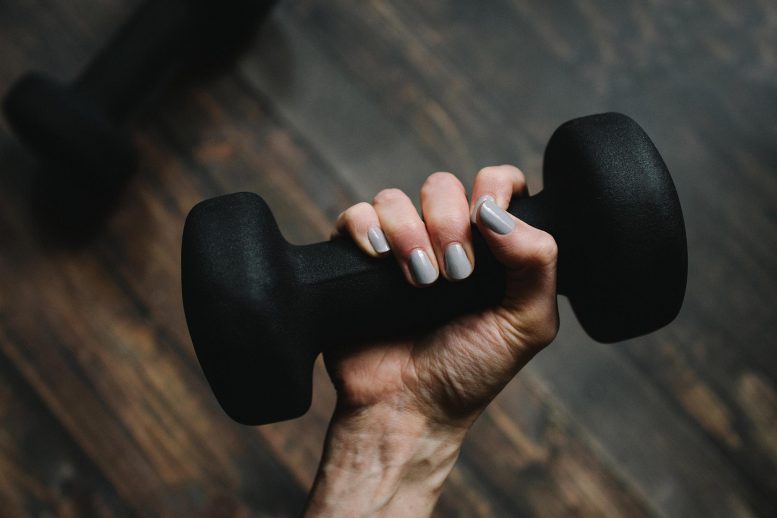
Arm Curl

New research from Edith Cowan University (ECU) has revealed that training one arm can improve strength and decrease muscle loss in the other arm — without even moving it.

The findings could help to address the muscle wastage and loss of strength often experienced in an immobilized arm, such as after injury, by using eccentric exercise on the opposing arm.

In eccentric exercises, the contracting muscle is lengthening, such as when lowering a dumbbell in bicep curls, sitting on a chair slowly or walking downstairs. Previous research has shown these exercises are more effective at growing muscle than concentric exercises, in which muscle are shortening such as when lifting a dumbbell or walking up stairs.

A new way of thinking

ECU’s Professor Ken Nosaka in the School of Medical and Health Sciences was part of the international study and said that the findings challenge conventional rehabilitation methods and could improve outcomes for post-injury and stroke patients.

“I think this could change the way we approach rehabilitation for people who have temporarily lost the use of one arm or one leg,” Professor Nosaka said.

“By starting rehab and exercise in the uninjured limb right away, we can prevent muscle damage induced by exercise in the other limb and also build strength without moving it at all.”

The opposite effect

The study involved 30 participants who had one arm immobilized for a minimum of eight hours a day for four weeks. The group was then split into three, with some performing no exercise, some performing a mix of eccentric and concentric exercise and the rest performing eccentric exercise only.

Professor Nosaka said the group who used a heavy dumbbell to perform only eccentric exercise on their active arm showed an increase in strength and a decrease in muscle atrophy, or wastage, in their immobilized arm.

“Participants who did eccentric exercise had the biggest increase in strength in both arms, so it has a very powerful cross-transfer effect,” he said.

“This group also had just two percent muscle wastage in their immobilized arm, compared with those who did no exercise who had a 28 percent loss of muscle.

“This means that for those people who do no exercise, they have to regain all that muscle and strength again.”

Future of rehab

Professor Nosaka said he plans on expanding the research further into other arm muscles and movements.

“In this study we focused on the elbow flexors as this muscle is often used as a model to examine the effects of immobilization on strength and size, and of course it is an important muscle for arm movement,” he said.

“In the future, we hope to look at how eccentric exercise can help improve motor function, movement, and fine muscle control, which is particularly important for stroke and rehabilitation patients.”

Professor Nosaka also said this type of training is useful for athletes who can begin post-injury recovery sooner.

 Reference: “Contralateral Effects of Eccentric Resistance training on Immobilized Arm” by Omar Valdes, Carlos Ramirez, Felipe Perez, Sebastian Garcia‐Vicencio, Kazunori Nosaka and Luis Penailillo, 8 September 2020, Scandinavian Journal of Medicine and Sports Science.
DOI: 10.1111/sms.13821

Monday, November 25, 2019

Unilateral versus bilateral upper limb exercise therapy after stroke: A systematic review

But you didn't compare opposite strengthening. So followup is needed, contact your stroke leader to get that followup done.  Your stroke doctor does know exactly whom to contact to get the stroke strategy updated and research done, or is there no one in charge of stroke? No protocols so you can't even get anything useful from this. 

Unilateral versus bilateral upper limb exercise therapy after stroke: A systematic review

A. E. Q. van Delden, MPhil1, C. E. Peper, PhD1, Peter J. Beek, PhD1 and  Gert Kwakkel, PhD1,2 From the 1Faculty of Human Movement Sciences and Research Institute MOVE, VU University Amsterdam and 2Department of Rehabilitation Medicine and Research Institute MOVE, VU University Medical Center Amsterdam, The Netherlands
Objective: 
to compare the effects of unilateral and bilateral training on upper limb function after stroke with regard to two key factors: severity of upper limb paresis and time of intervention post-stroke. Design: Systematic review and meta-analysis of randomized controlled trials. 
Methods: 
two authors independently selected trials for inclusion, assessed the methodological quality and extracted data. Study outcomes were pooled by calculating the (standardized) mean difference ((S)MD). Sensitivity analyses for severity and time of intervention post-stroke were applied when possible. 
Results: 
All 9 studies involving 452 patients showed homogeneity. in chronic patients with a mild upper limb paresis after stroke a marginally significant SMD for upper limb activity performance (SMD 0.34; 95% confidence interval): 0.04–0.63), and marginally significant MDs for perceived upper limb activity performance (amount of use: MD 0.42; 95% confidence interval: 0.09–0.76, and quality of movement: MD 0.45; 95% confidence interval: 0.12–0.78) were found in favour of unilateral training. All other MDs and SMDs were non-significant. 
Conclusion: Unilateral and bilateral training are similarly effective. However, intervention success may depend on severity of upper limb paresis(notice they require you to have the correct disability, letting other survivors behind)  and time of intervention poststroke. Key words: rehabilitation; stroke; upper limb; systematic review; CIMT; bilateral arm training. J Rehabil Med 2011; 00: 00–00 Correspondence address: Lex van Delden, Faculty of Human Movement Sciences; VU University Amsterdam; Van der Boechorststraat 9; NL-1081 BT Amsterdam, The Netherlands. E-mail: l.van.delden@vu.nl Submitted July 13, 2011; accepted October 31, 2011

Tuesday, October 2, 2018

Broke your arm? Exercise the other one to strengthen it - Stroke?

Have you been told about this rehab recovery option post-stroke? More research needed since they were healthy volunteers.

Broke your arm? Exercise the other one to strengthen it - Stroke?

If you have ever broken an arm and had to wear a cast or splint for a few weeks, you will be familiar with the alarming loss of muscle and uneasy feeling of weakness experienced after removing your cast.
Most people do not do much exercise while a broken arm is healing and can struggle with this loss of muscle, known as “atrophy,” and weakness for many weeks after the injury.
A new study published recently in the Journal of Applied Physiology, conducted in my lab by graduate student Justin Andrushko, suggests an effective strategy to offset muscle weakness might be to exercise the other arm.
We recruited a group of 16 college students to wear casts on their left wrists for four weeks. Half of these students exercised their right arm aggressively three days per week using a type of training known as “eccentric training” — which lengthens the muscle during contraction, and is quite effective for building muscle and enhancing strength.
Before and after the study period, we measured wrist strength in several different ways and quantified muscle volume using a Computed Tomography (CT) scan of the forearm. As expected, those students who did not train lost about 20 per cent of their strength and about three per cent of their muscle volume after four weeks.
Remarkably, the students who trained their opposite wrist completely preserved both the strength and muscle volume in the left, immobilized arm. This research has received a lot of attention.

Possible ‘mirror’ contractions

The phenomenon that creates the effect is known as “cross-education,” and has been documented for over a century, but the new study is one of just a handful to measure the effect when the opposite limb is immobilized.
We are the first to examine the effects using CT scans to measure muscle volume, and to measure the strength of multiple muscle groups in both arms (i.e. wrist flexors and extensors).
It turns out that the effect appears to be quite specific: training of the right wrist flexors preserved the left wrist flexors, but not the extensor muscles.


The loss of muscle after removing a cast from a broken limb can be alarming. (Shutterstock)
We do not fully understand what causes the effect. Most of the published work points towards changes in the nervous system relating to how the sides of the brain share information, or how they adapt together after training one arm. However, we are fascinated with the muscle size preservation effects.
Unfortunately, the study did not take detailed measures of anything inside the muscle. We suspect there could be some yet unknown connection between nervous system changes and the balance of muscle protein.
One theory is that there are small contractions, known as “mirror” contractions, under the cast while training the opposite side. We measured these contractions and they are very small — perhaps too small to preserve the muscle — but they are present. We need to do more research to understand the role of these small contractions in relation to prevention of atrophy.

Consider training the opposite limb

Although the results are exciting, we caution that the study was a controlled lab experiment involving young healthy volunteers without a real injury.
More work in clinical settings is needed before any changes to standard rehabilitation practices can be discussed.
There have been a few clinical studies already published — about wrist fracture and recovery from stroke and knee surgery — with promising results. The clinical studies seem more positive for fracture and stroke recovery and less so after knee surgeries.
Lab-controlled studies like the one we conducted are important to understand the underlying mechanisms of the effect, and to maximize its potential in future clinical work.
While more work in clinical settings is certainly needed, we can still recommend that if you ever experience a limb fracture, you might consider training your opposite limb. As with many types of exercise training, the risk of this approach is quite low and could have important benefits.