Your competent? doctor has had this covered already in your diet protocol, right?
vitamin B12(4 posts to May 2026)
Is Vitamin B12 the Muscle Nutrient You’ve Been Missing?
The mitochondria is the “powerhouse of the cell,” but B12 is what keeps the lights on. Here’s the latest science on how it affects your energy levels.
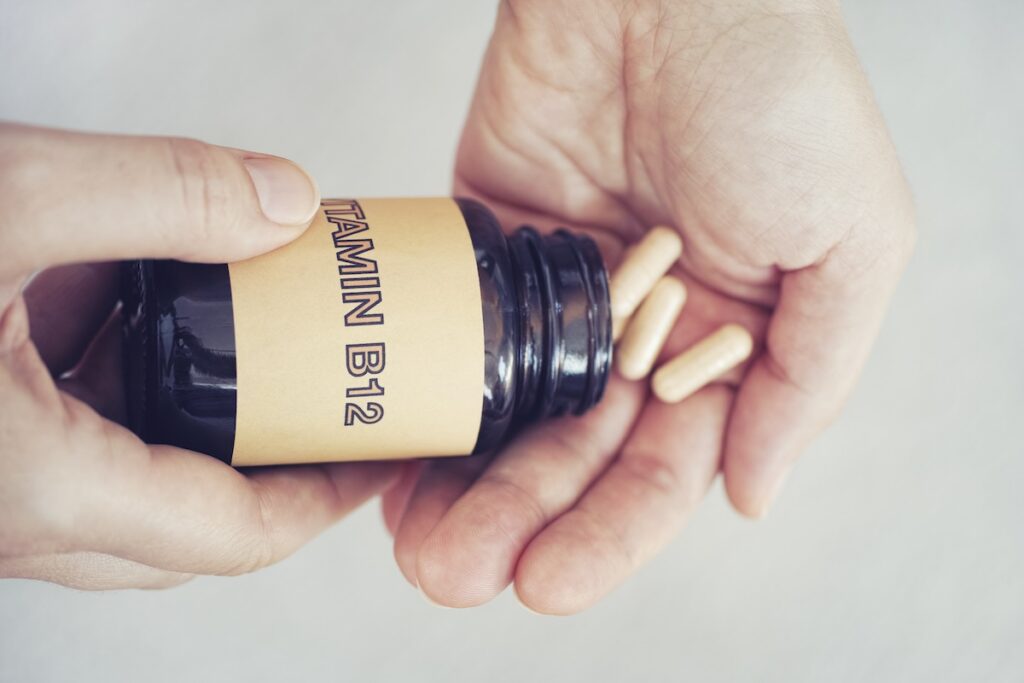
Protein powder, creatine, pre-workouts … There are more supplements than ever promising to elevate your performance in the gym. But if you walked into a supplement shop asking for vitamin B12 for muscle growth, you’d probably raise a few eyebrows.
B12 isn’t typically the go-to nutrient for muscle mass. But recent scientific evidence indicates the “energy vitamin,” may also play a role in powering your muscles. Here’s what we know, and how you can capitalize on it.
What You Should Know About B12 and Your Muscles
When we think of eating to fuel our muscles, you’ve probably heard about eating more protein and consuming enough calories. Physically active folks use their muscles more, so they need larger quantities of these major fuel sources.
But protein alone can’t do it all, and the research shows that other nutrients, like vitamin B12, may matter too. Vitamin B12 is essential for DNA synthesis, healthy nerve function, and red blood cell production — all of which help support normal muscle function.
Particularly, vitamin B12 supports the mitochondria, also known as those famous cellular “power plants” that provide energy.
It’s possible that insufficient vitamin B12 intake can depower your muscles’ capabilities. In fact, researchers believe age-related losses in muscle may have to do with mitochondrial dysfunction.
Are You at Risk of B12 Deficiency?
While the majority of B12 sources in our diet come from animal foods, only about half is effectively absorbed.
What’s more, deficiency is more common in some groups than others. Particularly, adults over 50, vegans and vegetarians, people with digestive conditions, and anyone who’s had stomach surgery may all be at an increased risk for low B12 levels. Plus, some medications may interfere with absorption as well.
There may be a connection between low vitamin B12 status and feeling strong, according to Caroline Thomason Bunn, RD. “Supplementing with vitamin B12 has been shown to improve strength and physical function in elderly adults who were deficient,” she shares.
Vitamin B12 deficiency goes beyond making you feel tired. It’s linked to anemia, nerve symptoms, muscle weakness, and even cognitive impairment in older people. It saps your muscles of an essential mechanistic puzzle piece, according to the latest research.
Going Deeper on the B12–Mitochondria Link
In 2026, scientists from Cornell University and the University of Alabama at Birmingham set out to determine how vitamin B12 deficiency affects skeletal muscle. Rodent subjects were split into two groups:
- Young-adult male mice that were either genetically unable to use B12 properly or fed a B12-deficient diet for seven weeks.
- Older mice (comparable to senior humans in age) that received weekly B12 injections for eight weeks.
In the B12-deficient group, the researchers observed that the mitochondria were not functioning at optimal capacity — the mice muscles in this group generated and burned about 25 percent less energy.
But the more useful question is whether that translates to actual strength — and human research suggests it can. In a 2024 pilot study, older adults with mild B12 deficiency who supplemented for three months saw significant gains in muscle strength and quality, reaching about the same level as people whose B12 was already healthy.
Before we get practical, bear in mind the mouse study points to a mechanism rather than proof — and the human evidence, while encouraging, is still one small pilot in people who were already deficient.
The Takeaway
Vitamin B12 supplementation has been recommended by institutions like the Mayo Clinic for years, but when it comes to muscle health and functionality, other supplements tend to steal the spotlight.
Especially if you’re over 50. Incorporate vitamin B12-rich foods into your diet to ensure you meet the recommended daily intake. Some good sources of B12 to include in your diet are:
- Clams
- Beef liver
- Tuna
- Salmon
- Eggs
- Fortified nutritional yeast
- Fortified breakfast cereals and other grains
Bottom Line
Here’s what we know: Getting adequate micronutrients, such as vitamins like B12, is just as important as hitting the big benchmarks — even if you don’t always feel the effects right away.
Feeling strong and energetic can make a massive difference in your overall quality of life, but requires you to pay attention to more than just calories or protein. If you’re feeling fatigued and are part of a cohort that tends to suffer from B12 deficiency, upping your intake might make a noticeable difference.
That said, the clearest human evidence so far is a small pilot where three months of B12 brought deficient older adults’ strength up to match non-deficient peers — promising, but larger trials are the next step, especially on whether B12 supplementation helps people who aren’t prone to deficiencies. In the meantime, there’s no harm in keeping your bases covered.
Experts Who Contributed
- Jake Dickson (BS-EXS, NASM-CPT), wrote this article.
- Lauren Keary, NASM-CNC, reviewed this article for accuracy.
- Caroline Thomason Bunn, RD, CDCES, founder of Caroline Thomason Nutrition, reviewed this article for accuracy.
supports the mitochondria, also known as those famous cellular “power plants” that provide energy.
It’s possible that insufficient vitamin B12 intake can depower your muscles’ capabilities. In fact, researchers believe age-related losses in muscle may have to do with mitochondrial dysfunction.


Are You at Risk of B12 Deficiency?
While the majority of B12 sources in our diet come from animal foods, only about half is effectively absorbed.
What’s more, deficiency is more common in some groups than others. Particularly, adults over 50, vegans and vegetarians, people with digestive conditions, and anyone who’s had stomach surgery may all be at an increased risk for low B12 levels. Plus, some medications may interfere with absorption as well.
There may be a connection between low vitamin B12 status and feeling strong, according to Caroline Thomason Bunn, RD. “Supplementing with vitamin B12 has been shown to improve strength and physical function in elderly adults who were deficient,” she shares.
Vitamin B12 deficiency goes beyond making you feel tired. It’s linked to anemia, nerve symptoms, muscle weakness, and even cognitive impairment in older people. It saps your muscles of an essential mechanistic puzzle piece, according to the latest research.
Going Deeper on the B12–Mitochondria Link
In 2026, scientists from Cornell University and the University of Alabama at Birmingham set out to determine how vitamin B12 deficiency affects skeletal muscle. Rodent subjects were split into two groups:
- Young-adult male mice that were either genetically unable to use B12 properly or fed a B12-deficient diet for seven weeks.
- Older mice (comparable to senior humans in age) that received weekly B12 injections for eight weeks.
In the B12-deficient group, the researchers observed that the mitochondria were not functioning at optimal capacity — the mice muscles in this group generated and burned about 25 percent less energy.
But the more useful question is whether that translates to actual strength — and human research suggests it can. In a 2024 pilot study, older adults with mild B12 deficiency who supplemented for three months saw significant gains in muscle strength and quality, reaching about the same level as people whose B12 was already healthy.
Before we get practical, bear in mind the mouse study points to a mechanism rather than proof — and the human evidence, while encouraging, is still one small pilot in people who were already deficient.
The Takeaway
Vitamin B12 supplementation has been recommended by institutions like the Mayo Clinic for years, but when it comes to muscle health and functionality, other supplements tend to steal the spotlight.
Especially if you’re over 50. Incorporate vitamin B12-rich foods into your diet to ensure you meet the recommended daily intake. Some good sources of B12 to include in your diet are:
- Clams
- Beef liver
- Tuna
- Salmon
- Eggs
- Fortified nutritional yeast
- Fortified breakfast cereals and other grains
And since B12 supports the mitochondria in your muscles, pairing it with enough protein and regular strength training may help you hold onto muscle function as you age.
Bottom Line
Here’s what we know: Getting adequate micronutrients, such as vitamins like B12, is just as important as hitting the big benchmarks — even if you don’t always feel the effects right away.
Feeling strong and energetic can make a massive difference in your overall quality of life, but requires you to pay attention to more than just calories or protein. If you’re feeling fatigued and are part of a cohort that tends to suffer from B12 deficiency, upping your intake might make a noticeable difference.
That said, the clearest human evidence so far is a small pilot where three months of B12 brought deficient older adults’ strength up to match non-deficient peers — promising, but larger trials are the next step, especially on whether B12 supplementation helps people who aren’t prone to deficiencies. In the meantime, there’s no harm in keeping your bases covered.
Experts Who Contributed
- Jake Dickson (BS-EXS, NASM-CPT), wrote this article.
- Lauren Keary, NASM-CNC, reviewed this article for accuracy.
- Caroline Thomason Bunn, RD, CDCES, founder of Caroline Thomason Nutrition, reviewed this article for accuracy.

