Showing posts with label exercises. Show all posts
Showing posts with label exercises. Show all posts
Friday, August 7, 2026


Thursday, May 21, 2026
Want Strength and Vitality? Stop Ignoring Your Glutes by Super Age
And you incompetently didn't get SPECIFIC EXERCISES on this from your doctor or therapist, did you?
Want Strength and Vitality? Stop Ignoring Your Glutes
Monday, December 4, 2023
I tried an elite athlete’s four-move mobility routine, and it soothed my spine and loosened my hips in just 12 minutes
If you can't do these post stroke your doctor and therapists completely failed at their jobs!
I tried an elite athlete’s four-move mobility routine, and it soothed my spine and loosened my hips in just 12 minutes
11

Like
most people, my body sometimes feels a bit stiff and beaten up. I love
exercising, hitting CrossFit sessions five times per week, but I rarely
approach my recovery efforts with the same diligence.
Someone who trains far harder than me and gives their body the TLC it needs is Laura Horvath, who was crowned the "fittest woman on earth" at the 2023 CrossFit Games.
Horvath swears by the stretching routines on the Pliability app, so I contacted the team to ask for one of her favorite sequences. Then I hopped into some comfortable joggers and unrolled my yoga mat to give it a go.
Here are my top takeaways from the 12-minute session, and instructions for tackling the four-move routine for yourself.
How to do Laura Horvath's four-move stretching routine
This routine is from Pliability's "back pain pathway", a series of 12-minute sessions each designed to alleviate discomfort and strengthen your back. This doesn't mean you'll exclusively be doing back-specific stretches during the routines; surrounding muscles and joints like the glutes and hips will also benefit.
I did the routine by copying the follow-along video on the Pliability app, where Laura demonstrates each move, but you can also do it by following the instructions and prescribed timings below.
All you need is a box or sturdy raised surface to lean on—for reference, I used a weight bench, but the side of a couch or chair can work too.
1. 3D abductor stretch

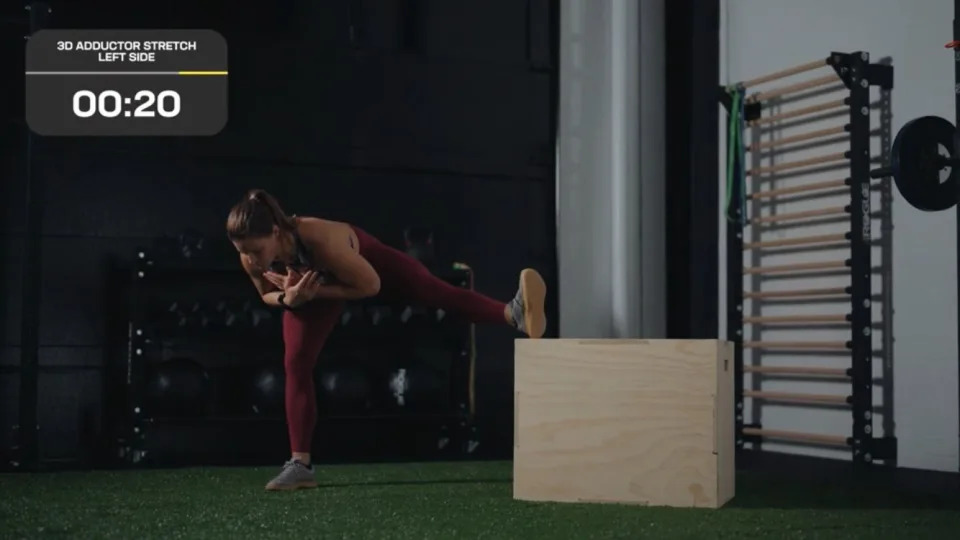
Time: 90 seconds on each leg
Stand to the right of sturdy surface at approximately knee-height—for example, a box, weight bench, chair or couch. Place your left foot on it with your toes facing upward. Your leg should be straight and your body should be facing away from the raised surface.
Lean forward until your torso is as close to parallel with the ground as you can get it while maintaining a flat lower back. Your left toe should always point to the ceiling. Slowly return to the starting position.
My top takeaways
Keeping the toe of your raised leg upright during this stretch is easier said than done, and I found mine kept wanting to tip forwards as I leaned over. I also really had to focus to maintain a flat back.
But the pay-off is worth it. The move delivered a satisfying stretch down the inside of my raised thigh as well as my hips.
Hinging at the hip like this offered similar strengthening benefits to the "good morning" exercise too, as I felt the muscles around my core and lower back kicking into action to support this area.
2. Standing lizard with 'corner' education

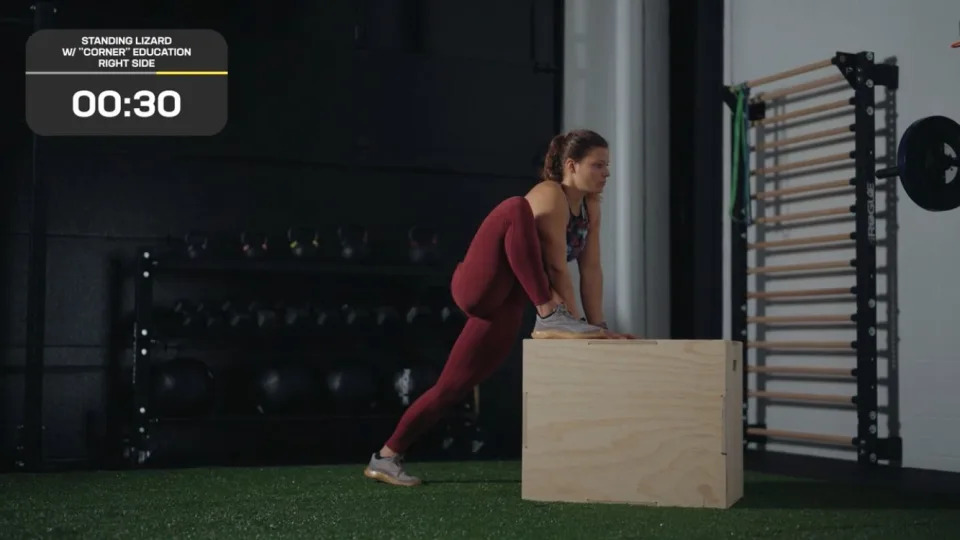
Time: 90 seconds on each leg
Stand facing a box or sturdy surface at approximately knee-height. Raise your right knee and place your right foot on the box.
Sink your hips towards the box. Your knee should always be pointing at the ceiling.
Keeping your legs relaxed, experiment with sinking your hips in slightly different directions to target tight spots.
My top takeaways
If you're searching for a satisfying hip stretch, look no further than the standing lizard with 'corner' education.
The instructor encouraged me to experiment by sinking my hips towards the box in slightly different directions, finding the 'corners', or end ranges, of the stretch.
I really enjoyed being able to play around and find the angles that delivered the deepest stretch for me. I was also somewhat surprised to find my left side felt slightly tighter than my right—this could have something to do with an old soccer injury in my left knee.
What I wasn't so surprised about was seeing that Horvath was more flexible than me. Where she was able to drop her elbows onto the box beside her planted foot, I kept my arms straight and worked within my own limitations.
3. Standing pigeon
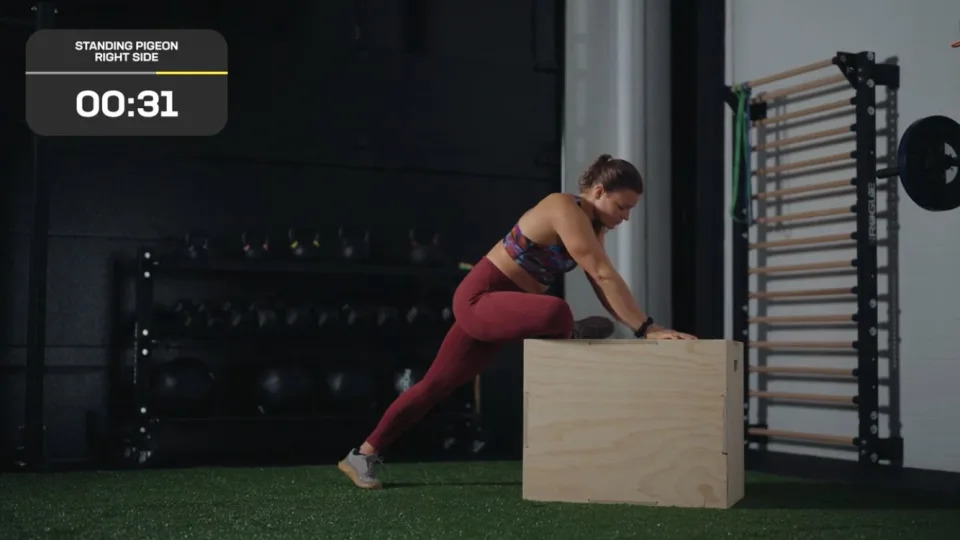
Time: 90 seconds on each leg
Stand facing a box or sturdy surface at about knee-height. With your left foot still on the floor, place your lower right leg on the box so it's lying horizontally. Try and lower your right knee towards the box or sturdy surface it's resting on.
Relax your right leg and sink your hips towards the box to feel a deep stretch in your hips. If you feel any 'pinching' in your hips and lower back, ease off.
My top takeaways
This was the most intense stretch of the lot, and I could really feel it on the outside of my glutes (backside muscles) as well as in my hips.
Slowly trying to lower my knee towards the box had some impact, but the main intensifier for me was sinking my hips lower into the stretch.
I've had problems with pigeon stretch feeling uncomfortable before on my left knee, with the same old soccer injury playing up again, but I had no such issues with this standing variation.
If you do feel any discomfort, the instructors advice was to "back off the stretch... You should not feel this in your knee at all".
4. Jefferson curls
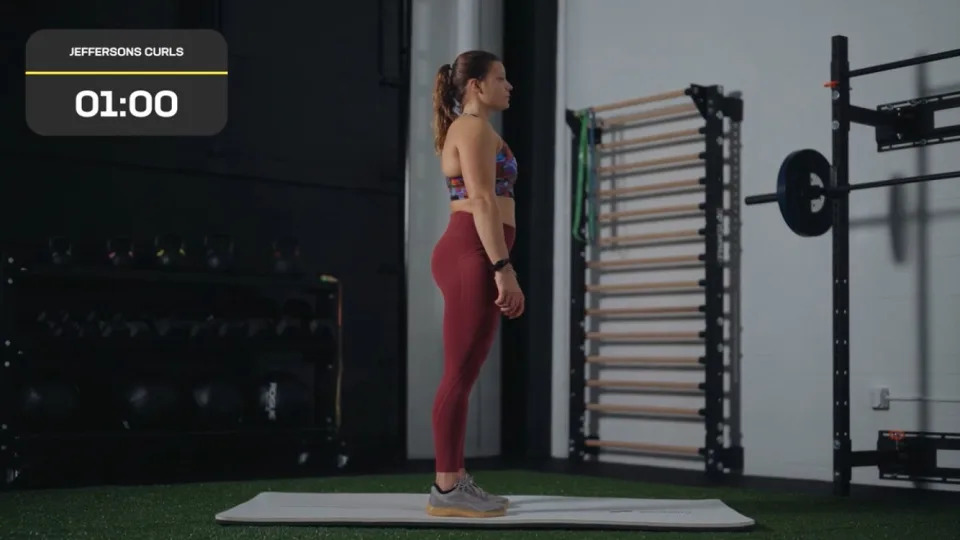
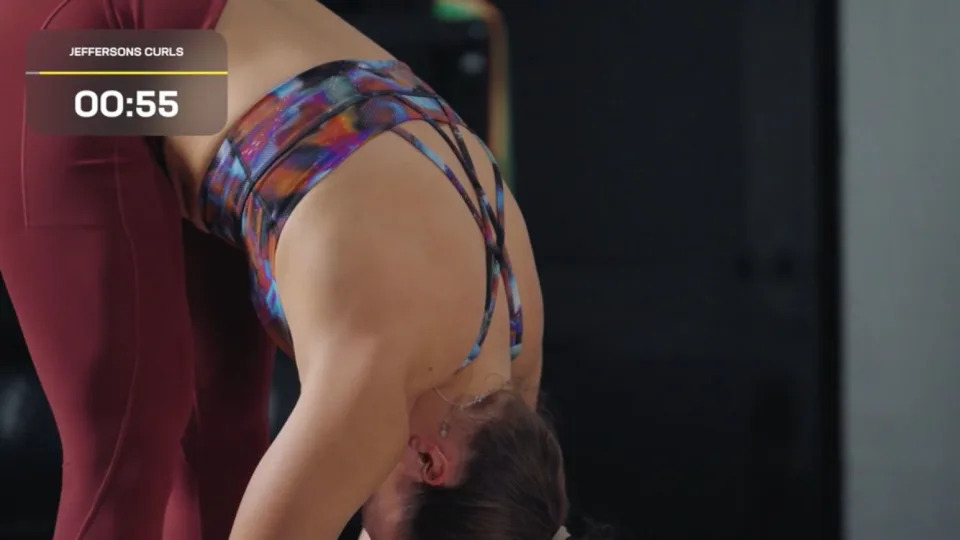
Time: 60 seconds
Stand upright with your feet hip-width apart.
Drop your chin to your chest then allow your head to continue dropping towards the floor, slowly curling your spine one vertebrae at a time. Let your arms hang down towards the floor, allowing your chest and shoulders to be pulled down. When you reach your hips, gently push them backwards while keeping your legs straight, enabling your chest to continue folding forward.
Take a deep breath as you reach the bottom of the stretch, squeezing your glutes (backside muscles) and abdominals. Reverse this movement to slowly return to the starting position.
My top takeaways
After some fairly intense stretches, the Jefferson curl was a breath of fresh air.
I felt it stretching and soothing my spine and neck, which were tight from a combination of heavy deadlifts the day before and plenty of time sitting at my desk.
However, while some muscles relaxed, it was interesting to feel others roar into action to make up for this.
As I left the bottom of the stretch and gradually uncurled my spine, my abdominals switched on to support my spine.
For me, this was incredibly enjoyable and relaxing. But again, the instructor advises: "If you feel pain at any point, back off the range of motion, and do not push into the end ranges."
My final thoughts
After I finished this routine, I felt looser and more relaxed. Some subtle tightness in my lower back from deadlifts the day before had largely subsided, and I was comfortably able to sink into a deep squat thanks to the hip-opening exercises.
What had surprised me most about the routine, as part of Pliability's Back Pain Path, was the absence of too many specific spine stretches like the cat-cow. Instead, most of the moves seemed to focus on my hips, with my glutes also singled out for special attention.
This makes sense when you think about it. The body is a series of interconnecting systems and the spine is far from a one-man band; the supporting muscles and nearby joints play a pivotal role in keeping it working smoothly.
Strong, healthy hips and glutes can support the spine, helping you maintain proper pelvic alignment and good postures. They will also lower your risk of lower back pain or injury by taking some pressure off this area when lifting things.
That's why I'm sure I'll be giving this routine (and similar) another try in the near future.
Sunday, December 3, 2023
Strengthen your joints and reduce your risk of injury with these six expert-approved exercises
If you can't do these post stroke your doctor and therapists completely failed at their jobs!
Strengthen your joints and reduce your risk of injury with these six expert-approved exercises
3
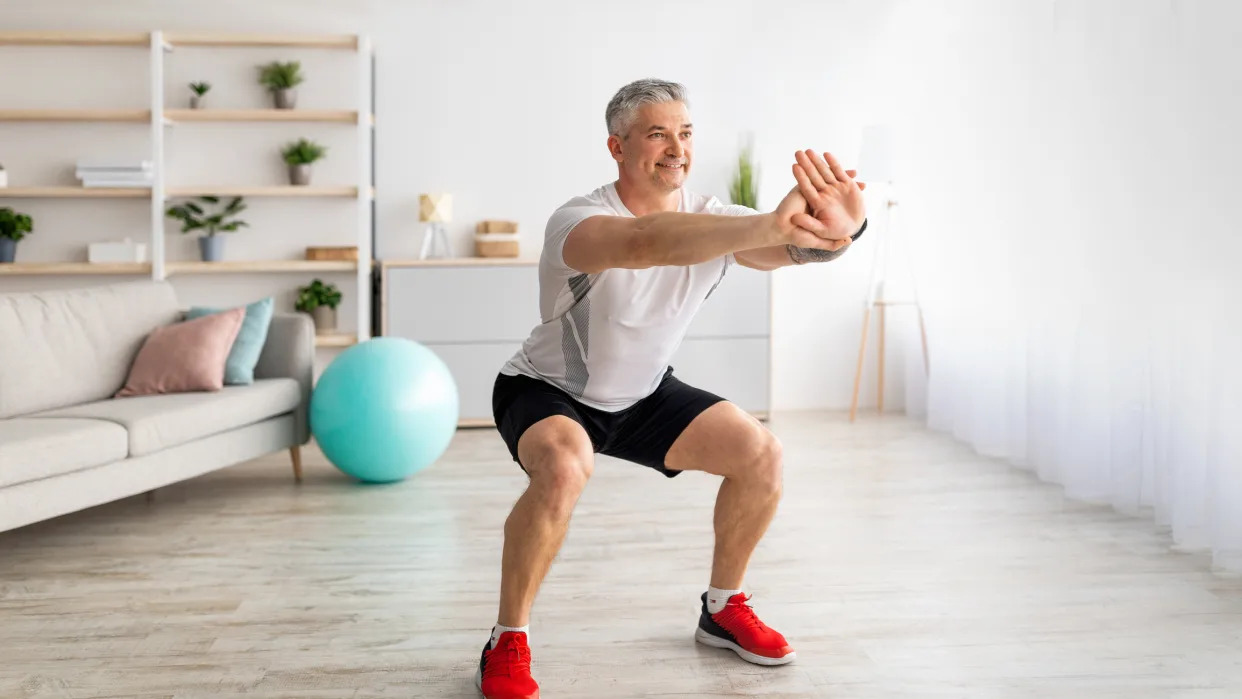
If you're experiencing joint pain, your first impulse might be to avoid exercise altogether. But performing joint strengthening exercises can actually help, rather than hinder, your recovery.
"When you exercise, you’re building strength in your muscles, ligaments and tendons around your joint, which helps build support," explains Abby O'Rourke, clinical fitness regional lead at healthcare charity Nuffield Health.
The charity has selected the following six exercises as the best for building joint strength. Each of the moves—demonstrated below—can be tweaked to be easier or harder. Most of them can be performed either equipment-free or with a simple resistance band.
For the final move, you might want a bosu ball or balance board, which can be picked up for roughly $15 from Amazon, but there's also a no-equipment alternative included.
How to do Nuffield Health's joint pain prevention workout
Squat
Seated row (I would fail at this, unable to grasp the band tightly enough with my left hand. Can't tie a loop either with only one functioning hand)
Leg extension
Shoulder press(Not possible at all for my left arm.)
Step up
Stability challenge
"I would suggest performing each move for between 30 seconds and one minute, then resting for 15-30 seconds," O'Rourke advises. She suggests repeating the routine two to three times every week and doing it alongside an aerobic activity like walking.
"And remember, as the UK chief medical officer's guidance says, 'some is good, more is better'."
Wednesday, March 22, 2023
Which exercises might reduce pro-inflammatory and enhance anti-inflammatory cytokines in older people with mild cognitive impairment or Alzheimer's disease?
I hate treadmills, they do nothing for balance recovery and fall prevention, and are boring as hell. So it is your doctor's responsibility to give you EXACT EXERCISES TO DO!
Which exercises might reduce pro-inflammatory and enhance anti-inflammatory cytokines in older people with mild cognitive impairment or Alzheimer's disease?

In a recent article published in Experimental Gerontology, researchers systematically reviewed English language publications from 13 electronic databases, such as PubMed/Medline, Google Scholar, and Web of Science.
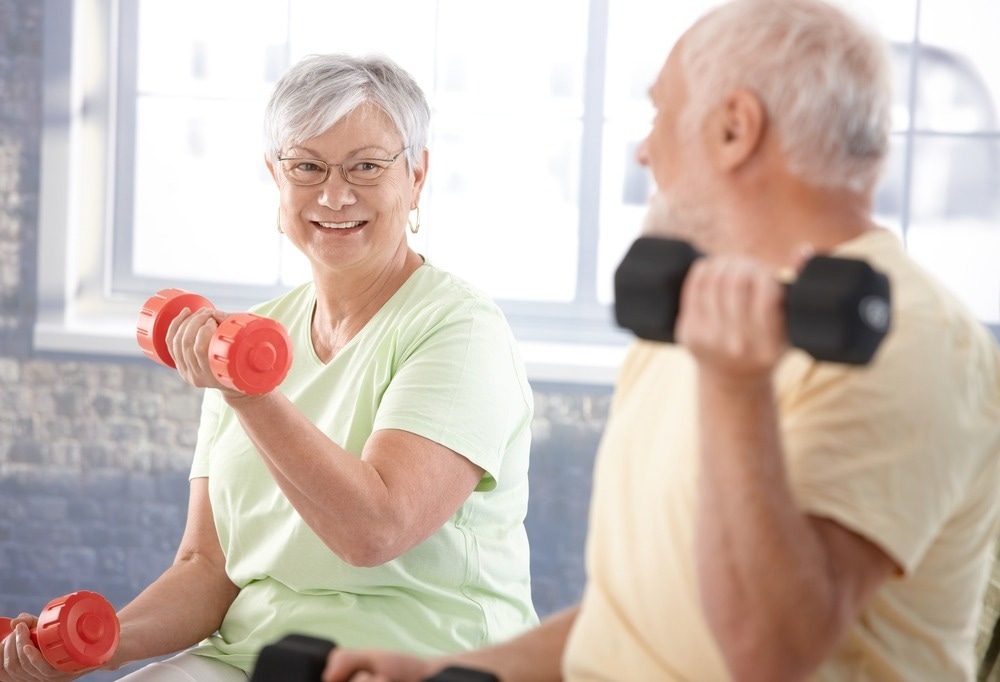
They investigated which exercises might enhance anti-inflammatory cytokines and reduce pro-inflammatory cytokines in patients with dementia or mild cognitive impairment (MCI), as illustrated in studies using apt animal models and human participants.
Background
MCI is often considered the earliest symptomatic manifestation of Alzheimer's disease (AD), the most common cause of dementia. By 2050, AD might become so prevalent that one in 85 people will have AD worldwide. Cognitive deficits, neurodegeneration, b-amyloid (Aβ) deposition, neurofibrillary tangle (NFT) formation, and neuroinflammation are some of the characteristic manifestations of AD.
There is a need for biomarker panels to diagnose AD early. Their identification is also crucial because inflammatory mediators play an important role in disease pathogenesis and could inform the development of novel therapeutic strategies for AD.
About the study
In the present study, researchers performed a detailed systematic review to understand the effects of chronic physical activity on MCI or AD outcomes. They included studies using exercise, physical activity, or fitness training as an experimental intervention.
These articles had participants who either had AD, MCI, or dementia, examined cerebrospinal fluid (CSF), brain tissue, etc., and measured cytokines or other inflammatory or neuroinflammatory immune markers. The researchers also included all animal studies that responded to these criteria.
In the study assessments, the researchers examined the effect of physical activity, stratified based on its type, frequency, volume, intensity, and duration.
Results
The authors claim this is the first systematic study on physical exercise parameters in this context. Thus, the studies covered in this review showed inflammatory and anti-inflammatory cytokine levels after exercise in the intervention and control groups.
The included studies also combined results from 25, 11, and two articles exclusively related to animals, humans, and both humans and animals, respectively. They include 1249 animals and 789 human participants.
First, the researchers evaluated only animal model articles to find that physical exercise reduced pro-inflammatory markers in 70.8% of the models, especially tumor necrosis factor-alpha (TNF-α), interleukin (IL)-1β, and IL-6. In 26% of the animal model articles, the levels of the anti-inflammatory cytokines, viz., IL -4, IL -4β, IL -10β, IL -10, and TGF-β showed a marked increase.
In 40.8% of animal model studies, the effect on cytokine levels was positive post-treadmill and swimming exercises, whereas resistance exercise decreased pro-inflammatory cytokines. These three exercise types also promoted a marked reduction in Aβ amyloid plaques, pro-inflammatory cytokines, and microglial activation. Further, the researchers noted elevated levels of IL -4 after four weeks of exercise, through which the brain most likely compensated for Aß-induced upregulation of IL-6.
A low, moderate, or high treadmill exercise volume decreased IL -1β and a surge in anti-inflammatory cytokine IL -10 in blood serum. Furthermore, the study results showed that low-intensity endurance training reversed neuroinflammation.
Intriguingly, 73% of studies where authors induced AD in non-transgenic animals found a positive exercise effect on neuroinflammation. In 100% of articles, hippocampal Aβ injection was very effective concerning neuroinflammation.
Moving on to studies with human models, the researchers observed that chronic exercise was beneficial. In 53.9% and 23% of chronic exercise articles, they observed reduced pro-inflammatory and increased anti-inflammatory cytokines, respectively.
Accordingly, cycling, aerobic and multimodal exercises, and resistance training reduced several pro-inflammatory cytokines, e.g., IL -6, IL -15, IL -1β, and TNF-α. Even in older adults with MCI, three times per week of multimodal training for 16 weeks reduced blood serum levels of IL -6 and TNF-α.
Likewise, resistance training had multiple benefits. For instance, it improved their cognitive function by increasing insulin-like Growth Factor One (IGF-1) levels in the hippocampus. Similarly, aerobic and mind-plus-body exercises increased Brain-derived neurotrophic factor (BDNF), whereas cycling reduced small nucleolar RNA host gene 14 (SNHG14) expression to halt AD progression.
Conclusions
The authors emphasized that future studies elucidate the effect of exercise protocols on AD stages, from preclinical to severe. Similarly, understanding the correlation between cytokine levels and cognitive functions is crucial to managing neuroinflammation and cognitive decline.
Furthermore, future studies should have a larger sample size covering both genders where they compare groups doing two different types of exercise, rather than a sedentary group vs. an exercise group. It would enhance understanding of how forced physical activity accentuates dementia progression.
Nonetheless, this review remarkably showed the positive effects of chronic physical activity on the brain tissue of animals and humans with MCI or AD. Though the study results could help guide healthcare professionals, the authors cautioned that this efficacy was biological and not proven clinically.
Journal reference:
- Ayari, S. et al. (2023) "A systematic review of exercise modalities that reduce pro-inflammatory cytokines in humans and animals' models with mild cognitive impairment or dementia", Experimental Gerontology, 175, p. 112141. doi: 10.1016/j.exger.2023.112141. https://www.sciencedirect.com/science/article/pii/S0531556523000621
Wednesday, February 8, 2023
Improving heart health at midlife and beyond could lower future risk of stroke, dementia
Remind your doctor it is his/her responsibility to get you recovered fully to do the exercises needed to improve your heart health.
Improving heart health at midlife and beyond could lower future risk of stroke, dementia
By Laura Williamson, American Heart Association News


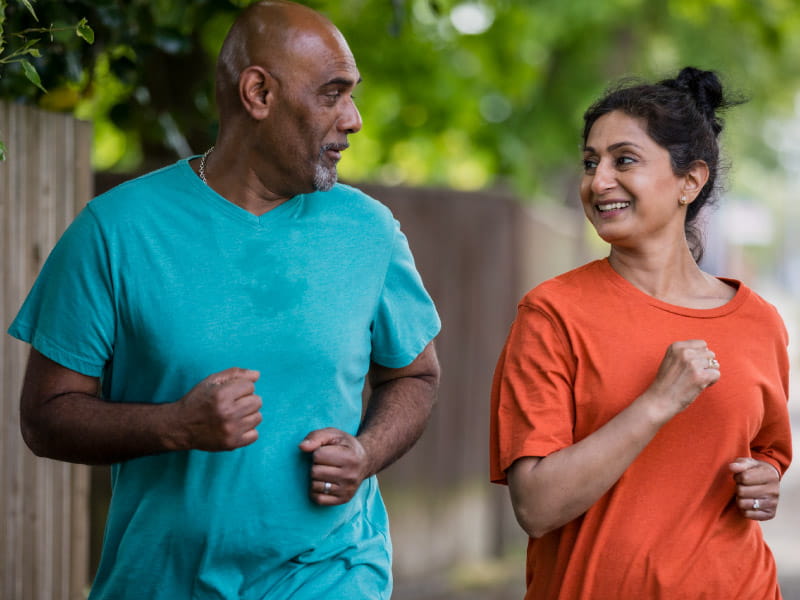
Good heart health promotes better brain health and can help reduce the risk for stroke and dementia. But is it ever too late to make a difference? New research suggests the answer is "no."
The study, to be presented Wednesday at the American Stroke Association's International Stroke Conference in Dallas, found that improving heart health in midlife and beyond was associated with a lower prevalence of stroke and dementia risk factors around two decades later. The findings are considered preliminary until full results are published in a peer-reviewed journal.
"Even small improvements can actually have an effect," said lead author Sanaz Sedaghat, an assistant professor in the division of epidemiology and community health at the University of Minnesota in Minneapolis.
A large body of research shows the same risk factors that contribute to heart disease – such as carrying too much weight, not being physically active or having high blood pressure – also contribute to cerebrovascular diseases such as stroke and dementia. However, there is less data about how changes in cardiovascular health in midlife and beyond may affect a person's risk for cerebrovascular disease as they age.
In the study, researchers used health data for 1,638 participants in the Atherosclerosis Risk in Communities study, collected twice in midlife (at average ages of 53 and 59) and once in late life (at an average age of 76).
At each visit, cardiovascular health scores were calculated using the American Heart Association's Life's Simple 7, a collection of behaviors and factors that greatly affect heart and brain health. These include diet, physical activity, weight, tobacco use, cholesterol, blood pressure and glucose levels. The data was collected before AHA added sleep as a major determinant of cardiovascular health in 2022, changing the name to Life's Essential 8.
Participants received up to 2 points for each of the seven items, based on whether their adherence to target goals for each item was poor, intermediate or ideal. During the late-life visit, brain scans identified markers of cerebrovascular disease, including white matter hyperintensity volume, microbleeds and infarcts, or cell death, throughout the brain. These markers signal a greater risk for stroke or dementia.
People who had higher cardiovascular health scores in midlife and late life, or whose scores rose within midlife and from midlife to late life, had a lower prevalence of cerebrovascular disease markers. Every one-point increase in the score reduced the overall risk for cerebrovascular damage by roughly 7%.
"For me, the interesting part is even one point makes a big difference," Sedaghat said.
The study did not look at how improvements in individual components of the score affected cerebrovascular damage. But it did look at how changes in overall cardiovascular health affected some of the individual elements of cerebrovascular health.
For example, from midlife to late life, those who maintained ideal cardiovascular health – who had the highest scores – "had 33% lower odds of brain microbleeds and 37% lower odds of having infarcts," compared to people whose scores declined, Sedaghat said.
"You can prevent a lot of brain damage by following" these measures for good cardiovascular health, said Dr. Vladimir Hachinski, a distinguished university professor in clinical neurological sciences at Western University in London, Ontario, Canada. "And you can see the results here."
Hachinski, a pioneer in the field of stroke and vascular dementia research who was not involved in the new study, said he wasn't surprised to see that improving cardiovascular health overall could lower the risk for specific types of brain damage and would love to see follow-up studies that dig deeper into which components of heart health have the most impact on brain health.
"The next important step is to look at which of these have the strongest relationships," he said.
The findings contribute to mounting evidence pointing to the need for greater collaboration between cardiovascular and cerebrovascular disease experts, Hachinski said.
If heart disease, stroke and dementia all develop because of the same set of risk factors, he said, "it only makes sense that we have to prevent them together."
If you have questions or comments about this American Heart Association News story, please email editor@heart.org.
Subscribe to:
Posts (Atom)