Changing stroke rehab and research worldwide now.Time is Brain! trillions and trillions of neurons that DIE each day because there are NO effective hyperacute therapies besides tPA(only 12% effective). I have 523 posts on hyperacute therapy, enough for researchers to spend decades proving them out. These are my personal ideas and blog on stroke rehabilitation and stroke research. Do not attempt any of these without checking with your medical provider. Unless you join me in agitating, when you need these therapies they won't be there.

What this blog is for:

My blog is not to help survivors recover, it is to have the 10 million yearly stroke survivors light fires underneath their doctors, stroke hospitals and stroke researchers to get stroke solved. 100% recovery. The stroke medical world is completely failing at that goal, they don't even have it as a goal. Shortly after getting out of the hospital and getting NO information on the process or protocols of stroke rehabilitation and recovery I started searching on the internet and found that no other survivor received useful information. This is an attempt to cover all stroke rehabilitation information that should be readily available to survivors so they can talk with informed knowledge to their medical staff. It lays out what needs to be done to get stroke survivors closer to 100% recovery. It's quite disgusting that this information is not available from every stroke association and doctors group.

Showing posts with label retirement. Show all posts

Monday, September 21, 2026

A happier retirement contains these 3 elements

 Are you recovered enough to be happy? Or did your incompetent? doctor fail you?

My  resilience story: I would still be leading a life of quiet desperation if still married.

(Life is definitely better as I age, I got divorced enhancing my happiness immeasurably. I'm retired and comfortably well off. And healthy as I can be post stroke. I'm going to live a long time yet.)

A happier retirement contains these 3 elements

What’s the secret of a rich, rewarding retirement?

It’s as simple as ABC: agency, belonging and cause.

That’s how Bruce Feiler, author of “A Time to Gather” and other books, spells out the three factors that give life meaning. “Agency” is wielding power and autonomy in choosing how to live; “belonging” is forging social ties with others; and “cause” is serving a higher purpose.

With these three ingredients in place, the odds of a satisfying retirement soar, he says. By making intentional decisions aligned with your goals and values, leading an active social life and contributing to a cause that elevates your spirit, you’re bound to feel more happy and fulfilled.

“It’s a tool kit for navigating retirement,” Feiler said. “It’s the same for navigating any life transition, like an illness, a move or the loss of a loved one.”

Many retirees struggle to find purpose or structure once they’re done with the routine of a traditional job, which can lead to loneliness and isolation. As people live longer, it’s not unusual for retirement to last 20 to 30 years.

Here’s how to assess how well you know and apply these three critical elements:

Agency: Examine how much control you feel you have over your everyday life. By choosing “what we are, what we create and what we do,” as Feiler says, we’re more apt to serve as our own director, rather than letting external factors direct us.(I'm completely in control, know enough to say no when needed.)

 Related video: 8 simple ways to make the most of retirement and enjoy every day (En Pareja)

Belonging: Consider the key players in your life. Do you have positive relationships with friends and family? Do you attend community events or other group gatherings eagerly? Or do you feel alone and isolated much of the time?(Have many social groups and travel companions. Marriage  would vastly complicate my social connections.)
Cause: Explore how deeply you believe in something larger than yourself. Does your desire to give back or tackle societal problems energize you? Do you pounce on volunteer opportunities? When donating your time to make a difference or improve the lives of others, do you feel fully alive and happy?

(Trying to get stroke solved to 100% is a humongous challenge! Getting through the fossilized brains of stroke medical 'professionals' I haven't figured out yet. 

And I think a lot of funerals will need to occur before we get the right strategy and leadership to GET THERE!

Even if all three elements are present in your life, try adding more, the author says.

“Pick a personal project for A, B and C,” Feiler said. “I’m tempted to say start small, but some people like to start big.”

To gain more agency, for example, you can tend the garden for an hour or write your autobiography. Let your motivation level determine the size and scope of the project.

At the same time, cut yourself some slack. As you age, you may face limitations on your ability to exert agency, socialize often and embrace a cause.

“The ABCs are very important,” said Teresa Amabile, a professor emerita at Harvard Business School. “But they’re not of equal importance.”

Read: The loneliness crisis has gotten so bad that lawmakers are ready to spend millions of dollars to fight it

One focus plays a paramount role in enhancing your retirement years: belonging.

The biggest predictor of longevity and happiness is the quality of our relationships, according to the Study of Adult Development, which has tracked participants and their descendants for nearly 90 years.

“Belonging is very critical,” said Amabile, co-author of “Retiring: Creating a Life That Works for You.” “Relationships make a huge difference in life satisfaction. That’s certainly very true in retirement.”

Even if you were somewhat lonely or less satisfied with your past relationships, it’s not too late to find more comradeship and support in retirement. Maintaining an openness to people — and a willingness to strengthen connections with everyone from distant or estranged family members to friends, acquaintances and strangers — enables you to benefit from more social interaction.

Read: The future of retirement? Work until you die.

The obstacles of the alphabet

It’s not always easy to follow through with your ABCs. Obstacles abound.

Amabile warns that we may lose some agency despite our best efforts.

“There’s only so much control we can exert over our lives and circumstances,” she said. “So it’s necessary to figure out when we can’t control things and find out how to adapt.”

Moreover, it takes confidence and positivity to pilot your life. You need to believe that you can wield control over your choices and resist outside forces that try to influence you.

To forge better social connections, weigh whether shyness, cynicism or snap judgments of others hold you back.

“People have gremlins,” said Barbara Waxman, a San Francisco-based gerontologist and coach. “There are naysayers on our shoulders who hold us back, that voice of self-doubt.”

“If you get a social invitation, recognize the moment as a decision point,” said Patrice Jenkins, a retirement consultant and author of “What Will I Do All Day?” “Don’t default to say ‘no’ and settle into what’s comfortable.”

You can’t flip a switch and apply the ABCs all at once. Retirement unfolds in stages. But by making strides in integrating agency, belonging and cause into your life, you pave the way for a smooth transition.

Read: Couples with a big age gap need more money — they have to plan for two retirements

Wednesday, August 19, 2026

10 everyday habits that are harming your longevity the most

 I'm pretty good at these.

10 everyday habits that are harming your longevity the most

Living a long, healthy life is a popular goal, but it’s not easy to achieve. It’s common for folks to develop conditions like dementia and chronic pain, in addition to mobility issues and cardiovascular problems, as they age.

While certain uncontrollable factors (like genetics) play a major role in many of these issues, everyday habits can also contribute to a less-than-ideal aging process. And some of the habits you probably follow every day or every week are actually getting in the way of healthy aging and a long life.

Health: 6 Seemingly ‘Harmless’ Habits That Are Prematurely Aging Your Brain

Here’s what they are, according to doctors:

1. Skipping preventive care.

According to Dr. Heather Whitson, director of the Duke Aging Center in North Carolina, neglecting to stay up to date on preventive care — including things like mammograms, colonoscopies and vaccines — is not good for your long-term health.

“It’s like not taking your car into the shop,” Whitson said. “It’s probably not going to last as long if you don’t keep up with the routine maintenance.”

You can chat with your primary care doctor about what preventive tests are right for you.

Health: 10 Everyday Habits That Are Harming Your Longevity The Most

2. Not cultivating social relationships.

I'm extremely good at this.

“We know that socialization helps with your brain and with your longevity,” said Dr. Lee Lindquist, chief of geriatrics at Northwestern Medicine in Chicago. The more time you spend interacting with other people, the more it can benefit your life span.

“I always joke... that you need to socialize with happy people, because we all have toxic people in our lives,” she said. Toxic people can bring anxiety and sadness, which won’t help you age well. Related video: The common medications that quietly become dangerous as you get older (Talking With Docs)

“The more socialization you can do with people that bring you joy or bring you happiness, those are things that will definitely help you age healthy and age well and improve your longevity,” Lindquist said.

During the COVID-19 pandemic, when we were all stuck indoors, many people’s cognition was damaged because of the isolation, she noted. “So, we do know that social isolation harms aging and harms the longevity process.”

Health: 7 Things Doctors Wish Older Adults Would Do Daily

“A couple of my favorite patients who are in their 90s and 100s, they actually wake up every day and they try to find somebody new to talk to,” she added. As you age, it’s normal for your social circle to dwindle, which means it’s critical to keep going out to meet new people if you want to age well, Lindquist noted.

3. Not adjusting your medications as you age.

“We see it so many times where people will be on medicines that they were started on in their 40s and 50s that they may not need in their 70s or 80s,” Lindquist said. “And some of these medicines are not ideal for older adults.”

Certain medications can make you more susceptible to falls and cause thinking problems, she added. Some anti-anxiety medications can contribute to memory loss, according to AARP, and some prescription sleep medications are known to increase your fall risk, according to Harvard Health Publishing.

“So, definitely talk to your doctor about whether or not you still need some of these medicines,” Lindquist said.

Health: 7 Unconventional Habits Longevity Experts Swear By

4. Not exercising.

This one probably isn’t surprising, but it can’t be said enough: Failing to exercise will harm your longevity.

“Exercise is amazing — being able to put exercise in a pill form would take a lot of health care providers out of business, because it really is good for mood, it’s good for weight control, it’s good for your bones, it’s good for your heart, it’s good for your brain,” Whitson said. “And it really is about the only thing that you can recommend that has all-around good benefit.”

“Exercising is super important, and not exercising or not getting enough daily activity is something that will definitely harm your longevity,” Lindquist said.

When asked how much she recommends people exercise, Lindquist simply said: “More.”

“When you get too comfortable, and doing the same activity three times a week, once a week, or even not at all, it just really hurts your body,” she said.

So, if you’re someone who goes on a daily walk, try adding in a Zumba class a few times a week. If you’re a die-hard Peloton fan, sign up for some personal training classes, too.

“Even if you ask your physician for a physical therapy order to get you started to get you moving around more, that’s very important,” Lindquist said.

If you’re looking for a benchmark to start, you should aim for at least 150 minutes of moderate exercise or 75 minutes of vigorous exercise each week, according to the American Heart Association. And, again, more minutes mean more health benefits. 

5. Smoking.

Smoking cigarettes is linked to lung cancer, chronic obstructive pulmonary disease, heart disease, stroke and more. But it’s highly addictive, making it hard to just quit.

According to the American Lung Association, it can be helpful to zero in on the reason you’re quitting smoking, so you can use it as motivation through the tough parts of the process. You can also get resources from your doctor to help you quit.


6. Eating an unhealthy diet.

According to Whitson, prioritizing a healthy diet is another way to better your chances of a healthy life span.

Whitson suggested that “a Mediterranean-style diet that is heavy on fish... and heavy on whole fruits and vegetables and grains, with only the very occasional treat of processed food, is probably the best thing for most people.”

It’s never too late to change your diet ― but you may have an easier time doing so when you’re younger.

“It’s very hard to change your diet when you’re in your 70s, 80s, 90s, so if you can start eating right earlier, it’s going to be easier for you and it’ll affect you better over the long run,” Lindquist explained.

7. Not getting enough sleep.

“There’s a lot of increasing evidence that depriving ourselves of sleep has long-term consequences,” Whitson said. These include a higher risk of dementia and heart disease, in addition to higher levels of daily stress and worse moods overall.

It’s normal to experience age-related changes that affect your sleep, so you shouldn’t be totally alarmed if your sleep patterns are different as you get older. But certain conditions, like obstructive sleep apnea, put you at risk for some of these negative outcomes when left untreated.

“If you’re... noticing really excessive daytime sleepiness, if their partner’s telling them that they’re snoring or having apneic episodes [where you stop breathing] that are waking them up at night,” it’s important to let a doctor know, Whitson noted.

Adults need seven to nine hours of sleep each night. If you have trouble getting this much sleep, it’s a good idea to cut back on things like caffeine and alcohol, and to have the same sleep and wake times each day.

8. Letting stress go unmanaged.

No stress being retired.

“It’s really hard to not feel stressed about work and family and whatever other things make us stressed out, but just be mindful that we as humans have a very physical stress response to things that are not a physical threat to us,” Whitson said.

Many animals have a stress response that kicks in under conditions of urgency, like when they’re being chased by a predator or looking for water. Generally, once the need is met, the stress goes away.

“We as humans are able to stress about things that... just don’t pose any physical threat to us ― but then by turning on that stress response and having it kind of chronically activated, it does all kinds of things,” Whitson said. “It reduces our immune system’s ability to fight off real pathogens and things that are our real stressors.”

Stress also takes a toll on our metabolism, our sleep, our blood pressure and more. It’s important to do what you can to decrease your stress, whether that’s talking to a mental health professional (if possible) or cutting out things in life that cause you problems.

9. Not planning for your future health.

“We talk a lot about planning for end of life — you know, what are you going to do? Do you want CPR? Do you want advanced-care planning? Who’s my power of attorney? Where’s my will?” Lindquist said. “But many times people don’t think about, ‘What am I going to do in the 10 to 20 years before I die?’”

Lindquist refers to this time frame as the “fourth quarter of life, because that’s the time when you’re going to have more health problems.” She added that people in their 70s, 80s and 90s are more likely to require hospitalization and deal with worsening memory loss. 

Besides deciding who get the lake house, your golf clubs or your engagement ring, you should start thinking about your plan for the last 10 to 20 years of your life, Lindquist explained. Are you going to plan to move in with family? Will you have in-home care? Will you move to a senior community? Do you live near a hospital?

“These are conversations that people should be having, especially when they’re considering longevity and living longer,” she noted.

By having these conversations with loved ones, you can make sure your voice is heard as you age and that there are no unchecked expectations. To help adults plan for all of the aspects of their future, Lindquist and her team built Plan Your Lifespan, a free website funded by the National Institutes of Health.

10. Not planning for your financial future.

I started planning for this at 30, even losing half to the divorce still allows me financial freedom. 2-3 international trips a year are going to occur while still healthy.

“It’s great when people’s goal is to increase their active longevity and health span... [but] they should know that they have to plan for it financially,” said Whitson. “One of the saddest things that I see as a geriatrician is when increasingly, it happens frequently now, that people outlive their savings.”

Many of Whitson’s patients in their 90s tell her they never expected to live so long, and that they didn’t expect to have to support themselves for another 30 years after retirement. “That happens, and it’s real,” she said.

“I worry about some of the people that I see at midlife that are sort of expecting to retire at 65 and haven’t really accounted for the fact that if they live 30 healthy years after that, they better be able to know where their money is going to come from,” Whitson said.

“I think a lot of people have these imaginations of travel and living large in retirement because they will have made all the right health choices and be very healthy, which is great,” she said. “But thinking about the funds flow for that chapter of their lives is important in midlife, too.”

So, as you focus on your physical and mental health as you age, it’s important to remember that future financial health also plays a major role.7 Signs You're Aging Well, According To Geriatricians

This article originally appeared on HuffPost. Keep independent journalism alive. Your support funds the deep reporting that matters most. Become a HuffPost member and support our journalism today.

Saturday, July 11, 2026

Can leaving the workforce early lead to cognitive decline? Here's what experts say

 I left work at 62 and there is no cognitive decline at all. Keeping up with all this research keeps my brain sharp.

Can leaving the workforce early lead to cognitive decline? Here's what experts say

Early retirement sounds pretty great. It's hard to picture a downside of ditching the daily grind for a lifetime of more personally fulfilling pursuits.

But leaving employment before traditional retirement age - especially because of layoffs or weak labor markets - could have negative impacts on cognitive abilities, according to a new working paper from researchers at UC Irvine published by the National Bureau of Economic Research.

David Neumark, a professor of economics at UC Irvine who co-authored the study, said existing research had demonstrated a correlation between leaving the workforce before age 65 and a faster pace of cognitive decline. He and his co-authors, population health scholar Tim Bruckner and graduate student Noah Arman Kouchekinia, wanted to look more closely at causation: Does leaving the workforce lead to diminishing cognitive ability, or does a decline in mental capabilities make a person more likely to leave their job?

The results, Neumark said, suggest the former: People who left employment early - particularly men aged 51 to 64 - showed more evidence of cognitive decline than people who remained employed over that same period.

The study looked at broad population impacts, not individual ones. And it didn't differentiate between people who intentionally retired early and people who were forced out by labor market difficulties, though Neumark said most fell into that latter category.

The UC Irvine researchers looked at data for 40,000 adults who participated in University of Michigan's Health and Retirement Study between 1996 and 2018. Respondents in that study, which is ongoing, are scored on their cognitive ability over time, among other things.

The researchers divided the country into local labor markets and then identified so-called "demand shocks" to industries in those markets and how they correlated with changes in cognitive scores for the people who lived there.

Looking at it that way, he said, helped the researchers distinguish whether unemployment contributed to cognitive decline, rather than the reverse - that people left the workforce prematurely because their cognitive abilities had declined.

For instance, Neumark said, in labor markets that relied on auto manufacturing, people left the workforce because of downturns in that industry, not because they were no longer intellectually capable of working. "When we look at those labor market shocks, the labor market declined because it had auto plants," he said. "It's not having less jobs afterward because people there experienced cognitive decline."

The cognitive ability scores of those who left their jobs did not typically decline below the "normal" range, the paper reported; they were just a few points lower compared to people the same age who were still employed. Neumark said the decline observed in nonworking people in their 50s was comparable to two years of normal age-related cognitive decline among people in their 60s and 70s, which is not drastic but significant enough to show up in testing data.

The impacts were also more pronounced in men than in women. Neumark said that is likely because women tend to work in jobs that are less subject to local demand shocks, like teaching and nursing, so they're less likely to become suddenly unemployed en masse.

It's also important to note, he said, that this is a population-level finding, not an individual one. If you are 51 and facing an extended period of unemployment, or if you carefully save and invest in order to facilitate leaving the workforce earlier, you are not automatically doomed to early dementia.

"It's more of an average effect. And I wouldn't want to say it applies to everyone," he said. "But I think if someone were to say, ‘What's the takeaway for me? ' I'd say try to replace what you're doing post-work with some of the things you did at work that you think keep you sharp."

Mass unemployment can have cascading cost consequences: At a population level, it is costly to the government to have people out of work for a long period of time, costly to have people claiming Social Security earlier than they'd planned because they can't find work, and costly when people go from mild cognitive decline to dementia. Neumark said the implications of the paper indicate it is likely in the government's interest to fund programs like local hiring subsidies and programs to boost employment opportunities for older Americans.

"Economists used to say, if we see a regional employment decline, ‘We shouldn't do anything because it's better if people move to where the jobs are,'" he said. People used to do that - but research shows they don't anymore. A lot of that is due to housing costs, particularly if you're coming from historically less expensive areas like the Southeast, he said.

"Some places were always more expensive than the Southeast, but now they're a lot more expensive," Neumark said. "You're not going to move to San Francisco to make 10% higher wages, right? That's not going to work. Whereas in the 1970s, you might have, because it might only have cost 10% more to move to San Francisco."

Losing a job vs. choosing retirement

Susann Rohwedder, a senior economist for RAND, studies cognitive and economic well-being in older populations. She said people who choose to retire early and people who are pushed out of the workforce due to forces outside their control are not facing the same circumstances that likely lead to cognitive decline.

Someone in their 50s who is laid off during a broader economic downturn is going to face higher levels of distress and depression, both of which are linked to accelerated declines in cognitive functioning, she said. That's a very different picture from someone who has carefully saved and invested with the goal of leaving the grind behind in their 50s.

Still, she said, anyone who leaves the workforce, for any reason, is more likely to experience some level of accelerated cognitive decline. Work functions as a "precommitment device," Rohwedder said, something that locks you into a course of action, so you're pressured to be dependable and responsible and make deadlines. And that appears to be beneficial to brain health.

It's challenging to replace that in retirement, even an active one, she said, because you aren't necessarily committed to getting things done the same way. It's easier to cancel pickleball than a quarterly shareholder meeting. Then again, for many people, getting the opportunity to rest your brain a bit is a selling point for retirement, not a downside.

How to protect your brain when you leave work

The paper did not delve into interventions to prevent cognitive decline. But people who study the subject say there are good habits associated with maintaining your brain health in your later working years and beyond.

VJ Periyakoil, a professor of medicine and the director of the Center for Longevity and Healthy Aging at Stanford Medical School, said the reason work keeps you mentally sharp is because it gives you purpose and offers structure, mental challenges and social interactions.

"It is like sending the brain to the gym for eight hours a day," she said in an email.

The good news is that the workplace isn't the only "brain gym" that exists. Staying active - physically, mentally, and socially - in retirement or during an extended time out of the paid workforce can offer those same protective benefits.

She highlighted volunteering as a great option: You stay physically active, you have a routine, you meet people, and you gain a sense of purpose. Learning a new language or instrument are also activities that challenge our brain with novelty, which keeps you sharp at any age.

"Round it out with a Mediterranean-style diet, good sleep, and exercise," she said. "This will keep us golden in our golden years."

Related Reading

Bay Area to get its first major new medical school in more than a century

A Nobel laureate thinks this hit UC Berkeley class could help change the world

Strike could disrupt medical services but UC says ‘business as usual.' Here's what patients should know

Subscribe

There’s more to San Francisco with the Chronicle. Subscribe today for just 25¢.

Read this story on sfchronicle.com

Friday, November 15, 2024

Senior Wellbeing Report; The Best Countries and States to Enjoy your Golden Years

 I'll take better health over low cost anytime, but then I'm biased since I'm from Minnesota and I actually like winters.

Senior Wellbeing Report; The Best Countries and States to Enjoy your Golden Years

The best countries and states to enjoy your golden years

Growing older is a natural part of life, but it brings a unique set of challenges you may not have encountered in your younger years. As you age, new medical ailments can surface,
your social circle can shrink, and it can be challenging to maintain the same lifestyle you’ve been used to.

These challenges to health and lifestyle often require specialist support, such as social groups for seniors, accessible public facilities, and reasonable access to specialist healthcare and prescription drugs.

However, the availability of these services can vary significantly from place to place, leading to very different outcomes for seniors. Access to healthcare and appropriate medication will
vary depending on location and insurance status. At the same time, cultural differences can lead to considerable disparities in social support and the risk of isolation in old age.

To better understand how senior well-being changes from place to place, the team at Universal Drugstore has compared the healthcare, social support, and quality of life in different locations. This will allow us to reveal the best places for seniors in the U.S. and internationally.

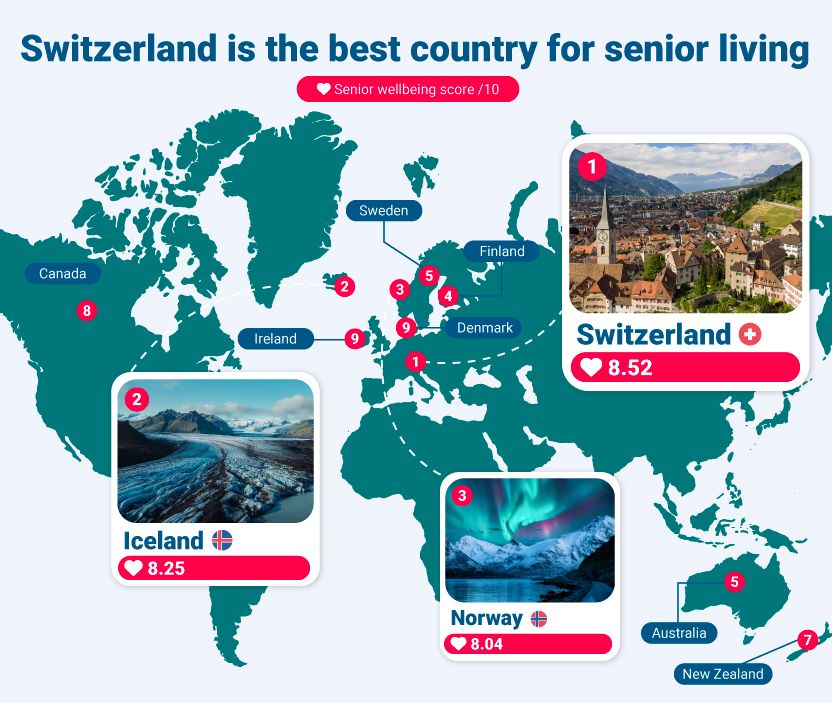
Switzerland is the best country for senior living

  1. Switzerland
    Senior Wellbeing Score: 8.52

    Switzerland is the best country for living in your later years, with a senior well-being score of 8.52. This beautiful alpine country at the heart of Europe is one of the wealthiest countries in the world per capita and is well-known for its excellent healthcare and healthy population.

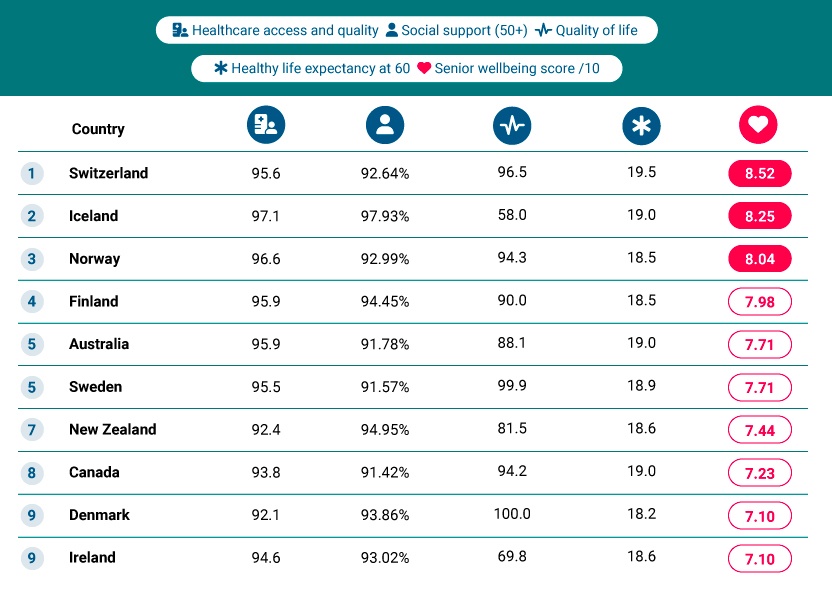
    The country performed very highly across all factors, offering a brilliant quality of life with clean mountain air, excellent access to healthcare, and a healthy life expectancy of 60 of 19.5 years. This means the average elderly Swiss person can expect to reach the age of 79.5 in relatively good health, the fourth highest age after Japan, South Korea, and France.

  2. Iceland
    Senior Wellbeing Score: 8.25

    Iceland has the second-highest senior wellbeing score of 8.25. This remote island nation between Norway and Greenland has a small population of 383,700 people. Smaller populations can breed strong social connections and make it more difficult for people to slip through the cracks, which could explain why Iceland has the highest social support rating for people aged 50+ at 97.93%.

    However, despite having the highest social support score and the best access to quality healthcare, Iceland has received a relatively low quality of life score of 58.0. This score is based on a wide range of factors, with Iceland performing particularly poorly for affordability, meaning older people may have to make financial sacrifices to get by.

  3. Norway
    Senior Wellbeing Score: 8.04

    Norway takes third place with a senior well-being score of 8.04. This Scandinavian country performs well across all factors, providing a good experience for seniors in their later years. Healthy life expectancy at age 60 in the country is 18.5 years, meaning the average healthy 60-year-old could make it to 78.5.

    Norway's third-place finish means Northern Europe dominates the top three, while the only non-European countries in the top ten are Australia, New Zealand, and Canada. All top ten countries are wealthy and developed nations, many of which have socialized all or part of their healthcare systems.

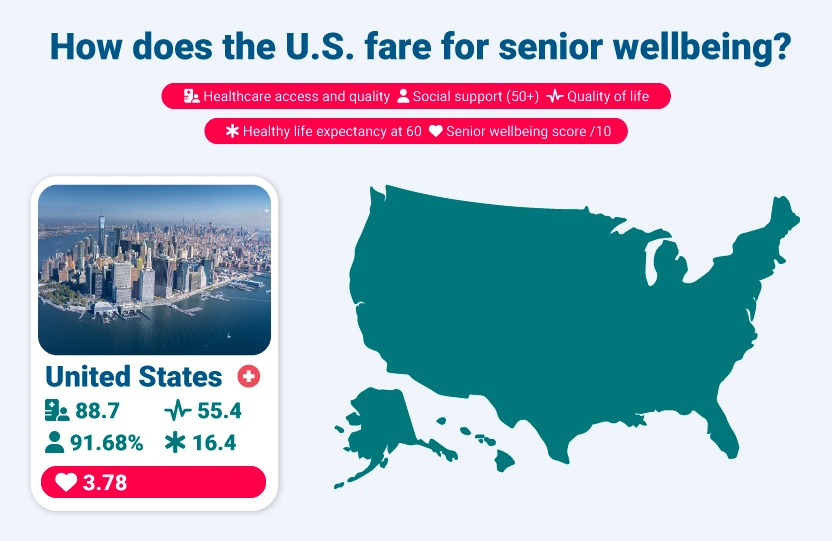
How does the U.S. fare for senior well-being?

The United States did not perform well, coming in 26th out of 38 countries with a senior well-being score of 3.78. However, the country performed best for social support for people aged 50+, earning the 16th highest score of 91.68%.

The United States tied with Italy for quality of life, with both countries receiving a score of 55.4 out of 100. However, the European nation performed better overall, with a senior well-being score of 5.34.

Known for its prohibitively expensive healthcare system, the United States performed relatively poorly regarding healthcare access and quality, taking 26th place with a score of 88.7 out of 100.

However, the United States’ worst performance was for healthy life expectancy for people aged 60. The average healthy 60-year-old in the country can expect to live another 16.4 years in good health, which only beats five other countries in our study.

This data shows much room for improvement in the United States regarding senior well-being. This is likely the result of socioeconomic factors, such as affordable medication and healthcare availability, a culture where walking is uncommon, driving is prioritized, and an abundance of unhealthy hyper-processed food options.

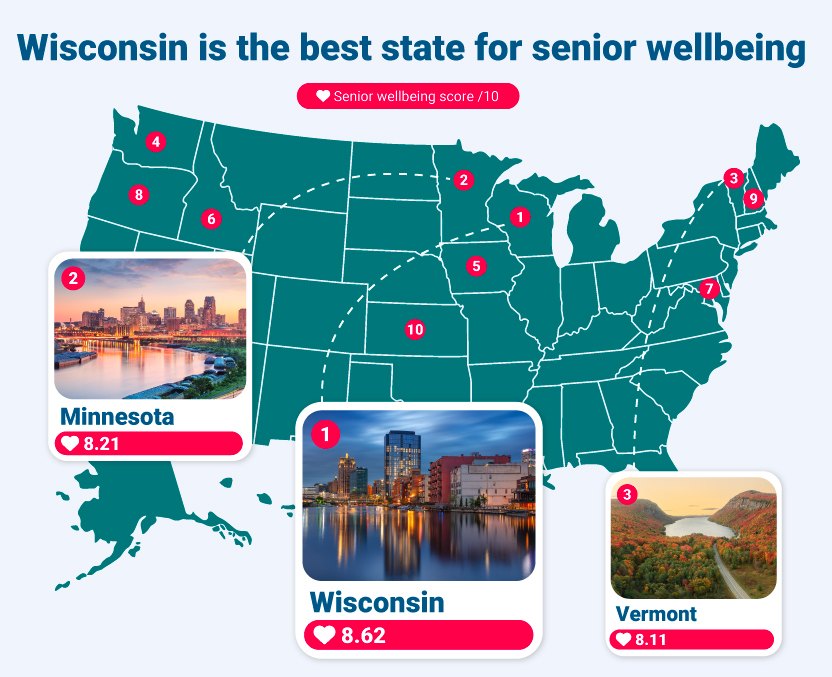
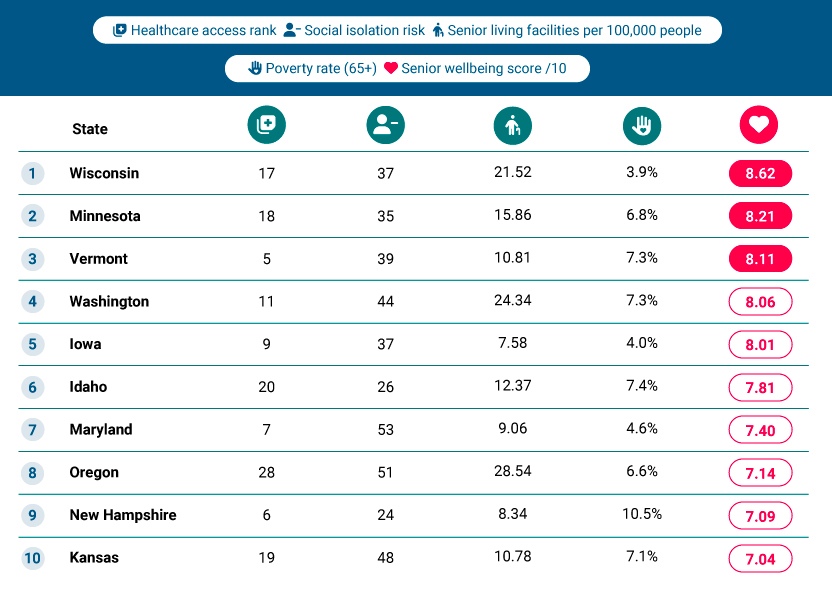
Wisconsin is the best state for senior wellbeing

  1. Wisconsin
    Senior Wellbeing Score: 8.62

    Wisconsin is the best state in the USA for senior well-being, with a score of 8.62. This midwestern state has the lowest poverty rate among seniors, at just 3.9%, making it a good place for local affordability. It also has a wide range of senior living facilities, with 21.52 per 100,000 people.

    The state also performed well for its social isolation risk, finishing in joint-ninth place alongside Iowa, scoring 37 out of 100. Wisconsin’s weakest factor was healthcare access, though it still earned 17th place, well into the top half of states.

  2. Minnesota
    Senior Wellbeing Score: 8.21

    Minnesota earned a senior well-being score of 8.21, making it the second-best state for living in your later years. Minnesota performed well across most factors, with a low social isolation score of 35 and a very low senior poverty rate of 6.8%. There are also plenty of assisted living and retirement facilities in the state, with 15.86 per 100,000 people.

    Situated on the Eastern border of first-place Wisconsin, Minnesota’s strong performance suggests that there may be some cultural or regional impacts that make the area a great place for senior living. This appears even more likely considering that Iowa, which borders both states, took fifth place with a score of 8.01.

  3. Vermont
    Senior Wellbeing Score: 8.11

    Vermont is the third-best state in the country for senior well-being, earning an overall score of 8.11. This densely forested New England state is known for its beautiful natural landscapes, clean mountain air, and relaxed atmosphere, making it an attractive destination for many senior citizens. 

    Vermont doesn’t top the charts for any individual factor but performs relatively well across the board. The state performs best when it comes to healthcare access, ranking fifth in the country, while it takes 11th place for both social isolation risk and the availability of senior living facilities.

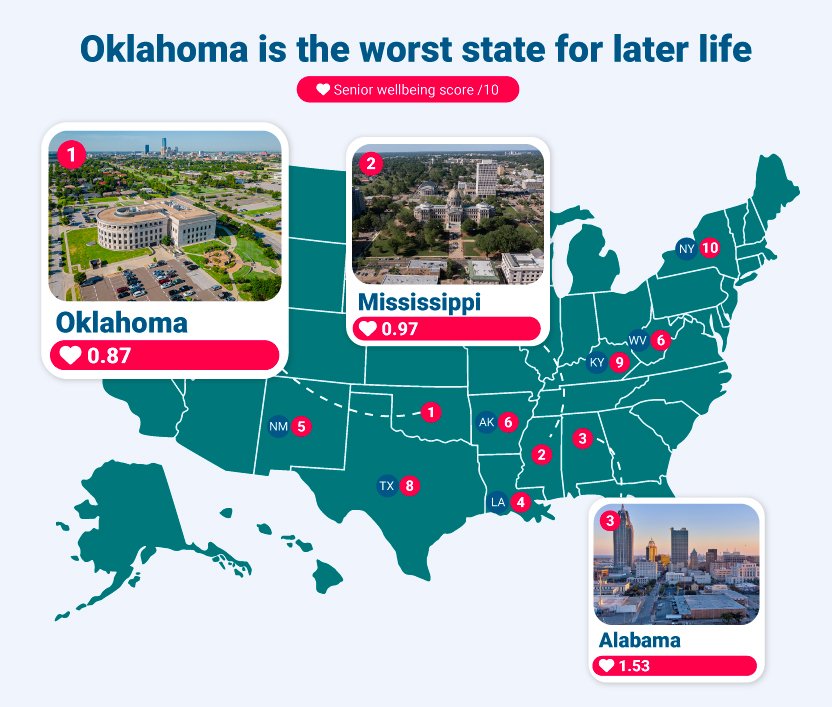
Oklahoma is the worst state for later life

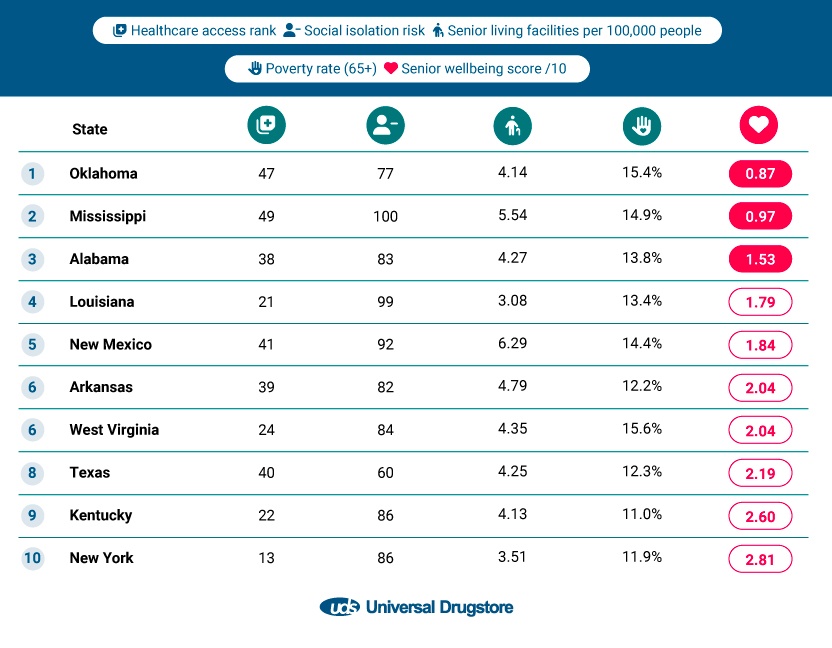
  1. Oklahoma
    Senior Wellbeing Score: 0.87

    Oklahoma recorded the worst senior well-being score in our study at just 0.87. The state recorded the second-highest poverty rate among seniors at 15.4%, with only West Virginia recording a higher rate.

    Oklahoma also performed poorly across all other factors, with just 4.14 senior living facilities per 100,000 people, a high social isolation risk score of 77 out of 100, and received the fourth lowest rank for healthcare access.

  2. Mississippi
    Senior Wellbeing Score: 0.97

    Mississippi had the second-lowest senior wellbeing score of 0.97, narrowly avoiding the bottom spot. The state received the highest possible score of 100 for the risk of social isolation while also receiving the second-lowest rank for healthcare access. 

    Mississippi performed marginally better when it came to the number of senior living facilities, with 5.54 per 100,000 people, but the state’s very high rate of poverty among seniors, 14.9%, kept its overall score as one of the lowest.

  3. Alabama
    Senior Wellbeing Score: 1.53

    Alabama came third from the bottom with a senior well-being score of 1.53. This southeastern state did not perform well in any category, with a social isolation risk score of 83 out of 100, a 13.8% poverty rate among seniors, and just 4.27 senior living facilities per 100,000 people.

    However, Alabama is just one of eight southern states featured in the bottom 10 locations for senior well-being in the United States. Louisiana, Texas, New Mexico, and Kentucky all performed poorly, suggesting a clear difference in the quality of life for seniors between the northern and southern parts of the country. The only two states in the bottom 10 that aren’t southern are West Virginia and New York, both in the eastern United States.

How to get the most out of your retirement years

While getting older can present numerous challenges, they do not have to stop us from enjoying our senior years. Aging is a natural part of life, so why shouldn’t you make the most of it and enjoy your golden years to their fullest?

Whether you face medical obstacles associated with old age, or you struggle to remain social, there are many ways to overcome these challenges. Here are just a few of the ways you can ensure a happy old age.

  1. Join clubs and groups

    Staying socially active is incredibly important for maintaining good mental health. As you get older, it can be difficult to find opportunities to meet new people and experience a sense of community. By joining a club, you can ensure you get regular time with people who have similar interests, giving you a schedule to look forward to and the opportunity to build new friendships.

  2. Find a hobby

    Finding a hobby is an excellent way to keep your mind active and engaged, especially once you’ve retired from work. The free time that retirees have is a blessing, allowing for new passions to be uncovered or for interest in old hobbies to be rekindled. There are a plethora of hobbies to choose from, but whatever your personal interests, it will give you a sense of direction and accomplishment the more you engage in it.

  3. Stay physically active

    Staying physically active is incredibly important for our health, particularly in old age. This could include anything from going on long walks to enjoying a regular swim session or even maintaining a garden. Regular exercise has a range of health benefits and will help keep your body and mind in good shape for longer, allowing you to stay healthy well into old age.

    If you have conditions that prevent you from doing certain exercises, do not worry. Simply choose whatever activity you are comfortable with, as some activity is always better than none.

  4. Build a support network

    Support networks are important for everyone in society, but when you reach your senior years they can become vital. One reason for this is that becoming socially isolated in old age is a known risk, as the everyday points of contact we have with work and friends gradually reduce. This is why it’s important to stay in regular contact with friends and family members, building them into your daily or weekly routine.

  5. Keep on top of ailments

    One unfortunate part of getting older is an increase in the number of ailments we seem to pick up. While it's very easy to let these come and go, sometimes they will develop into something more serious. Therefore, it’s important to always look for a solution to medical problems as soon as they arise, preventing them from getting any worse. This includes following the advice of your doctors, taking the prescribed medication, and following any instructions they give you.

  6. Reasonable budgeting

    We all hope to be able to retire in comfort and security, often putting a lot of effort into building a healthy retirement fund to support us in later life. However, the funds we gather for this do have a limit, so it’s important to plan ahead and try to keep to a budget for everyday spending. 

    That said, it’s equally important not to let your finances cause you worry or prevent you from enjoying life. Remember that you’re perfectly entitled to treat yourself and spend money on things that will bring you or your loved ones joy.

  7. Fill your diary

    Having things to look forward to is crucial to maintaining a happy and positive frame of mind. We can all go through periods of sadness or feeling at a loss for what to do with ourselves, but with a little effort, this can be countered. Finding things to put in your diary can seem a little daunting if you’ve been stuck in a rut, but having even the smallest events planned can do wonders for your mental health. These can be anything, from family visits to club meetings, seeing a new movie, or going out for dinner.

  8. Practice mindfulness

    Another way to ensure you make the most of your senior years is to practice mindfulness. This means pausing to take a moment away from your everyday thoughts and worries. You may stop and reflect on events and people around you or in your past, you may choose to sit somewhere peaceful and simply empty your mind, or you might even use a guided meditation to help you relax. However you practice mindfulness, it will help to keep you relaxed and positive-minded so you can enjoy your golden years.

Methodology

We wanted to find out which countries and US states are the best for senior wellbeing. To do this, we collected data across a range of factors and combined them into a single, rankable score.

To compare countries, we made a list of OECD nations and collected data for the following factors:

Data for these factors was then combined into a single equally weighted “Senior Wellbeing Score.” We used this score to rank the countries and revealed the highest-scoring locations as the best for senior well-being.

To compare US states, we made a list of all 50 states and collected data for the following factors:

Data for these factors was then combined into a single equally weighted “Senior Wellbeing Score.” We used this score to rank the states and reveal the highest-scoring locations as the best for senior well-being.

Share:

Monday, December 18, 2023

Happy retirees do these 5 things really, really well — master them to make the most of your golden years


Did your competent? doctor get you recovered enough to easily do all these? Or don't you have a competent doctor? My opinion is a competent doctor is one who gets you 100% recovered. There are no excuses allowed, your doctor has known since medical school the need to get stroke solved to 100% recovery. Doing nothing towards that is pure incompetency!

Happy retirees do these 5 things really, really well — master them to make the most of your golden years

Even if you love your career, you probably spend more time than you’d be willing to admit fantasizing about retirement.

And whether you’re diligent about your savings goals or feeling behind on them, preparing for retirement isn’t just a financial endeavor.

Many retirees who’ve successfully made the transition to their post-working world share certain habits and strategies that help them live the good life today and plan for an equally great one tomorrow.

These rituals and routines can lead to happiness in retirement. But more importantly, if you develop them early enough, you can elevate your quality of life at every stage.


Plan the work, work the plan

Happy retirees often spend much of their careers actively laying the financial groundwork for their retirements. Careful deliberation about investment strategies, diligent and regular savings and other planning helped position them for a relaxing and financially independent life.

It’s no surprise that many don’t just turn that switch off once they exit the workforce. That habit of planning and being prepared is forever useful, whether it’s remixing their portfolio and adjusting required minimum distributions or mapping the ideal European vacation.

This age-agnostic practice can also prove invaluable when health issues or other sudden changes arise that necessitate a backup plan.
Check in on your money

Whether you’re 10 years from retirement or right on its doorstep, you might be tempted to put your assets on cruise control.

Many of today’s younger investors choose target-date mutual funds that act as a sort of autopilot portfolio, ramping down risk the closer they get to retirement. Similarly, many retirees choose strategies emphasizing conservative returns to protect their capital against market volatility.

Both moves have their merits, because they promote a meddle-free, risk-averse approach to savings.

But young or old, it’s still prudent to keep a sharp eye on your investments and income flow, and to stay atop any government rule changes or other situations that could change how much you receive (along with any new taxes you may owe) in retirement.

A “set it and forget it” mindset may keep you in the market, but don’t completely check out.

According to recent data, only 40% of non-retirees feel confident about their retirement savings — a clear sign many Americans could use help navigating their finances and making sure their assets are protected.

One solution to give you peace of mind: Find a financial advisor who can help you navigate your finances and make sure your assets are safeguarded.

Researching and calling multiple financial planners can be a time-consuming hassle, but there are ways you can easily browse vetted advisers online that fit your needs.

Calling in an expert can allow you to rest easy knowing all of your financial ducks are in a row so you can enjoy this new phase of your life to the fullest.

Read more: Rich young Americans have lost confidence in the stock market — and are betting on these 3 assets instead. Get in now for strong long-term tailwinds
Stay healthy and active

Hitting the gym regularly now? Great. Keep it up, because paying attention to your health now can pay off in retirement, quite literally.

While seniors can take advantage of fitness discounts, like the Silver Sneaker program and other breaks, staying fit can offer long-term security against increasingly steep medical and health expenses.

Active routines will help avoid some of the costly medical scenarios that contribute to the estimated $315,000 in medical expenses older Americans can expect to spend in retirement. Walking, strength training and regular mobility exercises are key to longevity, according to the Centers for Disease Control and Prevention.
Learn new tricks

Picking up a hobby or learning a new skill is not only fun but keeps your mind sharp and actively engaged. The mental exercise and problem-solving required to learn guitar or take up painting is rewarding and can slow cognitive decline.

Consider doubling the benefit by combining exercise and continuous learning through things like tennis lessons or ballroom dancing.
Keep up your social network

Research shows retirees report higher levels of happiness when their social engagement increases, while similar studies found isolation has links to heart disease, stroke and dementia.

Loneliness can exacerbate inactivity and lead many older adults to pull back from the activities that made them vibrant in their earlier years, raising the risk for rapid health declines as we age.

Even before you retire, think about the ways you’ll find stimulation, purpose and community in your later years. You may want to join a club or get involved in volunteer work so that when your career ends, you already know what you’d like to fill your time.

And most importantly, maintain your connections with family and friends, which as the research shows, will keep you happy and reduce your stress. But you probably didn’t need Gallup to tell you that.