Changing stroke rehab and research worldwide now.Time is Brain! trillions and trillions of neurons that DIE each day because there are NO effective hyperacute therapies besides tPA(only 12% effective). I have 523 posts on hyperacute therapy, enough for researchers to spend decades proving them out. These are my personal ideas and blog on stroke rehabilitation and stroke research. Do not attempt any of these without checking with your medical provider. Unless you join me in agitating, when you need these therapies they won't be there.

What this blog is for:

My blog is not to help survivors recover, it is to have the 10 million yearly stroke survivors light fires underneath their doctors, stroke hospitals and stroke researchers to get stroke solved. 100% recovery. The stroke medical world is completely failing at that goal, they don't even have it as a goal. Shortly after getting out of the hospital and getting NO information on the process or protocols of stroke rehabilitation and recovery I started searching on the internet and found that no other survivor received useful information. This is an attempt to cover all stroke rehabilitation information that should be readily available to survivors so they can talk with informed knowledge to their medical staff. It lays out what needs to be done to get stroke survivors closer to 100% recovery. It's quite disgusting that this information is not available from every stroke association and doctors group.

Showing posts with label cerebral microvasculature. Show all posts

Thursday, May 9, 2024

In Angina, Gene Therapy Coaxes Heart Vessel Growth

 Ask your doctor if anything in this or all the other VEGF research will help your recovery. Screaming may be required when your doctor professes ignorance. I'd fire her/him on the spot if nothing is known on VEGF interventions.

Increasing microvasculature in the brain would seem to be excellent for our recovery.

The latest here:

In Angina, Gene Therapy Coaxes Heart Vessel Growth

LONG BEACH, California — An experimental new gene therapy has specialists questioning whether heart vessel growth to restore blood flow could actually be possible in refractory angina after bypass surgery.

"These patients by definition have exhausted all medical and surgical options in terms of revascularization," reported lead study investigator Kenta Nakamura, MD, an interventional cardiologist at the University of Washington School of Medicine in Seattle.

"While the disease carries a low mortality, it is associated with a low quality of life," Nakamura said when presenting the results from the phase 2/3 EXACT trial. 

The findings (Abstract LB-2), presented at the Society for Cardiovascular Angiography and Interventions 2024 Scientific Sessions, were published online simultaneously on May 2 in Circulation: Cardiovascular Interventions.

Of the 32 patients who received an injection of XC001, 81% had an improvement in angina class 6 months after the procedure.

The injection — an adenoviral 5 vector that delivers three isoforms of vascular endothelial growth factor (VEGF) to the heart — is delivered through a minithoracotomy.

"Going back to what we think is the fundamental issue in refractory angina, which is that the subtended myocardium has inadequate blood flow," Nakamura said. And that's because of inadequate microvasculature small arteries that are not amenable to mechanical revascularization, he explained. "This is a novel method to essentially coax the heart to grow more vessels to be able to restore that blood flow."

Trial Results

In the EXACT study, no severe adverse events were attributed to the treatment itself. There were 20 severe adverse events in 13 patients, but they were due to surgery and were within expectations.

The study measured 12-month changes in four markers of cardiac function in treated patients, which showed that:

  • Total exercise duration increased from an average (± standard deviation [SD]) of 359.9 (± 105.55) seconds at baseline to 477.6 (SD, ±174.7) seconds
  • Total myocardial perfusion deficit on PET decreased by 10.2%
  • Time to onset of ST depression during exercise tolerance testing increased by 103.1 (95% CI, 26.7-179.5) seconds
  • Angina frequency decreased by 8.8 (95% CI, 4.6-13.0) episodes.

Previous studies have shown a potential benefit of VEGF in patient-reported outcomes, "but they've often failed to show objective evidence of ischemic improvement. I think this is more exciting because we have a couple of really objective measures of ischemia that are not confounded by patient bias or placebo," Nakamura explained after his presentation.

Previous trials of VEGF therapy in cardiovascular disease have used single isoforms of the vector. "This is the first time that all three isoforms have been studied," said senior study author Thomas Povsic, MD, PhD, from the Duke Clinical Research Institute in Chapel Hill, North Carolina. "And there are preclinical data that suggest that it enhances efficacy, so we're encouraged by the fact that we saw consistency across a variety of endpoints."

The next phase of the trial will involve the use of cardiac catheterization to deliver the vector, Povsic added.

"If we can get delivery to be less invasive through a percutaneous approach, we think that future studies will validate that this will enhance patient well-being and could potentially be a treatment for a broader class of patients who don't have treatments right now, such as patients with microangina or even patients with regular angina if delivery can be done safely enough," Povsic said.

Potential for Wider Use

Targeting the heart's microvasculature with VEGF has the potential to treat a large population with coronary artery disease that currently has no options, said Timothy Henry, MD, medical director of the Carl and Edyth Lindner Center for Research and Education at Christ Hospital in Cincinnati.

"This study happens to be in refractive angina patients with severe obstructive disease, but we also have cases of refractive angina without obstructive disease that's mostly due to microvascular dysfunction," Henry said. "Seventy five percent of patients with heart failure with preserved ejection fraction and 30% to 40% of patients post-PCI or post-CTO still have chest pain, and a lot of that has to do with the microvasculature."

He pointed out that EXACT is a preliminary study without a placebo group, but the fact that "everything worked in the same direction" — that is, the outcomes were consistently positive — and that it was accepted for publication in a major journal make the trial noteworthy at this stage.

"This raises the issue of the importance of the microvasculature in all these different areas, and I think in the next 10 years, that's where we're going to move forward," Henry said.

The trial was funded by XyloCor Therapeutics. Nakamura and Povsic disclosed financial relationships with XyloCor. Henry participated in the trial but has no relevant financial disclosures.

Monday, March 21, 2022

Therapeutic Opportunities and Delivery Strategies for Brain Revascularization in Stroke, Neurodegeneration, and Aging

It doesn't sound like anything in here describes anything useful to stroke recovery, but have your doctor check it out

Therapeutic Opportunities and Delivery Strategies for Brain Revascularization in Stroke, Neurodegeneration, and Aging

Idoia Gallego, Ilia Villate-Beitia, Laura Saenz-del-Burgo, Gustavo Puras and José Luis Pedraz
Eric Barker, ASSOCIATE EDITOR

Abstract

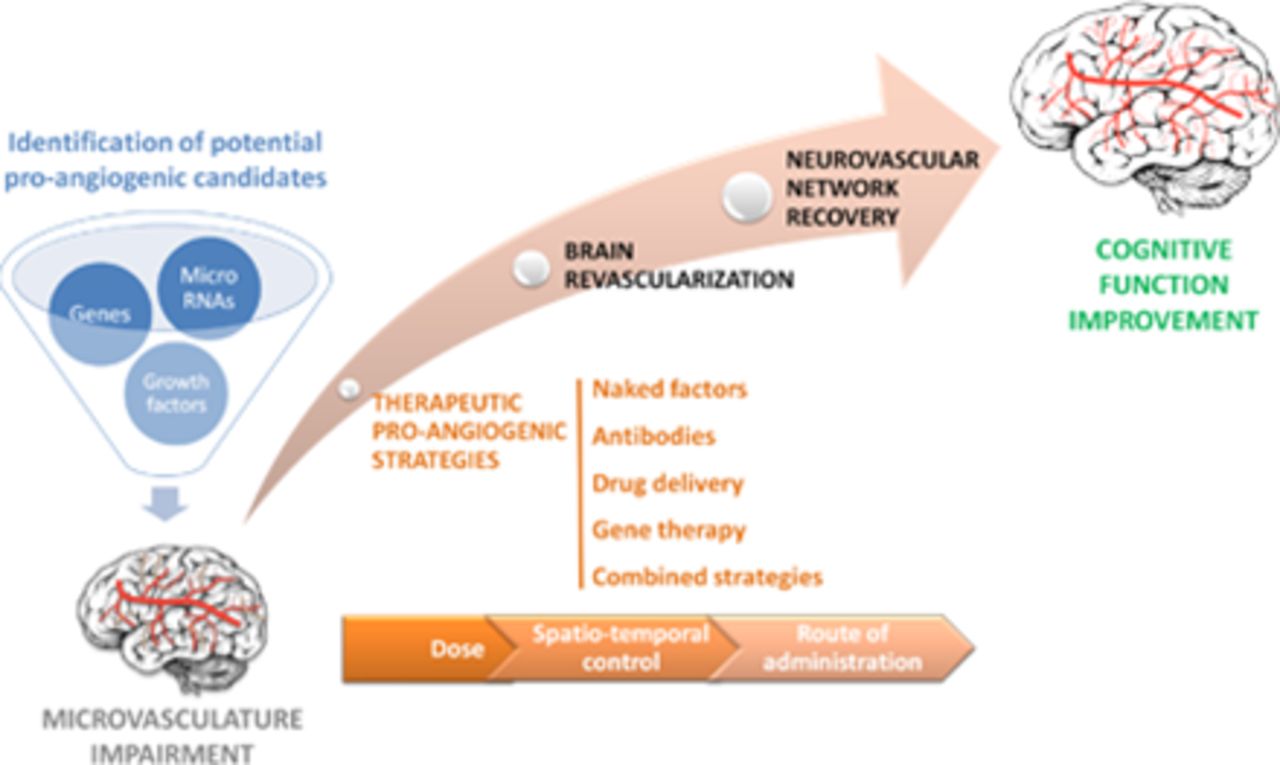
Central nervous system (CNS) diseases, especially acute ischemic events and neurodegenerative disorders, constitute a public health problem with no effective treatments to allow a persistent solution. Failed therapies targeting neuronal recovery have revealed the multifactorial and intricate pathophysiology underlying such CNS disorders as ischemic stroke, Alzheimeŕs disease, amyotrophic lateral sclerosis, vascular Parkisonism, vascular dementia, and aging, in which cerebral microvasculature impairment seems to play a key role. In fact, a reduction in vessel density and cerebral blood flow occurs in these scenarios, contributing to neuronal dysfunction and leading to loss of cognitive function. In this review, we provide an overview of healthy brain microvasculature structure and function in health and the effect of the aforementioned cerebral CNS diseases. We discuss the emerging new therapeutic opportunities, and their delivery approaches, aimed at recovering brain vascularization in this context.

Significance Statement The lack of effective treatments, mainly focused on neuron recovery, has prompted the search of other therapies to treat cerebral central nervous system diseases. The disruption and degeneration of cerebral microvasculature has been evidenced in neurodegenerative diseases, stroke, and aging, constituting a potential target for restoring vascularization, neuronal functioning, and cognitive capacities by the development of therapeutic pro-angiogenic strategies.

I. Introduction

Neurologic disorders are the second leading cause of death and the principal cause of disability in the world (GBD 2015 Neurologic Disorders Collaborator Group, 2017). Increasing life expectancy and population growth worldwide imply that more and more people are reaching ages in which neurologic disorders are more prevalent. The rising incidence and prevalence of these related central nervous system (CNS) diseases have an important socioeconomic impact, so it becomes a real problem not only for patients and families but also for the economy and healthcare systems (Harper, 2014; Wimo et al., 2020). There are no curative pharmacological treatments able to attain a complete neurovascular recovery in CNS diseases; they can only slow down the neurologic degenerative processes. This scenario underscores the difficulty of current pharmacological drugs to target and efficiently act in the brain. One of the main obstacles that lacks the success of such therapies is the blood-brain-barrier (BBB), along with other factors that must be taken into consideration, such as the presence of other extracellular and intracellular barriers and the complexity of the neurovascular network with interactions at several levels. For this reason, huge research efforts are being conducted to find and develop novel therapeutic strategies for CNS diseases (Niu et al., 2019; Poovaiah et al., 2018; Teleanu et al., 2019).

A few years ago, neuroscientists considered the brain as a dichotomized organ comprised of brain cells and cerebral blood vessels, with no relationship among these two entities. Nowadays however, the scientific community is aware of the close connection established and required between neuronal and vascular CNS cells for correct brain functioning. The brain is one of the most highly perfused organs in the body; in fact, nearly every neuron has its own capillary (Zlokovic, 2005), highlighting the pivotal relationship between the neuronal and vascular systems, called the neurovascular network. The neurovascular network in CNS is responsible for supplying the 20% of the cardiac output carrying oxygen and nutrients to the brain (Iadecola, 2013) and thus contributing to a healthy neurologic function. That is why lack of this supply, caused by vessel damage or degeneration, could have a major role in the pathogenesis of CNS diseases. Consequently, it is not surprising that the cognitive impairment that occurs in many CNS diseases could be related to cerebrovascular disruptions, mainly at the microvasculature level, and cerebral blood flow reduction, as in the case of ischemic stroke, amyotrophic lateral sclerosis (ALS), Alzheimeŕs disease (AD), vascular Parkisonism (VP), vascular dementia (VaD) and aging, which will be described in depth in section III, Vascular Disorders in Brain CNS Diseases.

This review provides an overview of the cellular and molecular mechanisms needed to manage the cerebral microvasculature, as well as an up-to-date perspective of CNS diseases related to cerebral microvasculature damage or deterioration, as is the case of ischemic stroke, Alzheimeŕs disease (AD), amyotrophic lateral sclerosis (ALS), vascular Parkisonism (VP), vascular dementia (VaD) and aging, all of which are associated with cognitive impairment. In particular, we describe evidence for microvasculature regeneration as a form of neurologic and cognitive function improvement by looking at progress in the identification of potential therapeutic pro-angiogenic factors and focusing on the nanotechnological approaches, advanced opportunities, and the administration strategies employed.