Changing stroke rehab and research worldwide now.Time is Brain! trillions and trillions of neurons that DIE each day because there are NO effective hyperacute therapies besides tPA(only 12% effective). I have 523 posts on hyperacute therapy, enough for researchers to spend decades proving them out. These are my personal ideas and blog on stroke rehabilitation and stroke research. Do not attempt any of these without checking with your medical provider. Unless you join me in agitating, when you need these therapies they won't be there.

What this blog is for:

My blog is not to help survivors recover, it is to have the 10 million yearly stroke survivors light fires underneath their doctors, stroke hospitals and stroke researchers to get stroke solved. 100% recovery. The stroke medical world is completely failing at that goal, they don't even have it as a goal. Shortly after getting out of the hospital and getting NO information on the process or protocols of stroke rehabilitation and recovery I started searching on the internet and found that no other survivor received useful information. This is an attempt to cover all stroke rehabilitation information that should be readily available to survivors so they can talk with informed knowledge to their medical staff. It lays out what needs to be done to get stroke survivors closer to 100% recovery. It's quite disgusting that this information is not available from every stroke association and doctors group.

Showing posts with label Atherectomy. Show all posts

Friday, March 21, 2025

Safety update: FDA announces Class I recall due to atherectomy devices breaking during use

 You'll want to know this if your doctor is trying to clean out plaque and clots in your peripheral arteries. You'll have to hope like hell your competent? doctor knows about this before you do.

Safety update: FDA announces Class I recall due to atherectomy devices breaking during use
The U.S. Food and Drug Administration (FDA) has provided an update on ongoing safety issues with atherectomy devices sold and distributed by Bard Peripheral Vascular, an Arizona-based subsidiary of Becton, Dickinson and Company (BD). When the agency first warned users about these issues back in February, it was still reviewing the situation; a recall had not yet been finalized. 

With this update, however, the FDA has officially ruled that this is a Class I recall, meaning the devices “may cause serious injury or death” if used without following updated instructions for use (IFU) provided by Bard Peripheral Vascular.

The reason behind the new Class I recall

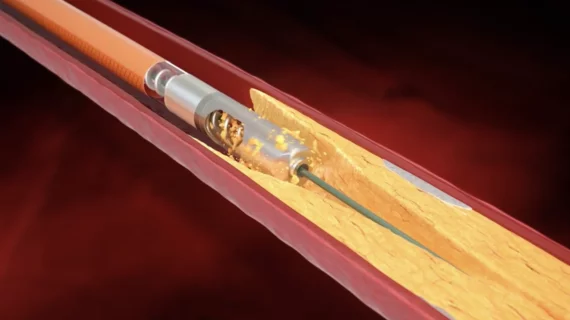
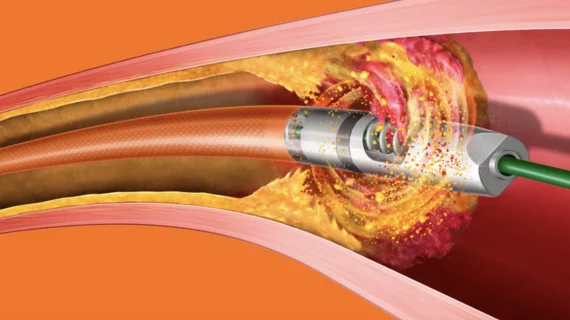
The warning includes multiple models of Bard Peripheral Vascular’s Rotarex Atherectomy System. These devices are designed to target high-risk plaques and blood clots in the peripheral arteries by rotating at a high speed. The ongoing issues have involved the helix portion of the devices fracturing or breaking off when being used. 

“Use of the device in certain anatomy and lesion types, as well as certain procedural factors, may cause the helix to fracture or break, requiring retrieval of a broken catheter and/or device fragment,” according to the updated advisory. “A helix fracture or break could cause vessel injury and may lead to severe bleeding or death.”

This has resulted in 115 incidents that required an additional intervention. In addition, BD has received reports of 30 serious injuries and four deaths.

No devices need to be returned or removed from the market

Unlike many Class I recalls, where the devices are immediately removed from the market, clinicians can still use these atherectomy devices to treat patients. However, the FDA has emphasized that it is crucial to read the updated IFU before performing another procedure.

The updated IFU include several warnings, including:

  • Use a kink resistant, suitably reinforced sheath of the same size as the Rotarex™ Atherectomy Catheter, or 1 French size bigger. When choosing a contralateral approach this may also serve to facilitate a smooth transition across the aortic bifurcation.
  • Do not use the device across a vessel bifurcation or curve that results in a curvature of the catheter shaft of <4 cm in diameter (Figure 2). Consider the use of ipsilateral access if contralateral access is expected to result in a catheter bend less than 4 cm in diameter.
  • Maintain adequate blood flow through the catheter to reduce the risk of catheter overheating or blockage. Adequacy of blood flow can be assessed by observing continuous drainage into the collecting bag and listening for changes in the audible pitch of the motor.
  • Maintain constant catheter movement to reduce fatigue stress on the inner helix in one location. Perform a smooth back and forth motion within the target lesion. Use a 10 mm forward motion (equivalent to one catheter head) for softer materials and 1 mm for denser lesions.
  • Do not use the device in calcified vessel segments that exhibit radiopacities on both sides of the arterial wall and extend beyond 10 mm in length prior to contrast injection or digital subtraction angiography.
  • Monitor the catheter closely for resistance to movement. Audible control unit alarms (i.e., intermittent beeping) or changes in tactile feel of the catheter, pitch sound of the motor, or LED bar illumination on the control unit (where the green light is no longer illuminated, leaving only the yellow/orange light illuminated) indicate the need to reduce catheter advancement from increments of 10 mm to 1 mm, stop, or flush the catheter.

Click here for more information from the FDA and Bard Peripheral Vascular.

Friday, February 7, 2025

FDA warns that atherectomy devices are breaking during use—30 serious injuries, 4 deaths reported

 Hopefully your doctor isn't using this to ream out the plaque in your arteries.

Ask your competent? doctor if these others are better and EXACTS AMOUNTS TO USE.

plaque removal (7 posts to July 2017)

5 Vitamins That Remove Plaque From Arteries

The latest here:

FDA warns that atherectomy devices are breaking during use—30 serious injuries, 4 deaths reported

The U.S. Food and Drug Administration (FDA) has shared a new warning about ongoing safety issues with atherectomy devices sold and distributed by Bard Peripheral Vascular, an Arizona-based subsidiary of Becton, Dickinson and Company (BD). 

The warning includes multiple models of Bard Peripheral Vascular’s Rotarex Atherectomy System, which is designed to target high-risk plaques and blood clots in the peripheral arteries by rotating at a high speed. According to the FDA, the rotating helix portion of the devices are fracturing or breaking when exposed to “certain stress, wear, high temperatures, friction or localized pressure.”

“Use of the device in certain anatomy and lesion types, as well as certain procedural factors, may cause the helix to fracture or break, requiring retrieval of a broken catheter and/or device fragment,” according to the advisory. “A helix fracture or break could cause vessel injury and may lead to severe bleeding or death.”

More than 100 incidents have been reported so far, including 30 serious injuries and four deaths.

Updated device instructions from the manufacturer

Bard Peripheral Vascular and BD have already released updated instructions for use (IFU) for these atherectomy devices, and additional training for clinicians is now available on BD’s website.

The new IFU document advises cardiologists to always use a “kink-resistant, suitably reinforced sheath” that is either the same size of the Rotarex Atherectomy System or even one size bigger. There is also a new warning not to use the device “across a vessel bifurcation or curve that results in a curvature of the catheter shaft of <4 cm in diameter.” Ipsilateral access should be considered instead in those cases.

Users are also warned to maintain adequate blood flow, to help reduce the risk of catheter overheating or blockage, and maintain constant catheter movement to limit stress on the device.

“Perform a smooth back and forth motion within the target lesion,” according to the new IFU. “Use a 10-mm forward motion (equivalent to one catheter head) for softer materials and 1 mm for denser lesions.”

Bard Peripheral Vascular is also warning users not to use these devices for the treatment of calcified vessel segments that “exhibit radiopacities on both sides of the arterial wall and extend beyond 10 mm in length prior to contrast injection or digital subtraction angiography.” Finally, the company emphasized that these catheters should be watched closely for any signs of resistance to movement. Reducing catheter advancement or flushing the catheter may be necessary.

FDA still evaluating this ‘potentially high-risk device issue’

The FDA has not yet classified this issue as a recall, but it did send out an “early alert” to inform clinicians and patients alike about the issue as quickly as possible. 

“The FDA is currently reviewing information about this potentially high-risk device issue and will keep the public informed as significant new information becomes available,” according to the advisory.

This early alert is part of a new pilot program the FDA’s Center for Devices and Radiological Health announced in November 2024.

Wednesday, November 16, 2016

Rotational Atherectomy in Clinical Practice

I would be really concerned about the cutting blades nicking the arterial walls and causing damage, leading to clots being thrown off into the brain. But I have no medical training and thus can't comment on dangers with this. Will your doctor guarantee that the <10 µm particle size will not cause a stroke?
http://circinterventions.ahajournals.org/content/9/11/e004571.extract?etoc
Goran Stankovic and Dejan Milasinovic
This article requires a subscription to view the full text. If you have a subscription you may use the login form below to view the article. Access to this article can also be purchased.


Unlike balloon dilation that results in the displacement of atherosclerotic plaque with multiple intimal tears, rotational atherectomy (RA) is based on the principle of differential cutting that allows for physical removal of inelastic atherosclerotic material while rendering the inner lumen surface smooth.1 Although plaque reduction by pulverization of atherosclerotic material into <10 µm particles has remained its central paradigm,2 the conceptual framework has shifted from the original approach of RA as a debulking strategy and, thus, applicable in a broad array of coronary lesions with large plaque burden, to a contemporary selective clinical utilization, with an emphasis mainly on plaque modification prior to stent implantation.3,4 This transition in conceptual understanding of the targeted effects of RA has been mirrored by a decreasing tendency in its use, from 20% in the mid 1990s to 1% to 3% according to contemporary reports.4,5 Today, RA is used selectively, mainly to disrupt the continuity of the calcium ring within the vessel wall and, thus, facilitate optimal drug-eluting stent (DES) implantation in patients with severely calcified de novo coronary lesions. ROTAXUS (Rotational Atherectomy Prior to Taxus Stent Treatment for Complex Native Coronary Artery Disease), as the only randomized trial to date that tested the strategy of routine lesion preparation with RA followed by DES implantation against stenting without RA, showed a higher rate of procedural success in patients undergoing RA, which, however, did not translate in long-term clinical benefit.6 These findings coincided with previous nonrandomized studies that had also supported RA …
View Full Text