Changing stroke rehab and research worldwide now.Time is Brain! trillions and trillions of neurons that DIE each day because there are NO effective hyperacute therapies besides tPA(only 12% effective). I have 523 posts on hyperacute therapy, enough for researchers to spend decades proving them out. These are my personal ideas and blog on stroke rehabilitation and stroke research. Do not attempt any of these without checking with your medical provider. Unless you join me in agitating, when you need these therapies they won't be there.

What this blog is for:

My blog is not to help survivors recover, it is to have the 10 million yearly stroke survivors light fires underneath their doctors, stroke hospitals and stroke researchers to get stroke solved. 100% recovery. The stroke medical world is completely failing at that goal, they don't even have it as a goal. Shortly after getting out of the hospital and getting NO information on the process or protocols of stroke rehabilitation and recovery I started searching on the internet and found that no other survivor received useful information. This is an attempt to cover all stroke rehabilitation information that should be readily available to survivors so they can talk with informed knowledge to their medical staff. It lays out what needs to be done to get stroke survivors closer to 100% recovery. It's quite disgusting that this information is not available from every stroke association and doctors group.

Showing posts with label occupational therapist. Show all posts

Saturday, July 11, 2026

Exploring occupational therapists’ perceptions of the use of functional electrical stimulation in adult stroke rehabilitation

Who cares what therapists think? Survivors are the client; you ask them how well you as a therapist are providing EXACT recovery protocols! If you're willing to listen, they'll tell you you have NOTHING concrete for recovery!

 Exploring occupational therapists’ perceptions of the use of functional electrical stimulation in adult stroke rehabilitation


ORCID Icon &ORCID Icon
, Accepted 29 May 2026, Published online: 09 Jun 2026

Abstract

Purpose: Stroke is one of the leading global causes of disability, with motor deficits, particularly in the upper limb, being among the most common and debilitating consequences. Occupational therapists are crucial members of the multidisciplinary team, working to enhance patients’ participation in daily activities by addressing motor impairments through interventions such as Functional Electrical Stimulation (FES). However, an evidence-practice gap exists in the application of FES. This study aimed to explore occupational therapists’ perceptions of using FES in adult stroke rehabilitation in Gauteng, South Africa. This study employed a descriptive qualitative research design. Twelve occupational therapists participated in semi-structured interviews conducted via an online platform. The research population included clinicians working in the neurorehabilitation field in Gauteng, South Africa from both public and private healthcare sectors. An inductive thematic analysis was used to analyse the data.  Three themes emerged from this qualitative study, namely, ‘A Tug of War’, ‘The Lost Leading the Lost’ and ‘A Puzzle of Practicality’. These themes unravel the perceptions of occupational therapists and explore the factors that influence the use of FES in stroke rehabilitation. Conclusion: Many identified perceptions and factors challenge the use of FES in adult stroke rehabilitation. Addressing these challenges is essential for improving evidence-based practices in occupational therapy, especially for motor impairments after stroke.

IMPLICATIONS FOR REHABILITATION

Training on FES needs to be enhanced at an undergraduate and postgraduate level for improved application of the technology.Open-loop FES currently does not align with the complex movement patterns required for occupation-based intervention and is therefore best suited as a preparatory modality. Policy, protocol, and guideline development is needed for a unified approach to FES use in stroke rehabilitation. The commercial availability and access to closed-loop FES systems should be explored by rehabilitation technology manufacturers and sales representatives.

Saturday, December 6, 2025

Comprehensive Guide to Occupational Therapy After Stroke

 Nothing here mentions getting 100% recovered at all, so they are ensuring that their pushing of the tyranny of low expectations allows them to declare success when survivors would actually declare it A COMPLETE FUCKING FAILURE!

Comprehensive Guide to Occupational Therapy After Stroke

Introduction to Occupational Therapy for Stroke Survivors

Occupational therapy helps stroke survivors reclaim their independence in daily life.

Stroke can suddenly change how someone performs the simplest tasks. It can affect movement, vision, thinking, or coordination, making tasks like getting dressed, preparing breakfast, or even brushing teeth challenging. These difficulties with everyday activities can feel daunting for both survivors and their families.

Occupational therapy (OT) after stroke helps survivors regain independence in daily life. Therapists assess changes in movement, thinking, coordination, vision, and sensation to understand how these impact essential activities such as dressing, eating, or working.1 Instead of treating symptoms in isolation, occupational therapists (OTs) design personalized recovery plans that restore function or adapt tasks to the survivor’s new abilities.

How Occupational Therapy Differs from Physical Therapy

Physical therapy (PT) focuses on major movement abilities like walking, balance, and overall mobility. On the other hand, OTs concentrate on daily living skills, which are the specific tasks people need to take care of themselves and participate in their communities. PT focuses on improving physical abilities and motion, such as strength, endurance, and walking. OT helps patients regain independence and living skills by addressing both mobility and upper extremity recovery. OT provides training in transfers, safe movement through daily environments, balance for everyday tasks, and use of the arms and hands for functional activities like dressing, cooking, and self-care.2

The two professions work collaboratively during stroke rehabilitation, with each addressing different aspects of recovery. Physical therapists (PTs) might help someone regain strength to stand up, while OTs teach them how to get dressed while standing or seated safely. Both therapies may be combined for comprehensive recovery, especially in complex cases where survivors need both movement restoration and skill retraining.

Why Occupational Therapy Matters After Stroke

Occupational therapists evaluate the specific skills needed to support daily living after stroke.

There can be many effects of stroke, with each person’s experience varying according to their recovery, the location of brain injury, and their support systems.3 OTs conduct evaluations that examine how stroke has affected their patients’ daily functioning.

OT assessments cover how someone manages daily activities, their ability to move around, and any problems with motor function, visual perception, coordination, sensation, and cognition.

The evaluation process involves watching people attempt real-world tasks like washing, dressing, or preparing meals. When OTs begin training their patients on activities of daily living, they will start with this type of assessment, observing how stroke has affected the person’s ability to carry out essential tasks on their own.

During the assessment, a therapist might notice that someone struggles to button a shirt not just because of weak fingers, but because they can’t see the left side of their body or can’t remember the sequence of steps.

OT aims to improve participation in meaningful activities, address underlying deficits, minimize complications, and provide education and support to patients and care partners.4 Rather than simply working on isolated skills, they focus on helping people return to roles that matter to them, such as parent, spouse, employee, or community member. They also help families understand how stroke has affected their loved one’s ability to function and how best to support them.
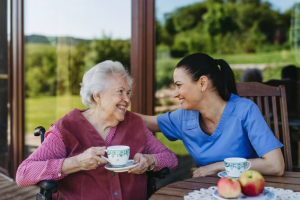
Care partner having tea with stroke survivor

We use the term “care partner” to be more inclusive of all types of people who support their loved ones with long-term health conditions, and because it matches our mission of empowering the individual to be in control and in charge of their own health and condition. It also implies that the individual is partnering with their loved one rather than “giving” their loved one a service.


Core Occupational Therapy Interventions

Occupational therapy interventions may focus on task-oriented training.

Task-oriented training involves client-centered, repetitive practice of activities that are relevant to each person’s goals.5

  • Restoring motor control and hand function happens through OT exercises that involve practicing functional tasks. Someone might practice opening jars, using utensils, or operating a computer mouse. These real-world movements help the brain relearn motor patterns while building strength. OTs also use neurorehabilitation techniques such as task-specific training, repetitive practice, bilateral arm activities, and sensory re-education to stimulate the nervous system and promote neuroplasticity. They may incorporate tools like constraint-induced movement therapy, functional electrical stimulation, or adaptive equipment to reinforce recovery. By combining these approaches, OTs help patients rebuild coordination, improve motor control, and regain independence in daily life.
  • Maximizing self-care and activities of daily living involves teaching techniques for dressing, bathing, and meal preparation. When recovery alone isn’t enough, adaptive equipment or assistive devices may help bridge the gap. This may include things like specialized utensils, long-handled dressing tools, or modified kitchen features that require less fine motor control.
  • Managing cognitive, perceptual, and behavioral changes combines retraining with adaptation strategies. Memory difficulties might be addressed with external cues like alarms or visual prompts. Behavioral changes such as impulsivity, emotional outbursts, or difficulty with social interactions may require other strategies.6
  • Preparing home and work environments ensures safety and supports independence. OTs assess living spaces and recommend modifications like grab bars or furniture rearrangement to prevent falls and support daily activities.
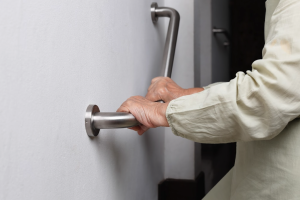
Hands hanging on to a handle


Improving Quality of Life and Supporting Stroke Caregivers

Stroke affects mental health as well as physical health.

Stroke recovery goes beyond physical healing. Survivors and their families also face emotional and psychological challenges that impact quality of life and long-term recovery. Early psychological interventions can decrease stress in stroke patients and increase their commitment to treatment, while problem-solving strategies and involvement in activities help survivors develop better coping abilities.7

Research shows that life quality in stroke survivors can decrease with age but often improves the longer it’s been since the stroke; over time, people also tend to improve in different areas of daily function.8

Post-stroke depression affects 30-50% of stroke survivors and can impact recovery and rehabilitation.9 When left untreated, depression can reduce motivation for therapy, slow physical recovery, and decrease quality of life for the entire family. Healthcare teams should screen for depression regularly and connect people with appropriate mental health support when needed.

Support groups may also provide essential connections for both survivors and care partners who often feel isolated after stroke. These groups offer practical advice from others who understand similar challenges, emotional support during difficult moments, and hope through seeing others who have made progress. Care partner support is particularly important because family members may experience their own stress, depression, and burnout while caring for their loved one.

Frequently Asked Questions

How often should occupational therapy sessions occur?

Stroke survivors typically receive OT sessions multiple times per week, with frequency and duration varying based on individual needs and location.

What are the expected timelines for progress?

Recovery after a stroke tends to be most rapid in the first few months, when the brain’s natural healing and rewiring processes are most active. However, research shows that neuroplasticity—the brain’s ability to adapt and form new connections—can support meaningful improvements well beyond the first year. With consistent, targeted therapy and practice, many stroke survivors continue to make gains months and even years after their stroke.

How can family members assist between sessions?

Family members can help by practicing recommended exercises with their loved one, learning safe techniques for transfers and daily activities, and providing encouragement while stepping back when their loved one can work independently.

Conclusion: Why Occupational Therapy Matters in Stroke Recovery

Occupational therapy addresses the practical challenges stroke survivors face every day. Early intervention supports independence, improves quality of life, and helps families adapt to new routines.

Research confirms that early OT intervention soon after the stroke can enhance quality of life, improve cognitive function, and reduce depression in stroke survivors.10 A comprehensive approach—combining skill retraining, adaptive or assistive equipment, and environmental modifications—can address the full scope of post-stroke challenges.

The most rapid recovery after stroke often happens in the first few months, when the brain is especially responsive to change. Yet, research on neuroplasticity shows that with the right therapy and practice, survivors can continue to improve well beyond this early phase. Working with certified occupational therapists provides access to evidence-based strategies and individualized treatment plans that combine restoring lost abilities with teaching practical adaptations. This approach supports ongoing progress, helping stroke survivors enhance both independence and quality of life over time.

Monday, December 9, 2024

Factors Influencing the Use of Mobile Applications for Driving Rehabilitation After Stroke: Exploring the Perspectives of Occupational Therapists

 No acknowledgement that they are completely failing at getting their patients recovered!

Factors Influencing the Use of Mobile Applications for Driving Rehabilitation After Stroke: Exploring the Perspectives of Occupational Therapists

 
Sample our Health and Social Care journals, sign in here to start your FREE access for 14 days

Abstract

This study describes factors influencing occupational therapists’ implementation of mobile applications into driving rehabilitation post-stroke. A qualitative descriptive design was used to analyze interview data from twenty (n = 20) occupational therapists working in stroke rehabilitation. Key factors include awareness of emerging applications, workplace technology policies, patient impairment levels and technological proficiency, and the involvement of caregivers in patient training. The ability to observe cognitive-perceptual abilities when utilizing mobile applications provided key insights into patient progress. Further investigation is necessary to explore methods for remotely monitoring outcomes in driving rehabilitation.

Saturday, February 3, 2024

Occupational therapists’ assessment and reporting of functional cognition in stroke care


 I consider assessments absolutely worthless unless they point directly to EXACT STROKE REHAB PROTOCOLS THAT DELIVER RECOVERY!

Occupational therapists’ assessment and reporting of functional cognition in stroke care

Received 06 Jun 2023, Accepted 20 Jan 2024, Published online: 01 Feb 2024

Abstract

Purpose

To investigate how functional cognition of people post-stroke is evaluated and reported by occupational therapists in Ireland. Functional cognition refers to the use and integration of cognitive skills for daily function.

Methods

This study used a qualitative design. Six focus groups and one individual interview were conducted with 20 occupational therapists purposively sampled for variation across different clinical grades. Data were analysed according to the Braun and Clark thematic analysis framework.

Results

Participants felt that assessment of functional cognition was an integral feature of occupational therapy assessment in stroke care but acknowledged that terminology used by occupational therapists for functional cognition was inconsistent. Non-standardised observational assessment was routinely used by participants. Challenges were reported with respect to written documentation of non-standardised observations. Participants reported that use of standardised cognitive assessments required considered clinical reasoning before administration. Standardised performance-based assessments were not widely implemented by participants.

Conclusion

Occupational therapists in Ireland reported a multi-component assessment process to evaluate functional cognition post-stroke. Establishing practice guidelines for the assessment of functional cognition may be of benefit to occupational therapists working in stroke care. Further research is needed to quantify procedures in this assessment process to account for variation in practice.

IMPLICATIONS FOR REHABILITATION

  • The assessment of functional cognition in stroke rehabilitation is integral to occupational therapy practice.(I totally disagree, nothing about this gets survivors recovered; the only goal in stroke!)

  • Occupational therapists described the assessment of functional cognition as a multi-component assessment drawing from three main modalities: standardised cognitive assessments; non-standardised observations; and performance-based assessments.

  • Professional education in, and practice guidelines, for the assessment and reporting of functional cognition could be beneficial for occupational therapists in stroke care to streamline their assessment and reporting of functional cognition.

Saturday, June 24, 2023

There are no muscles in human fingers

Well the intrinsics are in the palm, hopefully your occupational therapist has protocols to bring those back to life.

What are intrinsic muscles?

The intrinsic muscle groups consist of smaller muscles solely located within the various hand osseofascial compartments within the anatomic confines of the wrist (proximally) and phalanges (distally). The intrinsics are important for various hand functions, such as pinch and grip strength.

 There are no muscles in human fingers.


One of the most complex parts of human anatomy is also one (or rather two) that we use hundreds of times per day yet often take for granted. Human hands are the body’s multipurpose tools, equipped with 27 individual bones; about half of those are found in our fingers, the tactile appendages that will bend and flex roughly 25 million times over the course of our life span. Our fingers are able to perform the everyday tasks we need thanks to thousands of nerve endings and touch receptors that can sense pressure, texture, temperature, movement, and more. But there’s one thing our hardworking digits don’t have: muscles.

Muscles make it possible for our bodies to move, and the human frame relies on more than 600, which are tasked with helping us in nearly every motion. So how do fingers perform the intricate tasks we require without them? Turns out human fingers are controlled by the muscles in our forearms and the tops and palms of our hands. Small intrinsic muscles in the hand allow the fingers to perform fine motor movements, while extrinsic muscles in the forearm and elbow control how the wrist and hand

move. Finger bones (aka phalanges) are connected to these muscles by tendons — fibrous, cord-like connective tissues — and when the attached muscles contract, fingers are able to perform their range of motion. Flexor tendons in the palm help fingers to bend, while extensor tendons on the top of the hand are responsible for straightening the fingers back out — essential movements that allow our hands to touch, grasp, and hold objects.


Friday, January 27, 2023

Delivering Occupation-Based Practice in Stroke Rehabilitation of Hospital Settings: Thai Occupational Therapists’ Experiences

Why are you talking to therapists? You talk to survivors and ask them one question: Are you 100% recovered? Y/N? The answer tells you the effectiveness of your therapists. 

Delivering Occupation-Based Practice in Stroke Rehabilitation of Hospital Settings: Thai Occupational Therapists’ Experiences

Abstract

Occupation-based practice (OBP) is central to the practice of occupational therapists where occupations or meaningful activities become the focus of the assessment, intervention, and outcomes measurement process. Although occupational therapists practising in Thailand claim that they engage in OBP, this claim warrants empirical investigation. This study aimed to investigate the experiences and perceptions of hospital-based occupational therapists of OBP within stroke rehabilitation. Utilizing a qualitative design, fourteen occupational therapists were recruited through purposive sampling. Data were collected through semi-structured interviews until data saturation was reached. Each interview was recorded and transcribed verbatim, and data were analyzed using thematic analysis. Five themes were identified (1) Perspective towards OBP, (2) OBP as professional value and cultural identity, (3) Implementing OBP for stroke rehabilitation in hospital settings, (4) Environmental factors of using OBP in stroke rehabilitation, and (5) OBP in the service management. Occupational therapists perceived that OBP is important for professional identity. Using OBP provides positive changes in stroke clients. This study provides evidence that will help implement OBP into occupational therapy in Thailand.


Thursday, June 23, 2022

The role of ward placement of occupational therapists in the task-oriented training for acute stroke patients

You didn't even measure patient recovery, completely useless research. May improve means nothing.

The role of ward placement of occupational therapists in the task-oriented training for acute stroke patients

課題指向型アプローチにおける急性期の病棟配置作業療法士の役割.  Japanese Occupational Therapy Research , Volume 38(5) , Pgs. 601-608.

NARIC Accession Number: I247978.  What's this?
Author(s): Takashi TAKEBAYASHI; Masumi Takahashi; Mitsuhiko Kodama; Takuya Hirose.
Publication Year: 2019.
Abstract: 
This article discusses the role of ward placement of occupational therapists (OT) in the task-oriented training for acute stroke patients. In task-oriented training, i.e., shaping and task practice approaches for acute stroke patients, clearly defined roles exist for the primary OT and the ward placement OT. The ward placement OT provides task practice in the patient’s hospital room, whereas the primary OT provides shaping practice in a rehabilitation setting. Taken together, these two roles may improve the affected upper extremity function and use in everyday activities for acute stroke patients. In addition, this type of collaboration may lead to the effective transfer of positive patient outcomes from the rehabilitation setting into the real world.
Descriptor Terms: Heart disorders, Physical stress, Treatment, Unemployment, Brain.
Language: Japanese
Geographic Location(s): Japan, East & Southeast Asia.

Can this document be ordered through NARIC's document delivery service*?: Request Information.
Get this Document: https://www.jstage.jst.go.jp/article/jotr/38/5/38_601/_pdf/-char/en.

Citation: Takashi TAKEBAYASHI, Masumi Takahashi, Mitsuhiko Kodama, Takuya Hirose. (2019). The role of ward placement of occupational therapists in the task-oriented training for acute stroke patients.  課題指向型アプローチにおける急性期の病棟配置作業療法士の役割.  Japanese Occupational Therapy Research , 38(5), Pgs. 601-608. Retrieved 6/23/2022, from REHABDATA database.


* The majority of journal articles, books, and reports in our collection are only available by regular mail, rather than downloadable electronic format. Learn more about our digital collection and our document delivery service.

More information about this publication: There are no references related to this document. 

Wednesday, May 4, 2022

Zipping jackets

 Had to figure this out myself since the left hand has almost zero pinch grip to hold the side of the zipper long enough and strong enough until the zipper has been fully engaged.  Had a loop of cord/fabric sewn onto the fabric next to the zipper pin, where I use my right hand to insert my left thumb into the loop. Since there is enough spasticity in my thumb it doesn't straighten out and is strong enough to get the zipper started. My OT's should have recommended this. Much faster and more portable than my other solution; a Vise-Grip.

The loop, it probably should have been a half inch longer for ease of insertion


It takes a bit of effort to get the thumb out of the way to get the zipper pin inserted into the zipper tab. Damn spasticity.


Tuesday, May 3, 2022

Clapping failure

 I go to live music, mostly jazz, as often as possible. A major failure point is the total inability to use both hands to clap. One handed clapping against my thigh is ridiculous and quiet. I should be able to go to any occupational therapist in the world and have EXACT PROTOCOLS that will fix my hand.

Last night was at Red Cedar Spirits:

Randy Napoleon on guitar; Associate Professor of Jazz Guitar

at MSU(Michigan State University)

Rodney Whitaker on bass;Director of Jazz Studies at MSU(Michigan State University)

Eric Law; Outstanding Alto Saxophone at the Jack Rudin Jazz Championship


This is what my left hand looks like 5 seconds after opening it with my right hand. Wrist and finger spasticity have completely kicked in  making clapping impossible

Wednesday, February 2, 2022

Winter coat removal failures

 I try not to wear my heavy winter coat because it has cuffs and they make it almost impossible to remove. Pile jackets are also a major problem because the pile catches on my sleeve as I try to pull the right sleeve down an inch at a time until my elbow is freed. 

Takeaway: No cuffs, slippery linings for pile sleeves. None of this was covered in my therapy sessions.

Wednesday, July 7, 2021

Occupational therapists’ evaluation of the perceived usability and utility of wearable soft robotic exoskeleton gloves for hand function rehabilitation following a stroke

Why the fuck are you asking therapists this question? You ask survivors: Did you get 100% recovered  using these?

Occupational therapists’ evaluation of the perceived usability and utility of wearable soft robotic exoskeleton gloves for hand function rehabilitation following a stroke

Received 29 Oct 2020, Accepted 01 Jun 2021, Published online: 30 Jun 2021

Purpose

To evaluate the perceived usability and utility of using a soft robotic glove to rehabilitate hand function following a stroke.

Methods

A convergent parallel mixed-methods design was used to consult a convenience sample of 14 experienced occupational therapists (OTs) practicing within a specialised stroke rehabilitation program. All OTs participated in one 60-to-90-minute individual consultation during which the attributes of a recently-developed soft robotic glove (ExoGlove) were presented before they could test it on themselves. After this consultation, OTs completed the System Usability Scale (SUS) questionnaire and answered open-ended questions focussing on the usability and utility of soft robotic gloves framed according to the Unified Theory of Acceptance and Use of Technology (UTAUT).

Results

The OTs perceived the glove’s usability as being moderate-to-good on the SUS (median score= 63.75 on a scale of 100). Thematic analysis revealed the importance of specifically considering elements such as ease of use (e.g. simplicity and speed), cost, movement precision, durability, and safety, when developing soft robotic gloves such as the ExoGlove.

Conclusions

Engagement in a continuous improvement process is essential to maximise the perceived usability and utility of soft robotic gloves, particularly of the ExoGlove, through their final development phase before pilot testing their effects and effectiveness for post-stroke hand rehabilitation.

  • Implications for rehabilitation

  • All occupational therapists anticipate that a soft robotic glove such as the ExoGlove will allow them to increase treatment intensity and best aligns with principles of neuroplasticity.

  • The clinical judgement and guidance of OTs, developed through practice, experience, and knowledge, remain essential to safely and efficiently exercise with a soft robotic glove.

  • Achieving a balance between effort and performance expectancies is essential in developing and improving the functionality of soft robotic gloves, as with each additional functionality comes new challenges that impact its successful transition to a clinical setting.


Tuesday, December 15, 2020

Poison ivy failures

 On my walks in the woods I have to pick up branches from the trails, sometimes having to kneel to cut thru them. I picked up some poison ivy on my right inner wrist and my right knee. I very seldom ever kneel on my left knee, almost impossible to get it to a kneeling position with the spasticity of my ankle.

Applying hydocortisone requires squirting it onto the top of my left hand, pulling my right sleeve up with my teeth, and then rubbing my right wrist over the cream on my left hand.  Luckily it is not weeping.  My left hand is pretty much useless for anything at all. My occupational therapist at three weeks gave me my prediction for recovery of that hand.   'According to research, non-use at three weeks likely means it will never recover.' And she was an excellent occupational therapist. Will have to look into mirror therapy now.

With a useless left hand it is impossible to take a picture of my right wrist.

Friday, October 23, 2020

Mailbox assembly failure

 Nigh impossible to hold brackets together, insert bolt AND turn the nut on with just one hand. Occupational therapists should have a protocol for bringing back fine motor control.  NOT compensation!