Use the labels in the right column to find what you want. Or you can go thru them one by one, there are only 34,148 posts. Searching is done in the search box in upper left corner. I blog on anything to do with stroke. DO NOT DO ANYTHING SUGGESTED HERE AS I AM NOT MEDICALLY TRAINED, YOUR DOCTOR IS, LISTEN TO THEM. BUT I BET THEY DON'T KNOW HOW TO GET YOU 100% RECOVERED. I DON'T EITHER BUT HAVE PLENTY OF QUESTIONS FOR YOUR DOCTOR TO ANSWER.
Changing stroke rehab and research worldwide now.Time is Brain!trillions and trillions of neuronsthatDIEeach day because there areNOeffective hyperacute therapies besides tPA(only 12% effective). I have 523 posts on hyperacute therapy, enough for researchers to spend decades proving them out. These are my personal ideas and blog on stroke rehabilitation and stroke research. Do not attempt any of these without checking with your medical provider. Unless you join me in agitating, when you need these therapies they won't be there.
What this blog is for:
My blog is not to help survivors recover, it is to have the 10 million yearly stroke survivors light fires underneath their doctors, stroke hospitals and stroke researchers to get stroke solved. 100% recovery. The stroke medical world is completely failing at that goal, they don't even have it as a goal. Shortly after getting out of the hospital and getting NO information on the process or protocols of stroke rehabilitation and recovery I started searching on the internet and found that no other survivor received useful information. This is an attempt to cover all stroke rehabilitation information that should be readily available to survivors so they can talk with informed knowledge to their medical staff. It lays out what needs to be done to get stroke survivors closer to 100% recovery. It's quite disgusting that this information is not available from every stroke association and doctors group.
Which means they are a COMPLETE FUCKING FAILURE AT GETTING THEM RECOVERED while still in hospital! Leading me to believe they have done nothing to save the hundreds of millions of neurons they are allowing to die because they did NOTHING to stop the 5 causesof the neuronal cascade of death in the first week!
Hôpital Glengarry Memorial Hospital (HGMH) is expanding its Physiatry program to include outpatient consultations, increasing access to specialized rehabilitation care(NOT RECOVERY!) for residents of Glengarry and surrounding communities.
Physiatry is a medical specialty focused on improving function, mobility, and quality of life for individuals recovering from stroke, neurological injury, and other disabling conditions.
Since the fall of 2025, Physiatry services at HGMH have supported referred inpatients as part of the hospital’s commitment to enhancing rehabilitation and recovery services. Building on the success of that program, patients can now be referred for outpatient consultations with Dr. Jacqueline Cochrane, a specialist in Physical Medicine and Rehabilitation with advanced training in stroke rehabilitation and spasticity management.
Many patients continue to face challenges long after being discharged from hospitals following a stroke or neurological injury. Physiatry services help identify barriers to recovery and develop individualized treatment plans to maximize independence and participation in daily life.
The expansion of Physiatry services is another example of HGMH’s ongoing commitment to bringing specialized healthcare services closer to home and improving access to care(NOT RECOVERY!) for the communities it serves.
Referrals are accepted from physicians and nurse practitioners for patients with OHIP or RAMQ coverage.
When you have dumbed down primary goals like this, this is the reason we need to get survivors in charge. They will push for 100% recovery, NOT this fucking tyranny of low expectations.
NEW YORK—Suffering from a stroke can have a major impact on
patients’ cognitive, speech and motor functions. Rehabilitation during
recovery is critical to regaining these faculties. Now, at New York
University’s Langone Hospital in Brooklyn, doctors and physical
therapists are taking a new, interactive approach to post-stroke
rehabilitation.(But you never talk RESULTS! Are they that fucking bad?)
Vincent Cavallaro is the vice president of neurology and
rehabilitation at NYU Langone-Brooklyn, and is part of the team that is
incorporating “gaming” into the recovery model. Typically,
rehabilitation consists of physical therapy, occupational therapy,
speech pathology therapy, and sometimes neuropsychology therapy. The
primary goal of physical therapy is to get the patient up and walking
around, and to ensure their balance is steady enough for treatment.
Occupational therapy involves relearning daily activities like cooking
and showering. Speech pathology services are used to evaluate swallowing
and the ability to speak.
Patients are initially seen by a physiatrist, a doctor who
specializes in rehabilitation medicine. The physiatrist develops a
treatment plan specific(I'd like to see one once, if you have one send it to me, and the objective diagnosis that led to the plan.) to a patient’s needs to achieve the best
possible recovery. Patients are required to receive three hours of
therapy a day, and a total of 15 hours a week. Now, the team has
implemented four different interactive devices to enhance the recovery
process, and encourage patients to regain the quality of life they had
before a stroke.
According to the National Stroke Association, 10 percent of stroke
survivors regain almost all of their functions, and 25 percent recover
with minor impairments. (These are appalling failure rates, what is your hospital's plan to improve them?)However, in order to recover from a stroke,
patients need to take control of their own rehabilitation
process.(So what the fuck is the doctor for?) Rehabilitation can be daunting and frustrating, and it can be
difficult to keep patients involved in the process. However, the earlier
a stroke patient starts the process the more likely they’ll have
favorable results. Often, as long as a patient is stable, rehabilitation
starts within a matter of a couple of days.
New Technologies
Doctors and physical therapists are always on the lookout for new
technologies to keep patients engaged during the rehabilitation process.
One of the devices NYU has employed is the Armeo Spring, a giant video
game controller that requires the entire arm to move. The device is
designed to help patients regain mobility in their arms and provides
some movement assistance. In addition to working on mobility, the device
is also designed to prevent contractures, which are the result of
stiffness in the muscles, tendons, or ligaments and can ultimately
restrict motion. Part of the importance of keeping a patient engaged in
their recovery is to facilitate continual treatment to prevent such
conditions.
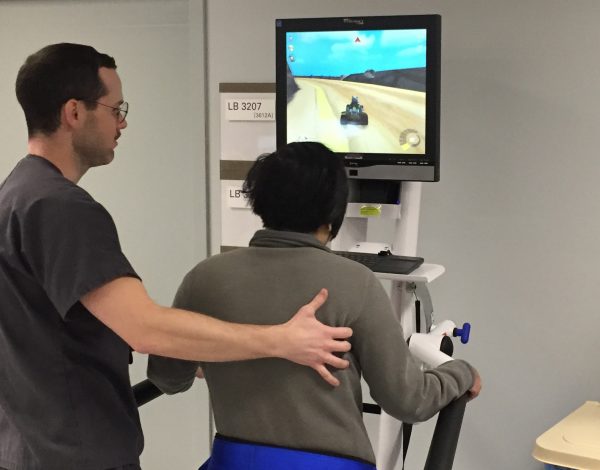
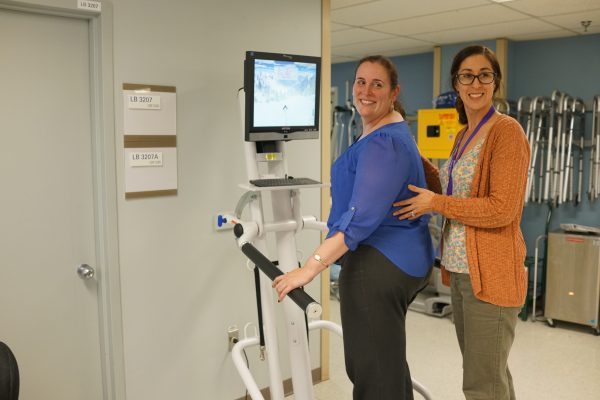
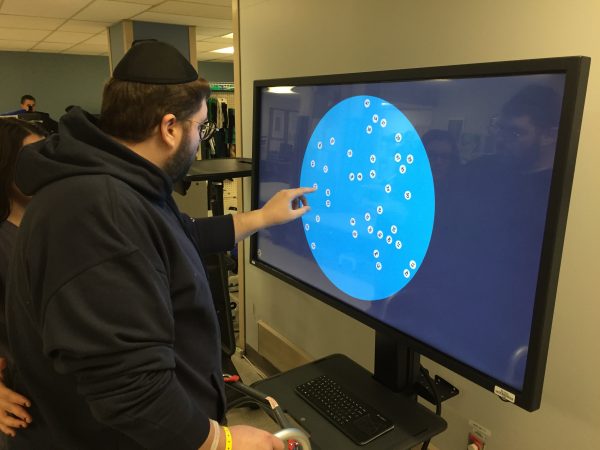
A patient working with the Bioness Integrated Therapy System. (Courtesy of NYU Langone Hospital-Brooklyn)
“Once you do it and learn the process and realize that you’re in a
safe environment, then there’s a score that comes up and they try to
beat their score, or try to avoid hazards along the screen. So they’re
kind of playing against themselves, and there’s further engagement on
the patient level than trying to do this without this enhanced feature
of this constant feedback that they get,” PT Cavallaro told The Epoch
Times.
The machine can anticipate arm movement, and helps patients move
their arm once the arm is in motion. The device is connected to a
computer monitor that can simulate everyday activities such as picking
an item off of a shelf at the supermarket and placing it in a shopping
basket.
Balancing Acts
Balance, cognition, and memory are important functions that
rehabilitation can help recover, and the team at NYU utilizes a device
called the Bioness Integrated Therapy System that has several different
programs. Patients stand in front of a large computer screen and point
at images on different parts of the monitor, making them shift their
weight in different directions, which ultimately helps them regain
balance. Another program helps improve memory by requiring the patient
to tap a series of objects on the screen, and then tap on the same
series again to show they remember.
Once patients regain more balance, they move on to the Korebalance
System. Patients stand on a flexible platform and shift their weight
with their feet while playing a video game where they have to stay on a
track. Instead of using their hands like they would if they were playing
a typical video game, patients use their feet and allocate their weight
on the platform to stay on the track. This system ultimately helps fine
tune patients’ balance.
A patient (R) using the Korebalance System. (Courtesy of NYU Langone Hospital-Brooklyn)
The fourth interactive device patients use is called the Flint Rehab
Glove, and it is designed to help patients regain mobility in their
fingers. The glove is connected to a video game similar to Guitar Hero.
Each finger corresponds to a colored button on the screen. Once the
button appears, they touch the appropriate finger with their thumb and
the game makes a sound, and the repetitive movement creates a song.
More Than a Game
According to PT Cavallaro, patients have reacted positively to these
interactive games. The rehabilitation team works to ensure a patient has
the ability to complete each game before moving onto the next in order
to promote a positive, can-do attitude, and show that they can
accomplish more than they previously believed.
“I think when you’re playing a game, I think there’s a natural
tendency to want to score better each time you do it, and that gives you
that visual input that comes off the screen that patients see, and want
to, next time they’re on that machine, get a higher score or a longer
distance time.”
A patient (L) employing the Korebalance System. (Courtesy of NYU Langone Hospital-Brooklyn)
These interactive games give the physical therapist another means of
treating their patients, and enhances the traditional rehabilitation
methods. When patients succeed and families see them prevail in their
treatment, they are less apprehensive when the patient returns home.
While the relationship between the patient and the physical therapist
is the most important aspect of recovery, there is a lot to gain from
technology.
A Needed Development
These new technologies come at a time when stroke recovery is a growing concern.
According to the Centers for Disease Control and Prevention, strokes
are the fifth leading cause of death in the United States. Approximately
795,000 people suffer from a stroke annually. There are many factors
that can lead to a stroke such as a history of strokes in the family.
Medical conditions such as hypertension, diabetes, and Sickle Cell
Anemia can also contribute to a stroke. However, there are behaviors
that can make a stroke more likely such as alcohol abuse, tobacco use,
lack of exercise, and an unhealthy diet. Fortunately, these behaviors
can be moderated or avoided completely.
Following a stroke, patients may experience a variety of impairments
including paralysis in some limbs or on one side of the body, difficulty
understanding or constructing speech, trouble controlling or expressing
emotion, numbness or sensation, trouble swallowing, and depression.
Successful rehabilitation can be the difference between years of suffering and dependency and a meaningful and active life.
The Neuromuscular
Medicine and physiatrists
are human services suppliers who work helpfully with a multidisciplinary group
to give composed care to people with Neuromuscular Disease (NMDs). The chief or
organizer of the group must know about the potential issues particular to NMDs
and have the capacity to get to the mediations that are the establishments for
legitimate care in NMD. These incorporate well being upkeep and appropriate
observing of sickness movement and complexities to give expectant, preventive
care and ideal administration. Extreme objectives incorporate augmenting
well being and utilitarian limits, performing therapeutic checking and
reconnaissance to repress and avoid complexities, and advancing access and full
combination into the network to improve personal satisfaction.
Although currently
incurable(Why aren't they curable? Are you that lazy you won't even try to cure the problems?), NMDs are not untreatable. The neuromuscular medicine, and physiatry
experts are scratch human services suppliers who work helpfully with a
multidisciplinary group to amplify well being, expand useful limits (including
upper limb function, transfer skills, mobility, and self-care skills),
inhibit or prevent complications (such as disuses weakness, airway clearance problems, skeletal
deformities, cardiac insufficiency and
arrhythmia, respiratory failure, bone health problems, metabolic syndrome, excessive weight gain or
weight loss), and promote access to full integration into the community with
optimal quality of life.
The molecular basis of
hereditary NMDs has been rising and coming into more keen concentration in the
course of recent decades. Numerous promising remedial techniques have since
been produced in creature models. Human preliminaries of these techniques have
begun, prompting the desire for authoritative medications for huge numbers of
these presently hopeless illnesses. Albeit particular medications for NMD have
not yet achieved the center, the characteristic history of these infections can
be changed by the focusing of intercessions to known indications and
difficulties. Analysis can be quickly achieved; the family and patient can be
all around bolstered, and people who have NMD can achieve their maximum
capacity in instruction and business.
NMD Management is best
carried out by a team consisting of physicians; physical
therapists, occupational therapists and speech therapists;
social workers; vocational counselors; and psychologists,
among others. In a perfect world, inferable from the noteworthy portability
issues related with most NMDs, the neuromuscular expert, physiatrist and all the
key clinical staff ought to be accessible at each visit. Tertiary care medical
centers in larger urban areas usually can provide this type of service. This
may be an independent clinic or may be sponsored by one or more of the
consumer-driven organizations that sponsor research and clinical care for
people with NMDs.
Newswise — Chicago-based Integrated Rehab Consultants
(IRC) has grown its gross revenue from $63,000 since its inception in
2010 to more than $21 million in just six years by providing physicians
for rehab oversight to improve patient care and significantly reduce
cost for patients and insurers. IRC achieved profitability in its first
year and each subsequent year while self-funding its own growth at an
exponential pace: YearRevenue%growth
2010 $ 63,000
2011 1,197,000 1,800%
2012 2,791,000 133%
2013 5,145,000 84%
2014 8,464,000 64%
2015 15,898,000 88%
2016 . 21,394,000 34%
IRC is on track for gross revenue of $25 million for the year ending December 31, 2017.
Starting
with just one physiatrist (rehabilitation physician) in Chicago in
2010, IRC now supplies 100+ physicians to 300+ high quality Skilled
Nursing Facilities (SNFs) in 22 states coast-to-coast and CEO Amish Patel, DO, has his sights set even higher.
“Integrated
Rehab Consultants’ growth has been totally self-funded to date,” Dr.
Patel noted. “However, we see a tremendous opportunity for additional
growth and expansion into psychiatry using a similar business model.”
IRC
is successfully filling a critical need in nursing care today.
Increasingly, especially among older adults, insurance providers
(including Medicare) are discharging patients who need short-term
rehabilitation after a stroke or orthopedic surgery, such as a knee
replacement, to SNFs, rather than more costly in-patient rehab
facilities, to get them in shape before returning home.
According
to MedPAC, the average stroke patient stay in a SNF costs $8,905, as
opposed to $34,196 in an inpatient rehab facility.
However, many
lower-cost SNFs do not have the highly qualified staff to direct the
most efficient rehab for these patients. IRC fills the gap by providing
physiatrists to oversee patient rehab. The physicians’ fees are covered
by Medicare or other patient insurance.
Physiatrist Oversight Shortens Rehab Stay
When
a physiatrist is involved to provide more frequent patient visits,
focus exclusively on rehab and oversee a physical therapy plan,
patients’ length of stay is decreased. According to a recent Coker Group
study (2015), SNFs with an IRC physiatrist on staff lowered their
average patient length of stay by 11 percent.
Discharging patients
from SNFs more quickly pleases everyone: patients, facilities,
hospitals and insurance providers. Families are happy to see loved ones
come home, facilities are able to free up beds for more acute (and more
profitable) patients, hospitals are seeing fewer re-admissions and
insurers prefer the lower-cost option.
IRC, the largest provider of physiatrists to SNFs nationwide, was founded by Dr. Amish Patel,
a board-certified, Chicago-based physiatrist. As a young physiatrist,
he noticed more rehab patients going to SNFs as opposed to other care
settings and found that the SNFs weren’t equipped to care for this type
of patient. He contracted with other physiatrists across the country and
matched them with SNFs to provide rehab oversight. He continues to
treat patients in the Chicago area while serving as the company’s CEO.
If this gathering of physiatrists is focused on outcomes then there should a presentation on the disasterous results of stroke rehabilitation of only 10% full recovery.
A study on the surgical treatment of scoliosis in patients with
Duchenne muscular dystrophy is just one of the presentations that will
underscore the specialty's increasing emphasis on evidence-based
outcomes, according to organizers here at the American Academy of
Physical Medicine and Rehabilitation (AAPMR) 2016 Annual Assembly.
The
research, led by David Berbrayer, MD, from the University of Toronto
Sunnybrook Health Sciences Centre, casts doubts on the overall benefits
of surgery in this patient population.
This is a "really good
example of the need for evidence-based medicine," said Joseph Hornyak,
MD, PhD, from the C.S. Mott Children's Hospital at the University of
Michigan in Ann Arbor, who is chair of the AAMPR evidence committee.
"It doesn't give a definitive answer, but it raises concerns," he told Medscape Medical News.
Other
leading presentations cover a diverse array of topics, such as the
impact of vitamin D on mood in patients with spinal cord injury, factors
associated with patient discharge after acute stroke rehabilitation,
and concussion symptom reporting in high-school athletes.
The
concussion study, led by Nathan Cook, PhD, from the Massachusetts
General Hospital and Harvard Medical School in Boston, examines the
reporting of concussion symptoms by high-school students with attention
deficit hyperactivity disorder (ADHD), a condition that can make it
challenging to differentiate pre-existing symptoms from concussion
symptoms.
Dr Joseph Hornyak
Teenagers with ADHD probably have an increased risk for concussion, Dr Hornyak said.
"This
is a huge study, with 37,000 high-school athletes, comparing a control
group with an ADHD group on medication. It will be very interesting to
see the symptom complex between these different populations," he added.
Concussion will also be the subject of a plenary session that features Bennet Omalu, MD, the renowned forensic pathologist who inspired the film Concussion about chronic traumatic encephalopathy.
Dr Thiru Annaswamy
"We're focusing on outcomes a lot more these days," said
Thiru Annaswamy, MD, from the University of Texas Southwestern Medical
Center, the VA North Texas Health Care System, and the Dallas VA Medical
Center, who is chair of the AAPMR evidence, quality, and performance
committee.
"The stroke
rehabilitation abstract is a great example of an examination of
predictors of good outcomes. Focusing on outcomes helps us establish and
prove the value of rehabilitation in several conditions, which is
increasingly necessary with healthcare reform," he explained.
Dr
Annaswamy said he is excited about an analysis being presented on two
types of wheelchair propulsion to determine which pattern results in
more arm fatigue. The study is "very pertinent for our paraplegics and
others who use wheelchairs to get around," he said. "It's very
impactful, and there's good science behind it."
Just as appealing
as the research presentations, Dr Annaswamy pointed out, is the diverse
offering of clinical sessions and hands-on workshops, which will cover
topics such as regenerative medicine, ultrasound, cancer rehabilitation,
medicolegal work, and opioid prescribing.
We're focusing on outcomes a lot more these days
"These sessions are probably the most widely attended for
educational content," he said. "Typically hundreds attend, and sometimes
it is into the thousands."
Also
on the agenda are political pundits James Carville and Mary Matalin —
one of America's most influential political couples — who will make an
appearance at the plenary sessions discussing the impact of the current
political climate on healthcare.
"In today's political climate,
any discussion about healthcare could be very interesting, and they're a
good couple to present both sides," Dr Hornyak told Medscape Medical News.
Offbeat
conference features include a wheelchair basketball tournament, which
will give physiatrists greater insight into adaptive sports. And once
again, the AAPMR is hosting its annual movement competition. Attendees
can track the distance they travel each day with a pedometer or mobile
app, and top scorers will be recognized.
aDepartment of Rehabilitation and Regenerative Medicine, Columbia University College of Physicians and Surgeons
bDivision of Rehabilitation Medicine, Weill Cornell Medical College
cNew York-Presbyterian Hospital, New York, NY.
Correspondence: David J. Cormier, Department of
Rehabilitation and Regenerative Medicine, Columbia University Medical
Center, Harkness Pavilion Room HP-1-165, 180 Fort Washington Ave., New
York, NY 10032 (e-mail: davidjohncormier@gmail.com).
Abbreviations: AAPM&R = American Academy of
Physical Medicine and Rehabilitation, ADLs = activities of daily living,
IRF = inpatient rehabilitation facilities, LTACH = long-term acute care
hospital, MCA = middle cerebral artery, SNF = skilled nursing
facilities.
The authors report no conflicts of interest.
This is an open access article distributed under the
Creative Commons Attribution License 4.0, which permits unrestricted
use, distribution, and reproduction in any medium, provided the original
work is properly cited. http://creativecommons.org/licenses/by/4.0
Received February 25, 2016
Received in revised form June 13, 2016
Accepted July 3, 2016
Abstract
Abstract: This study was intended to determine if
there is variation among physiatrists in referral preferences for
postacute rehabilitation for stroke patients based on physician
demographic characteristics or geography.
A cross-sectional survey study was developed with 5
fictional case vignettes that included information about medical,
social, and functional domains. Eighty-six physiatrist residents,
fellows, and attendings were asked to select the most appropriate
postacute rehabilitation setting and also to rank, by importance, 15
factors influencing the referral decision. Chi-square bivariate analysis
was used to analyze the data.
Eighty-six surveys were collected over a 3-day period.
Bivariate analysis (using chi-square) showed no statistically
significant relationship between any of the demographic variables and
poststroke rehabilitation preference for any of the cases. The prognosis
for functional outcome and quality of postacute facility had the
highest mean influence ratings (8.63 and 8.31, respectively), whereas
location of postacute facility and insurance had the lowest mean
influence ratings (5.74 and 5.76, respectively).
Physiatrists’ referral preferences did not vary with
any identified practitioner variables or geographic region; referral
preferences only varied significantly by case.
Nearly 800,000 individuals experience a stroke each year in the United States, at a cost of 33.6 billion dollars.[1]
Whereas some persons with stroke recover fully, many are left with
substantial disability. Stroke is the leading cause of serious long-term
disability in this country.[1]
Given the impact on individuals with stroke and the substantial
resources devoted to their care, it is important to gain a greater
understanding of which poststroke interventions lead to the best
outcomes. One area of controversy is the type of rehabilitation facility
where persons with stroke should receive their rehabilitative care.
Poststroke rehabilitation options include inpatient
rehabilitation facilities (IRFs), skilled nursing facilities (SNFs),
long-term acute care hospitals (LTACHs), home therapy, and outpatient
therapy. The process of assessing rehabilitation needs and selecting the
most appropriate rehabilitation option for a person with acute stroke
is complex and not well-studied. Depending on the institution, this
determination may be made by nurses, case managers, social workers,
physical therapists, occupational therapists, speech and language
pathologists, and/or physicians (including physiatrists, neurologists,
internists, and others). Physiatrists’ role in this process varies among
hospitals, with some hospitals involving physiatry routinely, and
others rarely or never. Physiatrists’ role includes the medical and
functional assessment as it encompasses all of the rehabilitation needs,
through a strong relationship within the interdisciplinary
rehabilitation team. Physiatrists are arguably the physicians with the
most specific training in stroke rehabilitation, and it is therefore
important to better understand their referral preferences for these
patients.
Many factors may be considered when determining the most
appropriate poststroke rehabilitation option for a given patient. These
factors may include the severity and nature of neurological and
functional deficits, medical comorbidities, provider and facility
relationships, insurance coverage, cost, geographical proximity and
location of available facilities, and patient and family preference.[2,3]
When referral to an IRF is being considered, the question of whether or
not a patient will be able to participate in and benefit from the
3 hours of therapy that are mandated in an IRF is of particular concern.
Assessment protocols are not standardized, and there is
little reassurance that patients are reliably receiving the most
appropriate rehabilitation. Furthermore, there exist no standardized
criteria or guidelines to assist referral teams in predicting which
poststroke discharge option is optimal for each patient. To optimize
patient outcomes after stroke, more information is needed about which
patients benefit most from rehabilitation in each setting. Knowing who
is making these referral decisions and how they are making them is an
important first step towards reaching this goal.
Given the large number of individuals involved in making
decisions regarding rehabilitation level of care, and the many factors
that contribute to this decision, it is unsurprising that research has
found variation in referral patterns. After stroke, patients are more
likely to be evaluated for rehabilitation needs if they are hospitalized
in a stroke unit.[4]
Measures of activities of daily living (ADLs) ability after stroke are
predictive of discharge home versus a rehabilitation institution, but do
not distinguish between patients discharged to SNF and patients
discharged to IRF.[5]
When rehabilitation consultation teams assist in making the referral decision, patient outcomes improve.[6] Ilet et al[7]
further found that the likelihood of discharge to a rehabilitation unit
is influenced by variation in practice among hospitals. Geographic
proximity to an IRF has been shown to be a substantial predictor of the
likelihood of discharge to IRF.[8]
Variation in the utilization and intensity of poststroke rehabilitation
services has also been demonstrated by Medicare beneficiaries’ payment
analysis.[9,10]
Patients who suffer a stroke benefit from early rehabilitation.[11,12]
There is also some indication in the literature that patients admitted
to IRF experience better functional recovery than those admitted to SNF.[13–17]
To date, studies comparing IRF to SNF outcomes in the United States
have all been observational in nature, and no randomized studies have
been performed. As a result, comparing IRF to SNF stroke rehabilitation
outcomes is complicated by the differences between the patient
populations referred for these 2 different types of care. Multiple
factors known to influence outcomes after stroke (age, cognition,
functional level, continence) have also been found to be different in
those receiving postacute stroke rehabilitation in IRFs and those
receiving this rehabilitation in SNF.[6]
We sought to examine postacute stroke rehabilitation
referral preferences among physiatrists. We hypothesized that there is
variation among physiatrists in referral preferences based on
demographic variables and/or geographic location, leading to patients
with similar backgrounds and functional limitations being referred to
different types of rehabilitation. Given that different rehabilitation
options have different outcomes, this variation in referral preferences
may lead to suboptimal rehabilitation outcomes for some stroke patients.[5]
This is just so f*cking self-servingly wrong. They are incredibly incompetent if this is their conclusion. All recovery in the early weeks is spontaneous, having NOTHING to do with the attending physician. Just because someone is standing next to Michael Jordan as he makes a basket is no reason to attribute any of that to you standing next to him. And these people have MD and doctorates behind their names. http://www.sciencedirect.com/science/article/pii/S1052305714006399
Early
rehabilitation for acute stroke patients is widely recommended. We
tested the hypothesis that clinical outcome of stroke patients who
receive early rehabilitation managed by board-certificated physiatrists
(BCP) is generally better than that provided by other medical
specialties.
Methods
Data
of stroke patients who underwent early rehabilitation in 19 acute
hospitals between January 2005 and December 2013 were collected from the
Japan Rehabilitation Database and analyzed retrospectively.
Multivariate linear regression analysis using generalized estimating
equations method was performed to assess the association between
Functional Independence Measure (FIM) effectiveness and management
provided by BCP in early rehabilitation. In addition, multivariate
logistic regression analysis was also performed to assess the impact of
management provided by BCP in acute phase on discharge destination.
Results
After
setting the inclusion criteria, data of 3838 stroke patients were
eligible for analysis. BCP provided early rehabilitation in 814 patients
(21.2%). Both the duration of daily exercise time and the frequency of
regular conferencing were significantly higher for patients managed by
BCP than by other specialties. Although the mortality rate was not
different, multivariate regression analysis showed that FIM
effectiveness correlated significantly and positively with the
management provided by BCP (coefficient, .35; 95% confidence interval
[CI], .012-.059; P < .005). In addition, multivariate
logistic analysis identified clinical management by BCP as a significant
determinant of home discharge (odds ratio, 1.24; 95% CI, 1.08-1.44; P < .005).
Conclusions
Our
retrospective cohort study demonstrated that clinical management
provided by BCP in early rehabilitation can lead to functional recovery
of acute stroke.
Well my physiatrist knew nothing and did nothing. But then I'm stroke-addled so I probably missed all the work he did. He didn't even tell me I had a stroke, I was supposed to interpret what a CVA was. No discussions on how or what recovery might occur. Nothing on my chances of full recovery - 10%. No explanation as to why tPA failed to put me back to normal. In general he should have never been paid for anything he didn't do for me. http://www.newswise.com/articles/new-research-presented-at-the-effects-of-integrating-a-physiatrist-into-an-acute-stroke-team
A research team at Emory University presents new research at the 2015
AAP Annual Meeting in San Antonio that suggests that early
rehabilitation as well as discharges to acute rehabilitation facilities
post stroke can improve neurologic outcomes. The purpose of the study
was to investigate the impact of introducing a physiatrist into an acute
stroke team.
"What we do as physiatrists is independent from
early mobilization by therapists. It is our ability to anticipate,
prevent, identity and treat barriers to rehabilitation that changes
patient outcomes," said author Lisa Foster. (REALLY?)
There is evidence
that suggests that a physiatrist on staff may facilitate a more
favorable discharge destination and decrease risk of mortality. (I bet this is cherry-picking research subjects)
# # #
The
Association of Academic Physiatrists (AAP) is the only academic
association dedicated to the specialty of physical medicine and
rehabilitation (PM&R) in the world. AAP is an organization of
leading physicians, researchers, in-training physiatrists, and others
involved or interested in leadership, mentorship, and discovery in
PM&R. AAP is based in Baltimore, MD. To learn more about the
Association and the field of physiatry, visit our site at www.physiatry.org. Follow us on Twitter at https://twitter.com/AAPhysiatrists.
The
2015 AAP Annual Meeting will take place in San Antonio, March 10-14,
2015. The AAP Annual Meeting brings together physiatrists and
academicians, in-training physiatrists, researchers, and academic
PM&R professionals to share the latest information, innovative
techniques, best practices, and new technologies. AAP 2015 covers a
broad spectrum of cutting edge topics in academic physiatry. The meeting
is packed with educational activities including educational sessions,
cutting-edge keynote speakers, hands-on workshops, and scientific paper
presentations along with over 400 poster board presentations showcasing
the finest scientific innovations and research. To learn more about the
Annual Meeting visit www.physiatry.org/AAP2015.
Physical Medicine and Rehabilitation. This is the type of doctor I had in the hospital. Also called physiatrist.
My comments on mine; My PMR doctor
for stroke had obviously never opened a research paper since school. He
wrote 3 prescriptions, for OT, PT, ST all for ET(Evaluate and Treat). From talking to my
therapists none had ever seen my MRI or received any directions from
this doctor. It's why I now firmly believe in Pay for performance. I had
my OT running interference to get botox instead of him. He pooh-poohed the article I brought him on Saeboflex.


 A patient working with the Bioness Integrated Therapy System. (Courtesy of NYU Langone Hospital-Brooklyn)