Changing stroke rehab and research worldwide now.Time is Brain! trillions and trillions of neurons that DIE each day because there are NO effective hyperacute therapies besides tPA(only 12% effective). I have 523 posts on hyperacute therapy, enough for researchers to spend decades proving them out. These are my personal ideas and blog on stroke rehabilitation and stroke research. Do not attempt any of these without checking with your medical provider. Unless you join me in agitating, when you need these therapies they won't be there.

What this blog is for:

My blog is not to help survivors recover, it is to have the 10 million yearly stroke survivors light fires underneath their doctors, stroke hospitals and stroke researchers to get stroke solved. 100% recovery. The stroke medical world is completely failing at that goal, they don't even have it as a goal. Shortly after getting out of the hospital and getting NO information on the process or protocols of stroke rehabilitation and recovery I started searching on the internet and found that no other survivor received useful information. This is an attempt to cover all stroke rehabilitation information that should be readily available to survivors so they can talk with informed knowledge to their medical staff. It lays out what needs to be done to get stroke survivors closer to 100% recovery. It's quite disgusting that this information is not available from every stroke association and doctors group.

Showing posts with label brain supplements. Show all posts

Wednesday, July 1, 2026

Is Creatine Supplementation for Brain Health Worth a Try?

 Your competent? doctor better be very familiar with this.

The earliest one from 2015 is:

Not knowing of this is PURE INCOMPETENCE!

Is Creatine Supplementation for Brain Health Worth a Try?

Creatine supplements have been recently examined for their potential to improve brain health and prevent dementia. Given the lack of effective therapies for dementia, it is worth considering whether these supplements are safe and effective.

What Role Does Creatine Play in the Body? 

Creatine is endogenously synthesized in the liver and kidneys, and its amino acid precursors are also provided by a variety of foods, including meat and vegetables. Most of the body’s creatine is stored in muscle cells as phosphocreatine; creatine serves to help replenish adenosine triphosphate during physical activity, which is why we have seen creatine supplements increasingly used in the setting of weight training and exercise over the past decade. 

With the emerging understanding of its role in the brain, research on creatine supplementation has moved from the gym to the brain lab. 

How Creatine May Affect Brain Health 

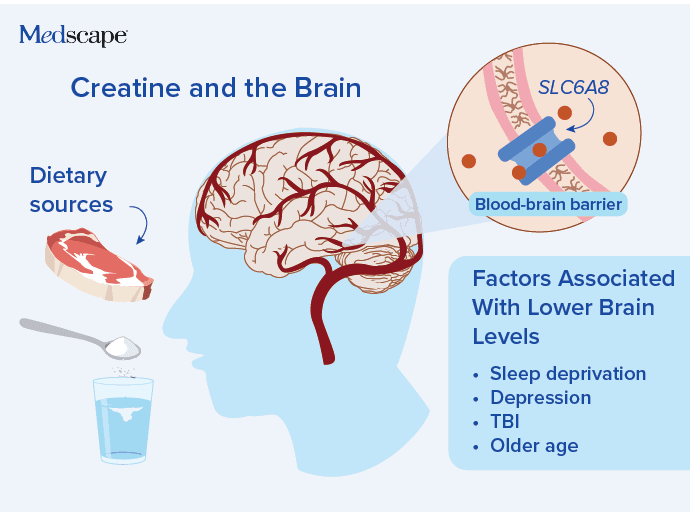
Creatine is produced in the brain and retina through a process that involves the enzyme guanidinoacetate methyltransferase, which is highly expressed in glial cells. In addition to information on markers of creatine synthesis and activity, evidence is accumulating regarding the action of creatine in the brain

Key Points
  • Creatine synthesized in liver/kidneys; brain/retina synthesis also occurs.
  • Brain creatine transport defects (SLC6A8) cause severe neurologic dysfunction; no treatment.
  • Small studies: supplementation ↑ brain creatine, but less than skeletal muscle.
  • Healthy adults: possible short-term gains in mood, cognition, sleep; women may benefit more.
  • Evidence for dementia/brain disorders remains limited; safety/dosing not fully established.
What mechanisms link creatine to cognitive performance?
Which populations benefit most from creatine supplementation?
How does creatine affect brain creatine on imaging?

Interest in creatine for brain health grew out of the knowledge that creatine deficiency or dysfunction may adversely affect cognition. Defects in the creatine transporter (CRT) gene (SLC6A8) result in low brain creatine levels, along with severe neurologic symptoms, defined as CRT deficiency syndrome. The mechanism of neurologic dysfunction is still unclear, and currently there is no treatment for CRT deficiency syndrome.

Suggested for you
There are different creatine formulations. The most common one used in studies is powder mixed with water, which has a more established bioavailability. Other commercial forms include pills, capsules, and gummies. 

The first step is to verify that creatine supplementation affects brain creatine levels. This is supported by a few small-scale human studies, but the increase is less than that seen in skeletal muscle. 

Authors of a review noted that creatine supplementation may help improve mood, cognition, and sleep in healthy adults. The observed improvements were generally more notable among women than men, which the authors attributed to lower baseline endogenous creatine stores in women. 

creatine and brain

In a 2026 study in 29 sleep-deprived but otherwise healthy adults, 0.2 g/kg creatine monohydrate supplementation was associated with up to a 12% improvement of sleep deprivation-induced deterioration in cognitive skills. For a 150-lb adult, this dosage would be about 14 g of creatine per day. 

Creatine Supplementation for Treating Brain Disorders 

While experimental evidence suggesting that creatine supplementation may help healthy people does not automatically imply that extra creatine would be beneficial in the context of brain disease, there appears to be promise in the use of creatine supplements as an adjunctive treatment in some brain disorders.

According to a 2022 review in Nutrients, creatine supplementation may help reduce some symptoms of traumatic brain injury and concussion.

Creatine also has been explored as a possible treatment for Alzheimer’s disease symptoms or as a disease-modifying therapy. A single-arm pilot trial in 20 patients with Alzheimer’s disease found that 20 g/d creatine monohydrate for 8 weeks was associated with increased total brain creatine and modest improvements on cognitive tests. 

Is There a Place for Creatine Supplementation for Healthy Adults? 

The evidence is still not solid regarding potential benefits of creatine supplements for healthy individuals or for people who have dementia. And while creatine appears to be safe when used as a supplement for exercise and for building muscle, safety concerns have not been entirely ruled out. Furthermore, established dosing and dietary references are lacking. 

Despite these shortcomings, it may be worthwhile for healthy adults or those with cognitive symptoms to try creatine supplements. So far, this supplement shows promise (albeit inconsistent) for short-term cognitive benefits, rather than a lasting impact on brain health. It is the short-lived nature of the effects that makes it worth trying. Many people use other supplements for brain health, like ginkgo biloba or ginseng, and can judge for themselves whether they see any benefits. The same principle applies to creatine – anyone taking it can assess if it improves their cognition or mood, without bearing the burden of deciphering whether a clinically undetectable effect is taking place. 

Heidi Moawad, MD, is a neurologist and medical editor. She is on the teaching faculty at Case Western Reserve University. Dr Moawad resides in Cleveland, Ohio, and enjoys traveling, cooking, and taking exercise classes. 

Sunday, May 3, 2026

This Antioxidant May Help Clear Zombie Cells & Improve Blood Vessel Health

 But doesn't your competent? doctor already have you on watermelon juice for artery health?

 You can tell the competence of your doctor and hospital if they implemented watermelon in their hospitals from way back in November 2011.

Watermelon juice reverses hardening of the arteries  Nov. 2011 

Do you prefer your doctor, hospital and board of director's incompetence NOT KNOWING? OR NOT DOING? Your choice; let them be incompetent or demand action!

This Antioxidant May Help Clear Zombie Cells & Improve Blood Vessel Health

As we age, our blood vessels get stiffer and don't relax as easily. This makes it harder for blood to flow smoothly, and it's one of the main reasons cardiovascular disease and accelerated aging go hand in hand. But a compound found in strawberries might help. New research1 suggests fisetin, a plant compound that's been making waves in longevity circles, could help reverse some of this damage by clearing out worn-out cells.

How fisetin targets zombie cells

Fisetin is a dietary flavonoid that has antioxidant properties, and it's known to be a potent senolytic compound. What does this mean? Fisetin may help clear senescent cells in the body.

Senescent cells are damaged cells that stopped doing their job but refuse to die, which is why scientists call them "zombie cells." Instead of clearing out, they stick around and release inflammatory signals that harm healthy cells nearby.

So to study fisetn's senolytic effects, researchers gave 27-month-old mice (very roughly equivalent to humans in their 70s) fisetin supplements on and off over several weeks. They found that aging blood vessel cells were releasing high levels of CXCL12, one of the inflammatory signals zombie cells produce. Could fisetin clear these cells and restore healthy blood vessel function?

What the researchers found

After fisetin treatment, the older mice had fewer zombie cells and lower levels of CXCL12. Their blood vessels also started working properly again, relaxing and expanding the way healthy vessels should.

To test this further, the team took blood from old mice and exposed young blood vessel cells to it. The young cells started acting old; they got sluggish and showed signs of stress. CXCL12 played a role in this. But when fisetin was added, it protected the young cells from these effects.

This suggests fisetin works in two ways: clearing out zombie cells and lowering the harmful signals they release.

What this means for you

Research on fisetin is still mainly in the preclinical phase (aka in cells and animals), so we don't know yet if it works the same way in people. But it adds to growing evidence that fisetin could be a promising longevity compound for heart and blood vessel health.

If you want to get more fisetin through food, here are some top sources:

  • Strawberries: The richest source; add a handful to your morning smoothie or enjoy as a snack
  • Apples: Slice them up for an easy afternoon pick-me-up
  • Onions and cucumbers: Toss them into salads for a simple boost
  • Persimmons: A sweet option when they're in season

Fisetin supplements are also available and popular among longevity enthusiasts, though human studies on dosing are still limited. For now, focusing on whole foods is a simple, low-risk way to get more of this compound. Plus, you'll benefit from the fiber, vitamins, and other plant compounds that come along with it.

The takeaway

This study shows fisetin can reverse age-related blood vessel problems in mice by clearing out zombie cells and calming inflammation. Human trials are still needed, but adding fisetin-rich foods like strawberries, apples, and onions to your plate is an easy place to start.


These Brain-Supporting Nutrients May Help Slow Cognitive Decline As You Age by mindbodygreen

 You do expect your competent? doctor to get these into your diet protocol immediately, right? Oh NO, you DON'T have a functioning stroke doctor, do you? Because you don't have a diet protocol at all, do you!

These Brain-Supporting Nutrients May Help Slow Cognitive Decline As You Age

As we get older, keeping our minds sharp becomes a bigger priority. And while there's no single food or nutrient that can protect against cognitive decline, research continues to uncover dietary factors that may offer some protection. A new study1 highlights two nutrients that don't always get a lot of attention (or a lot of space on our plate): choline and betaine.

About the study

Researchers wanted to know whether higher intakes of choline and betaine could influence cognitive performance over time1, particularly in people already at elevated risk for cognitive decline.

Why these two nutrients? Choline is an essential nutrient that the body uses to produce acetylcholine, a neurotransmitter involved in memory, attention, and learning. It also helps maintain the structural integrity of brain cell membranes. Betaine is a compound derived from choline, supports methylation, a biochemical process critical for DNA repair, neurotransmitter synthesis, and keeping homocysteine levels in check (elevated homocysteine has been linked to cognitive decline).

The video player is currently playing an ad. You can skip the ad in 5 sec with a mouse or keyboard

To explore this connection, researchers followed 6,610 adults ages 55 to 75 who had metabolic syndrome, a condition that increases the risk of both heart disease and cognitive decline. Participants completed a validated food frequency questionnaire, and researchers assessed their cognitive function using eight neuropsychological tests across five areas: attention, memory, executive function, processing speed, and language. They repeated the cognitive assessments two years later.

Higher intakes linked to better attention, language, and executive function

Those who consumed more choline showed less decline in attention over the two-year period and improvements in language scores.

The average choline intake was about 422 milligrams per day (roughly the equivalent of eating three large eggs daily, or a combination of eggs, chicken, and fish throughout the day). That's just under the adequate intake of 550 milligrams for men and 425 milligrams for women.

Those with higher betaine intake showed favorable changes in executive function and language. Average betaine intake was around 114 milligramsg per day, which is less than what you'd get from a single cup of cooked spinach (~160 milligrams) or beets (~130 milligrams).

The effects were modest but statistically significant, and they held up after researchers adjusted for factors like age, education, physical activity, and overall diet quality.

Easy ways to add more choline and betaine

Both nutrients are found naturally in the diet.

  • Choline-rich foods: Eggs (one large egg has about 147 mg), chicken, beef liver, fish, and soybeans
  • Betaine-rich foods: Beets, spinach, quinoa, and whole wheat bread

However, it can be challenging to optimize choline intake through food alone. Eating 3+ eggs a day isn't necessarily ideal for everyone.

Supplementing with citicoline (also known as CDP-choline) is a form of choline that has been studied for its potential cognitive benefits. It's converted into both choline and cytidine in the body, which may support brain cell membrane health and neurotransmitter production. Cognizin® citicoline is a patented, clinically studied form of the compound that has been shown to support everything from memory, to attention, and mental energy. Look for options that provide at least 500 milligrams of Cognizin® citicoline per serving (our favorite supplement pairs that with 5 grams of creatine monohydrate).

Saturday, May 2, 2026

Best Supplements for Stroke Recovery: A Complete Guide for Natural and Brain Boosting Supplements Post Stroke by Flint Rehab


Best Supplements for Stroke Recovery: A Complete Guide for Natural and Brain Boosting Supplements Post Stroke


Elizabeth Denslow, OTR/L
Medically reviewed by Elizabeth Denslow, OTR/L — written by Flint Rehab.Last updated on April 29, 2026Recovering after a stroke can feel overwhelming. There are many moving parts including your therapy, medications, lifestyle changes, and the day-to-day effort of rebuilding strength and independence. Naturally, one of the most common questions many survivors and caregivers ask is: Are there supplements that can help support recovery? The short answer is yes, there are some supplements that may play a supportive role in your recovery post-stroke. However, they are not a replacement for therapy, medical care, or consistent exercise. Instead, think of them as one piece of a larger recovery plan that works together to support your brain and body. In this guide, we’ll walk through the best supplements for stroke recovery, including both brain-focused supplements and natural supplement options. We’ll also discuss what you should consider before adding anything new to your routine including any potential safety concerns to evaluate with your doctor. Let’s dive in! A quick but important reminder: Before starting any new supplement, it’s important to talk with your doctor(That's cute; thinking your doctor will know anything about supplements!). They understand your full medical history and can help you choose options that support your recovery safely.

Understanding Stroke Recovery, Nutrition, and Supplementation

After a stroke, the brain can rewire and repair itself through a process called neuroplasticity. This is the brain’s ability to reorganize, form new connections, and allow survivors to regain movement, speech, and other functions over time.

Now, while therapy and repetition are the primary drivers of neuroplasticity, nutrition plays an important supporting role. This is because the brain needs the right nutrients to repair cells, reduce inflammation, and maintain healthy blood flow.

And this is where supplements may help.

That said, it’s important to keep expectations realistic. Supplements won’t create recovery on their own but they can help support the processes already happening through therapy and daily practice.

Are Supplements Safe After a Stroke?

Before diving into specific options, there’s something important to understand about supplements post-stroke.

Not all supplements are safe for everyone in general, but especially after a stroke.

That’s because many stroke survivors may be taking medications like:

  • Blood thinners
  • Blood pressure medications
  • Cholesterol-lowering drugs

And some supplements can interact with these medications and cause adverse effects. For example, certain natural compounds may affect blood clotting or blood pressure.

This is why before taking any supplement, it is absolutely essential that you:

  • Talk with your doctor before starting a new supplement
  • Introduce one supplement at a time
  • Watch for any changes or side effects

This extra step can help you stay safe while introducing supplementation to support your recovery.

Best Brain Supplements for Stroke Recovery

After a stroke, many people begin looking for ways to support the brain as it heals and adapts. While no supplement can replace therapy or medical care, certain nutrients are often discussed for their potential to support brain health, cognitive function, and nerve repair. 

Let’s take a look at some of the best brain supplements for stroke recovery that may play a helpful role alongside a consistent rehabilitation routine.

1. Omega-3 Fatty Acids (Fish Oil)

omega-3 (110 posts to June 2012) My posts on the subject.

My posts on the subject.

Omega-3s are one of the most widely studied supplements for brain health.

They may help:

  • Reduce inflammation in the brain
  • Support cell membrane repair
  • Promote healthy blood flow

After a stroke, inflammation can slow recovery. Omega-3s may help create a more supportive environment for healing.

They are commonly found in:

  • Fish oil supplements
  • Fatty fish like salmon and sardines

For many people, this is a foundational supplement to consider.

2. Vitamin D

vitamin D(40 posts to May 2012) My posts on the subject.

Vitamin D is essential for overall health, but it also plays a role in brain function.

Low vitamin D levels have been linked to:

While vitamin D deficiency may contribute to fall risk, it is important to note that excessively high vitamin D levels are also associated with an increased risk of falls. This again demonstrates the importance of reviewing any new supplements with your doctor before starting, as they can help ensure the proper dosage for your specific situation.

3. B Vitamins (B6, B12, and Folate)


vitamin B6 (2 posts to January 2019) My posts on the subject.

Vitamin B12(26 posts to December 2011) My posts on the subject.

folate (10 posts to May 2012) My posts on the subject.

B vitamins are important for nerve health and energy production.

They may help:

Vitamin B12, in particular, is essential for maintaining healthy nerve cells.

For stroke survivors experiencing fatiguedepression, or nerve-related challenges, B vitamins are often part of a supportive plan.

4. Magnesium

magnesium (42 posts to March 2011) My posts on the subject.

Magnesium plays a role in hundreds of processes in the body, including brain function.

It may help:

  • Support nerve signaling
  • Reduce muscle stiffness or spasticity
  • Promote relaxation and better sleep

Sleep is often overlooked in recovery, yet it’s when much of the brain’s repair work happens. Magnesium can indirectly support that process.

5. Coenzyme Q10 (CoQ10)

CoQ10 (14 posts to May 2013) My posts on the subject.

CoQ10 is involved in energy production at the cellular level.

After a stroke, cells may struggle to produce energy efficiently. CoQ10 may help:

  • Support cellular energy
  • Reduce oxidative stress
  • Protect brain cells

While research is still ongoing, some people include CoQ10 as part of a broader brain health routine.

6. Curcumin (from Turmeric)

curcumin (46 posts to March 2011) My posts on the subject.

Curcumin is the active compound in turmeric and is known for its anti-inflammatory properties.

It may help:

  • Reduce inflammation
  • Support brain healing
  • Protect against oxidative damage

Because inflammation can interfere with recovery, curcumin is often discussed as a natural option to support healing.

Natural Supplements for Stroke Recovery

As recovery continues, some individuals look beyond traditional vitamins and begin exploring plant-based or naturally derived supplements. These options are often discussed for their potential to support circulation, reduce inflammation, and promote cognitive function. 

While they can feel like a more “natural” approach, it’s still important to use them carefully and as part of a broader recovery plan guided by your healthcare team.

1. Ginkgo Biloba

Ginkgo biloba (12 posts to May 2012) My posts on the subject.

Ginkgo is commonly used to support brain health and circulation.

It may help:

  • Improve blood flow to the brain
  • Support memory and cognition

However, it’s important to use caution. Ginkgo can affect blood clotting, so it may not be safe for those on blood thinners.

2. Green Tea Extract

Don't do anything with this until your doctor can guarantee the right prescription. Green tea extract can be dangerous.

green tea extract (8 posts to March 2016) My posts on the subject.

Green tea contains antioxidants called catechins.

These may help:

  • Reduce oxidative stress
  • Support overall brain health

Drinking green tea or using a supplement can be a gentle way to add more antioxidants into your routine.

3. Resveratrol

resveratrol (71 posts to January 2012) My posts on the subject.

Resveratrol is found in grapes and berries.

It may help:

  • Support blood vessel health
  • Reduce inflammation
  • Protect brain cells

While research is still developing, it’s often included in discussions about long-term brain health.

4. Garlic Extract

Aged Garlic Extract (13 posts to January 2016) My posts on the subject.

Garlic has long been used for heart health.

It may help:

  • Support healthy blood pressure
  • Improve circulation
  • Reduce cholesterol levels

Since stroke recovery often involves managing cardiovascular health, garlic may be a helpful addition for some individuals.

5. Ashwagandha

Be careful with this one:

For the study, published in JAMA Network Open, researchers analyzed data from more than 9,500 American adults with an average age of 47.5 who participated in the National Health and Nutrition Examination Survey from 2017 to 2020.
The researchers focused on six supplements previously linked to liver damage:

  • Ashwagandha
  • Black cohosh
  • Garcinia Cambogia
  • Green tea extract
  • Red yeast rice
  • Turmeric/curcumin

Ashwagandha is an adaptogenic herb that helps the body manage stress.

It may help:

  • Reduce stress and anxiety
  • Improve sleep
  • Support overall well-being

Recovery is not just physical. Emotional health plays a major role, and managing stress can support the healing process.

Whole Foods vs. Supplements

It’s worth pausing here to highlight something important. Whenever possible, nutrients should come from whole foods first.

For example:

  • Fatty fish instead of only fish oil
  • Leafy greens instead of only folate supplements
  • Nuts and seeds instead of isolated nutrients

Whole foods provide a combination of nutrients that work together. Supplements, on the other hand, are more targeted.

That said, supplements can still be helpful when:

  • There are nutrient deficiencies
  • Appetite is reduced
  • Dietary restrictions are present
  • Higher therapeutic doses are needed

In many cases, the best approach is a combination of both.

How to Choose the Right Supplements

With so many options available, it’s easy to feel unsure about where to start. First and foremost, talk with your doctor. After a stroke, your care plan often includes medications and specific health considerations. 

The supplements in the US have zero guarantee of purity or efficacy due to the fucking stupidity of the US Congress passing the Dietary Supplement Health and Education Act of 1994 (DSHEA).

A doctor can help you avoid potential interactions, confirm what’s safe for you, and guide you toward options that fit your recovery needs.

From there, here are a few simple guidelines to help you move forward with confidence:

1. Start with Your Needs

Think about your specific challenges:

  • Are you dealing with fatigue?
  • Memory issues?
  • Muscle stiffness?

Choosing supplements based on your needs can make the process more focused.

2. Keep It Simple

It can be tempting to try everything at once. However, starting with 1–2 supplements allows you to:

  • Track how your body responds
  • Avoid unnecessary interactions
  • Stay consistent

3. Look for Quality

Not all supplements are created equal.

Look for:

  • Third-party testing
  • Clear ingredient labels
  • Reputable brands

This helps ensure you’re getting what you expect. Your doctor may be able to recommend certain brands that are known for their high quality products.

4. Stay Consistent

Supplements are not quick fixes. In many cases, they take time to support your body. Because of this, consistency matters more than taking large amounts or constantly switching products. 

A steady routine, paired with your therapy and daily practice, is what supports long-term progress.

The Most Important Piece: Repetition and Therapy

While supplements can support recovery, they cannot replace the most important driver of progress:

Repetition.

The brain rewires through consistent practice. Every movement, every exercise, and every attempt helps reinforce new neural pathways.

This is why tools, exercises, and structured programs are so important during recovery. Supplements may support the process, but they do not create it.

Final Thoughts: Building a Supportive Recovery Plan

There is no single “best” supplement for stroke recovery.

Instead, the goal is to build a supportive environment for healing, which may include:

  • Therapy and high-repetition exercises
  • Balanced nutrition
  • Targeted supplements (when appropriate)
  • Rest and stress management

Supplements can play a role, but they work best when combined with consistent effort and guidance from healthcare professionals.

If you’re considering adding supplements, start small, stay informed, and remember to talk with your doctor to determine which supplements are safe and can support your long term recovery! 

We hope you enjoyed this article and subscribe to our newsletter for weekly articles just like this delivered straight to your inbox — subscribe here.

Flint Rehab is leading the way in neuro-rehabilitation with products that are backed by research and clinically proven to help you recover more effectively from stroke, TBI, and SCI.