Changing stroke rehab and research worldwide now.Time is Brain! trillions and trillions of neurons that DIE each day because there are NO effective hyperacute therapies besides tPA(only 12% effective). I have 523 posts on hyperacute therapy, enough for researchers to spend decades proving them out. These are my personal ideas and blog on stroke rehabilitation and stroke research. Do not attempt any of these without checking with your medical provider. Unless you join me in agitating, when you need these therapies they won't be there.

What this blog is for:

My blog is not to help survivors recover, it is to have the 10 million yearly stroke survivors light fires underneath their doctors, stroke hospitals and stroke researchers to get stroke solved. 100% recovery. The stroke medical world is completely failing at that goal, they don't even have it as a goal. Shortly after getting out of the hospital and getting NO information on the process or protocols of stroke rehabilitation and recovery I started searching on the internet and found that no other survivor received useful information. This is an attempt to cover all stroke rehabilitation information that should be readily available to survivors so they can talk with informed knowledge to their medical staff. It lays out what needs to be done to get stroke survivors closer to 100% recovery. It's quite disgusting that this information is not available from every stroke association and doctors group.

Showing posts with label pet ownership. Show all posts

Tuesday, March 29, 2022

Long-term pet ownership may help older adults retain cognitive skills

Not going to happen with me, pets would prevent spur of the moment travel and be extremely expensive to board on long vacations. Both of which prevent dementia by increasing social connections. Those social connections are much more important to me than having a pet and I believe more likely to prevent dementia. But I'm not medically trained, so don't listen to me.

Long-term pet ownership may help older adults retain cognitive skills
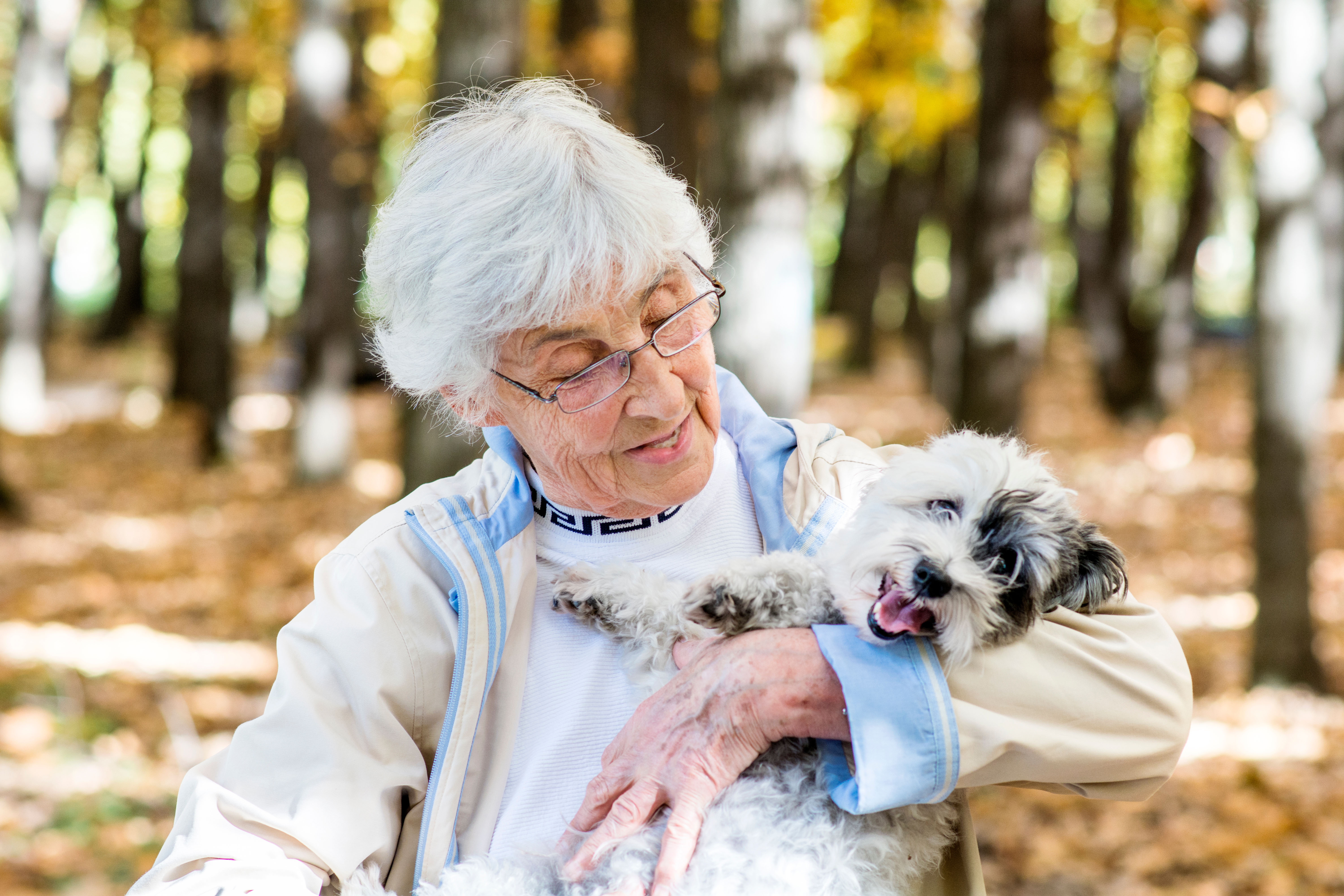
Older woman holding dog

Researchers found that adults ages 50 or older who had owned any kind of pet for more than five years showed slower decline in verbal memory compared to non-pet owners. Photo credit: Shutterstock

Our furry, feathered, finned, scaled and shelled animal friends may do more than bring us emotional comfort.

Owning a pet for over five years may help keep cognitive skills sharp as you age, according to a new study by researchers at the University of Florida, University of Michigan and Virginia Commonwealth University.

The researchers found that adults ages 50 or older who had owned any kind of pet for more than five years showed slower decline in verbal memory — being able to recall words, for example — over time compared to non-pet owners.

“We can’t show that this is causal but it does show that pets could buffer or have a protective effect on older adults’ cognition and we think it has to do with some of the mechanism related to stress buffering,” said Jennifer Applebaum, a doctoral candidate in sociology and National Institutes of Health predoctoral Fellow at the University of Florid. Applebaum is the lead author of the study.

Applebaum said the researchers are not recommending pet ownership as a therapeutic intervention. However, “an unwanted separation from a pet can be devastating for an owner and marginalized populations are most at-risk of these unwanted outcomes,” she said. “We do recommend that people who own pets be supported in keeping them via public policy and community partnerships.”

Among policies that could be considered: reducing or eliminating pet fees in rental housing, foster or boarding support during times of health crisis or other emergencies and free or low-cost veterinary care for low-income owners.

This is the first study to examine the impact of pet ownership over time on cognitive function among a national sample of U.S. adults ages 50 or older. The 1,300 people studied are participants in the Health and Retirement Study, a longitudinal survey that is tracking 20,000 adults in the U.S. to learn about aging-related issues.

The average age of those included was 65; 53% owned pets, with nearly one-third owning pets for more than five years. While all types of pets were included in the study, dogs were the most prevalent, Applebaum said, followed by cats.

Over six years, cognitive scores declined slower in pet owners and was strongest in long-term pet owners. The effect was most pronounced for White and Black adults, men, adults with advanced degrees and people with incomes of less than $125,000. More research is needed to fully explain the findings, Applebaum said.

There are many studies of mental and physical health benefits of pet ownership, though results have been inconclusive. However, a positive relationship with a pet is thought to buffer stress via emotional support, which also may promote healthy cognitive aging. Taking care of a pet – walking a dog, feeding a cat – also boost physical activity, which is linked to cognitive health.

“These findings provide early evidence to suggest that long-term pet ownership could be protective against cognitive decline, providing a novel and fundamental step to examine how sustained relationships with companion animals contribute to brain health,” according to the authors.

Applebaum said it is possible that people who owned a pet for less than five years also experienced other significant stressors or did not have positive experiences with their pets and so did not reap health benefits from those interactions.

The research team will present the preliminary study, which is currently under review for publication, at the American Academy of Neurology 74th Annual Meeting in April.

Applebaum became interested in issues related to pet ownership and social inequality while working in animal shelters. She completed a master’s in veterinary medicine before pursuing her doctorate.

“I am interested the impact of social inequalities on people and pets,” Applebaum said. “That got me more broadly interested in how pets impact health and how that plays out in a household between both owners and pets.”


Thursday, February 24, 2022

Owning a Pet May Protect Cognitive Health

But WHOM is going to do the stroke research to see if owning a pet recovers your 5 lost years of brain cognition due to your stroke?

 I have zero interest in owning a pet, it would vastly complicate and increase expenses of traveling.

Owning a Pet May Protect Cognitive Health


Strongest benefit seen for long-term pet owners

A portrait of a mature bearded man with a tabby cat draped over his shoulder.

Cognitive decline was slower for older adults who had pets, an observational study showed.

Over 6 years, cognitive scores decreased at a slower rate in pet owners than in people without pets, reported Tiffany Braley, MD, MS, of the University of Michigan in Ann Arbor, and colleagues, in an abstract released in advance of the American Academy of Neurology annual meeting.

The magnitude of the association was larger among long-term pet owners, who had a cognitive composite score 1.2 points higher at 6 years than non-pet owners (P=0.03).

"Although this study cannot prove a cause and effect relationship between pet ownership and cognition, these findings provide early evidence to suggest that long-term pet ownership could be protective against cognitive decline, providing a novel and fundamental step to understanding how relationships with companion animals contribute to brain health," Braley told MedPage Today.

"Pet ownership should not be sought as a means to preserve cognitive health," Braley pointed out. "However, if a causal relationship exists between pet ownership and cognitive health, this would provide further support for programs to support older adults interested in maintaining or initiating pet ownership."

The findings were based on 1,369 people with a mean age of 65 in the longitudinal Health and Retirement Study (HRS). Pet ownership and its duration were assessed in the 2012 wave, and people with impaired cognitive function at baseline were excluded.

The researchers used cognitive assessments from 2010 to 2016 to create a composite score derived from an immediate and delayed 10-noun free recall test, a serial seven subtraction test, and a backwards count test, with a total score range of 0-27.

Overall, 53% of participants owned pets and 32% were long-term pet owners, defined as owning a pet for 5 years or more. Most participants (88%) were white; 7% were Black and 2% were Hispanic.

The cognitive benefits associated with longer pet ownership were more prominent for people who were Black, college-educated, and men, Braley and colleagues noted.

Earlier studies have demonstrated that pet ownership can reduce loneliness and depression, both of which have been associated with cognitive changes. Military veterans with post-traumatic stress disorder (PTSD), for example, experienced significantly greater improvement in depression and loneliness scores after adopting a dog, observed Steven Stern, MD, of the University of Texas Health Science Center in San Antonio.

"When I started working in the PTSD clinic at the VA, I was struck by the fact that veterans with PTSD would frequently talk about their dogs and how much having a dog helped them," Stern told MedPage Today. That observation led to a small clinical trial that randomized veterans with PTSD to dog adoption from a local Humane Society and or a 3-month wait list. Within a month, most veterans who adopted a dog reported a positive experience of companionship with their pet, and many became more physically and socially active.

More recently, U.K. researchers showed that pets may help people with early dementia. "The IDEAL program was a unique opportunity to examine associations between pet ownership and walking, loneliness, depression, and quality of life in a large cohort of people with mild-to-moderate dementia," noted Carol Opdebeeck, PhD, of Manchester Metropolitan University in England.

"The key to any benefits of pet ownership in this study was in the person being involved in the care of their pet," Opdebeeck told MedPage Today. People who cared for a dog walked more and were less lonely, she said. "People who had a pet but were not involved in its care were more likely to be depressed and have poorer quality of life than people with no pet or those with a pet who were involved in its care," she added.

A limitation of the HRS study was that the length of pet ownership was assessed only at one time point. Unknown confounders also may have influenced results.

"We do not recommend pet ownership as a therapeutic intervention," co-author Jennifer Applebaum, MS, of the University of Florida in Gainesville, told MedPage Today. "However, we do recommend that people who own pets be supported in keeping them through public policy and community partnerships. An unwanted separation from a pet can be devastating, and marginalized populations are most at risk of these unwanted outcomes."

  • Judy George covers neurology and neuroscience news for MedPage Today, writing about brain aging, Alzheimer’s, dementia, MS, rare diseases, epilepsy, autism, headache, stroke, Parkinson’s, ALS, concussion, CTE, sleep, pain, and more. Follow

Disclosures

The study was supported by the National Heart, Lung, and Blood Institute and the National Institute on Aging.

Primary Source

American Academy of Neurology

Source Reference: Shieu M, et al "Companion animals and cognitive health: a population-based study" AAN 2021.