Changing stroke rehab and research worldwide now.Time is Brain! trillions and trillions of neurons that DIE each day because there are NO effective hyperacute therapies besides tPA(only 12% effective). I have 523 posts on hyperacute therapy, enough for researchers to spend decades proving them out. These are my personal ideas and blog on stroke rehabilitation and stroke research. Do not attempt any of these without checking with your medical provider. Unless you join me in agitating, when you need these therapies they won't be there. Did your doctor somehow miss the recovery protocol that Pedro Bach-y-Rita used to recover fully back in 1958 with only a partial brain?

What this blog is for:

My blog is not to help survivors recover, it is to have the 10 million yearly stroke survivors light fires underneath their doctors, stroke hospitals and stroke researchers to get stroke solved. 100% recovery. The stroke medical world is completely failing at that goal, they don't even have it as a goal. Shortly after getting out of the hospital and getting NO information on the process or protocols of stroke rehabilitation and recovery I started searching on the internet and found that no other survivor received useful information. This is an attempt to cover all stroke rehabilitation information that should be readily available to survivors so they can talk with informed knowledge to their medical staff. It lays out what needs to be done to get stroke survivors closer to 100% recovery. It's quite disgusting that this information is not available from every stroke association and doctors group.

Showing posts with label 'best recovery'. Show all posts

Saturday, January 21, 2023

How can we make the best possible recovery after a stroke?

 Notice the immediate tyranny of low expectations is set right away. NOT FULL RECOVERY;  the craptastic 'BEST RECOVERY'. This is the shit all stroke survivors have to deal with; our stroke medical 'professionals' completely FUCKING FAILING AT THEIR ONLY JOB'! 100% recovery. I take no prisoners in pointing out how godawful your 'professionals' are!

How can we make the best possible recovery after a stroke?

Every year, around 12,000 Norwegians have a stroke. Research fellow Solbakken has good advice for those affected.

Symptoms of a stroke include paralysis and loss of feeling in the arm or leg, as well as facial paralysis and difficulties with language or speech. This can also lead to concentration and attention difficulties.

A stroke causes brain cells to be damaged and die, making it important to get to a hospital for treatment as quickly as possible. Emergency treatment can be crucial to the severity of the outcome.

“A stroke is an emergency incident, and most people don’t know much about it. Many probably feel a bit uncertain since having a stroke is such a major upheaval,” Liss Marita Solbakken says.

She is a research fellow at OsloMet and is writing her thesis on the aftercare of stroke patients during the initial period after being discharged from hospital.

Figures from the Norwegian Directorate of Health show that around a third of stroke patients return quickly to their previous level of function, whilst around a third have a somewhat reduced level of functioning but can live at home with assistance.

The remaining third are severely affected and have to live in a nursing home, or risk dying within the first year after discharge.

The stroke mortality rate has dropped and is now just below 25 per cent.
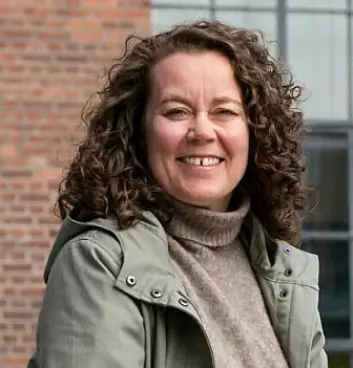
Research fellow Liss Marita Solbakken is a physiotherapist who conducts research on people affected by strokes.

Work on what you want to be good at

Strokes can affect both older and younger people. Most are older adults, but approximately 21 per cent of stroke patients are under 65 years of age. They are midway through life when the stroke occurs. They are still working, and many have children to take care of.

“Rehabilitation is crucial to ensuring that stroke patients are as self-reliant as possible,” Solbakken says. “Rehabilitation targeting specific tasks is good, for example, learning to walk again, use cutlery and use a phone.”

This means that you must practise the task you want to get better at.

Research has also shown that many people benefit significantly from rehabilitation at home. This means practising the daily activities you want to master and manage to do them several times. Day-to-day challenges are often based in the home, and you might not notice some of these challenges until you return home.

You might discover that you forget things, have difficulties finding your bearings, and feel more tired.

“If you discover new challenges when you come home, you should not hesitate to contact a therapist in the municipality for advice and aftercare,” Solbakken adds.

About strokes:

The most common form is a cerebral infarction due to a blood clot in the brain. The second condition is a cerebral haemorrhage.

Research has also shown that stroke patients benefit greatly if they quickly receive treatment at a hospital. The right treatment will reduce the symptoms of strokes, particularly those that entail major functional impairment.

Risk factors are related to lifestyle and blood circulation, such as smoking, blood pressure, diabetes and high cholesterol.

Talk to others

Solbakken thinks many could benefit from talking to others who have suffered a stroke.

“It can be helpful to share experiences with each other and it can be comforting to talk to someone who has experienced the same thing as you. You can learn from their stories, see their progress, and give and receive support. This can be a source of motivation," she says.

It is also helpful to learn more about strokes and rehabilitation.

“If you have any questions, ask your doctor or therapist, or others who have had a stroke. This helps you to find out what you can do yourself and what you can expect from others,” Solbakken advises. “You will benefit most from being an active participant in your own rehabilitation, and from sharing your experience with your physiotherapist so that the activities are adapted to you and your goals.”

Advice for the patient

Research fellow Liss Marita Solbakken has the following advice for people who have suffered a stroke:

  1. Think about what you want to be able to do and share it with the people who can help you to achieve these goals.
  2. Talk to others who have had a stroke. Contact one of the stroke associations.
  3. Be active! Repetition and varied activities are important to recovering from a stroke.
  4. Nurture a sense of mastery. Celebrate small and big improvements and reflect on what you have achieved by working on your personal goals.
  5. Tell your doctor or physiotherapist if you notice difficulties after returning home from hospital.

References:

Lou et al. 'Stroke patients' and informal carers' experiences with lige after stroke: an overview of qualitative systematic reviews', Disabil Rehabil, 2017. DOI: 10.3109/09638288.2016.1140836 Abstract.

Solbakken et al. Patients' experiences of involvement, motivation and coping with physiotherapists during subacute stroke rehabilitation - a qualitative study, European Journal of Physiotherapy, 2022. DOI: 10.1080/21679169.2022.2032825

Thursday, April 28, 2022

Integrated Care Programs for Stroke Patients May Be Best

So your 'best' is still a complete failure, none are referred to as 100% recovered.  Who is being fired for that incompetence? If I never 100% solved the problems I was assigned I would be fired immediately. You can't allow the tyranny of low expectations to allow your hospital to retain incompetent persons.

Integrated Care Programs for Stroke Patients May Be Best

Madeleine Haase

April 28, 2022

0

The study covered in this summary was published in medRxiv.org as a preprint and has not yet been peer reviewed.

Key Takeaways

  • Recipients of the return home program (RHP) were admitted to a long-term care facility less frequently and later than other patients, suggesting that institutionalization is sometimes a consequence of inadequate or late home care.

  • Implementing an integrated care program of healthcare and social care for stroke patients at discharge successfully promoted early domiciliary care delivery, resulting in less frequent and later institutionalization in a long-term care facility.

  • The benefits of postdischarge integrated care services for stroke patients are likely to increase through the pooling of budgets and approaches that integrate social services and healthcare services as a whole.

Why This Matters

  • Stroke affects over 80 million people worldwide and is the leading cause of disability among adults.

  • Owing to their limited capacity for activities of daily living, stroke patients often require domiciliary care after hospital discharge.

  • The healthcare burden of stroke is expected to increase in the upcoming years. There is thus a need for implementing integrated care pathways that efficiently screen stroke patients. There is also a need for adequate postdischarge care plans that meet the social and healthcare needs of patients.

Study Design

  • The health outcomes and the use of resources of 92 stroke patients who received care within the RHP program were compared with those of a population-based matched control group using central healthcare records regarding routine care.

  • Patients in the intervention group received domiciliary care service, home rehabilitation, and telecare significantly earlier than the matched control patients.

  • The primary objective of the study was to assess the time to key events, which included adverse endpoints (ie, death and institutionalization in a long-term care facility) and service provision endpoints (ie, receiving domiciliary care, telecare, and at-home rehabilitation services).

Key Results

  • Within the first 2 years after the stroke episode, recipients of the RHP program were less frequently institutionalized in a long-term care facility (5% vs 15%).

  • The use of primary care services, nonemergency transport, and telecare services was more frequent in the RHP group.

  • Two years after the index stroke episode, domiciliary care was being provided to 92.4% of patients in the RHP group and to 19.1% of the control group. Telecare services were provided to 75.5% of the RHP group and to 44.5% of the control group 2 years after the index episode.

  • Two years after the index stroke episode, 98.4% of patients in the RHP group were receiving at-home rehabilitation; among the control group, 84.8% were receiving at-home rehabilitation.


Sunday, August 1, 2021

‘Best Rehab Center’ Highland Meadows earns 5 star quality rating

 How can they be 'best' when they give us no actual statistics on recovery of any of the diseases they treat?

‘Best Rehab Center’ Highland Meadows earns 5 star quality rating 

ROCKWALL, TX (August 1, 2021) Highland Meadows Health & Rehab, Rockwall’s premier skilled nursing and long term care facility, is excited to announce they’ve been awarded five stars, the highest quality rating possible from CMS.gov (Centers for Medicare & Medicaid Services).

CMS created the Five-Star Quality Rating System to help consumers, their families, and caregivers compare nursing homes. The overall rating is based on performance of health inspections, staffing, and quality of resident care measures.

This good news comes at the same time readers of Living Magazine voted Highland Meadows the Best Rehabilitation Center in Rockwall and Rowlett. Highland Meadows’ in-house rehab department comprises skilled professionals who are employees – not contracted – another distinction that sets this facility apart from others.  The gym is spacious and filled with the latest, high-tech equipment; and there is also a dedicated room that serves as a simulated home environment, complete with kitchen appliances, washer and dryer – for functional therapy.

“We work to ensure that each patient achieves the best possible outcome in the shortest period of time,” said Gracen Hawley, LNFA, MA, CCC-SLP, Owner/Administrator of Highland Meadows. “The average stay for most of our rehab patients is 17 days, far below the national average. We combine that with the individual care, guidance and support they deserve.”

Located at 1870 S. John King Blvd., the 120-bed, privately owned and operated facility serves long-term residents and short-term rehab patients. They are committed to healing, helping, and improving quality of life for those in their care by focusing on patients’ physical, spiritual and emotional well-being.

Strikingly beautiful, immaculate and spacious, the state-of-the-art facility provides skilled nursing and comprehensive rehabilitation programs including inpatient and outpatient physical therapy, occupational therapy, speech language pathology, IV therapy, and a myriad of other services as needed. Their professional, licensed care team specializes in stroke recovery, orthopedics, wound care management, pain management, post-surgical rehab, and Diabetes. A physician makes rounds seven days a week, and their Medical Director, Dr. Tony Bui, is a licensed, board-certified Physiatrist who offices onsite Monday through Friday.

Highland Meadows also recently introduced new members of its professional care team, including Dr. John Paul Benavides, DO, who specializes in pain management; Dr. Claire Brenner, MD, board certified Infectious Disease Specialist; Dr. Yousef Abou-kayya, MD, board certified in Pulmonology, Internal Medicine, Critical Care, and Sleep Medicine; as well as Hiruy Berta, RN, BSN, who serves as Director of Nursing.

Highland Meadows also has its own in-house lab, dramatically decreasing the time it takes to draw and process state lab results.  They recently introduced their own in-house pharmacy, giving patients access to the medications they need, when they need it.

Inside Highland Meadows you’ll find fully furnished living suites, spacious private and semi-private rooms with flat screen TVs and internet access, clean and luxurious restrooms, a community dining hall with chef-prepared meals and specialized menus, activity areas, a beauty salon and barber – all situated on gorgeous grounds in Rockwall.

Monthly activities like Bingo, Bible study, choir, worship services, group exercise, men’s group, dance parties and ice cream socials help keep residents engaged. Transportation services are provided to ensure patients can get to their follow-up doctor appointments.

Highland Meadows is now in-network with all United Health Care plans including UHC Commercial, AARP, Secure Horizons, Wellmed, Silverback, and UHC Medicare Advantage. This is in addition accepting Medicare, Medicaid, private pay, private insurance, Humana PPO, Blue Cross Blue Shield, Aetna, Baylor, Scott & White and WellMed.

To learn more about Highland Meadows, call 972-722-7408 or visit their website at highlandmeadowshealth.com. Follow all of their activities and events on Facebook and Instagram.

Submitted press release. Highland Meadows is a Blue Ribbon News advertiser and client of BRN Media.