Changing stroke rehab and research worldwide now.Time is Brain! trillions and trillions of neurons that DIE each day because there are NO effective hyperacute therapies besides tPA(only 12% effective). I have 523 posts on hyperacute therapy, enough for researchers to spend decades proving them out. These are my personal ideas and blog on stroke rehabilitation and stroke research. Do not attempt any of these without checking with your medical provider. Unless you join me in agitating, when you need these therapies they won't be there.

What this blog is for:

My blog is not to help survivors recover, it is to have the 10 million yearly stroke survivors light fires underneath their doctors, stroke hospitals and stroke researchers to get stroke solved. 100% recovery. The stroke medical world is completely failing at that goal, they don't even have it as a goal. Shortly after getting out of the hospital and getting NO information on the process or protocols of stroke rehabilitation and recovery I started searching on the internet and found that no other survivor received useful information. This is an attempt to cover all stroke rehabilitation information that should be readily available to survivors so they can talk with informed knowledge to their medical staff. It lays out what needs to be done to get stroke survivors closer to 100% recovery. It's quite disgusting that this information is not available from every stroke association and doctors group.

Showing posts with label short chain fatty acids. Show all posts

Sunday, July 28, 2024

Short-Chain Fatty Acids Improve Poststroke Recovery via Immunological Mechanisms

 Did your competent? doctor do ANYTHING with this in the 4.5 years since it came out?

Do you prefer your  doctor, therapist and hospital  incompetence NOT KNOWING? OR NOT DOING?

Short-Chain Fatty Acids Improve Poststroke Recovery via Immunological Mechanisms

Rebecca Sadler, Julia V. Cramer, Steffanie Heindl, Sarantos Kostidis, Dene Betz, Kielen R. Zuurbier, Bernd H. Northoff, Marieke Heijink, Mark P. Goldberg, Erik J. Plautz, Stefan Roth, Rainer Malik, Martin Dichgans, Lesca M. Holdt, Corinne Benakis, Martin Giera, Ann M. Stowe and Arthur Liesz

Abstract

Recovery after stroke is a multicellular process encompassing neurons, resident immune cells, and brain-invading cells. Stroke alters the gut microbiome, which in turn has considerable impact on stroke outcome. However, the mechanisms underlying gut–brain interaction and implications for long-term recovery are largely elusive. Here, we tested the hypothesis that short-chain fatty acids (SCFAs), key bioactive microbial metabolites, are the missing link along the gut–brain axis and might be able to modulate recovery after experimental stroke. SCFA supplementation in the drinking water of male mice significantly improved recovery of affected limb motor function. Using in vivo wide-field calcium imaging, we observed that SCFAs induced altered contralesional cortex connectivity. This was associated with SCFA-dependent changes in spine and synapse densities. RNA sequencing of the forebrain cortex indicated a potential involvement of microglial cells in contributing to the structural and functional remodeling. Further analyses confirmed a substantial impact of SCFAs on microglial activation, which depended on the recruitment of T cells to the infarcted brain. Our findings identified that microbiota-derived SCFAs modulate poststroke recovery via effects on systemic and brain resident immune cells.

SIGNIFICANCE STATEMENT Previous studies have shown a bidirectional communication along the gut–brain axis after stroke. Stroke alters the gut microbiota composition, and in turn, microbiota dysbiosis has a substantial impact on stroke outcome by modulating the immune response. However, until now, the mediators derived from the gut microbiome affecting the gut-immune-brain axis and the molecular mechanisms involved in this process were unknown. Here, we demonstrate that short-chain fatty acids, fermentation products of the gut microbiome, are potent and proregenerative modulators of poststroke neuronal plasticity at various structural levels. We identified that this effect was mediated via circulating lymphocytes on microglial activation. These results identify short-chain fatty acids as a missing link along the gut–brain axis and as a potential therapeutic to improve recovery after stroke.

Introduction

Stroke induces a multiphasic pathophysiological cascade, which consists of an initial excitotoxicity followed by a longer neuroinflammatory phase within the brain (Dirnagl et al., 1999; Iadecola and Anrather, 2011). Moreover, stroke can be regarded as a systemic disease affecting also remote organ function, including the lung (Austin et al., 2019), heart (Bieber et al., 2017), and immune system and intestinal function (Singh et al., 2016). Recently, it has been shown that a dysbiotic gut microbiota is correlated with a worsened outcome in patients (Xia et al., 2019), and that these changes are evident up until 3 weeks after hospitalization (Swidsinski et al., 2012). We have previously demonstrated an important role of the gut microbiome on stroke outcome in proof-of-principle experiments using germ-free and recolonized mice (Singh et al., 2018). Further experimental studies in rodent stroke models have identified a key role for the immune system, particularly brain-invading lymphocytes originating from the intestinal immune compartment, in mediating along the gut–brain axis (Benakis et al., 2016; Singh et al., 2016).

The gut microbiome produces a large number of bioactive metabolites which may affect brain function via modulating the immune system or afferent neuronal pathways (Kau et al., 2011; Cryan and Dinan, 2012). In particular, the metabolite group of short-chain fatty acids (SCFAs) acetate, butyrate, and propionate have been shown to readily cross the blood–brain barrier (Frost et al., 2014; Morrison and Preston, 2016) and affect brain function in development, health, and disease. For example, SCFA treatment improved the disease course in experimental autoimmune encephalitis by promoting anti-inflammatory mechanisms and reducing axonal damage (Haghikia et al., 2015). In mouse models of chronic stress, mice that received SCFA treatment exhibited significant improvements in antidepressant and anxiolytic behaviors, which was accompanied by reduced plasma corticosterone levels and differential gene regulation (van de Wouw et al., 2018).

More recently, the role of SCFAs in modulating the immune system has been studied in great detail. Through these investigations, they have been shown to play a role in the polarization of T cells in the intestinal immune compartment and inducing anti-inflammatory T-cell subset (Smith et al., 2013; Tan et al., 2016). Other studies have shown a critical role for microbiota-derived SCFAs in the maturation of microglial cells, the brain's resident immune cells (Erny et al., 2015). However, SCFAs can have far-reaching pleiotropic effects also beyond the immune system, including a direct effect on neuronal function through their potent function as histone deacetylase inhibitors (Bourassa et al., 2016). Accordingly, the importance of SCFA function has been implicated in neurodegenerative diseases and even in postischemic neurogenesis (Chuang et al., 2009; Kim et al., 2009).

Despite the key contribution of the gut microbiome to stroke outcome and the identification of SCFA as one of the microbiome's primary bioactive mediators, the role of SCFAs and their potential therapeutic use for poststroke recovery in the chronic phase after brain ischemia have not yet been investigated. In this study, we comprehensively investigated the effect of SCFA administration on poststroke recovery using advanced behavior analyses, in vivo wide-field calcium imaging, transcriptomic studies, and histological analyses to study and link SCFA-mediated recovery mechanisms from the molecular level up to behavior.

More at link.

Friday, May 17, 2024

Short-chain fatty acids: Important components of the gut-brain axis against AD

 You'll have to ask your competent? doctor for the EXACT PROTOCOL that will deliver Alzheimer's prevention. THINK YOUR DOCTOR CAN DO THAT?

Short-chain fatty acids: Important components of the gut-brain axis against AD

a
School of Pharmaceutical Sciences and Institute of Materia Medica, Xinjiang University, Urumqi 830017, China
b
Xinjiang Key Laboratory of Uygur Medical Research, Xinjiang Institute of Materia Medica, Urumqi 830004, China
c
College of Life Science and Technology, Xinjiang University, Urumqi 830000, China
d
Xinjiang Key Laboratory of Biological Resources and Genetic Engineering, Xinjiang University, Urumqi 830004, China
https://doi.org/10.1016/j.biopha.2024.116601Get rights and content
Under a Creative Commons license
open access

Abstract

Alzheimer's disease (AD) comprises a group of neurodegenerative disorders with some changes in the brain, which could lead to the deposition of certain proteins and result in the degeneration and death of brain cells. Patients with AD manifest primarily as cognitive decline, psychiatric symptoms, and behavioural disorders. Short-chain fatty acids (SCFAs) are a class of saturated fatty acids (SFAs) produced by gut microorganisms through the fermentation of dietary fibre ingested. SCFAs, as a significant mediator of signalling, can have diverse physiological and pathological roles in the brain through the gut-brain axis, and play a positive effect on AD via multiple pathways. Firstly, differences in SCFAs and microbial changes have been stated in AD cases of humans and mice in this paper. And then, mechanisms of three main SCFAs in treating with AD have been summarized, as well as differences of gut bacteria. Finally, functions of SCFAs played in regulating intestinal flora homeostasis, modulating the immune system, and the metabolic system, which were considered to be beneficial for the treatment of AD, have been elucidated, and the key roles of gut bacteria and SCFAs were pointed out. All in all, this paper provides an overview of SCFAs and gut bacteria in AD, and can help people to understand the importance of gut-brain axis in AD.

More at link.

Friday, January 3, 2020

Short chain fatty acid supplementation could improve stroke recovery in mice

Can you doctor put two and two together and provide this to you prior to human testing? Or will you have to wait 50 years waiting for SOMEONE ELSE TO SOLVE THE PROBLEM?

Their reasons for doing nothing.

Laziness? Incompetence? Or just don't care? No leadership? No strategy? Not my job?


Researchers have found that supplementing drinking water with short chain fatty acids helped mice to recover from stroke by increasing microglia activity.
According to new research, supplementing the body’s short chain fatty acids in the microbiome could improve stroke recovery. The scientists behind the findings say that this supplementation may be a non-invasive addition to stroke rehabilitation therapies.
The researchers, part of the Society for Neuroscience, revealed that in mice, the gut microbiome influences brain health including how the brain recovers from stoke. Previously, short chain fatty acids, a fermentation product from gut bacteria and essential for gut health, have not been explored as a potential route for stroke recovery.
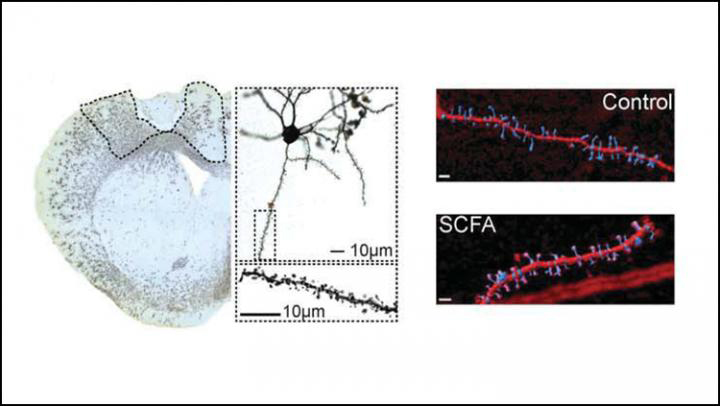
The researchers added the acids to the drinking water of mouse models for four weeks before inducing a stroke. The mice that drank the fatty acid water experienced a better stroke recovery compared to the control mice, including reduced motor impairment and increased spine growth on dendrites, a crucial memory structure.

Post-stroke neuronal plasticity is altered by short-chain fatty acid treatment (credit: Sadler et al., JNeurosci 2019).
Additionally, the team found that fatty acid-supplemented mice expressed more genes related to microglia, the brain’s immune cells. The researchers suggest that microglial activity could be responsible for increasing dendritic spines and improving stroke outcome. This relationship indicates that short chain fatty acids may serve as messengers in the gut-brain connection by influencing how the brain responds to injury.
The study’s authors write that they “identified that this effect was mediated via circulating lymphocytes on microglial activation. These results identify short chain fatty acids as a missing link along the gut-brain axis and as a potential therapeutic to improve recovery after stroke.”
The results were published in JNeurosci.