Changing stroke rehab and research worldwide now.Time is Brain! trillions and trillions of neurons that DIE each day because there are NO effective hyperacute therapies besides tPA(only 12% effective). I have 523 posts on hyperacute therapy, enough for researchers to spend decades proving them out. These are my personal ideas and blog on stroke rehabilitation and stroke research. Do not attempt any of these without checking with your medical provider. Unless you join me in agitating, when you need these therapies they won't be there.

What this blog is for:

My blog is not to help survivors recover, it is to have the 10 million yearly stroke survivors light fires underneath their doctors, stroke hospitals and stroke researchers to get stroke solved. 100% recovery. The stroke medical world is completely failing at that goal, they don't even have it as a goal. Shortly after getting out of the hospital and getting NO information on the process or protocols of stroke rehabilitation and recovery I started searching on the internet and found that no other survivor received useful information. This is an attempt to cover all stroke rehabilitation information that should be readily available to survivors so they can talk with informed knowledge to their medical staff. It lays out what needs to be done to get stroke survivors closer to 100% recovery. It's quite disgusting that this information is not available from every stroke association and doctors group.

Showing posts with label alcohol. Show all posts

Sunday, July 26, 2026

Restricted Eating Windows Aid Cognitive Function


Do you prefer your doctor, hospital and board of director's incompetence NOT KNOWING? OR NOT DOING? Your choice; let them be incompetent or demand action!

I basically do one meal a day, 4-5 pm. That calorie restriction allows me to consume alcohol at my social connections. There will be no naysaying of my habits!

Restricted Eating Windows Aid Cognitive Function

Summary: A pilot clinical trial suggests that combining time-restricted eating with calorie reduction yields cognitive benefits for older, overweight, or obese women beyond weight loss alone.

The six-month trial evaluated 47 women aged 50 to 79. While both groups lost an average of 15 pounds via a daily 500-calorie deficit, participants who restricted their eating to an 8 to 9 hour daily window demonstrated significant improvements in spatial planning and problem-solving compared to those adhering to a standard 12-hour window.

The findings indicate that aligning nutrient intake with circadian rhythms may protect executive function and spatial memory in populations at elevated risk for dementia.

Key Facts

  • Target Cohort Parameters: The pilot study enrolled 47 women aged 50 to 79 classified as overweight or obese, a demographic with elevated statistical risk for cognitive decline and Alzheimer’s disease.
  • Caloric Deficit Baseline: All trial participants underwent nutritional counseling to maintain a continuous 500-calorie daily deficit over a six-month intervention period, achieving an average weight loss of approximately 15 pounds across both arms.
  • Eating Window Protocol: The time-restricted eating group constrained consumption to an average window of 8.2 hours per day (typically 10:00 AM to 6:00 PM), stopping food intake at least 4 hours prior to sleep, while the control group maintained a standard 12.3-hour eating window.
  • Selective Cognitive Gains: Participants in the restricted window cohort showed statistically significant improvements in spatial planning and problem-solving tests, along with a trend toward fewer errors on learning and memory tasks.
  • Cognitive Domain Specificity: Time-restricted eating did not produce significant differences in multitasking or reaction time tests, pointing toward domain-specific executive function benefits.

Source: American Society for Nutrition

Results from a small clinical trial suggest it may be possible to reduce your risk of dementia by eating during fewer hours of the day. The pilot study, which involved a weight-loss program for older women with overweight or obesity, showed modest cognitive improvements in those who limited their daily eating window instead of just reducing their calorie intake.

“Losing weight alone will ward off some of the aging-related cognitive decline, and these data suggest that there may be additional benefits if you stop eating 4 hours prior to going to sleep and reduce food intake to 8-9 hours per day, compared to the usual eating window of 12 hours per day,” said Sue Shapses, PhD, RD, DFASN, professor at Rutgers University and Rutgers-RWJ Medical Center, the study’s Principal Investigator.

Shapses’ group will present the findings at NUTRITION 2026, the flagship annual meeting of the American Society for Nutrition, held July 25–28 in National Harbor, Maryland, just outside Washington, D.C.

Alzheimer’s disease and other forms of dementia have become more prevalent as populations age, and women and people who are overweight or obese tend to face a higher likelihood of developing these conditions. Diet and other lifestyle factors have been linked to dementia risk, but few studies have examined whether modifying these factors can reduce that risk.

The trial enrolled 47 women aged 50-79 who were overweight or obese. All participants were counseled to reduce their calorie intake by 500 calories per day. Twenty-six participants were asked to restrict their eating to a window of less than 9 hours per day, while the rest maintained a typical eating window of about 12 hours per day. In the time-restricted eating group, participants generally ate only between 10 a.m. and 6 p.m., with an average daily eating window of 8.2 hours, compared to 12.3 hours per day on average among those asked to maintain the standard eating window.

After six months, participants had lost about 15 pounds, on average, which was about the same in both groups. Compared with participants who maintained a 12-hour eating window, those who consumed food for only 8-9 hours per day had significant improvements on spatial planning and problem-solving tests at the end of the weight-loss program. They also showed a trend toward fewer errors on memory and learning tests, but there was no significant difference in performance on multitasking or reaction time tests. 

“There was a modest effect of time-restricted eating to improve spatial planning and problem-solving and on reducing errors related to memory and learning,” said Shapses. “These outcomes suggest a better ability to remember information during everyday tasks and reducing mistakes related to memory, attention and problem-solving. Reductions in the eating window predicted greater improvements.”

The researchers said that further studies would be needed to confirm the findings in a larger group of participants. They also plan to investigate mechanisms that might explain the possible benefits of time-restricted eating, such as the interactions between circadian rhythm, nutrient-sensing pathways, inflammation and metabolic health.

Key Questions Answered:

Q: How did time-restricted eating differ from standard weight loss in this study?

A: While both groups lost equal weight (around 15 pounds) by cutting 500 calories daily, participants who ate within an 8 to 9 hour window gained additional cognitive benefits in spatial planning and problem-solving that were not seen in the standard 12-hour eating group.

Q: What specific eating schedule was used in the time-restricted group?

A: Participants in the time-restricted group ate between 10:00 AM and 6:00 PM (an average window of 8.2 hours per day), effectively stopping food intake at least four hours before going to sleep.

Q: What biological mechanisms might explain these cognitive improvements?

A: Researchers suggest that narrowing the eating window aligns nutrient intake with natural circadian rhythms, modulating nutrient-sensing pathways, reducing systemic inflammation, and improving overall metabolic health in ways that directly support brain function.

Editorial Notes:

  • This article was edited by a Neuroscience News editor.
  • Journal paper reviewed in full.
  • Additional context added by our staff.

About this neurotech and memory research news

Author: Nancy Lamontagne
Source: American Society for Nutrition
Contact: Nancy Lamontagne – American Society for Nutrition
Image: The image is credited to Neuroscience News

Original Research: The findings will be presented at NUTRITION 2026

Friday, July 24, 2026

6 Common Habits That Are Prematurely Aging Your Brain


6 Common Habits That Are Prematurely Aging Your Brain

Youth isn’t just skin deep; like our bodies, our brains can age more or less depending on our lifestyles, habits, and diets. Moreover, keeping our brains youthful seems far more important than a few smile lines, right? Fortunately, there are relatively easy ways to slow the brain’s aging process and foster a healthier mind. By understanding common habits that can prematurely age your brain, you can make positive changes to better control your health and overall well-being.

You Overindulge in Alcohol

(Sunday is music at Red Cedar, Tuesday is music at Moriarties, Thursday is trivia at Moriarties; all are bars, so alcohol is involved, there will be no condemnations of that.) All part of my plan to exponentially expand my social connections to prevent dementia. Alcohol will be involved and there will be no naysaying of that. 

Having a glass of wine with a friend or a cocktail at a birthday party is undoubtedly a fun way for many of us to socialize and celebrate. Alcoholic beverages are so ingrained in our culture that many don’t think twice about indulging in a few during a night out, but here’s why you should forgo your weeknight beers or glasses of wine for something non-alcoholic. Alcohol is one of the most significant components of premature aging of the brain. 

According to the Alzheimer’s Society, over time, drinking too much alcohol causes brain cells to die, literally shrinking the brain tissue. With fewer brain cells available to carry messages and perform tasks, daily life becomes more difficult. This can happen from drinking regularly or from drinking more than the recommended daily limit. However, by understanding the importance of moderation, you can take control of your brain health. The recommended daily alcohol limits are one standard drink for women and two for men. A standard drink is typically equivalent to a 12-ounce beer, a 5-ounce glass of wine, or a 1.5-ounce shot. The weekly limits are seven and fourteen, respectively.

You Stay in All the Time

(Sunday is music at Red Cedar, Tuesday is music at Moriarties, Thursday is trivia at Moriarties; all are bars, so alcohol is involved, there will be no condemnations of that.) 

Passing on a night out is fine. Everyone needs a rest or a mental health break occasionally. But don’t skip out too often. Studies have found that not having enough social interaction can age your brain. This idea is supported by studies of Blue Zones, that is, communities worldwide whose residents most often live to be 100. One of the common factors between all these communities is that socializing is a vital part of their culture, suggesting that it helps them live longer.

Furthermore, a recent study published in the Frontiers in Aging Neuroscience journal found that social isolation and loneliness were associated with poor cognitive aging. So, whether it is a game night at a friend’s house, a family dinner, or a big event, push yourself to say “yes” to spending time with loved ones. You’ll have fun, and these social interactions will also benefit your brain.

You Love Junk Food

Nope. 

What’s your junk food Achilles’ heel? Everyone has one — fried foods, sodas, candies, and chips are common culprits. Unfortunately, kicking a junk food habit is tricky, mainly because it’s so accessible while you’re on the go. But here’s why you might want to rethink your daily drive-thru habits. Neuroscientist Dr. Amy Reichelt explains that junk food is addictive because it activates the reward system in our brains and releases dopamine, making us feel good — we love eating tasty treats. However, overly sweetened and fatty foods are bad for the brain.

Dr. Reichelt says that high levels of sugar and fats can inflame the brain, damaging brain cells. One study showed that just five days of eating sugary sweets caused measurable brain inflammation. Damage to the brain’s hippocampus has also been reported, which can lead to memory loss and inhibited learning capabilities. Lastly, the inflammation can hinder the creation of new neurons in the brain, which further ages it. When choosing your meals and snacks, remember you’re fueling your body and brain for years to come, not just for the few minutes it takes you to finish that piece of cake.

You Skip the Gym

 Was pretty regular walking 2-3 hours per day in the woods, but travel and having to head back to Minnesota to take care of my 97 year old Mom has reduced that a bit.

With streaming platforms and social media galore, it’s becoming easier and easier to opt for a night in front of a screen. Unfortunately, this habit of slumping on the couch immediately after work isn’t the healthiest choice. Working out is one of the best things you can do to keep your brain and the rest of your body healthy through all stages of adulthood. A study published in Neurology Clinical Practice revealed the cognitive impact of physical exercise. Physical exercise promotes learning, planning, concentrating, and maintaining a clear, active mind. It also counteracts the effects of cognitive aging. 

Neuropsychologist Aaron Bonner-Jackson, PhD, also emphasizes the importance of physical exercise for the brain. “In general, even in people who are at risk for development of Alzheimer’s or other dementias, can stave off decline in some cases for many years and help people function better.” This is encouraging news for those with genetic predispositions and anyone looking to bolster their brain health. If you were looking for a sign to go to the gym this week, this is it!

You Don’t Switch Up Your Routine

Is your daily routine in the doldrums? Or maybe you haven’t even noticed it was until now. While having a fixed schedule helps many people with their productivity, the mundane can cause premature brain aging. If ripping up your planner sounds like torture, try this. Block off a few hours once or twice a week for “free time” to spontaneously decide what you’ll do. This keeps your brain excited and motivated. According to Harvard Medical School, challenging your brain with new mental exercises helps maintain the health of brain cells and stimulates connection among them. During your newly allotted “free time,” try these Harvard-recommended activities for brain health: try a new hobby, learn a new skill or language, volunteer, or mentor.

You Sacrifice Sleep

 Not since retirement.

Here’s a new sleep motto to promote a healthier brain: Seven hours a day keeps aging at bay. Getting the doctor-recommended amount of sleep per night works wonders on your mental and physical health, and according to new research, it bodes well for long-term brain health, too. A study at the University of Zurich revealed that sleep loss can cause changes to the brain that would typically be age-related.

However, after a full night’s sleep, the same participants saw their brain’s estimated “age” change again, suggesting that even one night of missed sleep impacts brain aging tremendously. This is because sleep gives the brain a break. It needs this downtime to cleanse itself of toxins, reorganize, store memories, and form new connections. Without sleep, it can’t function properly. If your sleep habits aren’t up to par, let this be your sign to nail down a nighttime routine and aim to get more rest.


Tuesday, July 21, 2026

How Much Water Should You Drink Daily? Science-Backed Hydration Guide by Super Age


Another protocol for your doctor to have in place to make sure you leave the hospital better than you came in. 

Which means you probably need to be catheterized or diapered immediately in the hospital. There aren't enough nurses to get all their patients safely to the bathroom in time. When I'm traveling, especially on airplanes and buses, I purposely stay dehydrated in order not to need to use the bathroom.

On coffee:

The caffeine in coffee gives it diuretic effects, meaning it causes your body to pass more urine. But these effects are too mild to cause dehydration, especially if you're a regular coffee drinker. Coffee may even be hydrating for some people, because it contains a lot of water.

On alcohol:

For reference, a standard drink—12 ounces of beer, 5 ounces of wine, 1.5 ounces of liquor—has 14 grams of alcohol, according to the National Institute on Alcohol Abuse and Alcoholism [3]. In other words, the alcohol alone in one standard drink can make your body produce a little less than half a cup of pee.

So to calculate; a standard 5 ounce glass of wine produces less than 4 ounces of pee. That doesn't sound like dehydration.  Beer would make even better sense.

 The latest here:

How Much Water Should You Drink Daily? Science-Backed Hydration Guide

Friday, July 17, 2026

Scientists expected one result from alcohol and Alzheimer’s—they found another

 I couldn't tell if this was a good thing or not and there is no point in asking a doctor.

Scientists expected one result from alcohol and Alzheimer’s—they found another

Alcohol may not affect the Alzheimer’s-damaged brain in one single way—instead, its impact appears to depend on which type of brain change is already present, according to new research from Texas A&M University.

The findings complicate the widely held assumption that alcohol simply worsens Alzheimer’s-related decline across the board. Instead, the study found that alcohol interacted with two of the disease’s hallmark features—amyloid-beta plaques and tau tangles—in opposite ways.

Two Proteins, Two Different Reactions

Alzheimer’s disease is marked by two main types of abnormal protein buildup in the brain: amyloid-beta, which forms sticky plaques between brain cells, and tau, which forms tangles inside them. Scientists have long studied both, but rarely examined how alcohol interacts with each separately.

The research team set out to do exactly that. They focused on the corticostriatal circuit, a brain pathway that helps control decision-making and behavioral flexibility—the ability to adjust behavior when circumstances change. This function is often impaired in both addiction and Alzheimer’s disease.

Using animal models representing amyloid-beta pathology and tau pathology separately, the researchers tracked how chronic alcohol exposure changed communication within this circuit.

An Unexpected Reversal

Scientists initially expected alcohol to push each model further in the direction its existing pathology was already headed. Amyloid-beta pathology is typically linked to abnormal increases in brain cell activity, while tau pathology is usually linked to reduced communication between cells. The researchers therefore predicted alcohol would increase circuit activity in the amyloid-beta model and decrease it in the tau model.

Instead, they found the opposite. In animals with amyloid-beta pathology, alcohol reduced communication in the corticostriatal circuit. In animals with tau pathology, alcohol increased it. The same substance produced reversed effects depending on which type of pathology was present.

“The key point for non-experts is not that our study proves alcohol causes Alzheimer’s disease,” the researchers told Newsweek, in a joint statement. “Rather, it suggests that alcohol can meaningfully affect vulnerable brain circuits, and that those effects depend on which Alzheimer’s-related changes are already present. People who are concerned about their brain health or Alzheimer’s risk may wish to be cautious about alcohol and follow their doctor’s advice.

(This will be your doctor's advice; NO thinking required! 

Safest level of alcohol consumption is none, worldwide study shows)

“More broadly, our findings raise new questions about how alcohol, Alzheimer’s-related brain changes, and the brain’s immune responses influence one another—and how alcohol might shape brain-circuit function and the progression of the disease.”

Why It Matters

The findings add to growing evidence that Alzheimer’s disease is not one uniform condition. Differences in disease stage, the specific pathology involved, genetics and lifestyle factors may all shape how a person’s brain responds to outside influences such as alcohol.

That distinction could eventually matter for how doctors think about risk. A blanket warning about alcohol and dementia may be too simple, the researchers suggest, if the underlying brain pathology changes how alcohol acts on neural circuits in the first place.

Dr. Amy Swift, psychiatrist and deputy chief medical officer at Silver Hill Hospital, told Newsweek: “Integrating these nuanced insights into clinical decision-making may be particularly valuable for patients who continue to struggle with alcohol use after receiving a diagnosis of Alzheimer’s disease and related dementia. As our understanding of the underlying mechanisms evolves, treatment approaches should likewise adapt to reflect these biological and phenotypic differences, ultimately supporting more individualized, evidence-informed patient care.”

Reference

Huang, Y., Xie, X., Huang, Z., Gangal, H., Chen, R., Wang, X., Li, J., Wang, J. (2026). Chronic alcohol exposure produces pathology-dependent corticostriatal circuit remodeling in Aβ- and tau-based mouse models of Alzheimer’s disease. Neuropharmacology. Chronic alcohol exposure produces pathology-dependent corticostriatal circuit remodeling in Aβ- and tau-based mouse models of Alzheimer’s disease – ScienceDirect

Contact Newsweek editors on this story: Kara Dolman and Emma Lee-Sang

Related Articles

Start your unlimited Newsweek trial

Thursday, July 16, 2026

Helping Men Build an Action Plan for a Better Midlife, Starting with Fun by Super Age


Well, at age 50 I had my stroke and the result of that is making me happy for the rest of my life.  Got divorced at age 58, fired at age 56. All leading to moving to Michigan and finding lots of new friendships.


(Life is definitely better as I age, I got divorced enhancing my happiness immeasurably. I'm retired and comfortably well off. And healthy as I can be post stroke. I'm going to live a long time yet.)

People really need to start listening to and repeating the Ani DeFranco song. I'm happy.
"If Yr Not"
If you’re not, if you’re not
If you’re not getting happier as you get older
Then you’re fuckin’ up

And of course this!

Men must drink with male friends twice a week to stay healthy, study finds

 Do not bring this to your doctor's attention, you don't want to be responsible for an exploding head.

Helping Men Build an Action Plan for a Better Midlife, Starting with Fun

Saturday, July 11, 2026

Alcohol Alters Brain Flexibility Based on Hidden Dementia Markings

 Ask your competent? doctor for the EXACT LIMITS on your alcohol consumption if you're doing it(like me) to increase your social connections and thus prevent dementia! NO answer or just a blank stare; INCOMPETENCE! Fire them!

Alcohol Alters Brain Flexibility Based on Hidden Dementia Markings

Summary: A new study focused on the corticostriatal circuit, a critical neural pathway governing decision-making, goal-directed behavior, and behavioral flexibility. Using animal models representing isolated features of the disease, the team discovered that alcohol dramatically reduces communication in the presence of amyloid-beta, but significantly amplifies circuit communication in the presence of tau. This unexpected divergence proves that everyday exposures can interact with pre-existing biological conditions in entirely non-linear ways.

Key Facts

  • The Cognitive Overlap: Behavioral flexibility is heavily impaired in both substance addiction and early-stage Alzheimer’s disease. This operational overlap prompted the Wang lab to investigate whether alcohol use alters the specific brain circuits targeted during early dementia progression.
  • The Additive Assumption Upended: Because amyloid-beta pathology naturally causes abnormal spikes in neural activity and tau causes depressed communication, researchers assumed alcohol would act as a simple additive risk factor, pushing each condition further in its existing path. Instead, alcohol triggered the exact opposite pattern.
  • The Amyloid Suppression: In animal models characterized by amyloid-beta accumulation, alcohol exposure severely decreased signaling communication across the corticostriatal pathway.
  • The Tau Amplification: In stark contrast, when applied to models defined by tau protein tangles, alcohol exposure sharply increased signaling communication within the exact same brain highway.
  • Microglia Immune Disruption: Beyond altering circuit-level communication, the study revealed that alcohol actively interferes with microglia, the resident immune cells of the brain. In the amyloid-dominated models, alcohol disrupted the microglia’s ability to clean up and respond to toxic amyloid buildup.
  • Rejecting Uniform Profiles: These findings emphasize that Alzheimer’s disease is not a uniform condition. Because human patients carry completely different ratios of amyloid and tau depending on their genetics, lifestyle, and disease stage, a person’s neurological response to alcohol will vary significantly based on their unique internal pathology.

Source: Texas A&M

Alcohol use has been associated with an increased risk of cognitive decline and dementia. But new research from the Texas A&M University Naresh K. Vashisht College of Medicine at Texas A&M Health suggests the relationship between alcohol and Alzheimer’s disease is more complicated than previously thought.

Instead of affecting all Alzheimer’s-related brain changes in the same way, alcohol interacted differently with amyloid-beta-related and tau-related pathology in animal models, two key pathological processes involved in Alzheimer’s disease.

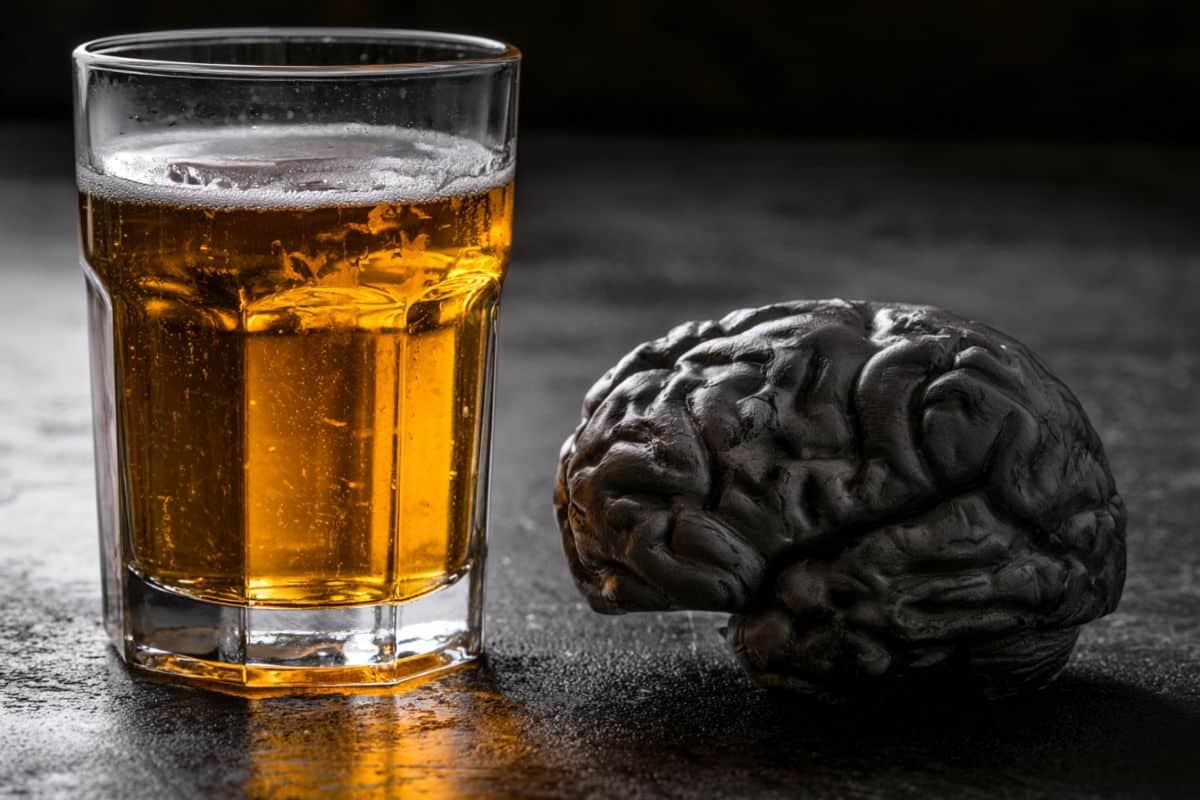
This shows a drink and a brain.

Alcohol exposure triggers opposite signaling behaviors within the brain’s corticostriatal circuit depending on the presence of amyloid-beta or tau protein hallmarks, shattering the long-standing medical assumption that lifestyle risk factors induce a uniform additive effect on dementia progression. Credit: Neuroscience News
The study was led by postdoctoral research associate Dr. Yufei Huang in the lab of Dr. Jun Wang, professor in the Department of Neuroscience and Experimental Therapeutics. The researchers focused on how alcohol affects brain circuits that are important for behavioral flexibility, or the ability to adjust behavior when situations change. This ability often becomes impaired in both addiction and Alzheimer’s disease.

“We started thinking about whether the same circuits involved in flexibility and adaptation might also be important in Alzheimer’s disease,” Huang said.

The team studied a brain circuit called the corticostriatal circuit, which helps control decision-making and behavioral flexibility. When this circuit does not work properly, people may struggle to adapt to new information or changing environments.

To test the effects of alcohol, the researchers used animal models that represent different Alzheimer’s-related pathological features. One model was based on amyloid-beta, a protein that forms plaques in the brain. The other was based on tau, a protein that forms tangles inside brain cells.

What they found surprised them.

Alcohol affected communication differently in the corticostriatal circuit, a major neural pathway involved with goal-directed behaviors. In animal models with amyloid-beta pathology, alcohol reduced communication in the circuit. In those with tau pathology, alcohol increased communication in the same circuit. In other words, the same exposure led to opposite effects depending on the type of Alzheimer’s-related change present.

“This finding was a complete surprise to us,” Huang said. “We expected alcohol to worsen both conditions in a similar way, but that was not what we saw.”

The researchers explained that amyloid-beta and tau affect the brain differently. Amyloid-beta pathology is often associated with abnormal increases in neural activity, whereas tau pathology is frequently linked to decreased communication between brain cells.

Based on these known differences, the team initially expected alcohol to push each model further in its existing pathological direction—increasing circuit communication in the amyloid-beta model and decreasing it in the tau model. Instead, alcohol produced the opposite pattern, reducing communication in the amyloid-beta model while increasing it in the tau model.

“The results were almost the opposite of what we expected,” Huang said. “To us, this highlights an important principle in biology: Combining two risk factors does not always produce a simple additive effect.”

The study adds to a growing understanding that Alzheimer’s disease is not a single, uniform condition. Different people may have different combinations of disease stage, pathology, genetics and lifestyle factors, which could influence how the brain responds to outside factors such as alcohol.

“This is important because Alzheimer’s disease is not a uniform condition,” Huang said. “People may differ in disease stage, type of brain changes, genetics and lifestyle factors.”

The study also highlights an unexpected link between Alzheimer’s research and addiction science. The Wang lab has long studied how substances like alcohol affect brain circuits involved in learning and decision-making. Those studies showed that substance use can lead to long-term changes in brain flexibility, which is also affected early in Alzheimer’s disease.

That overlap led researchers to ask whether alcohol might also influence Alzheimer’s-related brain changes.

Beyond effects on brain signaling, the study also found that alcohol may interfere with immune cells in the brain, especially in the amyloid model. These immune cells, called microglia, help maintain brain health and respond to disease-related changes such as amyloid accumulation.

“Alcohol not only altered brain circuit function but also appeared to disrupt immune cell responses in the brain,” Huang said. “This may be one way alcohol contributes to Alzheimer’s-related brain dysfunction.”

While the study was done in animal models, the researchers say the findings raise important questions for human health. Alcohol may not affect everyone with Alzheimer’s risk in the same way. People who already have early disease-related brain changes, or who carry genetic risk factors, may respond differently to alcohol exposure.

The team hopes future studies will look at alcohol use in people alongside brain biomarkers such as amyloid, tau and inflammation markers. This could help clarify whether alcohol has different or stronger effects in people who are already in the early stages of Alzheimer’s disease.

For now, the study adds to a growing understanding that brain health is shaped by a combination of biology, environment and lifestyle. Alcohol, rather than having a single effect on the brain, may interact with existing conditions in ways that are more complex than once thought.

Ultimately, the researchers say the goal is not only to understand Alzheimer’s disease better, but also to better understand how everyday exposures may shape brain health over time.

Funding: This research was supported by funding from the National Institute on Alcohol Abuse and Alcoholism (NIAAA/NIH; U01AA025932, R01AA027768, and R01AA030293) and the Texas A&M University Division of Research Targeted Proposal Teams (TPT) funding program.

Key Questions Answered:

Q: Why did scientists expect alcohol to affect amyloid-beta and tau proteins in the exact same way?

A: Traditionally, air pollution, high blood pressure, and alcohol use have been treated as generic risk factors that simply worsen brain health across the board. Because both amyloid plaques and tau tangles are toxic to brain tissue, researchers naturally assumed that adding alcohol to the mix would act like pouring gasoline on a fire, speeding up the damage uniformly. Discovering that alcohol actually dials down brain communication in one model while winding it up in the other was a complete biological surprise.

Q: What is behavioral flexibility, and why is this specific brain circuit so important?

A: Behavioral flexibility is your brain’s ability to smoothly change its strategy or choices when your environment shifts. The corticostriatal circuit is the primary brain highway that controls this decision-making process. When this circuit is damaged or altered, individuals get “stuck” in repetitive loops and struggle to process new information. Because this flexibility breaks down very early in both alcohol addiction and Alzheimer’s disease, understanding how they intersect is crucial to protecting adult cognitive health.

Q: Does this mean alcohol could actually be good for certain types of Alzheimer’s patients?

A: Absolutely not. While alcohol caused an unexpected surge in communication within the tau model, an abnormal spike in signaling can be just as toxic and damaging to brain networks as a drop in communication. Dr. Yufei Huang stresses that the real takeaway is that combining two different health risks doesn’t produce a simple, predictable outcome. Instead of showing that alcohol is beneficial, the study proves that everyday lifestyle exposures interact with our unique internal biology in highly complex, unpredictable ways.

Editorial Notes:

  • This article was edited by a Neuroscience News editor.
  • Journal paper reviewed in full.
  • Additional context added by our staff.

About this Alzheimer’s disease research news

Author: Laura Tolentino
Source: Texas A&M Health
Contact: Laura Tolentino – Texas A&M Health
Image: The image is credited to Neuroscience News

Original Research: Open access.

Chronic alcohol exposure produces pathology-dependent corticostriatal circuit remodeling in Aβ- and tau-based mouse models of Alzheimer’s disease” by Himanshu Gangal, Jianrong Li, Jun Wang, Ruifeng Chen, Xuehua Wang, Xueyi Xie, Yufei Huang, Zhenbo Huang. Neuropharmacology
DOI:10.1016/j.neuropharm.2026.111069

Wednesday, July 8, 2026

Alcohol’s Health Myth Is Over. How to Tell Patients


 I'm not concerned. What about all this? Your competent? doctor won't do a bit of thinking, just state; no alcohol!

Men must drink with male friends twice a week to stay healthy, study finds

 Do not bring this to your doctor's attention, you don't want to be responsible for an exploding head.

But what if you are using Guinness for blood thinning?

Guinness could really be good for you

A pint of the black stuff a day may work as well as a low dose aspirin to prevent heart clots that raise the risk of heart attacks.

Don't do this on your own, you know how deadly even one glass of alcohol is.

So I'm looking at this 107 year old drinking 3 liters of wine a day and want to emulate him. Does your doctor have any proven scientific reason not to do this?

Here is what your doctor will use, no thinking required:

Safest level of alcohol consumption is none, worldwide study shows


The latest here:

Alcohol’s Health Myth Is Over. How to Tell Patients

or nearly 30 years, the media and many physicians promoted the belief — fueled by the French paradox and bias-ridden observational studies — that a drink or two a day could be good for many adults.

Now, better-designed research has uncorked a new truth: Even one drink a day can raise the risk for cancer, cardiovascular problems, liver disease, and early death. The government-commissioned Alcohol Intake and Health Study, published in June, found a level of drinking once considered potentially protective — a glass of red wine with friends, a beer on a summer night, a brunch-time cocktail — have no meaningful health benefits.

The study joins a growing body of research presenting physicians with a challenge: How to explain to patients, even light drinkers, that older studies were flawed, and the healthiest drink is none at all.

“The science is evolving in front of our eyes. That can be deeply unsettling, but it’s an opportunity to engage our patients in the conversation,” said oncologist Noelle LoConte, MD, an associate professor at the University of Wisconsin School of Medicine and Public Health in Madison, Wisconsin, and lead author of the American Society of Clinical Oncology’s most recent statement on alcohol and cancer.

Key Points
  • Newer data: even 1 drink/day ↑ cancer, CV, liver disease, and all-cause mortality risk.
  • No meaningful health benefit found for red wine/light-moderate alcohol.
  • Prior J-shaped curve likely biased by sick-quitters + healthier drinker confounding.
  • Alcohol counseling is impactful; explicit clinician discussion ↑ awareness of cancer risk.
  • Patient discussions: nonjudgmental, collaborative, motivational interviewing; cancer risk = zero alcohol.
How does alcohol cessation affect blood pressure longitudinally?
Which confounders bias moderate alcohol observational studies?
What is alcohol's dose-response cancer risk threshold?

Hearing the message from a physician makes a difference. A 2021 study of 4549 US adults found just 44% remembered a clinician talking with them about alcohol’s harms in the past year, and only 35% thought there was a link between drinking and cancer risk. That rose to 52% when their doctor explicitly discussed it. Silence is risky: Cardiology patients who thought alcohol was heart healthy were 67% more likely to drink excessively, while adults who viewed alcohol as neutral or even beneficial for the heart were less than half as likely to recognize its cancer risks.

“We know that physicians’ recommendations about alcohol are extremely impactful,” LoConte said. “We should be talking with patients about alcohol at least periodically.”

Sick Quitters and Unhealthy Abstainers: The Bias in Alcohol Studies

On a Sunday night in 1991, America watched as 60 Minutes correspondent Morley Safer raised a glass of red wine at a French bistro, suggesting it explained why France had lower heart disease rates despite a high-fat diet. Within a year, US red wine sales rose 40%. Meanwhile, large epidemiologic studies — including the Framingham Study in 1983 and the Physician’s Health Study in 2000 — found a reduced risk for coronary artery disease with light-to-moderate drinking. By 2011, a major review of 84 studies concluded that the debate was essentially over.

But doubts were emerging, and for good reason: The widely reported “J-shaped curve” — graphs showing higher heart risks for abstainers, lower risks for moderate drinkers, and highest risks for heavy drinkers — turned out to be wrong.

Abstainer groups often included many “sick quitters” — former drinkers who’d stopped due to health problems — and never-drinkers who avoided alcohol because of life-long poor health, reported Canadian researchers in a 2016 analysis. Meanwhile, low-to-moderate drinkers typically enjoyed other major health advantages like higher incomes, healthier diets, more exercise, and less obesity, according to a 2023 follow-up analysis. Adjusting for these biases reduced alcohol’s survival protection to a statistically meaningless 3%.

Suggestions that light drinking benefits cholesterol or blood pressure have also lost out to newer data. In a 2025 Japanese study of 58,943 adults, light-to-moderate drinkers who quit saw blood pressure fall by their next annual check-up. Slight changes in cholesterol are not clinically significant, noted the American College of Cardiology.

“The science doesn’t lie — alcohol isn’t good for us,” said Douglas Spotts, MD, a family physician in Mifflinburg, Pennsylvania, and spokesperson for the American Academy of Family Physicians. “Physicians and scientists know enough now to confirm that the old adage about red wine is nothing more than a myth. No amount of alcohol is safe — full stop.”

Talking to Patients About Alcohol

Recent trends may be on the physician’s side: alcohol use among US adults dropped to 54% in a July 2025 Gallup poll, the lowest in its 90-year-history. But alcohol remains deeply embedded socially. “Alcohol helps people socialize,” said LoConte. “It’s culturally normed. Adults enjoy it. These all make it hard for doctors to bring up with patients.”

Cardiologist Columbus Batiste, MD, agrees. “We get the head nod of ‘Ok, Doctor’ just to appease us, and you know the patient will do something completely different when they leave,” said Batiste, Chief of Cardiology at Kaiser Permanente in Moreno Valley, California.

Finding the right approach to discuss alcohol could be lifesaving, Batiste said. Acknowledging flawed older research starts with a positive, nonjudgmental attitude.

1. Shift the Focus From ‘Harm’ to ‘Health Promotion’

Flip the script from ‘alcohol is bad’ to a discussion of achieving health goals. “If the question is ‘How do I achieve health?’ then we’re talking about whether alcohol consumption is health promoting, which is a different question than ‘Will it harm you?’” Batiste said.

That moves alcohol into a healthy lifestyle context. “Alcohol is one component, along with a healthy diet, exercise, stress relief,” Batiste said. “When we look at a recipe for life, for health, sometimes those small ingredients matter a lot — a pinch of salt, a pinch of baking powder. It’s the same with alcohol and health.” If patients are relying on a few drinks to relax, feel comfortable in social situations, or numb physical or psychological pain, it’s time to talk about healthier options, he added.

2. Put the Patient in the Driver’s Seat

Batiste recommends framing the dynamic collaboratively. He tells patients: “You’re the CEO of your body. If you want it to flourish, here’s my advice as your professional advisor. You have the right to accept, veto, or ask for more supporting information.” The American Heart Association recommends this approach for supporting healthy lifestyle changes for patients — beginning with asking the patient for permission to give advice; providing clear, specific, and customized advice that increases patient knowledge about their health; and then asking the patient what actions they want to take.

3. Use Motivational Interviewing and Tracking

Rather than simply telling patients to drink less, experts said it can be more effective to start with a conversation about their habits and concerns. LoConte recommends asking whether patients are worried about their drinking and encouraging them to track when and how much they drink before discussing the results at a follow-up visit. While reducing alcohol is a positive step, she said it’s important to be clear about the evidence: “The number is zero for cancer.”

That doesn’t mean every conversation should sound the same. Batiste said recommendations should be tailored to a person’s overall health and drinking patterns. Someone who already has cardiovascular disease, heart failure, or an irregular heartbeat may face different risks than someone who drinks occasionally. But even for lighter drinkers, he said, patients should understand that “even light alcohol on a consistent basis could be harmful” over time.

4. Actively Debunk Common Patient Myths

Mistaken beliefs about alcohol include “red wine is healthier”, “beer is safer because it’s lower in alcohol by volume”, or “drinking is only a problem if you have an addiction” and “My friend’s aunt drank whiskey every day and lived to 100.” “I see patients every week with these beliefs,” LoConte said.

5. Confront ‘Nutritional Whiplash’ Directly

Experts said it’s worth acknowledging that patients may feel confused by yet another shift in health advice. Explaining that scientific recommendations evolve as stronger evidence emerges can help put the change in context.

“As we saw with COVID, seeing science as iterative, the back-and-forth process can be deeply unsettling,” LoConte said. “It’s an opportunity to talk about research and health.” She also reminds patients that alcohol is different from many foods that seem to swing in and out of favor. “Alcohol isn’t like those,” she said. “It’s always been a Class 1 carcinogen-like ultraviolet light, tobacco, and the human papillomavirus. And now, we’re solidifying the risk.”

Batiste takes a similar approach by encouraging patients to explore the evidence themselves. He shows them how to find trustworthy information online — including using AI tools that surface authoritative sources — and revisits the conversation at future appointments. “If I tell people they can’t do something, it will drive them toward doing it,” he said. “I try to give them the why and show them where to find more good information.”

The experts cited in this article had no relevant disclosures.