Changing stroke rehab and research worldwide now.Time is Brain! trillions and trillions of neurons that DIE each day because there are NO effective hyperacute therapies besides tPA(only 12% effective). I have 523 posts on hyperacute therapy, enough for researchers to spend decades proving them out. These are my personal ideas and blog on stroke rehabilitation and stroke research. Do not attempt any of these without checking with your medical provider. Unless you join me in agitating, when you need these therapies they won't be there.

What this blog is for:

My blog is not to help survivors recover, it is to have the 10 million yearly stroke survivors light fires underneath their doctors, stroke hospitals and stroke researchers to get stroke solved. 100% recovery. The stroke medical world is completely failing at that goal, they don't even have it as a goal. Shortly after getting out of the hospital and getting NO information on the process or protocols of stroke rehabilitation and recovery I started searching on the internet and found that no other survivor received useful information. This is an attempt to cover all stroke rehabilitation information that should be readily available to survivors so they can talk with informed knowledge to their medical staff. It lays out what needs to be done to get stroke survivors closer to 100% recovery. It's quite disgusting that this information is not available from every stroke association and doctors group.

Showing posts with label finger pricking. Show all posts

Thursday, May 14, 2026

Could a fingerprick at home flag your Alzheimer's risk? New study says yes

Does your competent? doctor have the EXACT PREVENTION PROTOCOLS  if this is found? Oh NO, they haven't put Bernadette the nuns' method into practice have they? Why Bernadette the nun was able to function quite well even with Alzheimers?

Do you prefer your doctor, hospital and board of director's incompetence NOT KNOWING? OR NOT DOING? Your choice; let them be incompetent or demand action!

Could a fingerprick at home flag your Alzheimer's risk? New study says yes
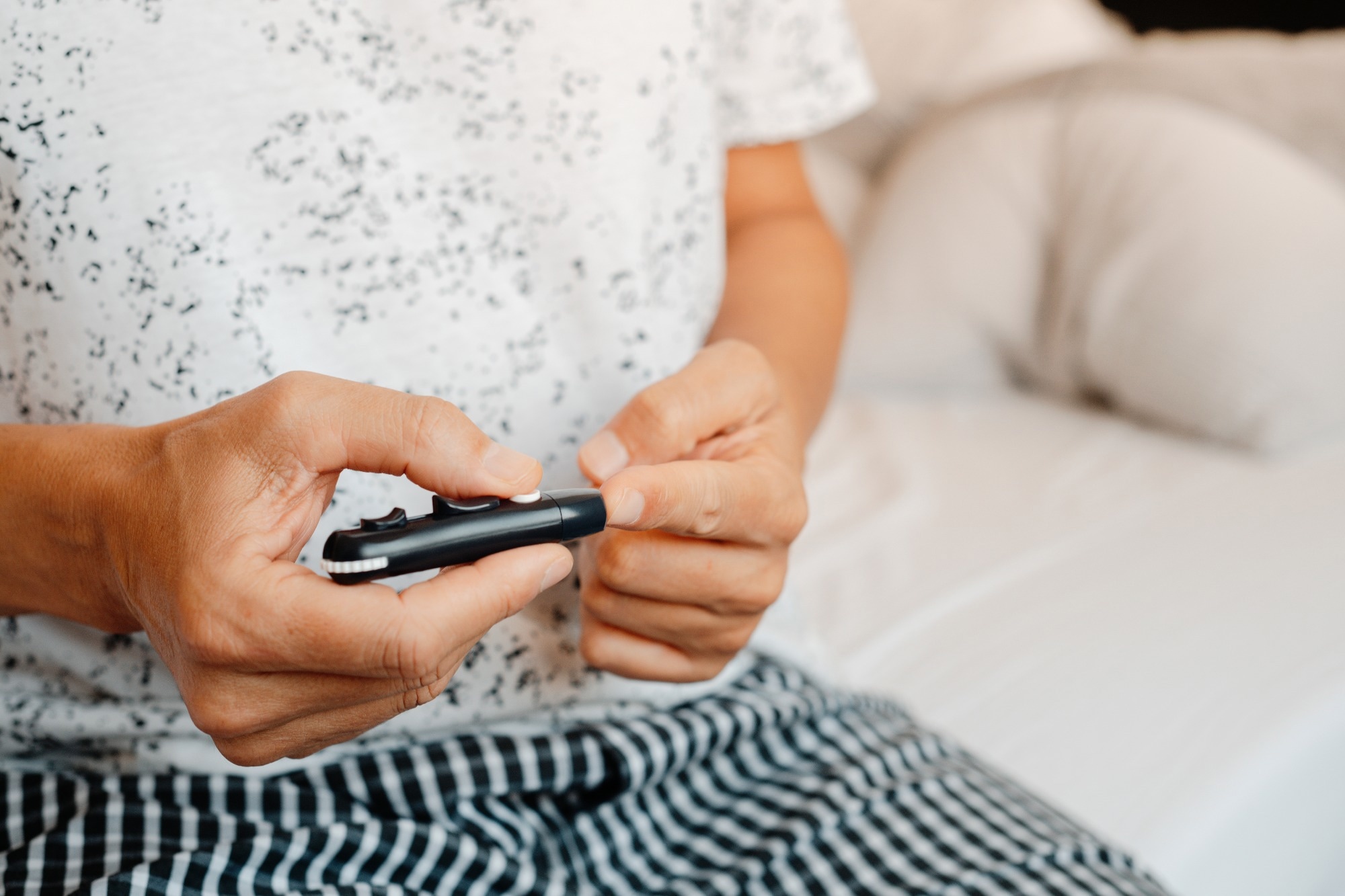
A simple fingerprick taken at the kitchen table and dropped in the post could soon help identify who is most at risk of Alzheimer's disease, long before symptoms tighten their grip. In a new  study, researchers show that self-collected capillary blood, paired with online cognitive tests, matches the accuracy of traditional clinic-based sampling, opening the door to earlier, more equitable, and far more accessible dementia risk screening.

Study: Alzheimer’s Disease blood biomarkers measured through remote capillary sampling correlate with cognition in older adults. Image Credit: nito / Shutterstock

Study: Alzheimer’s Disease blood biomarkers measured through remote capillary sampling correlate with cognition in older adults. Image Credit: nito / Shutterstock

In a recent study published in Nature Communications, researchers found that self-administered fingerprick blood tests measuring plasma phosphorylated tau at amino acid 217 (p-tau217), along with glial fibrillary acidic protein (GFAP), closely aligned with conventional venous blood biomarkers. The markers were also associated with cognitive and functional performance across the Alzheimer's disease (AD) continuum. The findings suggest that combining these capillary blood tests with computerized cognitive assessments could support remote, at-home triage of individuals at risk of AD-related impairment, though the authors emphasize the approach is intended for risk stratification, not diagnosis. High patient acceptability further underscores its potential to improve early detection.

AD places a major burden on individuals, families, and healthcare systems, progressively impairing memory, independence, and quality of life. Despite advances in biomarker research, many people with early cognitive impairment remain outside specialist care, delaying diagnosis and intervention. Blood biomarkers such as p-tau217 and GFAP have emerged as promising tools for detecting AD-related pathology. However, current venous blood testing still requires clinic visits, limiting accessibility and scalability. This underscores the need for scalable approaches that extend risk assessment beyond specialist settings and support earlier identification of high-risk individuals.

Capillary Sampling Study Design

Building on earlier work validating capillary sampling against venous blood and cerebrospinal fluid markers, researchers evaluated whether a self-administered capillary blood test could support scalable triage for AD when collected remotely and returned by post.

The researchers included 174 participants spanning cognitively healthy adults, individuals with mild cognitive impairment (MCI), and patients with mild to moderate AD dementia, though only 28 participants had dementia, which limits the robustness of group-discrimination analyses. They recruited individuals with dementia through primary and secondary care sites across the South-West United Kingdom using established diagnostic criteria. Cognitively healthy individuals were drawn from the Platform for Research Online To investigate gEnetics and CogniTion and ageing (PROTECT-UK) study. The cohort was predominantly white and UK-based, so generalizability to other ethnic, socioeconomic, and healthcare contexts remains unconfirmed.

Using written and video instructions, participants collected fingertip capillary blood samples at home and returned them by post. Additionally, 40 of them provided venous blood samples for comparison of sampling methods. Researchers then quantified GFAP and p-tau217 using ultrasensitive immunoassay platforms (highly sensitive lab tests capable of detecting low levels of these proteins in blood).


Participants also completed a comprehensive assessment of cognition, function, and health status. Using a computerized testing platform developed within the PROTECT study, the team evaluated executive function, attention, and memory through tasks assessing recall, associative memory, reaction speed, verbal reasoning, and working memory.

Further, the team measured functional ability using the Lawton Instrumental Activities of Daily Living (IADL) scale. They then used the informant questionnaire on cognitive decline in older adults (IQCODE) to assess cognitive decline. Participants also provided information on vascular health conditions through structured medical history questionnaires. In addition, they completed an online Likert-scale survey evaluating usability, user experience, and readiness to adopt the at-home sampling method, with caregiver support provided where necessary. The researchers assessed correlations between blood-based biomarkers and cognitive outcomes. Logistic regression models explored associations between biomarker status and vascular risk factors, adjusting for age and sex.

p-tau217 and GFAP Cognitive Findings

The study included 146 cognitively normal individuals and 28 with dementia. Participants had a mean age of 66 years, and 54% were female. Both capillary biomarkers showed significant associations with cognitive performance. Elevated p-tau217 levels were linked to poorer memory, attentional processing, and higher-order cognitive abilities. GFAP was similarly associated with deficits in working memory and executive processing.

Functional findings showed a comparable trend. Elevated p-tau217 levels were associated with both daily functioning and cognitive decline scores, whereas GFAP was linked only to functional ability measures. Both biomarkers also significantly discriminated between participants with and without dementia in receiver operating characteristic (ROC) curve analyses (a standard method for evaluating diagnostic test performance), supporting their role in triage rather than as standalone diagnostic tests, particularly given the modest sensitivity (35%) of the chosen thresholds.

Using predefined thresholds prioritising 85% specificity (favoring few false positives at the cost of missing some true cases), researchers identified distinct at-risk groups. Participants exceeding the biomarker threshold values showed significantly poorer cognitive and functional performance across most domains. A dual-threshold approach combining p-tau217 with episodic memory performance, flagging individuals who scored abnormally on both tests, further refined stratification, identifying a high-risk group comprising 9% of participants with marked impairment and a low-risk group with consistently better performance across measures.

Notably, researchers found minimal overlap between the two biomarkers, with only 6% of participants testing positive for both. GFAP positivity was strongly linked to heart disease (odds ratio 4.14, 95% CI 1.31–13.10), indicating GFAP-positive individuals had roughly four times higher odds of reporting a cardiac history, pointing to a potential association with vascular-related cognitive impairment, while p-tau217 showed no such relationship.

The team also found strong agreement between capillary and venous biomarker measurements (r = 0.71–0.79 across diagnostic subgroups, including cognitively healthy and dementia participants), supporting the validity of the home-based method. Eighty percent of participants completed the test independently, and nearly all (96%) indicated they would be willing to use it as part of routine healthcare, though stated willingness does not necessarily translate to successful independent use, as the 20% requiring assistance demonstrates.

At-Home Alzheimer’s Triage Implications

The findings support capillary p-tau217, particularly when combined with computerized cognitive testing, as a scalable, remote triage tool for identifying individuals at the highest risk of AD-related impairment, while GFAP may provide additional insight into vascular-related cognitive decline.

The study showed strong agreement between capillary and venous biomarkers and validated the use of self-collected home samples, reinforcing the feasibility of this approach outside clinical settings. High patient acceptability further supports real-world implementation. Rather than diagnosing disease, this approach could enable earlier risk stratification and improve clinical pathways. It may also streamline clinical trial recruitment, where screen failure rates in preclinical AD trials currently reach as high as 90%.

Future studies should validate findings in independent and more diverse cohorts, benchmark against amyloid and tau PET imaging, assess longitudinal predictive value, and refine self-testing instructions (since 20% of participants required assistance) to integrate this strategy into primary care and research settings.

Readers should also note that commercial immunoassay platforms were used in this work, and funding and competing-interest disclosures should be reviewed in the original publication.

Journal reference:
  • Corbett, A., Sander-Long, M., Ashton, N.J. et al. (2026). Alzheimer's Disease blood biomarkers measured through remote capillary sampling correlate with cognition in older adults. Nature Communications, 17, 3699. DOI: 10.1038/s41467-026-71448-2, https://www.nature.com/articles/s41467-026-71448-2

Sunday, February 1, 2026

Finger-Prick Blood Test Shows Promise for Early AD Detection

 Does your competent? doctor even know of the need for this test? 

So, EXACT DEMENTIA PREVENTION PROTOCOLS CAN BE INITIATED! NO? So, you DO have an incompetent? doctor? 

You need this prevention!

1. A documented 33% dementia chance post-stroke from an Australian study?   May 2012.

2. Then this study came out and seems to have a range from 17-66%. December 2013.`    

3. A 20% chance in this research.   July 2013.

4. Dementia Risk Doubled in Patients Following Stroke September 2018  

The latest here:

Finger-Prick Blood Test Shows Promise for Early AD Detection

New research provides more evidence that dried blood samples collected from a simple finger prick can be used to measure key biomarkers of Alzheimer’s disease (AD).

In a multicenter study of more than 300 participants, levels of p-tau217 in finger-prick samples closely matched results from standard blood tests, and they could identify AD-related changes in spinal fluid with an accuracy of 86%.

“These findings underscore the potential of dried blood collection and capillary blood as a minimally invasive, scalable approach for AD biomarker testing in research settings. Yet, further refinement of collection and analytical protocols is needed to fully translate this approach to be viable and useful as a clinical tool,” the investigators cautioned. 

For now, “what we have shown is that it’s an extremely useful research tool, and we already have large scale research studies going on, but we don’t envision this anytime soon to be a clinical test,” Nicholas Ashton, PhD, senior director of the Banner Fluid Biomarker Program, Banner Sun Health Research Institute in Sun City, Arizona, told Medscape Medical News.

The study was published online on January 5 in Nature MedicineA Close Match

Blood biomarkers, p-tau217 in particular, have emerged as accurate tools for detecting AD pathology, offering a minimally invasive alternative to PET or lumbar puncture. Yet, standard blood testing still depends on venipuncture, controlled processing, and trained personnel, limiting scalability.

The DROP-AD project is evaluating whether AD biomarkers can be reliably measured from dried blood spot or dried plasma spot, derived from capillary blood obtained via finger prick, for detecting AD biomarkers, including p-tau217, glial fibrillary acidic protein (GFAP), and neurofilament light (NfL).

The current study included 337 participants recruited across seven European centers, spanning cognitively normal individuals, patients with mild cognitive impairment, AD dementia, non-AD dementias, and individuals with Down syndrome. A total of 304 participants provided paired capillary dried plasma or blood spot samples, as well as venous plasma samples.

Levels of p-tau217 in the finger-prick samples closely matched results from standard venous blood samples (Spearman’s rank correlation coefficient = 0.74; < .001).

Dried plasma spot p-tau217 levels increased progressively across clinical disease stages and showed “good accuracy” in predicting CSF biomarker positivity, with an area under the curve of 0.864.

Home-Based Sampling?

The investigators also successfully detected GFAP and NfL from dried blood and plasma spot analysis.

“Both GFAP and NfL showed high concordance between capillary and venous samples, and were similarly associated with cognitive performance and age, reinforcing the validity of these remote sampling methods,” the authors reported.

Notably, the study also demonstrated feasibility in individuals with Down syndrome, a population at high genetic risk for AD for whom venipuncture can be particularly challenging. 

In the subgroup with Down syndrome, capillary biomarker concentrations were higher in those with dementia than in asymptomatic individuals and showed strong agreement with venous plasma levels.

The study also found “high concordance” between supervised and unsupervised blood collections, suggesting that remote or home-based sampling may be feasible.

Not Ready for Clinical Use

The findings build on earlier data from the DROP-AD project, as reported by Medscape Medical News.

“Despite the promise shown, we do not currently recommend the use of dried blood analysis for clinical use, decision-making, or patient management because of observed differences in analytical performance and diagnostic accuracy between capillary-derived and venous blood samples,” the authors cautioned.

Further methodological refinement, standardization, and validation in larger cohorts are required before this approach can be translated into routine clinical practice, they concluded.

Once that happens, Ashton said he could envision a “scenario in the future” where elderly asymptomatic individuals could be sent a dried blood spot card as a “first step in triage.”

“Especially if we get a readout next year, or even this year, that antiamyloid drugs are beneficial to people without symptoms because these individuals are not going to be walking into our clinics in primary care or specialty services because they don’t have objective memory concerns,” Ashton said.

Having an at-home test could help engage asymptomatic people with positive biomarkers in early treatment, he added.

Worth Further Study

Reached for comment, Maria C. Carrillo, PhD, Alzheimer’s Association chief science officer and medical affairs lead, said blood-based biomarkers are “reshaping how we identify, diagnose, and understand Alzheimer’s disease, especially in research settings.”

“Currently, the evidence supports the use of blood biomarkers as one tool of many in a multi-phase diagnostic process in people experiencing changes in memory and thinking abilities. The science is not yet strong enough to recommend blood tests as a standalone diagnostic, nor for their use in people without symptoms,” Carrillo told Medscape Medical News.

The association’s clinical practice guideline provides clear, evidence-based recommendations for when and how blood-based biomarker tests can be responsibly integrated into diagnostic workflows in specialty care, she noted.

Carrillo said the Alzheimer’s Association “agrees with the authors that more research is needed before this [finger-prick] technique can become a suitable tool for clinicians.”

However, the finding that the biomarker results were very similar between the supervised and self-collected blood samples “shows that the idea has merit and is worth further investigation — in a variety of locations and situations, and with much larger and more representative populations — to help ensure that the test results are credible and consistent wherever they are done.”

Summing up, Carrillo said, “The approach described in this new paper points to a future where Alzheimer’s biomarker testing is simple, minimally invasive, widely available, and potentially even self-administered.”

The study had no commercial funding. Ashton reported receiving consultancy and/or speaker fees from Alamar Biosciences, BioArctic, Biogen, Eli Lilly, Neurogen Biomarking, Roche, Spear Bio, Quanterix, and Vigil Neuroscience. A complete list of author disclosures is provided with the original article. Carrillo had no relevant disclosures.

Friday, July 21, 2023

Finger prick test detects blood-based biomarkers of Alzheimer’s disease

With your dementia risk from your stroke you need to have a serious discussion with your doctor on how to prevent dementia once biomarkers are identified. 

Your risk of dementia, has your doctor told you of this?  Your doctor is responsible for preventing this!

1. A documented 33% dementia chance post-stroke from an Australian study?   May 2012.

2. Then this study came out and seems to have a range from 17-66%. December 2013.`    

3. A 20% chance in this research.   July 2013.

4. Dementia Risk Doubled in Patients Following Stroke September 2018 

The latest here:


Finger prick test detects blood-based biomarkers of Alzheimer’s disease

Key takeaways:

  • Researchers collected venous and finger prick blood samples from memory clinic patients and tested for biomarkers of Alzheimer’s disease.
  • Several biomarkers were detected in the finger prick samples.

A finger prick test measured blood-based biomarkers of Alzheimer’s disease and has potential to increase accessibility of testing, according to research at the Alzheimer’s Association International Conference.

“Currently, use of Alzheimer’s blood tests is limited by the need to visit a clinic, administration by trained personnel, and strict time-limited and temperature-dependent delivery and storage procedures,” Hanna Huber, PhD, of the Institute of Neuroscience and Physiology at the University of Gothenburg in Sweden, said in a related release.

diabetes
According to recent research out of Sweden, a provisional finger-prick blood test may increase accessibility and provide an accurate indicator of Alzheimer’s disease. Image: Adobe Stock

Huber and colleagues initiated a pilot study to determine the capability of capillary dry blood spot (DBS) and venous DBS to measure specific biomarkers of neurodegeneration: neurofilament light (NfL), glial fibrillary acidic protein (GFAP) and phosphorylated tau (p-tau181 and p-tau217).

They collected venous and finger prick blood samples, EDTA plasma and neuropsychological measures from 43 memory clinic participants at ACE Alzheimer Center Barcelona and also examined cerebrospinal fluid biomarkers in 23 of those patients.

Researchers prepared 65 L of venous and capillary blood on DBS cards (Noviplex), which were shipped overnight without temperature control or cooling, to Gothenburg, Sweden. Dried blood samples were extracted from the cards, and NfL, GFAP and p-tau181 were measured.

Huber and colleagues used Pearson correlation for analysis of the DBS samples and EDTA plasma.

According to results, capillary DBS GFAP (r = 0.6773; P < .0001) and NfL levels (r = 0.4593; P = .0022) correlated with their counterparts in EDTA plasma. Similarly, venous DBS GFAP (r = 0.7624; P < .0001), NfL (r = 0.6798; P < .0001) and p-tau181 (r = 0.577; P < .0004) significantly correlated with EDTA plasma.

Additionally, both capillary and venous DBS GFAP correlated with amyloid status (r = 0.4305/r = 0.4223; P < .05) and venous DBS NfL and p-tau181 correlated with Mini-Mental State Examination and Clinical Dementia Rating assessments, as well as amyloid (all P < .05).

“A method that allows blood collection at home and that is simple enough to be performed independently, or by caregivers, would increase accessibility of these tests,” Huber said in the release. “It would result in improved early diagnosis and better monitoring of patients considered ‘at risk’ or those who are receiving approved therapies.”

Reference:

Monday, December 25, 2017

Saving a Person From Stroke with a Needle: DEBUNKED

I wrote about this way back in Jan. 2013. Bloodletting was discredited in the late 19th century

Good Samaritans save man from possible stroke in Zamboanga City Jan. 2013

But it obviously needs repeating that this is a complete load of bunk

Saving a Person From Stroke with a Needle: DEBUNKED 

Wednesday, January 2, 2013

Good Samaritans save man from possible stroke in Zamboanga City

This finger pricking is an urban myth.     
It may have started when bloodletting was still in vogue.
the most dangerous one of all is the suggestion that people should not be taken to a hospital until all their symptoms are resolved, on the grounds that 'all the capillaries in the brain will burst on the way to the hospital.
The Neurologica blog debunking this here:
Needle Nonsense for Stroke

http://www.mindanaoexaminer.com/news.php?news_id=20130102095616
The timely response of people around him and the quick arrival of a medical team have saved Wednesday the life of a man who nearly suffered a stroke at a telecom office in Zamboanga City in the southern Philippines.

Joseph Climaco Directo, whose name was identified through his driver's license, was at the office of the PLDT and waiting for his turn to be called by the service representative when he suddenly dropped his phone and began shaking, his muscle was contracting, and mouth salivating.

Directo could hardly moved, his eyes shut closed as other customers alerted the security guards who phoned for an ambulance. Concerned customers took turns and massaging Directo's chest to alleviate his breathing condition until medical help could arrive.

One woman pricked a needle on Directo's finger tip, saying it would help loosen up the pressure of the mans body. But medical experts said it would not help a victim of stroke and could only delay treatment.

Members of Zamboanga�s Emergency Medical Services arrived just in time and examined the man whose blood pressure was at 160. It took about 30 minutes before Directo managed to speak, although he was severely disoriented.

The radio station dzRZ of the Radio Mindanao Network also flashed an emergency broadcast to alert Directo�s family about his condition.

Directo was eventually rushed to the Ciudad Medical for emergency medical treatment. (Mindanao Examiner)