Changing stroke rehab and research worldwide now.Time is Brain! trillions and trillions of neurons that DIE each day because there are NO effective hyperacute therapies besides tPA(only 12% effective). I have 523 posts on hyperacute therapy, enough for researchers to spend decades proving them out. These are my personal ideas and blog on stroke rehabilitation and stroke research. Do not attempt any of these without checking with your medical provider. Unless you join me in agitating, when you need these therapies they won't be there.

What this blog is for:

My blog is not to help survivors recover, it is to have the 10 million yearly stroke survivors light fires underneath their doctors, stroke hospitals and stroke researchers to get stroke solved. 100% recovery. The stroke medical world is completely failing at that goal, they don't even have it as a goal. Shortly after getting out of the hospital and getting NO information on the process or protocols of stroke rehabilitation and recovery I started searching on the internet and found that no other survivor received useful information. This is an attempt to cover all stroke rehabilitation information that should be readily available to survivors so they can talk with informed knowledge to their medical staff. It lays out what needs to be done to get stroke survivors closer to 100% recovery. It's quite disgusting that this information is not available from every stroke association and doctors group.

Showing posts with label Philippines. Show all posts

Friday, May 30, 2025

Iloilo-based hospital sets benchmark in stroke care


This is the whole problem in stroke enumerated in one word; 'care'; NOT RECOVERY!

If your hospital is following this it means they are a failure because they are delivering 'care'; NOT RECOVERY! I would never go to a failed hospital!

YOU have to get involved and change this failure mindset of 'care' to 100% RECOVERY! Survivors want RECOVERY, NOT 'CARE'!

I see nothing here that states going for 100% recovery! You need to create EXACT PROTOCOLS FOR THAT!

ASK SURVIVORS WHAT THEY WANT, THEY'LL NEVER RESPOND 'CARE'! This tyranny of low expectations has to be completely rooted out of any stroke conversation! I wouldn't go there because of such incompetency as not having 100% recovery protocols!

RECOVERY IS THE ONLY GOAL IN STROKE! GET THERE!

Iloilo-based hospital sets benchmark in stroke care
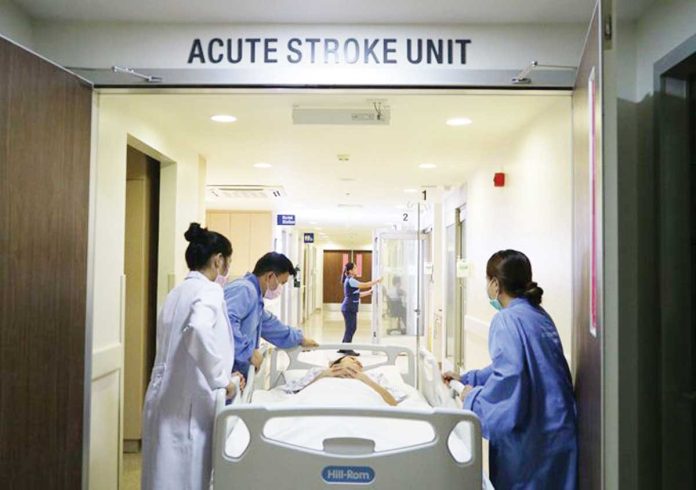
Medical professionals at The Medical City Iloilo swiftly transport a patient into the Acute Stroke Unit, part of the hospital’s internationally recognized emergency care system that earned it a Gold Status from the World Stroke Organization. TMC PHOTO

ILOILO City – A hospital here has set a new standard in emergency stroke care(NOT RECOVERY!), becoming the first in Iloilo to receive the prestigious Gold Status from the World Stroke Organization (WSO) Angels Awards for the first quarter of 2025.

This recognition marks a major milestone in the city’s healthcare system, underscoring The Medical City Iloilo’s adherence to international best practices in stroke management, particularly in response time, clinical protocols, and patient outcomes.

The Gold Status — second only to Platinum and Diamond under the WSO’s tiered recognition program — signals that the hospital has significantly raised the bar for acute stroke care(NOT RECOVERY!) in the region.

The recognition is also seen as a challenge to other hospitals in Western Visayas to invest in quality stroke care(NOT RECOVERY!) and adopt the WSO’s globally benchmarked clinical standards.

The Angels initiative, supported by the European Stroke Organisation and other global partners, aims to drive continuous improvement in stroke care through data-driven performance evaluations.

The Medical City Iloilo’s officials credit the award to the implementation of internationally recommended stroke protocols, including rapid CT imaging upon patient arrival and timely administration of thrombolytic (clot-busting) medication. During the award period, 17 stroke patients were treated under these stringent care pathways.

This award reflects its commitment to providing fast, evidence-based stroke care that can save lives and reduce long-term disability, the hospital said in a statement.

The improvements have not only enhanced patient survival but also reinforced TMC Iloilo’s role as a leader in emergency neurological services.

The formal awarding will take place during the Stroke Society of the Philippines Annual Convention in August, where top-performing hospitals nationwide will be honored./PN

Thursday, August 26, 2021

Current State of Stroke Care in the Philippines

Notice how appallingly bad this is; measuring 'care' NOT RESULTS. Totally useless.  

Business 101: If you don't measure it it is not important, so obviously stroke results are not important. 

“What's measured, improves.” So said management legend and author Peter F. Drucker 

The latest here:

Current State of Stroke Care in the Philippines


ME. V. Collantes1*, Y. H. Zuñiga2, C. N. Granada3, D. R. Uezono4, L. C. De Castillo1, C. G. Enriquez1, K. D. Ignacio1, S. D. Ignacio5 and R. D. Jamora1
  • 1Department of Neurosciences, College of Medicine, Philippine General Hospital, University of the Philippines, Manila, Philippines
  • 2University of the Philippines, Manila, Philippines
  • 3Department of Health, Manila, Philippines
  • 4College of Public Health, University of the Philippines, Manila, Philippines
  • 5Department of Rehabilitation Medicine, College of Medicine, Philippine General Hospital, University of the Philippines, Manila, Philippines

Stroke remains the leading cause of disability and death in the Philippines. Evaluating the current state of stroke care, the needed resources, and the gaps in health policies and programs is crucial to decrease stroke-related mortality and morbidity effectively. This paper aims to characterize the Philippines' stroke system of care and network using the World Health Organization health system building blocks framework. To integrate existing national laws and policies governing stroke and its risk factors dispersed across many general policies, the Philippine Department of Health (DOH) institutionalized a national policy framework for preventing and managing stroke. Despite policy reforms, government financing coverage remains limited. In terms of access to medicines, the government launched its stroke medicine access program (MAP) in 2016, providing more than 1,000 vials of recombinant tissue plasminogen activator (rTPA) or alteplase subsidized to selected government hospitals across the country. However, DOH discontinued the program due to the lack of neuroimaging machines and organized system of care to support the provision of the said medicine. Despite limited resources, stroke diagnostics and treatment facilities are more concentrated in urban settings, mostly in private hospitals, where out-of-pocket expenditures prevail. These barriers to access are also reflective of the current state of human resource on stroke where medical specialists (e.g., neurologists) serve in the few tertiary and training hospitals situated in urban settings. Meanwhile, there is no established unified national stroke registry thus, determining the local burden of stroke remains a challenge. The lack of centralization and fragmentation of the stroke cases reporting system leads to reliance on data from hospital records or community-based stroke surveys, which may inaccurately depict the country's actual stroke incidence and prevalence. Based on these gaps, specific recommendations geared toward systems approach - governance, financing, information system, human resources for health, and medicines were identified.

Introduction

The Philippines is an archipelagic nation with over 7,100 islands divided into three major island groups - Luzon, Visayas, and Mindanao, with its capital Manila located on the largest island Luzon (1). With over 109 million Filipinos living in the country, its population is generally young, with almost 40% belonging to the age group below 19 years old and only 5% are aged 65 and above (2).

From 2009 to 2019, stroke remains the second leading cause of death and one of the top five leading causes of disability in the Philippines (3). The true stroke prevalence is uncertain, but reported estimates vary between 0.9% (2005) (4) to 2.6% (2017) of the population (5). Based on types of stroke, seven out of 10 cases are diagnosed as ischaemic while the other three are considered hemorrhagic (4). Thirty six percent (36%) of the total stroke deaths are not attended by any medical personnel (6).

The Philippines' Local Government Code of 1991 has resulted in the devolution of different health services in the country, transferring the management of health systems from the national level to the provincial, city, and municipal level or the local government units (LGUs) (7). Thus, health outcomes varied from one LGU to another. Coping to the new responsibilities that came with devolution posed a challenge to some LGUs, leaving some health facilities poorly equipped and staffed, thereby affecting the quality of health services.

Contributing further to this challenge is the country's archipelagic nature, making health services delivery even more difficult. Geographically isolated and disadvantaged areas have limited access to health facilities. Added to this burden is the migration of health professionals to other countries searching for better wages, compromising the health care delivery (8). These health system challenges can compromise stroke care of the country, negatively affecting the outcomes of the patients and are reflected in the national data.

In resource-limited settings like the Philippines, reporting comprehensive documentation of the current state of stroke care and identifying existing gaps and challenges can support the prioritization of measures to reduce the country's stroke-related mortality and morbidity. This paper aims to characterize the stroke care system in the Philippines using the World Health Organization (WHO) building blocks of the health system framework (9).

Saturday, November 14, 2015

Stroke Rehabilitation in the Philippines: An Audit Study

This is absolutely appalling. Majority of cases had a hemorrhage after an infarct? Very little transfer to rehabilitation. The takeaway here is never to have a stroke in the Philippines.
http://dcidj.org/article/view/446
Consuelo Belmonte Gonzalez-Suarez, Karen Grimmer, Isaias Alipio, Elda Grace Anota-Canencia, Maria Luisa Santos-Carpio, Janine Margarita Dizon, Lauren Liao, Jan Tyrone Cabrera, Romil Martinez, Eulalia Beredo, Carolina Valdecanas, Vania Yu

Abstract


Purpose: Although cerebrovascular accident is a leading cause of mortality in the Philippines, there has never been a national survey of stroke client descriptors and rehabilitation practices. This paper reports on data from the audit of stroke care for inpatients in hospitals serviced by physiatrists.
Method: Audit was done of the medical records of stroke clients admitted to hospitals with rehabilitation units. Performance indicators for timely referral to rehabilitation were applied.
Results: A total of 1683 records were audited. The majority of clients had cerebral infarct followed by cerebral haemorrhage. The median length of stay was 7 days; stay was lengthier for haemorrhagic strokes. Only 54.1% of the clients were referred to rehabilitation, with a median delay of 3 days between admission and referral to rehabilitation. 25.4% of the clients had early referral to rehabilitation. 39.2% of the 1397 clients were referred to rehabilitation earlier than 2 days before discharge.
Conclusion: This Filipino study provides valuable information on stroke types and prevalence, demographics and rehabilitation practices. Despite the prevalence of post-stroke rehabilitation, it has been underutilised in the management of stroke.
Conclusions: It is possible to identify a core set of health-related CBR skills. These may be considered in the development of training programmes for new or alternative cadres of CBR workers, using a task-shifting model including appropriate support, supervision and referral mechanisms.Implications: Further research is required to establish the generalisability of the skills sets identified here, both across contexts and different client groups and their needs. The identification of core sets of skills for other areas of the CBR Matrix - livelihood, social, empowerment and education – could similarly facilitate access to these domains for people with disabilities.