Changing stroke rehab and research worldwide now.Time is Brain! trillions and trillions of neurons that DIE each day because there are NO effective hyperacute therapies besides tPA(only 12% effective). I have 523 posts on hyperacute therapy, enough for researchers to spend decades proving them out. These are my personal ideas and blog on stroke rehabilitation and stroke research. Do not attempt any of these without checking with your medical provider. Unless you join me in agitating, when you need these therapies they won't be there.

What this blog is for:

My blog is not to help survivors recover, it is to have the 10 million yearly stroke survivors light fires underneath their doctors, stroke hospitals and stroke researchers to get stroke solved. 100% recovery. The stroke medical world is completely failing at that goal, they don't even have it as a goal. Shortly after getting out of the hospital and getting NO information on the process or protocols of stroke rehabilitation and recovery I started searching on the internet and found that no other survivor received useful information. This is an attempt to cover all stroke rehabilitation information that should be readily available to survivors so they can talk with informed knowledge to their medical staff. It lays out what needs to be done to get stroke survivors closer to 100% recovery. It's quite disgusting that this information is not available from every stroke association and doctors group.

Showing posts with label chest thumping. Show all posts

Friday, June 23, 2023

Lalitha Super Specialty Hospital's Ankineedu stroke centre becomes India's first QAI certified stroke centre

It took a while to realize this is just about 'care': NOT RESULTS OR RECOVERY!

So, invalid chest thumping.

Quality stroke centers would report on the following:

There is no quality here if you don't measure the right things.

  1. tPA full recovery? Better than 12%?
  2. 30 day deaths? Better than competitors?
  3. rehab full recovery? Better than 10%?

 Lalitha Super Specialty Hospital's Ankineedu stroke centre becomes India's first QAI certified stroke centre

Ankineedu Stroke Centre of Lalitha Super Speciality Hospitalin Guntur, Andhra Pradesh, has become the first Advance Stroke centre in India to receive a certifiably disease-specific stroke accreditation from Quality and Accreditation Institution (QAI), partnering with the Indian Stroke Association (ISA). QAI has set strict criteria to qualify for the accreditation, which will help ensure that stroke centres in India observe global standards. According to Dr P Vijaya, Director of Ankineedu Stroke centre, a team of critical healthcare specialists are working 365 days a year to treat all types of brain strokes, with operations available 24/7.

This is a disease specific accreditation given for the best care of the brain stroke (paralysis patients). Basically 2 levels of stroke care and the center is recognized for the highest level of care including clinical, advanced brain imaging, interventional , neurosurgery and research.

Saturday, April 8, 2023

St. Luke’s Carbon earns stroke certification - Lehighton, PA

Big fucking whoopee.


 But you tell us NOTHING ABOUT RESULTS. They remind us they 'care' about us multiple times but never tell us how many 100% recovered.  You have to ask yourself why they are hiding their incompetency by not disclosing recovery results. ARE THEY THAT FUCKING BAD?

Anytime I see the word 'care' in stroke I know that we don't have the right goals anywhere in stroke. 100% recovery is the only goal in stroke. NOT 'care'.


Three measurements will tell me if the stroke hospital is possibly not completely incompetent; DO YOU MEASURE ANYTHING?  I would start cleaning the hospital by firing the board of directors, you can't let incompetency continue for years at a time.

There is no quality here if you don't measure the right things.

  1. tPA full recovery? Better than 12%?
  2. 30 day deaths? Better than competitors?
  3. rehab full recovery? Better than 10%?


You'll want to know results so call the president for RESULTS.  They are; tPA efficacy, 30 day deaths, 100% recovery. Because there is no point in going to that hospital if they are not willing to publish results.

The invalid chest thumping here:

St. Luke’s Carbon earns stroke certification - Lehighton, PA


Sunday, January 29, 2023

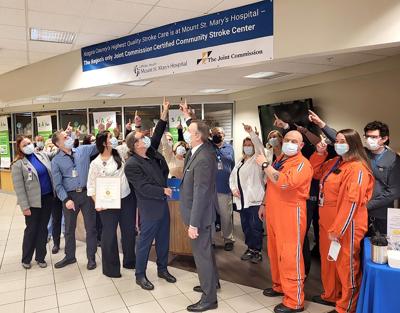
Mount St. Mary’s Hospital awarded Stroke Center certification

Big fucking whoopee.


 But you tell us NOTHING ABOUT RESULTS. They remind us they 'care' about us multiple times but never tell us how many 100% recovered.  You have to ask yourself why they are hiding their incompetency by not disclosing recovery results. ARE THEY THAT FUCKING BAD?

Anytime I see the word 'care' in stroke I know that we don't have the right goals anywhere in stroke. 100% recovery is the only goal in stroke. NOT 'care'.


Three measurements will tell me if the stroke hospital is possibly not completely incompetent; DO YOU MEASURE ANYTHING?  I would start cleaning the hospital by firing the board of directors, you can't let incompetency continue for years at a time.

There is no quality here if you don't measure the right things.

  1. tPA full recovery? Better than 12%?
  2. 30 day deaths? Better than competitors?
  3. rehab full recovery? Better than 10%?


You'll want to know results so call the president for RESULTS.  They are; tPA efficacy, 30 day deaths, 100% recovery. Because there is no point in going to that hospital if they are not willing to publish results.

The invalid chest thumping here:


Mount St. Mary’s Hospital awarded Stroke Center certification


MSM

Mount St. Mary’s Hospital has earned the American Stroke Association’s Certificate of Distinction as a Primary Stroke Center. It is the only hospital in Niagara County that holds the advanced certification.

LEWISTON — Mount St. Mary’s Hospital has earned The Joint Commission’s Gold Seal of Approval® and the American Stroke Association’s Certificate of Distinction as a Primary Stroke Center. It is the only hospital in Niagara County that holds this advanced certification. The Joint Commission is one of the leading accrediting bodies, ensuring the highest standards of quality and patient safety are met for more than 22,000 healthcare organizations across the United States.

“A great deal of preparation was involved in obtaining this certification and I could not be more grateful for the dedication of Christina Hayek, stroke coordinator, and the entire team of physicians and associates who made this possible,” said C.J. Urlaub, president of Mount St. Mary’s and Catholic Health’s senior vice president of strategic partnerships, integration and care delivery / Niagara County. “We take great pride in this achievement which allows us to better serve our community.”

Mount St. Mary’s underwent a rigorous, onsite review this past year to earn the distinction for nationally-recognized stroke care and is a top choice for EMS providers across the Niagara region.

The team of Joint Commission reviewers evaluated compliance with related certification standards including program management, delivering and facilitating clinical care. Joint Commission standards are developed in consultation with healthcare experts and providers, measurement experts and patients. The reviewers also conducted onsite observations and interviews with providers.

“Certification recognizes healthcare organizations committed to fostering continuous improvement in patient safety and quality of care,” said Deborah Ryan, MS, RN, interim executive vice president, Accreditation and Certification Operations, The Joint Commission. “We commend this hospital for using certification to reduce variation in its clinical processes and to strengthen its program structure and management framework for stroke patients.”

“We congratulate Mount St. Mary’s for this outstanding achievement,” said Nancy Brown, chief executive officer for the American Stroke Association. “This certification reflects its commitment to providing the highest quality of care for stroke patients.”

Saturday, January 28, 2023

1975 to 2019 Saw Decrease in Stroke Mortality for Men, Women

Quit your invalid chest thumping, you've done nothing to address the absolute failure of only 10% full recovery!

1975 to 2019 Saw Decrease in Stroke Mortality for Men, Women

There was a decrease in age-standardized stroke mortality for men and women from 1975 to 2019.

HealthDay News — From 1975 to 2019, there was a decrease in age-standardized stroke mortality for men and women, according to a study recently published in the International Journal of Epidemiology.

Cande V. Ananth, Ph.D., M.P.H., from Rutgers Robert Wood Johnson Medical School in New Brunswick, New Jersey, and colleagues conducted a sequential time series analysis to examine stroke mortality trends among 4,332,220 people aged 18 to 84 years in the United States between 1975 and 2019. Trends in overall, ischemic, and hemorrhagic stroke were examined.

The researchers found that from 1975 to 2019, there was a decrease in age-standardized stroke mortality from 87.5 to 30.9 per 100,000 (incidence rate ratio, 0.27; average annual decline, −2.78 percent). Among men, the age-standardized mortality rate decreased from 112.1 to 38.7 per 100,000 (incidence rate ratio, 0.26; average annual decline, −2.80 percent). With increasing age, stroke mortality increased sharply. A steeper decline in ischemic than in hemorrhagic strokes was observed.

“The contribution of predisposing risk factors to declines in stroke mortality underscores opportunities to develop public health campaigns and interventions to reduce untoward behaviors that negatively affect stroke and metabolic health,” the authors write.

Abstract/Full Text (subscription or payment may be required)

Tuesday, October 25, 2022

New Initiative to Prevent, Treat and Beat Stroke Focuses on Health Equity, Heart-brain Connection

So you're DOING NOTHING to get survivors to 100% recovery? This is the reason we need survivors in charge, we wouldn't accept this tyranny of low expectations. This is complete and total invalid chest thumping.  

New Initiative to Prevent, Treat and Beat Stroke Focuses on Health Equity, Heart-brain Connection

The American Heart Association’s Getting to the Heart of Stroke™ initiative, developed in conjunction with and supported by HCA Healthcare and the HCA Healthcare Foundation, focuses on preventing, treating and beating stroke by providing consumer and health care professional education nationwide, deepening collaboration between neurology and cardiology and equitably empowering communities about stroke risk to improve health outcomes

October 17, 2022 08:45 AM Eastern Daylight Time

DALLAS & NASHVILLE, Tenn.--(BUSINESS WIRE)--Knowledge and management of heart-related risk factors and conditions are critical in reducing the likelihood of and improving outcomes with stroke, especially across populations with health disparities. This powerful connection between heart and brain health is the target of a new initiative focused on clinical training, community and patient education, as well as diagnosis and treatment. Getting to the Heart of Stroke from the American Heart Association, the world’s leading nonprofit organization focused on heart and brain health for all, with support and collaboration from HCA Healthcare, Inc. (NYSE:HCA), one of the nation’s leading health care providers, and the HCA Healthcare Foundation, will also include individualized health education efforts in 15 local markets across the United States.

    “Getting to the Heart of Stroke and our support of the American Heart Association further demonstrates our unwavering commitment to the individuals, families and communities we serve”

Getting to the Heart of Stroke, developed in conjunction with HCA Healthcare and HCA Healthcare Foundation, features several efforts focused on preventing initial and recurrent strokes and improving overall stroke care(NOT RESULTS!) by:

    Educating and deepening the collaboration between health care professionals, especially in neurology and cardiology.
    Empowering consumers to know and better manage their stroke risk, including through the use of a new stroke self-management tool, along with greater engagement with patients diagnosed with atrial fibrillation (AFib) through the Association’s MyAFibExperience patient support network.
    Improving the overall health of communities by addressing disparities through local health impact work.

“What’s good for the heart is good for the brain, but the reverse is also true: problems with the heart, including AFib, are well-documented as major stroke risk factors,” said Nancy Brown, chief executive officer of the American Heart Association. “To effectively combat stroke, we need to work together and elevate the heart-brain connection among health care professionals, while simultaneously addressing health disparities and resource gaps in our communities. We are not a one-size-fits-all nation and neither is the most successful approach to public health.”

Getting to the Heart of Stroke focuses on education and care(NOT RESULTS!) across medical disciplines and specialties and addresses risk factor management for people at highest risk of stroke from AFib—which is known to increase stroke risk by up to 5 times1—or secondary stroke from other undiagnosed heart issues.

“Getting to the Heart of Stroke and our support of the American Heart Association further demonstrates our unwavering commitment(I see NO commitment whatsoever!) to the individuals, families and communities we serve,” said Sam Hazen, chief executive officer, HCA Healthcare and chairman, HCA Healthcare Foundation. “Through this collaboration, we hope to have a significant impact in improving heart and brain health outcomes in order to beat stroke.”(Beating stroke is 100% recovery and you're DOING NOTHING FOR THAT!)

As part of the new initiative, American Heart Association staff and volunteer experts with support from the HCA Healthcare Foundation and HCA Healthcare community colleagues will work in 15 select communities (listed below) to implement community education. The nationwide initiative will also focus on stroke risk factor awareness and professional education projected through the lens of equitable health for all.

Working closely with health care professional thought leaders, including those from HCA Healthcare, the Association will also develop accredited education programming that will be available to all health care professionals, and a specific learning collaborative with 10 HCA Healthcare facilities focused on continuously improving quality of care(NOT RESULTS!).

“We are proud to be collaborating with the American Heart Association and recognize that increased education and connectivity between our neurology and cardiology health care(NOT RESULTS!) teams, patients and communities are integral to reducing the devastation of stroke, determining its underlying cardiac causes, such as AFib and structural heart disease and preventing another one,” said Steven Manoukian, MD, FAHA, senior vice president, HCA Healthcare. “Through this unique and multi-faceted initiative with the AHA, everyone will become better at Getting to the Heart of Stroke.”

Identifying the cause of a stroke is critical to being able to prevent a subsequent stroke. Certain patient subsets, including Black and Hispanic/Latino populations, face additional barriers to identifying and treating stroke risk factors as well as receiving thorough assessment and treatment following stroke2.

While some AFib risk factors, including uncontrolled high blood pressure, diabetes and obesity, are more prevalent among Black people, they are less likely to be diagnosed with the condition, which may be related to race or ethnicity3. Black adults also have a higher prevalence of stroke and the highest death rate from stroke compared to any other racial group4. Getting to the Heart of Stroke will address these disparities through local health impact work in select communities. Focus areas may include women’s health and wellbeing, high blood pressure management, nutrition security or tobacco/vaping prevention.

The local HCA Healthcare hospital systems participating in Getting to the Heart of Stroke are:

Colorado

    Denver – HealthONE

Florida

    Gainesville/Ocala - HCA Florida Healthcare
    Jacksonville - HCA Florida Healthcare
    Orlando - HCA Florida Healthcare
    Palm Beach - HCA Florida Healthcare
    St. Petersburg/Tampa - HCA Florida Healthcare

Missouri

    Kansas City - HCA Midwest Health

Nevada

    Las Vegas - Sunrise Health

North Carolina

    Asheville - Mission Health

Tennessee

    Nashville – Tristar Health

Texas

    Austin – St. David’s Healthcare
    Dallas/Fort Worth - Medical City Healthcare
    Houston/Gulf Coast - HCA Houston Healthcare
    San Antonio - Methodist Healthcare

Virginia

    Richmond - HCA Virginia Health System

About the American Heart Association

The American Heart Association is a relentless force for a world of longer, healthier lives. We are dedicated to ensuring equitable health in all communities. Through collaboration with numerous organizations, and powered by millions of volunteers, we fund innovative research, advocate for the public’s health and share lifesaving resources. The Dallas-based organization has been a leading source of health information for nearly a century. Connect with us on heart.org, Facebook, Twitter or by calling 1-800-AHA-USA1.

About HCA Healthcare

Nashville-based HCA Healthcare is one of the nation’s leading providers of healthcare services comprising 182 hospitals and approximately 2,300 ambulatory sites of care, including surgery centers, freestanding ERs, urgent care centers, and physician clinics, in 20 states and the United Kingdom. With its founding in 1968, HCA Healthcare created a new model for hospital care in the United States, using combined resources to strengthen hospitals, deliver patient-focused care and improve the practice of medicine. HCA Healthcare has conducted a number of clinical studies, including one that demonstrated that full-term delivery is healthier than early elective delivery of babies and another that identified a clinical protocol that can reduce bloodstream infections in ICU patients by 44%. HCA Healthcare is a learning health system that uses its more than 35 million annual patient encounters to advance science, improve patient care and save lives. Please click here to connect with HCA Healthcare on social media.

About HCA Healthcare Foundation

The mission of the HCA Healthcare Foundation is to promote health and well-being and strive to make a positive impact in all the communities HCA Healthcare serves. We accomplish this mission by providing leadership, service and financial support to effective non-profit organizations working individually and collectively.

1 www.heart.org/-/media/Files/Health-Topics/Atrial-Fibrillation/FAQ-About-AFib.pdf Accessed August 30, 2022

2 D O Kleindorfer; et al 2021 Guideline for the Prevention of Stroke in Patients with Stroke and Transient Ischemic Attack: A Guideline From the American Heart Association/American Stroke Association Stroke. 2021;52:e364–e467 DOI: 10.1161/STR.0000000000000375

3 S R Heckbert; et al Difference by Race/Ethnicity in the Prevalence of Clinically Detected and Monitor-Detected Atrial Fibrillation Circulation: Arrhythmia and Electrophysiology. 2020;13:e007698 DOI: 10.1161/CIRCEP.119.007698

4 www.stroke.org/-/media/Stroke-Files/Lets-Talk-About-Stroke/Prevention/Lets-Talk-About-Black-Americans-and-Stroke-Sheet.pdf Accessed August 30, 2022
Contacts

American Heart Association
For Media Inquiries: 214-706-1173
Jayme Sandberg: 214-706-2169; Jayme.Sandberg@heart.org

For Public Inquiries: 1-800-AHA-USA1 (242-8721)
heart.org and stroke.org

HCA Healthcare
For Media Inquiries:
Harlow Sumerford: 615-344-1851; Harlow.Sumerford@hcahealthcare.com 

Thursday, June 30, 2022

'Something we have dreamed about for years': EAMC gains stroke certification(East Alabama Medical Center)

Big fucking whoopee.


 But you tell us NOTHING ABOUT RESULTS. They remind us they 'care' about us multiple times but never tell us how many 100% recovered.  You have to ask yourself why they are hiding their incompetency by not disclosing recovery results.  ARE THEY THAT FUCKING BAD?


Three measurements will tell me if the stroke hospital is possibly not completely incompetent; DO YOU MEASURE ANYTHING?  I would start cleaning the hospital by firing the board of directors, you can't let incompetency continue for years at a time.

There is no quality here if you don't measure the right things.

  1. tPA full recovery? Better than 12%?
  2. 30 day deaths? Better than competitors?
  3. rehab full recovery? Better than 10%?


You'll want to know results so call that hospital president(Whoever that is) RESULTS are; tPA efficacy, 30 day deaths, 100% recovery. Because there is no point in going to that hospital if they are not willing to publish results.

 The latest invalid chest thumping here:


  'Something we have dreamed about for years': EAMC gains stroke certification 

After 18 months of preparation and a meticulous on-site review, East Alabama Medical Center is now stroke-certified, and its leader calls the achievement a dream come true.

“Having a certified stroke program is something we have dreamed about for years,” said Laura Grill, president and CEO of East Alabama Health, in a press release. “We want to be the provider of choice for our community and achieving this designation means fewer patients have to go outside of this region to receive top-notch stroke care.”

The Joint Commission, a nonprofit organization that accredits more than 22,000 U.S. health care organizations and programs, found EAMC compliant with its standards for the delivery of stroke patient care, timeliness of stroke-specific patient care and utilization of current evidence-based guidelines of stroke care, according to a press release from East Alabama Health

After the evaluation, EAMC was awarded The Joint Commission’s Gold Seal of Approval and the American Stroke Association’s Heart-Check mark for Primary Stroke Center Certification.


“This certification reflects its commitment to providing the highest quality of care for stroke patients,” said Nancy Brown, chief executive officer of the American Stroke Association in a press release.

Receiving the Gold Seal of Approval means the organization exceeds and maintains quality benchmarks and patient outcomes, according to The Joint Commission’s website.

“This certification reflects its commitment to providing the highest quality of care for stroke patients,” said Nancy Brown, chief executive officer of the American Stroke Association, in a press release. “We congratulate EAMC for this outstanding achievement.”

More achievements

The accreditation comes after Laura Grill was elected to serve on the executive committee of the Alabama Hospital Association as the secretary-treasurer. Grill was also selected as president to lead the Association’s Central Alabama Regional Hospital Council.


Tuesday, June 21, 2022

Southeast Health earns national recognition in stroke care

Big fucking whoopee.


 But you tell us NOTHING ABOUT RESULTS. They remind us they 'care' about us multiple times but never tell us how many 100% recovered.  You have to ask yourself why they are hiding their incompetency by not disclosing recovery results. ARE THEY THAT FUCKING BAD?

Three measurements will tell me if the stroke hospital is possibly not completely incompetent; DO YOU MEASURE ANYTHING?  I would start cleaning the hospital by firing the board of directors, you can't let incompetency continue for years at a time.

There is no quality here if you don't measure the right things.

  1. tPA full recovery? Better than 12%?
  2. 30 day deaths? Better than competitors?
  3. rehab full recovery? Better than 10%?


You'll want to know results so call that hospital president(Whoever that is) RESULTS are; tPA efficacy, 30 day deaths, 100% recovery. Because there is no point in going to that hospital if they are not willing to publish results.


In my opinion Get With the Guidelines allows stroke hospitals to continue with their tyranny of low expectations and justify their complete failure to get survivors 100% recovered. Prove me wrong, I dare you in my stroke addled mind. If your stroke hospital goal is not 100% recovery you don't have a functioning stroke hospital.

All you ever get from hospitals are that they are following 'Get With the Guidelines'; these are way too static to be of any use. With thousands of pieces of stroke research yearly it would take a Ph.D. level research analyst to keep up, create protocols, and train the doctors and therapists in their use. 

If your stroke hospital doesn't have that, you don't have a well functioning stroke hospital, you have a dinosaur. 

Read the guidelines yourself here:  You'll see they say they improve outcomes but give no proof that it is happening. I find nothing in here that states they are even measuring results or recovery. Since neither seems to occur, it is in my opinion invalid recognition.

“What's measured, improves.” So said management legend and author Peter F. Drucker 

Get With The Guidelines® Stroke

 The latest invalid chest thumping here:


Southeast Health earns national recognition in stroke care

Southeast Health was named a Gold Plus hospital for consistency in all seven stroke related quality measures by the American Stroke Association.
Southeast Health recognized as leader in stroke care.
Southeast Health recognized as leader in stroke care.(MGN)
Published: Jun. 20, 2022 at 11:54 AM EDT

DOTHAN, Ala. (WTVY) - Southeast Health was named a Gold Plus hospital for consistency in all 7 stroke-related quality measures by the American Stroke Association.

2022 is the 11th consecutive year that Southeast Health has received this particular recognition.

Additionally, the hospital earned four elite quality “Get with the Guidelines” achievement designations. According to the American Heart Association, “Get with the Guidelines” is an in-hospital program for improving stroke care by promoting consistent adherence to the latest scientific treatment.

As one of only three comprehensive stroke centers in Alabama, Southeast Health also received recognition on the “Stroke Honor Roll” for Advanced Therapy and Type 2 diabetes.

Advertisement

The stroke team at Southeast Health includes board-certified Emergency Department physicians, specialized nurses and the Radiology department.

“Our stroke team has worked hard during the past several years to hardwire capturing the GWTG Stroke Quality measures,” said Ramona Johnson, MSN, stroke coordinator at Southeast Health Medical Center. “This is the first year that we have attained this elite recognition that will benefit our patients and the community.”

Strokes are the number 5 leading cause of death and disability in the United States. Early stroke detection can be instrumental in improving recovery times and minimizing disability caused by a stroke.

Copyright 2022 WTVY. All rights reserved.


Wednesday, April 27, 2022

Organization honored for strides against stroke in Middle East, North Africa

This chest thumping is unwarranted, delivering 'care' is not what is needed. In these 3rd world countries trying to duplicate  the stroke care from more advanced countries is wrong, especially since 1rst world countries are complete failures in stroke.  What is needed here are interventions that stop the neuronal cascade of death in the first week, ones that are not so time dependent. Survivors want results NOT 'care'.

Organization honored for strides against stroke in Middle East, North Africa

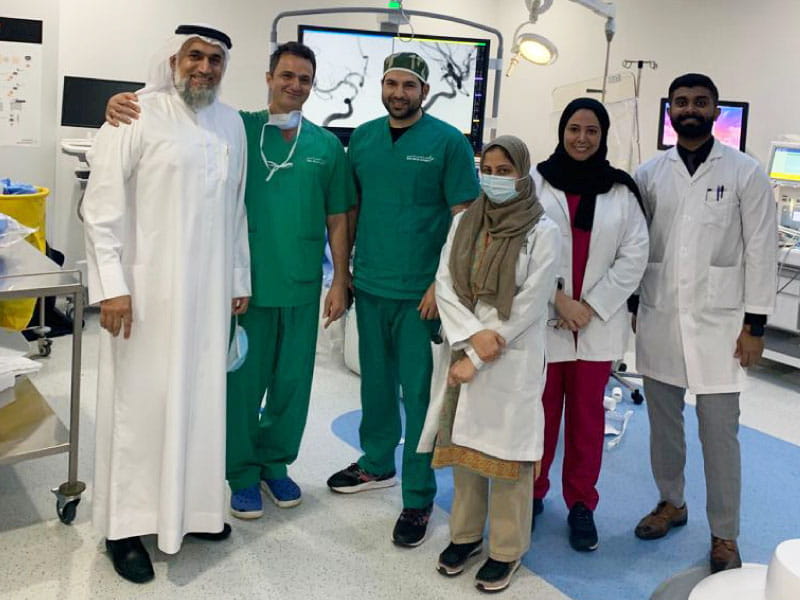
Dr. Suhail Al Rukn, left, a cofounder of the Middle East and North African Stroke Organization (MENASO), with the neuro-intervention stroke team at Rashid Hospital in Dubai, United Arab Emirates. (Photo courtesy of MENASO)
Dr. Suhail Al Rukn, left, a cofounder of the Middle East and North Africa Stroke Organization (MENASO), with the neuro-intervention stroke team at Rashid Hospital in Dubai, United Arab Emirates. (Photo courtesy of MENASO)

Thanks to cutting-edge research and new treatments, great strides have been made in the battle against stroke in much of the world, saving countless lives and livelihoods. There's been less progress in the Middle East and North Africa, where stroke occurs more frequently in young people and treatment options have been more limited.

"There's a huge deficit about stroke care in our region," said Dr. Suhail Al Rukn, a neurologist in the United Arab Emirates, noting that the large number of young people in the region experiencing stroke was "a red flag, because stroke is the No. 1 cause of adulthood disability and No. 2 or 3 worldwide for mortality."

Determined to close the gap, in 2016, Al Rukn and other senior stroke specialists from the region founded the Middle East and North Africa Stroke Organization (MENASO) in Dubai. MENASO has worked tirelessly to raise public awareness about stroke, educate health care providers about the most effective treatments and promote the need for dedicated stroke facilities and lifesaving treatments.

For outstanding contributions in achieving international goals to advance the AHA mission, MENASO will receive the 2022 Ron Haddock International Impact Award during the American Heart Association's annual National Volunteer Awards virtual ceremony on June 28.

A heartfelt mission

Increasing the number of dedicated comprehensive stroke care centers has been one of MENASO's top priorities. In 2015, there was only one such facility in the UAE and fewer than 10 in Egypt, which has a population of more than 100 million people. "Mortality decreases by at least 20% to 25% for patients admitted to a stroke center compared to those admitted to a general ward," Al Rukn said.

In an ambitious and ultimately successful attempt to address the problem, in 2019, MENASO partnered with the American Heart Association to distribute educational resources and define ideal systems of stroke care powered by the AHA's Get With The Guidelines quality improvement program. Together, the organizations developed a first-of-its-kind certification program, launched in July 2020.

"We hope this collaboration will enhance and improve the level of stroke care in the Middle East and North Africa," Al Rukn said, noting the value in learning best practices "from a big brother."

A direct result of those efforts, the first two accredited centers in Dubai came online in late 2021, and 20 additional centers are expected to open over the next year. "This is the first time for the AHA to do this type of certification outside the U.S.," Al Rukn said.

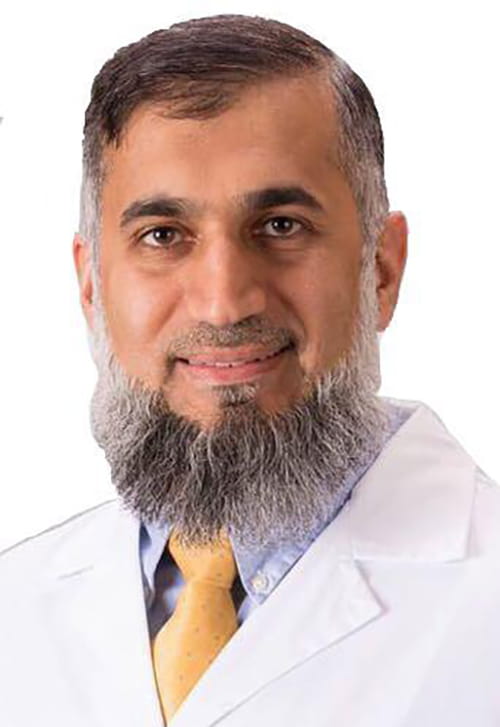
Neurologist Suhail Al Rukn (Photo courtesy of MENASO)

In addition, the information they have shared via monthly webinars and an annual conference that rotates between countries has persuaded Iran and Egypt to begin offering surgical clot-removing procedures and clot-busting drugs such as tPA through their national health care systems, saving lives and preventing permanent disability for many.

"It went from not being available to being covered 100% by these countries and their stroke centers," he said. "The number of patients who have received (such treatments) has increased five to six times."

The battle continues

While the number of stroke centers has increased in many Middle Eastern and North African cities, many small towns and villages are still lacking adequate care. And some countries in the region still don't offer effective treatments like tPA at no charge. "All stroke treatment is lifesaving, so these patients should receive it like any other lifesaving procedure," Al Rukn said.

To that end, MENASO is rolling out a series of short webinars for each country to promote the need for dedicated stroke centers and the wider adoption of accepted treatment practices. "That will spread our message and get our voice to every village and small town," he said.

In addition, the organization is encouraging governments to send more stroke patients in small towns and villages to the nearest dedicated stroke center, which can also serve as training facilities for health care professionals in those areas.

Al Rukn believes the work will ripple outward as awareness increases and the benefits become undeniable.

"When you see your neighbors are doing something good, you will learn from them," he said. "And then you will start to do the same thing."

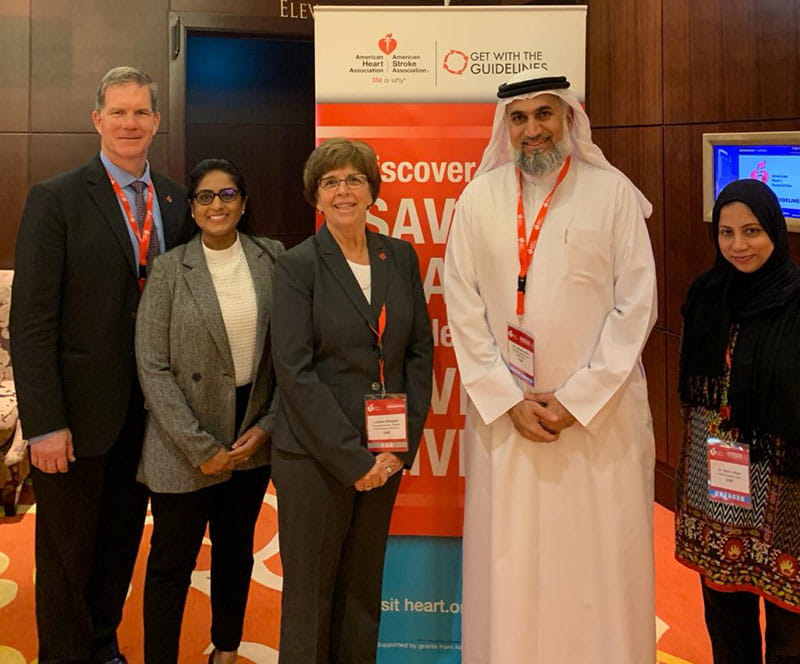
In 2019, MENASO partnered with the American Heart Association to improve stroke care in the Middle East and North Africa. From right, at that first meeting in Dubai, are stroke specialist and MENASO board member Dr. Maria Khan and Dr. Al Rukn, along with AHA International Quality Improvement Initiatives Director Louise Morgan; AHA Director of International Quality & Accreditation Puja Patel; and Keith Jansen, AHA former international vice president. (Photo courtesy of MENASO)
In 2019, MENASO partnered with the American Heart Association to improve stroke care in the Middle East and North Africa. From right, at that first meeting in Dubai, are stroke specialist and MENASO board member Dr. Maria Khan and Dr. Suhail Al Rukn, along with AHA International Quality Improvement Initiatives Director Louise Morgan; AHA Director of International Quality & Accreditation Puja Patel; and Keith Jansen, AHA former international vice president. (Photo courtesy of MENASO)


Thursday, March 10, 2022

UT Health East Texas Rehabilitation Hospital awarded Gold Seal of Approval for Stroke Rehabilitation Certification

Big fucking whoopee.


 But you tell us NOTHING ABOUT RESULTS. They remind us they 'care' about us multiple times but never tell us how many 100% recovered.  You have to ask yourself why they are hiding their incompetency by not disclosing recovery results.  ARE THEY THAT FUCKING BAD?


Three measurements will tell me if the stroke hospital is possibly not completely incompetent; DO YOU MEASURE ANYTHING?  I would start cleaning the hospital by firing the board of directors, you can't let incompetency continue for years at a time.

There is no quality here if you don't measure the right things.

  1. tPA full recovery? Better than 12%?
  2. 30 day deaths? Better than competitors?
  3. rehab full recovery? Better than 10%?


You'll want to know results so call that hospital president(Whoever that is) RESULTS are; tPA efficacy, 30 day deaths, 100% recovery. Because there is no point in going to that hospital if they are not willing to publish results.

 The latest invalid chest thumping here:

UT Health East Texas Rehabilitation Hospital awarded Gold Seal of Approval for Stroke Rehabilitation Certification


Tyler, Texas (March 9, 2022) — UT Health East Texas Rehabilitation Hospital has earned The Joint Commission’s Gold Seal of Approval® for Stroke Specific Rehabilitation Certification by demonstrating continuous compliance with its performance standards. The Gold Seal is a symbol of quality that reflects a health care organization’s commitment to providing safe and quality patient care.

The certification recognizes health care organizations that provide clinical programs across the continuum of care for stroke patients. The certification evaluates how organizations use clinical outcomes and performance measures to identify opportunities to improve care, as well as to educate and prepare patients and their caregivers for discharge.

UT Health East Texas Rehabilitation Hospital underwent a rigorous review conducted virtually. During the visit, a Joint Commission reviewer evaluated compliance with related certification standards including performance measurement, clinical management and patient education. Joint Commission standards are developed in consultation with healthcare experts and providers, measurement experts and patients. The reviewer also conducted virtual observations and interviews via internet connection.

“Stroke Rehabilitation Certification recognizes health care organizations committed to fostering continuous quality improvement in patient safety and quality of care,” said Mark Pelletier, RN, MS, chief operating officer, Accreditation and Certification Operations, and chief nursing executive, The Joint Commission. “We commend UT Health East Texas Rehabilitation Hospital for using certification to reduce variation in its clinical processes and to strengthen its program structure and management framework for stroke patients.”

UT Health East Texas Rehabilitation Hospital Administrator Laurie Lehnhof-Watts said the certification is a reflection of the outstanding care provided at the rehabilitation hospital.

“The stroke rehabilitation team at UT Health Rehabilitation Hospital was confident in being able to achieve this certification and will continue to enhance and improve the services we provide to patients who have experienced a stroke,” Laurie Lehnhof-Watts said. “We assess our compliance with the American Stroke Association Adult Stroke Rehabilitation and Recovery Guidelines to provide best practices for our patients. The team collaborates with The Joint Commission certified Comprehensive Stroke Center team at UT Health Tyler to bring the best acute care and rehabilitative care to patients in the East Texas region.”

Saturday, November 27, 2021

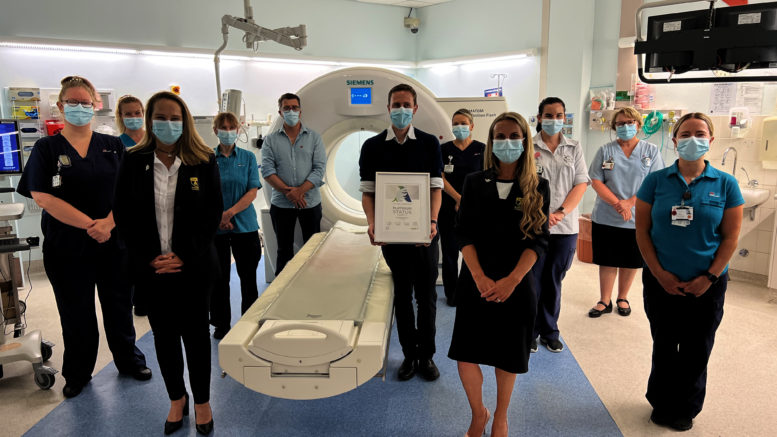
Stroke unit one of three to receive Platinum status - Gosford Hospital, Australia


Big fucking whoopee.


 But you tell us NOTHING ABOUT RESULTS. They remind us they 'care' about us multiple times but never tell us how many 100% recovered.  You have to ask yourself why they are hiding their incompetency by not disclosing recovery results.  ARE THEY THAT FUCKING BAD?


Three measurements will tell me if the stroke hospital is possibly not completely incompetent; DO YOU MEASURE ANYTHING?  I would start cleaning the hospital by firing the board of directors, you can't let incompetency continue for years at a time.

There is no quality here if you don't measure the right things.

  1. tPA full recovery? Better than 12%?
  2. 30 day deaths? Better than competitors?
  3. rehab full recovery? Better than 10%?


You'll want to know results so call that hospital president(Whoever that is) RESULTS are; tPA efficacy, 30 day deaths, 100% recovery. Because there is no point in going to that hospital if they are not willing to publish results.

 The latest invalid chest thumping here:

Stroke unit one of three to receive Platinum status - Gosford Hospital, Australia

The team from Gosford Hospital’s stroke unit: Lauren Wheeler, Gemma Walker, Samantha Dagasso, Dianne Livermore, Dr Bill O’Brien, Dr James Evans (holding the award) Katie Ercan, Kim Malkin, Jade Edwards, Rhonda O’Neil and Elise Pendlebury

Gosford Hospital’s stroke unit is celebrating after being recognised with a second international award for meeting the highest standards in treatment and care.

After being recognised recently with Gold status by the World Stroke Organisation, the unit has now been upgraded to Platinum status– making it one of just three Australian hospitals to receive the higher ranking.

The award initiative, a partnership between the World Stroke Organization and European Stroke Organisation, aims to optimise the standard of treatment(NOT RESULTS!) in stroke centres worldwide and improve patient outcomes by setting global benchmarks for best practice in stroke care.

The hospital’s stroke lead, Dr James Evans, said the awards were recognition of the team approach taken to enhance stroke care and its use of data to continually improve.

“We are dedicated to continuously improving stroke care standards,” Evans said.

“Our patient-centred approach involves the whole team – the emergency department, CT, the neurology team, including doctors, nurses, physio, speech, occupational therapists, social work and rehabilitation.

‘It means everyone is focused on improving patient care.

“We have a dashboard of information we monitor daily, allowing us to look at a patient’s whole journey, from
emergency through to recovery and rehabilitation.”

Gosford Hospital treats around 550 stroke patients a year, with up to 150 of these having brain bleeds.

Training, protocols and the hospital’s stroke unit performance were assessed as part of the initiative.

For Platinum status, the unit had a target of restoring blood-flow to the brain to more than 75 per cent of eligible patients within 60 minutes of arrival.

Dr Bill O’Brien, who has been a neurologist at Gosford Hospital for 10 years, said the awards were the result of years of hard work.

“We’ve spent years creating and honing a truly integrated multidisciplinary team; one where everyone is equally valued and the focus is on using live data to achieve best practice outcomes for our patients,” he said.

“It’s fantastic to see all of that hard work recognised through not one, but two global awards.”

To achieve Platinum status a hospital must show a range of outcomes, including optimum time to treatment, coordinated care, appropriate scans and screening, and ensuring discharged patients are on medications to minimise their risk of further stroke.

The initiative’s Medical Project Manager in Australia, Kim Malkin, said every step toward improving care and outcomes for stroke patients was worth celebrating, as there were approximately 38,000 stroke events across Australia each year – around 100 every day.

“To date, only a handful of Australian hospitals have achieved WSO Platinum status so Gosford Hospital should be immensely proud of this achievement,” Malkin said.

Source:
Media release, Nov 24
Central Coast Local Health District


Monday, September 20, 2021

Hospitals of Providence(EL PASO, Texas) nationally recognized for stroke care standards

I can see little reason to go here for stroke treatment unless all you want is 'care'.

Notice how useless this is; measuring 'care' rather than results.

Three measurements will tell me if the stroke hospital is possibly not completely incompetent; DO YOU MEASURE ANYTHING?  I would start cleaning the hospital by firing the board of directors, you can't let incompetency continue for years at a time. 

Business 101: If you don't measure it it is not important, so obviously stroke results are not important. 

“What's measured, improves.” So said management legend and author Peter F. Drucker 

There is no quality here if you don't measure the right things.

  1. tPA full recovery? Better than 12%?
  2. 30 day deaths? Better than competitors?
  3. rehab full recovery? Better than 10%?


You'll want to know results so call that hospital president(Whoever that is) RESULTS are; tPA efficacy, 30 day deaths, 100% recovery. Because there is no point in going to that hospital if they are not willing to publish results.

 The latest invalid chest thumping here:

Hospitals of Providence(EL PASO, Texas) nationally recognized for stroke care standards

The Hospitals of Providence Sierra Campus has once again been nationally designated as a Comprehensive Stroke Center by DNV, for offering the most advanced stroke care and the highest level of competence(I don't see competence being measured at all) for treatment of serious stroke events.

The Comprehensive Stroke Center Certification is based on rigorous standards set forth by the American Stroke Association and the Brain Attack Coalition, affirming the hospital provides the full spectrum of stroke care - diagnosis, treatment, rehabilitation, and education - offering stroke patients the highest level of care available and attributing to the best outcomes. The Hospitals of Providence Sierra Campus offers state-of-the-art infrastructure, staff, and training to receive and treat patients with the most complex strokes.

RECOMMENDED: The Hospitals of Providence Sierra Campus recognized by Texas for stroke care efforts

“Our comprehensive stroke team is committed to ensuring our stroke patients have the best possible outcomes,” said Dr. Gustavo Rodriguez, Professor, and Vice-Chair in the Department of Neurology at Texas Tech University Health Sciences Center, specializing in vascular neurology and interventional neurology and Medical Director for The Hospitals of Providence Sierra Campus Comprehensive Stroke Center. “Certifications of this magnitude recognize the hospital and team for being amongst the best to treat stroke patients and provide the full spectrum of care they need in one setting.”

The Hospitals of Providence Sierra Campus continues to invest in Neurology Services, expanding the care available to the El Paso region. Recognized as a brain and heart center, the Sierra Campus recently invested $1 million for its new 128-slice Computed Tomography (CT) scanner, advancing cardiology and neurology imaging. Recently, the hospital was also the first in the region to perform the first Medtronic Pipeline Shield procedure, for the treatment of certain wide-neck intracranial aneurysms.

RECOMMENDED: New device from Hospitals of Providence reduces risk of stroke

“This is an incredible achievement for our team and a reflection of Sierra Campus’ reputation for excellence in patient care,” said Rob J. Anderson, Chief Executive Officer for The Hospitals of Providence Sierra Campus. “We are proud to be improving the lives of stroke patients every day by offering the most advanced care and returning our patients to the life and activities that they love. We are committed to providing El Pasoans advanced stroke care close to home.”

The Sierra Campus offers an extensive program to provide and care for stroke patients through the entire treatment plan. From the time a stroke patient arrives in the emergency room, a dedicated team is ready to begin life-saving care. The Inpatient Rehabilitation Unit, also certified in stroke care by the Commission on Accrediting Rehabilitation Facilities, provides stroke patients with advanced rehabilitative care and expertise to promote recovery and increase functionality. Additionally, the Sierra Campus continuously offers stroke prevention education to the community through various community events and hosts a virtual Stroke Support Group for caregivers and survivors on the second Wednesday of every month.

To find out more about The Hospitals of Providence Sierra Campus Comprehensive Stroke Center click here.


Cheyenne(WY) Regional Medical Center Receives Three-Year Accreditation for Inpatient Rehabilitation Services

 Notice how useless this is; measuring 'care' rather than results.

Three measurements will tell me if the stroke hospital is possibly not completely incompetent; DO YOU MEASURE ANYTHING?  I would start cleaning the hospital by firing the board of directors, you can't let incompetency continue for years at a time. 

Business 101: If you don't measure it it is not important, so obviously stroke results are not important. 

“What's measured, improves.” So said management legend and author Peter F. Drucker 

There is no quality here if you don't measure the right things.

  1. tPA full recovery? Better than 12%?
  2. 30 day deaths? Better than competitors?
  3. rehab full recovery? Better than 10%?


You'll want to know results so call that hospital president(Whoever that is) RESULTS are; tPA efficacy, 30 day deaths, 100% recovery. Because there is no point in going to that hospital if they are not willing to publish results.

 The latest invalid chest thumping here:

Cheyenne(WY) Regional Medical Center Receives Three-Year Accreditation for Inpatient Rehabilitation Services


Cheyenne Regional Medical Center’s acute inpatient rehabilitation unit (ARU) and inpatient stroke rehabilitation program have received a three-year accreditation from the Commission on Accreditation of Rehabilitation Facilities International (CARF) for both general and stroke rehabilitative services.

CRMC’s ARU has been accredited by CARF for 15 years for general rehabilitation and received its first CARF specialty accreditation for stroke care in 2018.

“Earning CARF accreditation is a rigorous process that included a comprehensive site survey by two independent medical practitioners who interviewed staff and also reviewed patient charts to determine the quality of rehabilitation and overall care that’s being provided,” said Rebecca Carey, the ARU’s clinical director.

CRMC’s ARU is the only CARF-accredited inpatient and stroke rehabilitation program in Wyoming and is one of only two CARF-accredited programs in a region extending from southern Wyoming to Aurora, CO.

CRMC’s ARU was specifically recognized by the CARF surveyors for having significant administrative support, a robust technology plan including ongoing diligence regarding cybersecurity, effective communication tools for patient care, a strong commitment to safety and quality, positive patient outcomes, a strong and compassionate nursing and therapy staff, renovations that enhance patient and staff experiences and an effective continuum of care with strong connections to the community.

CARF International is an independent, nonprofit that accredits more than 60,000 human and health services organizations at 28,000 locations in North and South America, Europe, Asia and Oceania.

CARF accreditation requires the service provider to commit to ongoing quality improvement, focus on the unique needs of each person served and monitor the results of services provided.

“CARF accreditation is important because it demonstrates that our ARU and stroke rehabilitation programs are focused on providing the highest level of care to our patients and community,” said Tim Thornell, CRMC’s president and chief executive officer. “It also shows that our ARU team is dedicated to helping patients achieve the highest level of independence and to improving their overall quality of life.”

An ARU is distinguished from other rehabilitation programs by the amount and level of rehabilitation required. Each patient undergoes intensive rehabilitation at least three hours a day, five days a week.

In an ARU, a physician leads an interdisciplinary team in providing coordinated rehabilitation care for each patient, with an expectation that the patient will achieve measurable improvements. The rehabilitation care is tailored to fit the needs of the individual.

CRMC’s ARU specializes in treating people who are recovering from a variety of conditions, including strokes, brain injuries, neuropathy and myopathy, spinal cord injuries, multiple trauma injuries, amputations, neurological disorders, Guillain-Barré syndrome, multiple sclerosis and Parkinson’s disease.

Tuesday, March 2, 2021

No Stroke Expertise? Specialist on Speed Dial Boosts Outcomes

 Oh God, 'better care'! The tyranny of low expectations in full display. Aren't you glad your doctors and researchers are OK with this lazy crapola? Massive amounts of chest thumping for what should be regular care. When you get to 100% recovery then you can celebrate, until then just shut up and do your job, which is 100% recovery in case you missed that goal.

No Stroke Expertise? Specialist on Speed Dial Boosts Outcomes

Stroke care compared between hospitals with and without telestroke technology

A male stroke expert virtually visits a hospitalized female patient via monitor and camera while a female physician looks on.

Stroke patients received better care(NOT RECOVERY!) at hospitals lacking on-site stroke expertise if they had telestroke capacity, according to large observational study.

Reperfusion treatment, through thrombolysis or thrombectomy, was more likely among acute ischemic stroke patients at telestroke centers compared with matched peers treated without either on-site or virtual capacity (6.8% vs 6.0%, RR 1.13, 95% CI 1.09-1.17), reported Ateev Mehrotra, MD, MPH, of Harvard Medical School, and colleagues in a paper published online in JAMA Neurology.

Telestroke made the biggest difference for rural patients and the lowest-volume hospitals (admitting fewer than two strokes per month), whereas higher-volume centers (averaging at least two strokes per week) showed no improvement in reperfusion therapy by telestroke capacity.

Approximately 30% of all hospitals emergency departments in the U.S. now use telestroke technology. Although low-volume and rural hospitals showed the greatest benefits of telestroke, they were least likely to have telestroke capacity in the study.

Better reimbursement or direct financial support may encourage these hospitals to adopt telestroke, Mehrotra's team suggested, noting that barriers to adoption may include insufficient financial investment, lack of high-speed internet in rural communities, and regulations that limit financial support from tertiary hospitals.

Mehrotra's group also showed higher reperfusion rates at telestroke centers among patients 85 years and older, for whom emergency medicine physicians may be uncomfortable using thrombolysis given the associated increased risk of intracerebral hemorrhage in the oldest age group.

Telestroke extends stroke expertise to hospitals without on-site stroke expertise, where emergency departments are staffed by people with less exposure to stroke care(NOT RECOVERY!) and thus lower comfort levels with reperfusion decisions. Remote consultations permit contact between a stroke specialist, the bedside care(NOT RECOVERY!) provider, and the patient.

Study investigators compiled Medicare data on acute stroke admissions in the U.S. in which the patient had first presented to a hospital without on-site stroke expertise in 2008-2017. They found 76,636 matched pairs of patients (57.7% women, mean age 78.8 years) going to hospitals with or without telestroke.

There was no evidence that stroke care(NOT RECOVERY!) had previously been superior at hospitals that eventually adopted telestroke.

Mortality rates at 30 days favored stroke patients at telestroke-capable hospitals (13.1% vs 13.6%, RR 0.96, 95% CI 0.94-0.99). However, the effect dissipated by 6 months (22.6% vs 23.0%, RR 0.98, 95% CI RR 0.97-1.00).

The two groups had similar healthcare costs (institutional spending $26,560 vs $26,524) and functional status (60.25 vs 60.22 days alive in the community after discharge) through 90 days.

"To our knowledge, this is the first study to demonstrate that telestroke is associated with a clinically meaningful reduction in mortality and improved use of reperfusion treatments with no increase in health care spending," Mehrotra and colleagues noted.

"Though cost-effective from the perspective of Medicare, it is important to emphasize that local hospitals must pay for telestroke capacity, and these payments are not captured in our data," they cautioned.

Other limitations of the study include unobserved confounding, the lack of data on symptom onset and other patient factors in Medicare records, and the reliance on community living as a proxy measure of functional outcome after stroke.

"Given the increasing prevalence of telestroke in EDs and current state of evidence, it is unlikely that a randomized clinical trial of telestroke vs placebo is feasible given the ethics of not offering patients effective stroke care(NOT RECOVERY!). Therefore, we believe this form of rigorous observational study is likely to be the best evidence available on the association of telestroke with treatment and outcomes for patients with acute ischemic stroke," study investigators wrote.

  • author['full_name']

    Nicole Lou is a reporter for MedPage Today, where she covers cardiology news and other developments in medicine. Follow

Disclosures

The study was supported by a grant from the National Institute of Neurological Disorders and Stroke.

Mehrotra had no disclosures.

Study coauthors reported ties to Genentech, Life Image, the Massachusetts Department of Public Health, Penumbra, Diffusion Pharma, the Agency for Healthcare Research and Quality, Controlled Risk Insurance Company, and the American College of Emergency Physicians.


Tuesday, February 9, 2021

Queen of the Valley Hospital in West Covina,CA earns comprehensive stroke center designation


Big fucking whoopee.


 But you tell us NOTHING ABOUT RESULTS. They remind us they 'care' about us multiple times but never tell us how many 100% recovered.  You have to ask yourself why they are hiding their incompetency by not disclosing recovery results. ARE THEY THAT FUCKING BAD?

Three measurements will tell me if the stroke hospital is possibly not completely incompetent; DO YOU MEASURE ANYTHING?  I would start cleaning the hospital by firing the board of directors, you can't let incompetency continue for years at a time.

There is no quality here if you don't measure the right things.

  1. tPA full recovery? Better than 12%?
  2. 30 day deaths? Better than competitors?
  3. rehab full recovery? Better than 10%?


You'll want to know results so call that hospital president(Whoever that is) RESULTS are; tPA efficacy, 30 day deaths, 100% recovery. Because there is no point in going to that hospital if they are not willing to publish results.

 The latest invalid chest thumping here:

Queen of the Valley Hospital in West Covina,CA earns comprehensive stroke center designation

The designation means the hospital is a 9-1-1 receiving hospital for patients and has met the standards of the Centers for Medicare & Medical Services.

Plans are underway for a massive expansion to West Covina’s Queen of the Valley Hospital, as shown in this rendering. (Courtesy of Cunningham Group)
PUBLISHED: | UPDATED:

Emanate Health Queen of the Valley Hospital in West Covina has been designated a comprehensive stroke center by the Los Angeles County Emergency Medical Services Agency and can begin receiving urgent stroke patients via ambulance.

The designation means the hospital is a 9-1-1 receiving hospital for patients and has met the standards of the Centers for Medicare & Medical Services.

“The comprehensive stroke center designation at Queen of the Valley Hospital means that critical stroke patients will receive life-saving care more quickly than being diverted to other facilities,” said Emanate Health CEO Robert H. Curry. “When every minute counts, having top-notch care nearby could help minimize physical damage to the brain and shorten rehabilitation times.”

Comprehensive stroke centers offer neurology specialists and neurointerventional physicians, who are available around the clock. The hospital has physicians and specialists who can perform clot-removing procedures, including a thrombectomy, an interventional procedure for removing a blood clot from an artery or vessel.(But what is your 100% recovery rate? Not willing to tell us?)

Queen of the Valley can now accept stroke patients via ambulance who would have been transported to other hospitals in Arcadia and Pomona.

The hospital received designation as a primary stroke center by DNV-GL Healthcare in the fall.

“We’re very proud to staff leading physicians and surgeons who use state-of-the art technology to treat stroke patients in our area of the San Gabriel Valley to offer the best possible patient outcomes,” said Mary Konyalian, RN, Vice President Neuroscience & Nursing at Emanate Health. “It’s taken years of hard work, but we’ve made it to the mountaintop and reached the highest level of stroke care certifications.”

According to the American Stroke Association, about 795,000 Americans experience a new or recurrent stroke annually. On average, a stroke occurs every 40 seconds. Strokes kill more than 137,000 people a year in America and is one of the leading causes of death.