Changing stroke rehab and research worldwide now.Time is Brain! trillions and trillions of neurons that DIE each day because there are NO effective hyperacute therapies besides tPA(only 12% effective). I have 523 posts on hyperacute therapy, enough for researchers to spend decades proving them out. These are my personal ideas and blog on stroke rehabilitation and stroke research. Do not attempt any of these without checking with your medical provider. Unless you join me in agitating, when you need these therapies they won't be there. Did your doctor somehow miss the recovery protocol that Pedro Bach-y-Rita used to recover fully back in 1958 with only a partial brain?

What this blog is for:

My blog is not to help survivors recover, it is to have the 10 million yearly stroke survivors light fires underneath their doctors, stroke hospitals and stroke researchers to get stroke solved. 100% recovery. The stroke medical world is completely failing at that goal, they don't even have it as a goal. Shortly after getting out of the hospital and getting NO information on the process or protocols of stroke rehabilitation and recovery I started searching on the internet and found that no other survivor received useful information. This is an attempt to cover all stroke rehabilitation information that should be readily available to survivors so they can talk with informed knowledge to their medical staff. It lays out what needs to be done to get stroke survivors closer to 100% recovery. It's quite disgusting that this information is not available from every stroke association and doctors group.

Showing posts with label driving. Show all posts

Wednesday, December 17, 2025

Changes in Driving Patterns May Signal Early Cognitive Decline


Your competent? doctor already knew about this earlier research, right? Oh no, you DON'T have a functioning stroke doctor, do you?

And your patient's health will deteriorate after stopping driving.

Changes in Driving Patterns May Signal Early Cognitive Decline

A change in driving patterns may be an indicator of cognitive decline in older adults, a long-term study suggested.

Using driving data, researchers were able to predict the development of mild cognitive impairment (MCI) with 82% accuracy. Over 3 years, compared with those with normal cognition, older adults with MCI drove less at night, made fewer monthly trips, and did not stray as much from regular routes.

“We found that using a GPS [Global Positioning System] data tracking device, we could more accurately determine who had developed cognitive issues than looking at just factors such as age, cognitive test scores, and whether they had a genetic risk factor related to Alzheimer’s disease,” principal investigator Ganesh M. Babulal, PhD, OTD, of Washington University School of Medicine in St. Louis, said in a news release.

The study was published online on November 26 in Neurology.

New Opportunities for Early Detection

In the US, older adults make up roughly 20% of drivers. In addition, an estimated one third of this population experiences cognitive impairment. Previous studies have shown that those with early-stage dementia scored worse on driving tests and had a greater risk of a crash.

Timely, scalable solutions are needed to monitor safety in this at-risk population of drivers, the researchers noted, highlighting that recent advances in vehicular tracking technology might provide useful data to identify MCI.

To test this hypothesis, the investigators analyzed driving data from 298 participants (mean age, 75.1 years; 45.6% female). Of these, 56 were older adults with MCI, while the rest had normal cognition (NC).

Participants underwent the Clinical Dementia Rating, a series of neuropsychological assessments, and were genotyped for the APOE epsilon 4 allele, a known risk factor for Alzheimer’s disease. Investigators calculated individuals’ Preclinical Alzheimer Cognitive Composite (PACC) score based on results from a battery of standardized cognitive tests.

An in-vehicle GPS tracker recorded participants’ driving behavior daily for up to 40 months, capturing total trips, average distance, nighttime driving, speeding episodes, and route variation.

Changes in longitudinal driving behavior were assessed using a linear mixed model, adjusted for baseline age, race, education, sex, and APOE epsilon 4 status. Logistic regression with receiver operator curve analysis was used to distinguish older adults with MCI and those with NC.

At baseline, the driving habits of the NC and MCI groups were similar. However, over time, older adults with MCI made fewer trips per month (P < .001) and fewer nighttime trips (P < .001). They also drove more familiar routes, as evidenced by statistically significantly lower random entropy, a measure of trip unpredictability.

Specifically, driving factors like speeding, route variation, and medium and maximum distance were found to distinguish drivers with MCI from those with NC (area under the curve, 0.82; 95% CI, 0.75-0.89).

When demographic factors, PACC score, and APOE epsilon 4 status were added to the model, the investigators were able to identify MCI with 87% accuracy (95% CI, 0.81-0.93). Without the driving data, accuracy decreased to 76%.

“Looking at people’s daily driving behavior is a relatively low-burden, unobtrusive way to monitor people’s cognitive skills and ability to function,” Babulal said. “This could help identify drivers who are at risk earlier for early intervention, before they have a crash or near miss, which is often what happens now.”

The investigators noted that the study’s limitations included the fact that the majority of participants were predominantly White individuals and highly educated and that the data were not externally validated.

The study was supported by the National Institutes of Health and the National Institute on Aging. See the study for the full list of author disclosures.

Saturday, November 29, 2025

The Way You Drive Might Signal Mild Cognitive Impairment

 Your competent? doctor already knew about this earlier research, right? Oh no, you DON'T have a functioning stroke doctor, do you?

And your patient's health will deteriorate after stopping driving.

The Way You Drive Might Signal Mild Cognitive Impairment

Summary: Researchers found that long-term driving behavior can reveal early signs of cognitive decline years before clinical diagnosis. Older adults who later developed impairment showed gradual reductions in trip frequency, night driving, and route variety compared to cognitively healthy peers.

Machine learning models using GPS data predicted cognitive impairment more accurately than age, genetics, or cognitive tests alone. This low-burden monitoring approach could enable earlier interventions while preserving independence and safety.

Key Facts

  • Passive Detection: GPS driving patterns predicted cognitive decline with up to 87% accuracy.
  • Early Behavioral Shifts: Reduced night driving, shorter trips, and less route variation signaled risk.
  • Real-World Monitoring: Daily driving outperformed traditional screening methods alone.

Source: AAN

Using in-vehicle driving data may be a new way to identify people who are at risk of cognitive decline, according to a study published on November 26, 2025, in Neurology.

“Early identification of older drivers who are at risk for accidents is a public health priority, but identifying people who are unsafe is challenging and time-consuming,” said study author Ganesh M. Babulal, PhD, OTD, of Washington University School of Medicine in St. Louis, Missouri.

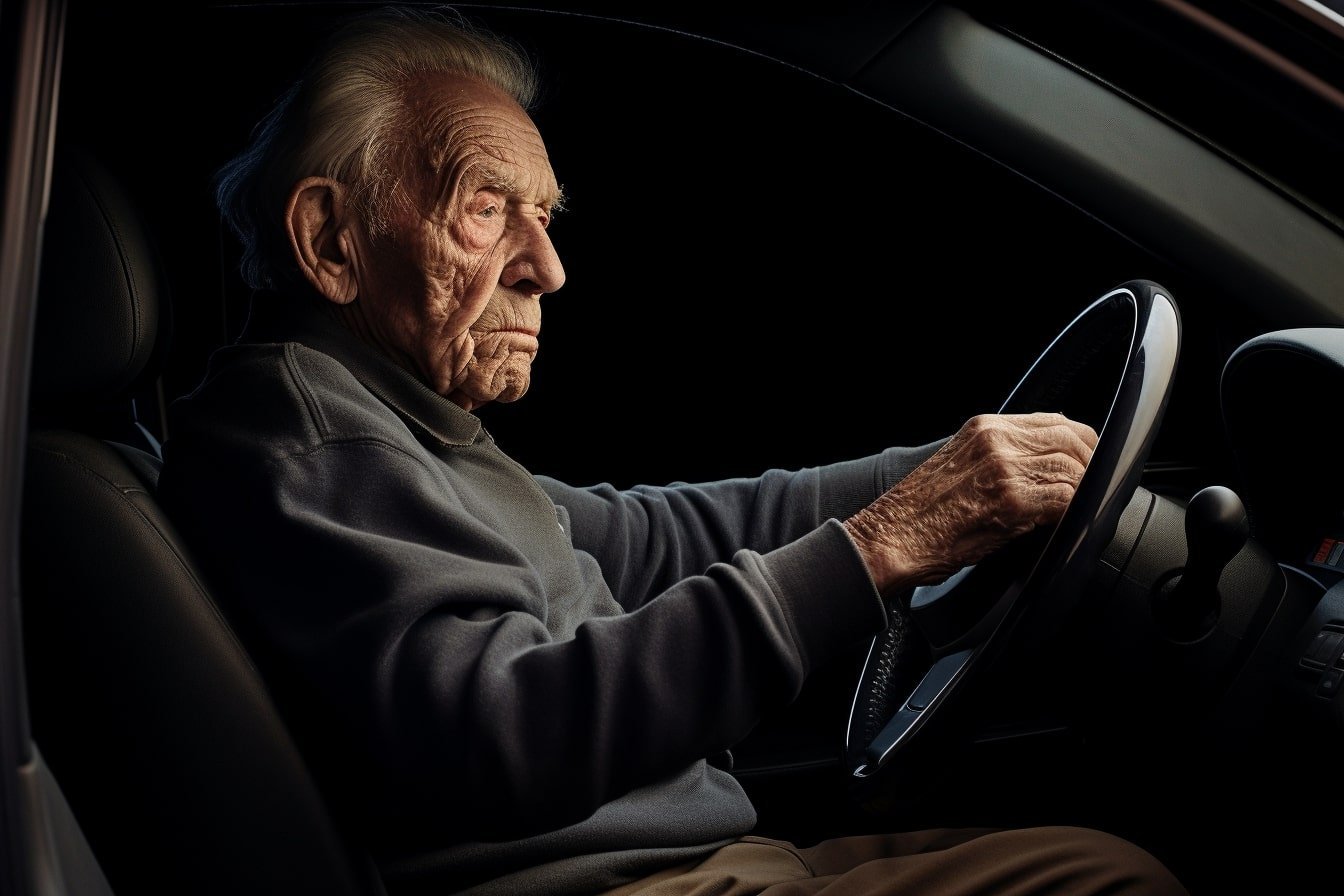
This shows an older person driving.
Once they added in the factors of age and other demographics, cognitive test scores and whether people had a gene associated with Alzheimer’s, the accuracy improved to 87%. Credit: Neuroscience News

“We found that using a GPS data tracking device, we could more accurately determine who had developed cognitive issues than looking at just factors such as age, cognitive test scores and whether they had a genetic risk factor related to Alzheimer’s disease.”

The study involved 56 people with mild cognitive impairment, which is a precursor to Alzheimer’s disease, and 242 cognitively healthy people with an average age of 75. All participants were driving at least once a week at the start of the study.

Participants agreed to take tests of thinking skills and to have the data tracking device installed on their vehicles. They were then followed for more than three years.

While the driving patterns of the two groups were similar at the start of the study, over time older adults with mild cognitive impairment had greater reductions in how many times they drove each month, how often they drove at night and how much they varied their routine in where they drove.

The researchers used driving factors such as medium and maximum trip distance, how often people went above the speed limit and how much they varied their routine to predict whether a person had developed mild cognitive impairment with 82% accuracy.

Once they added in the factors of age and other demographics, cognitive test scores and whether people had a gene associated with Alzheimer’s, the accuracy improved to 87%. In comparison, using all of those factors without any driving information resulted in 76% accuracy.

“Looking at people’s daily driving behavior is a relatively low-burden, unobtrusive way to monitor people’s cognitive skills and ability to function,” Babulal said.

“This could help identify drivers who are at risk earlier for early intervention, before they have a crash or near miss, which is often what happens now. Of course, we also need to respect people’s autonomy, privacy and informed decision-making and ensure ethical standards are met.”

A limitation of the study is that most participants were highly educated, white people, so the results may not be generalizable to the overall population.

Funding: The study was supported by the National Institutes of Health and the National Institute on Aging.

Key Questions Answered:

Q: Can everyday driving behavior reveal early cognitive decline?

A: Yes. Subtle changes in routine, distance, and night driving predicted cognitive impairment with high accuracy.

Q: How accurate is this method compared to standard tests?

A: Driving data predicted impairment with up to 87% accuracy, outperforming traditional screening alone.

Q: Could this lead to earlier intervention?

A: Yes. Continuous, passive monitoring could identify risk before dangerous driving or major symptoms appear.

Editorial Notes:

  • This article was edited by a Neuroscience News editor.
  • Journal paper reviewed in full.
  • Additional context added by our staff.

About this cognitive decline and neurology research news

Author: Renee Tessman
Source: AAN
Contact: Renee Tessman – AAN
Image: The image is credited to Neuroscience News

Thursday, July 18, 2024

Case Report - Is There Room for Improvement? Stroke Rehabilitation Environments May Not Reflect Home Environments in Terms of Chair, Toilet, and Bed Heights

My pet peeve was the car in the rehab center, practice getting in and out was only done on the passenger side, never the driver door or the rear doors.

Is There Room for Improvement? Stroke Rehabilitation Environments May Not Reflect Home Environments in Terms of Chair, Toilet, and Bed Heights

Open AccessPublished:July 09, 2024DOI:https://doi.org/10.1016/j.arrct.2024.100352

Abstract

The present study aims to describe the chair, bed, and toilet heights in rehabilitation hospitals and home environments to challenge rehabilitation clinicians to better prepare stroke survivors for discharge home. This study uses analysis of secondary outcomes from a multicentre, phase II randomized controlled trial (HOME Rehab trial) and additional observation of hospital environment. Data were collected from six rehabilitation hospitals and the homes of two hundred first-time stroke survivors who were aged >45 years. Chair, bed and toilet heights were measured; we measured 936 chairs and beds in hospital (17%) and home (83%) environments. Mean chair height at home was 47 cm (SD 6), which was 2 cm (95% CI, 0-4) lower than in the hospital ward and 5 cm (95% CI, 3-7) lower than in the hospital gym. Mean toilet height at home was 42 cm (SD 3), which was 3 cm (95% CI, 2-4) lower than in the hospital. Study findings suggest a disparity in heights between hospitals and home. Although clinicians may be aware of this disparity, they need to ensure that chair and bed heights within the hospital environment are progressively made lower to better prepare stroke survivors for discharge home.

KEYWORDS

Physical rehabilitation after stroke aims to prepare stroke survivors for discharge home. Safe discharge home from rehabilitation includes being able to sit, transfer, and walk. Therefore, physiotherapy in rehabilitation is based on the practice of these essential everyday activities to improve the performance of these activities in preparation for discharge home., A common everyday activity practiced in rehabilitation is standing up from a chair. Over the previous decades, research has described the biomechanics of standing up from a chair. One of the important findings is that, as the chair height is increased, lower limb joint moments are decreased, ie, it requires less muscular effort to stand from a higher chair.,  ,  ,  This knowledge assists rehabilitation therapists in tailoring the difficulty of standing up to the stroke survivor's ability by modifying the chair's height.
Rehabilitation hospitals are modified in design and built specifically for people with physical disability. The design of rehabilitation hospital environments usually considers safety, eg, minimizing fall risk, but does not necessarily consider the potential of the environment to influence functional outcomes. Hospital clinicians suggest that the current environmental design does not match stroke survivors’ goals and home challenges.
This study aimed to describe the chair, bed, and toilet heights in the home environment to inform rehabilitation clinicians and consider how they can better prepare stroke survivors for discharge home. Therefore, the research questions were (1) what are the heights of chairs, beds, and toilets in hospital and home environments? and (2) what is the difference in chair, bed, and toilet heights between rehabilitation hospitals and home environments?

Methods

Design

Secondary observational analysis of the hospitals and individuals post-stroke participating in a discharge planning trial, the HOME Rehab trial. The HOME Rehab trial is a multicentre, phase III randomized trial conducted in Australia. The trial compared an enhanced occupational therapy discharge planning intervention to usual care discharge planning. Within this trial, environmental measures were taken at stroke participants’ homes and in the hospital sites’ wards and gyms.

Ethics approval

This study was approved by the Alfred Health Human Research Ethics Committee (HREC/17/Alfred/236 [NMA]), and site-specific ethics approval was obtained at all participating sites. All participants gave written informed consent before data collection.

Participants, therapists, centers

Six metropolitan hospitals that had rehabilitation wards, which were sites in the HOME Rehab trial, were included in the hospital ward and gym environmental analyses. The hospitals were located across 3 states of Australia. The rehabilitation wards had a stroke throughput of >20 patients each year.
The home environmental analysis included the first 200 stroke participants in the HOME Rehab trial. The stroke participants had all experienced their first stroke. They were aged >45 years, admitted to rehabilitation, expected to return to a community (private) dwelling after discharge, and had no significant prestroke disability (prestroke modified Rankin Scale score, 0-2).

Measures

A comprehensive environmental evaluation was completed in rehabilitation hospital wards, gyms, and homes. In the hospital evaluation, a trained therapist measured the heights of chairs, plinths, toilets, and beds using a standardized procedure. In the home evaluation, dining chair, lounge, toilet, and bed heights were measured by a trained family member, who also took a photograph of the procedure that a trained therapist checked. In both environments, the same procedure was used, and it involved using a tape measure from the floor to the top of the chair or bed to the nearest millimeter. All chairs and beds were measured at the height they were found on entry to the room without adjustment. All chairs and toilets were measured when vacant, and beds and plinths (therapy mat tables) were measured with a person sitting on them to account for mattress compression when occupied.
Additionally, in the rehabilitation environment evaluation, beds or plinths (therapy mat tables) were measured under further conditions; after measuring at the height found, they were adjusted to the lowest possible and highest possible height. Five individual chairs or beds were measured in the ward and therapy gym areas for each type.

Data analysis

Descriptive statistics (mean ± SD) were used to describe the average height of each type of chair or bed in the hospital ward, hospital gym, and home. The difference in heights was calculated as mean difference and 95% CI.

Results

Height data were included from 65 chairs, 60 beds/plinths (therapy mat tables), and 30 toilets across 6 hospitals rehabilitation wards and gyms. Height data from 200 stroke participant homes were available. The height of chairs, beds, and toilets in the home and rehabilitation hospital environments are detailed in table 1.
Table 1Mean ± SD height (centimeters) of chairs, beds, and toilets in each environment and mean difference (95% CI) between environments.

EnvironmentsMean Difference Between Environments

HomeHospital WardHospital GymHome Minus Hospital Ward (95% CI)Home Minus Hospital Gym (95% CI)
Chair

Mean ± SD height (cm)
n=188

47±6
n=30

49±3
n=35

52±4
−2 (−4 to 0)−5 (−7 to −3)
Lounge

Mean ± SD height (cm)
n=196

43±5
N/AN/AN/AN/A
Toilet

Mean ± SD height (cm)
n=199

42±3
n=30

45±2
N/A−3 (−4 to −2)N/A
Bed/plinth

Mean ± SD height (cm)
n=198

59±9
n=30

60±10
n=30

58±9
−1 (−5 to 3)1 (−3 to 5)

Height of chairs and beds in the home environment

In terms of height, the mean ± SD chair height was 47±6 cm, lounge (recliner) height was 43±5 cm, toilet height was 42±3 cm, and bed height was 59±9 cm (table 1).

Height of chairs and beds in hospital ward and gym environments

In the ward, beds were adjustable to a minimum height of 42±12 cm and a maximum height of 88±9 cm. In the gym, plinths (therapy mat tables) were adjustable to a minimum height of 46±2 cm and a maximum height of 89±7 cm. The mean toilet height was 45±2 cm.

Difference in heights between hospital and home environments

Bed height and variability were similar across environments. Toilet height was 3 cm (95% CI, 2-4) lower in the home than in the hospital. Chair height was 2 cm (95% CI, 0-4) lower in the home than in the hospital ward and 5 cm (95% CI, 3-7) lower in the home than in the hospital gym. See table 1 and figure 1.
Fig 1
Fig 1Mean ± SD height (cm) of chairs in each environment.

Discussion

The current study identified that the heights of beds were similar between environments; however, chairs were lower in the home than those in hospital environments (mean 2 cm lower). This result is not surprising because hospitals are purpose-built spaces for people with physical disability and, therefore, designed to make everyday activities more manageable for these people. In addition, chairs in the gyms were even higher, perhaps because very disabled people are practicing this everyday activity within the gym, so using a higher height to make standing up more manageable with a focus on improving technique.
Notably, there was more variability in heights in the home environment than in the hospital, eg, the SD of chair heights in homes was more than double the SD in hospital wards. This suggests that stroke survivors need to be equipped to be able to stand up from some very low chairs and beds that will be present in the home environment. Moreover, when accessing the community or using a car, the height may be even lower than found in the home.

Strengths and limitations

The current study has both strengths and limitations. Limitations include different height measurers in the hospital and home environments. However, all measurers followed a standard procedure. A significant strength of the study is the large sample size of stroke survivor homes and the inclusion of 6 hospitals across 3 states of Australia. This large sample helps to assure certainty in the results presented in this study. Further, these are the hospital environments the stroke survivors accessed before discharge home.

Conclusions

The findings of the current study suggest clinicians should pay particular attention to the height of chairs and beds within the hospital environment. Chair and bed height should be matched to the stroke survivor and lowered as their ability improves over time.

Wednesday, June 5, 2024

Back behind the wheel: After stroke, Huntley man relearns how to drive to regain independence lost

You'll want this to learn to drive so ask your doctor for EXACT STROKE PROTOCOLS TO RETURN TO DRIVING.

Health goes downhill when older adults stop driving

Maybe your doctor can look at these and actually help you get back to driving.

Predicting road test performance in drivers with stroke

Stroke survivor, researchers encourage patients to discuss driving with their doctors

Stroke survivors more likely to make dangerous driving errors

The latest here:

Back behind the wheel: After stroke, Huntley man relearns how to drive to regain independence lost 


Dan Davis didn’t seem like a candidate for a stroke. The Huntley man didn’t smoke and rarely drank alcohol.

But nearly a year ago, on June 28, Davis was getting ready for work when he suddenly collapsed. His wife, who has a medical background, called 911 but already realized what it was — a stroke.

Davis retained his cognitive abilities through his 27-day hospital stay.

What the stroke took from the now 47-year-old was strength on his right side. It also threatened to take away his independence.

Could the working father of two sons continue to drive when his right foot could no longer work the gas and brakes in his car?

“I was dependent on my wife to take me places. Even getting down the stairs … I had to quickly assess how I lived my life and think more carefully about it than I did before,” Davis said. “Every move I make, I have to assess if it is feasible to do it.”

It’s Karyn Silvestri’s job to determine whether Davis will be able to get behind the wheel of a car again.

Silvestri, an occupational therapist at Northwestern Medicine, exclusively works with people — both teens and adults with acquired or congenital disabilities — to determine if they can drive and help them learn to drive with adapted vehicles. Some have had a traumatic brain injury or, like Davis, a stroke.

Silvestri says she is one of just a handful of occupational therapists in Illinois who is also a licensed driving instructor. She has clients come from Indiana and Wisconsin.

“There are not enough to serve the clientele that really needs driving rehabilitation services,” Silvestri said.

Her role is twofold, Silvestri said. First, she evaluates clients to determine if they can safely drive. Then, she works with them to ensure they can pass the state’s driver examination, often with a vehicle adapted for them.

Much of the behind-the-wheel training happens in parking lots at Northwestern Woodstock Hospital or Marianjoy Hospital in Wheaton. They don’t use simulators, but real vehicles the drivers will be using that better represent what being behind the wheel feels like, Silvestri said.

These days, a majority of his driving is going to Marianjoy for his rehab appointments, Davis said. Getting behind the wheel with Silvestri to practice was “like being a 16-year-old again, learning how to do this.”

His car is adapted with a knob on the left side of the steering wheel — his stronger hand — allowing him to steer. Instead of using his right foot for the brake and gas pedals, Davis now uses his left foot. It helps, Davis said, that he had 30 years of driving experience.

“How to turn — that doesn’t go away. The muscle memory resides in me,” he said. “But the nerves … it was like being a 16-year-old. The stakes are high, and you don’t want to fail those tests.”

After practicing with Silvestri and re-memorizing the rules of the road, Davis aced his driving test. He’s had his license back — with a C restriction requiring a mechanical aid or adaptive devices — for three months. He has driven about 3,000 miles since then, running errands and getting back to a little normalcy.

He has to think about where he is going, too — not how to get there, but what will be required of him when he gets there.

“Keep in mind the independence you gain [by driving], but you also have to be conscious of what you have to face where you are going,” Davis said. Those obstacles might be getting from a parking garage to his destination.

“Stepping onto a curb — I have to think about it. If I have to carry something heavy, I have to plan it out more than I did a few months ago,” he said.

Davis is hoping for surgery for a device that will help his nervous system operate his right side again, but insurance would not approve it. As a right-handed person, not having control over that side of his body has made everything from writing to reading a book a lot harder, Davis said.

“Even eating dinner. I am good at left-handed eating,” Davis said, “but for things like cutting my meat … I am figuring it out.”

Thursday, October 19, 2023

Motor-cognitive functions required for driving in post-stroke individuals identified via machine-learning analysis

Useless, nothing here on the rehab needed to get safely driving again. DO YOU BLITHERING IDIOTS EVER THINK AT ALL?

Motor-cognitive functions required for driving in post-stroke individuals identified via machine-learning analysis

Abstract

Background

People who were previously hospitalised with stroke may have difficulty operating a motor vehicle, and their driving aptitude needs to be evaluated to prevent traffic accidents in today’s car-based society. Although the association between motor-cognitive functions and driving aptitude has been extensively studied, motor-cognitive functions required for driving have not been elucidated.

Methods

In this paper, we propose a machine-learning algorithm that introduces sparse regularization to automatically select driving aptitude-related indices from 65 input indices obtained from 10 tests of motor-cognitive function conducted on 55 participants with stroke. Indices related to driving aptitude and their required tests can be identified based on the output probability of the presence or absence of driving aptitude to provide evidence for identifying subjects who must undergo the on-road driving test. We also analyzed the importance of the indices of motor-cognitive function tests in evaluating driving aptitude to further clarify the relationship between motor-cognitive function and driving aptitude.

Results

The experimental results showed that the proposed method achieved predictive evaluation of the presence or absence of driving aptitude with high accuracy (area under curve 0.946) and identified a group of indices of motor-cognitive function tests that are strongly related to driving aptitude.

Conclusions

The proposed method is able to effectively and accurately unravel driving-related motor-cognitive functions from a panoply of test results, allowing for autonomous evaluation of driving aptitude in post-stroke individuals. This has the potential to reduce the number of screening tests required and the corresponding clinical workload, further improving personal and public safety and the quality of life of individuals with stroke. k  mi mkji  mk

Tuesday, September 26, 2023

Machine learning model able to better predict AD from driving data, biomarkers


Because of your extra risk of dementia from your stroke, does your hospital have enough functioning brain cells to get this? 

Do you prefer your hospital incompetence NOT KNOWING OR NOT DOING anything on this?

Your risk of dementia, has your doctor told you of this?  Your doctor is responsible for preventing this!

1. A documented 33% dementia chance post-stroke from an Australian study?   May 2012.

2. Then this study came out and seems to have a range from 17-66%. December 2013.`    

3. A 20% chance in this research.   July 2013.

4. Dementia Risk Doubled in Patients Following Stroke September 2018 

The latest here:

Machine learning model able to better predict AD from driving data, biomarkers

Key takeaways:

  • The study included 139 adults aged 65 years and older to drive vehicles for 1 year.
  • When a machine learning model was applied, more variables meant greater prediction accuracy for preclinical Alzheimer’s.

PHILADELPHIA — A machine learning model was better able to predict preclinical Alzheimer’s disease from participant biomarkers as well as driving data from a year-long study, according to a speaker.

“As we age, there are declines in sensory and motor abilities and when we think about driving, it really is one of the most complex activities that most of us do,” Ganesh M. Babulal, PhD, OTD, MSCI, an associate professor in the department of neurology at Washington University School of Medicine, said during his presentation at the American Neurological Association annual meeting. “It requires sustained and dynamic engagement.”

Older person driving
According to research, a machine learning model was better able to predict preclinical Alzheimer’s disease with more variables taken from information of cognitively normal older adults whose vehicles were chipped for 1 year. Image: Adobe Stock

Babulal and colleagues sought to identify older drivers at risk of cognitive decline and at risk for accidents and crashes, and to do so before cognitive decline occurs.

In the first 4 years of their research, the researchers found those with preclinical AD as measured by positive readings on amyloid or cerebrospinal fluid (CSF) biomarker testing made 2.5 more errors on a standard road test and were faster to fail a road test although remaining cognitively normal.

Their current study involved the DRIVES program, in which each 139 adults aged 65 years and older who were deemed cognitively normal as measured by the Clinical Dementia Rating scale, required to drive a non-adaptive vehicle with a valid driver’s license at least once per week.

Each participant had their vehicle fitted with a chip that for 1 year measured latitude and longitude for each vehicle as well as the number of trips, miles, unique destinations along with speed, the number of instances of hard braking and sudden acceleration. An accelerometer also measured the kind of accident impact as well as level of accident impact as either minor or major. All participants with CSF data were categorized as positive or negative and logistic regression models were employed to measure area under the curve. A machine learning model was applied with data to further analyze AUC with respect to biomarkers predicting preclinical disease.

According to results, when more variables were added to analysis, the more closely the AUC approached 1, indicating greater accuracy for preclinical disease prediction. When driving, baseline age, APOE, e4 status, race and gender were factored, AUC reached 0.963, compared with 0.774 when only driving was analyzed.

“Plasma biomarkers have really been the holy grail for Alzheimer’s disease,” Babulal said. “These are data that’s easily captured on any patient.”

Sunday, July 23, 2023

Cognition in Motion: A Hard Look at Aging Drivers

You don't want this to happen so ask your doctor for EXACT STROKE PROTOCOLS TO RETURN TO DRIVING.

Health goes downhill when older adults stop driving

Maybe your doctor can look at these and actually help you get back to driving.

Predicting road test performance in drivers with stroke

Stroke survivor, researchers encourage patients to discuss driving with their doctors

Stroke survivors more likely to make dangerous driving errors


The latest here:

Cognition in Motion: A Hard Look at Aging Drivers

Summary: A recent study found a majority of cognitively impaired older adults in South Texas are still driving, raising safety concerns.

Of the over 600 individuals assessed, 61.4% of those with cognitive impairment were active drivers. While some with mild impairment may be able to safely drive, for others, it may be inappropriate.

The study emphasizes the importance of early and open conversations between patients, caregivers, and healthcare providers about safe driving practices.

Key Facts:

  1. 61.4% of older adults with cognitive impairment, surveyed in the study, continue to drive.
  2. The likelihood of driving decreases with the degree of cognitive impairment, irrespective of ethnicity.
  3. Around 35% of caregivers expressed concern about their care recipient’s ability to drive safely.

Source: University of Michigan

The majority of older adults with cognitive impairment are still driving, despite concerns raised by caregivers and others, a Michigan Medicine study in a South Texas community finds.

Researchers assessed more than 600 adults over 65 years old in Nueces County, Texas, who had cognitive assessment scores that indicated a likelihood of impairment.

This shows an older man driving.
Approximately one in nine Americans aged 65 and older, or 6.7 million people, are estimated to live with Alzheimer’s disease and millions more have related dementias. Credit: Neuroscience News

Of those people with cognitive impairment, 61.4% were current drivers, and around one-third of all caregivers had concerns about their care-recipient driving.

Wednesday, June 22, 2022

Yawning

 Yawning is a moderate problem. 

  1. Sitting in my chair working on my laptop it causes the left arm to rise almost to my chest, threatening to dump the laptop onto the floor. I have to immediately grab the left arm with my right hand and very forecefully push it down. 

  2. Driving a car I can't control it with my right hand so it wanders all over getting into trouble.

I've seen nothing anywhere on how to prevent this from happening.

Tuesday, June 14, 2022

Driving

 Drove to St. Paul, Minnesota and back. One session I managed to get my left arm to hang out the open window for 40 minutes before having to pull it in. I have zero ability to use my left arm muscles to get the arm either on the window edge or back from it.  The second time I tried it I had to pull in in after only 5 minutes, the muscles were screaming so loudly.   Don't know the difference in setup. 

 I now have to pad my left knee with excess clothing because it abducts outward and painfully presses into the door.

I guess I should be doing these, which I should have received from my therapists:

10 Hip Abduction Exercises | At Home Abductor Workout

Monday, February 28, 2022

Driving after a stroke - UK


 I thought the driving simulator was worthless.

My return to driving was with an occupational therapist; Drive right now with no practice and see if you pass, almost guaranteed for 90+% to fail. And since they never pulled my license I just started driving after having to buy a new automatic transmission car.

Driving after a stroke - UK

You're not legally allowed to drive for a month after a stroke or transient ischaemic attack (TIA). Some people have to stop driving for longer, or will not be able to drive again. This page explains what to do if you are a driver, including when to tell the DVLA (DVA in Northern Ireland).

This web page gives you general information about driving after a stroke. You should always get individual advice from your doctor about your stroke and any other health conditions that affect your driving. 

The information on this page can be accessed in the following formats: 

On this page:

Key points 
How can a stroke affect my driving? 
Do I need to tell the DVLA/DVA about my stroke? 
Starting to drive again 
If you drive for a living 
What if I can’t go back to driving? 
Alternatives to driving 
Worried about someone's driving? 

Key points

  • By law, you must not drive for a calendar month after a stroke or transient ischaemic attack (TIA).
  • It is your responsibility to tell the DVLA (DVA in Northern Ireland) about any medical condition that affects your driving.
  • If you have a licence to drive a large goods vehicle (LGV) or passenger carrying vehicle (PCV), you must tell the DVLA/DVA about your stroke or TIA straight away.
  • Car and motorbike drivers don’t usually need to tell the DVLA/DVA about a stroke in the first month, but there are some exceptions.
  • If you have a car or motorbike licence, and you can drive safely, you may be able to start driving again after a month. But it depends on what type of stroke you had, and other health conditions like epilepsy.

Not sure what to do?

The team of stroke professionals involved in your care may help with assessing the skills you need for driving. They can also advise whether it is safe for you to return to driving.

You might need some more information about your own condition before you decide what you need to do. It can be helpful to speak to your doctor to check what type of stroke you had, and how many strokes or TIA you had.

You can find detailed information about how your medical condition affects your driving in the guide for medical professionals on the DVLA website.

What if my doctor says I should not drive?

If your doctor tells you to stop driving for three months or more, you should contact the DVLA/DVA to tell them about your medical condition. You might need to send back your driving licence, but wait until you speak to the DVLA. They will tell you what to do next.

How can a stroke affect my driving?

After a stroke, your ability to drive safely can be affected in various ways. You may have physical or visual problems, or you may have difficulty concentrating for long periods of time or making quick decisions.

Physical effects
Weakness in your arm, leg or both is common after a stroke. You may also experience other physical effects which include pain, changes in sensation, weakness and problems with balance.

Vision problems
A stroke can cause a variety of problems with your sight. These include double or blurred vision, loss of central vision in one or both of your eyes, and visual field loss.

Cognitive effects
Driving requires many different cognitive skills. You need to be able to concentrate, navigate, multitask and make quick decisions. After a stroke you may have difficulty concentrating, understanding, solving problems, or making decisions. Your perception of space and distance may have changed, or you may have problems with your memory.

Fatigue
After your stroke, you may find that you lack energy and feel extremely tired. This may affect your ability to concentrate and maintain alertness while you drive.

Seizures and epilepsy
If you have any seizures after your stroke, you must stop driving and need to tell the DVLA/DVA. Depending on the type of seizures you might be able to start driving after six months or a year, but the DLVA/DVA could decide on a longer period.

Do I need to tell the DVLA/DVA about my stroke?

No, if:

If you drive a car or motorbike and you had a single transient ischemic attack (TIA) or stroke with no brain surgery or seizures, you can usually start driving again after one calendar month. You only need to tell the DVLA/DVA if your stroke affects your ability to drive. 

The exception is that you must tell the DVLA/DVA if you had a stroke due to a bleed in the brain known as a subarachnoid haemorrhage (SAH). This is a type of haemorrhagic stroke, sometimes called a brain haemorrhage or brain bleed. Your GP or stroke team can tell you what type of stroke you had, and you can read our information about haemorrhagic stroke.

Yes, if:

  • You are a Group 2 driver (lorry and bus).
  • Your ability to drive has been affected.
  • You had several TIAs.
  • You had more than one stroke in three months.
  • You had a subarachnoid haemorrhage (a type of brain bleed).
  • You had any seizures.
  • You had brain surgery.
  • Your doctor tells you not to drive.
  • If your disability or health gets worse.
  • If one calendar month after a stroke or TIA, your stroke has affected your driving.
  • If you need to drive a vehicle with adapted controls.

Large vehicle drivers
If you drive a large vehicle such as a lorry or bus, you must tell the DVLA/DVA about your stroke or TIA as soon as possible. You can’t drive for a minimum of one year after the stroke or TIA. Whether you can drive again will depend on the type of stroke you had, and how the stroke has affected you. If you are unsure, ask your GP or a member of your stroke team, and speak to the DVLA/DVA.

If you don’t tell the DVLA/DVA about a medical condition that affects your driving, you could end up with a criminal conviction. You could be fined up to £1000, and you could be prosecuted if you have a collision.

If you are not sure what to do, always get individual advice about your stroke or effects of stroke from your stroke team or GP.

How do I tell the DVLA/DVA I've had a stroke?

Step 1

  • England, Scotland and Wales: car licence holders can report a medical condition online. Car and lorry drivers can download a form at gov.uk/health-conditions-and-driving.
  • Northern Ireland: you can contact the Drivers Medical Section of the DVA by post, phone or email (see the end of this guide for details).

Step 2
Where possible, the DVLA/DVA will make a decision using the information you provide. If the DVLA/DVA requires more information they may:

  • Contact your GP or consultant.
  • Arrange for you to be examined by a medical officer or specialist.
  • Ask you to take a driving assessment.

Step 3
Once the DVLA/DVA has received all the relevant information they will make a decision about whether you can drive again.

The DVLA/DVA may make one of the following decisions:

  • You may be able to keep your licence.
  • You may be issued a licence for a fixed period of one, two, three or five years, (one, two or three by the DVA) after which time your medical fitness will be reviewed again.
  • You may be issued with a licence to drive a vehicle with adapted controls.
  • Your licence may be taken away. If this happens, you will be given a reason for this decision. You will be told whether you can reapply for your licence, and you will receive a notice explaining how you can appeal the decision.

The DVLA aims to make a decision within six weeks. You will be notified if the decision is going to take longer.

If the DVA are making the decision, they will aim to decide within three to four weeks. If further information is required about your medical conditions or you have a LGV or PCV licence, the decision may take longer.

Starting to drive again

If you are able to return to driving, the choice of when and how to do it is a personal one. 

If you have an occupational therapist, talk to them about it. They can tailor your therapy to help prepare you to return to driving. An automatic car can be easier to drive than a manual.

Before you start driving again, you may find it helpful to have a few refresher lessons with a qualified driving instructor. You can find driving instructors in your area by looking in your local phonebook or on the internet. Check that they are registered with the Driving Standards Agency (DSA). Mobility centres can also provide advice about returning to driving.

Insurance
Before you start driving again you must tell your insurance company about your stroke or TIA. If you don’t do this, it might invalidate your insurance. Insurance companies have their own processes, so talk to yours to find out more. Check your policy carefully. They might want confirmation that you are safe to drive.

Having a medical condition can make insurance more expensive. Try shopping around for a competitive quote, or look for a specialist insurance provider when you need to renew.

If you drive for a living

If you drive as part of your work, a stroke can affect your income and way of life.

You might have to take a break from your usual work until the DVLA/DVA allows you to return to driving. Some people will not be able to go back to work and may need to re-train or look for new types of work or a new career. People tell us that this can be a huge challenge. Seeking work at the same time as dealing with fatigue or other effects of stroke might feel hard to cope with. 

Seek advice from your local Job Centre Plus, which has advisors for people with disabilities. Ask your GP if there are occupational health services in your area that can support you. 

Licensed taxi drivers must tell their local authority licensing department about their stroke and any medical conditions. Drivers of larger vehicles (lorries or buses) have a minimum of a year away from driving after a stroke or TIA. If you drive a police or health service vehicle, your employer may follow the same rules as for larger vehicle licences.

Sick pay and benefits
If you are off work while recovering from a stroke or TIA, you might get sick pay from your employer. If you are self-employed you may be able to claim Employment and Support Allowance or Universal Credit. Find out what benefits you can claim.

Returning to work as a driver
If you're able to go back to driving, you may need to change your working hours or shift pattern to avoid fatigue. You might need to use different equipment for some tasks. If you are employed, speak to your employer about how the stroke could affect your work and discuss a ‘return-to-work plan’. This could include regular chats with your manager to check if there are any problems, and agree any changes needed to help you return to work. It may be possible to do a different type of work with the same employer.

Driving to get to work
If you rely on a car to get to work, and you find it difficult to use public transport due to mobility problems, you may be able to get funding for taxis to work via the Access to Work scheme. Your employer might be able to support you working from home some or all of the time.

If you can get to work by public transport you might be able to get reduced price travel such as a Disabled Person’s Railcard. If your licence has been revoked for medical reasons, you are entitled to a free bus pass in most areas. In Northern Ireland, you can get a SmartPass giving you half price travel. In London, you can get a Freedom Pass. Apply through your local council.

What if I can’t go back to driving?

If you are unable to drive, you may feel that you've lost some of your independence. You may have to rely on others to get out and about, particularly if you live in a rural area and public transport is hard to access. You might feel isolated, frustrated, or low.

Talk to your family and your healthcare professionals about how you're feeling. They can help you to look at other options that will help you do the things that are important to you.

There could be ways of getting around in your area, such as using bus, train, taxis or community transport schemes.

Many people recover from some of the effects of their stroke over time. If you improve, you might be able to have a repeat driving assessment at a later time. When your licence has been returned, refresher driving lessons can help you regain confidence.

If you are feeling very low or anxious, speak to your GP, or contact our Helpline for ideas about how to get emotional support.

Alternatives to driving

Community transport
In some areas, local councils provide community transport schemes for people who have disabilities and are unable to use public transport. The services vary, but they may be able to take you door-to-door to places in your local area or on shopping trips. Contact your local council to find out more about schemes in your area. There are also dial-a-ride services in many parts of the UK where you can book wheelchair-accessible transport.

Access to work
If you are can’t use public transport because of your disability, the Access to Work scheme may be able to help you with the cost of getting to and from work. Speak to a Disability Employment Adviser at your local Jobcentre Plus (Jobs and Benefits Office in Northern Ireland).

Trains
You may be able to buy a Disabled Person’s Railcard. This entitles you to a third off the cost of most rail fares in England, Scotland and Wales. It also gives you a third off pay-as-you-go Oyster fares on Transport for London trains. If you live in Northern Ireland, you could be entitled to a half-fare SmartPass which can be used for bus and rail travel – contact Translink.

Bus
If you can’t get a driving licence for medical reasons, you can get a free bus pass, a Freedom Pass in London. You may be entitled to a free bus pass if you have a disability. In England and Scotland contact your local council or local authorities in Wales. In Northern Ireland, you may be entitled to the SmartPass, which gives you half price travel, if you receive the mobility component of Personal Independence Payments (PIP) or Disability Living Allowance (DLA). 

Shopmobility
Many towns and shopping centres in England and Wales also offer Shopmobility schemes that hire out manual wheelchairs and powered scooters to anyone who needs help with getting out and about.

Motability scheme
If you are receiving certain benefits you might be able to exchange some or all of your benefit to lease a new car, powered wheelchair or scooter through the Motability Scheme. To be eligible you need to be on a disability benefit such as the higher rate mobility component of Disability Living Allowance or Personal Independence Payments. Others include the War Pensioners' Mobility Supplement and Armed Forces Independence Payment.

Even if you can’t drive, you can still get a Motability vehicle and choose other people to drive for you. A Motability car could be used to drive you around, and also for journeys to support you even if you’re not in the car, such as doing your shopping.

The Blue Badge scheme
The Blue Badge scheme lets you park in convenient spaces in car parks and on-street parking areas. You can use your badge in any car, as a driver or passenger. Your local authority will be able to tell you if you are eligible for a badge, how to apply and more details about the scheme.

Specially adapted cars
There are various vehicle adaptations and motoring accessories that can make driving possible and more comfortable with a physical disability.

Specialist mobility centres can carry out assessments and provide advice about making adaptations to your vehicle which can enable you to return to driving. They can also provide assessments for passengers with disabilities, and information on how to safely lift wheelchairs in and out of a car. There are centres across the UK.

Worried about someone’s driving?

If you are worried about the safety of someone’s driving, it can be a tricky subject to talk about. But it’s vital to make them aware of your concerns, not just for their safety, but for the safety of others on the road.

If a person has been driving for many years it can be hard to suddenly stop, and it can change the way they see themselves. So they may need support and guidance from family, friends and professionals.

Sometimes stroke survivors find it difficult to recognise the effects of stroke. Stroke can also affect your judgement and, in rare cases, someone can be unaware they have a disability. This is called anosognosia.

Family members and professionals may need to remind them that they can no longer drive because of the potential risk to themselves and others. You could read this guide together and talk about the other ways of getting around, and plan some of the journeys they might want to make using alternative types of transport.

If you feel that the person is not safe to drive and they refuse to stop driving, you can write to the DLVA in confidence online.